




Choosing to grow a variety with built in pod shatter resistance is one of the most important things you can do to protect OSR yields through to harvest, and make the margins to keep oilseed rape profitable, believes Kurtis Scarboro, arable development officer at Limagrain.
“Almost all of the costs of growing the crop have been spent by this stage so it makes sense to protect yield potential right through to the end of the growing season,” he says.
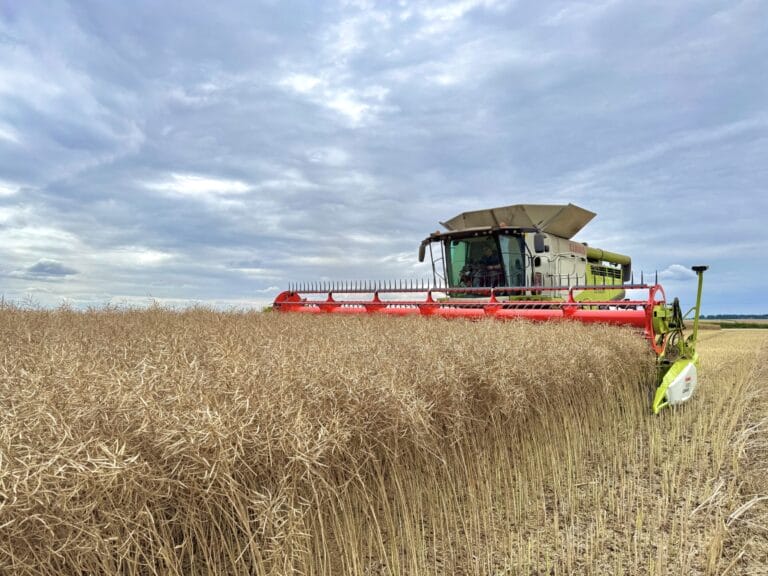
Pod shatter is a natural process for seed dispersion in oilseed rape, however on farm it can result in significant seed loss through heavy wind, rain, hailstones, or the combine passing through the crop.
“POSH resistance also helps to provide some flexibility in the timing of the harvest. It also cuts down the number of volunteers in the following crop, easing the burden of weed control, says Mr Scarboro.

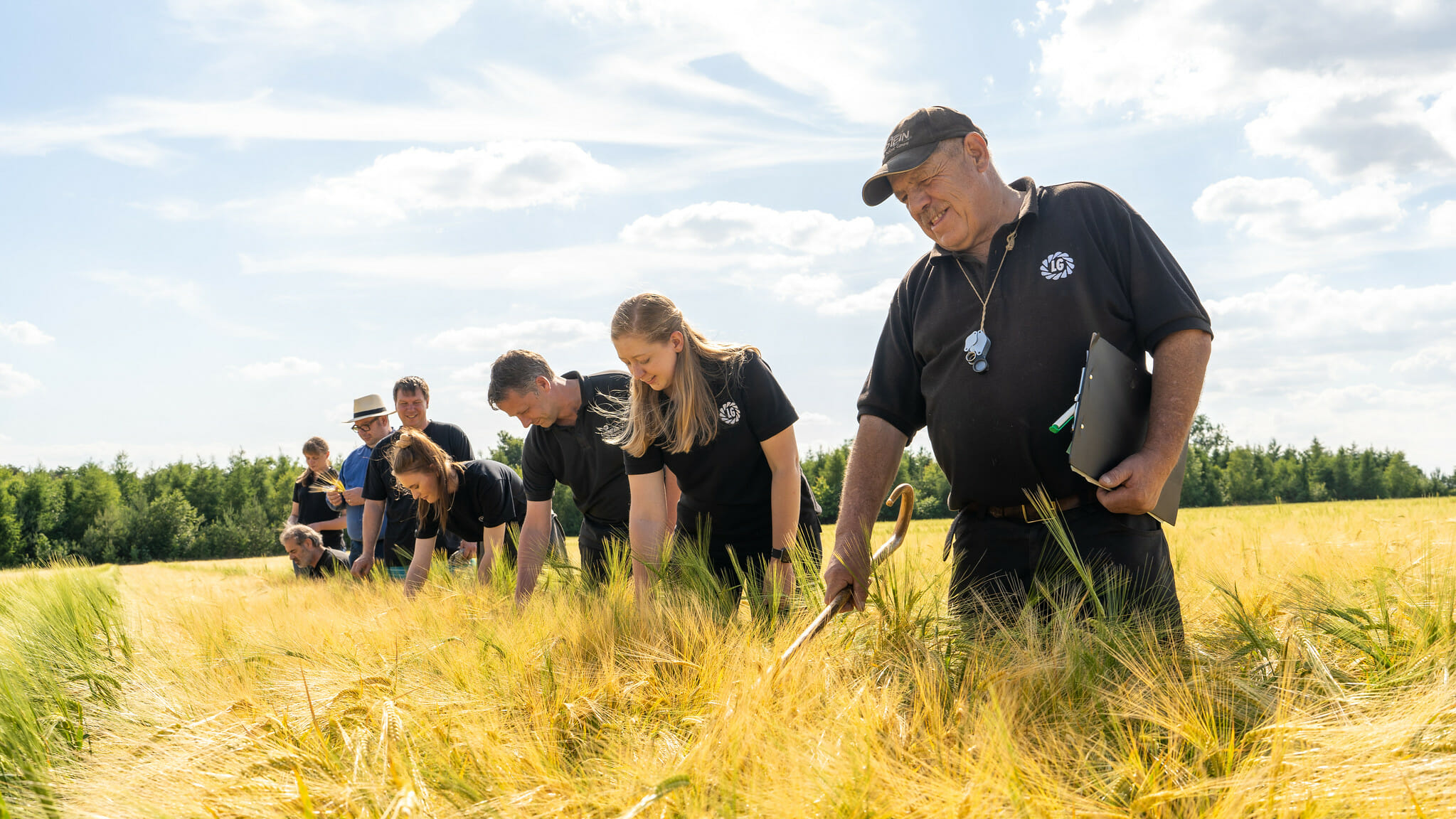
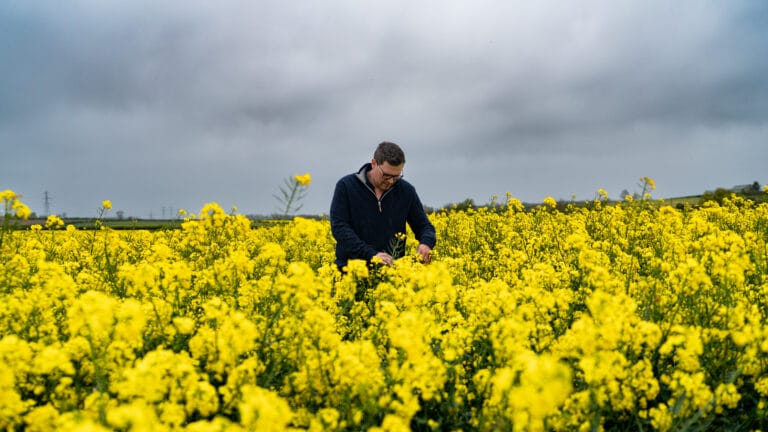
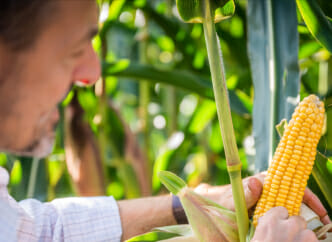
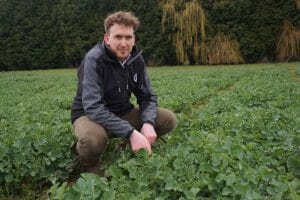
Kurtis Scarboro Arable Development officer and OSR Product Manager check pod shatter
“The most effective option for preventing pod shatter is a genetic trait, so it can’t be influenced throughout the season – making varietal choice very important.”
However pod shatter is not an either/ or trait, but one that can be quantified by the force required to break a ripe pod, he points out.
Limagrain precisely quantify pod shatter resistance (POSH) using lab-based techniques, where the force required to shatter the pod is measured. This clearly shows that not all POSH resistant varieties offer the same level of resistance.
“All Limagrain hybrids contain the trait and we constantly monitor the efficacy of our pod shatter resistance against other commercial varieties so we can be confident in our claims that the variety really is pod shatter resistant,” he says.
“The benefits of robust pod shatter resistance were clearly seen in an exceptionally wet and windy 2023; July saw one of the wettest and windiest months on record for the last 188 years, followed by the windiest day for the last 55 years and whilst some oilseed rape crops were devastated, others appeared relatively unscathed and this undoubtedly comes down to robust pod shatter resistance.”
Joe Bayford of Keyston Farms places great value on the trait and will not grow a variety that doesn’t have pod shatter resistance. Farming over 600ha’s near Huntingdon, he believes that if it is possible to get a decent oilseed rape crop this close to harvest, then its critical to protect the yield all the way to the trailer.
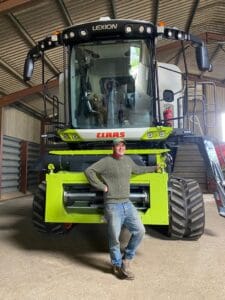
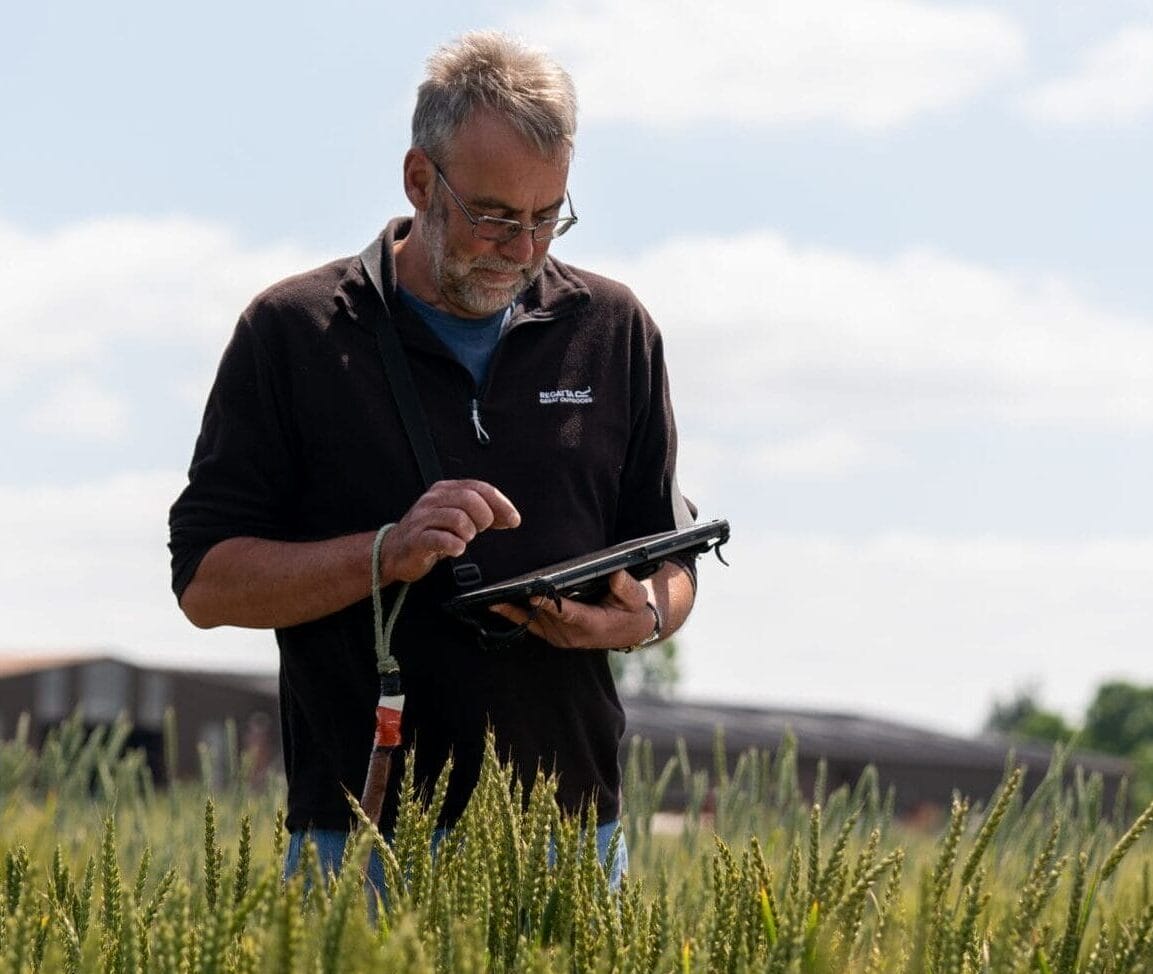
Joe Bayford appreciates the value of pod shatter in OSR
Despite reducing the area grown, oilseed rape remains an important crop at Keyston. “We are only growing about half of what we used to, but we still find oilseed rape a valuable crop in the rotation behind either spring or winter barley.
He moved over to hybrids from coventionals about six years ago and has seen as much as a 0.5t/ha yield benefit in doing so, which he puts down to genetic traits such as pod shatter.
“If we can get around 3t/ha for the crop then we are still making money, anything less than that and it starts to drag down the gross margin.
“On the advice of Jonathan Payne of Nickersons, we grew Aurelia and Attica and this year we are trying LG Armada, which again is looking very good and another step on in genetics and yield improvement .
“We have noticed with LG hybrids when we rub the pods out to test for moisture before harvesting, they are much more stubborn to pull apart – even with a hailstorm in 2021 the seed did not shed, whereas some local crops did.”
He notes that he always applies pod stick believing it’s a relatively cheap extra insurance.Establishing the crop has become a whole different ball game to beat the beetle, acknowledges Joe. “The rape always follows a spring or winter barley with the aim to get drilled by the end of July/first week of August, conditions willing.
“The aim is to have a well-established crop in the autumn, so by the spring it’s big enough that emerging flea beetles are feeding on the stems and not on the growing points of the plant.
“Last year we managed to drill most of the crop in the first week of August, until rain stopped play. A week later we were back in action, but this later drilled crop hasn’t coped as well.”
“We adapted our Horsch Sprinter tine drill by taking out every second tine, working on 12 rather than 24 tines so we are effectively working on 50cm rows, doubling the seed rate per row.
“The seed comes primed with a phosphite and phosphate dressing as well as being polymer coated and dressed with Integral-Pro, all of which gives the seed that extra kick. – any gains at this stage can mean the difference between a crop and not a crop.
“We also put 150kg DAP down the drill, significantly improving the seed to fertiliser contact.”
Is September the best month for drilling OSR in 2024?
Over the past few years, there has been a lot of discussion around the optimum sowing window for OSR. Growers have long speculated on the perfect conditions for successful establishment. As breeders, we would always emphasise a key point when considering your drilling window is planting to the conditions rather than a specific calendar date. We are starting to hear success stories at harvest from farmers who observed environmental conditions, and when required, moved away from the traditional late July-August sowing window when they did not suit.
The traditional sowing window always made sense for the open pollinating ‘conventional’ varieties of OSR, which generally have slower autumn vigour than their hybrid counterparts. Hybrid varieties from the Limagrain portfolio such as Aviron, LG Avenger and the clubroot tolerant variety LG Scorpion, are fast establishing and particularly vigorous varieties, making them extremely well suited for later drilling.
The increased autumn vigour offered by hybrids means that later sowing is not only a viable option, but a strategic choice, as these hybrids establish quickly and reach optimum winter biomass faster than traditional conventional varieties.
With the rain received over the first couple of weeks of this September, the conditions are suitable or even optimal, with ample soil moisture present for the crop to get away. Though I would caveat this with a reminder that it is still crucial to get the 30kg N/ha of autumn fertiliser applied to the crop to make it a success.
When drilling later, there is always the worry of potential damage from adult flea beetle, due to there being less biomass present than in an early sown crop. Later sown crops however should emerge after the majority of adult CSFB have migrated. Research from ADAS in 2020/21 points out that crops sown on the 15th of September showed minimal damage on the plants from adult CSFB, at just 3%. On top of this, plants sown on the 15th of September also demonstrated a marked reduction in the number of larvae found in plants, meaning a reduced risk from larvae damage. *
Other benefits of later sowing include the reduced risk from a range of common diseases, as well as increased opportunity for weed control. A lot of the weeds and volunteers from the previous crop will have already emerged and a stale seedbed can be achieved before drilling.
Sclero-Flex Secures OSR Yields
Liam Wilkinson introduces Limagrain’s newest genetic trait, Sclero-flex, into its OSR breeding lines.
Sclerotinia stem rot is a significant disease of oilseed rape in the UK; and in some circumstances, can reduce yields by 50% or result in complete loss through plant death.
In spring, when soils are moist and warm (10oC+), sclerotia in the soil germinate, releasing airborne ascospores which land on OSR petals. Sclerotinia then develops as the petals fall and stick to the leaves or stems, assisted by further moisture.
The disease is fed by nutrition from the rotting petals and pollen, allowing penetration of the leaf cuticle, resulting in lesions. Then, stem lesions occur as the pathogen spreads, which reduces food and water supply to the canopy, induces premature ripening, and weakens stems to cause lodging.
Effective control of the disease relies largely on protectant fungicides that should be applied during mid-flowering before there is any significant petal fall. However, the fungicides only have a protectant role and have to be applied ahead of infection taking place.
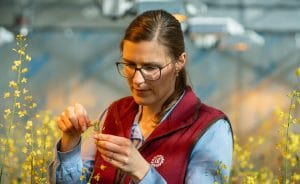
Coretta Kloeppel – OSR Hybrid Breeder
Sclerotinia sprays can coincide when on-farm activity is high and there’s greater pressure on sprayer hours. This makes it difficult to hit those optimum timings.
Sclerotinia is the reason given for almost 30% of total fungicide use in the crop. Against this background, the weather has become less predictable.
In recognition of this increasing threat, a new breeding tool has been identified by Limagrain to help combat the disease. Known as Sclero-flex, this exciting quantitative tolerance to Sclerotinia completes the Sclerotinia control triangle, joining cultural methods and fungicidal chemistry.
Limagrain OSR varieties with the new technology, have shown an average reduction in Sclerotinia incidence of 57%, and a reduction in severity of 44%.
How does Sclero-flex work?
It’s based on tolerance rather than resistance. Sclero-flex is the collective result of many smaller genes which all demonstrate tolerance. This ensures a variety will be durable and sustainable and less likely to break down in the future.
The focus on developing new traits beyond existing scope has been coined as Limagrain’s seventh generation of hybrids – bringing varieties to the market which offer a stacked portfolio for stem health, alongside the standard pod shatter, TuYV and RLM7 resistance traits, which growers have come to expect.
LG Armada is the first seventh generation hybrid to be released, boasting the new Sclero-flex technology. It’s also the highest yielding OSR variety on the AHDB Recommended List.
Integrated Pest Management Foundations
Plant breeding remains the foundation of integrated pest management (IPM).
LG champions a ‘control triangle’ where effective disease management lies in a careful balance between cultural practices, responsible fungicide use, and refined plant genetics. This includes when combatting Sclerotinia.
Cultural control practices rely on widening the cropping rotation – so, only growing OSR once every five years, whilst being mindful of where other Sclerotinia hosts fit into the rotation. Effective weed management is also important.
As for responsible fungicide use, action starts by using relevant Sclerotinia alert tools such as that hosted by the AHDB. It’s then a case of understanding the crop’s growth cycle and not using fungicides curatively, due to them having no activity once infection has taken hold.
Breeders Perspective Q&A
Maeve O’Rourke – Junior OSR Breeder
Q. What diseases do you see as being the biggest threat to UK OSR crops in the coming seasons?
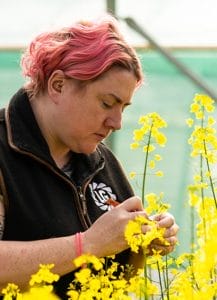
Maeve O’Rourke – Junior OSR Breeder
A. I think it’s still going to be cabbage stem flea beetle that will be our biggest challenge rather than disease.
LG has a huge selection of different varieties with robust resistance against common UK diseases, with dozens of strong varieties in the immediate pipeline, and international research behind upcoming challenges. However, fighting CSFB is a unique and hard challenge for breeders and farmers alike.
Q. How important is the UK to the European breeding programme?
A. The UK is extremely important.
Almost every parent line in the last two decades has begun at our head office in Rothwell, Lincolnshire and our trials network is so varied (from Aberdeen to Dorset and everywhere in between) that we have a great chance of spotting any future issues for disease and any stand-out varieties, not just for the UK but all of Europe.

Q. As a breeder, what is your focus for the future?
A. Focusing on different sources of resistance.
As breeders, we know we have a limited lifespan for all resistances because diseases are constantly evolving, and the changing long-term climate conditions will affect where in the UK these diseases start to occur. We are always looking to find new and novel types of resistance, even if they aren’t useful in 2024, they might be crucial in 2034.
The benefits of oilseeds in your rotationWith the most recent AHDB early bird survey estimating that the UK winter oilseed rape area has declined by 16% for harvest 2024, partially due to the challenges around establishment, it is easy to overlook the benefits that OSR can bring into an arable rotation.
Whilst of course it is important that crops are economically viable, the bigger picture in terms of what added value OSR has to growers, should not be taken for granted. So, whilst growers may begin to question the place of OSR in the rotation, it is worth considering the following benefits below:
- OSR offers a great opportunity to maximise workloads on farm. In terms of the drilling, it is outside that of the main cereal drilling window and with TuYV resistance in the LG portfolio, early drilling can be achieved without having to worry about virus pressures from aphids. With respect to harvest and input timings, it is typically not aligned with cereal crops, meaning that in difficult seasons, workload on time sensitive crops such as cereal fungicide timings, are reduced.Weed control is an important factor to consider with any break crop but following 2 years of difficult grass weed control in cereals, products such as Astrokerb (propyzamide & aminopyralid) offer an opportunity to get on top of difficult to control grass weeds, such as bromes and blackgrass. Where charlock and other brassica weeds are an issue, Clearfield® tolerant varieties offer a solution.
-
OSR is one of the only monoculture arable crops in which ‘companion cropping’ is being carried out on a relatively wide scale. With some growers looking towards Buckwheat or berseem clovers to establish alongside OSR, under new SFI payments, this can be worth £55 a hectare.
-
OSR in the rotation brings a different rooting structure, with the large tap root produced helping to break ‘pans’ and improve soil structure, as well as nutrient availability when sown following wheat crops. A 2015 German study (Weiser et al., 2017) showed that wheats following OSR yielded on average 5% higher than those following a cereal, such as barley. These are costs that are often overlooked when analysing the value of OSR on farm.
-
Whilst OSR can be relatively input heavy, if sown before the end of the year, there has been a lot of research carried out into how best to reduce inputs in the spring; AHDB project PR447 investigated the effectiveness of managing and tailoring OSR nitrogen inputs based on the canopy size. Research forms the backbone of technologies, such as the Yara N sensors, and has proven effective in reducing spring nitrogen costs for growers whilst maximising yields.
For more information on utilising nitrogen in OSR, please follow: Oilseeds Canopy Management – LG Seeds
Limagrain varieties top the 2024/25 AHDB Recommended ListPlant breeder Limagrain’s winter wheat LG Beowulf and 2-row winter barley LG Caravelle, are the highest yielding varieties to join the 2024/25 AHDB Recommended List.
LG Armada also takes lead position as the highest yielding oilseed rape variety on the Recommended List for the UK, whilst LG Adeline takes pole position for oilseed rape in the North.
In addition, high yielding maize variety Saxon tops the 2024 BSPB Forage Maize Descriptive List for ME yield (‘000s MJ/ha).
This means that LG now offer the highest yielding varieties in; winter wheat, 2 row winter barley, OSR and maize*.

“This is an exceptional achievement for any breeder,” explains Ron Granger, Limagrain’s arable technical manager.
“Last year saw our winter wheat and winter barley varieties take pole positions across the RL. We have built on this success for a second year running, producing higher yielding varieties, backed up with desirable agronomic characteristics, securing high yield performance on farm. What’s more, these varieties have proven to be robust and consistent performers across seasons and regions.”
Highest yielding winter wheat
Group 4 hard wheat LG Beowulf yields 106% across the UK and shows the same consistency of performance across all regions: east (106%), west (106%) and the north (107%) – an outstanding achievement for any variety.
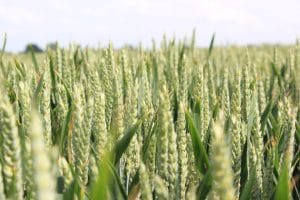 LG Beowulf has produced these exceptionally high yields consistently in National List and RL trials over regions and seasons, in both the unusually dry summer of 2022 as well as the exceptionally wet summer of 2023. Alongside these yields, it offers a good grain quality, with a spec weight of 78.3 kg/hl.
“LG Beowulf is much like LG Skyscraper; it performs wherever you grow it,” he says. “It can be drilled early or late – providing growers with a wide drilling window, as a first or second wheat, on light or heavy land, and there are very few varieties that meet this criterion,” he says.
LG Beowulf yields are backed up by a set of strong agronomic characteristics, offering an excellent disease resistance profile with ratings of 9 for yellow rust, 6.7 for septoria, as well as orange wheat blossom midge (OWBM) resistance.
It has very stiff straw and is rated 8 for standing in untreated and PGR treated trials, which strongly contributes to its reliability on farm.
“In summary, LG Beowulf is a very high yielding, robust and versatile variety that comes at a time when growers are looking more than ever to maximise output, in order to maintain profit in times of increasing costs,” says Mr Granger.
Highest yielding winter barley
LG Caravelle is the highest yielding two-row winter barley for the second year running, since joining the Recommended List in 2023.
“Offering UK yields of 105.6%, LG Caravelle continues to dispel any misconception that two row barleys are lower yielding than hybrids. The variety certainly competes with the best yielding hybrid barleys, especially in the east,” says Mr Granger. “LG Caravelle is competitive in a black-grass situation, another characteristic that is normally associated with hybrids.” 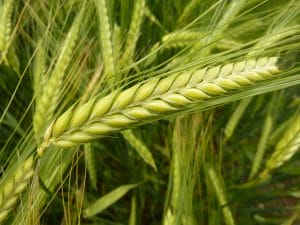
“LG Caravelle’s high yields are backed up by an excellent disease profile, reflected in its superb untreated performance, it is early maturing with stiff straw and good brackling resistance.”
“LG Caravelle also offers an exceptionally high specific weight for a winter barley, of 71.4 kg/hl combined with low screenings %,” he adds.
“Indeed, LG Caravelle possesses all of the key characteristics for a winter barley.”
LG Capitol is a two-row winter barley that joins the Recommended List this year and is a sister variety to LG Caravelle, offering similar yields and consistency of performance over seasons and regions. Its yields sit just 0.1% behind that of LG Caravelle, at 105.5%.
LG Capitol also combines a high specific weight and ripening, similar to KWS Tardis, with a solid disease resistance profile and good straw attributes.
Highest yielding OSR
The top three highest yielding oilseed rape varieties on the 2024/25 AHDB Recommended List all come from the Limagrain stable, offering exceptional consistency over regions and seasons.
LG Armada tops the UK and E/W List at 107%, LG Academic follows 1% behind at 106%, with LG Adeline taking pole position on the Northern List with an outstanding yield of 108.3%.
LG Armada is one of the next generation of versatile high yielding oilseed rape varieties, improving on the characteristic trait loaded-hybrids that growers have come to expect from Limagrain.
“‘Ambassador-like’ in its growth habit, LG Armada has strong autumn vigour, is robust, with good adaptability to all regions of the UK,” says Limagrain’s oilseeds product manager, Liam Wilkinson.
 “LG Armada is the first of our seventh generation of hybrids, bringing new maintainer and restorer lines to our OSR portfolio. This effectively means we are bringing varieties to market offering a stacked portfolio of much improved stem health attributes, alongside the standard pod shatter, TuYV and RLM7 resistance traits.”
“We know stem health is key to driving consistent oilseed rape yields across farms and with these seventh-generation hybrids, we are seeing bigger stems and better rooting which also results in higher oil content,” he says.
Highest yielding maize
Limagrain’s maize variety, Saxon was added to the BSPB 2023 Forage Maize Descriptive List and has made the top of the list for 2024 for its ME yield of 225 (‘000s MJ/ha). It has dry matter yields of 19.1 t/ha, making it ideal for all uses, including anaerobic digestion.

“On the Descriptive List, Saxon yields 105% of the average and additionally is quite an early variety with an FAO of 180,” says Tim Richmond, Limagrain’s product manager for maize.
“Saxon combines superb early vigour with good standing power, making it perfectly suited for all mainstream maize sites.”
“LGAN has long been the watchword for maize varieties that deliver what really counts – high yields of high-quality feeds that sustain excellent milk yields. Saxon is one of the latest examples of the benefit of breeding varieties that deliver in the clamp.”
To learn more about how any of these varieties could perform on your farm, click the links below;
LG Maize
LG Winter Wheat
LG Winter Barley
LG OSR
- * Data: 2024/25 AHDB RL / *2-row winter barley. 2024 BSPB NIAB Forage Maize Descriptive List – First choice varieties for favourable sites by ME yield of fresh plant at harvest (‘000s MJ/ha)
The oilseed rape drilling window is far wider than often thought. Although most crops are drilled in the first two weeks of August, it is possible to drill into September and still get a good crop established, says leading plant breeders Limagrain UK.
“With this year’s later harvest comes the reminder that there is no need to panic and rush to get the rape crop in before mid-August. Many farms now have drills that cover large areas quickly, so it is possible to get drilling done in a shorter time frame than may have been the case several years ago,” says Liam Wilkinson, Limagrain’s oilseed rape product manager.
“The last few years we have seen milder autumns so soils are warmer, and as long as there is sufficient moisture, we have seen crops do well on farm when drilled at this later period.”
“Most breeder and Recommended List trials are drilled later than they would ‘on-farm’ -which could be anytime from the August bank holiday – as the seed becomes available. What we see the following year in trials plots, are often slightly later drilled crops.”
Mr Wilkinsons refers to work done by Dr Sacha White at ADAS where later drilled crops tend to be at less risk from CSFB larvae as there is less time for the adults to lay their eggs in the autumn crop.
“So if you can get the crop up and away from the adults as quickly as possible, the crop has a fighting chance against the pest.”
“Drilling later can also help with black-grass control as it gives you enough time to create a stale seed bed.”
“We find ourselves now in a position where there are fewer active ingredients to control the most difficult weeds in the whole rotation, particularly this year with the loss of Carbetamide.”
He adds: “The pressure on these herbicides increases further considering the growing number of early drilled crops (if soil moisture allows), which can mean potentially bigger weeds under the canopy, as they’ll have more time to grow before being sprayed.”
“By drilling later, the smaller crop can also make better use of autumn nitrogen, as opposed to a plant established in mid-August that is much larger and has to spread the nitrogen out.”
“For those in Clubroot infected areas, delayed drilling also reduces the risk of infection.”
Neil Watson, Hutchinsons southern technical manager agrees by drilling oilseed rape later it is possible to avoid the peak migration of the adult CSFB, and there reduce subsequent impact from larvae.
“The French drill later than we do and still manage to get to 8 leaves before the cessation of autumn growth,” he says.
He also recognises however that there is risk involved with drilling later and that yield potential may be compromised should the plant not reach the critical 8 leaf stage – hence the value of picking a vigorous variety that will grow away quickly enough to be well established before the winter closes in- and this is critical.
“A backward crop coming into the spring has insufficient leaves and branching sites to fulfil yield potential. It also leaves little time for leaf area expansion before initiating floral development from the vegetative stage leaving a suboptimal canopy size to intercept light.”
He refers to data which suggests needing a 400-600 day degree (80dd per leaf) from emergence to get to this magical 8 leaf stage. “A vigorous crop emerging end of August through to mid-September has a good chance of achieving this, assuming sowing date being 2 weeks earlier roughly. Beyond this drilling window, however you are compromising yield.”
Mr Wilkinson adds for success when drilling in this later slot, it is key to choose a variety with rapid autumn dynamic growth and the traits needed to establish and grow away quickly into the autumn – so a vigorous, trait-loaded hybrid fits the situation well.
Liam Wilkinson
So what is vigour and how can it be measured?
“Industry wide there is much debate about the value of vigour in oilseed rape varieties. But with no standardised measurement for vigour, it’s very subjective,” says Liam Wilkinson.
“Vigour is not a point in time measurement, it is a reflection of the plant’s dynamic growth through the autumn and reflects the speed of growth and ability of the plant to accumulate biomass.”
“Understanding how a particular variety develops and being able to create vigour values related to these, means that as breeders we are very well informed to provide advice on where a variety should be drilled,” he says.
“The very high yielding hybrid LG Aviron is one of one of the most vigorous varieties, it establishes speedily in the autumn and puts on biomass very quickly, even under testing or challenging situations, and copes well with being drilled later. Ambassador also performs well in this drilling slot, as do our national listed candidates Armada and Academic.”
However he points out, if the decision to drill later or circumstances push into a later drilling than normal, it is key to commit to the crop fully to give it as much chance to succeed.
“There’s no point in putting the crop in the ground and then hanging back on nitrogen or weed control. The crop will need all the help it can get so it’s up and away as quickly as possible.”
Drilling oilseed rape in mid-September is nothing new for Northumberland grower, Richard Brewis of Woodhouse Farm, who has been drilling rape in September for the last twenty years and does not believe this impacts yields.
“OSR is an integral part of our rotation, and we would normally have around 60ha’s in the ground. We had always done what everyone else did and drilled oilseed rape after winter barley, so mid-August.”
“However, our heavy wet soils didn’t suit winter barley, so about twenty years ago, we made the decision drop the barley and drill oilseed rape after wheat which would obviously mean drilling later, and we have never looked back,” he says.
“Now we aim to start drilling the rape by the 6/7th September and just keep going until it is all in.”
He points out this is of course weather dependent, and he must work around that. “But even when a crop was drilled as late as the 20th September it was still decent, although this is slightly later than we would choose to go, but it does show that yield is affected by other factors other than just drilling date.”
Growing hybrids is essential for our approach, he says. “We have grown Limagrain’s hybrid Aurelia for the last three years and have been very pleased with that, it copes well with this drilling slot, producing an even crop and very pleasing yields. Last year we also trialled some LG Wagner and plan to have a mix of each variety in the ground this year.
Rape at Woodhouse Farm is established using a Simba subsoiler followed with a power harrow drill and Cambridge roll, if weather conditions allow.
“We aim for a rosette pan structure of about 7-8 leaves rather than height, going into the winter, although we have had fewer leaves and still managed to keep the crop.”
Generally CSFB is not an issue, and Mr Brewis puts this down to the later drilling window. “Last year’s early harvest meant that we drilled our rape slightly earlier than normal, in the third week of August and lo and behold, we found patches of damage that we had not seen before.”
He believes there is a zone when adults CSFB inflight is reducing in his area – and this is the second and third weeks of September and by catching this, risk is much reduced for adult infection which then relates to very little spring larval damage.
“We do get some winter rape weevil, and treat this, so perhaps that also has an effect on the CSFB,” he suggests.
“Our main challenge is keeping pigeons off the crop, particularly as the crop is smaller, for which we use a range of methods from gas guns and visual deterrents to calcium chloride to make the crop more bitter. We must also take great care with slugs.”
However, some damage is inevitable, but Mr Brewis does not give up on poorer or damaged areas, and whilst they may never be as good as the rest of the crop, he says they will reach about 75% of the full potential.
He recognises there are pressure points in crop management when choosing to drill in September, and that it is not suitable for everyone. “As we don’t have issues with black-grass, we can start drilling wheat in the second week of September, so that can clash with drilling rape. We also have less time to get the wheat straw off.”
“Yes, there are risks to our approach – we only get one shot at getting the crop into the ground but so far there has been only one year back in 2012 when it rained continuously after harvest when we didn’t get the crop that we wanted.”
Thriving in Ireland – How OSR has found its place in the Irish rotationOSR hasn’t always been the break crop of choice in Ireland, but it’s gained popularity as a replacement for sugar beet since 2006, says farmer John Dunne and Goldcrop, arable trials & agronomy manager.
“Growers quickly realised how good a break crop it is and how both wheat and barley got a kick when grown after it, the kick in spring barley being seen for a few years after OSR.
“The planted area grew until 2012, when we had a bad harvest, and then faltered after a few varieties let growers down.”
But the trade continued to push the crop and Harvest 21 saw 10,000ha harvested. “This grew to 14,000ha for Harvest 22 and is expected to be 19,000ha this year,” he explains.
One reason for the increasing area has been down to better yields, says John.
“We’ve seen a 30% increase in yields over the past six years. Whereas growers would previously have achieved 3.95t/ha to 4.45t/ha, they’re now regularly getting 4.94t/ha to 5.43t/ha – so it’s a big increase.”
But getting the crop sown in time can be a challenge, he says. “Planting OSR behind winter barley is fine, but trying to get it in after winter wheat or spring barley can be tricky.
“In 2006, growers started out with conventional varieties but they’ve moved towards hybrids over time. We have to be careful that varieties aren’t too vigorous, but we’d rather be looking at the crop rather than looking for it.”
Having traits such as TuYV resistance in varieties is really important to Irish farmers because the climate is quite mild, according to John. “When we get a frost, it’s a notable topic of conversation here. And because it’s so mild, we’ve had issues with barley yellow dwarf virus, and this made me wonder if TuYV was also nipping at OSR yields.”
Working with breeders Limagrain UK who were the first to introduce the trait, Goldcrop took samples of varieties without TuYV resistance and found the virus to be consistently showing up. “Once you get your eye in for identifying the virus symptoms, you’ll see a reddening of leaves at the edges of the field and along tramlines and the disease can take up to a third of the yield.
“Last year we saw headline varieties without resistance falter in our official trials, whereas resistant varieties took this risk out of the equation.”
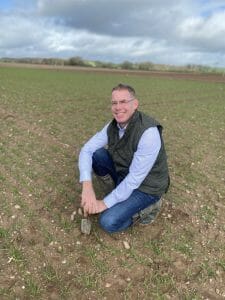
John Dunne
According to John, Irish growers have also had more trouble with light leaf spot than with phoma and so really value highly resistant varieties.
“LLS has always been the tougher beast to my mind and in some years the circumstances play into it with higher pressures, especially when there are nearby OSR stubbles. As the disease cycles so frequently and repeatedly, it can be hard to control and is the most damaging disease we have, so having genetic resistance is a huge help.”
He also feels that pod shatter resistance has to be standard in all varieties. “Our climate is tricky, so to have something that won’t shed is a big safety net. I can’t really believe that varieties still come to market without it.”
Irish farmers have become very fond of growing OSR, adds John. “It’s an essential part of the rotation for many, so having stacked traits to secure its future place here is important.”
Liam Wilkinson, product manager for OSR at Limagrain feels that the Irish OSR area has increased because of access to varieties with stacked traits. “If a disease is going to be found in any crop, the Irish will normally get it, but having new genetics in place has really helped secure OSR’s place in Ireland.”
OSR: East Vs WestMeeting the challenges of growing oilseed rape has brought the value of both genetics and crop management practices into the limelight more than ever before. We look at how two growers on opposite sides of the country use these tools to tackle their challenges.
Despite the challenges of flea beetle, slugs and pigeons, oilseed rape is a good break crop for Emma Fletcher who farms 700 ha with her brother on the Leicestershire/Warwickshire border.
“It fits well in the rotation as a profitable break crop, going in after winter barley and before wheat”
The oilseed rape at Burton Fields Farming Ltd is was established via direct drilling with a 9 meter Dale direct drill. “The aim is to drill the crop in August, but the most important thing is to drill into moisture.”
“We have a tick list for the characteristics and traits a variety has to offer,” says Ms Fletcher. “Fundamentally we need it to be consistent, we don’t want a volatile crop that yields well one year and then lets us down the next.”
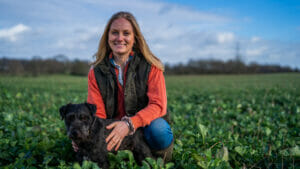
Emma Fletcher
“Aside from robust agronomics, we also need it to have really good autumn vigour, good disease resistance and we also look for a variety that offers pod shatter.”
“Aurelia ticks all of the boxes, and we were pleased with it in our first year of growing it in 2021 & 2022. We look for the rape to yield 4+t/ha.
“This year’s crop was drilled slightly later than we would have liked which meant it went in at the beginning of September rather than the last week of August, as we held off for a bit more moisture,” she explains.
“We had a few issues with CSFB in the spring. Despite drilling at low seed rates some areas have come through thicker than we would have liked, which we put down to volunteers, and the beetle seem to favour this thicker crop.”
Emma explains that having split hopper on the drill allows for companion crops to be sown at the same time. “Last year we established the OSR with buckwheat. Every other coulter was buckwheat or oilseed rape. We were really pleased with the results and the buckwheat then died off with the first frost.”
“However, this year the OSR has been drilled with a mix of buckwheat and berseem clover, so we shall see if that has made a difference.”
Nutrition at Burton Fields Farm is on a responsive approach with tissue tests being taken season-long and we prefer to respond to these results rather than simply going on with a blanket approach, points out Miss Fletcher.
“This season we have kept it fairly simple with the disease control and tried to utilise nutrition as best possible. In the autumn sewage sludge is put into the seedbed to enhance autumn vigour.”
“Slugs are often a problem in the autumn so traps are used to treat when the threshold is met. PGRs at this time are also very important; sheep have been considered instead of this but there are downsides to using them so we are holding back for now.”
Over in the north west of the country, Richard Reeves of Tattendale Farm has been growing OSR for 40 years.
“We are a fairly traditional arable rotation on a tenancy agreement with Tatton Park Estates, of which OSR is an integral part. We look for yields on average of 4.5t/ha and prefer varieties that we can rely on for a consistent yield.”
“On the advice of our rep, James Hood from United Oilseeds , we opted for Aurelia a couple of years ago and will stick with it again this coming season as it has delivered what we need. It comes though well in the autumn, its vigour is stand out and we haven’t had any issues with disease.”
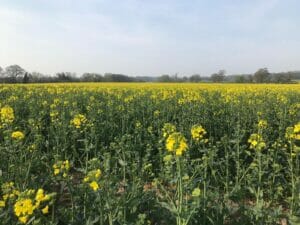
Aurelia
“We tend to keep things fairly simple as this has always worked for us. The OSR follows barley or early wheat,” says Mr Reeves.
“Waiting for moisture to drill in the autumn is not so much of an issue where we are so we aim to drill in the last two weeks of August, any earlier and we find the crop gets too proud.”
“As we are not in a predominantly arable area, CSFB is not so much of an issue, pigeons are our challenge.”
Our soils take the plough well, so we plough and combo drill the rape straight after, which traps the moisture with the seed.”
Seed rates are around 3kgs/ha. We apply about 140-150kg/ha Nitrogen across two applications of granular product and then top up with liquid. This year we are looking at going on twice with a foliar application as we have found that this increases the oil content. We also apply Sulphur in an N:S mix.
“A single PGR is used in the autumn, and a fairly standard fungicide programme as we have so few disease issues with the Aurelia.“
“At the end of the day farmers want yields as this is what they get paid for, so growing a variety that the best chance of reaching its yield potential is key,” says Liam Wilkinson of breeders Limagrain UK.
“Growers can put in all the leg work, but are still being thwarted by elements beyond their control, which is where plant breeding steps in to protect yield by breeding stacked traits into varieties,”
Beckii Gibbs, seed manager with United Oilseeds, believes that Aurelia’s offering of fully loaded traits, excellent disease resistance, proven performance and good vigour makes it a firm favourite with farmers.
“Aurelia has been the number 1 variety on farm for a number of years now. The fact that it holds a 30% share of the UK certified hybrid seed market speaks volumes. From our farmers’ perspective, it’s a reliable and consistent variety and is likely to remain a popular choice particularly with the good yields Aurelia achieves year on year.”
LG GatePost Newsletter – June 2023The June 2023 issue of LG GatePost is now available to download.
This edition features articles about our newest wheat addition to the 2023-24 AHDB Recommended List, LG Redwald, as well as LG Caravelle, our excellent 2-row winter feed barley.
You can read about and view our Live Panel event which was a round table discussion on Varieties, Soils and Policy with industry experts.
We discuss the new Sustainable Farming Incentives and the new ‘actions’ involved, with an article about why to consider establishing a legume fallow.
There is also information about our upcoming Demo Days and a link to register.

LG GatePost – June 2023
On 21st March, LG’s Ron Granger and Tom Barker were joined by industry experts, Tim Parton (Farm Manager, Staffordshire) and Susan Twining (CLA Advisor) for a live Q&A round table discussion on Varieties, Soils & Policy.
Key Questions raised…
1. Do you still think yield is king? Are breeders, such as Limagrain, breeding varieties specifically for a regen system?
RON GRANGER: “Yield will always be important because farmers have to make an income. But the key issue going forward is around yield security, especially with our changing climate. For example, the capability of a plant to withstand spring droughts is now becoming an increasingly important factor.”
“Robust disease resistance also has a key part to play – we are currently seeing the fruition of stacking genes in both Septoria and rust resistances. Resistance to pests is also key.”
“Most growers have been adopting some form of regenerative practise for the last 5 years, so we are in a position where growers are able to tell us, as breeders, what they want from varieties to suit a regen system for the future.”
“Generally, varieties for regen have been chosen from the present AHDB RL – which is not a problem. However, as breeders, we can look at the germplasm in our programme and identify varieties that will better suit a direct drilling, wide-row situation.”
2. What type or size of crop rotation is likely to be needed to sustain regenerative farming? Do you use companion cropping?
TIM PARTON: “I try to extend my rotation as much as possible and split spring to winter cropping by 50:50, to allow for as much cover cropping as possible. It’s the cover cropping that is key to the system and this brings in the variety of plants above and roots below the soil.”
“Companion cropping is important, particularly in OSR, where I grow white, berseem and crimson clover in the crop, to take it through. Nature doesn’t monocrop and plant diversity is key.”
3. Should regen ag be certified?
SUSAN TWINING: “At the CLA , we have looked closely at this, and decided that it is not something that we would advocate for at this stage, if ever. Regen farming is about a set of principles which allows for flexibility, depending on the farming situation etc. In certifying this, it would become a tick box exercise – which makes it a completely different concept.”
“ELMS offer a good suite of options to reward farmers for good practise. We already have the Soils SFI, the IPM, and Nutrient Management SFI’s coming out later this year.”
You can watch the full version HERE
LG Denmark Study TourIn the spring, Limagrain took a group of UK growers to Denmark, to look at regenerative and conservation agricultural practices.
After two full days of visiting farms, agronomy companies and a plant breeder, there was some very interesting and surprising feedback:
GEORGE ATKINSON, LINCOLNSHIRE: “It’s been fascinating to see all the different farming systems, and also learn about Danish policies that contradict themselves. I was expecting to come and see the future, but some of the growers are where we were 15 to 20 years ago.”
AL BROOKS, HAMPSHIRE: “I came here with a preconceived idea that we were going to learn something from the Danes in terms of their view towards conservation and regenerative agriculture. I was stunned by the amount of red tape they are subjected to. They are constricted in the industry and don’t have the voice with government.”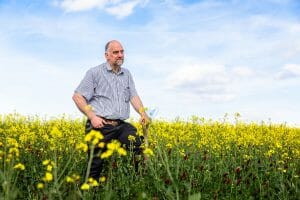
TIM PARTON, STAFFORDSHIRE: “I think the government advisors in Denmark need to take a real hard look at what they are trying to achieve, and what their directives are. They are so restrictive; they are missing out on the big benefits they could be getting from regenerative and conservation agriculture. They need to help their farmers more, rather than restrict them.”
“Discovering that UK farming practice with regards to conservation agriculture or regen is ahead of Denmark, was a surprise to many on the trip, and a real positive take home message for the UK.
It’s very noticeable that plant breeding is paramount to the future direction of agriculture, as practices move towards lower input and better disease resistances. Limagrain look forward to sharing what we do with growers from the UK and abroad,” says Tom Barker of Limagrain, who hosted the trip.
Download the latest edition of LG GatePost here
Candidate Corner – OilseedsOver the last 4 years, we have seen the LG Oilseed Rape portfolio dominate the Recommended List, and the consistency of on-farm performance for many growers has been witnessed, with Aurelia and Ambassador becoming dependable staple varieties.
This strength in depth of the portfolio continues to progress, as we have four Candidate varieties available this autumn: LG Armada, LG Academic, LG Adeline and LG Aphrodite.
In a time when it would appear that the Recommended List is looking to be condensed, it is really encouraging to see the depth in our portfolio continues to produce varieties, with LG getting 4 Candidate varieties based on their NL performance; this is more than any other breeder.
The four varieties are all fully loaded hybrids, meaning that they encompass LG’s trait stacking approach to help mitigate risk for growers, by having the combination of TuYV resistance and pod-shatter, along with solid disease resistances.
LG Armada, LG Adeline and LG Academic all possess the new ‘Stem Health’ tag. This means that from our breeding trials across the UK and Europe, the three varieties have shown consistently strong levels or resistance to phoma stem canker, cylindrosporium and verticillium wilt.
Cylindrosporium is the stem-based symptoms of light leaf spot which, if bad, can cause early senescence, reduced oils and yield. As a result of improved stem health, these new hybrids have increased oil contents as well as more resilience towards the end of the growing season, due to the better translocation of water and nutrients to the pods.
Breeders Q&A
Coretta Kloeppel – OSR Hybrid Breeder

What is the main aim of the LG breeding programme?
“The main aim of the LG breeding programme is to secure and achieve high yields for farmers. Through stacking traits and maximising disease resistances, we look to reduce as much risk for growers as possible.”
How important is the UK to the wider European breeding team?
“The UK is integral to the European programme, it is where all initial crosses take place, every European variety begins its life in Lincolnshire. It is also very important for disease screening, the LLS screening we carry out in Scotland along with the Verticillium trials in Suffolk, all help provide data for the UK, but also feed into the wider European data sets. This helps us to build a full picture and ensure disease resistances are robust.”
What are the main threats to UK OSR growers and how are we looking to help mitigate against them?
“Cabbage Flea beetle is the obvious one. We have already started by prioritising spring and autumn vigour when selecting varieties, but we are also looking for ideotypes which may be more resilient, as well as being involved in numerous research projects. There is no silver bullet, but marginal gains can certainly help. We are also looking at club root varieties as well as looking more into the importance of Verticillium.”
What is the most important trait in OSR?
“There is no one important trait, from what we have seen the combination is the most important. So TuYV is crucial for all round plant health and maximising yield, whereas Pod shatter ensures that as much of what is produced by the plant ends up in the shed to be sold.”