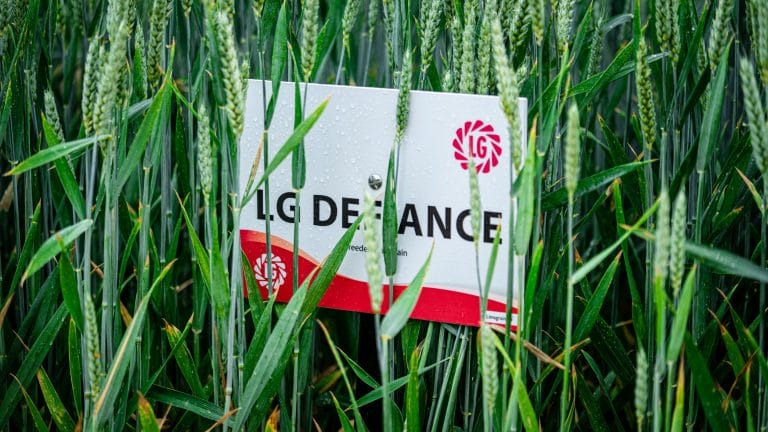
The light, sandy soils of north Norfolk may not be prime wheat-growing land, but farmer Chris Blaxell believes LG Skyscraper is well suited to such conditions, having performed strongly last season.
Farming 280 ha (700 acres) with his wife on two main farms near Sheringham and Cromer, Mr Blaxell is growing the soft Group 4 variety for the second year running, alongside a range of combinable crops and a small 10 ha area of sugar beet.
“Previously, we used to grow the soft wheat variety Bennington, but decided to try LG Skyscraper as a first wheat at the farm near Sheringham, which is predominantly on a sandy loam soil. The variety seems well suited to the lighter land, and did very well for us last year, when we got 160 tonnes from 34 acres.”
That equates to a yield of 11.6 t/ha (4.7 t/acre), which was a good result given the soil type and challenging establishment conditions during autumn 2020, Mr Blaxell says. “Admittedly, it wasn’t a dry growing season, which certainly helped, but it still yielded well for that land, with good specific weight too.”
Last year’s LG Skyscraper followed spring beans, with land cultivated using a Cousins Patriot combination cultivator, before drilling at the end of October at 185 kg/ha.
A similar approach has been taken this year, with LG Skyscraper following spring beans and oilseed rape. At the time of writing, crops are looking well tillered with promising yield potential, although rain is needed to help fulfil this, Mr Blaxell says. “LG Skyscraper is a good, early developer and has tillered nicely, so looks good so far.
“We drill quite late, which suits LG Skyscraper, as it’s a variety that you wouldn’t want to drill too early. Drilling late also means we avoid getting too much early disease pressure. However, coastal areas don’t experience the same number of frosts as further inland, so we do still follow a fairly comprehensive, prophylactic fungicide strategy to control Septoria and yellow rust, which are the main disease risks in this area.”
Dry conditions through much of April have helped keep disease pressure relatively low so far, with fungicides tailored accordingly, he notes.
This year’s LG Skyscraper received 0.5 L/ha Djembe (bromuconazole + tebuconazole) with 0.7 L/ha Adjust (chlormequat) at T0, followed by 0.5 L/ha Velogy (benzovindiflupyr), plus 0.5 L/ha Pecari (prothioconazole) and 1 L/ha Adjust at T1. The T2 was based on Diadem XE (fluxapyroxad + Mefentrifluconazole), Lybro 200 (pyraclostrobin) and folpet. Any T3 requirements will depend on disease pressure nearer the time, he says.
“LG Skyscraper has good agronomic characteristics, including a reasonable disease profile. It looks promising at the moment, so hopefully it will yield well again this harvest.”
Chris Blaxwell
LG Diablo is a solid spring option
Lighter Norfolk soils are classic spring barley ground, and Mr Blaxell has also found LG Diablo to be an ideal choice for the farm, having grown it for the past four years.
“It yields well, has good agronomics and is an easy variety to sell as there’s always a ready market for it locally,” he says.
Some 25 ha (60 acres) is in the ground this spring, drilled in the first week of March. “Generally, LG Diablo emerges and gets away well, which is exactly what you want from a spring barley.”
Mr Blaxell tries to give crops every chance of doing this by waiting for soils to warm up sufficiently before drilling in spring, and applying early phosphate, nitrogen and sulphur fertiliser to sustain strong root and leaf development.
He typically aims for average yields of 9.5-10 t/ha (4 t/acre) from spring barley, and says LG Diablo has achieved that, despite some challenging conditions for spring crops in the past couple of seasons.
All of his LG Diablo is sold for a malting premium, and has consistently met the end user requirements for grain nitrogen below 1.85%, with a bonus paid on any samples coming in at less than 1.65%.
He also notes that grain skinning, which can cause handling and processing problems for maltsters, brewers and distillers, has never been an issue with LG Diablo, whereas it has been a problem in some other varieties grown in the past.
“Overall, it’s a good, easy variety to grow,” he concludes.
The Value of Vigour
How important is vigour when selecting an oilseed rape variety and how is it measured?
Liam Wilkinson, technical arable officer with breeders Limagrain UK discusses the approach that Limagrain takes to measure vigour and how this value can be used by growers to optimize establishment in their oilseed rape crops. Industry wide there is much debate about the value of vigour in oilseed rape varieties – reflecting the challenges the crop faces from autumn drought, weeds, adult Cabbage Stem Flea Beetle (CSFB) as well the threat from spring CSFB larvae.
If a plant can get up and out of the ground and grow away quickly in the autumn producing biomass, it has a much better chance of survival. It’s a similar story in the spring – when faced with high CSFB larval burdens, the plant needs to ‘wake-up’ and grow away as quickly as possible. A well established plant with a good sized canopy that’s not too large, and has good roots will over-winter better. A well established closed canopy can also have a substantial effect on weed competition, and should not be underestimated. A long tap root is essential for a plant to access the resources to get going again in the spring.
But how does a grower select a “vigorous” variety when there is no standardised measurement for either autumn or spring vigour? UK growers now have a choice of an excellent range of both hybrid and conventional varieties that offer ‘autumn and spring vigour’ which help to mitigate many of these establishment challenges, continues Mr Wilkinson. But with no standardised measurement for vigour, it’s a claim that anyone can make based on a very subjective basis. Pressure from breeders and growers is pushing the AHDB to recognise the urgent need to address this issue.
Whilst the AHDB carries out early vigour scores which are recorded on the one year harvest results, it is not a value that is carried over onto the Recommended List (RL). The basis of this scoring is on a sliding scale of 1-9, where 1 is a very weak variety and 9 representing the most vigorous variety on a field by field basis. Clearly this is open to a large amount of interpretation and variation between varieties, fields and locations!
In the absence of official vigour scores on the RL, there are various methodologies that have been adopted to measure vigour across the industry. Remember however, no-one knows a variety as well as the breeder. We pull varieties apart and really understand the genetics behind the growth habits of particular varieties in the autumn and spring- what we call the growth kinetics of the plant- which are genetically set.
Every variety is different; some varieties can be very fast to establish but may slow down later in the autumn whereas others take a bit longer to establish but once their roots are down, they keeping growing later into the autumn, and all of this relates to the ‘vigour of the crop. Limagrain has invested much time and resource into generating ‘absolute vigour scores’ that can be understood and used by growers.
The key starting point is to recognise that vigour is not a point in time measurement, it is a reflection of the plant’s dynamic growth through the autumn and reflects the speed of growth and ability of the plant to accumulate biomass.
This is based on the speed of growth, or the rate of a plants ability to build biomass over a period of time – so the rate of change of Green Area Index (GAI) over time. There are three key stages of growth for an oilseed rape plant.
Phase one: is the early vigour phase, the time taken between sowing and emergence, when the cotyledons are first visible
Phase two: when the plant develops between 4-7 leaves.
Final phase: when the plant reaches 7-20 true leaves after which it starts to shut down for winter. By measuring biomass at each of these stages it provides set of standardised values which we term autumn dynamic growth, that give a much more accurate set of values allowing for varieties to be easily compared.
Spring vigour is tied into daylight changes and how early the plant flowers, or comes out of dormancy, so is more straight forward to measure. Understanding how a particular variety develops at these three stages, and being able to create vigour values related to these, means that as breeders we are very well informed to provide advice on where a variety should be drilled. When plotted on a graph, it is easy to see the differences in autumn dynamic growth between varieties. (See graph below)
The very high yielding hybrid LG Aviron is clearly one of one of the most vigorous varieties, it establishes speedily in the autumn and puts on biomass very quickly, even under testing or challenging situations. Due to LG Aviron’s very vigorous growth right through to winter, it is best to drill it slightly later to prevent it developing too large a canopy, which in itself can cause crop management issues.
Varieties such as LG Antigua and Aurelia can be drilled earlier as they establish and put on biomass well in the autumn which means that they get up and away quickly, but then they tend to sit in the winter, so their canopies do not get too big. Location can influence how vigour rankings are used, for example further north it might be more useful to choose a variety that gets going in the autumn, then sits and waits a bit longer in the spring for conditions to become more favourable, such as once the threat from frosts has passed. Limagrain has put together an overview of all its key oilseed rape varieties with autumn and spring vigour value based on this approach.
Best OSR Varieties for Yield
LG’s Oilseed Rape varieties dominate for the second year running on 2021-22 AHDB Recommended List
All of the top six highest yielding oilseed rape varieties on this year’s Recommended List (RL) are bred by Limagrain, reinforcing the success of its ‘trait loading’ approach, in providing UK growers with varieties that are robust and deliver consistently across seasons and regions.
Two exciting new varieties join these top six on the RL for the first time: LG Aviron and LG Antigua. Hybrid LG Aviron gains UK wide recommendation with an extremely high gross output of 108% over control. It shares this top position with stable mate Ambassador, which has held onto its very high yields for the second season in a row. “Trait loading of our varieties means that LG Aviron offers the N-Flex trait unique to Limagrain’s oilseed rape varieties, as well as resistance to pod shatter, TuYV and RLM 7,” says Will Charlton, Limagrain’s oilseed rape product manager.
“The N-Flex trait is a relatively new trait launched in our hybrids last year, offering a step forward in the way that oilseed rape varieties minimise yield losses in sub-optimal N conditions.” “Ambassador and LG Aviron; the
two highest yielding varieties on the RL, possess this trait and have demonstrated their robustness and resilience in what was a challenging season for oilseed rape. LG Aviron has proven itself to be a very vigorous hybrid, that can establish well in challenging seedbeds.”
Gaining recommendation for the east/west, with an extremely high gross output of 109% of control and 108% for the UK, LG Antigua is the second of Limagrain’s fully loaded hybrids to join the top six on the RL this autumn.
“LG Antigua offers a comprehensive genetic traits package: combining TuYV, pod shatter and RLM 7 resistance and good disease resistance.”
“The variety has excellent plant vigour characteristics in both the autumn and spring, and offers the earliest maturity available on the RL which is a valuable trait on farm,” points out Mr. Charlton.
All data from AHDB RL 2021/22. ( ) = limited data
The Limagrain Plant Breeding Hub at Croptec 2021
Croptec 2021 is a must-attend for anyone looking to make their farm business more efficient, productive, and ultimately more profitable
Already shaping up to be a great two days, the show is a must-attend for anyone looking to make their farm business more efficient, productive, and ultimately more profitable.
With a carefully curated roster of talks, from a diverse range of speakers, we’re offering a platform to industry professionals, whose experience lays at the forefront of innovation in British agriculture.
Wed 24th November, LG Plant Breeding Hub Speaker Programme
Join us on Wednesday 24th November at 10.20-10.55am to hear Limagrain UK’s Pulse Breeder, Will Pillinger talk about the latest developments in pulse breeding. He will explain how increasing pulse crop yields through plant breeding can potentially improve output and reduce risk on-farm.
At 12.00-12.25pm, Dr Emma Wallington of NIAB, will discuss what gene editing is and how this could be adopted in the UK.
Liam Wilkinson, Arable Technical Specialist at Limagrain UK concludes the Day 1 programme at 1.20-1.55pm with a presentation on trait focused oilseed breeding and how this forms the basis of IPM strategy when managing the crop.
Thurs 25th November, LG Plant Breeding Hub Speaker Programme
On Thursday 25th November, we open our Day 2 programme at 10.20-10.55am with Farmacy Agronomist Charles Wright, who will be sharing his first-hand experience of the impact of varietal resistance on agronomic decision-making in a farm environment.
At 12.00-12.25pm, we will benefit from a farmers’ perspective with Jonny Hodgson, who will talk about the importance of plant breeding in a regenerative agricultural system.
We end the speaker programme for the day at 1.20-1.55pm with Limagrain UK Cereals Pathologist, Rachel Goddard. Rachel will go into detail on breeding diverse disease resistance in wheat and discuss what wheat breeders can do to stay one step ahead of pathogen evolution.
We aim to showcase the latest innovations in UK plant breeding at the LG Plant Breeding Hub. We are also keen to talk with growers about the challenges currently facing the industry, from climate change to price pressures. Our experts will be on hand throughout the day with farm ready advice and a wealth of both practical knowledge and technical insight.
It’s been 2 long years since the last Croptec event, and if the free resources are not enough to tempt you, we have tea and coffee on LG stand, PLUS a scratch card giveaway with a host of great prizes.
Get your FREE tickets today
If you’ve not already registered for free tickets, please put the dates in your diary and click here to do it now. We look forward to seeing you on the LG Plant Breeding Hub stand.
Scratchcard competition
Moisture creates opportunity for late drilled oilseed rape
With soils still warm and moist from this year’s summer rainfall, there are still good opportunities for later drilled oilseed rape to establish well, says Liam Wilkinson, arable development officer for breeders Limagrain UK.
Difficulties in harvesting this year have meant many growers have been unable to clear land as early as they would have liked, and many may be concerned that they have missed out on drilling oilseed rape as a break crop.
Liam Wilkinson, arable development officer
However, Mr Wilkinson recommends growers refer to seedbed conditions rather than calendar dates, before making a final decision, noting that most breeder trials are drilled in September.
He says: “There are still good opportunities for late drilled crops – which often outperform some of the earlier drilled crops – in fact many later drilled crops have been winners in the YEN awards!
“Last year we saw crops of LG Antigua drilled mid September up in the Lincolnshire Wolds achieve yields of over 6t/ha so there is definitely high yield potential for crops drilled into September in the right conditions.”
“Choosing the correct variety for this drilling window is key to success, however.”
“If you are drilling in September, the focus should be on speed of autumn growth and vigour, so hybrids are a first choice because they are quick to get going and they accumulate biomass very quickly,” he says.
“Tried and tested varieties such as Ambassador and Aurelia have performed consistently in this slot both on farm and in trial for a number of years now, and the addition of LG Aviron and LG Antigua to our portfolio only strengthens our position in the later drilled slot.”
“Vigour is important for helping to get the crop established and putting roots down but the speed of development is key for reaching over wintering biomass as quickly as possible, you are looking for a variety to have canopy to be able to withstand potential pest problems as well as harsh winter conditions.”
With vigorous varieties, seed rates should target 25-30 plants/sq.m, which is normally around 50 seeds/m2, and Liam recommends that growers assess seedbed conditions and adjust seed rates accordingly to account for field losses, particularly if conditions deteriorate.
He goes on to say that varietal disease resistance to disease also plays a key role for later drilled crops, and growers should look for resistance to phoma, explaining that with the smaller, younger crops, phoma lesions cover a larger percentage of the leaf, so disease can have a more devastating effect.
“All of our hybrids that we bring to market fall into our fully-loaded category. We are looking to mitigate as much risk as possible for growers, and by combining TuYV and pod shatter resistance along with gene specific resistance to phoma we have managed to produce high yielding varieties which perform consistently over seasons”
“Their high yield potential can be seen again in this year’s AHDB results.”
OSR Shows remarkable powers of recovery
A poor start hid the true potential of oilseed rape conventional variety Aspire, which came back in time to pip other hybrid varieties for yield, reports Tom Jewers, of Woodhall Farm, Rattlesden, Suffolk.
Tom Jewers
“It yielded half a tonne more than any other variety on the farm and based on this we will be using Aspire to replace our previous mainstays of Cabernet and Campus.”
Growing oilseed rape is high risk as well as high reward, so we try to limit exposure as much as possible, says Tom.
While disease resistance is key, he points out that there are agronomic strategies that he believes can help the crop too. For example, in the battle against cabbage stem flea beetle (CSFB), he has found that oilseed rape plants should not drilled too close together, so he aims for 20 plants/m2 irrespective of the crop being hybrid or conventional.
“We try to drill as early as possible so the crop has a chance to get away before CSFB numbers build, and by creating more space the crop has a chance to grow thicker stems which are just that bit more resistant to the pest.”
Reflecting on his decision-making process last year, he notes that one of the important traits he was looking for was the resistance package, particularly turnip yellows virus (TuYV).
“A few years ago when Amalie, the first variety with TuYV resistance was introduced, we were interested, but sceptical, because official figures showed it to be behind on yield.
“However, when we trialled it on farm, it out-yielded everything else, showing us that it was likely that our yields had been held back by TuYV.”
For the past few years Tom has also been growing companion crops; he started on a small scale but now they are grown across the whole farm.
“These are typically composed of mixes of berseem clover, buckwheat, and as they are susceptible to frost, they are killed off over the winter having given the oilseed rape a good start.”Benefits from the companion crops have been general and sometimes inconsistent, and he reports that one year he saw fewer CSFB, another seemed to deter pigeons, and on a more consistent theme – they do not appear to have attracted more slugs.
Normally the oilseed rape is planted by direct drilling, but this year he has had to undertake some remedial work from wheelings in the previous barley crop.
“If you have an issue with your soil you have to go in to repair it. This means that some of the crop went into a loosened seedbed on July 27, although we were concerned that it may be more vulnerable to CSFB.
“At the moment it is markedly forward from mineralising the nitrogen (N) from the cultivated soils.
“Oilseed rape crops are a big risk, but the rewards can be equally as great, and there are no other break crops that we can grow on the farm that offer the same margins.
“Ultimately it is a case of trialling things to find out what works for you on your farm.”
Farm facts:
Total farmed area: 390ha
Home farm area: 265ha
Contract farm area: 125ha (of which 65ha has been taken on new this year)
Soil: Hanslope series medium clay soil
Seed rate: 40 seeds/m2
Oilseed rape still brings black gold
Very pleasing yield results have been achieved from all varieties of oilseed rape, both conventional and hybrids grown at H.H. Craske and Son, Michael Craske’s Hadleigh-based farm in Suffolk.
This year’s crop included two conventionals – Acacia, Aardvark and hybrid Aurelia. Mr Craske has always grown conventionals and was originally sceptical about growing oilseed rape hybrids, but last year 50% of his crop was the hybrid Aurelia which we found it was vigorous and performed very well despite difficult conditions.” He went on to say, “After drilling, it stood in water, then in the spring we had lots of frosts, which may have affected the biomass. However, the crop was saved by the damp weather in May and June.” His choice of variety is always careful and he assesses the different traits and resistances. Aurelia has a good resistance package that includes Turnip Yellows Virus (TuYV) and light leaf spot, pod shatter and Phoma stem canker. It also has ratings of 7 for stem stiffness and lodging resistance.
Conventional variety Aardvark has good resistance to light leaf spot and phoma stem canker.
As a grower with many years of experience of oilseed rape, Michael insists that choosing the right ground conditions is key to a good start, but nutrition also plays a key role.
He often plants rape behind spring barley or a second wheat which he prioritises for early harvest.
This year, plans are to drill it behind winter barley as well as spring barley.
He has also planted after winter wheat with chopped straw, but if the weather is damp he advises applying slug pellets ahead of drilling and double rolling to ensure good seed to soil contact.
“We have found that unlike wheat, spring barley does not leave any residual nitrogen (N) in the soil to get rape off to a good start, so we have learned to apply some nutrition in these situations.”
Fertiliser (40kg/N/ha) is applied as soon as possible in January, to help the crop get a running start.
“We apply a total of 200kg/N/ha over the growing season up until the middle of March.”
He also uses SOYL scans for variable rate potash and phosphate and applies Polysulphate.
Last year, because of the volatility of the oilseed rape market he did not order any seed, but bought it for next day drilling when conditions were right.
“It makes a difference when it is possible to work with suppliers that are able to operate on this basis.”
For his cultivation strategy, he uses a Heva 9-leg subsoiler on a crawler, and an Accura disc seeding mechanism. The coulters follow the leg of the subsoiler and the rest of the ground is not touched.
Michael finds he gets the best results with wide rows of 50cm , with a seed rate of around 2.5 – 3.3 kg/ha.
Having dedicated approximately a fifth of the farm’s total combinable area to rape last year, the initial plan is to do the same for the 2021-2022 season.
“Despite having grown oilseed rape on the farm since 1974,there is always something new to learn; but there’s no way of getting away from the fact that the crop remains something of a lottery.”
Farm facts:
Third-generation farm founded in 1951
Farm size: 700 ha, all farmed in-house
Area dedicated to oilseed rape 2020- 2021: 128 ha
Soil: Hanslope soil series, with variations of sandy clay loam
Rotation: First wheat, second wheat, spring barley, oilseed rape, first wheat, second wheat, legume (normally winter beans, but can be peas in more difficult years).
LG trials show value of robust genetics in protecting margin
Crop variety trials provide an excellent opportunity to look at how current leading and potential future varieties, both treated and untreated, perform in particular conditions that help growers shape future cropping choices.
With the top oilseed rape varieties on the 2021/22 AHDB Recommended List, and some of the highest yielding wheat and barley varieties, there is much interest in Limagrain UK’s breeding programme.
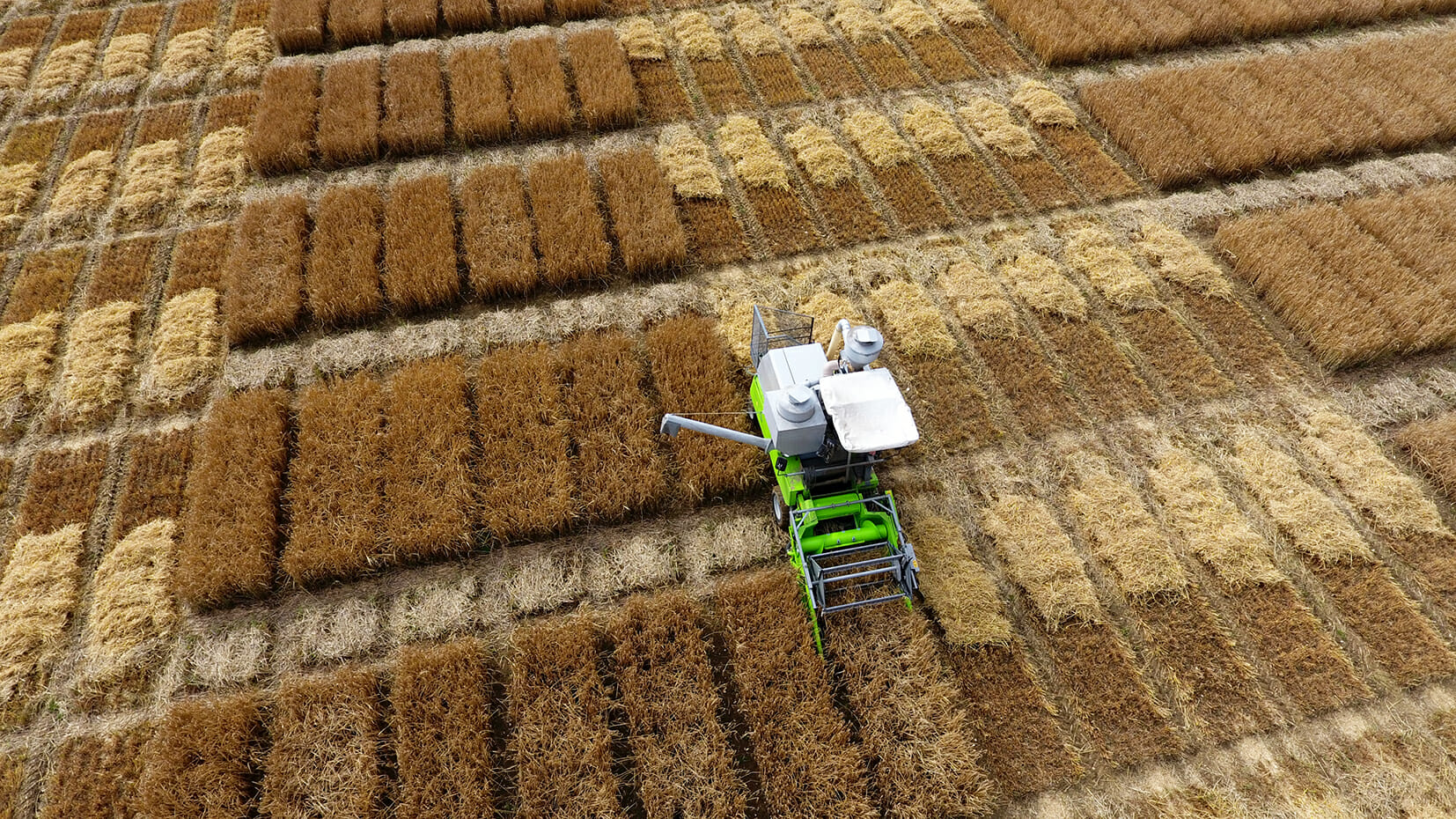
In response to this, last autumn Limagrain invested in a wide range of new demonstration variety trials sites, whilst also maintaining those that were already a well recognised feature of the farming landscape – one of which is located just opposite the Murrayshall Hotel, outside Perth hosted by S. Cameron courtesy of W. Glen & Son.
“We put the plots in hoping that by this summer we would once again be able to come together for what we believe is a really valuable exercise in helping growers make the best informed variety choices, and one that has not been possible for the last year,” said William Charlton, Limagrain UK arable marketing manager.
“We were delighted therefore in the interest from both growers and the seed trade to our open day at the end of July, where we had the opportunity to showcase our Northern variety portfolio and share the results of our work on how to get the best out of these varieties on-farm.”
OSR Portfolio
Key messages to come from Limagrain UK’s arable development officer, Liam Wilkinson, were Limagrain’s OSR genetics are the strongest and most robust that any breeder has seen for a long time.
“Our focus on using genetics to mitigate risk in the oilseed rape crop has been very successful and is fully reflected in the current RL for the North where LG varieties hold the top six positions.”
Within the breeding programme we have been able to focus on issues relevant more specifically to northern conditions and challenges; for example none of our varieties have less than a score of 6 for light leaf spot and our trait-loaded approach offers pod shatter, turnip yellows virus (TuYV) and RLM7 resistances.
These leading varieties have proven themselves consistently over seasons and continue to deliver the yields that growers have come to expect.
In summary: Aurelia is the top yielding variety for the north at 106% of control. Aurelia is a fully loaded hybrid combining genetic TuYV, pod shatter and RLM7 phoma resistance with the highest light leaf spot rating available on the Recommended List.
LG Aviron is Limagrain’s newest fully loaded hybrid to receive full UK recommendation and joins the RL as joint highest yielding variety at 105% of control. LG Aviron has shown its robustness and consistency throughout testing and is a very vigorous hybrid that can establish well in challenging seedbeds.
Acacia is the highest yielding conventional variety available on the Recommended List at 104% control. Acacia offers key agronomic characteristics of strong autumn and spring vigour, solid disease resistance and short, stiff straw, combined with a high oil content.
Aardvark has early flowering, high vigour and the best disease package out of the recommended conventional varieties with 103% yield for the North.
Aspire is the only recommended conventional variety with crucial TuYV resistance. Aspire is a short robust plant type with very good straw characteristics. A solid disease profile and TuYV resistance means Aspire fits the early drilling option perfectly, with its slower speed of development.
Limagrain has produced a variety guide for its OSR Portfolio. This covers information on drilling dates, traits, and much more. Download using the link at the bottom of this page.
*2021/22 AHDB Recommended List North
Cereals Plots
One of the stars of the show, LG Astronomer, is an exciting new biscuit wheat that offers one of the most complete agronomic packages of any winter wheat available on the AHDB Recommend List for 2021/22.
“Because of its high specific weight (77.8 kg/hl), all-round agronomic package, and strong yield it ticks a lot of boxes for on-farm security, which is what growers are looking for,” says Limagrain UK’s arable technical manager, Ron Granger.
“LG Illuminate is popular in the north and has performed very well in the earlier drilling scenario and has a solid specific weight of 76.6 kg/hl, combined with good sprouting resistance.”
“It meets specification for distilling and export, as well as being a biscuit wheat, so it offers northern growers a wide range of market opportunities.”
LG Prince, which is the highest yielding biscuit variety on the RL, is suitable for early and late drilling spots, and also performs well as a second wheat, he says.
“These are great packages; we know that UK farmers are very good at growing biscuit wheats and get really good results, but any of these varieties yield well enough to be grown as feed wheats too.”
Moving on to Group 4 wheats, Mr Granger points out LG Skyscraper is still the highest-yielding winter wheat available on the RL, and continues to deliver these high yields across all situations.
“It has bold grain quality with a high specific weight, and it is widely used by distillers and in soft grists, giving LG Skyscraper multiple market outlets.”
“The variety ticks all the boxes; it works in a first wheat or second wheat slot and because it is suitable for late drilling and quick off the blocks in terms of speed of growth, it is good if you are dealing with a black-grass situation.”
Its greatest asset is the fact its an earlier maturing variety, an important attribute for northern growers.
“Well established soft wheat LG Spotlight also continues to be popular as a soft wheat variety for distilling, with excellent grain quality for securing end use premiums.” Its high stable Hagberg combined with sprouting resistance and a great specific weight should not be underestimated for the north, where harvest can be catchy at the best of times.
Also on show were new promising Group 4 Candidate hard wheat varieties, LG Farrier and LG Typhoon.
“LG Typhoon has potentially one of the highest septoria resistance scores which makes it suitable for the north, and fits across wide drilling windows, including earlier drilling.”
“LG Farrier has consistently produced high yields combined with an excellent specific weight and high stable Hagberg , and has a good resistance profile for mildew and rusts.”
Of Limagrain’s winter barley varieties, LG Mountain is still at the top end of the highest yielding 2-rows, at 104% of control and appears to be the one to beat in the north (105) with its earlier maturity being valuable for northern growers.
“LG Mountain has consistently produced these high yields, since it was brought to the market in 2016, right through to 2020 – which is now recognised to be one of the most challenging growing seasons for many years.”
“This is a really important attribute in a variety, as growers know that whatever the season throws at them, it is able to cope.”
“Over this time, LG Mountain has also demonstrated its ability to produce high yields in both light and heavy soils, showing its flexibility within the rotation.”
“This excellent yield resilience can be attributed to the variety’s good agronomic characteristics of short straw, good disease resistance, earlier maturity and great grain quality,” he adds.
Recent storms showcase value of pod shatter resistance
Recent very heavy rain and hailstone storms have wrecked havoc with many oilseed rape crops resulting in unnecessary yield losses just before harvest.
limagraAcross certain areas of the country many oilseed rape crops have been devastated by the storms whilst others have been left relatively unscathed, showing very clearly the value of pod shatter resistance.
Pod shatter is a natural process for seed dispersion in oilseed rape, however on farm it can result in significant seed loss caused by heavy wind, rain, hailstones, or the combine passing through the crop.
The pod shatter (POSH) resistance gene was originally introduced into OSR together with the restorer gene from radish. But, not all hybrids carry POSH resistance as the trait was lost in the breeding process to improve the restorer.
“Those varieties that do carry a high degree of pod shatter resistance, can make a real difference to seed losses both before and at harvest, which is what we have seen in the last couple of days,” says Limagrain UK’s arable development officer Liam Wilkinson.
However, Mr Wilkinson believes that the value of pod shatter resistance is a trait that is often underestimated and not really fully understood.
“Pod shatter can be quantified as the force required to break a ripe pod – it’s not an ‘either or’ trait.”
“We precisely quantify pod shatter resistance using lab-based techniques, where the force required to shatter the pod is measured, and this clearly shows that not all POSH resistant varieties offer the same level of resistance,” he says.
“All of our hybrids contain the trait and we constantly monitor the efficacy of our pod shatter resistance against other commercial varieties so we can be confident in our claims that the variety really is pod shatter resistant, and this plays out in their high yields and leading position on the current AHDB Recommended List.”
“POSH resistance can also help to provide some flexibility in the timing of the harvest, which can be as much as 14 days extra in our tests,” he says.
“In addition, a robust POSH resistance cuts down the number of volunteers in the following crop, easing the burden of weed control.”
“It doesn’t make sense not to take advantage of the trait, why risk any seed losses if you don’t have to? It’s not as though you pay any more for a variety with good resistance over one that does not,” he says.
One third of UK OSR crops at risk from Turnip Yellows Virus
Don’t ignore threat from Turnips Yellows Virus. OSR growers should be aware of the risk from TuYV as results from a recent survey confirms that one third of susceptible UK crops are infected, with severe implications on yields, warns plant breeders Limagrain UK.
Turnips yellows virus (TuYV) is transmitted by aphids and it is believed that 70% of the most common aphid, peach potato aphids (Myzus persicae) carry it. Work carried out at Brooms Barn a decade ago, showed a 30% yield penalty where levels of the virus were high and infection occurred early in the crop’s life.
Since 2015 plant breeders Limagrain have led the way in monitoring levels of TuYV in non-resistant or susceptible crops across the whole of Europe, including the UK.
Leaf samples are taken both in the spring and autumn and tested using the standard Elisa test.
Symptoms of TuYV
“We’ve mapped the incidence of TuYV from the UK to Ukraine and seen it build over the years,” notes William Charlton, arable marketing manager for Limagrain. “We’re getting to a situation where TuYV is now endemic across Europe, and no longer confined to hotspots.” Sampling is carried out twice during the growing season, with an initial small-scale survey conducted in the autumn, followed by extensive testing carried out in early spring.
Results from this spring’s sampling confirm that one third of all the UK’s non-resistant oilseed rape crops sampled were infected with TuYV. Samples were taken from 26 locations across the British Isles. The highest rates of infection, which were as much as 81-100%, were reported in the Midlands.
As would be expected, high rates of infection of 66-80%, were reported from the south-east, but similarly high levels of infection were also detected as far north as the borders, and as far west as Wales. One third of non-resistant OSR crops across Yorkshire, Lincolnshire, Wales/Shropshire were also infected.
“Five years ago we would not have seen these cases in the north and west, which just goes to show how TuYV is becoming increasingly widespread, and is now endemic in the UK OSR crop, irrespective of region.”
Effects of TuYV
The link between high numbers of aphids in the autumn and corresponding levels of infection is clear, explains Mr Charlton. “Infection usually occurs in September to October when aphids are still flying; the earlier a crop is infected, the more severe the symptoms tend to be with harsher yield penalty as the plants have less seeds/pods.”
“Early drilled crops that are more open, corresponding with mild autumnal conditions, are at the highest risk.”
“As control of aphids has become increasingly difficult, so numbers have increased, with a subsequent build up of TuYV inoculum in the environment.”
“Once an aphid is infected, it is infected for life – if an uninfected aphid feeds on an infected plant, the aphid becomes infected and so the cycle continues. Infected plants produce fewer side branches, pods, and seeds per pod. It’s confined to the phloem, so potentially robs the plant of resources that would be fed to the roots.
“But you often don’t see severe symptoms, which is why TuYV often goes undetected. Today’s challenge is that it has become increasingly difficult to control early infection with the loss of neonicotinoid seed treatments, and getting the timings right for spray’s is very difficult.”
“Genetic resistance is by far the best way forward.” The value of genetic resistance to TuYV has been well proven since Limagrain launched the first TuYV resistant variety Amalie back in 1995.
Initially the genetic resistance came with a yield lag, but innovative breeding has overcome this and today, Limagrain TuYV-resistant varieties, both hybrids and conventionals, top the AHDB Recommended List confirming the value of the resistance in protecting against detrimental yield loss from TuYV.
Mr Charlton notes that varieties carrying TuYV resistance also play an important role in IPM, as there is less reliance on insecticides which are challenging to time correctly.
“Over the last few years, in areas where the risk of TuYV infection is very high, we have seen the uptake of TuYV varieties to be as much as 80% of the total crop.”
“There’s such a strong argument for growing a TuYV-resistant variety, why wouldn’t you?”
Limagrain’s top yielding varieties all carry TuYV resistance:
All data from AHDB RL 2021/22. H = Hybrid Variety, C = Conventional Variety
Keeping on top of Clubroot threat
Widening rotations and choosing club root resistant oilseed rape varieties are key strategies being taken to reduce the threat of club root at Dunecht Home Farms, Aberdeenshire.
Just over 550ha of the 1000ha farm is dedicated to arable crops, 30ha is rented out for seed potatoes and there are 100 cows and 2200 ewes at the low-ground farm.
Farm Manager Chris Lovie says: “Although we are a mixed farm, before I started working here two years ago, they used to run a tight arable rotation, with lots of brassicas for grazing sheep through the winter. This led to incidences of Clubroot, and we are now working to manage this threat.”
Clubroot is a major issue in rape in Scotland’s arable rotations, with over 50% of fields used for oilseed rape carrying the disease – and in areas like Aberdeenshire, the incidence is higher with the majority of fields affected.
Yield losses on average are around a third of a tonne for every 10% disease severity, but in severe early infections in warm autumns emergence can be so poor that crops are ploughed back in so, at the extreme end, yield losses can be 100%.
If a field is infected then drilling a variety listed as clubroot resistant is still the primary means of reducing the risk of yield loss.
Planning rotations is also really important to keep fields profitable for the long term. Even stretching oilseed rape rotations out in infected fields from three, out to five years is enough to make a difference to infection levels and reduce pressure on the varietal resistance mechanism.
Chris Lovie, Farm Manager at Dunecht Home Farms
In Mr Lovie’s approach to tackling Clubroot at Dunecht the rotation is being widened to include a minimum of spring and winter barley, wheat and oilseed rape in the rotation. This will help to ensure that rape is not grown more frequently than one in eight years.
He always looks to grow a Clubroot resistant variety, but notes it also has to be suitable for the more challenging winter conditions of Aberdeenshire.
“Being so far north, the cold can set in quite early on, so we look for good autumn vigour and we like a variety that is able to put on enough biomass.”
He aims to create the best possible seedbeds to get the crop up and away as soon as possible. “Ploughing is useful for creating tilth for an even seed bed on what are often very wet soils, and also helps keep slugs under control.”
He is also evaluating shallow and direct drilling using a Simba Horsch drill.
Drilling usually starts in August, with the rape often going in after winter barley, or spring barley if he can combine it early enough.
His plans for next year are to grow the exciting, new Limagrain variety LG Anarion, which is the first to offer effective Clubroot resistance, along with TuYV and pod shatter resistance, without compromising yields.
In Limagrain trials, LG Anarion showed an 11% yield increase over its current clubroot variety, Alasco, and 5% over other leading club root varieties; representing a significant improvement and further closing of the yield gap associated with Clubroot resistance.
“LG Anarion has very strong autumn dynamic growth with fast biomass accumulation and then sits in the winter, so it does not get too ahead of itself. It exhibits very good winter hardiness,” says Mr Lovie.
Agronomically there is much to like about the variety; it offers good disease resistance with breeders data suggesting ratings of 6 for light leaf spot, 6+ for phoma and a good tolerance to verticillium.
Mr Lovie also likes LG Anarion because it has early-mid flowering and maturity, as he finds that the longer oilseed rape flowers for, the better it performs. It also has good ratings for stem stiffness and lodging.
Moving on to talk about other cultural controls he is undertaking to reduce the incidence of Clubroot, he reveals that although some of the soils on the farm are loamy, they are generally not the most fertile.
“We are working to improve this so we are taking remedial activity with applications of cattle and sheep muck, plus the occasional pig muck.
“We are also trying to improve the organic matter content by adding digestate.”
He notes that low soil pH is often associated with Clubroot, so he is keeping an eye on acidity, and current pH is 6.2.
“We soil sample every 5 years and apply calcium lime variably.”
While N, P and K are applied at planting, Mr Lovie has moved to using a liquid fertiliser strategy with two applications in spring; one in early March and the other just before flowering to keep the crop flowering.
Mr Lovie says: “At the other end of the growing season, we direct cut it, so good pod shatter resistance is increasingly important to protect yields, especially as we often find that harvest gets divided into two parts.”
“As a way of getting there, we have found that LG Anarion ticks all the boxes for us agronomically while also offering really good yields.”
Charlie Catto of Agrii, agronomist for Dunecht Home Farms, is looking forward to having LG Anarion available for his customers from next year.
“When it comes to oilseed rape, the faster it establishes the better chance it stands, so what is really appealing about LG Anarion is its ability to get out the blocks promptly,” says Mr Catto.
“The high autumn vigour, will help it to grow away from any potential flea beetle and slug damage.”
Fast establishment can be particularly important when it comes to a practical fit into the rotation, he adds, explaining that, if oilseed rape follows spring barley it is drilled a bit later than he would ideally like, so being able to establish well before the cold weather sets in, is a really important characteristic.
He is also pleased to see LG Anarion has pod shatter resistance, as this is high on his list of important traits for any new variety, noting that when windy at harvest this can make a difference to the yield of as much as 1t/ha in direct cutting situations.
“I really like the agronomic profile of the variety because it has resistance to the important pests and diseases, without taking a hit on yield.”
“For example, although turnip yellows (TuYV) is not yet much of a problem in this part of Scotland, by having resistance, growers know that they will not lose yield from this pathogen if it does become more prevalent.”
“As an agronomist, it is useful to find a Clubroot variety that has good light leaf spot and Phoma resistance ratings. We saw high levels of light leaf spot this winter in Aberdeenshire, so together with a good fungicide strategy, it will provide growers with effective crop protection.
“When these agronomic characteristics are added to yield and oil content – a high yielding Clubroot resistant oilseed rape variety supported by a robust agronomic package – it’s clear that LG Anarion is an excellent choice for the farmer’s gross margin.”
“Where we have issues with clubroot it certainly ticks all the boxes I’m looking for and will be my first choice this Autumn.”
Trials confirm LG Antigua offers valuable N-Flex trait
Very high yielding hybrid oilseed rape LG Antigua is confirmed to offer the N-Flex trait. This makes LG Antigua a four-trait loaded variety encompassing TuYV, pod shatter and RLM7 resistance and now N-Flex.
Varieties with the N-Flex trait have the ability to use nitrogen more efficiently. In the field, this means that varieties with the N Flex trait are better able to withstand delayed or sub-optimal nitrogen applications.
This exciting discovery comes as a result of extensive trials over the last few seasons in Europe, by breeders Limagrain, testing LG Antigua’s performance in optimal and sub-optimal nitrogen conditions.
“Essentially the N-Flex trait means that hybrids containing the trait use each unit of available N more efficiently than those which don’t,” says Will Charlton, Limagrain UK’s arable marketing manager.
“In the field, this translates into varieties with the N-Flex trait producing more stable yields year to year, with less in-field yield variability.”
The addition of the N-Flex trait illustrates Limagrain’s approach to producing hybrid oilseed rape’s that are trait-loaded.
High yielding varieties Ambassador and LG Aviron were the first 4-trait loaded varieties, offering genetic resistance to TuYV , pod shatter, RLM7 and the N-Flex trait. LG Antigua now joins this prestigious line-up.
“We are carrying out further work in farmer split field trials for the 2020-21 cropping year to evaluate how N-Flex aids spring nitrogen management and secures yields,” adds Will.
LG Hybrid Varieties. Data from 2021 AHDB Recommended List









 But how does a grower select a “vigorous” variety when there is no standardised measurement for either autumn or spring vigour? UK growers now have a choice of an excellent range of both hybrid and conventional varieties that offer ‘autumn and spring vigour’ which help to mitigate many of these establishment challenges, continues Mr Wilkinson. But with no standardised measurement for vigour, it’s a claim that anyone can make based on a very subjective basis. Pressure from breeders and growers is pushing the


 breeding programme.
 The pod shatter (POSH) resistance gene was originally introduced into OSR together with the restorer gene from radish. But, not all hybrids carry POSH resistance as the trait was lost in the breeding process to improve the restorer.


