



Since the introduction of Aurelia and Ambassador, LG’s OSR portfolio has dominated the Recommended List.
This not only shows the high yields that the breeders have been able to achieve, but also the consistency over regions and seasons.
This consistency comes from the LG approach towards stacking traits including pod shatter, TuYV and disease resistance and latterly the introduction of the stem health concept.
As breeders, we always look for the extremes to put our genetics to the test, to ensure that they are robust and do what they say they will, on farm. Whilst we breed for the UK market, our European programme allows us to screen across the continent, looking at phoma, light leaf spot and verticillium as well as the ability to compare against UK data which gives us confidence that varieties will perform.
This has not only been seen on farm in the UK, but also in Ireland where the resurgence of oilseed rape as a break crop has partly been due to the introduction of genetics, allowing the crop to be more manageable and risk free. Ireland has seen an increase in area of 30% over the last 6 years, with national average yields jumping from 4-4.5 t/ha to 5-5.5 t/ha.
John Dunne, variety manager for seed supplier Goldcrop, has put this down to the traits available. “It’s an essential part of the rotation for many, so having ‘stacked traits’ to secure its future place here is important.”
As breeders, we have long seen the importance of genetic resistance in Ireland, across all species, where the wet and mild climate causes high disease pressure.
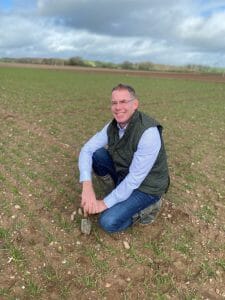
John Dunne, Variety Manager – Goldcrop
In wheat breeding, all breeders screen for Septoria resistance and in Ireland due to the climate, light leaf spot is of similar importance in OSR.
“LLS has always been the tougher beast, to my mind, and in some years the circumstances play into it with higher pressures, especially when there are nearby OSR stubbles. As the disease cycles so frequently and repeatedly, it can be hard to control” says John.
And with these pressures, we have seen the LG varieties rise to the top of the Irish Recommended List, with Ambassador and Aurelia being two of the three Recommended varieties.
Stem health will further add to this, with the reduced sporulation on stems meaning there is a reduced ‘pool’ of LLS spores to spread from stubbles to early sown crops. Early results from testing suggest that varieties such as LG Auckland and LG Armada are again raising the bar in terms of yield and stability for Irish growers.
Download the latest edition of LG GatePost here
Achieving High OSR Yields Despite the ‘Weather Gods’For David Fuller-Shapcott who farms near Kelso in the Scottish borders, beating the weather is a constant challenge.
“Autumn’s are very short and wet, which means we battle to get crops established and it can be difficult to travel in the spring so spray timings can also be difficult. Whilst at the other end of the season we need to leave crops in the field that bit longer to maximise sunlight and keep biomass growing for as long as possible,” he explains.
However adapting cultivation and establishment techniques, a focus on soil health and a large amount of patience has brought success to the cropping at Sweethope Farm.
Mr Fuller- Shapcott’s crop of Ambassador oilseed rape took the Bronze award in the 2022 national ADAS YEN competition yielding 7.33t/ha. This is not his first YEN win for oilseed rape, in 2019 he won a YEN Bronze award for a crop which yielded 6.4t/ha, calculated as 63% of its yield potential.
Oilseed rape is the main autumn break crop at Sweethope Farm in a rotation that maximises first wheats. Oilseed rape is grown one in six which usually means about 45-50ha is grown in any one year. Spring barley is grown for the local distilling market and winter barley for brewing. Soils are heavy clay and run up to over 200m above sea level.
The farm also features 32ha of permanent grass used as grass park lets for cattle and sheep, plus 17ha of mixed woodland.
YEN 2022
Oilseed rape establishment at Sweethope is based on a cultivator, using nine narrow and shortened subsoiler tines, to create relatively undisturbed slots ahead of a heavy packer. A row of 9 disc coulters and covering tines follow the packer.
The crop entered for YEN in 2022 was drilled into a field of fairly virgin oilseed rape soil following winter barley after five years of grass.
“This meant less slug pressure, which can often be more of an issue than CSFB, with our heavy, cold soils. As it was after grass we didn’t have a cover crop in this particular field,” says Mr Fuller- Shapcott
“The crop was drilled on 27th August at 2.2kg/ha -targeting 20-25 seeds/m2 – the aim is to have 22 stems/m2 at harvest. I am looking for large single plant, not a field of cress,” he says.
“I chose to grow Limagrain’s hybrid, Ambassador for several reasons.”
“We moved into hybrids for their vigour in the autumn. I don’t want too much vigour in the spring when I cannot travel and keep up with the crop.”
“It’s not just one of the highest yielding varieties on the AHDB Recommended List, but also offers a very high oil content and this boosts gross output. I have found varieties with inherently low oils harder to push.”
“Good light leaf spot resistance up here is key and Ambassador offers one of the highest resistance ratings of 7. It also offers pod shatter resistance which is very valuable.”
Mr Fuller-Shapcott points out that Ambassador also offers N-Flex which minimises yield losses in sub-optimal N conditions, making a variety adaptable for both high and low input scenarios.
He was interested to see what the benefits of this would be on his own soils and nitrogen regime, so in 2021 he carried out a small farm nitrogen trial looking at rates and timings between Ambassador and sister variety Aurelia, that does not offer N-Flex.
He found that at lower nitrogen levels, Ambassador performed as well as Aurelia at normal nitrogen levels.

David Fuller-Shapcott
He believes that this provides the crop with flexibility. “If ground conditions are too wet or the weather closes in before we can get on with fertiliser in the spring, we are not compromising the potential of the crop too much- it gives us that really valuable leeway.”
Mr Fuller-Shapcott enjoys being part of YEN and believes the learnings from it are incredibly valuable.” YEN has taught me importance of canopy structure in oilseed rape and how to manage this to achieve a particular yield and we work to this. We know that if we have 100,00seeds/m2 and a 5.0 TSW we are looking on average at a 5t/ha crop.”
“To achieve this we want to influence the structure of the canopy to promote podding at the top, aiming for an ‘oak not a pine’,” he says.
“I take a very much balanced approach to crop nutrition – not pushing the crop too hard but enough to produce a decent output with justifiable inputs. I have learned from YEN that it is worth feeding the crop well from the beginning; little and often.”
“For this crop I was aiming for about 160kgN, but in fact ended up applying less, only 133kg but this does not appear to have impacted the crop performance – and we put this down in some part to the N-Flex ability of the variety.”
“Fertiliser in liquid form is applied down the spout at drilling (subcasting), which increases rooting. Spring nitrogen goes on as soon as its possible to travel. For this crop that was around the 20th March when 66kgN went on.”
“On the 12th April we applied the same again, both doses using a 30%N and 9% sulphur liquid (W/V) with trace elements.”
“With OSR we always make sure there is adequate Boron, and tissue testing through the season gives me an insight into what the plant needs at different times,” he says.
Disease control is started as soon as he can travel, with a keen eye on Light Leaf Spot. “Last season the first spray was around the third week of January, this was followed up on the 18th April with a PGR and fungicide, and again at the end of flowering.”
“Magnesium, phosphorus and potash, also went on at this timing to help build seed size.”
Mr Fuller-Shapcott doesn’t rush to desiccate. “If we think the crop is ready, we try and leave it for another week – which does require a large amount of patience! But we have found it pays off, as it means we never have any red seeds.”
“This crop was desiccated on 26th July. Usually our rape crops have a birthday, but last year it was ready early and was combined on the 14th August- and the rest as they say is now in the YEN records!”
David was Arable Innovator of the Year in the 2018 British Farming Awards, Agriscot Scottish Arable Farmer of the Year finalist in 2018 and Scottish Rural Awards (Agriculture) finalist in 2019, Farmers Weekly Arable Farmer of the Year finalist 2019 and Scottish Land & Estates award winner 2019.
2016 saw Mr Fuller Shapcott take second highest potential yield prize in ADAS’s Yield Enhancement Network (YEN) wheat competition, achieving over 60% of the crop’s calculated potential yield.
This was a step up from 2015 when a yield of 14.2t/ha gave him the bronze potential yield award in a bumper harvest year when just across the border Northumberland grower Rod Smith broke the world record with a yield of 16.52t/ha.
Surprise Success for Scottish Oilseed Rape CropThe Lawson brothers, Mark, Philip and Ben, farm in Newton Stewart in Dumfries and Galloway – tucked into the bay just before Stranraer – generally not an area renowned for producing award winning oilseed rape crops. However Mark’s crop of oilseed rape won a silver award in the 2022 YEN awards with his crop achieving 84% of its potential yielding 7.39t/ha.
“When the awards were announced we couldn’t believe it. It was really unexpected, we never expected anything like that from a crop on this farm!” says a delighted Mark.
“It’s really wet here – and the soils are not the best- they tend to run to shallow stoney – which although gives us some reprieve from the rainfall as the water runs through it – also means we don’t have lovely, deep soils for the crop to sit its roots down into – not the best for highest yielding crops.”
Airlies farm stands out amongst its neighbours as it’s a purely arable rotation, bar some bed and breakfast cattle, in an area that traditionally is all livestock farming.
The Lawson’s bought, what was then a purely a livestock farm in 1989. However increased costs to transport bought in feed for the herd meant they started to grow their own. Over the years, the arable side has taken over and now have a rotation based on wheat, barley and oilseed rape. Grass is grown for silage and the rougher pastures support sheep.
“Our farm average oilseed rape yields can be around 3.7 t/ha but if we can push this to 4.2-4.4t/ha we are happy with that.”
“It hadn’t really occurred to us to enter YEN. We didn’t think we had much hope of winning anything and were unsure what we would gain from the experience, but a conversation with our seed advisor, Douglas Bonn of Nickerson Seeds convinced us to enter.
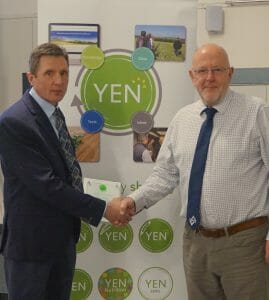
Mark Lawson and Douglas Bonn
“We had a field of Acacia oilseed rape that looked good and showed promise, so on discussion with Douglas we were persuaded to enter part of that field.”
“We used to grow variety Anastasia, so it made sense to move onto Acacia.”
Bred by Limagrain UK, Acacia is the most popular conventional variety in the country with proven strong autumn growth and good spring vigour, solid disease resistance and short, stiff straw, combined with a high oil content and yield.
“Whilst there has been a tendency to move into hybrids generally, many growers have found that Acacia delivers the vigour and consistency of performance that they are looking for,” explains Douglas.
He explains that Mark has always been interested in improving what he does on farm, so when the crop showed so much promise it made sense to enter it into the YEN for the valuable feedback gained from the judging.
Award winning cropping
“All in all it was a pretty easy season on the crop, says Mr Lawson.” Autumn 2021 had been really kind – all the crops drilled in good time. With the high levels of rainfall here our biggest challenge is getting the crops in the ground in good time.”
“Following winter barley, the oilseed rape was drilled into a nice dry seed bed. We min-till using a Simba Xpress which creates a good tilth for the seed. Seed rate was 3.55kg/ha – with an aim for an established plant count of 24 plants/m2.”
With regards to agronomy of the crop, Richard Bray, agronomist with Agrovista based in south-west Scotland says “It was a season when everything came together.”
“The crop came out of the winter well, so we included growth regulation at stem extension as we wanted to avoid a lodged or leaning crop that would not mature evenly or maximise pod fill. In with this, we also applied a broad spectrum foliar feed,” he says
“Tissue analysis highlighted the crop was still short of boron. So we addressed this at the early flowering stage with a 4-way mix containing boron, a carboxamide and triazolinthione fungicide for sclerotinia, a bio- stimulant to boost yield by increasing the numbers of seed per plant and an adjuvant to aid uptake.”
Mr Bray points out that as the flowering period can last many weeks this far north, a second mix at mid-flowering was applied but with the addition of a crop enhancer to increase chlorophyll production and maximise green leaf area.
“As far as weeds and diseases go, we can have issues with sterile brome but the oilseed rape does allow us to clean that up reasonably well. Light leaf spot can be an issue but again we were able to keep on top of that in the spray programme.
“It really is very rewarding for the Lawson’s to achieve this success and do so well against the more recognised arable areas of the east,” says Mr Bray.
Harvest promise
Mark explains how exciting it was when the combine started working in the field of Acacia. “We started harvesting on the 5th August in a neighbouring field and that looked pretty good, so we were very hopeful when we moved into the YEN crop – and in fact we struggled to get it all into the trailer- so we knew we were onto some high yields.”
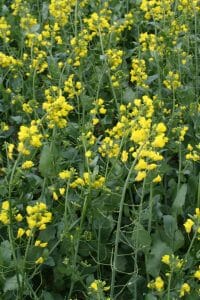
Acacia
“Entering YEN has been a really positive experience, we have learnt so much and will use what we can in this year’s crop. We will definitely enter YEN again there is always more to learn and build on from last year. Our objective is to be able to produce this level of yield consistently, year on year.”
Why did OSR yield so well in 2022?
A decade of YEN research shows that while light and water availability remain critical limiting factors to yield potential, successful crops are those with optimal biological growth to convert the energy available into grain.
Maximising biomass puts crops in a prime position to convert sunlight into yield, even if that yield potential is limited by factors beyond your control. So how did 2022 fare?
Looking at 2022 season:
- Analysis by YEN of historic weather patterns and OSR yields have revealed that high yielding seasons are associated with a warm October, dry December, warm minimum March temperatures, dry/sunny April and a wet/cool May.
- The 2021-22 season was characterized by a warm October, a dry December and winter, average March temperature, a dry sunny April and an average rainfall and warm May.
- The dry spring helped to restrict canopy growth which will have helped optimize canopy size at flowering for good seed set and reduce the risk of lodging.
- The sunny conditions in April will have helped crops to set many pods. Rainfall in May will have been particularly beneficial for crops suffering from the earlier dry spring conditions, but the dull conditions might have restricted the number of seeds set per pod.
On the whole, conditions were conducive for setting high seed numbers and hence higher potential yields
New OSR Manager for Limagrain UKPlant breeder Limagrain UK has strengthened its arable marketing team with the appointment of Liam Wilkinson to position of Oilseed rape product manager.
In his new post, Mr Wilkinson takes on the responsibility for the marketing of Limagrain’s highly successful oilseed rape portfolio which has been driven by its trait-loaded offering – bringing valuable traits and characteristics to the market, such as TuYV, Pod Shatter and Stem Health.
Limagrain’s hybrid Aurelia, is the UK’s most widely sown variety, whilst Ambassador is the number one variety grown in Europe – illustrating the strength of the breeder’s UK and European portfolio.
Limagrain is a farmer owned international co-operative group, specialising in both agricultural and horticultural seeds. As the fourth largest breeder and seeds marketing company in the world, it employs 10,000 people with a turnover of more than 2.5 billion euros annually.
Mr Wilkinson worked as a trials officer for Frontier, and latterly NIAB, before joining Limagrain in early 2020.
He has extensive experience of the oilseed rape crop; previously holding the position of arable technical officer for oilseed rape, with the breeder.
“Limagrain’s oilseed rape varieties have dominated the UK AHDB Recommended List for several years and continue to do so,” says Mr Wilkinson.

Liam Wilkinson
“There are obvious challenges for OSR growers around climate and pests, however it’s very encouraging to see the progress breeders are making by building further on the trait-stacked approach – which has helped many growers return to oilseed rape, by offering on-farm security through robust genetics.”
“We’ve already started with the introduction of Attica and LG Wagner this year, and I look forward to introducing more varieties in the coming years. Infact, it’s a really exciting time to be involved in OSR genetics.”
LG GatePost Newsletter – Feb 2023The February 2023 issue of LG GatePost is now available to download.
This edition features articles about our exciting new Wheat, Winter Barley and Oilseed Rape varieties that are taking leading positions across the 2023/24 AHDB Recommended List.
You can read about how moving to direct drilling of LG Diablo Spring Barley has proven successful for Berwickshire grower, Neil White and watch our Spring Barley agronomy series of videos that give you all the technical know-how to successfully grow your Spring Barley crop.
There is also information about our upcoming Trials Events, and online Technical Webinar.

With a tightly packed schedule of events to attend, our small but perfectly formed team of experts spend much of June and July travelling the length and breadth of the UK, bringing our learning, expertise and innovation to you, the grower.
Ron Granger and Liam Wilkinson come with a combined half century of experience in agriculture, unparalleled knowledge and practical experience of cultivating LG’s formidable cereals and oilseeds portfolio, alongside notoriously unbiased opinions.
If you have a burning question about future variety selection, nutrition or establishment, no doubt you will run into one or both if you are attending any of the diverse range of agricultural events that punctuate the busy summer months.
If you are growing or thinking about growing an LG variety and are looking to achieve a deeper understanding of where they sit in the current market, or indeed fit with your own very particular conditions, I would urge you to register for one of our summer demo days.
Alongside the usual trials tours and opportunity to catch up and exchange ideas with colleagues and other industry professionals, we will be running a programme of talks and seminars, with the prospect to hear from the breeders as well as brand partners.
Dates for 2023 are:
- Woolpit – 20th June
- Newbury – 21st June
- Maldon – 23rd June
- Rothwell – 4th July
- Perth – 26th July
You can register for the events here.
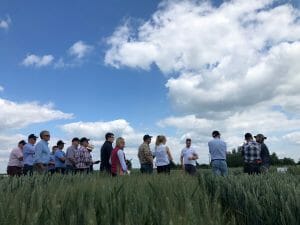
In my development work with the Limagrain UK oilseed rape portfolio, I’ve progressively seen marginal gains every year. Advances in trait stacking genetics have provided much greater yield stability, allowing us to get the best on farm performance out of our OSR varieties.
Micronutrition is one of the areas in which marginal gains are still possible. In varieties with higher yield potential and security, a focus on micronutrition can offer a good return on investment.
I have rarely walked an OSR crop not showing some level of boron deficiency.
Boron is one of the most crucial micronutrients in OSR plant growth, yet is one that is the hardest to test for, with soil testing being one of the most inaccurate that can be carried out. Typical symptoms are cracked, hollow stems, uneven flowering, and reduced pod set.
Boron uptake is poor in low soil temperatures, and it is prone to leaching following high winter rainfall. This means that it is not often readily available to the crop in early spring, especially to crops with underdeveloped root systems.
As an industry, we are seeing a trend towards varieties that have better spring vigour, can put down bigger roots before any spring droughts, and grow away from pigeon or cabbage stem flea beetle (CSFB) larvae damage.
This means varieties such as LG Aviron and LG Scorpion are starting stem extension much earlier than traditional varieties, whilst soils are still cold, and crucially, elements like boron are not as available to the crop.
Foliar boron should be considered as a staple inclusion in all OSR nutrition plans. With late autumn (propyzamide timing), early spring and flowering being the key inclusion timings for foliar boron. This will help with cell wall development at a time when the crop is growing rapidly, leading to a more even flowering and pod set.
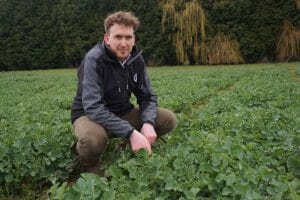
Liam Wilkinson
With this topic of micronutrition in mind, we have partnered with YARA on a joint OSR nutrition event near our head office in North Lincolnshire on the 8th March 2023. We will be running an online webinar on 8th February 2023 to further discuss the topics of how to get the best out of our genetics.
You can register for the events here.
Dominating the 2023/24 AHDB Recommended ListIt’s a grand slam as Limagrain UK’s exciting new wheat, winter barley and oilseed rape varieties, take leading positions across the 2023/24 AHDB Recommended List.
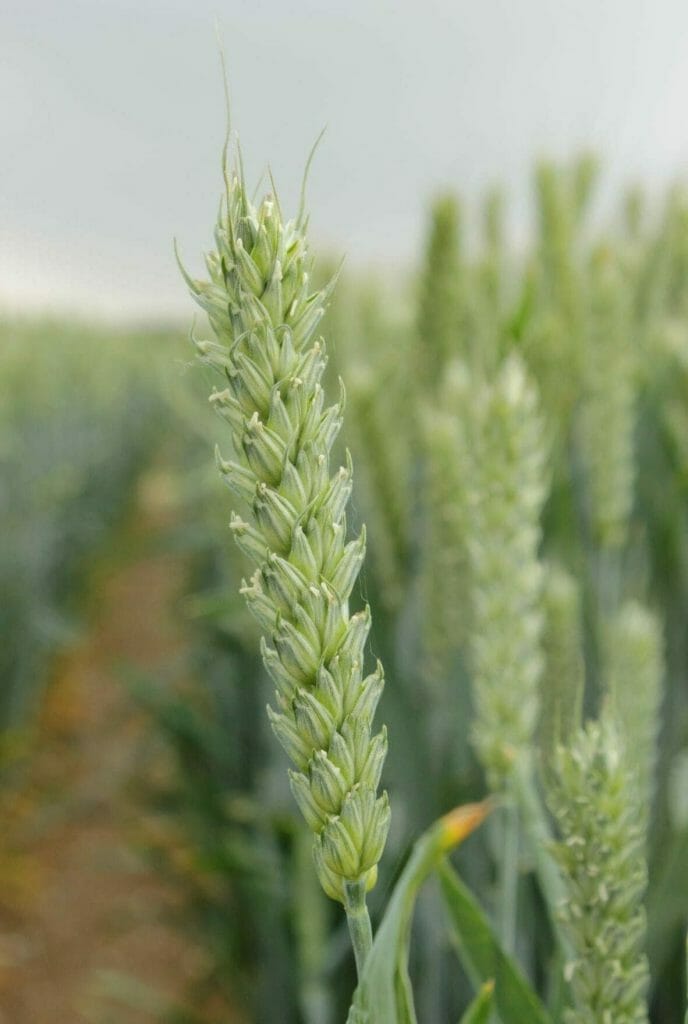
LG Redwald secures poll position as the highest yielding winter wheat.
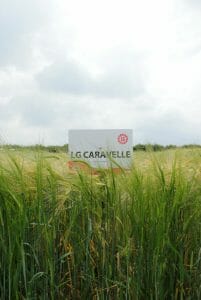
LG Caravelle is the highest yielding two row winter barley.
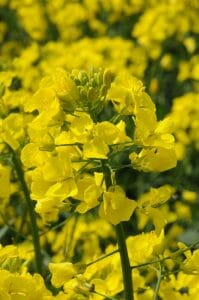
Attica joins as the highest yielding oilseed rape variety, with the essential turnip yellows (TuYV) and pod shatter resistance traits.
LG Wagner is the highest yielding addition to the northern OSR Recommended List.
LG Redwald sets a new standard for high yielding wheats, yielding 107% in the UK, (107% in the east and 109% in the west). As a soft wheat, the variety also offers potential for distilling.
These high yields have been consistently proven across National List trials, over seasons, drilling date and soil type, particularly in the second wheat and later drilling situations.
LG Redwald has an excellent disease resistance profile, with very good Septoria resistance as well as orange wheat blossom midge (OWBM) resistance.
LG Redwald
“It is an exciting variety that should deliver for growers in 2023/24, if supported with good agronomic practise to ensure it meets its full potential on farm, and comes at a time when growers are looking more than ever to maximise output in order to maintain profit in times of increasing costs.”
– says Ron Granger, arable technical manager.
LG Caravelle is the highest yielding two row winter barley to join the 2023/24 Recommended List.
LG Caravelle dispels any misconception that two row barleys are lower yielding than hybrids.
LG Caravelle
It offers UK yields of 106.3% – which is as good as the top yielding hybrid barley variety – and yields 2% above hybrids in the east.
These high yields are backed up by an excellent disease profile, reflected in LG Caravelle’s high untreated yields. LG Caravelle also offers an exceptionally high specific weight for a winter barley, of 71.8 kg/hl.
It is an early maturing variety with stiff straw; both important characteristics for a winter barley.
Attica is a newly recommended fully loaded hybrid with full UK recommendation. It joins the Recommended List as the highest yielding variety to combine stable high yields with the genetic security of TuYV and pod shatter resistance traits.
Attica has a strong autumn growth habit, offering growers a wide drilling window and a very good disease resistance package.
Attica
LG Wagner joins the north Recommended List as the highest yielding variety (108.1%). In 2022, it was the highest yielding variety, also offering the security of pod shatter and TuYV resistance. It is a shorter hybrid with stiff stems, combined with solid light leaf spot resistance and good stem health.
“This is a tremendous achievement and is the first time that any breeder has achieved this level of success across all of the cropping sectors in the last decade, if not longer.”
– says William Charlton, marketing manager for arable seeds.
“We believe this success is built on our unique UK focussed breeding approach, which means we are able to select for the UK’s maritime climate from day one in the breeding programme. This allows us to look for consistently high yielding varieties from the very start of our programme, to suit UK growers and end user requirements.”
LG Anarion the only clubroot variety to offer TuYV and Pod Shatter resistanceLG Anarion is the first Clubroot resistant variety to offer high yields, which is secured by a range of valuable genetic traits including TuYV, pod shatter and RLM 7 resistance, and is available to UK growers for the coming season. “This is a really exciting development for growers of oilseed rape in Clubroot infected areas,” says Will Charlton, Limagrain’s arable marketing manager. “Possession of these traits provides much needed on-farm security to growers who are looking to improve their profits from oilseed rape, in areas that have until now, been challenging as a result of Clubroot.”
Clubroot typically causes losses of 0.3t/ha for every 10% of plants affected. The disease is becoming far more widespread across the UK, spreading into areas such as Somerset and Derbyshire, and is no longer confined to the wetter regions such as the north-west. Tighter rotations, low soil pH, warmer wetter winters and poor OSR volunteer control have all contributed to these increasing levels of infection.
As the first Clubroot resistant variety to offer Turnip Yellows Virus (TuYV), pod shatter and RLM 7 resistance, LG Anarion is an exciting prospect for this season offering both high yields and yield security, says Liam Wilkinson Limagrain’s arable technical officer. “In our UK breeding trials we saw that LG Anarion showed an 11% yield increase over our current clubroot variety, Alasco, and 5% over other leading club root varieties; representing a significant improvement and further closing of the yield gap associated with Clubroot resistance. We’ve also seen strong performance in independent trials” “We know that TuYV can knock yields by as much as 30% and infection is difficult to prevent with foliar insecticides alone. Limagrain were the first to introduce TuYV resistance with the variety Amalie in 2014 and the trait is now a staple of our high yielding hybrids,” says Mr Wilkinson.
“LG Anarion also offers pod shatter resistance; a trait which has recently had its importance acknowledged by the AHDB with its inclusion on the recommended list. Pod Shatter resistance can help secure yields and prevent untimely seed losses if there is inclement weather around harvest.” It also protects from losses during harvest (as the header hits the crop), as well as reducing the number of volunteers in the following crop. Other traits stacked into LG Anarion include the RLM7 phoma resistance gene, which provides stable resistance scores of 7 or 8; Limagrain does not offer varieties with a light leaf spot score of below 6. Agronomically there is much to like about LG Anarion, notes Mr Wilkinson. “It offers good disease resistance with our breeding data suggesting ratings of 6 for Light Leaf Spot, 6+ for phoma and a good tolerance to verticillium.” “It has early-mid flowering and maturity, and good ratings for stem stiffness and lodging.”
“The variety has very strong autumn dynamic growth with fast biomass accumulation and then sits in the winter, so it does not get too ahead of itself. It exhibits very good winter hardiness, which means it can cope with more challenging winter conditions.” It’s important that growers are alert to the threat that Clubroot poses and are in a position to counter it as best as possible by identifying areas at most risk and targeting them with integrated cultural control strategies, says Agrii seed specialist, David Leaper.
Varietal resistance to Clubroot should only be used as one element of the management programme, he says. “All clubroot resistant varieties share the same source of resistance so we should not over rely on it.”
For sites at risk of club root, key elements of cultural control should encompass:
• Growing OSR no more than one in four years
• Remedying any soil compaction or drainage problems
• Checking soil pH regularly across all fields
• Avoiding early winter rape sowing
• Correcting boron deficiencies
• Testing soils for club root in unaffected fields
• Minimizing soil movement on farm equipment
How genetic protect OSR yields at harvestLosses in the period up to harvest in oilseed rape can often be high. However, there are several ways that these can be kept to a minimum, says Liam Wilkinson, development officer for arable crops for Limagrain UK.
“Choosing to grow a variety with built in pod shatter resistance is one of the most important things you can do,” he says.
“Last year, some crops were devastated by storms, whilst others appeared relatively unscathed, which showed very clearly, the value of pod shatter resistance.”
Pod shatter is a natural process for seed dispersion in oilseed rape, however on farm it can result in significant seed loss caused by heavy wind, rain, hailstones, or the combine passing through the crop.
The pod shatter (POSH) resistance gene was originally introduced into OSR together with the restorer gene from radish. Not all hybrids carry POSH resistance as the trait can be lost in the breeding process to improve the restorer.
Pod shatter is not an either/or trait but one that can be quantified by the force required to break a ripe pod, points out Mr Wilkinson
“At Limagrain, we precisely quantify pod shatter resistance using lab-based techniques, where the force required to shatter the pod is measured, and this clearly shows that not all POSH resistant varieties offer the same level of resistance,” he says.
“All of our hybrids contain the trait and we constantly monitor the efficacy of our pod shatter resistance against other commercial varieties so we can be confident in our claims that the variety really is pod shatter resistant.
Limagrain varieties that carry the trait are LG Auckland, Ambassador, LG Aviron, Aurelia, Antigua, Artemis, LG Antigua and Clearfield variety Constructor and this plays out in their high yields and subsequent leading position on the current AHDB Recommended List.”
“POSH resistance can also help to provide some flexibility in the timing of the harvest, which can be as much as 14 days extra in our tests,” he says.
“In addition, a robust POSH resistance cuts down the number of volunteers in the following crop, easing the burden of weed control.

Liam Wilkinson
It is also relevant to look at the overall stem health of a variety as a lodged crop is not going to be easy to harvest, adds Mr Wilkinson.
Of the diseases that can affect the health of the stem he believes that light leaf spot is the biggest threat.
“Previously considered a disease of the north, this is no longer the case as a result of mutations and a reduction in azole efficacy, alongside milder winter weather has resulted in it spreading across the UK.”
“Varieties offer good light leaf disease resistance ratings on the AHDB RL , but it’s important to recognise that in the UK, light leaf spot on the stem is not something that is scored for in the AHDB RL, it’s only the leaves that are scored for disease,” he says.
“Varieties with similar light leaf scores on the AHDB RL, will in reality have very different stem health scores.”
“So incidences of stem infection often go unreported, resulting in unnecessary yield and quality reductions.”
“But it’s been a key focus for us across the Limagrain European breeding programme. We select plants with good strong stems that stand well as a matter of course,” he adds.
“In France, stem based light leaf spot, or Cylindrosporium, is recognised to be a serious disease of oilseed rape in its own right and is included in the Terres Inovia Recommended List, the French equivalent of the AHDB RL.”
All of Limagrain’s varieties currently on the RL have been scored for cylindrosporium in the breeders own trials, as well as for LLS in the RL programme.
To illustrate this, Mr Wilkinson refers to Limagrain trials carried out in 2020.
“We evaluated the stem health of several varieties that all held the same light leaf spot score of 7 on the AHDB RL.(1= clean through to 9 which was fully diseased.)”

“Aurelia was scored an excellent score of 2 for overall stem health, Ambassador and LG Aviron scored a very good 3, but one variety only scored a 6 despite also holding a light leaf spot rating of 7!”
“The important message here is to look behind the headline scores and don’t assume that a good overall light leaf spot score translates into a good stem health score.”
“So the first step in protecting harvest losses is having the right genetics,” notes Mr Wilkinson, “in doing so this then provides an excellent foundation for management practices such as pod stick and timing desiccation correctly, to bring an additional level of protection which ensures that every seed possible gets into the combine.”
Pod shatter is an important trait when deciding which oilseed rape variety to grow for East Suffolk farmer Thomas Over of Westrope Farming Ltd.
Westrope Farming is one of the three founder farmers of the Three Musketeers potato marketing group. The climate is relatively mild in the area, with few frosts and his potato crops are usually started under fleece to follow the Cornwall earlies and Jersey Royals.
Soil structure drives the rotation; the lighter soils are used for growing vegetables, whereas on the heavier soils the rotation includes winter wheat, oilseed rape, plus spring and winter barley.
To help with choosing his oilseed rape varieties he visits nearby trials and works closely with his agronomist.
“Sometimes it seems as though there is a lot of data from so many varieties, but last year we grew LG Antigua and have been pleased with the variety because it has the important traits we are seeking; pod shatter resistance as well as being high yielding.”
Pod Shatter is an important trait, as the area where he farms Wickham Market, is vulnerable to massive hailstorms in late June and early July.
“As a result of a huge storm last year, we had to write off 14ha of shallots, but thanks to pod shatter resistance our oilseed rape crop was saved.”
Considering conventional oilseeds?Oilseed rape growers do not have to rely on hybrid varieties to access the vigour their crops need to escape damage in the autumn.
Selected conventional varieties also exhibit the good early vigour that will enable them to grow past the potential damage that can be caused by cabbage stem flea beetle, says Liam Wilkinson technical oilseed rape specialist, for plant breeders Limagrain UK.
Conventional rape varieties account for 35 – 40% of all crops, a smaller proportion of the national crop than for some time, he adds.
“They have ceded the majority of the market to hybrids, which traditionally offer greater vigour and the opportunity to ‘stack’ beneficial traits such as resistance to pod shatter and disease.”
Amongst Limagrain’s conventional varieties both Acacia and Amarone show similar characteristics, he notes.
“Growers are looking for vigorous growth in the autumn and to establish a canopy as quickly as possible so the crop gets away from the adult beetles.”
“Both Acacia and Amarone have good initial vigour, they quickly establish the three or four true leaves they need to reduce the risk from grazing damage by the adult CSFB.”
“With new conventionals Annika and Amarone also offering TuYV resistance, they can to help form the basis of an IPM strategy or those looking to reduce reliance on autumn insecticides.”
“They go on in the spring to reach eight true leaves and around 8cm collar with a 15cm tap root quickly, which helps protect them against larval damage”.

Tim Parton
“One key to helping all oilseeds avoid damage is to drill according to moisture levels rather than the calendar,” he adds.
“Drill for the soil conditions – you must have enough moisture to get the plants off to a good start, so they can get going and keep going.”
“That’s not the be all and end all of it, because the beetle and their larvae still pose a risk. But hitting these growth thresholds gives the crop the best chance of withstanding any damage.”
Two Farmers who continue to grow conventional varieties are Tim Parton, a well-known advocate for regenerative agriculture, based in South Staffordshire, and Andy Roberts, who farms on the Staffordshire/Shropshire border.
Tim grows around 40 hectares of a three variety blend at the 300ha Brewood Park Farm, South Staffordshire.
That blend includes Acacia and Annika and he saves his own seed so the mixture he sows is progressively better adapted to his farm:
“By combining several varieties I get stronger disease resistance which helps keep costs down. At the same time, those three varieties are adapting to my farm’s soil and conditions.”
“When they are senescing they send endophytes into the seeds that are ready to be sown into the environment they have been grown in, which improves plant genes for the future.”
They fit into a six year rotation alongside milling wheat, spring barley, spring beans, lupins and grass leys used for making haylage. cover crops are put in ahead of all spring crops and grazed by sheep – or ‘mobile composting units’ as Tim calls them.
He aims to direct drill the crop with a companion crop in the first week of September, and uses a high seed rate to achieve 100 plants/m2.
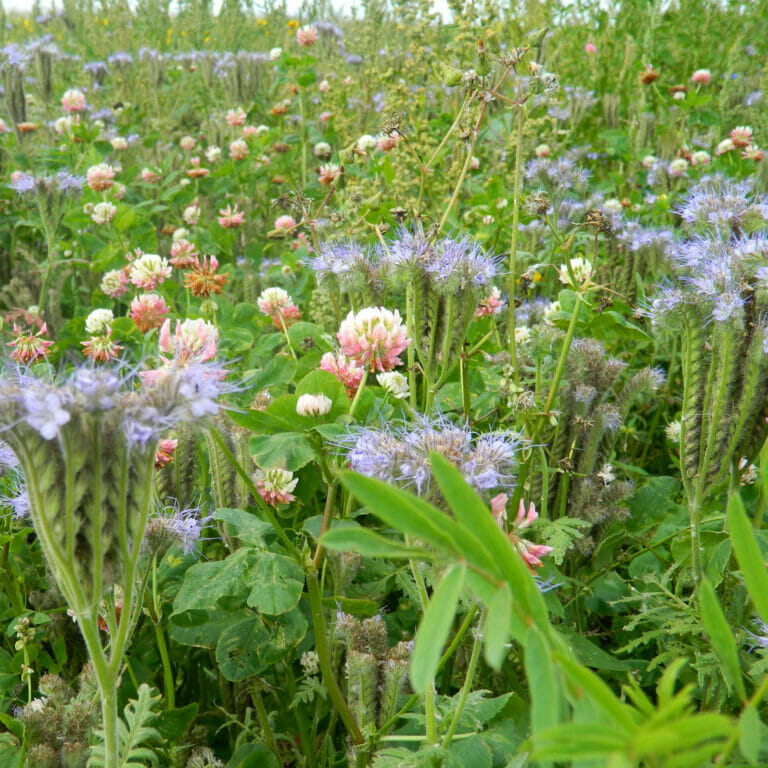
The companion crop is normally a mixture of crimson, white and burseem clover. He also adds molybdenum, sulphur, boron and manganese in the seedbed:
“The young plants will synthesise sugars and will not be attracting flea beetles”.
Total N supplied is around 170kgs/ha, much of that being supplied as foliar applications in response to the results of frequent tissue and sap testing.
Average yields have been around 5t/ha over the years, although cold springs have reduced that in recent years.
On the Staffordshire/Shropshire border Andy Roberts grows oilseeds in a rotation formed around winter wheat and spring barley, with breaks of either oilseed or potatoes.
The 320ha Lower Barns Farm, Pattingham, also supports a small suckler herd.
Across much of the farm oilseeds are grown one year in six; in areas not suitable for potatoes it may be as frequent as one year in four.
This year he sowed over a wider window than normal – from mid-August to the first week of September – working the land with a Sumo Trio and broadcasting the seed off the back so the following roller pressed the seed to achieve good soil-to-seed contact.
In some fields he spreads chicken muck before sowing, working it in with a Vaderstad Carrier, to add both organic matter and nutrients to their mainly sandy loam soils.
Seed rates depend on sowing date: “We are sowing earlier these days to avoid flea beetle damage. We sow 60 – 70 seeds/sq m in mid-August and raise that to 80 seeds/sq m in September.
“We grow Acacia because we have always used conventionals as they tend to be a bit shorter stemmed, and have good standing ability which makes them easier to harvest. We don’t save seed at the moment, but it is useful to have that option should we want it.”
Yields on the farm tend to average around 4t/ha, although last autumn one September-sown field topped 5t/ha.
Rising fertilizer prices are forcing a change in his regime this year:
“We normally apply between 180- 200kg/ha of nitrogen, but will be dropping that to 150kgs/ha.
“On fields that have received a dose of chicken muck we don’t use anything in the autumn; where muck has not been applied we use 30kgs/ha at planting.
“We believe the crop needs some help to get it way from the flea beetle threat.”
ANNIKA is well suited to early drilling and has excellent disease resistance, including genetic resistance to Turnip Yellows Virus. It produces a short plant with a stiff stem (scoring 9 for both lodging resistance and
stem stiffness) and offers high yield potential (45.3% oil).
ACACIA is the highest-yielding conventional variety on the AHDB 2021/22 recommended list. It has highly vigorous, robust plants with good stem strength and disease resistance. It rates 8 for lodging resistance; 9 for stem stiffness (45.7% oil).
Considering Conventional Oilseeds?Selected conventional varieties also exhibit the good early vigour that will enable them to grow past the potential damage that can be caused by cabbage stem flea beetle, says Liam Wilkinson technical oilseed rape specialist, for plant breeders Limagrain UK.
Conventional rape varieties account for 35 – 40% of all crops, a smaller proportion of the national crop than for some time, he adds. “They have ceded the majority of the market to hybrids, which traditionally offer greater vigour and the opportunity to ‘stack’ beneficial traits such as resistance to pod shatter and disease.” Amongst Limagrain’s conventional varieties both Acacia and Amarone show similar characteristics, he notes. “Growers are looking for vigorous growth in the autumn and to establish a canopy as quickly as possible so the crop gets away from the adult beetles.” “Both Acacia and Amarone have good initial vigour, they quickly establish the three or four true leaves they need to reduce the risk from grazing damage by the adult CSFB.” “With new conventionals Annika and Amarone also offering TuYV resistance, they can to help form the basis of an IPM strategy or those looking to reduce reliance on autumn insecticides.” “They go on in the spring to reach eight true leaves and around 8cm collar with a 15cm tap root quickly, which helps protect them against larval damage”.
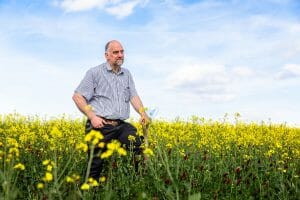 “One key to helping all oilseeds avoid damage is to drill according to moisture levels rather than the calendar,” he adds. “Drill for the soil conditions – you must have enough moisture to get the plants off to a good start, so they can get going and keep going.” “That’s not the be all and end all of it, because the beetle and their larvae still pose a risk. But hitting these growth thresholds gives the crop the best chance of withstanding any damage.”
Two Farmers who continue to grow conventional varieties are Tim Parton, a well-known advocate for regenerative agriculture, based in South Staffordshire, and Andy Roberts, who farms on the Staffordshire/Shropshire border. Tim grows around 40 hectares of a three variety blend at the 300ha Brewood Park Farm, South Staffordshire.
That blend includes Acacia and Annika and he saves his own seed so the mixture he sows is progressively better adapted to his farm: “By combining several varieties I get stronger disease resistance which helps keep costs down. At the same time, those three varieties are adapting to my farm’s soil and conditions.” “When they are senescing they send endophytes into the seeds that are ready to be sown into the environment they have been grown in, which improves plant genes for the future.” They fit into a six year rotation alongside milling wheat, spring barley, spring beans, lupins and grass leys used for making haylage. cover crops are put in ahead of all spring crops and grazed by sheep – or ‘mobile composting units’ as Tim calls them. He aims to direct drill the crop with a companion crop in the first week of September, and uses a high seed rate to achieve 100 plants/m2.
The companion crop is normally a mixture of crimson, white and burseem clover. He also adds molybdenum, sulphur, boron and manganese in the seedbed: “The young plants will synthesise sugars and will not be attracting flea beetles”. Total N supplied is around 170kgs/ha, much of that being supplied as foliar applications in response to the results of frequent tissue and sap testing. Average yields have been around 5t/ha over the years, although cold springs have reduced that in recent years.
On the Staffordshire/Shropshire border Andy Roberts grows oilseeds in a rotation formed around winter wheat and spring barley, with breaks of either oilseed or potatoes. The 320ha Lower Barns Farm, Pattingham, also supports a small suckler herd. Across much of the farm oilseeds are grown one year in six; in areas not suitable for potatoes it may be as frequent as one year in four. This year he sowed over a wider window than normal – from mid-August to the first week of September – working the land with a Sumo Trio and broadcasting the seed off the back so the following roller pressed the seed to achieve good soil-to-seed contact.
In some fields he spreads chicken muck before sowing, working it in with a Vaderstad Carrier, to add both organic matter and nutrients to their mainly sandy loam soils. Seed rates depend on sowing date: “We are sowing earlier these days to avoid flea beetle damage. We sow 60 – 70 seeds/sq m in mid-August and raise that to 80 seeds/sq m in September. “We grow Acacia because we have always used conventionals as they tend to be a bit shorter stemmed, and have good standing ability which makes them easier to harvest. We don’t save seed at the moment, but it is useful to have that option should we want it.” Yields on the farm tend to average around 4t/ha, although last autumn one September-sown field topped 5t/ha. Rising fertilizer prices are forcing a change in his regime this year: “We normally apply between 180- 200kg/ha of nitrogen, but will be dropping that to 150kgs/ha.
“On fields that have received a dose of chicken muck we don’t use anything in the autumn; where muck has not been applied we use 30kgs/ha at planting. “We believe the crop needs some help to get it way from the flea beetle threat.” ANNIKA is well suited to early drilling and has excellent disease resistance, including genetic resistance to Turnip Yellows Virus. It produces a short plant with a stiff stem (scoring 9 for both lodging resistance and stem stiffness) and offers high yield potential (45.3% oil). ACACIA is the highest-yielding conventional variety on the AHDB 2021/22 recommended list. It has highly vigorous, robust plants with good stem strength and disease resistance. It rates 8 for lodging resistance; 9 for stem stiffness (45.7% oil).