The LG oilseed rape portfolio is well recognised for its vigorous and robust varieties to aid establishment, such as fully loaded hybrids: Ambassador and Aurelia, and the newly recommended varieties: LG Aviron and LG Antigua.
This autumn’s favourable establishment conditions and relatively low incidence of CSFB, means there are some crops which more closely resemble kale than the struggling OSR crops we have seen in previous seasons.
Our own rooting and canopy studies can confirm this, with crops in October already more advanced in terms of biomass than crops observed in March of last year.
From our own work and our ongoing involvement with YEN, we know that OSR optimal plant numbers are between 25-40 plants/m2. In reality, low populations are difficult to establish and understandably growers compensate for losses with higher seed rates. But with fewer losses seen this season, plant populations in many crops are far higher than the optimum. These crops will require a different management to some of the smaller thinner crops we have seen in previous seasons, to reduce lodging and maximise light interception and achieve a higher percentage of yield potential.
Nitrogen Management
An AHDB project (PR447) investigating canopy management in OSR, identified that adjusting N based on canopy size (calculating N already tied up in the canopy), offers a yield increase of up to 0.36 t/ha in situations where the crop would have, if managed ‘traditionally’, produced a canopy that would have lodged.
The key principles are:
Reduce first split in the spring to lessen stem growth, saving for a main dressing around stem extension
Do not delay sulphur availability – select the right product and apply as much of the sulphur required as possible, with the first split
Know how much N is in your canopy and adjust rates accordingly. Dose response curves still show optimum N in the crop to be 220 kg/ha. PR447 outlines that only 60% of spring applied N is utilised by the crop, so this must also be adjusted for
To calculate crop N:
Use GAI (either satellite or mobile phone apps). As a rule, 1 unit of GAI is equivalent to 50 kg/ha nitrogen in the canopy
Fresh weight method – NIAB TAG identified a strong correlation between fresh weight and Canopy N, with every 1 kg of above ground fresh weight/m2 equating to 55 kg/ha N in the crop
Growth Regulators
In crops with high populations or GAI over 0.8, consider applying a PGR. In the spring, these can be fungicides that have a growth regulatory effect such as Tebuconazole or Metconazole, or specialist growth regulatory products such as Caryx (containing Metconazole and Mepiquat chloride).
In dense crops with high plant numbers, branches are formed from the top of the plant down, and as the first branches start to extend, they block sunlight to the bottom of the canopy. This can cause branches to abort and prevent flowers or pod production, leaving crops with a relatively thin top-heavy band of pods, which makes the crop more susceptible to lodging.
In crops treated with a PGR, the top branches (or Raceme) are shortened. This allows for more light interception through the canopy, allowing a deeper layer of pods and branching. Additionally, this allows for better penetration of fungicides at flowering, which can help prolong green leaf duration, which is heavily associated with reaching a greater percentage of yield potential.
Double gold for Lamyman’s OSR crop of Acacia
Conventional oilseed rape variety Acacia won double gold at 2020 the YEN (Yield Enhancement Network) awards, with a phenomenal yield of 7.01 t/ha. This equalled the world record set by the same grower, Lincolnshire-based Tim Lamyman, in 2018.
The crop of Acacia won Gold for the highest yield of oilseed rape, as well as the highest yield potential category producing a staggering 69% of its potential, a full 8% clear of the second placed entry.
Reflecting on the growing season, Mr Lamyman says: “The canopy of Acacia was incredibly impressive for the season, standing on average well over five feet, absolutely brimming with long, large pods looking as if they would almost bust open with the amount of seed inside.”
He chose the variety as his YEN crop because it was ahead in terms of yield of all the varieties – including the hybrids – in the 2019/2020 AHDB Recommended List.
“Acacia is the highest yielding conventional variety and is one of the fastest conventional autumn vigour varieties, short and incredibly stiff.”
Before drilling, the field chosen for the YEN crop, was worked with a Lemken Terradisc, Vardestad carrier and Lely roll. The crop was drilled on 18th August using a Vardestad System Disc Rapid with the coulters set at 12cm width into a field that followed 25 years continuous spring barley.
“The field chosen for the crop was a North-East facing grade 2 chalky Wold clay to the depth of 35 cm, which then runs into pure chalk.”
The crop emerged at speed – but was very quickly under attack from flea beetle, revealed Mr Lamyman.
“However, the combination of applying an insecticide to slow the flea beetle pressure and Delta K to stimulate a cytokinin growth effect and increase the fibrous root mass, allowed the oilseed rape to grow away from the flea beetle attack, and establish itself exceptionally well in the most challenging autumn on record,” he says.
He points out that at Worlaby Farms there was 660mm of rain falling between 1st September 2019 and 1st March 2020.
By this stage the spring had turned very dry, in fact the spring of 2020 was the fifth driest spring on record at Worlaby Farms.
Five even splits of Nitrogen with three containing sulphur were applied between 1st February and 30th April, giving a total of 258 kgN/ha and 160 kg/ha So3.
A standard high yielding oilseed rape crop usually produces around 100,000 seeds/m2 at 5 thousand seed weight (TSW), but Tim achieved 161,000 seeds/m2 to maintain a normal TSW weight of around 5.
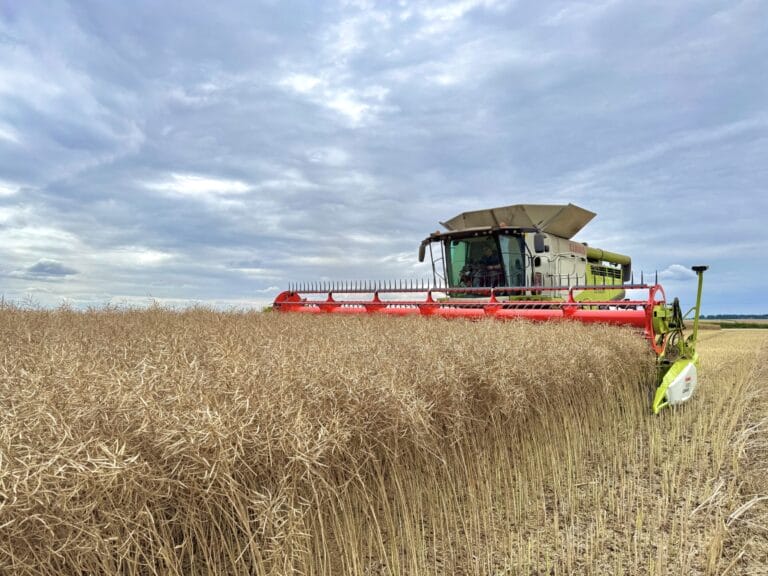
Harvested on 29th July with a Claas Lexion 750 combine, there were no problems, it was a straightforward job, reports Mr Lamyman.
“Even though it was over 5ft tall, the canopy was short and stiff enough to combine without having to alter the bed to put the rape plates and side knife on.”
Limagrain’s Oilseed Rape varieties continue to dominate for the second year running on the 2021-2022 AHDB Recommended List.
For the second year running it’s the top positions for breeder Limagrain UK’s oilseed rape varieties on the 2021-2022 AHDB Recommended List.
All of the top six yielding oilseed rape varieties on this year’s Recommended List (RL) have come from the breeders stable, reinforcing the success of its ‘trait loading’ approach in providing UK growers with varieties that are robust and deliver consistently across seasons and regions.
Two exciting new varieties join these top six on the Recommended List for the first time, LG Aviron and LG Antigua.
Hybrid LG Aviron gains UK wide recommendation with an extremely high gross output of 108% over control. It shares this top position with stable mate Ambassador, which has held onto its very high yields for the second season in a row.
“Trait loading of our varieties means that LG Aviron offers the N-Flex trait unique to Limagrain’s oilseed rape varieties, as well as resistance to pod shatter, TuYV and RLM 7,” says Will Charlton, Limagrain’s oilseed rape product manager.
“The N-Flex trait is a relatively new trait launched in our hybrids last year offering a step forward in the way that oilseed rape varieties minimise yield loses in sub-optimal N conditions.”
“Ambassador and LG Aviron, the two highest yielding varieties on the RL, possess this trait; and have demonstrated their robustness and resilience in what was a challenging season for oilseed rape.”
“LG Aviron has proven itself to be a very vigorous hybrid, that can establish well in challenging seedbeds.”
Gaining recommendation for the east/west with an extremely high gross output of 109% of control and 108% for the UK, LG Antigua is the second of Limagrain’s fully loaded hybrids to join the top six on the RL this autumn.
“LG Antigua offers a comprehensive genetic traits package: combining TuYV, pod shatter and RLM7 resistance and good disease resistance.”
“The variety has excellent plant vigour characteristics in both the autumn and spring, and offers the earliest maturity available on the RL which is a valuable trait on farm, points out Mr Charlton.
LG Aviron
LG Antigua
Gross output UK
108
108
(% controls)
East/West
109
109
North
105
102
Oil content, fungicide treated (%)
44.50%
45.60%
Glucosinolate (µmoles/g of seed)
11.2
11.5
Resistance to lodging
7
8
Stem stiffness
6
8
Shortness of stem
6
6
Plant height
161
162
Earliness of flowering
8
7
Earliness of maturity
6
6
Light Leaf Spot
7
6
Stem canker
7
7
These two new and exciting recommendations join Limagrain’s other outstanding recommended and proven varieties, all of which offer characteristics suitable for certain situations or market requirements, and proved themselves in last season’s challenging conditions.
Ambassador is the joint highest yielding variety on the 2021/22 Recommended list and is the outright highest yielding variety in the east/ west region. Ambassador is a fully loaded hybrid and with proven performance both in trial and on farm – Ambassador is the variety to beat in terms of oilseed rape performance.
Aurelia is a very high yielding hybrid offering high yields across all regions of the UK and is the top yielding variety in the north at 106% of control. A fully loaded hybrid combining genetic TuYV, pod shatter and RLM7 phoma resistance, Aurelia also offers the highest Light Leaf Spot rating (7) available on the RL.
Acacia is the highest yielding conventional variety on the RL and in its second year of recommendation has proven on farm and trial performance at 107% of control. Acacia offers key agronomic characteristics of strong autumn and spring vigour, solid disease resistance and short, stiff straw, combined with a high oil content.
Artemis is a consistently high yielding fully loaded hybrid variety with excellent autumn and spring vigour at 106 % of control. Artemis offers a comprehensive trait package with TuYV resistance, RLM7 and pod shatter. It is one of the tallest hybrids on the List and has very good straw strength attributes for securing yield potential in dry conditions.
Aspire is the only recommended conventional variety with the all important TuYV resistance. It is a short robust plant type with very good straw characteristics. A solid disease and TuYV resistance means Aspire fits the early drilling option perfectly with its slower speed of development.
Aardvark is a conventional variety with early flowering and high vigour and the best disease package out of the recommended conventional varieties. The variety has demonstrated a strong performance across all regions of the UK and has a strong agronomic package including excellent straw strength and solid disease resistance.
To find out more about any of these varieties please visit www.lgseeds.co.uk
Organically-grown LG Aurelia proves to be a real winner
After visiting Sweden last year and seeing the success of organically grown OSR crops, agronomist Andy Cheetham of Ceres Agri Service established his own trials growing organic OSR in north-east Scotland.
At harvest the crop in the trial at Strichen achieved a yield of 3.11t/ha, with 43% oil; cost calculations showed a gross margin of £2,624/ha, assuming a price of £900/t. In a second trial at Fraseburgh, yields were 2.4t/ha, so slightly less but still bringing in a healthy gross margin in a very challenging year in which to grow oilseed rape.
“The LG Aurelia did much better than many conventionally-grown OSR crops in this area, so quite a few farmers in the area have asked what variety it is – and they wouldn’t believe it was organic,” he says.
“It also proved easy to combine, so all in all it has been a very positive variety to grow.”
Aurelia Winter Oilseed Rape
“The key to the success of an organic crop is choosing a variety with good autumn and spring vigour and strong agronomic characteristics, so for this reason I chose the hybrid LG Aurelia which offers all of these.”
“LG Aurelia has the best disease resistance package on the AHDB Recommended List, along with TuYV resistance and pod shatter resistance. It also offers a high gross output and oil yield.”
He has repeated the trials again this year, and at the end of the first week of September, the 2020 planted crop drilled on 20th August already has two leaves.
Andy uses his own organic starter treatment mixture applied in the seed-bed which helps protect the crop from flea beetle, while a sulphur-based nutrient product helps deter pollen beetles.
All sites received sulphur- based nutrition at 5-leaf stage and stem extension. Another dose of sulphur based nutrition was applied at petals fall.
“We could have done more with nutrition, I feel our main limiting factor is nitrogen, and this will be addressed next season.
“I also plan to feed the crop a little earlier, as soon as there is enough leaf we will apply a nice organic cocktail. My plan is to drive yield up by 20%,” says Mr Cheetham.
He reflects that the results prove that going back to basics works best, including covering the ground to help reduce weeds.
Hybrids are the favoured option for late drilling of oilseed rape
The stop-start harvest has meant that many growers across the UK still have standing crops in fields and plans of early drilling are put on hold. So what’s the advice for those who are now faced with planning to drill oilseed rape a little later than planned?
As harvest results are reported, there is a very obvious trend that stands out from last season; hybrids have outperformed conventional varieties, says David Leaper, seed technical manager with agronomy firm Agrii.
David Leaper, Seed Technical Manager for Agrii
Mr Leaper refers to the results just in from Agrii’s national oilseed rape trials, that clearly show this trend.
“There were some clear difference in how varieties responded to the challenges of the season in terms of autumn establishment and root development; biomass proved to be the key in terms of offsetting the effects of Cabbage Stem Flea Beetle (CSFB).”
This work really highlights the value of vigour when establishing later drilled varieties, and growers who are now looking at drilling their rape slightly later than planned should strongly consider opting for a hybrid variety, he advises.
He also points out that latest sensible cut-off date for drilling rape is around the 10th September.
“Later drilled crops can do well but the chances of success diminish quickly after this date.”
Results from trial sites in Kent, Lincolnshire, South Wales and Angus in Scotland, show that the overall highest yielding hybrid varieties Ambassador and Aurelia, produced seed yields of 118% and 117% respectively, followed by candidate variety LG Aviron at 113%. This is well over the control mean of 110% (DK Expansion) at 4.7 t/ha.
Within the conventionals, Aspire (101%), Acacia (98%) and Anastasia (97%) led the pack, yielding slightly less than the mean control Campus (104%).
When combined with the two year summary, the trends remain the same; the hybrids outperform the conventionals. Aurelia and Ambassador remain at the top of the hybrids, with Acacia, Aspire and Anastasia all grouped together with Campus at the mean control of 4.5 t/ha.
“The hybrids were able to get their roots down and establish well, whereas many of the conventional varieties struggled and consequently were smaller and less bushy, and once the CSFB got into the plants, there was very little left of them to recover,” explains David.
Agrii also produces autumn and spring vigour scores for all of the varieties in the trial, with each variety being scored between 1-9, where 9 is the best vigour.
“Unsurprisingly, the hybrids led the pack for both autumn and spring vigour; Aurelia and LG Aviron had the highest scores way up in the 6’s for autumn vigour. The highest score for conventionals was Anastasia with 5.7.”
“Taking in five of the key sites, the trend remained the same for spring vigour; LG Aviron (7.2) and Aurelia (6.8) were some of the best hybrid performers, and Aardvark (6.2) and Anastasia (5.9), led the pack for the conventional varieties.”
LG Ambassador
“It’s important to recognise that there are differences in vigour between hybrid varieties and conventional varieties; there is a range, and it’s not an all or nothing characteristic. Some of the conventionals showed remarkable vigour and in some individual cases, this was comparable to that of some of the hybrids.”
“It’s no surprise that the seed yield and vigour graphs correlate,” says David.
Varieties that offer a range of traits or are trait loaded, have the upper hand when it comes to protecting the genetic yield potential of the particular variety, believes Mr Leaper.
He points out that the value of the TuYV trait played out once again, with varieties containing the trait delivering an additional 5-8% benefit over those without.
“The top four yielding hybrids all have TuYV resistance; as does the conventional Aspire.”
“With the very dry spring, many oilseed rape crops will have struggled with nitrogen uptake, so it is interesting to see that varieties with the new N-Flex trait have done better, such as Ambassador and LG Aviron.
“The N-Flex trait allows the crop to be more efficient in transforming N into yield, so in times of limited availability, this has played out.”
“Ambassador is the first four-trait loaded variety containing the N-Flex trait, TuYV, pod shatter and RLM7 resistant traits, and the value of this has played out in its performance in a difficult season.”
Mr Leaper points out that recent AHDB harvest results reflect those of the Agrii trials, where there is a similar yield benefit of hybrids over conventionals, with the same top 5/6 varieties. “It is always reassuring when trials run independently of each other, produce similar results!”
Agrii WOSR Varieties – 2 year summary
Oilseed rape for the 2021 season
Liam Wilkinson, technical officer for breeders Limagrain UK, believes that we are currently experiencing some of the most favourable oilseed rape establishment conditions for the last 3 or 4 years.
“In some regions, crops have still not been harvested, particularly winter barley. This provides an opportunity to drill OSR in favourable conditions – so it should be strongly considered.”
Considerations for later drilling
Pick a vigorous variety which can not only establish quickly, but accumulates a large canopy.
Choose a variety with good phoma resistance. The effect of phoma can be more damaging in a smaller later sown crop.
Adjust sowing rates. As soil temperatures cool down, germination field losses will increase. Seed rates should be increased to still aim for that optimal plant population of 25-30 plants/m2.
Wet weather has seen an increase in slug activity. Crops should be monitored closely and treated at threshold,particularly where seedbeds have been left unconsolidated.
Organically grown OSR looking a real winner
Having seen the success of organically grown oilseed rape in Sweden, Andy Cheetham of independent agricultural consultancy, Ceres Agri Services, based in north-east Scotland has been trialling the crop in Scotland.
“Back in November a meeting was hosted at SRUC, Craibstone to discuss a possible fact-finding visit to Sweden where they grow quite a lot of organic oilseed rape,” explains Andy.
“I decided I would tag along and see if I could get involved. We organised a trip to Linkoping in Sweden, where we visited the Cameleon drill factory and a number of farms over the three days we were there.”
“Once we had seen the crops in Sweden it was clear that growing organic oilseed rape was do-able.” Scotland’s Rural College is leading the Scottish Organic Canola (SCOCAN) project with a £30,000 grant from the Knowledge Transfer and Innovation Fund (KTIF). The project, in turn, follows on from a Rural Innovation Support Service (RISS) group. The project is primarily driven by farmers using a number of approaches, some based around the Swedish model, which include best options for establishing and fertilising the crop, as well as precision weed control.
LG Aurelia
Trials
With guidance from Andy, large plots of oilseed rape have been planted on five farms across the north east of Scotland: one in Moray, three in Aberdeenshire and one in Angus. He reveals attention to detail at every step of the process of preparing, drilling and growing the crop. Key to success of the crop was the correct variety choice; Andy needed a variety with good autumn and spring vigour, and strong agronomic characteristics. He has found just this with winter oilseed rape variety LG Aurelia.
“It was quick to establish last autumn and was quick off the blocks this spring too. It is doing much better than many conventional-grown OSR crops in this area so quite a few farmers in the area have asked us what variety it is – and they wouldn’t believe it was organic,” he says. “I will definitely be growing it again.” LG Aurelia was the variety which stood out for him with its impressive package of genetic traits offering a high gross output and oil yield, Turnip Yellows and pod shatter resistance, along with the best disease resistance package on the 2020/21 AHDB Recommended List – it scores an 8 for Light Leaf Spot and stem canker.
“It’s vigour is noticeable; it has an autumn/spring vigour boost and is medium-early to flower and medium for maturity, ensuring less damage from any late frosts, as well as allowing maximum green leaf canopy duration for maximum yield potential. It has turned out to be perfect for the job,” says Andy.
Two organic crops of LG Aurelia were drilled into land that had been grass for 20 years. Prior to sowing, the grass ley had been disc harrowed at one site, and rotovated at the other to break up the sod before ploughing, as this helps reduce pest numbers and nutrient lock up. “Sowing date for one site was 12 August and we used a seed rate of 55 plants/m2. This was sown with an Amazone 6m power harrow drill combination. We were delighted that within just four or five days the crop emerged and there was little sign of flea beetle.”
Fully loaded Hybrid from LG
Another, on the Moray coast, went in behind carrots. This crop developed roots which measured up to three feet long, he reports. Three of the four sites were sown using the System Cameleon drill. Seed-bed creation is normally done by first ploughing and pressing or ploughing then spade rolling or it can be direct drilled into stubbles using the System Cameleon (a low draft, low disturbance seed drill which is also an inter-row hoe using camera guidance). The bed is normally rolled after sowing and if slugs are likely to be a problem, he applies organic slug pellets with the Cameleon drill. Andy has his own organic starter treatment mixture applied in the seed-bed which helps protect the crop from flea beetle, while a sulphur-based nutrient product helps deter pollen beetles.
Fertiliser is used according to requirement; every field has a Full Soil Survey which uses ADAS and Albrecht figures to determine the soils chemical, physical and biological profile. This analysis can also determine potential nitrogen availability, and any limiting factors. All sites received sulphur- based nutrition at 5-leaf stage and stem extension. Another dose of sulphur based nutrition will be applied once the petals are all off. This is followed up during the season and if necessary sulphur based foliar treatments are applied.
Site Layouts and trials facts:
Site 1:
Near Inverurie, Aberdeenshire: sown 30th September: 2 fields 9.80ha in total
Variety: DLF Elevation (Conventional variety)
Previous crop: Orrganic winter oats (seed)
Cultivations:
Half field ploughed, spade rolled then sown with Cameleon drill at 25cm spacings sown at 5kg/ha to give 12 – 15 plants per linear metre.
Half field direct drilled with Cameleon drill at 25cm spacings sown at 5kg/ha to give 12 – 15 plants per linear metre. This field was not rolled
Also given special organic seedbed mix to help ward off flea beetle.
This site also got inter-row weeded with the Cameleon at 5-leaf stage and the start of stem extension, there was a serious problem with volunteer winter oats from previous crop.
Present crop condition: TOTAL CROP FAILURE
Site 2:
Near Strichen, Aberdeenshire: sown 12th August, one field 5ha in total
Varieties: LG Aurelia, LG Ambassador, LG Artemis, DSV Dazzler, DSV Darling (All Hybrids)
Previous Crop: Grass 20 years plus old
This crop also got 10t/acre hen-pen at stem extension.
Cultivations:
Field given good dose of muck, disced, harrowed in then ploughed and Cambridge rolled then sown with a 6m Lemken power harrow combination drill LG varieties sown at 5kg/ha and DSV at 2.5kg/ha to give 55ppm2 (sown using TGW). This field was never rolled.
Also given special organic seedbed mix to help ward off flea beetle.
Present crop condition: Very Good
Site 3:
Near New Aberdour, Aberdeenshire: sown 1st September: two fields 8.15ha in total
Varieties: LG Aurelia, DMH440(Bayer) (Both Hybrids)
Previous Crop: Grass 20 years plus old
Cultivations:
Field rotovated, ploughed and spade rolled then sown at 25cm spacing at 5kg/ha giving 12 – 15 plants per linear metre. Rolled with Cambridge rollers
Also given special organic seedbed mix to help ward off flea beetle.
This crop also got 10t/acre hen-pen at stem extension.
Present crop condition: Very Good
Site 4:
Near Buckie on the Moray Coast, Aberdeenshire: sown 1st September: one field 4ha in total
Varieties: LG Aurelia (Hybrid)
Previous Crop: Carrots
Cultivations:
Field done with spading machine after carrots, spade rolled then sown with Cameleon drill at 25cm spacing at 5kg/ha giving 12 – 15 plants per linear metre. Rolled with Cambridge rollers. White clover was also sown intra-row in this crop.
Also given special organic seedbed mix to help ward off flea beetle.
Present crop condition: Very Good
LG Ambassador
“All sites got tissue analysis at 5 true leaf stage and stem extension, and any nutrients deficient were applied using foliar treatments on an organic derogation,” says Andy.
“The plan was also to use a new organic fungicide, but with a bit of resistance from one of the certifying bodies it was not cleared for use in time. This was to be used at mid and late flower to reduce the risk of sclerotinia.”
“Luckily nature did a good job by blasting the petals to the ground with wind and rain.”
Sites 2 & 3 got amino acids at 5 leaf stage, these really greened up the crop and going by the tissue analysis did the job they said they would as well. A lot of bio stimulants are classed as “Muck & Magic”, but having used amino acids in both conventional and organic cropping I know they work.
This site also got inter-row weeded with the Cameleon at the start of stem extension.
OSR surprises on Lincolnshire Wolds
A crop of oilseed rape has produced a gross output of 7.04t/ha despite battling against flea beetle damage as it established in the autumn.
Tim Lamyman of Worlaby Farms, near Louth in Lincolnshire, harvested the 9ha of the conventional variety, Acacia on 16th August. He was optimistic when he started combining as the crop stood at just under 5ft tall and was brimming full of pods.
“The crop combined exceptionally well for such a thick crop of rape with tree trunk type stems that were up to 2 inches wide. For a conventional variety, the seed looked exceptionally bold,” he says.
Acacia is the highest yielding variety on the 2020-2021 AHDB Recommended List (RL), and set a new benchmark for oilseed rape yields when it joined the RL. The open pollinated variety is an Anastasia cross, inheriting key agronomic characteristics of strong autumn and spring vigour, solid disease resistance and short, stiff straw, combined with high oil content. “The field hasn’t had a rape crop on it for the last 20 years,” explains Tim. “Previously the field had continuous spring barley. I chose Acacia for its short straw, fantastic standing power, vigour and being the highest yielding variety on the AHDB list – if we were going to beat the previous best of 7.01 t/ha on the farm it had to be this variety.”
The Acacia was drilled into soils that had been worked with a Lemken Terra-Disc, a Vaardestad Carrier and drilled at 5kg/ha and then rolled. “As the crop established, the cabbage stem flea beetle moved in, but through a combination of its genetic vigour and an application of Bionature Delta fertiliser, that went on with the insecticide spray (lambda-cyhalothrin) it seemed to give it that extra boost, explains Tim. Delta is a stabilised nitrogen fertiliser with potassium for improved rooting, stress tolerance, crop quality and yield production.
“This combination of insecticide for the flea beetle and the fertiliser for promoting rooting and combatting stress saved the crop. No system is fool proof, particularly with oilseed rape, and especially if you are drilling into a dry seed bed with no prospect of rain, so it’s important to give it every possible chance.” Tim believes his approach has paid off – and it has been more than worthwhile investing in the crop all the way through.
Autumn programme:
• To mop up a few remaining barley volunteers, Tim went on with 0.75 l/ha Fusillade Max (125 g/l fluazifop-p -butyl) and also included a second application of 2.5 l/ha Delta K.
• The final autumn spray focussed on light leaf spot control with 0.5 l/ha tebuconazole and a further application of insecticide (lambda-cyhalothrin).
“By this stage it had started raining, and it felt like it would never stop- but in Jan we had a break from the weather and went on with 1.7 l/ha Astrokerb (500 g/litre propyzamide + 5.3 g/litre aminopyralid) plus 2.5 l/ha Delta K.”
Spring programme:
• A March application of prothioconazole and Hallmark were combined with a final application of Delta, to encourage extra branching.
• At stem extension 0.35 l/ha Toprex (250 g/l difenoconazole 125 g/l Paclobutrazol) for canopy and light leaf spot control
• 2.5 l/ha TipTop (20N20P20K) and 0.5 l/ha Rainbow wave (boron & molybdenum)
• Early flowering 1 l/ha Azoxystar & 0.5 l/ha tebuconazole was applied. 1 l/ha Xstress and 0.5 l/ha Calflux were applied again to increase biomass and pod survival to maximise seed size and numbers.
• Programme was finished off with a mid-flowering application of 0.4 l/ha proline and 1 l/ha X stress and 0.5 l/ha Calflux to keep the crop growing through the extreme drought pressure!
3 Steps to OSR Success
With oilseed rape becoming an increasingly challenging crop to grow, farmers should be looking to utilise varietal characteristics and cultural methods to mitigate risks associated with establishment. There are 3 key areas that can help ensure OSR success.
Conditions
Establishing oilseed rape, as with all crops, begins with drilling into the correct conditions. Drilling OSR into a dry seedbed is one of the most damaging starts the crop can get. Drilling should be into a seedbed with warmth, moisture and adequate nutrition, so that the plant can germinate and keep growing. Oilseed rape seeds harbour much less energy stores than other species, so ensuring plants can establish roots quickly and that those roots then have access to moisture and nutrition, is key for strong autumn establishment and vigour.
Drilling Date & Variety Choice
With OSR, there has been a tendency to drill by calendar date, with growers looking to drill as early as possible, particularly in areas highly affected by cabbage stem flea beetle (CSFB). Whilst these early drilled crops, if well-established, can better withstand attack from adult CSFB, it makes them more vulnerable to larval damage: meaning that drilling early for flea beetle may not be the way to go.
As part of a current research project, funded by AHDB, Dr Sacha White (Senior research entomologist at ADAS), has analysed 1,100 sites dating back 14 years, looking at the correlations between drilling date and damage from CSFB. One clear trend that emerged, was that later drilled sites had markedly less larval damage.
In recent seasons, the most severe damage to OSR crops has been caused by the CSFB larvae, rather than the grazing damage by adults. Later drilling means that the crop misses the main influx of adult CSFB during migration; resulting in later egg laying with cooler temperatures – slowing development of eggs and larvae. This results in lower larval numbers in the autumn and in the following spring.
With later drilling, there is a need for a greater attention to variety choice, with growers needing to choose varieties that can establish quickly and cope with the risks of drilling later. These risks include the potentially damaging effects of phoma on smaller crops, and increased risk of winter damage. Aim to have plants established with a sufficiently large biomass to overwinter, to aid with overall robustness and increased spring growth, which in turn can help to grow away from spring larval damage.
The precision breeding approach from Limagrain, means that LG’s fully loaded hybrids; Ambassador, Aurelia and Artemis, fit this position perfectly. They have amongst the highest early vigour scores in RL harvest in 2019, and in Limagrain’s own internal trials. The presence of the RLM7 resistance gene gives exceptional resistance to phoma (which can be more problematic in later drilled crops). This combines with the added security of resistance to Turnip Yellows Virus (TuYV) and pod shatter resistance, to protect against seed losses at harvest.
In areas where CSFB is less of a concern and drilling conditions tend to be wetter, such as in the north or west, varieties such as; Aurelia, Artemis, Aardvark and Aspire, fit an early drill window perfectly. In the correct conditions, these varieties will establish well and not leave too big of a canopy to manage over the winter. Remember when drilling early, to drill when seed bed conditions are right, not by calendar date.
Seed Rates
One method growers’ have tried to mitigate for CSFB damage, is to drill at higher seed rates. Dr White also investigated this and found that higher seed rates produced the same number of larvae per plant as there were in plots drilled at lower seed rates. This meant that there were higher larval numbers in plots drilled at higher seed rates, potentially causing higher pressure in nearby OSR crops the following year. Also, higher seed rates can lead to overly large canopies that require management to deal with an increased risk of lodging. With vigorous varieties, seed rates should target 25-30 plants/m2 and in the case of less vigorous varieties, aim for 40-45 plants/m2.
Key Messages
Drill to conditions – seed bed with adequate moisture and nutrition allows OSR to establish and keep growing
Pick a vigorous variety suitable for your chosen drilling window
More seed can lead to more problems – thicker seed rates can lead to more CSFB larvae and lead to difficulties managing canopies
Plant genetics provide solutions for OSR challenges
TuYV is a disease that has become a threat to many of the UK’s oilseed rape crops. With a potential yield detriment of 30% and no effective chemical control, what are the solutions for growers in Autumn 2020?
Turnip Yellows Virus (TuYV) is becoming increasingly challenging to control as the main vector, the peach potato aphid (Myzus persicae) has developed resistance to pyrethroids, and the disease is becoming more widespread across the British isles.
This corresponds to increasing levels of infection; since 2016, Limagrain UK along with industry partners – Agrii, Openfield and the AICC – have been monitoring levels of TuYV in crops across the UK.
Sampling is carried out twice during the growing season, with an initial small-scale survey conducted in Oct-Nov, followed by extensive testing carried out in early spring.
Dr Vasilis Gegas, European Oilseed Rape Portfolio Manager
“TuYV incidence reached its highest level ever last season, with 84% of non-TuYV resistant UK crops infected in early spring 2019. Almost all sites had an infection rate between 81-100%,” explains Dr Vasilis Gegas, Limagrain’s European oilseed rape portfolio manager.
“Incidence was highest in East Anglia and south east England.”
What’s the solution? Genetic resistance, points out Dr Gegas.
This year’s AHDB Recommended List for oilseeds has eight varieties with TuYV resistance.
“Over the past few years, there’s been huge genetic improvement in breeding for TuYV resistance, meaning that Limagrain’s TuYV resistant varieties have moved from the bottom of the yield pile since the launch of Amalie in 2014 to the top by quite a margin. Today, TuYV resistant varieties sit amongst the highest yielding varieties on the 2020-2021 AHDB Recommended List,” says Dr Gegas.
What to grow? The first decision to make is whether to go for a conventional or hybrid variety.
Hybrids; Ambassador, Aurelia and Artemis as well as conventional Aspire, all offer TuYV resistance and sit amongst the top six highest yielders on the RL.
Yielding 106% over control, Aspire is the only conventional variety on the RL that carries the TuYV resistance gene. Aspire is short and stiff-stemmed and therefore easier to manage which we know is one of the key reasons growers opt for conventional varieties.
Aurelia and Ambassador are both good hybrid choices, suitable for September sowings. Both are trait-loaded varieties that provide high resistance to pod shatter, TuYV and stem canker. Aurelia is the only variety with twin “8” ratings for light leaf spot and stem canker on the AHDB Recommended List 2020-21.
Ambassador has the edge on vigour, while Aurelia is slightly shorter and stiffer, suited better to fertile sites.
Ambassador
Aurelia
Artemis
Aspire
Variety type
RH
RH
RH
Conv
Gross output (% treated control)
108
108
107
106
Oil content (%)
45.3
45.2
45.7
45.7
Stem stiffness
8
8
8
9
Shortness of stem
6
6
5
7
Earliness of flowering
7
7
6
7
Earliness of maturity
6
5
6
5
Disease resistance
Light leaf spot
7
8
6
7
Stem canker
8
8
7
6
Source: AHDB Recommended List Winter oilseed rape 2020/21
For more information on any of these varieties, click here
Aspire – the one and only TuYV conventional for the UK
The key to success with oilseed rape is choosing a variety that will work in your particular situation, according to seed specialist Jonathan Payne of Nickerson Seeds. “Not all varieties are the same, so you have to look at the whole package.”
Jonathan Payne, Nickerson Seed Specialist
Jonathan Payne of Nickerson Seeds points out it is crucial to consider the individual merits of each particular variety to suit a particular situation as this will help maximise the crop’s genetics and achieve the best results.
“When choosing a variety it is crucial to consider the individual merits of each particular variety to suit a particular situation to then maximise the crop’s genetics to achieve the best results.”
For example, he points out that Turnip Yellows Virus (TuYV) is becoming increasingly challenging to control, as the main vector; the peach potato aphid (Myzus persicae), has developed resistance to pyrethroids, and the disease becomes more widespread across the British isles.
Since 2016, Limagrain UK along with industry partners – Agrii, Openfield and the AICC – have been monitoring levels of TuYV in crops across the UK.
Sampling is carried out twice during the growing season, with an initial small-scale survey conducted in Oct-Nov, followed by extensive testing carried out in early spring.
Picture shows TuYV affecting a crop of oilseed rape
“TuYV incidence reached its highest level ever last season, with 84% of non-TuYV resistant UK crops infected in early spring 2019. Almost all sites had an infection rate between 81-100%”, explains Dr Vasilis Gegas, Limagrain’s European oilseed rape portfolio manager.
“Whilst incidence was highest in East Anglia and south east England, sites in Scotland and the South West now also show very high levels of infection.”
“Four years ago we wouldn’t have seen high levels in the North. But last year we saw 70-75% infection of OSR in Perth and 50-54% in Aberdeen,” he points out.
“Infection usually occurs in Sept to Oct when aphids are still flying – the earlier a crop is infected, the less seeds per pod develop, so the harsher the yield penalty”, he adds.
“This means that early drilled crops that are more open, corresponding with mild autumnal conditions, are at the highest risk. Once an aphid picks up the virus, it’s infected for life – if an uninfected aphid feeds on an infected plant, the aphid becomes infected and so the cycle continues.”
Dr Vasilis Gegas, European Oilseed Rape Portfolio Manager
Limagrain was the first to introduce a commercially available TuYV resistant variety back in 2014, Amalie.
However, the variety was lower yielding than others and was recommended as a special category.
Over the past few years, there’s been a huge genetic improvement in breeding for TuYV resistance, meaning that Limagrain’s TuYV resistant varieties have moved from the bottom of the yield pile to the top by quite a margin – and today, TuYV resistant varieties sit amongst the highest yielding varieties on the 2020-2021 AHDB Recommended List.
“Yielding 106% over control, Aspire is one of these varieties, and the only conventional variety on the RL that carries the TuYV resistant gene”, says William Charlton, Limagrain’s UK arable marketing manager.
Aspire has been very successful in both official and on-farm trials, and when it was recommended, it was the highest yielding OSR variety on the RL, he adds.
“Year-on-year it’s proved to be a very robust variety across the board which has attracted growers and Aspire often sells itself through its performance in on-farm trials.”
Last year’s harvest results from trials conducted by the AICC in West Wittering, Sussex, showed that there was at least a 0.4-0.5t/ha yield advantage from varieties with TuYV resistance against those without.
William Charlton, Arable Marketing Manager
“Aspire particularly stood out in this trial, yielding 6.7t/ha – that’s a massive bonus over the 6.1t/ha from Django or 6t/ha from Campus,” explains Peter Cowlrick, AICC. “In a second trial in West Sussex, the trend was the same, with TuYV-resistant varieties leading the pack.”
While growers often associate hybrid types for their high yield potential, Aspire balances performance with some of the easier management aspects that conventional varieties glean, adds Will.
“Hybrids are normally the focus for breeders and growers, but we wanted to provide this level of performance for growers who prefer to grow conventional OSR”.
And it’s not just a top performer in terms of TuYV. Aspire also scores a 7 for light leaf spot, and 6 for stem canker.
“It’s probably the cleanest conventional variety I’ve ever seen,” adds Jonathan Payne.
“Aspire is short and stiff-stemmed and therefore easier to manage which we know is one of the key reasons growers opt for conventional varieties.”
Also positioning it as better suited to early drilling, Jonathan reckons a lot of growers will be looking to target that initial sowing window this coming season. “I think this year growers will be looking back over the past few years and will see the early drilling slot is often the go-to, to avoid catchy weather patterns, and Aspire’s TuYV trait will be crucial when aphid pressure is higher.”
On the 1-9 scales, high figures indicate that a variety shows the character to a high degree (e.g. high resistance). Data from the AHDB Recommended List 2020/21
On the 1-9 scales, high figures indicate that a variety shows the character to a high degree (e.g. high resistance). Data from the AHDB Recommended List 2020/21
Limagrain launches new oilseed rape trait – N Flex
Breeders Limagrain UK have introduced a new genetic trait to their oilseed rape breeding programme, the N-Flex trait. This is a massive step forward in the way that oilseed rape varieties minimise yield loses in sub-optimal N conditions.
Limagrain is at the forefront of bringing varieties to market that are able to better withstand seasonal yield variability by ‘bundling’ genetic traits – and this is the very latest development to come out of this approach, explains Dr Vasilis Gegas, Limagrain’s European oilseed rape portfolio manager.
The first commercially available variety containing this trait is Ambassador, the highest yielding hybrid on the 2020-2021 AHDB Recommended List. New candidate variety, LG Aviron, also has the nitrogen efficiency trait, N-FLEX.
“We know that yield variability in oilseed rape is a challenge on farm – that is the difference between the genetic yield potential of the variety and what’s in the trailer at harvest.”
“One of the key challenges in meeting yield potential in oilseed rape is the way that the plant utilises nitrogen and the difficulty in achieving optimal N; there are many factors that influence this as OSR has a yield potential that’s set not just by its genetics, but also the parameters of its site.”
“Soil structure, biology and weather conditions lead to leaching and low solubilisation or mineralisation. Rotations and cover cropping also affect nitrogen levels, and of course legislative guidelines dictate how much can be used and where.”
Our challenge was to look at how we could use genetics to cope with these ambiguities and introduce varieties that would be able to maintain high yields in lower than ideal nitrogen conditions by optimising every unit of available nitrogen.
“For OSR the key factor is nitrogen use efficiency – this is how well a plant assimilates and mobilises nitrogen from the soil moving it up into the pods and ultimately the seed.”
“A high yielding oilseed rape variety has to mobilise a lot of N during pod fill. Too little and pods don’t develop and fill, too much and it can kill off the canopy.”
We have focused on how OSR moves plant protein from the stems, leaves and pods into the seed- transforming N into yield – this is the basis of the N-Flex trait.
Hybrids containing the trait use each unit of available N more efficiently than those which don’t have the trait. In the field, this translates into varieties with the N-Flex trait producing more stable yields year to year, with less in field yield variability.
This claim is backed up by a series of trials across Europe conducted by Limagrain, where leading varieties including Ambassador were given optimal, medium and high N-stress.
In all three scenario’s, Ambassador containing the N-Flex trait, was able to maintain its yields over and above varieties that did not contain the N Flex trait.
Source: Limagrain Europe; Three years’ trials (2017-19) at 15 locations in France, UK, Germany, and Hungary; Comparisons – average of Optimal N calculated by N balance method; Medium N stress had N reduced by 50-80 kgN/ha; High N stress had N reduced by 80-130 kgN/ha.
Making the right choice with OSR varieties
Robert Fleming farms with his father and brother at Winfield Farm, Berwick-upon-Tweed, and oilseed rape is a key crop within their arable rotation.
The rotation at Winfield farm varies but is generally based on winter barley, oilseed rape, winter wheat followed by a break crop, back into wheat, and then winter barley again. The break crop can be clover, oats, or winter beans.
“We use rape as an entry crop to our winter wheat, and usually have around 53ha in the ground, depending on where we are in the rotation. Yields have averaged 4.7t/ha over the last five years, with anything above 4.5t/ha considered acceptable,” Robert points out.
“Fingers crossed we don’t see too much of an issue with CSFB – it’s certainly something we hope we never do, as we have a lack of break crop options, such as sugar beet.”
“We tend to grow two varieties at a time, which gives us a good comparison if we want to try something new. Key attributes in any variety we choose to grow are pod shatter resistance – we are on a disused airfield so the wind can be brutal – and vigour.”
“We need to have a decent amount of ground cover in the back-end, and it also needs to be quick off the blocks in the spring, once it is able to get hold of early nitrogen.”
For this reason, Mr Fleming has always opted to grow hybrids, and this year he is trying Aurelia for the first time, on the advice of his seed specialist; Douglas Bonn of Nickerson Seeds.
“We chatted through our options with Douglas and explained that we are looking for a variety that would offer the vigour and pod shatter that we needed, but also wanted a variety that wouldn’t get too high and would sit at a better height for combining.”
Aurelia is one of the highest yielding varieties on the 2020/21 AHDB Recommended List for the UK, with very high yields for the north (109%) explains Douglas.
“The variety offers an excellent set of genetic traits; including pod shatter resistance, TuYV resistance and also the best disease resistance profile out there, with an ‘8’ for light leaf spot and stem canker.” “It offers pretty much the whole package!”
“It’s vigorous and also has the standing power needed in Robert’s circumstances,” he explains.
Robert planted about 18ha of Aurelia last autumn, and so far, he is pleased with how it is looking, having come through the winter well, with good ground cover.
“The crop was drilled on 27th August, slightly later than we would normally drill, but we were behind on account of the wet weather. It went in at a seed rate of 3.2kg/ha, following cultivations with a 5-leg subsoiler.”
“The previous barley straw was all removed to help reduce the slug pressure. A starter fertiliser goes down the spout with the seed, the Aurelia got 130l/ha of liquid 7-20-0; we find that this gives it a good push to get going.”
“We have tended to move away from a pre-emergence herbicide to a post-emergence option, as it is often too dry to get maximum efficiency, with a follow-up of propyzamide if conditions allow. This means there is enough viable crop for us to spray, and allows us to identify any further issues in the crop.”
“Generally, we aim get some tebuconazole on in the autumn for light leaf spot control, as if we can’t then get on early in the spring, we have some protection. However, the high light leaf spot score of Aurelia, an ‘8’, may lead us to re-thinking our autumn fungicide plans this year – we shall see what conditions are like at the time.”
“It’s TuYV resistance is another tick box, allowing us to move away from pyrethroid insecticides, which is a massive bonus – we have a good relationship with the local beekeeper who places hives around our oilseed rape fields.”





 The first commercially available variety containing this trait is

