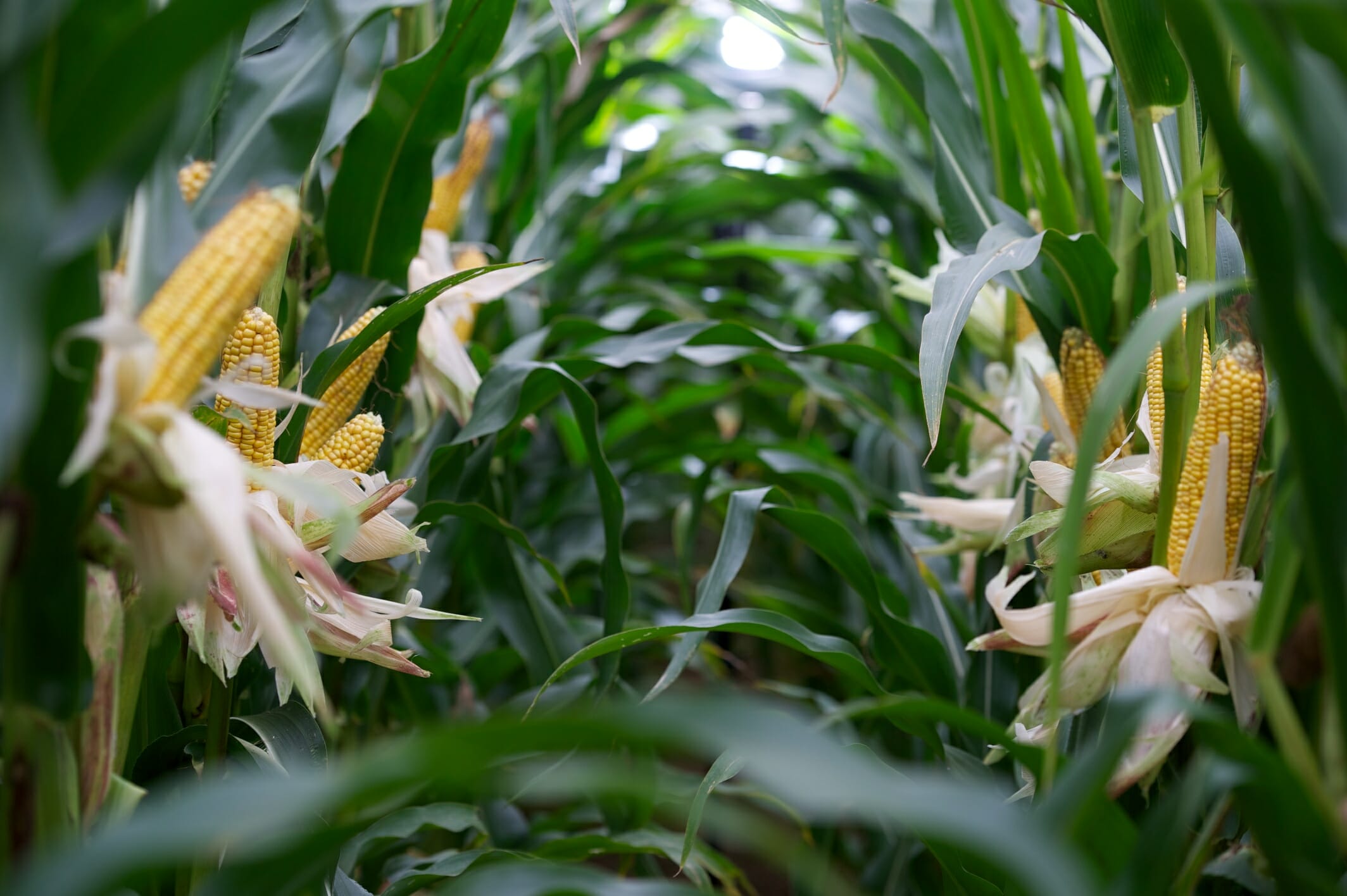
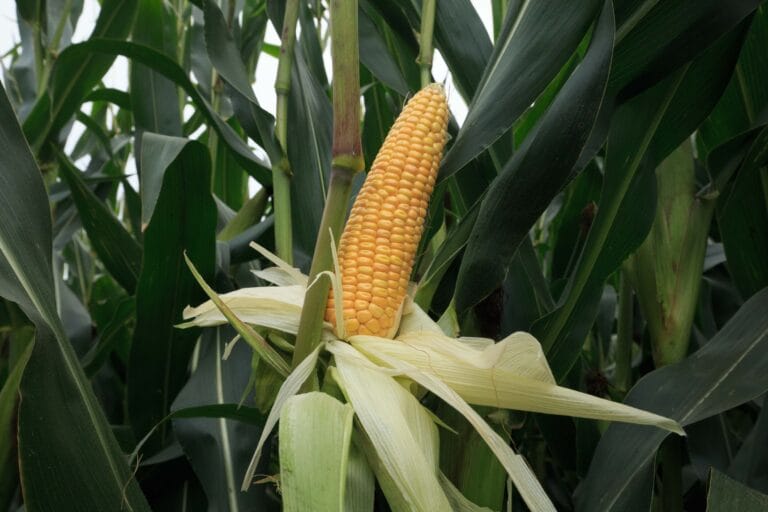






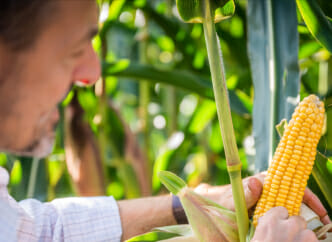
Over the last 10 years, breeders have made great progress in improving 2-row feed winter barley varieties. Newer varieties offer superior yield potential with better disease resistance and good grain quality attributes – desirable characteristics recognised by all feed barley growers.
LG Caravelle leads the way in this new world, as the highest yielding 2-row winter barley to join the 2023/24 AHDB Recommended List.
Bred by Limagrain, LG Caravelle dispels any misconception that 2-row barleys are lower yielding than hybrids, as it offers UK yields of 106% – which is as high as the present top yielding hybrids. Its performance in the east (109%) is exciting, with a significantly higher yield potential than any other variety; including hybrids – where it has a 3% advantage.
More importantly, the variety has shown a high consistency of performance across both regional and seasonal data sets.
These high yields are backed up by an excellent disease profile, reflected in LG Caravelle’s high untreated yields.The variety has a good rating of 7 for mildew, which can be a difficult disease to control in winter barley, as we saw last spring. Limagrain data suggests a 7 rating for brown rust – again this disease can be the yield robber in many seasons when not effectively controlled.
The variety has a respectable 6 rating for Rhynchosporium, a 5 for Net Blotch and is BaYMV resistant.
Agronomically, LG Caravelle is shorter strawed like LG Mountain, and offers both good lodging and brackling ratings with an earlier maturity (0).
LG Caravelle also offers an exceptionally high specific weight for a winter barley, at 71.8 kg/hl; one of the best available and only surpassed by the old favourite, KWS Cassia.
Early indications from AGRII black-grass competition trials in Cambridgeshire, suggests that LG Caravelle is competitive in a black-grass situation, offering high yields and black-grass ear reduction levels similar to that of hybrids.
Download the latest edition of LG GatePost here
LG Denmark Study TourIn the spring, Limagrain took a group of UK growers to Denmark, to look at regenerative and conservation agricultural practices.
After two full days of visiting farms, agronomy companies and a plant breeder, there was some very interesting and surprising feedback:
GEORGE ATKINSON, LINCOLNSHIRE: “It’s been fascinating to see all the different farming systems, and also learn about Danish policies that contradict themselves. I was expecting to come and see the future, but some of the growers are where we were 15 to 20 years ago.”
AL BROOKS, HAMPSHIRE: “I came here with a preconceived idea that we were going to learn something from the Danes in terms of their view towards conservation and regenerative agriculture. I was stunned by the amount of red tape they are subjected to. They are constricted in the industry and don’t have the voice with government.”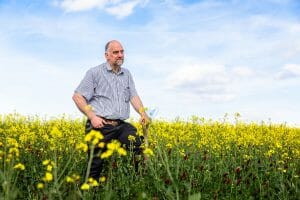
TIM PARTON, STAFFORDSHIRE: “I think the government advisors in Denmark need to take a real hard look at what they are trying to achieve, and what their directives are. They are so restrictive; they are missing out on the big benefits they could be getting from regenerative and conservation agriculture. They need to help their farmers more, rather than restrict them.”
“Discovering that UK farming practice with regards to conservation agriculture or regen is ahead of Denmark, was a surprise to many on the trip, and a real positive take home message for the UK.
It’s very noticeable that plant breeding is paramount to the future direction of agriculture, as practices move towards lower input and better disease resistances. Limagrain look forward to sharing what we do with growers from the UK and abroad,” says Tom Barker of Limagrain, who hosted the trip.
Download the latest edition of LG GatePost here
Survey reveals variety decisions driven by regional trials informationArable farmers favour local variety trials over national demonstrations when making crucial decisions about what varieties to grow next season, a survey by plant breeders Limagrain UK reveals.
The online questionnaire shows the overwhelming majority (86%) regard the information they gain from regional variety demonstrations as being more relatable than from national events.

Tom Barker, Cereals and Pulses Product Manager
“This is mainly because local events offer the chance to see how new and existing varieties perform in local soils, climate, and disease situations,” comments Limagrain UK cereals and pulses product manager, Tom Barker.
“Indeed,43% of farmers responding to the survey have attended a regional event with variety trials in the past 12 months, compared with just 28% that have attended a national event, such as Cereals or Arable Scotland.”
“Around one quarter have taken part in an online trials webinar, such as those organised by AHDB, or NIAB TAG.”
“Three-quarters of growers are prepared to travel up to an hour or more to attend a regional variety trial, and alongside location and practical considerations, such as date and time, the quality of technical information on offer is a major factor influencing the decision to attend,” he says.
This shows growers value the opportunity to gather technical information on individual varieties, and how to grow them, he points out, although of particular interest is the ability to compare treated and untreated plots to see first hand how varietal characteristics stand up to seasonal pressures.
“Other areas of interest include; late versus early drilling comparisons, different methods of establishment, alternative fungicide programmes, and trace element/ micronutrient work.”
As might be expected, winter wheat varieties are generally of most interest, followed by winter barley, spring barley, oilseed rape, then a host of other minor crops.
“It is also clear from the survey that, while growers take information from a range of sources when making variety decisions, including independent bodies, breeders, agronomists, and seed merchants, the vast majority (93%) would confidently select a variety based on what they had seen or learned at a variety trial,” says Mr Barker.
“We organised the survey to find out what growers want from trials events, and how we can tailor them to their needs in the future.”
“It shows that growers base their varietal decision making on what they see or learn at demonstrations and trials, with regional events once again proving their worth as a place growers can go to gain knowledge and understanding of varieties.”
Summer Demo Days
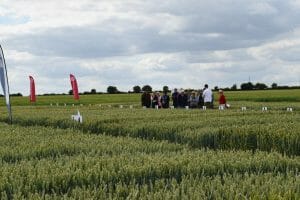
Recognising the importance of local information when making variety choices, Limagrain UK hosts a series of events around the country every year.
This summer’s programme during June and July features five locations, from our milling wheat demonstration on the Essex coast near Maldon, up to the Perth winter wheat trials in central Scotland (see panel for details of all events).
Every demonstration will showcase a range of new and existing varieties, alongside five new Candidate wheat varieties currently going through Recommended List approval. These include two potential biscuit wheats, LG Arkle and LG Grendel, and two hard feed wheats, LG Beowulf – the highest yielding feed wheat Candidate – and LG Redrum.
Limagrain UK’s Rothwell site will also feature the new winter barley Candidate LG Capitol, plus the highest yielding two-row feed, LG Caravelle, which joined the RL this year.
Limagrain Live is Back!Join Ron Granger, LG Arable Technical Manager and Tom Barker, LG Cereals & Pulses Product Manager, for a round table discussion on Varieties, Soils and Policy, with our panel of industry experts;
• Tim Parton – Farm Manager, Staffordshire
• Susan Twining – Chief Land Use Policy Adviser (CLA)
Ron and Tom will cover breeding for the future, how LG varieties could fit into a regenerative/conservation system and how to get the best performance from them.
This will be followed by a live Q&A with our panel, so come prepared with questions or enter them ahead of the event on the registration form.
Tim runs a 300-hectare estate on managed regenerative agriculture policy for the past 15 years. Through research and trials and by transitioning to no-till, the system has allowed the farm to eliminate insecticides and reduce herbicide and fungicide use.

Susan leads the CLA Land Use team which covers policy issues and advice relating to agriculture, forestry and woodland, and the environment. This includes issues such as new agriculture policy.
If you attend our online panel discussion, you will be eligible to claim both BASIS and NRoSO points.
Interested?
Click here to sign up for the event and submit your questions for our panel – link will follow closer to the event.
Crusoe delivers for Gold award winning growerAfter scooping top spot in the 2022 Yield Enhancement Network (YEN) Milling Quality Awards, Crusoe has once again proven its reliability for Norfolk farmer Chris Eglington.
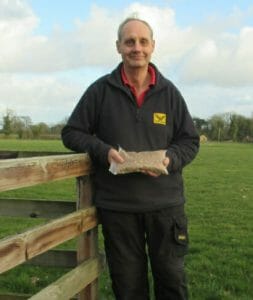
Chris Eglington
More than one-third (150 ha) of the 400 ha farm near Dereham is down to Group 1 milling wheats, divided evenly between Crusoe in the first wheat slot after peas or oilseed rape, and Skyfall as a second wheat.
“We’ve been growing Crusoe for at least eight seasons and it is a very reliable variety,” Mr Eglington says. “It’s not necessarily the highest yielding, but it performs every year.”
This performance was clearly demonstrated last harvest, when his YEN entry won Gold in the YEN Milling Quality Awards, with a protein content of 14.4%, specific weight at 80.7 kg/hl, and Hagberg of 355 seconds. This bucked the trend in a season characterised by high specific weights and Hagberg falling numbers, but generally lower protein content.
Mr Eglington acknowledges optimising yield and achieving full milling specification is a fine balancing act, but says Crusoe has generally met the grade every year he has grown it.
His YEN-winning crop was managed no differently to other milling wheats on the farm, which has operated a controlled traffic system across the entire area for the past decade.
For the 2022 YEN crop, grown on a good medium loam field, the preceding Aspire oilseed rape stubble was allowed to green-up for as long as possible, before cultivating with an 8-metre Vaderstad Carrier in early September. Wheat was then drilled within a couple of days, using the farm’s 8-metre Vaderstad Rapid, rolled, and a residual herbicide applied.
“We use variable seed rates, based primarily on the soil’s clay content. There are 13 different soil types on the farm, from sand to strong clay, and in some cases the subsoil is different to the topsoil.
“Generally, the lighter the land, the lower the seed rate, whereas on the heavier land we’ll increase rates, as it is usually harder to create the optimum seedbed. Having said that, conditions were so good last autumn, some of the heavier land established better than the lighter ground.”
Little and often nutrition
After many years of growing milling wheats, Mr Eglington recognises the importance of optimising crop nutrition to achieve both yield and the quality required by end users.
Variable rate potash, lime (where required) and nitrogen applications are used across the farm, and he has worked closely with grain buyer Camgrain, and in the past with Sainsbury’s, to optimise nitrogen inputs and protein.
“Although there’s a lot of pressure to reduce nitrogen use on farms, there’s no escaping the fact that if you want to get a good milling wheat crop with high yield and high protein, unfortunately there is no other option than to make sure the crop has enough nitrogen. Being a few kilos under could take away the premium and be a big money loser.”
He favours a “little and often” approach, based on his experience of growing milling wheats, and in-season crop monitoring to fine-tune requirements.
Although the preceding crop can affect residual nitrogen levels in the soil, given the uncertainty over how much will be available and taken up by the plant, Mr Eglington prefers to use regular tissue testing as a means of adjusting nitrogen programmes to crop need.
“We haven’t really done much soil testing, but do use the Yara N-Tester to test what’s in the plant tissue, and then the N-Sensor to apply nitrogen where it’s needed, and less where it’s not, so you end up with a very even crop.”
On average, first wheats typically receive a total of 280 kg N/ha, with second wheats getting an additional 10-15 kg N/ha, due to the lower residual nitrogen after the preceding wheat crop.
Nitrogen is normally applied as four splits of solid granular fertiliser, but will sometimes be supplemented with a small amount of liquid urea towards the end of the season (June) to help build grain protein if required.
Keeping crops clean
A standard four-spray fungicide programme is used across all of Mr Eglington’s wheats, from T0 through to T3.
“We don’t cut corners in terms of timing. It would be very unusual for us to miss out one of the main fungicide sprays, but we will alter products according to the weather and disease pressure at the time. AHDB benchmarking data shows we generally spend slightly less than average on fungicides, but spray slightly more frequently.
“Again, it’s a little and often approach. Fire-fighting disease is a lot more difficult than going out there and preventing it in the first place.”
Disease-wise, he says Crusoe is a predictable variety with no significant problems. “We know brown rust can be an issue later in the season, so we treat crops accordingly to manage that risk.
Six Steps to Spring Barley Success“We have tried other milling varieties in the past, but and have come back to Crusoe because it is a reliable variety,” he concludes.
As spring barley drilling gets underway in some areas, Limagrain UK’s arable technical manager, Ron Granger, outlines six ways to get the most from the crop this season.
- 1. Understand end market/ contract requirements
End user requirements will influence many agronomic decisions, particularly nitrogen strategy, so it is essential growers are clear about the quality criteria that must be met, says Mr Granger.
“Depending on the locality and the opportunities for selling to different end users or export markets, the barley crop you grow – and the agronomic inputs required – will be determined by the sector you target.”
This is particularly true for those dependent on hitting a certain grain nitrogen percentage to achieve the contract premium, notably distilling, which requires 1.65% N or lower, brewing 1.65-1.85%, and grain distilling at 1.85%+. Grain nitrogen is not a concern for animal feed.
- 2. Choose the right variety
In many instances, variety choice is also determined by the end user or contract chosen.
However, for those still to decide what to grow, Mr Granger recommends considering one of the dual use varieties, such as LG Diablo, which has good yield performance, with several end market opportunities, offering an advantage over many varieties now listed.
“Newer recommended varieties certainly offer higher yield potential, and if contracts are offered, then they are certainly worth considering. Dual use varieties offer growers flexibility for the distilling, brewing and feed market sectors.”
- 3. Wait for good drilling conditions
Limagrain trials show earlier drilling in spring can improve yield potential, however, this is mainly only possible on lighter, more free-draining land, that will dry and warm quicker than a heavier soil type.
“Early drilling will significantly increase disease risk, so consider more disease resistant varieties for this situation,” says Mr Granger.
“Generally, patience is required to wait for the right window of opportunity, when both the weather and soil conditions allow good seedbeds to be created with rising soil and air temperatures, to ensure rapid emergence and establishment, with continued plant growth.
“Certainly, we saw the value of earlier drilling in spring 2022, with most growers drilling earlier than usual in most regions. This, along with upfront nutrition before the drought hit, was certainly part of the reason why growers achieved higher yield potential than originally anticipated.”
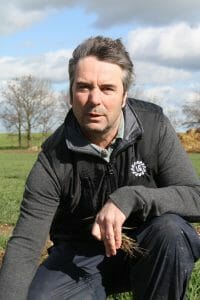
Ron Granger
- 4. Optimise seed rate
A survey of more than 100 growers by Limagrain last year showed half (49%) of growers were typically sowing spring barley at 300-350 seeds/m2, and most (76%) targeting a yield of 8 t/ha.
This rate appears to be about right when drilling into good conditions, however Mr Granger says seed rates must be tailored to individual situations.
Limagrain trials comparing variety seed rates over various seasons and regions suggest that with more vigorous, higher tillering varieties, such as LG Diablo, the optimum seed rate is 350 seeds/m2 when drilling into ideal conditions around mid-March.
However, this should be adjusted up or down depending on the weather, seedbed quality, moisture availability, drilling date, and the growers’ own experience on each site, says Mr Granger.
“Late-sown crops inevitably produce fewer tillers and therefore fewer ears, which must be compensated for by increasing seed rate.”
A lower rate of 300-325 seeds/m2 could suffice if drilling into an “onion bed” in March, but when forced to drill into April, due to the weather, or agronomic reasons, such as black-grass control, pushing rates up to 400 to 450 seeds/m2 may be more appropriate to achieve the optimum final ear number and a competitive crop in a black-grass situation, he advises.
- 5. Maintain tiller number
Once crops are established, Mr Granger says the best way to achieve high spring barley yield potential is to ensure high final ear counts. The AHDB Barley growth guide suggests final target ear population should be around 775 ears/m2.
“It is interesting to note that in 2019, higher yield potential was achieved from even higher final ear counts, approaching 800/m2 by harvest. An 8-9 t/ha crop needs around 800 ears/m2, which at a 350 seeds/m2 rate, equates to around 2.5-3 tillers per plant at harvest.
“However, experience shows optimal tiller and ear counts may be underachieved in many situations, meaning crops fall short of achieving their full yield potential.”
The biggest issue is often the weather, Mr Granger acknowledges. Drought conditions will cause tiller loss, so he says to ensure numbers are high enough at the outset by selecting high tillering varieties, using an appropriate seed rate, and driving establishment and early rooting by implementing a balanced nutrition regime early in the crop’s development.
“Traditionally, spring barley was often seen as a lower input crop, with growers reluctant to increase nitrogen application rates in fear of exceeding maltsters grain nitrogen limits. However, LG trials over many seasons of testing, indicate that using higher N rates can be beneficial.”
In the trials, a standard seedbed application of 120 kg N/ha was compared to a split nitrogen application of 150 kg N/ha, with the additional 30 kg applied at late tillering. This resulted in a yield benefit of 0.4-0.5 t/ha over a single seedbed dose, with little or no impact on grain nitrogen.
“Higher yielding varieties respond positively to higher nitrogen inputs, due to their increased yield potential and dilution of grain nitrogen content.”
6. Optimise other nutrients
Alongside nitrogen, optimising other macronutrients, such as phosphate, potash, magnesium and sulphur, has proven beneficial to tiller retention and final yield.
These should be applied in the seedbed or soon after drilling to promote strong rooting and early plant growth, Mr Granger advises.
“Tissue analysis of the young growing crop can help identify any shortfalls in nutrition before visible symptoms appear, and is a relatively inexpensive way of targeting a high yielding crop.”
Additional micronutrients, such as manganese, zinc, copper, iron, and boron, applied at the stem extension phase into flowering, are also useful, ensuring a healthy crop and good ear fertility, whilst also helping secure high grain number and maximum yield potential. “Apply these independently with other key inputs, or as a multi-nutrient product.
“Spring barley is a fast-growing crop and if key nutrients are deficient at any time, yield potential will be compromised.”
Also consider early growth regulator applications on crops to promote rooting and strong uniform tillering, he adds.
At least two fungicides are recommended to maintain tiller number and healthy plants, including the awns and maximum grain development. Typically, the first application is at GS 25-31, with the second targeted between GS 39-55.
“Of course, if the season dictates a low disease pressure, or a drought situation, flexibility in fungicide input and timing should be adjusted for the final yield potential in hand.
“Spring barley can move through growth stages quickly, so close monitoring of the growing crop is essential.”
For more info, see Limagrain’s Spring Barley Agronomy videos
LG GatePost Newsletter – Feb 2023The February 2023 issue of LG GatePost is now available to download.
This edition features articles about our exciting new Wheat, Winter Barley and Oilseed Rape varieties that are taking leading positions across the 2023/24 AHDB Recommended List.
You can read about how moving to direct drilling of LG Diablo Spring Barley has proven successful for Berwickshire grower, Neil White and watch our Spring Barley agronomy series of videos that give you all the technical know-how to successfully grow your Spring Barley crop.
There is also information about our upcoming Trials Events, and online Technical Webinar.
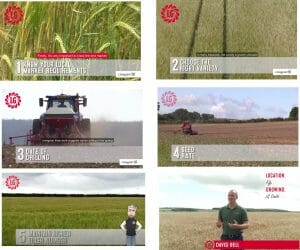
Introducing our Spring Barley AgRONomy video series, with commentary and technical advice from Limagrain UK Arable Technical Manager, Ron Granger.
The videos take you through how to identify the local market requirements, to variety choice, drilling dates and seed rates, with the 5th video providing tips on how to maintain a higher tiller number.
The final video is an interview with Spring Barley grower, David Bell of Fife, Scotland as he chats with LG about his YEN (Yield Enhancement Network) award winning spring barley crop, LG Diablo. David reveals the secret to his success with YEN over the years and how in 2020 he won the spring barley YEN with LG Diablo with an eye-watering yield of 13.4 tonnes a hectare. He discusses how he is using direct drilling and reduced tillage within his rotation, along with a plough-based system for his potatoes and break crops. The grower also shares how it’s important to be open to learning and engaging with the experts at Limagrain, alongside understanding your own soils and your own fields.
You can view the entire series here.
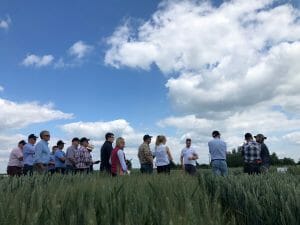
With a tightly packed schedule of events to attend, our small but perfectly formed team of experts spend much of June and July travelling the length and breadth of the UK, bringing our learning, expertise and innovation to you, the grower.
Ron Granger and Liam Wilkinson come with a combined half century of experience in agriculture, unparalleled knowledge and practical experience of cultivating LG’s formidable cereals and oilseeds portfolio, alongside notoriously unbiased opinions.
If you have a burning question about future variety selection, nutrition or establishment, no doubt you will run into one or both if you are attending any of the diverse range of agricultural events that punctuate the busy summer months.
If you are growing or thinking about growing an LG variety and are looking to achieve a deeper understanding of where they sit in the current market, or indeed fit with your own very particular conditions, I would urge you to register for one of our summer demo days.
Alongside the usual trials tours and opportunity to catch up and exchange ideas with colleagues and other industry professionals, we will be running a programme of talks and seminars, with the prospect to hear from the breeders as well as brand partners.
Dates for 2023 are:
- Woolpit – 20th June
- Newbury – 21st June
- Maldon – 23rd June
- Rothwell – 4th July
- Perth – 26th July
You can register for the events here.
A move to direct drilling LG Diablo spring barley has proven successful for Berwickshire grower Neil White, as yields and quality impressed in a challenging season.
Mr White has been direct drilling crops for the past seven years at the 260 ha (650-acre) Greenknowe Farm near Duns, but until this season, had not established spring barley this way.
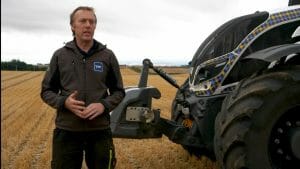
“Barley has been the last crop I’ve gone over to direct drilling with, but we successfully tried it on two-thirds of our area last spring, sowing directly into overwintered stubble. We will direct drill all of our barley again this spring, either into overwintered stubble or after a cover crop.
“It’s really pleasing for me to see that LG Diablo works in that direct drilled scenario, and still produces a good yield and grain quality. I’m very happy with it.”
The farm’s target spring barley yield is usually around 7.4-8.6 t/ha (3-3.5 t/acre), and this year’s 35 ha of LG Diablo was at the top end of that range, despite some very dry conditions during the growing season.
Quality was good too, with nitrogen coming in at 1.52%, and specific weight at 67.4 kg/hl, allowing everything to meet the malting specification required by grain buyer, Simpsons Malt.
“It produced a nice bold grain, despite the very dry spell. Everything hit the spec for malting, which is spot-on.”
Mr White acknowledges there were a few light grains this season, which he attributes to the lack of rain, preventing some grain from maturing and filling fully. “We certainly haven’t seen any issues with screenings before, so I’m sure it’s due to the year, not the variety.”
Maximising establishment
Mr White recognises that his Mzuri drill does move more soil than other direct drills, but believes this benefits barley establishment in the spring, as it helps aerate the soil, warm it up and mineralise some nitrogen.
Switching from a combination drill to the Mzuri has also allowed him to sow spring barley at variable seed rates to account for establishment differences on varied soil types, and put fertiliser ‘down the spout’ with seed, to get crops off to a good start.
Seed rates last season typically ranged from 380-440 seeds/m2 on the variable soils, with crops sown on 33cm rows. That is a much wider spacing than spring barley is conventionally sown at, but he believes LG Diablo’s vigour enables it to fill the gaps between rows nicely.
“Also, it doesn’t brackle, which is something that is always a threat if weather turns catchy at harvest, especially on wider rows.”
Wider benefits of direct drilling
Soil carries machinery better when it is not ploughed.
Moving less soil reduces total fuel consumption which saves money and improves the carbon credentials of direct-drilled malting barley.
In demand from distillers
LG Diablo’s consistency is valued by end users too, says Mike Dagg, senior grain trader at Simpsons Malt, who expects it to remain one of the top two varieties grown in Scotland for distilling over coming years.
“We’ve had the variety for five or six years now, and we know it goes through the malting process very well. If it performs well going through the malting process, then there’s every chance the malt product will also do well going through distilling too.”
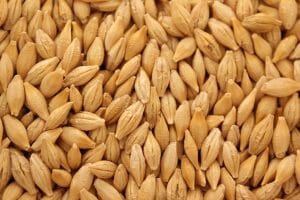
Indeed, over the past few years, LG Diablo has shown consistently good performance in distilleries, both in terms of spirit yields and processability, which ultimately leads to good efficiency and maintains demand for the variety, he says.
“LG Diablo is now pretty universally accepted by the majority of the Scottish distilling industry, and I don’t really see that changing anytime soon.
“Because LG Diablo is so consistent, and benefits from dual use approval for brewing and distilling, it’s got the ability to compete with, and hold its ground against, any new varieties coming along.
“I don’t see anything coming through breeding programmes currently that suggests LG Diablo and Laureate will lose their dominance in the Scottish distilling market.”
Dominating the 2023/24 AHDB Recommended ListIt’s a grand slam as Limagrain UK’s exciting new wheat, winter barley and oilseed rape varieties, take leading positions across the 2023/24 AHDB Recommended List.
LG Redwald secures poll position as the highest yielding winter wheat.
LG Caravelle is the highest yielding two row winter barley.
Attica joins as the highest yielding oilseed rape variety, with the essential turnip yellows (TuYV) and pod shatter resistance traits.
LG Wagner is the highest yielding addition to the northern OSR Recommended List.
LG Redwald sets a new standard for high yielding wheats, yielding 107% in the UK, (107% in the east and 109% in the west). As a soft wheat, the variety also offers potential for distilling.
These high yields have been consistently proven across National List trials, over seasons, drilling date and soil type, particularly in the second wheat and later drilling situations.
LG Redwald has an excellent disease resistance profile, with very good Septoria resistance as well as orange wheat blossom midge (OWBM) resistance.
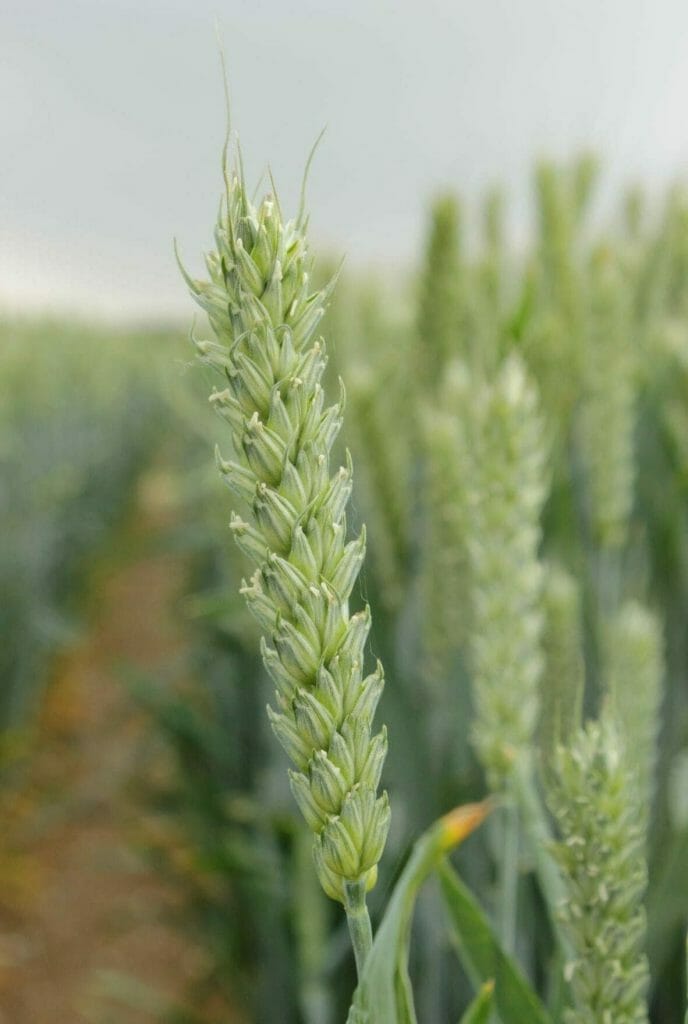
LG Redwald
“It is an exciting variety that should deliver for growers in 2023/24, if supported with good agronomic practise to ensure it meets its full potential on farm, and comes at a time when growers are looking more than ever to maximise output in order to maintain profit in times of increasing costs.”
– says Ron Granger, arable technical manager.
LG Caravelle is the highest yielding two row winter barley to join the 2023/24 Recommended List.
LG Caravelle dispels any misconception that two row barleys are lower yielding than hybrids.
LG Caravelle
It offers UK yields of 106.3% – which is as good as the top yielding hybrid barley variety – and yields 2% above hybrids in the east.
These high yields are backed up by an excellent disease profile, reflected in LG Caravelle’s high untreated yields. LG Caravelle also offers an exceptionally high specific weight for a winter barley, of 71.8 kg/hl.
It is an early maturing variety with stiff straw; both important characteristics for a winter barley.
Attica is a newly recommended fully loaded hybrid with full UK recommendation. It joins the Recommended List as the highest yielding variety to combine stable high yields with the genetic security of TuYV and pod shatter resistance traits.
Attica has a strong autumn growth habit, offering growers a wide drilling window and a very good disease resistance package.
Attica
LG Wagner joins the north Recommended List as the highest yielding variety (108.1%). In 2022, it was the highest yielding variety, also offering the security of pod shatter and TuYV resistance. It is a shorter hybrid with stiff stems, combined with solid light leaf spot resistance and good stem health.
“This is a tremendous achievement and is the first time that any breeder has achieved this level of success across all of the cropping sectors in the last decade, if not longer.”
– says William Charlton, marketing manager for arable seeds.
“We believe this success is built on our unique UK focussed breeding approach, which means we are able to select for the UK’s maritime climate from day one in the breeding programme. This allows us to look for consistently high yielding varieties from the very start of our programme, to suit UK growers and end user requirements.”
YEN Innovation Award winnerThis year, to mark 10 years of the Yield Enhancement Network (YEN), a new Innovation Award has been commissioned which was presented at the YEN conference on 24th January. The award is for an outstanding contribution to on-farm innovation and has been sponsored by Limagrain.
“Limagrain has been an active supporter of YEN since its inception so it seems only fitting that we sponsored the Innovation Award for the 10th anniversary conference,” says Limagrain’s Arable Marketing Manager, Will Charlton.
“As a company that invests in UK based breeding activities for all major arable crops, innovation is a core value of our business. Alongside bringing new varieties to market, we invest a considerable amount of time and money in examining how our varieties perform in different farming systems. Over the years YEN has been invaluable in helping us facilitate this work by providing a structure and detailed analysis to aid Limagrain’s collaborations with innovative farmers across the country.”
The standard of nominations was exceptionally high with all the farmers demonstrating a passion for progress, learning and collaboration. However, there could only be one winner. The award was presented by Limagrain’s Arable Technical Specialist, Liam Wilkinson.
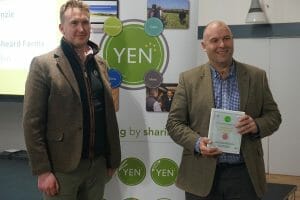
Liam Wilkinson and Russ McKenzie
“I’m delighted to announce that Russ McKenzie, farm manager of DJ Tebbit and John Sheard Farms, has won the YEN innovation Award. Russ has demonstrated his commitment to YEN by being one of the few farmers to provide an entry every year since YEN began.
In particular, the judges were impressed by his recent on farm trials work which has sought to investigate fungicide, nutrition and variety interactions under his own establishment system, utilising the latest digital and molecular diagnostics, alongside a trials plot combine to analyse the results. The complexity of his trials required dedication and a significant time commitment throughout a busy growing season. The data generated has provided valuable insights into how different inputs interact and influence a farming system.”