LG Skyscraper is up for the challenge in North Yorkshire
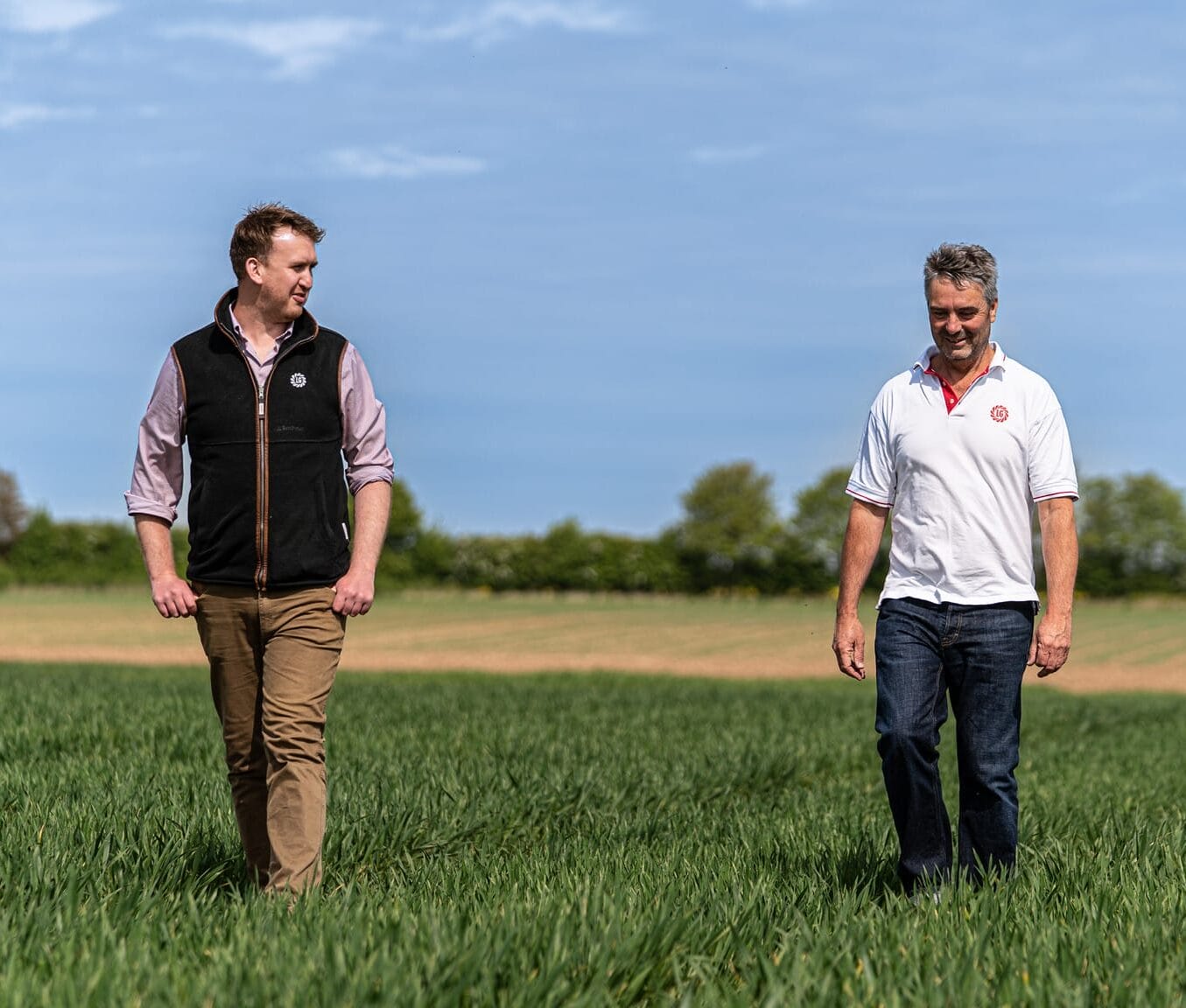
When Yorkshire farmer Tony Bell started growing LG Skyscraper two years ago, he did so hoping the variety would be up to the challenge of his lighter soils, not ideally suited to high-yielding wheat crops.
So far, the variety has lived up to expectations though, performing well in a challenging 2020/21 growing season that featured a wet autumn, followed by cool, very dry conditions during April, then rain in May and June.
His 20 ha (49 acres) of LG Skyscraper kept growing well throughout the changing conditions last season, and went on to average more than 10 t/ha, which was around 1 t/ha above the typical average wheat yield for the 265 ha farm near Thirsk. The crop also produced a nice bold grain sample, with specific weight coming in at 73-74 kg/hl.
“Our soil type is relatively light, so it’s not the best wheat-growing land, therefore we wanted a variety that would perform well, both in more adverse seasons when it turns very dry, and in wetter years,” Mr Bell says. “From what we’ve seen so far, LG Skyscraper seems to fit the bill.”
He acknowledges the spring growth of all varieties was impacted in some way by last April’s drought, with some very short crops through spring, however LG Skyscraper’s longer straw and strong agronomics proved beneficial.
“Because it was so dry, we didn’t need to apply any growth regulators until May, which worked well in the end as crops grew away quickly once rain came during that month. LG Skyscraper did appear to be more resilient and performed better than our other varieties in those conditions,” he says.
Increasing area
This year, Mr Bell, who manages the farm in partnership with his wife, has therefore increased his area of LG Skyscraper to 34 ha (85 acres), all sown as a first wheat after a range of different break crops that include oilseed rape, potatoes and forage maize.
Land typically receives one pass with a Sumo cultivator, before drilling with a Väderstad Rapid. “We generally favour October drilling for our LG Skyscraper, however, drilling dates for the harvest 2022 crop ranged from the 9th to the 23rd of the month, depending on the preceding crop. This year we’re also growing KWS Dawsum and Gleam, which are both September-drilled,” he notes.
Like all wheats on the farm, this year’s crop of LG Skyscraper established well and came through a relatively mild autumn and winter with good yield potential, Mr Bell reports. There was some anxiety over the potential impact of another dry April, however generally he remains happy with how crops are currently looking.
Tony Bell
“Despite the mild winter, there haven’t been any particular disease issues,” he adds.
Mr Bell recognises LG Skyscraper offers a reasonable disease resistance profile, reflected by its solid untreated yield on the AHDB Recommended List (82% of Control). The variety is rated 7 for mildew and yellow rust, 4.9 for Septoria (three-year rating), and like other leading LG wheats, carries Orange Wheat Blossom Midge (OWBM) resistance.
Last season, the dry, cool conditions in April meant he was able to make a slight saving on fungicides by not applying a T0 spray to his LG Skyscraper, however this year he did apply one.
“Given the rise in commodity prices, we wanted to do everything possible to maximise green leaf area and yield-building capacity throughout the season, and the T0 represents good value for money, relative to the high price of wheat.”
He has tried to make savings in other areas though, using the Yara N-Tester to help reduce the amount of fertiliser applied by 30-40 kg N/ha compared with last year, to nearer 170-180 kg N/ha. “Looking at nitrogen response charts, it may end up reducing yield slightly, but if we can get within 300 kg/ha of last year’s yield, I’ll be delighted.”
LG Skyscraper is up for the challenge in North Yorkshire
When Yorkshire farmer Tony Bell started growing LG Skyscraper two years ago, he did so hoping the variety would be up to the challenge of his lighter soils, not ideally suited to high-yielding wheat crops.
So far, the variety has lived up to expectations though, performing well in a challenging 2020/21 growing season that featured a wet autumn, followed by cool, very dry conditions during April, then rain in May and June. His 20 ha (49 acres) of LG Skyscraper kept growing well throughout the changing conditions last season, and went on to average more than 10 t/ha, which was around 1 t/ha above the typical average wheat yield for the 265 ha farm near Thirsk. The crop also produced a nice bold grain sample, with specific weight coming in at 73-74 kg/hl. “Our soil type is relatively light, so it’s not the best wheat-growing land, therefore we wanted a variety that would perform well, both in more adverse seasons when it turns very dry, and in wetter years,” Mr Bell says. “From what we’ve seen so far, LG Skyscraper seems to fit the bill.”
He acknowledges the spring growth of all varieties was impacted in some way by last April’s drought, with some very short crops through spring, however LG Skyscraper’s longer straw and strong agronomics proved beneficial. “Because it was so dry, we didn’t need to apply any growth regulators until May, which worked well in the end as crops grew away quickly once rain came during that month. LG Skyscraper did appear to be more resilient and performed better than our other varieties in those conditions,” he says.
Increasing area
This year, Mr Bell, who manages the farm in partnership with his wife, has therefore increased his area of LG Skyscraper to 34 ha (85 acres), all sown as a first wheat after a range of different break crops that include oilseed rape, potatoes and forage maize. Land typically receives one pass with a Sumo cultivator, before drilling with a Väderstad Rapid. “We generally favour October drilling for our LG Skyscraper, however, drilling dates for the harvest 2022 crop ranged from the 9th to the 23rd of the month, depending on the preceding crop. This year we’re also growing KWS Dawsum and Gleam, which are both September-drilled,” he notes.
Like all wheats on the farm, this year’s crop of LG Skyscraper established well and came through a relatively mild autumn and winter with good yield potential, Mr Bell reports. There was some anxiety over the potential impact of another dry April, however generally he remains happy with how crops are currently looking.
“Despite the mild winter, there haven’t been any particular disease issues,” he adds. Mr Bell recognises LG Skyscraper offers a reasonable disease resistance profile, reflected by its solid untreated yield on the AHDB Recommended List (82% of Control). The variety is rated 7 for mildew and yellow rust, 4.9 for Septoria (three-year rating), and like other leading LG wheats, carries Orange Wheat Blossom Midge (OWBM) resistance.
Last season, the dry, cool conditions in April meant he was able to make a slight saving on fungicides by not applying a T0 spray to his LG Skyscraper, however this year he did apply one. “Given the rise in commodity prices, we wanted to do everything possible to maximise green leaf area and yield-building capacity throughout the season, and the T0 represents good value for money, relative to the high price of wheat.”
He has tried to make savings in other areas though, using the Yara N-Tester to help reduce the amount of fertiliser applied by 30-40 kg N/ha compared with last year, to nearer 170-180 kg N/ha. “Looking at nitrogen response charts, it may end up reducing yield slightly, but if we can get within 300 kg/ha of last year’s yield, I’ll be delighted.”
Cambs grower recognises LG Skyscraper’s yield and resilience
The yield potential, grain quality and agronomic characteristics of LG Skyscraper have seen it hold its place on one Cambridgeshire farm, as others have fallen by the wayside.
Harry Sperling, who manages a 400 ha (1,000-acre) family farm near Huntingdon with his father, Henry, started growing LG Skyscraper in 2019/20, and has been pleased with its performance so far despite a challenging couple of seasons.
“Previously, we were growing RGT Saki and KWS Firefly, which performed well enough in terms of yield, but we found we were spending too much money on them. Last year we lost a few varieties following the emergence of the Cougar [Septoria] race, so in some ways we’re starting again to find varieties that perform on our farm.”
This year he is growing 35 ha of LG Skyscraper, alongside a range of other winter wheats, mostly hard Group 4’s, and a Group 2. “Our main reason for growing LG Skyscraper is yield,” Mr Sperling says. “But we also like its ability as a second wheat that we can drill late and combine early, to establish oilseed rape straight after.
“We grew it as a second wheat for the first two years, but are trying it as a first wheat this year to see where it fits best on our farm.”
LG Skyscraper’s grain quality characteristics are a further attraction, as most is sold into local soft grade milling markets, which attract a worthwhile premium, he notes. Last year’s crop yielded a respectable 10.42 t/ha in the second wheat slot, with 77-79 kg/hl specific weight and 11.8% protein.
That was despite tricky drilling conditions in the previous autumn and a prolonged cold, dry spell in late spring 2021. “We’ve found LG Skyscraper does cope well in a dry spring. It tillers and roots strongly and takes up nitrogen well, which helps it stay greener for longer. It’s a cracking variety and I’m pretty sure we could get 11 t/ha-plus in a good year.”
Mr Sperling recognises the importance of ensuring there is a high enough plant population to maximise yield, and says seed rates are increased from 400 to nearer 425 seeds/m2 for second wheats sown towards the third week in October.
Second wheats typically receive around 250 kg N/ha in four splits, including urea in mid-February, ammonium sulphate and urea in early and late March respectively, then a final ammonium nitrate application in mid-April (timings depending on the season).
Competitive ability
Mr Sperling says LG Skyscraper’s tillering capacity and height also give it a useful competitiveness against black-grass, which can be an issue on the reasonably heavy soils. Land going into winter wheat is typically cultivated with a Väderstad TopDown, followed by a Rexius Heavy Press, then is left for black-grass to germinate before being sprayed off with glyphosate ahead of drilling in the second or third week of October.
“We’re definitely improving black-grass control, although there is some that we have to live with, so the tillering and height of LG Skyscraper certainly help. If black-grass gets too much though, we will put fields into spring cropping.”
This season, he is growing 10 ha of LG Diablo spring barley on the worst black-grass field. “It’s a high yielding, multipurpose variety that delivers low grain nitrogen and high alcohol content, so is good for both farmers and buyers.”
Mr Sperling last grew LG Diablo in 2020, when heavy rain disrupted autumn drilling schedules. “It was a tricky year as spring 2020 turned very dry, but Diablo coped pretty well and it all made malting spec at 1.6% grain nitrogen.
“The LG Diablo was last to harvest in that year, but it worked well in terms of spreading our workload,” he adds. “Winter crops are still clearly the best for gross margin, but we will keep spring barley in the rotation where required.”
Survey puts spotlight on spring barley agronomy
As spring drilling gets underway in some areas, a survey of more than 100 growers by Limagrain UK provides a unique insight into spring barley agronomy.
All the UK’s main barley-growing areas were represented in the survey, which found that while farm practices are generally in-line with recommended approaches, there are some potential areas for improvement.
Ron Granger
Limagrain UK’s arable technical manager, Ron Granger examines three key areas.
Seed rates
Generally, seed rates appear about right, with half (49%) of growers sowing spring barley at 300-350 seeds/m2, and most (76%) targeting an 8 t/ha yield.
“Our trials work shows that for mid-March sowing in good weather and soil conditions, 350 seeds/m2 is optimal for modern, high-yielding varieties. An 8-9 t/ha crop needs around 800 ears/m2, which at a 350 seeds/m2 rate, equates to 2.5-3 tillers per plant at harvest,” Mr Granger says.
But seed rates must be adjusted to drilling date, weather and seedbed conditions, he continues.
“For example, if you’re sowing early on light land in perfect, warm seedbeds, then establishment and tillering capacity is greater and rates could be reduced to nearer 300 seeds/m2. Equally, if it’s late March, or soils are cold and/or cloddy, then go to nearer 375-400 seeds/m2, and for anything sown into April, or in a black-grass situation, consider 400-450 seeds/m2.”
Late-sown crops inevitably produce fewer tillers and therefore fewer ears, which must be compensated for by increasing seed rate, he explains.
“Modern varieties, such as LG Diablo or newcomer Jensen, offer excellent spring vigour and high tillering capacity,” he adds.
“The biggest issue is often the weather. Drought will cause tiller loss, so ensure numbers are high enough at the outset by driving establishment and early rooting with front-loaded nutrition.”
Optimising nitrogen
The survey shows 52% of growers usually apply 100-120 kg N/ha, and one third apply 120-150 kg N/ha to spring barley. But significantly, 45% plan to reduce nitrogen use this season.
This is not surprising given higher prices, however Mr Granger believes cutting fertiliser is a false economy if plant health, tiller retention and yield are compromised.
Limagrain research in Scottish and English barley trials shows that applying an extra 30 kg N/ha at late tillering before stem elongation, after an initial seedbed application of 120 kg N/ha, regularly returns a 0.4-0.5 t/ha yield benefit over a single seedbed dose, with negligible impact on grain nitrogen.
“With feed barley prices of £220/t, that could be worth £110, or more if there’s a malting premium, which far outweighs the £60-65 (N price of £2/kg) cost of the extra nitrogen. Why reduce rates if it compromises yield and, more importantly, the return on investment?”
Effort is better focused on timing applications to optimise uptake efficiency, he adds. “Some growers get good results from a ‘little and often’ approach, but whatever route you take, good plant health combined with soil moisture is essential for crops to efficiently take up nitrogen.
“Foliar trace element mixtures at times of plant stress can be beneficial when nitrogen uptake from soil is a limiting factor.”
Disease control
Most growers (70%) apply two fungicides, which is preferred in “normal” seasons, Mr Granger says. Typically, the first application is between GS 25-31, with the second targeted between GS 39-55.
“We all know how quickly spring barley moves, so close monitoring of growing crops is essential.
“Spring barley doesn’t have a main yield-building flag leaf, so all leaves, especially leaves two and three, must be kept clean and green as long as possible.”
Very dry conditions with no disease, may offer potential for cost savings, however he suggests this is best achieved by adjusting product selection and rate, rather than omitting sprays.
“If you’re only spraying once, it’s difficult to judge the best time to apply it, and you’re second-guessing the weather. Remain flexible and react to the season.”
Mr Granger also notes 70% of growers surveyed do not generally use an insecticide. “BYDV can be a problem in some areas, especially if there’s high activity of virus-transmitting aphids after a mild winter, so it’s something to monitor and treat if necessary.”
Look behind the Septoria headlines
Ed Flatman – Head of European Wheat Research
As a result of the perfect ‘Septoria storm’ this spring, many wheat varieties have seen their Septoria resistance ratings drop. Whilst this has mostly affected varieties with Cougar in their parentage, it is important to look at the detail behind each individual varieties’ genetics to fully understand the risk, says Ed Flatman, Head of European Wheat Research for Limagrain.
“It’s very easy to panic and group all the varieties with Cougar parentage into the same risk level – but this is not the case – and growers should take the time to really understand the risks to individual varieties,” he says.
“Parentage is a good indicator, however varieties do not inherit all the traits of both parents, therefore it’s important to understand the attributes of the new variety itself.”
Mr Flatman takes the example of the Group 3 biscuit, LG Astronomer. “The most recent additions to the Group 3’s last year all have Cougar in their parentage. LG Astronomer was one of these, and joined the group, offering the highest Septoria resistance rating of 7.4.”
Mr Flatman explains that on paper, with Cougar in its parentage, it is a (Leeds X Cougar) X Britannia cross, therefore LG Astronomer was likely to be one of the varieties affected.
“However, whilst other varieties in the group have seen their Septoria resistance ratings severely challenged by the Cougar strain, LG Astronomer’s genetics held on relatively well and its rating has only dropped from 7.4 to 6.8 on the current three-year rating, and 6.2 for the one-year (2021) rating.”
“This puts LG Astronomer as one of the highest rated Group 3 varieties for Septoria resistance, on both the new Recommended List three-year rating and the one-year (2021) rating.”
“It has not been as affected as other varieties in the group – and this is an important differentiation.”
“We know that relying on a single gene is a risky approach, but a lot of knowledge has been gained over the years, and rather than solely using field observations, we now use these in combination with molecular strategies to actively stack multiple resistances together to protect the individual lines, and this is the case with LG Astronomer.”
“As breeders, our focus is looking at overall resilience, and this includes protecting the resistances we have, as well as bringing through new lines that don’t come at the cost of yield.”
Protecting Septoria resistance ratings in the field
NIAB first looked at the Cougar isolates in an AHDB project in 2015 (and this has been furthered by a study conducted at Teagasc), which confirmed that these isolates were also virulent to a range of Cougar based varieties.
NIAB’s crop protection and agronomy specialist, Dr Aoife O’Driscoll explains: “A key point is that not all isolates are virulent to all varieties, which is why we have seen a range of responses across varieties with Cougar parents.”
Independent studies have shown that Cougar isolates are similar in fungicide sensitivity to the wider Septoria population, and there have been no significant shifts in azole sensitivity this season.
“Septoria should not be more difficult to control in terms of fungicide sprays, if programmes are timed properly. Growers should take confidence in this when planning their fungicide programmes this spring.”
NIAB supports the resistance ratings put forward by AHDB this autumn and Dr O’Driscoll recommends planning fungicide programmes based on the one-year (2021) rating, rather than the three-year rating.
10 top tips for ensuring high spring barley yields
Ron Granger, Limagrain UK’s arable technical manager, revisits the key agronomic principles for the best establishment of the barley crop, and for maintaining high tiller counts for optimal yields.
1. Know the end market or contract that you are growing for
This helps determine agronomic inputs for hitting desirable grain nitrogen content.
2. Choose the right variety
Usually determined by the end-use or contract chosen. LG Diablo is the highest yielding, dual-use variety* which means it can be used for either brewing or distilling.
3. Time of drilling
Patience is needed in the spring. Wait for when weather, soil conditions and temperature allow for good seedbed preparation, to encourage rapid emergence and establishment. a. Earlier drilling in the spring can encourage higher yields when on lighter, free draining land as a result of increased root and canopy size development. b. Disease risk may increase, so choose varieties with a stronger disease resistance.
4. Seed rate
Seed rate: for higher tillering varieties, the optimum seed rate is 350 seeds/m2 when drilling in ideal conditions around mid-March. This target can be adjusted depending on • Weather • Soil temperature • Drilling date • Seedbed quality • Moisture availability • Growers’ own experience on individual sites. When forced to drill into April, push rates up to 400-450 seeds/m2
5. Maintaining high tiller numbers
High final tiller or ear counts are critical for achieving high yield potential. An early balanced crop nutrition regime, encouraging better rooting and canopy development, play a critical role in securing final tiller survival.
6. Nitrogen and tiller numbers
a. Limagrain trials show that to achieve higher yields without exceeding grain nitrogen, 150 kg/ha nitrogen based on a split nitrogen application of a standard 120 kg/ha in the seedbed, plus an additional 30 kg/ha at tillering, is the best approach – when compared to a standard seedbed or split 50/50 nitrogen application of 120 kg/ha. b. Higher yielding varieties respond well to higher nitrogen levels, as nitrogen grain content dilution is achievable. Additional nitrogen input can be beneficial on better soil types and should be targeted for early canopy development, thus ensuring high final ear number – but beware on lighter soils regarding nitrogen timing in stress situations, when plant uptake is limiting.
7. Micro and macro nutrition
Pay attention to macro and micro nutrition for establishment, crop health and ensuring a high final tiller number
8. PGR’s
Early PGR applications programmes are recommended on thick crops, to promote additional rooting and strong uniform tillering.
9. Fungicides
Limagrain trials work suggests a minimum of two fungicides for maximum yield potential. If the season dictates low disease incidence , then a fungicide timing at the T2 G( S37-39) stage, may be satisfactory.
10. Harvesting
Harvesting of the crop when fully fit is advisable, to reduce lodging and brackling, and the effects on both yield and grain quality when weather conditions deteriorate. If using a desiccant, ensure the correct growth stage and harvest intervals are observed.
AHDB Barley Growth Guide
The AHDB Barley Growth Guide suggests that the final ear target population should be around 775/m2 (3 shoots/plant), however this is often underachieved, impacting on final yields.
*on AHDB RL 21/22
Breeder’s Perspective – Q & A
Sophie Buon, Barley Breeder for Limagrain UK gives us a little insight into her work.
Q. What are breeders doing to benchmark quality and innovation in spring barley?
Limagrain plant over 10,000 trial plots in the UK annually and screen varieties on key traits, including treated yield, end-use quality, resistance to pests and pathogens, and agronomic suitability.
It takes at least 8-10 years to develop and breed a variety, from an initial cross to a volume of commercial seed. To decrease this timeline and respond to the market quickly, breeders are combining genomic selection (a tool based on DNA markers, which helps predict yield and end use characters in early generation material), out of season nurseries in the Southern Hemisphere, and the use of greenhouses – to grow more generations per year.
Q. What are the challenges and difficulties in producing a dual use spring barley, like Concerto and LG Diablo?
In comparison to feed barleys, dual use varieties require a good yield with a minimum of agronomic standards (mainly specific weight, brackling and Rhynchosporium resistance), as well as a good malting profile. Brewers and distillers have around a dozen malting specifications that allow a variety to be suitable for both the beer and whisky industries.
The main requirements are an optimal Hot Water Extract (HWE) and Predicted Spirit Yield (PSY), to achieve high sugar extract from the malt and maximise the quantity of alcohol produced. It is also essential to breed for ‘non-Glycosidic Nitriles (GN) producer’ varieties, to avoid the production of harmful substances during distilling.
Q. What are barley breeders currently trialling and testing, that growers could see in varieties in 10 years’ time?
Our challenge will be to provide stable varieties adapted to climate change, and which have a lower impact on the environment, without having economic bearings on growers and end users. We must also adapt our breeding programme in line with the evolution of agricultural practices (e.g., no-till sowing or use of cover crops), and with economic and governmental policy, such as input costs, loss of chemistry and reducing the overall carbon footprint.
Look behind the Septoria headlines
As a result of the perfect ‘Septoria storm’ this spring, many wheat varieties have seen their Septoria resistance ratings drop. Whilst this has mostly affected varieties with Cougar in their parentage, it is important to look at the detail behind each individual varieties’ genetics to fully understand the risk, says Ed Flatman, Head of European Wheat Research for Limagrain.
Ed Flatman – Head of European Wheat Research
“It’s very easy to panic and group all the varieties with Cougar parentage into the same risk level – but this is not the case – and growers should take the time to really understand the risks to individual varieties,” he says.
“Parentage is a good indicator, however varieties do not inherit all the traits of both parents, therefore it’s important to understand the attributes of the new variety itself.”
Mr Flatman takes the example of the Group 3 biscuit, LG Astronomer. “The most recent additions to the Group 3’s last year all have Cougar in their parentage. LG Astronomer was one of these, and joined the group, offering the highest Septoria resistance rating of 7.4.”
Mr Flatman explains that on paper, with Cougar in its parentage, it is a (Leeds X Cougar) X Britannia cross, therefore LG Astronomer was likely to be one of the varieties affected.
“However, whilst other varieties in the group have seen their Septoria resistance ratings severely challenged by the Cougar strain, LG Astronomer’s genetics held on relatively well and its rating has only dropped from 7.4 to 6.8 on the current three-year rating, and 6.2 for the one-year (2021) rating.”
“This puts LG Astronomer as one of the highest rated Group 3 varieties for Septoria resistance, on both the new Recommended List three-year rating and the one-year (2021) rating.”
“It has not been as affected as other varieties in the group – and this is an important differentiation.”
“We know that relying on a single gene is a risky approach, but a lot of knowledge has been gained over the years, and rather than solely using field observations, we now use these in combination with molecular strategies to actively stack multiple resistances together to protect the individual lines, and this is the case with LG Astronomer.”
“As breeders, our focus is looking at overall resilience, and this includes protecting the resistances we have, as well as bringing through new lines that don’t come at the cost of yield.”
Protecting Septoria resistance ratings in the field
NIAB first looked at the Cougar isolates in an AHDB project in 2015 (and this has been furthered by a study conducted at Teagasc), which confirmed that these isolates were also virulent to a range of Cougar based varieties.
NIAB’s crop protection and agronomy specialist, Dr Aoife O’Driscoll explains: “A key point is that not all isolates are virulent to all varieties, which is why we have seen a range of responses across varieties with Cougar parents.”
Independent studies have shown that Cougar isolates are similar in fungicide sensitivity to the wider Septoria population, and there have been no significant shifts in azole sensitivity this season.
“Septoria should not be more difficult to control in terms of fungicide sprays, if programmes are timed properly. Growers should take confidence in this when planning their fungicide programmes this spring.”
NIAB supports the resistance ratings put forward by AHDB this autumn and Dr O’Driscoll recommends planning fungicide programmes based on the one-year (2021) rating, rather than the three-year rating.
Spring vigour makes LG Diablo firm favourite for Borders grower
Strong early vigour, consistency and ease of management are three reasons why LG Diablo has become the top spring barley choice for one Berwickshire grower.
Will and Annabel Hamilton, of Bee Edge Farm, grow 200 ha of spring barley for Simpsons Malt across 1,200 ha of mostly contract farmed land, close to the East coast near Eyemouth. Soil type is predominantly sandy loams, with many fields more suited to spring barley than winter wheat.
LG Diablo makes up almost two-thirds of his entire spring barley area (120 ha), with the remainder down to the heritage variety Golden Promise, grown for the craft brewery market.
“LG Diablo is the best spring barley variety I’ve ever grown on this farm,” Mr Hamilton says. “It’s easy to grow, consistently produces distilling quality and has set spring barley yield records on every single farm we’ve grown it on.”
Indeed, the variety won the Hamiltons’ two Bronze Awards in their first year of entering the Yield Enhancement Network (YEN) competition in 2021, with a crop that yielded 8.7 t/ha, equivalent to 64% of the 13.5 t/ha potential yield.
Quality was pleasing too, with a specific weight of 64.3 kg/hl, 1% screenings and 1.43% grain nitrogen. “For us, that’s a good spring barley sample, and is fairly typical of the analysis we usually get from LG Diablo.”
Up and away
Mr Hamilton believes a key reason for LG Diablo’s strong performance over the past two seasons is its early vigour, which helps crops establish quickly in the spring and make the most of the shorter growing season.
“Early vigour is really important to us, especially as we often get long spells of cool easterly winds off the North Sea during the spring which can check some spring barley. But LG Diablo is pretty vigorous and seems to be much less affected by such conditions.”
All spring barley is established using a traditional system, with land ploughed in the autumn, before power harrowing and combination drilling in spring at a seed rate of around 400 seeds/m2.
“We like to wait until the soil has warmed up as this helps barley come through and get away quickly. That usually means drilling around the second half of March, depending on the season.
“It’s important to create a really good seedbed with a nice fine tilth, into which seed can be sown fairly deep – typically around 30 mm – to ensure there’s good moisture availability for germination.
Seed is dressed with a trace element mix plus growth promoter to help improve establishment, and a nitrogen, phosphate and potash-based seedbed fertiliser is also included at drilling. Once tramlines are visible, Muriate of Potash (MOP) is variably applied where required, based on soil test results. Spring barley typically receives around 110-120 kg N/ha in total.
Mr Hamilton says LG Diablo has proved fairly easy to manage in terms of disease control, with two fungicide sprays usually applied. The first goes on at growth stage 31, with a post-emergence herbicide and trace element mix included where needed, before a second broad-spectrum fungicide is applied prior to ear emergence.
He acknowledges LG Diablo is two to three days later maturing than some other varieties, but says this has not been an issue in the past two seasons. Last year’s YEN crop was harvested on 28 August, which was a fairly typical harvest date for spring barley in that area.
“We find LG Diablo reliable, consistent and high yielding, and some of the reason for that is down to the early vigour the variety shows,” he concludes.
Scots farmer gives tips for maximising spring barley potential
Careful variety selection, quality seed and establishing crops well, are three keys to maximising spring barley yields in short and increasingly unpredictable growing seasons, according to a two-time winner of a Yield Enhancement Network (YEN) Gold award.
Peter Chapman
Aberdeenshire farmer, Peter Chapman, picked up a YEN Gold for the second time in 2021, after achieving the best percentage of potential spring barley yield from his Sienna spring malting barley, from Limagrain UK.
The crop achieved 82% of its estimated potential yield of 9.7 t/ha, and produced the highest specific weight of all 10 varieties in that category at 72 kg/hl – far exceeding the benchmark of 63 kg/hl.
Mr Chapman won Gold in the same category in 2020 with a crop of LG Diablo, which achieved 87% of its potential 11.1 t/ha yield.
In a year characterised by early summer drought that limited the yield potential of all crops in 2021, he was “pleasantly surprised” with Sienna performance, and will grow it again this season, alongside LG Diablo and a small test area of the new Limagrain UK variety, Jensen.
The 425 ha (1,050-acre) arable and suckler beef farm, which Mr Chapman runs with his wife Grace, grew 64 ha of Sienna last year, and a similar area of LG Diablo. He says both varieties performed well in a tricky season, with Sienna slightly out-yielding LG Diablo. Two other fields of Sienna did even better than the YEN entry, coming in at around 8.4 t/ha, with everything exceeding 70 kg/hl specific weight.
“It produced a beautiful grain sample,” he notes.
With a ready market for feed grain on the doorstep, Mr Chapman’s approach is very much a “high input, high output” system, which has been effective thus far. “Yield and specific weight are my main priorities when choosing varieties, then standing power and agronomics.”
Secrets to success
Mr Chapman is clear there is no single answer to maximising crop potential, but says it begins with careful variety selection and sowing good quality seed into the best possible conditions.
“Achieving good specific weights can often be a worry in Aberdeenshire, as although we get the extra day length in summer, there isn’t the same sunlight intensity as further south. I’ve therefore always been a big fan of high specific weight varieties and it was one of the main reasons we chose Sienna.”
Nickerson Original Seed is purchased via Nick Wallace at Nickerson Seeds, part of the Limagrain Group, as Mr Chapman says the quality and vigour of the seed supplied has always been “really good. It’s never let me down.”
The farm used to home-save much of its seed, however a split field comparison between certified and home-saved seed a few years ago showed a clear advantage from using quality, certified seed, he notes.
“Good vigour is especially important with spring barley, given the season is so short. You need crops to emerge and grow quickly, so it’s vital you sow good seed and establish a strong root system to help plants withstand any drought periods later in the season.”
Healthy soils
Healthy soil with adequate nutrition is fundamental to creating the conditions for strong rooting and healthy crops that can maintain momentum through the season, Mr Chapman continues.
“Our soils are generally in very good condition, with organic matter contents of 7-9%, due to a history of livestock on the farm, plus regular applications of manure and compost.”
Last season, spring barley ground received farmyard manure and premium green waste compost when the Nitrate Vulnerable Zone (NVZ) application window opened in February, before being ploughed.
The YEN field was then drilled on 29 March at 350 seeds/m2, with a phosphate-based liquid starter fertiliser “down the spout” with seed and the main liquid nitrogen application once tramlines were visible.
“It was a difficult spring,” Mr Chapman recalls. “Crops were drilled in perfect conditions, but it was so cold, everything took about a week longer than normal to emerge. Once crops came through, they never looked back though and everything looked tremendous by June.
“The LG Diablo, which we drilled at a lower seed rate of 290/m2, also looked stunning, having made the most of its amazing tillering capacity.”
Sienna performed well agronomically too, showing good standing power and stayed clean with a reasonable fungicide programme. Crops received two fungicide sprays, on the 7 and 25 June, based around fluxapyroxad, prothioconazole and tebuconazole, with a growth regulator and micronutrients included in the first spray and folpet in the latter. The crop was sprayed off with glyphosate on 15 August, before harvest on 2 September.
Mr Chapman says a prolonged dry spell last June did result in some tillers being lost, which reduced overall yield potential, however crops still yielded well, at the upper end of the farm’s rolling average of 7.5-8 t/ha.
“With a bit more moisture at the beginning of June, we perhaps could’ve been looking at 9 t/ha,” he suggests.
“Overall, I was very happy with how the LG Diablo and Sienna did last year; both in terms of yield, quality and agronomics. I’m also confident that we made the right decision to go fully down the certified seed route, as I can see it really pays for itself.”
LG Diablo delivers for Northern distillers
LG Diablo could become the number one spring barley variety in Scotland in the next two to three years, if it maintains the strong performance seen so far on-farm and throughout the malting process.
That is the view of Bairds Malt commercial director, Eddie Douglas, who has been impressed with the variety’s consistent quality and good yield potential, even when it is grown further north in the UK.
“We were initially wary of LG Diablo’s slightly later maturity, so in the first year, limited our area to the Lothians and Borders region, before trying it in Aberdeenshire the following year. It performed well in both areas; so well that the variety now makes up 50% of the volume at one of our intake points in Aberdeenshire, and last harvest we saw good crops from as far north as the Moray Coast.”
Eddie Douglas – Bairds Malt Commercial Director
Looking back, he notes that Optic’s maturity used to be deemed “too late” for Scotland, but it soon went on to become an established variety across the country. “LG Diablo’s later maturity is something to watch, but it shouldn’t be an issue. I could see it being the number one variety in Scotland within the next two to three years, if performance is similar to the past three seasons.”
Indeed, Mr Douglas believes LG Diablo may have potential for growers even further north, into the Black Isle region, so will be trialling it at the Bairds Malt variety screening site near Inverness this spring.
“We’ve been running our own private trials programme at various sites for the past 20 years. It gives us the opportunity to test the performance of new and existing varieties in tougher conditions, and allows us to be confident that varieties will be commercially viable before we recommend them to growers.”
LG Diablo’s full approval for brewing and distilling also gives extra flexibility to find a premium market at different levels of grain nitrogen, Mr Douglas notes.
Malting consistency
Consistency is a key requirement for all end users and Mr Douglas says LG Diablo has fully delivered this over the past three years, with strong performance throughout the malting process.
“We take in a full calendar year’s-worth of material in a short six-week window around harvest, so have to make sure quality is consistent.”
LG Diablo has shown “good, even modification levels”, which means grains modify at the same rate throughout the malting process – from steeping, through to germination and drying, he notes. “Some varieties can have grains that hydrate at different rates, which affects the length of time you need to steep grain for.”
LG Diablo’s homogeneity also improves the accuracy of predicted spirit yields (PSY); a key piece of information for distillers. “A typical PSY is around 410-415 litres/tonne, and LG Diablo tends to be at the upper end of that range compared with other varieties.
“From our experience so far, LG Diablo is probably the number one variety in terms of end user performance, ahead of Sassy (second) and Laureate (third).”
Pleasing farm results
On the advice of his grain buyer Scotgrain, Aberdeenshire grower Alan Rae tried LG Diablo for the first time last season and was impressed with the variety’s performance at the 134 ha (330-acre) family farm, near Ellon on the east coast.
All of his 10 ha (25-acre) “test” field met malting specification at 1.4-1.5% grain nitrogen, with yields matching Laureate. “The LG Diablo was harvested first, and we got it all dried and moved off-farm before we even started on the Laureate,” he notes.
Mr Rae says the variety stayed “very clean” last year, having received two fungicides. All of his spring barley was drilled with a combination drill into ploughed ground, around the end of March/early April and received starter fertiliser “down the spout” with seed, to ensure crops got off to a strong start.
“We always apply Bittersalz at heading, which seems to help the barley fill well and certainly last year’s LG Diablo produced a good, bold grain,” he adds.
“If the price is right and our buyer wants the variety, then I will definitely grow it again.”
LG Typhoon – Flying onto the Recommended List
LG Typhoon is a high yielding group 4 hard wheat, that joins the 2022-2023 AHDB Recommended List, from breeders Limagrain UK.
LG Typhoon offers UK growers the package that they have been asking for in a hard wheat; a clean, consistent and resilient variety, with a solid all-round disease package and OWBM resistance.
It has shown excellent consistency of performance, yielding 102% across very differing climatic seasons and across the varying regions of the UK.
Yield consistency
Regions
Years
UK
East
West
North
2019
2020
2021
LG Typhoon
102
102
102
[102]
102
[102]
102
[ ] = limited data.
“LG Typhoon offers growers flexibility in the rotation, across both sowing date and soil type,” says Ron Granger, Limagrain UK’s arable technical manager. “The variety exhibits a genuine suitability for the earlier sowing situation, endorsed by its combination of desirable agronomic characteristics – and this is reflected in its very high yield performance at this drilling window.” “LG Typhoon also excels as a second wheat.”
Rotation
Sowing Date
Soil Type
First cereal
Second cereal
Early Sep (before 25Sept)
Trials sown (25Sept-31Oct)
Late (after 1Nov)
Light Soils
Heavy Soils
LG Typhoon
101
104
[105]
102
[101]
[102]
101
Graham
102
101
100
102
100
102
101
[ ] = limited data.
The reason for LG Typhoon’s consistent performance comes down to its excellent all-round foliar disease resistance, explains Mr Granger. “This is shown by an untreated yield that is above many of the RL feed varieties, supported by a resistance rating of 7 for Septoria – which significantly comes from a combination of sources different to those in current RL varieties,” he says. “LG Typhoon offers excellent yellow rust resistance, with a RL rating of 9 combined with YR seedling resistance – a valuable tool regarding fungicide programmes and timings.” “The variety offers more than excellent yellow rust ratings; it is an attractive proposition with good ratings for all the diseases, including (6) for eyespot and Fusarium, and the very valuable bonus of Orange Wheat Blossom Midge (OWBM) resistance.” Mr Granger adds: “In terms of grain quality, LG Typhoon offers a good specific weight (76.3 kg/hl), certainly equal or indeed better than many of the feed wheats on the new RL.”
Limagrain UK’s wheat breeder, Phil Tailby, summarises the main traits of LG Typhoon
-The key word to describe LG Typhoon is ‘consistent’; it has performed consistently well in treated trials across all years of testing and across all regions.
-The variety has extremely high untreated yield, which highlights the excellent foliar disease resistances, which include both adult and seedling resistance to yellow rust and a new Septoria resistance package not found in any other variety on the RL.
-It also offers flexibility to UK farmers, performing very well as a second wheat, and is a genuine early drilling variety.











 “We grew it as a second wheat for the first two years, but are trying it as a first wheat this year to see where it fits best on our farm.”


 Q. What are breeders doing to benchmark quality and innovation in spring barley?

 Sienna
