Establishment is important, but securing high final tiller number is key for optimum high yield potential.
The shortfall in winter sowings this season means spring barley will be the major crop of consideration in many situations. Provisional Defra forecast for spring barley sowings for 2020 are that the crop will rise by 28% compared to 2019, which is a huge rise, and many will be growing spring barley after a long break. We revisit the key agronomic requirements for establishing spring barley and for maintaining tiller counts for high final ear number:
1. Know your market/contract requirements
Specifications for differing malting barley markets will determine the agronomic inputs needed to achieve the required nitrogen percentage.
2. Choose the right variety
In many cases, variety choice is determined by the end-use/contract chosen. Newer, higher yielding varieties such as LG Diablo, offer a significant yield advantage over older historic varieties. They also offer very high yields in a feed barley situation.
3. Time of drilling
Generally, patience is required to wait for the right conditions for drilling. The window of opportunity should be taken then both the weather and soil conditions allow for good seedbeds with rising soil and air temperatures, to ensure rapid emergence and establishment with continued plant growth. Earlier drilling in the spring can boost yields and should be considered on lighter, more free-draining land that will dry and warm up quicker than heavier, wetter soil types. Drilling early will significantly increase disease risk, so it’s best to look at more disease resistant varieties for this situation.
4. Seed rate
Limagrain trials comparing variety seed rates over various seasons and regions, show that with the more vigorous, higher tillering varieties, the optimum seed rate is 350 seeds/m² when drilling in ideal conditions around mid-March. This figure can be adjusted up or down depending on weather, drilling date, seedbed quality, moisture availability and perhaps most importantly, the growers’ own experience on each site. A lower seed rate of 300-325 seeds/m² could suffice if drilling into an “onion bed” in March. Although, when forced to drill into April due to the weather or agronomic reasons such as black-grass control, pushing up to 400-450 seeds/m² may be more appropriate.
5. Maintain high tiller number
The AHDB Barley Growth Guide suggests that the final ear target population should be around 775 ears/m². Certainly in 2019, higher yields were achieved from above average, higher final tiller counts – backing up the theory that final ear counts approaching 800/m² achieve higher yields. One of the biggest factors for securing final tiller survival, is early nutrition. Spring barley has traditionally been a lower input crop, with growers reluctant to increase nitrogen application rates in spring malting barley crops, through fear of exceeding maltsters’ grain nitrogen limits.
Limagrain trials over several years, show a benefit with using higher nitrogen rates. A standard seedbed application of 120 kg/ha was compared with a split nitrogen application of 150 kg/ha, with half applied in the seedbed and half at tillering. This resulted in increased yield potential without exceeding grain nitrogen percentage.
Newer, higher yielding varieties respond to higher nitrogen inputs and due to the higher inherited yield, a dilution of the nitrogen grain content is achievable. Macronutrients such as phosphate, potash, magnesium and sulphur should be applied either in the seedbed or soon after drilling, to promote strong rooting and early plant growth.
Micronutrients including manganese, zinc, copper, iron and boron applied at the stem extension phase of growth into flowering, are also beneficial to ensure a healthy canopy and good ear fertility. Early PGR applications are recommended to promote additional rooting and strong uniform tillering. A minimum of two fungicide programmes should be considered to maintain plant health and final ear number.
Growers in the north-west are sticking with Sienna as their barley of choice because of its good all-round qualities, says Agrovista agronomist Steven Gate.
“With Sienna there are no trade-offs or compromises. It has excellent grain quality, a good yield and a decent straw.”
Growers were recording good specific weights as high as 67kg/hectare, in last year’s challenging north-west England harvest.
Sienna yielded very well for both grain and straw, and its only weakness being that if harvest opportunities were missed due to unforeseen circumstances, such as contractors being committed elsewhere, then the variety did take a battering from the inclement weather we experienced last autumn, he said.
As well as being approved for malt distilling, it is also very popular for home feeding of livestock, in Cumbria and south west Scotland.
Soils in these arable areas are mainly light sandy loam, and their free draining characteristics are helpful to growers getting their spring barley crops drilled in late March or early April. They are then ready for harvest by late August or early September.
As with most crops, getting the seedbed right is key, with fine tilth and a good fertiliser diammonium phosphate (DaP) as well as nitrogen (N).
A target of 110kg/ha of total N is aimed at, taking into account in-depth soil sample results, field history and any organic manures applied prior to establishing the crop, says Mr Gate.
Of this, at least 1/3 of the requirement needs to be placed in the seedbed as near the seed as possible, and the remaining applied when the tramlines are visible.
Locally-held trials in 2019 showed 15-20% more tillers in crops that had received DaP, he reveals.
“This is a significant difference, and at our Open Day in July, this difference was still visible.”
He wanted to take the trial plots through to harvest to record yield, but unfortunately last year it was not possible.
“Getting the nutrient strategy right helps the crop to get away quickly too, so it has time to develop.”
“There is a lot of livestock in our area, and soil fertility and structure is kept to a good standard, thanks to applications of farmyard manure (FYM)” he notes.
He recommends aiming for 300 surviving plants/m2 for crops drilled early to mid-March, rising to 325-350 for later sown crops. Seed rates of 160-180kg/ha are recommended, depending on thousand grain weight (T.G.W).
The variety’s disease resistance is also very good, he notes.
“A split prothioconazole-based fungicide with the addition of chlorothalonil (CTL) at T2 has kept the crop clean in the past. However, with the absence of CTL going forward, we may see Ramularia pressure increase.”
Moving on to talk about tips for getting the best out of the variety, he reminds growers to include a PGR programme to keep it standing.
“It can get a little bit tall, so you need to keep the height manageable, but the straw length remains good afterwards.”
“Overall, Sienna is a really good variety to work with; it is clean and it goes through the combine well.”
John Maxwell of J G Maxwell & Son c2 seed producers in Dumfriesshire says:
“Sienna performs very well for us and our customers, producing a good bold grain along with good amounts of straw which suits the requirements of mixed farmers in south west Scotland.”
Richard and Geoff Graham of Egremont put all their 50ha of spring barley to Sienna and have done for a number of years.
Richard says: “We like the grain yield and quality that Sienna produces, along with the good amount of straw.”
“A great all-rounder.”
Why LG Diablo is making strides into the malting barley market
LG Diablo, which was recommended in 2018 and achieved full approval for distilling in 2019, is set to make significant in-roads into the spring barley acreage this spring and claim its place as a mainstream variety.
As with all malting barley’s, there is a considerable time lag between recommendation and market take-up. However this does give growers and end-users time to see how the variety really performs from one year to another, explains Dr Steve Hoad, of the SRUC.
“Newcomer LG Diablo is giving the end-users the confidence to break up the market dominance held by Concerto and more latterly Laureate, based on what they have seen from the variety over the last few years as it goes through testing and evaluation.”
“As a dual purpose variety with its very good grain and malting quality, LG Diablo ticks all the right boxes, and the results so far are very promising, with just the final hurdle of brewing approval to come later this spring,” he adds.
Don Peters, seed manager for Scotgrain Agriculture, the procurement arm of Bairds Malt, is excited about the addition of LG Diablo to the malting barley portfolio, having had the variety in macro scale evaluation over the last two years.
“LG Diablo will be one of the mainstream varieties being contracted for harvest 2020. It was the first distilling bulk we processed from the 2019 crop and we are pleased to report vigorous germination despite the relative immaturity.”
“The malt quality showed high extract and associated predicted spirit yield, so we are confident our distiller customers will be pleased with the variety when they process it.”
“One of the reasons LG Diablo processes so well is that its hot water extract is a similar level to that of Concerto – a trait that helped Concerto to become a benchmark variety. A high hot water extract is heavily desired by the end user in order for them to achieve higher sugar extraction rates from the malt and the ability to create more alcohol”, explains arable technical manager for Limagrain, Ron Granger.
“LG Diablo also has a very good specific weight, which is important in the malting industry as malting is a volume-based process and low specific weights cause reduced throughput in the processing plants.”
He points out that this will be more significant than ever this spring with more barley going into the ground across the UK to make up the deficit from reduced autumn winter wheat plantings, as in times of over production, growers with low specific weight parcels will incur penalties if specifications are not met.
For growers and processors alike, LG Diablo’s very high yields are exciting, particularly in the north with a yield of 107%, out-performing other leading varieties such as RGT Planet and Laureate, by a significant amount, he says. LG Diablo’s untreated yields also sit at the top of the table alongside Laureate at 97% of control, and 2% over that of RGT Planet, demonstrating the variety’s very robust disease resistance profile.
“The variety has shown resilience, as shown by its consistent yield performance in the very testing seasons of 2018 and 2019.”
In terms of agronomic package, LG Diablo has straw characteristics similar to RGT Planet; medium in height (73cm) with good lodging and brackling resistance. On the 2020/21 AHDB Recommended List, LG Diablo’s maturity is rated at +1,” says Mr Granger.
Gordon and Graham Mackie of The Laws Farm, Kingennie, Dundee, have grown LG Diablo for two seasons and have been so pleased with its performance, that they will up the acreage this spring.
“We talk to Bairds malt about any new varieties worth looking at and try a small area alongside our established varieties. A couple of years ago, we started growing a small area of LG Diablo alongside Chronicle and Sassy to see how it would do on our farm – and whereas before we have seen slight incremental improvements from a new variety, LG Diablo demonstrated a real step change in performance,” Gordon explains.
“We have had fantastic yields across the farm in different fields and very different seasons. Last year we had over 7.5 t/ha, and no issues with quality.”
“There’s no doubt the variety is pushing the boundaries of current yields whilst holding onto its quality specification.”
“Maturity wasn’t an issue for us, and let’s face it, we can’t harvest over 80 hectares of barley in a day, so a spread of varieties and maturities works well. We harvest the Chronicle first, then Sassy followed by LG Diablo.”
“Importantly, straw yields are also good.”
“In the wetter conditions last year, we didn’t see any skinning or brackling. We also found LG Diablo easy to handle in the combine; it thrashed well, and it flowed really easily, taking half the time to tip.”
Further north, the enthusiasm for LG Diablo is as strong; Stewart Grant of TW Grant, Faich-hill Farm, Gartly near Huntly, started growing a small amount of LG Diablo after being impressed with it in local trials.
“It certainly looked like it ticked all of the farmer boxes, and it has not disappointed. LG Diablo was our highest yielding variety last year, bringing in around 7.9 t/ha – well above that of Concerto and Laureate, with no quality rejections.”
Mr Grant likes to have a range of maturities so that he can spread harvest out, so last year the Concerto was harvested first, then Laureate followed by LG Diablo.
Mr Grant will aim to grow about 120 hectares of LG Diablo again this year, if not a fraction more, depending on his field sizes and will stick with the three varieties as it helps to manage risk, and spread out harvest.
This is an approach that his agronomist John Watts of Agrii fully supports. “Having such a large area down to one variety is simply not an option.”
“We adopt a “little and often” approach to fungicide use, applying three sprays at approximately three week intervals which we find gives us good, season long protection.”
“This is important not only in maximising yield but also in protecting malting quality in an area which can get significant rainfall. The 2019 growing season demonstrated this with a very wet June presenting us with lush crops carrying tremendous yield potential but with high Rhynchosporium pressure.”
“The LG Diablo responded well to our fungicide programme and delivered good yields which fell within malting specification.”
The Laws Farm, Kingennie, Dundee
Faich-hill Farm, Gartly, Huntly
400 hectares between 3 sites
540 hectares
Rotation of potatoes (ware), wheat, spring barley, winter oats, oilseed rape, winter barley, 75 suckler herd
Rotation spring & winter barley & permanent grass
Soils in good condition range from sandy loam to heavier clay loam
Soils are predominantly good loamy soils
Cultivations for spring barley: conventional plough and 1 pass system with seed sown behind harrow
Cultivations: Plough, drill and roll
2019 LG Diablo drilled between 28th and 30th March at a rate of 200kg/ha
2019 LG Diablo drilled beginning March at a rate of 190kg/ha
Nutrition: 500kg/ha Yara 14:13:21 + S compound at sowing and a top dressing of 177kg/ha of 33.5% N Yara Extran at crop emergence
Nutrition: 350kg/ha 10:26:26 at sowing
The Grants target 120kg/ha N on their malting barley so 245kg/ha Nitram is top dressed on as soon as tramlines are visible
Harvest Date: 25-08-19
Harvest Date: Beginning Sept
LG Skyscraper still at the top
Soft wheat, LG Skyscraper remains at the top of the AHDB 2020-21 Recommended List after another promising season, yielding 105% over controls.
“LG Skyscraper has continued to demonstrate its ability to perform across a wide range of situations and environments, says Ed Flatman, senior wheat breeder for Limagrain UK.
“The variety has now shown over a series of contrasting years, its capacity to establish well and develop a good foundation in the early season, which it then converts into a consistently top yield of sound bold grain.”
Agronomically, the variety has held up well; its rating for yellow rust has held fast when many around have fallen and its brown rust rating has gone up from 5 to 6 on this year’s Recommended List.
Ed Flatman, Senior Wheat Breeder for Limagrain
LG Skyscraper also has Orange Wheat Blossom Midge resistance (OWBM) which is an important trait that is of increasing value in wheat varieties due to restrictions on insecticide products, says Mr Flatman.
LG Skyscraper’s excellent performance across the UK, once again dispels any myths surrounding soft wheats being lower yielding than hard wheats, adds Limagrain’s arable technical manager, Ron Granger.
He points out that LG Skyscraper offers a large grain and its specific weight of 76.9 kg/hl and HFN coming in at 218, makes an attractive package when compared to other feed varieties.
“As a soft wheat, LG Skyscraper has the additional benefit of distilling, which in a season when it will be critical to make as much as possible from crops in the ground, is a very valuable attribute.”
For many growers who are still looking to drill their wheat, it is worth noting that in Limagrain’s 2019 trials, LG Skyscraper was the highest performing variety in the late drilled slot. In fact, the variety has shown itself to take this poll position over three very different seasons, he points out.
“LG Skyscraper can be drilled comfortably up until the end of January, and even later into February further north, but seed rates will need to adjusted accordingly.”
“LG Skyscraper ticks a lot of boxes for on-farm performance and is an excellent choice for the second wheat situation,” adds Mr Granger.
Ron Granger, Arable Technical Manager for Limagrain
FARMER PROFILE
With a best yield of 13 t/ha, a good disease profile and flexibility on planting date, LG Skyscraper has performed very well for Peterborough-based grower, Seb Richardson.
The variety has proven itself in a testing year and plans are now to increase the acreage where it will be grown, he says.
It performed well across soil types, averaging 10 t/ha, up over the five year farm average – even where it was planted on thin ground productivity held up, providing yields of 8-9 t/ha.
“The crop was mostly drilled in the third week of October, but the last field was not drilled until mid-November but we still got close to 11 t/ha from it,” he explains.
However, he feels that given the right conditions, the yields could have been even better; “the drought early in the year held back the yields from LG Skyscraper.”
Situated on Northampton heavy clay soil, he finds a conventional tillage regime, subsoiling to break the pan, ploughing and pressing to be the most effective.
His normal routine comprises three fungicide applications, combined with the use of pre-emergence herbicides plus another for broad-leaf weed and volunteer bean control. Moreover, Mr Richardson found that while he followed a sound fertiliser regime which included micronutrients and foliar feed, he did not need to apply any special nutrients.
Moving on to talk about some of the difficulties of the 2019 growing season, he points out that lodging was not a problem despite the really heavy June rainfall.
Peterborough-based grower, Seb Richardson
“There was just one field, which had received a lot of farmyard manure the year before, where the crop went down.”
Cabbage stem flea beetle has made it no longer feasible for Mr Richardson to grow oilseed rape, so, in addition to increasing the wheat area, he is also growing more winter beans.
“We find beans make a nice entry into a first wheat,” he continues, remarking that he does not grow second wheat. “Beans can be grown in a rotation of five to seven years, and this fits with our system of growing a mixture of winter and spring crops.”
“We are very pleased with LG Skyscraper; we like both its versatility and its yield – not forgetting its disease profile helps us keep fungicide use to a minimum.”
“Next year, not only will we be growing it again ourselves, but also on the contract farm we manage.”
Farm Facts
Area farmed: 500 ha at home + 200 ha contract farming
Soil: Heavy clay, Grade 3 Northamptonshire soil
Crops grown: Winter wheat, winter barley, winter beans, spring barley & spring oats
Drilling dates: 20th, 21st & 22nd October, 2018
Seed rate: 425 seeds per sq. m
Nutrition: Nitram double top, DAP (Diammonium Phosphate), good spectrum micronutrients (including manganese, zinc and potassium), plus later in the season – a foliar feed with manganese and potassium.
Crop protection: Herbicides: Avadex (thiocarbamate) and Crystal (flufenacet + pendimethalin) applied pre-emergence. Also a herbicide for broad-leaf weeds, applied for bean volunteer control.
Fungicides & PGR’s: Applied at T1, T2 and T3, to control Fusarium and rust.
Another Great Performance from LG Skyscraper
With a best yield of 13t/ha, a good disease profile and flexibility on planting date, LG Skyscraper has performed very well for Peterborough-based grower Seb Richardson.
The variety has proven itself in a testing year and plans are now to increase the acreage where it will be grown, he says.
It performed well across soil types, averaging 10t/ha, up over the five year farm average – even where it was planted on thin ground productivity held up, providing yields of 8-9t/ha.
“The crop was mostly drilled in the third week of October, but the last field was not drilled until mid-November but we still got close to 11t/ha from it,” he explains.
However, he feels that given the right conditions, the yields could have been even better; “the drought early in the year held back the yields from LG Skyscraper.”
Situated on Northampton heavy clay soil, he finds a conventional tillage regime, subsoiling to break the pan, ploughing and pressing to be the most effective.
His normal routine comprises three fungicide applications, combined with the use of pre-emergence herbicides plus another for broad-leaf weed and volunteer bean control. Moreover, Mr Richardson found that while he followed a sound fertiliser regime which included micronutrients and foliar feed, he did not need to apply any special nutrients.
Moving on to talk about some of the difficulties of the 2019 growing season, he points out that lodging was not a problem despite the really heavy June rainfall.
“There was just one field, which had received a lot of farmyard manure the year before, where the crop went down.”
Cabbage stem flea beetle has made it no longer feasible for Mr Richardson to grow oilseed rape, so, in addition to increasing the wheat area, he is also growing more winter beans.
“We find beans make a nice entry into a first wheat,” he continues, remarking that he does not grow second wheat. “Beans can be grown in a rotation of five to seven years, and this fits with our system of growing a mixture of winter and spring crops.
“We are very pleased with LG Skyscraper; we like both its versatility and its yield – not forgetting its disease profile helps us keep fungicide use to a minimum.”
“Next year, not only will we be growing it again ourselves, but also on the contract farm we manage.”
Farm Facts
Area farmed: 500 ha at home + 200 ha contract farming
Soil: Heavy clay, Grade 3 Northamptonshire soil
Crops grown: Winter wheat, winter barley, winter beans, spring barley & spring oats
Drilling dates: 20th, 21st & 22nd October, 2018
Seed rate: 425 seeds per sq. m
Nutrition: Nitram double top, DAP (Diammonium Phosphate), good spectrum micronutrients (including manganese, zinc and potassium), plus later in the season – a foliar feed with manganese and potassium.
Crop protection:
Herbicides: Avadex (thiocarbamate) and Crystal (flufenacet + pendimethalin) applied pre-emergence. Also a herbicide for broad-leaf weeds, applied for bean volunteer control.
Fungicides & PGR’s: Applied at T1, T2 and T3, to control Fusarium and rust.
LG Skyscraper – the variety of choice for flexible drilling
Winter wheat LG Skyscraper is quick to get going in spring and also quick to pick up tillers, says contract no-till farmer Aaron Hogsbjerg who grew the variety for the first time this year.
“We really like LG Skyscraper because it is vigorous and fits well with our no-till regime,” he says. Despite the challenging weather conditions of 2018, he achieved an average of between 9-10t/ha and compared well with other varieties grown on the Suffolk and Essex-based farms where he works.
For Aaron, planting date flexibility is a real benefit, and he reports that even the fields sown the week before Christmas went to 9t/ha. “We were chuffed to bits. We used to grow Evolution, but LG Skyscraper is streets ahead.”
A different variety sown on 25 November only did 8.5t/ha, he reports, adding that Graham works well when it is in the right place and conditions are right, but is renowned for its slow growth. “LG Skyscraper was quick to establish across the farm, and worked equally well across a number of soils, from sandy and clay loams, and even patchy light sand.”
“Since changing to a no-till regime, the improvement in the soil has been remarkable, it was now nicely friable and the crop was out of the ground in seven days.” Moreover, he remarks, even in wet weather of autumn 2019 he has been able to get on the land, and drilling through a cover crop keeps mud off the drill. However, drilling in a no-till regime can result in a few plants being lost early on, so seed rates ranged between 400 and 550 per m2, with the later drilled crops getting the higher rate.
“It sounds quite a high rate, but it gets us the results we wanted,” says Aaron. He notes that because of its height, when growing LG Skyscraper, treatment with a PGR is necessary but effective; for example despite the heavy rainfall in June 2019, none of it fell over. “This could be a problem in other years, but you can manage crop height using PGRs.”
Moving on to talk about his strategy, he explains that 25% of the land is used for growing sugar beet, and rotations can be three, five or seven years, depending on the land and conditions. “We have been building our confidence in the break crop, and next year we might grow more oilseed rape.” Aaron follows a standard programme with a “no fire engines” approach particulary at the start of the season. “We are believers in feeding the crop to keep it healthy to keep chemistry use to a minimum, and we found that the crop kept itself quite clean.”
He tissue tests the crop to check for any nutrient deficiencies. This year plants were low in boron, resulting in top-ups of both boron and manganese and reduced rates of fungicides. Moreover, he was pleased to discover that even in the late, wet harvest of 2019, bushel weight held up, where other varieties may have struggled. “LG Skyscraper is a nice variety to combine and the straw chops well.”
Plans are to grow more of it, and it will be Aaron’s variety of choice for late drilling after sugar beet. “Of course, so far we have only grown it for one year, but we really like this variety.”
Three year: Sugar beet, spring barley, winter wheat
Fertiliser: Liquid
Crop protection: Fungicide applied at T0 and T1 or T1.5
Herbicide Strategy:
Pre emergence: Movon (Flufenacet + flurtamone + diflufenican) Wicket (Prosulfocarb)
Post emergence: Sunfire (flufenacet) Claymore (pendimethalin) where needed
Early spring: Broadway star (pyroxsulam + cloquintocet-mexyl + florasulam) for broome patches
Importance of specific weight in wheat
In a good year, grain quality is important but in a bad year its even more crucial not just to ensure a market but as an indicator that a variety is truly robust. However, specific weight itself tells us more about the variety than simply the plumpness of the grains.
As a measure of grain quality, specific weight is a standard and well understood trading measure. Whichever end-market grain is being sold into, there is a threshold to meet. Varieties with an inherent higher level give more security in meeting that requirement. However specific weight itself tells us more about the variety than simply the plumpness of the grains. Varieties with a higher specific weight generally tend to be the more consistent, especially in difficult situations and in years of prolonged or repeated stress.
JB Diego gained a strong following based not only on yield potential, but also on consistency, and physical grain quality was a strong determinant in that. LG Spotlight is another example that offers very high yields coupled with superb grain quality, a very high specific weight and excellent Hagberg/resistance to sprouting. Traditionally, soft wheats have tended to have slightly lower specific weight than the best hard wheats, mainly due to more strict requirements for bread wheat. However, there is no physical or genetic reason why soft wheats cannot have high specific weights well into the 80’s.
As the wheat plant develops, ear number and potential grain number are set, then post flowering the grains fill and therefore grain size becomes a major determinant of final yield. However, when grain fill is disrupted due to low light, high temperature or other stresses, the grains will not achieve their full potential. Often this results in grain being less plump with the smallest grains at the top of each spikelet either being lost over the back of the combine or taken out post-harvest as screenings during processing. As a grain develops, the length is set first and then it fills outwards to determine the width and final size. If this process is interrupted then grains will be thinner than normal, often with a more pronounced crease and in extreme cases grains can become “boat shaped”. All of this reduces the packing density of the sample and hence reduces the specific weight. Varieties like LG Spotlight and JB Diego will give the most consistent sample and reliable yields, because they can produce an optimal number of grains of the right size range that can be filled consistently, under an array of conditions.
Ed Flatman, Senior Wheat Breeder for Limagrain
Grain size will vary as a function of available resources; more optimal conditions of high light intensity, temperature in the mid 20’s and adequate moisture supply – will lead to the highest yields and increased grain size. However, when any of these factors are compromised, these varieties will produce slighter smaller but still well-filled grains, whereas in other varieties grains can be less well shaped or become pinched and this easily knocks points off the specific weight. High Hagberg and very good resistance to sprouting also ensure bushel weights are maintained, especially in catchy harvests. Here, the alternate wet and dry can cause grains to swell and then contract, even if there is only a hint of pre-germination, then this affects grain shape and hence specific weight. Ear disease, such as fusarium, causes infected grains to be pinched or shrivelled, having the same negative effect on the sample quality.
Late drilling window still open – but correct variety choice is crucial to success
For those who have opted to delay drilling their wheats this season, be it for black-grass management, being in a second wheat situation, for those who are drilling wheat after sugar beet or potatoes, or even those growers who have been forced into this slot due to the weather, it’s important to consider the specific challenges this poses to the crop, says Limagrain UK’s arable technical manager, Ron Granger.
“Delayed or late drilling of winter wheat, considered to occur from mid-October onwards, is common practice on farms today. However, as autumn progresses and soils inevitably become cooler and wetter, it is important to make a distinction by choosing varieties that will cope well rather than be challenged by the situation,” he says.
“Get it wrong, and you could be facing fairly substantial yield penalties – but this is all totally avoidable.”
“Crops drilled later will not be in the ground as long as those drilled earlier in the autumn, so the chosen variety needs to establish well and once growing conditions are favourable in the spring, needs to be quick off the blocks.”
Characteristics of wheats that suit the late drilling slot are strong tillering and vigorous, combined with good rooting attributes, and a semi prostrate growth habit in the winter, describes Mr Granger.
“This is especially important where black-grass is present, as you need a variety that will compete with its rapid growth rather than sit and tiller flat to the ground where it may eventually become smothered by the black-grass.”
“The theory is not complicated, and this is why certain varieties like LG Skyscraper suit the black-grass situation.”
Limagrain carries out trials looking at which varieties better suit the later-drilled slot. “This is valuable information for growers, especially when also considering limited AHDB data sets.”
In Limagrain’s 2019 trials, LG Skyscraper, which is the highest yielder on the 2019/20 AHDB Recommended List, outperforming everything else this summer, is the highest performing variety in the late drilled slot. In fact, the variety has shown itself to take this poll position over three very different seasons, points out Mr Granger.
“LG Skyscraper ticks a lot of boxes for on-farm performance and is an excellent choice for the second wheat situation.”
Ron’s advice is where a grower wants to put in a quality wheat after roots, which is not an uncommon approach especially for quality wheat growers, Group 2’s LG Detroit is a good option.
“The significant thing about LG Detroit is that it is stiff strawed and comes with orange wheat blossom midge (OWBM) resistance. The added value characters of high inherent protein content, from its parent Crusoe, and good fusarium resistance are also valuable assets for a quality wheat.”
“However, with the variety’s high vernalisation requirement, growers need to be aware that it should be drilled before the end of January.”
“Our agronomy work suggests that LG Detroit benefits from a higher seed rate if sown later in the season, as the variety does tend to drop tillers in the spring if in a stress situation, e.g. drought scenario.”
LG Spotlight also demonstrates attributes for the late drilling scenario, with good tillering and quicker speed of development in the spring, and again in trials has shown itself to be competitive for yield against well established commercial varieties grown in this situation, Mr Granger adds.
“The key attribute of LG Spotlight is its “security of grain quality” – that is a high stable Hagberg with a good specific weight that does not deteriorate when harvest is difficult, as seen in this season.”
Mr Granger highlights data from several seasons of work from Limagrain, that suggests that taller wheats, such as LG Skyscraper, are at an advantage in the later drilling scenario, because larger plant canopies also play an important role in keeping black-grass ear numbers and seed return to the minimum.
“In a black-grass or second wheat situation, LG Skyscraper would be my first choice variety over LG Spotlight or LG Detroit – it just appears to have a bit more vigour and resilience in these circumstances.”
SEED RATES
Mr Granger points out that one of the single most important factors in getting a late drilled crop off to a good start is to use the correct seed rate.
“Seed rates after the end of October are difficult to quantify specifically, as they will be more determined by the seasonal weather and seedbed preparation, at the time of drilling.”
“Generally, seed rates should be increased the further drilling moves towards the winter months, to compensate for the impact on tillering, as a result of cooler temperatures and shorter days.”
“In good conditions in early November, the target should be a seed rate of 375-400 seeds/m2, increasing to 400-475 seeds/m2 at later drill dates, or in a black-grass or poor seedbed situation.”
“Growers should also choose varieties with a good disease resistance profile – certainly against mildew, as this can be problematic on some soil types in the late drilled situation.”
Harvest Heroes – Soft feed wheats challenge the dominant hard feed market
Back in the spring, Limagrain UK’s arable technical manager Ron Granger challenged the perception that hard feed wheats have higher yields and quality over soft wheats.
Back in the spring, Limagrain UK’s arable technical manager Ron Granger challenged the perception that hard feed wheats have higher yields and quality over soft wheats.
How right he was to make this challenge; this year’s AHDB harvest results* confirm that soft wheats; LG Skyscraper and LG Spotlight sit at the very top of the yield table, whilst holding onto their quality attributes.
LG Skyscraper is the highest yielding wheat at 105% of control, ahead of the highest yielding recommended hard wheat varieties RGT Gravity (103%) and Gleam (104%). LG Spotlight sits amongst these at 103%.
LG Spotlight’s impressive grain quality credentials remain intact despite the challenging weather towards the latter end of the season. Its specific weight of 76.7 kg/hl is higher than that of Gleam (75.4) and RGT Gravity (75.0). LG Spotlight’s HFN approaching 275, remains the highest on the list.
“It’s important to note that this combination of quality credentials, as found in LG Spotlight, is rarely seen in a soft wheat,” says Ron Granger, arable technical manager for Limagrain UK.
“The stop-start 2019 harvest proves the robustness of these characteristics; the value of this high Hagberg, combined with the high level of sprouting resistance provides security when wet weather delays harvest – and is normally only seen in some top bread varieties,” he points out.
“LG Skyscraper offers a large grain and its specific weight of 76.2 kg/hl and HFN coming in at 212.8 , continue to make to an attractive package when compared to other feed varieties.”
“We are also seeing these excellent harvest results using farm standard inputs, which is an important message as growers can feel confident in their ability to produce these levels of results within more realistic input systems,” adds Mr Granger.
In a Limagrain farm trial near Perth in Scotland, which was based around farm standard inputs, the soft wheats took the top yields; LG Spotlight was the best yielder at 10.4 t/ha, LG Skyscraper sat just behind at 10.3t/ha, whereas the hard wheats; Gleam and RGT Gravity were behind this at 9.7t/ha respectively.
For Russ McKenzie of John Sheard Farms, LG Skyscraper was one of the top yielding wheats across the different units that make up the 995ha’s that he farms on the Northants and Cambridgeshire border.
“Our best yields were 12.09t/ha and the variety was pretty consistent across all of our units. LG Skyscraper has shown itself to be a competitive variety, very vigorous in the autumn which suits our later October plantings. The variety will be one of our core varieties this autumn and we will be growing it over a larger area,” says Mr McKenzie.
“These excellent results from across the country are a result of the robustness of the disease ratings and agronomics supporting the varieties,” explains Mr Granger.
“Whilst there was significant pressure from septoria and yellow rust, both LG Skyscraper and LG Spotlight have managed to withstand this pressure, which can be seen from the differences in treated and untreated ratings.”
He points out that whilst both varieties are tall, they respond well to good PGR programmes based around split timings and the additional use of terpal or cerone, if required at a later date.
“It’s important that varieties show consistency in performance over seasons, and the season of 2019 has certainly proved that Limagrain’s soft wheats are not just varieties that perform well in dry seasons, as we had in 2017 and 2018.”
“If you are growing feed wheat for high yield potential with good grain quality, then the soft wheats LG Skyscraper and LG Spotlight certainly offer attributes better than, or equal to the best hard feed wheats.”
This spring saw malting barley; LG Diablo, receive Full Approval for malt distilling use by the Malting Barley Committee, and it has also been moved to Provisional Approval 2 for brewing.
“Based on its move to Provisional Approval 2 for brewing, if Full Approval for brewing is also obtained next year, LG Diablo will be the highest yielding dual-use spring barley”, says Matt Shand, National Sales Manager for Limagrain UK.
LG Diablo’s UK yield sits 2% above the current market favourites, at 105% of control. Last year, LG Diablo outperformed other leading varieties such as; RGT Planet and Laureate, by a significant amount, in the key malting barley growing areas across the east (106%) and north (107%) regions, in fungicide treated trials.
LG Diablo’s untreated yields also sit at the top of the yield table, alongside Laureate at 94% of control, and 1% over that of RGT Planet, demonstrating the variety’s very robust disease resistance profile.
“In terms of agronomic package, LG Diablo has straw characteristics similar to RGT Planet, and is medium in height (73cm) with good lodging and brackling resistance. Although rated slightly later maturing, this would not appear to have an effect on its high yield potential, as seen in the very testing season of 2018.”
LG Diablo has a very good specific weight, which is important in the malting industry, as malting is a volume-based process and low specific weights can cause reduced throughput in the processing plants.
“So growers with low specific weight parcels will incur penalties if specifications are not met, particularly in times of overproduction.”
“Its hot water extract is a similar level to that of Concerto – a trait that helped Concerto to become a benchmark variety.
“A high hot water extract is heavily desired by the end user, in order for them to achieve higher sugar extraction rates from the malt and create more alcohol – and LG Diablo offers this.”
Paul Huntley, Seed Grain Director at Simpsons Malt Ltd, based in Berwick-upon-Tweed, is excited about the performance of LG Diablo to date, and believes that it will have a significant impact on the malting barley marketplace. “For the three years that we have had the variety in testing, it has performed very well. Even in this summer’s challenging conditions, it has stood well when some other varieties
have gone over.”
“In our macro-scale trialling last year, LG Diablo malted well and distilling customers were very happy with its performance, which led to its Full Approval for malt distilling”
“From a Scottish malting barley perspective, it’s always good to have a new variety on the block, broadening choice and reducing the reliance on a single dominant variety, as we have seen with Concerto and latterly Laureate.”
Crusoe shows its true character
At its launch back in 2012, Crusoe set the standard for a new kind of milling wheat that offered very high yields, exceptional quality and agronomic characteristics.
Seven years later and Crusoe has had one of its best performing seasons sitting at the top of the AHDB Recommended List 2019 harvest results *for fully recommended Group 1’s with a yield of 11.49t/ha at 99% over control, 3% over Skyfall at 11.11t/ha and 1% over KWS Zyatt on 11.31 t/ha.
“This really shows how robust Crusoe is in a high disease pressure, challenging year,“ says Ron Granger, arable technical manager with Limagrain UK.
Crusoe’s protein results compliment those of its yields; 13% protein sees it at the top of the Group 1’s, once again above that of fellow group 1’s, Skyfall (12.6%) and KWS Zyatt (12.7%)
“With no issues around any of its physical qualities, Crusoe has become universally accepted by its growers and the millers as being a solid Group 1 which also meets export specifications, and this year’s harvest results confirm its position as one of the most consistently performing Group 1 varieties.
“Crusoe has stood out over a wide range different seasons and challenges because of its robust and consistent disease resistance, good standing ability and agronomics. “Septoria and yellow rust are by far the biggest threats in any season and Crusoe continues to show good resistance to both,” he says.
He acknowledges its inherent weakness to brown rust (Crusoe’s RL rating dropped from 6 to 4 on the 2015/16 list), but says this is relatively easy to control providing growers are observant and act early if pressure is high.
“Medium maturity helps with an orderly harvest especially for larger growers, and this has helped with this year’s stop-start harvest. Crusoe’s bright green colouration is retained longer than most other varieties mainly due to excellent resistance to mildew, yellow rust and Septoria tritici.”
“Feedback from the field has sometimes alluded to the fact that the variety can be difficult to thrash out due to its tight glumes, but when the weather causes serious delays, such as this year, this characteristic ensures both yield and quality do not deteriorate, when other varieties have suffered.”
Success on farm
Crusoe was one of the top yielding milling wheats on Nocton Farm, part of Beeswax Dyson Farming, where it yielded 11.46t/ha, with a protein content of 14.16% .
Agronomist Ben Abell was very pleased with the results in what has been an unpredictable season.
“We have grown Crusoe since 2012 and put about 600ha of Crusoe into the ground every year, 100ha of this is grown for seed, the rest for milling which we sell onto various merchants.”
“This particular 55 hectare field was drilled on 6th November at a seed rate of 400seeds/m2, and established well. We always drill Crusoe behind vining peas as the residual nitrogen helps the Crusoe achieve protein specification. That said, the crop received 195kgs N in total, which also included 40kgs of Nufol as a late protein spray.”
Inputs are always tailored to the season, he adds. “This year we had a dry spring so fungicide inputs were lower than normal. We do keep an eye on brown rust as this is a weakness of the variety, and tailor our programme accordingly, so it’s not an issue.”
“The crop was harvested on 2nd September, and this has been its best performance in the seven years we have grown it. However, year on year Crusoe is always a consistently good yielder.”
*(Provisional results 11/09/19)
Key facts to help you get the best out of Crusoe
Crusoe’s key attributes of short stiff straw with good disease resistance for yellow rust and septoria and its inherent high protein content continue to make it a strong Group 1 milling wheat choice.
For those planning to drill Crusoe this coming season there are some key facts that will help to get the best out of the variety:
Crusoe suits heavy or medium soils
Crusoe’s optimum sowing window is from the last week of September through to end of November – Crusoe has a medium tillering capacity and trials work does suggest that seed rates should be increased significantly when drilling end of October onwards (Target 400 seeds/m2)
Crusoe is rated medium for plant development in the spring
Crusoe performs well as a second wheat
Be vigilant regarding brown rust in the growing crop and treat accordingly if conditions persist.
BYDV tolerant barley is a top performer
Six row BYDV tolerant winter barley, Rafaela was introduced to the market last year from breeders Limagrain UK. A year on and the variety has proven the value of its BYDV tolerance trait, alongside offering valuable agronomic characteristics such as excellent performance in black-grass situations.
In the absence of neonicotinoid seed treatments, this autumn, growers will be looking for different management strategies to contain the barley yellow dwarf virus (BYDV).
Whilst all cereals and grasses are affected, the biggest impact will be on barley. Symptoms are bright yellow leaves, which develop into large areas of yellowing and stunted plants.
To get the best control possible, cultural control methods will need to be understood, adapted and combined with timely pyrethroid applications, says Ron Granger of plant breeders Limagrain UK.
“The impact on yield can be significant, with higher losses coming from earlier infection, which can be as much as 2.5t/ha,” he says.
A new and exciting variety available to growers this autumn is Rafaela; a conventional six-row winter barley that carries the traits for Barley Yellow Dwarf Virus (BYDV) tolerance and Barley Yellow Mosaic Virus (BaYMV) resistance.
Mr Granger points out that it’s important to note that it’s a tolerance to BYDV rather than a resistance, which means that the variety can be infected with the virus but does not show the associated symptoms.
Ron Granger, Limagrain’s Technical Arable Manager
“Think of it as a natural plant immune system – you may still see some leaf yellowing but without the associated impact on yields – so it is a really valuable tool in the fight against BYDV.”
“However, farmers will still need to manage aphids,” he says. “Spraying in mid-October and in mid-November with pyrethroids is the best approach, as this targets both sets of aphid arrivals.”
“The virus is still circulating in the plant – the gene does not break its lifecycle but the tolerance provides a form of risk management if the weather turns and spraying is delayed.”
“The trait provides a get out of jail card, but it still needs protecting.”
However there’s more to Rafaela than its BYDV tolerance and ability to produce high yields, he adds. “It’s vigorous and early to mature, making it an ideal entry to oilseed rape, or if wanting to get something drilled whilst delaying drilling winter wheat.”
Work conducted at Agrii’s black-grass trials at Stow Longa showed Rafaela to be one of the most competitive barleys for black-grass, says Agrii’s head of agronomy, Colin Lloyd.
“In the trials, we only counted 45 black-grass ears/m2 in the Rafaela, compared to 96 ears/m2 in the best two-row winter barley, California.”
‘It’s right up there with the hybrids for black-grass competitiveness’.
“It really gets up and away – it’s quick in the spring- and this gives it the competitive advantage.”
In Agrii trials last year which were taken to harvest, Margin Over Input Costs (MOIC) were compared between barleys in this grass-weed scenario.
“Eight varieties of winter barley were drilled on the 30th September 2018, which when taken to harvest yielded an average of 8.92t/ha, producing an average gross margin of £904/ha.”
“Of these, the best 2-row was California which yielded 9.01t/ha, producing a MOIC of £933/ha. However Rafaela out-yielded the California at 9.19t/ha, producing a GM of £954/ha – that’s a significant increase of £21/ha.”
Rafaela, Winter Barley
But compare this to winter wheat drilled right next to these plots on the same day, he adds.
“We drilled 23 varieties which averaged 5.12 t/ha with an average GM of £184 per hectare. The difference is clear, Rafaela makes money and winter wheat loses money in this earlier drilled slot in a blackgrass situation – a sobering thought.”
Limagrain continues to evaluate the best ways of using Rafaela’s genetics for on-farm performance.
“We are doing work with a range of industry partners on both naturally infected and inoculated aphid trials, and we are also testing the variety in treated and untreated insecticide trials. This will provide us with the depth of information on how and where we can fully exploit Rafaela’s exciting genetics to their full potential, says Mr Granger.













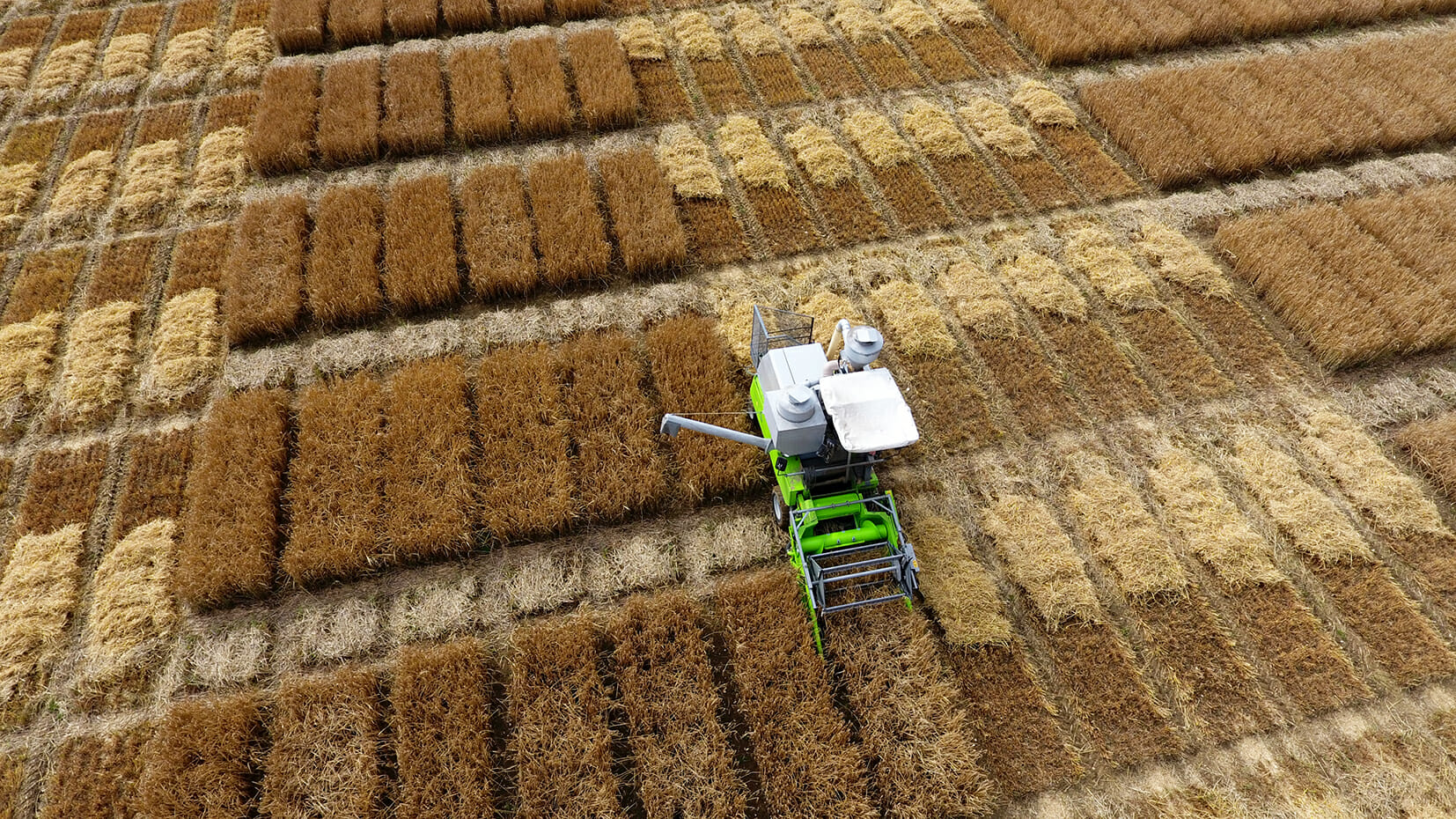

 Limagrain trials over several years, show a benefit with using higher nitrogen rates. A standard seedbed application of 120 kg/ha was compared with a split nitrogen application of 150 kg/ha, with half applied in the seedbed and half at tillering. This resulted in increased yield potential without exceeding grain nitrogen percentage.


 “We really like
 In Limagrain’s 2019 trials, LG Skyscraper, which is the highest yielder on the 2019/20 AHDB Recommended List, outperforming everything else this summer, is the highest performing variety in the late drilled slot. In fact, the variety has shown itself to take this poll position over three very different seasons, points out Mr Granger.

 “It’s important to note that this combination of quality credentials, as found in

 LG Diablo’s untreated yields also sit at the top of the yield table, alongside Laureate at 94% of control, and 1% over that of RGT Planet, demonstrating the variety’s very robust disease resistance profile.


