












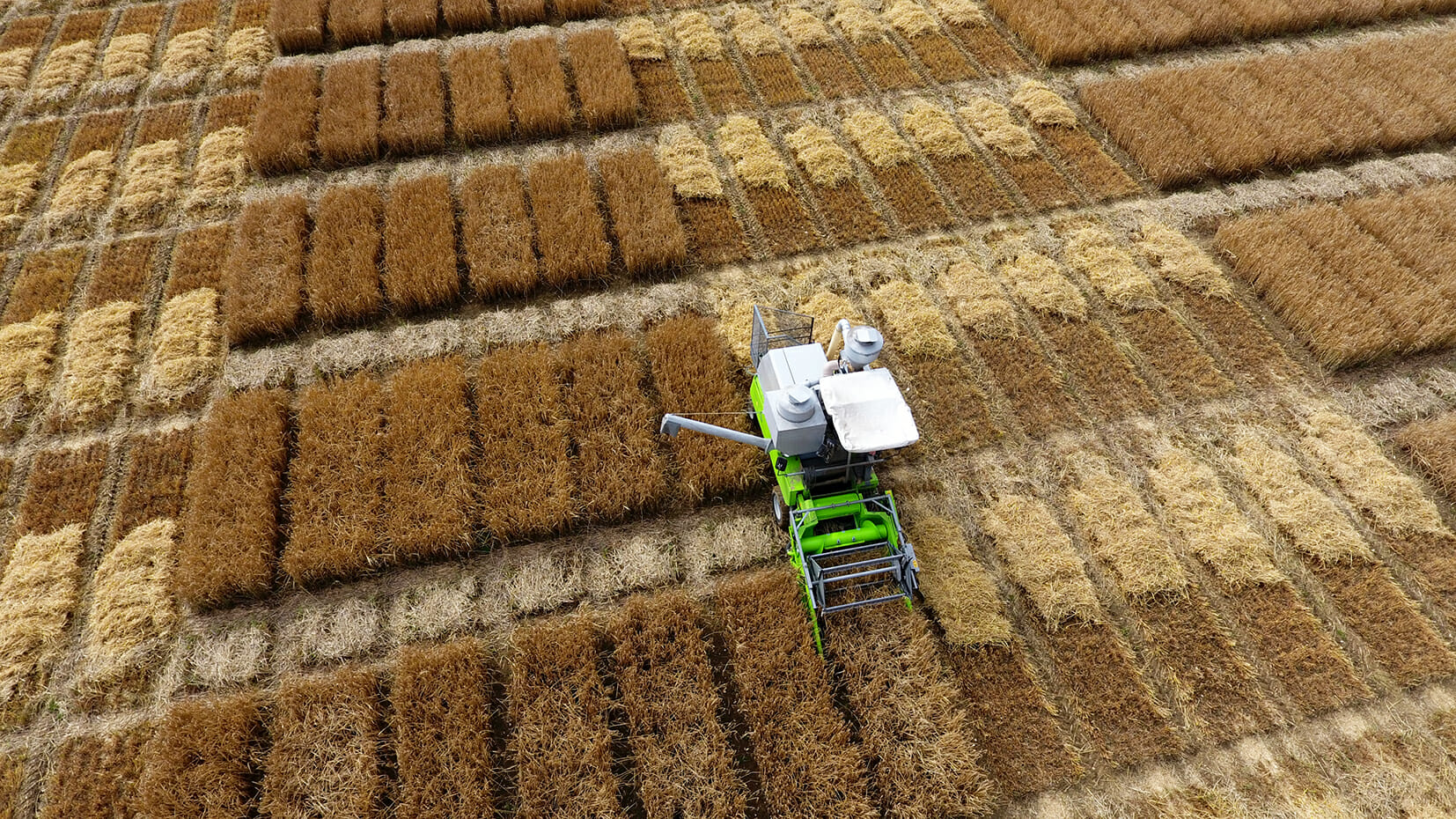

The launch of two new winter wheat varieties from Limagrain Field Seeds gives growers more options to achieve consistently high yields amidst an increasingly unpredictable climatic and economic situation.
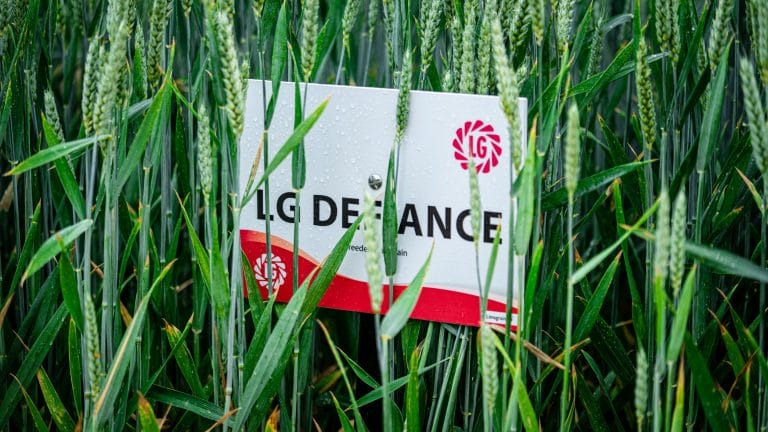
LG Defiance and LG Challenger are both Group 4 hard wheats that have shown consistently high yield potential across different regions, seasons, soil types, and rotational positions, alongside good agronomic characteristics to reliably deliver strong returns.
“LG Defiance has the highest untreated yield on the 2026/27 AHDB Recommended List (95%), which is very rare for a hard feed wheat,” says Limagrain’s Arable Technical Manager, Ron Granger. “LG Challenger is third-best untreated yield on the list, illustrating the strength of genetics underpinning both varieties. Both contain good pedigrees, but the key is what we as breeders can get out of that parent material to deliver on-farm.”
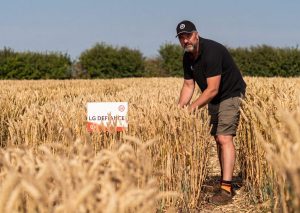
Ron Granger, Arable Technical Manager, Limagrain UK
Both varieties are close to the best in terms of UK treated yield, at 109 for LG Defiance and 107 for LG Challenger.
Crucially, LG Defiance pairs this with solid disease scores for yellow rust (rated 8) and a 6 rating for Septoria, while LG Challenger is rated 7 and 6 respectively.
“With the changes to Yr15 resistance we’ve seen, selecting a variety with better yellow rust resistance, supported by an appropriate fungicide programme, is becoming an increasing priority,” notes Mr Granger. “Although everyone is talking about yellow rust, we can’t forget that Septoria is still the biggest yield-robber on most farms.”
Risk management
Frontier’s National Technical Manager, Seeds, Dr Kirsty Richards, says that with rising costs, unpredictable weather patterns, and evolving disease pressures, selecting good genetics to reduce risk and build resilience across the rotation is crucial.
“Yield is a big attraction of LG Defiance and LG Challenger, but it cannot be at any cost. Remember that 80% of crop potential is harnessed by putting the right variety in the right place, at the right time, for your situation.”
For LG Defiance, she believes its agronomic characteristics make it a particularly good choice for later drilling or second wheat situations, while LG Challenger’s growth habit and straw strength better suits earlier sowing. Mr Granger agrees, but adds that both varieties have shown excellent yield potential when sown during the main October drilling window.
“LG Defiance is a taller variety that will require a good split PGR programme. Limagrain trials support the fact that it responds well to PGRs and the reduced height has no impact on final yield potential, similar to varieties such as LG Skyscraper and LG Redwald.”
A further characteristic that builds resilience and helps meet market requirements under tough conditions is the excellent grain quality of both varieties, particularly their high specific weights at 77 kg/hl and 78.6 kg/hl respectively, notes Dr Richards.
Best crop on the farm
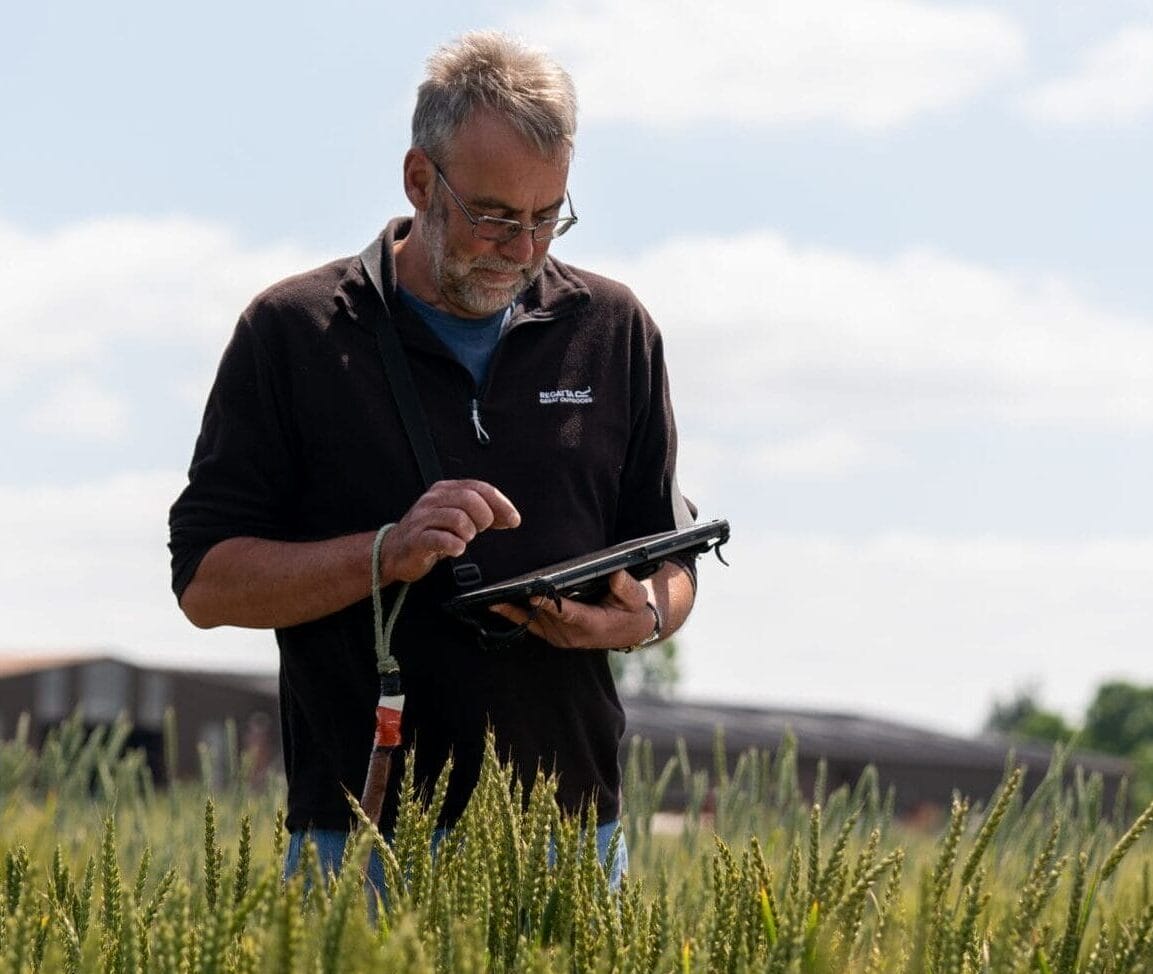
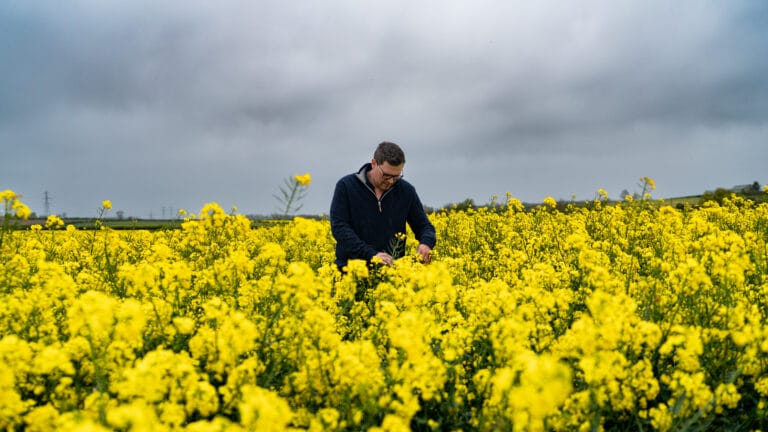
Staffordshire farmer Rob Atkin is growing a small area of LG Defiance this season to test whether the variety suits his farm, and so far he says it is the “cleanest and best looking crop on the farm”.

So far, LG Defiance is the cleanest and best-looking crop on the farm,” says Staffordshire farmer Rob Atkin
“In the past, we grew a lot of KWS Extase and Gleam, so when we saw these were in the parentage of LG Defiance, we thought it made sense to give it a try. We like to trial new varieties every year to see what works. So far, LG Defiance looks really good, but the real proof will come at harvest.”
Yield is a big consideration when choosing varieties, but Mr Atkin says robustness to diseases like Septoria and yellow rust is perhaps more important. “I want a variety that’s robust enough to stay clean and potentially give us the opportunity to reduce input costs while still maximising yield.”
Mr Atkin will be hosting an open day on 22 June, allowing growers to see first-hand the range of varieties he is growing this season. Learn more about the Staffordshire Demo Day.
High yields make financial and environmental sense
While recent rises in fuel and fertiliser prices may prompt some growers to consider cutting inputs, ADAS Senior Crop Research Scientist Christina Baxter insists productivity should remain the focus — yield is still ‘king’.
Analysis of results from more than 1,200 Yield Enhancement Network (YEN) wheat crops between 2013 and 2022 shows a “very convincing” relationship between gross margin and yield, dispelling any suggestion that high yields cost more to produce.
“On a per tonne basis, variable costs decline as yield increases, as does the carbon footprint. There’s often a criticism that high-yielding crops cost too much, are too risky, and are bad for the environment. But YEN data proves that’s not the case.”
There are many building blocks to a high-yielding crop, not least the weather and husbandry, but a key starting point is understanding the potential of individual fields and selecting a variety with the genetic profile that can deliver most in that situation.
The general approach to high yields has been to grow a crop that stays green for as long as possible. To support canopy longevity, you need to keep leaves clean so the crop gets maximum benefit from that leaf area and captures the most sunlight — in addition to ensuring sufficient rooting depth for late-season water uptake.
“Attention to detail, effective management, and good varieties all support strong productivity.”
Learn more about LG Defiance, LG Challenger, and the full range of Limagrain Field Seeds varieties at lgseeds.co.uk
| LG Defiance | LG Challenger | |
| Parentage | KWS Extase x Gleam | (Gravity x SY Insitor) x LG Skyscraper |
| Treated yield (UK) | 109 | 107 |
| Untreated Yield | 95 | 93 |
| Septoria Rating | 6.3 | 6.1 |
| Yellow Rust Rating | 8 | 7 |
| Specific Weight | 77 kg/hl | 78.6 kg/hl |
| Drilling Window | Standard to late | Early to standard |
| OWBM Resistance | Yes | Yes |
Download your essential guide to oilseeds, winter wheat and winter barley – this year’s guide is jam packed with brand new market-leading varieties, plus a wealth of technical articles from our team!
This brochure covers the key agronomic attributes of individual varieties for securing yield potential. The data is taken from the AHDB RL with additional Limagrain data sets, offering you added insight when it comes to selecting the best variety for your farming system.

This latest guide includes articles from our technical team – Ron Granger and Liam Wilkinson on variety suitability on farm, and also a handy ‘6 tips for barley grain and straw yield’, something which could be really important this year.
We’ve also included articles from the OSR team – Product Manager Florentina Petrescu writes about how OSR has made a fantastic comeback this year, and highlights some stand-out varieties from the LG breeding programme.
As always, if there is anything else you would like to know, please don’t hesitate to get in touch!
Limagrain Takes Trials Beyond the Plot with New Farmer‑Led Demo Farm NetworkBook onto our Demo Days!
Suffolk Summer Demo Day – Thursday 4th June 2026
Staffordshire Summer Demo Day – Monday 22nd June 2026
Limagrain Field Seeds is taking variety trials beyond the plot with the launch of a new UK farmer-led Demonstration Farm network.
The initiative is designed to give growers a clearer, more practical view of how varieties perform in real farming systems, moving away from purely small-plot data and into field-scale reality. Instead of relying solely on trial sites and headline figures, the network will showcase Limagrain genetics under the pressures that shape day-to-day farm decisions, including soil type, rotation, cultivation and input strategy.
Nicolle Hamilton, marketing director at Limagrain, says the aim is to give growers a different perspective. “We want to offer growers a more meaningful way of looking at our varieties, through a farmer lens,” she says. “That means taking them out of controlled conditions and putting them into real farming systems, managed by farmers making commercial decisions every day. While she stresses that formal trials and the AHDB Recommended List remain important benchmarks, she says they do not always reflect the realities of commercial farming.
“This is not about replacing trials, it’s about adding another layer,” she says. “Farmers want to know how varieties establish, how they cope with different soils and how they perform under lower inputs or after cover crops. That is where this approach adds value.”
“It’s about working with farmers, listening to them and learning from them.”
Heather Oldfield, Limagrain cereals product manager, says the strength of the network lies in its farmer-led approach. “This is about genuine collaboration,” she says. She adds the focus is not on identifying a single standout variety, but on understanding where different genetics fit. “There is no perfect variety,” she says.
“Success comes from putting the right variety in the right place. What works on one farm may not work on another. These Demo Farms help us show those differences in a way that is much more relevant to growers.”
The Farmers
The first two farms in the network are based in Suffolk and Staffordshire, offering two contrasting systems. Ryan McCormack hosts the East Anglian site at Dennington Hall Farms, while Rob Atkin farms over in Staffordshire. Together, they provide a broad snapshot of how varieties perform across different soils, climates and management approaches.
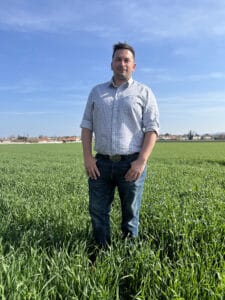
Ryan McCormack is testing Limagrain varieties in systems that include reduced tillage, cover crops, and livestock to understand what works best under these conditions
At Dennington Hall Farms, Ryan McCormack is running a highly integrated system combining arable, livestock and environmental management. The farm operates a 12-year rotation and places strong emphasis on soil health, with cover cropping, minimal cultivation and livestock grazing all playing a role. “I’m farming for margin, but also for my soils,” he says. “That means I need varieties that can cope with reduced tillage, cover crops and lower inputs. The only way to understand that is to test them in those conditions.” His trials include comparing multiple varieties under different establishment systems within the same field, giving a clear view of how genetics respond to management.
In contrast, Rob Atkin’s Staffordshire farm operates across a wide range of soil types, from heavy clay to high-organic-matter silt. The mixed farm includes combinable crops alongside beef and sheep, with a growing focus on soil health and cost control. “I still need yield to pay the bills,” he says. “But I want varieties that work on farm, not just in perfect plots. I want to know how they perform under pressure.” For Mr Atkin, the value of the network lies in its honesty. “It’s about seeing what works, what doesn’t and why, that’s far more useful than just looking at figures.”
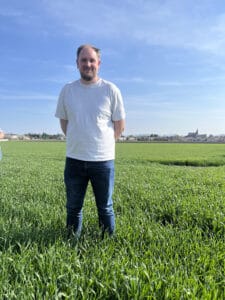
Rob Atkin believes that seeing varieties in real situations helps him make better decisions
To help growers follow crops through the season, Limagrain Field Seeds is supporting the Demo Farm initiative with on‑farm demonstration days. These demonstration days offer the opportunity to see varieties in the field, discuss results with farmers and Limagrain experts, and gain practical insight into real‑world performance.
More information and registration details can be found below:
With many winter wheat crops carrying excellent yield potential into this spring, extra care is needed to manage the large biomass and retain strong tillers through to harvest.
That is the view of Limagrain Field Seeds UK arable technical manager, Ron Granger, who says close monitoring of crop growth stages and well-timed plant growth regulator applications are key to success, alongside careful nitrogen management and disease control.
“Because many farms drilled several weeks earlier last autumn, with a relatively kind establishment period and winter, this season is looking very different to previous years, with huge biomass and yield potential in a lot of crops.”
Taller, high biomass crops can inevitably be at greater risk of lodging though, so growers need to adapt how they manage them, focusing on manipulating growth to strengthen stems, retain high tiller number, and drive maximum yield, he says.
“Farmers need to get their PGR strategy right, otherwise it could be very easy to get caught out by the situation we’re facing this season.”
Timing is everything
The aim of a good PGR programme is to shorten the distance between internodes; keeping the first node tight to the basal node and then keeping the second node close to the first, which increases straw stiffness, Mr Granger says.
To achieve this, it generally requires a split PGR programme consisting of two carefully timed PGR applications; one just before the start of stem extension, usually around growth stage 29-30, when plants start to sit upright; followed by a second at the first node detectable stage, just prior to the second node moving (GS 31-32).
“In all the years I’ve been doing PGR trials, across thousands of variety plots, a split treatment has always been the approach that’s kept crops standing. On-farm, you can be more targeted to just a single variety, so growers can sometimes get away with a well-timed single application, but I still question whether many are getting the timing right.”
The best way to ensure accurate timing, is by looking at the primordia ear development, however he recognises that time is of value, so suggests using careful plant dissection to determine when individual nodes are moving, both off the base of the plant, and between differing nodes of interest. “Crops have been drilled earlier, and will move quickly, especially once nitrogen is applied, so be vigilant and proactive, don’t rely on calendar dates.”
Should conditions remain wet, growers may have no option but to apply a full rate single PGR programme, which Mr Granger says should be targeted around the first node detectable stage (GS 31).
If conditions turn very dry in late March into April, care needs to be taken with later PGR applications, as experience shows PGR products should not be applied to stressed crops, he adds. “We have seen from previous seasons of drought, that when plants are compromised in a drought situation, you can reduce yield by applying a PGR to the crop.
“It’s best to apply PGRs early, whilst crops are nice and healthy, there’s plenty of water available, and they’re growing strongly.”
Options to consider
Mr Granger says that there is a good range of products to choose from, and most PGRs are very cost-effective, especially once weighed against the potential risks to yield and quality from lodging.
His favoured options are based on chlormequat to restrict the internodal distance, plus trinexapac-ethyl to thicken stem walls. “This is my go-to PGR programme, whether used as a split or single application. If earlier treatment windows are missed, then mepiquat + prohexadione-calcium is another product to consider, as I feel it is a kinder product, which can be applied at later growth stages, allowing you greater flexibility.”
In high lodging risk situations, such as very high-yielding crops on fertile soil in coastal areas, the addition of ethephon + mepiquat at GS 37-39, could also be considered to shorten and stiffen the upper internodes, he adds. “But for me, this would be a last resort if a well-timed split PGR programme has not been implemented initially.”
Protecting grain and straw yield
Straw presently is of value, so whilst some growers planning to bale straw may worry that using PGRs will reduce straw height and therefore yield, Mr Granger dismisses this.
“The reality is that you can maintain both grain and straw yield by using PGRs. They help to retain tiller number, which in turn delivers higher yield and gives more straw, and ensures that those tillers keep standing, allowing you to harvest the crop in good condition. Lodged, dirty, or mouldy straw is of no value to anybody.”
Equally, Limagrain trials at Rothwell, Lincolnshire in 2024 (the last wet season), showed no detrimental effect on grain yield, from using PGRs under two different nitrogen regimes (see chart 1). The work compared an untreated (no PGR), a split PGR of chlormequat + trinexapac-ethyl, and a single PGR (chlormequat + trinexapac-ethyl) approach in a crop of LG Beowulf (see chart 2), at a standard nitrogen rate of 180 kg N/ha, and a higher rate of 225 kg N/ha, which was implemented to increase lodging pressure in the trials.
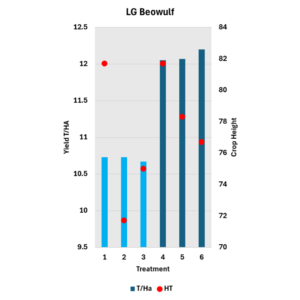
Chart 2
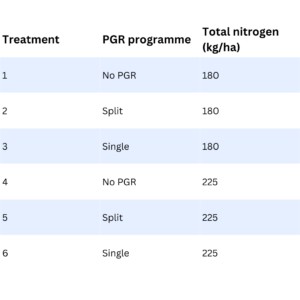
Chart 1
“There was no significant difference regarding the effect of PGRs on yield in either nitrogen regime, but there were differences in crop height, which is all positive in terms of the management of those crops, especially if growers are looking to use higher nitrogen rates to drive yield.
“As long as you get the PGR on correctly, you can then apply nitrogen rates applicable for high yield potential for your individual farm situation. The last thing you want is a flat crop at harvest. At present, crops are coming into spring with higher-than-normal biomass, so growers have an opportunity, with good agronomic input, to drive for high yield potential.”
Proven Beats PromisedLimagrain Field Seeds UK is proud to be the market leader in the oilseed rape market, over the last 5 years. This is largely due to its continued commitment to innovation in oilseed rape, and investment in its UK based breeding programme, whilst also collaborating with the wider LG European breeding network.
“During our time as the UK’s leading oilseed rape breeder, market conditions have changed massively, with the loss of neonicotinoids and the decline in the oilseed rape area, due to establishment issues,” comments Liam Wilkinson, Head of Technical for Limagrain Field Seeds UK.
“However, our constant innovation has meant that we have done as much to genetically derisk growing oilseed rape as we can, through our fully loaded hybrids approach – with Pod Shatter and TuYV resistance being staple inclusions in all of our varieties,” Liam continues.
“As a result, we have seen our varieties perform with consistency, both on-farm and in trials, despite changing seasons and other challenges.”

Our breeders are advancing the genetics behind Limagrain’s fully loaded hybrids
The LG European breeding network offers Limagrain Field Seeds UK the chance to screen oilseed rape varieties under the highest pest and environmental pressures, whether that be testing winter hardiness in Northern Europe, Sclerotinia in Hungary or Light Leaf Spot and Verticillium in the UK. This means that, whilst varieties must perform under UK conditions, Limagrain Field Seeds UK can be secure in knowing that its varieties will stand up to the challenges faced.
“These latest innovations have seen us bring varieties such as LG Avenger into the UK market, which has shown resilience to Cabbage Stem Flea Beetle (CSFB), in both independent and internal trials. Whilst only part of the solution to CSFB, we are committed to helping growers overcome the challenge, whether this be through variety choice or helping with agronomic advice around our varieties.
“LG Adapt has shown its performance across AHDB Recommended List (RL) trial sites in 2025, where it had the highest gross output of all varieties – but key, is that it had one of the lowest variabilities across sites, meaning that growers can be confident in its ability to perform. LG Adapt also has the highest oil content on the RL, allowing its consistency to be capitalised on, with market bonus.”
The LG breeding programme is dedicated to increasing genetic performance of oilseed rape on UK farms, and whilst yield is a key driver, LG’s commitment to securing yield on farm, means that they will only bring varieties to market which contain Pod Shatter and TuYV resistance, to turn the investment in your oilseed rape crop, into harvestable yield.
Find out more about our oilseed rape varieties here.
Explore The Brand New Conservation & Gamecover Crops BrochureWelcome to your LG Conservation & Gamecover Crops Brochure

Download the new guide now!
In this catalogue, you’ll find a comprehensive range of mixtures designed for soil health and nutrient management, such as herbal leys and legume fallows, crops for integrated pest management,
such as flower rich margins and companion crops, crops for farmland wildlife, such as winter bird food mixtures, and crops for field margins and buffer strips.
We hope you find this brochure a valuable resource, as you identify the options and crops that best suit your business needs. If you’d like further guidance, our team is always available to help you choose mixtures that will work best for your farm.
Take a look at our Essential Guide to Conservation & Gamecover Crops today.
Top Tips for Managing Forward Oilseed Rape Crops This SpringSpring management key for forward oilseed rape crops
A mild autumn delivered excellent establishment conditions for oilseed rape (OSR) crops across much of the UK. While many crops are entering spring with large, forward canopies, careful management will be essential to ensure this strong start is converted into yield rather than lost through lodging or inefficient canopy structure.
Liam Wilkinson, head of technical at Limagrain Field Seeds UK, says that although big crops look encouraging, they can be counter-productive if not actively managed.
“From our own work, we know that the optimal OSR plant population is around 25–40 plants/m²,” he explains. “In previous seasons, growers often compensated for establishment losses by increasing seed rates. This year, however, losses have been far lower, meaning many crops are carrying plant populations well above the optimum.”
Without intervention, these dense, forward canopies can limit light interception, increase competition between plants and raise the risk of lodging, ultimately capping yield potential.
Tailoring spring management
Mr Wilkinson stresses that large crops require a different approach to thinner stands seen in recent years. “These crops need to be managed to control canopy size and structure, reduce lodging risk and maximise light penetration to the lower branches – which are the most productive in terms of pod set,” he says.
Varietal growth habit should also be considered when prioritising treatments: “Some varieties, such as LG Avenger, have faster stem extension and are more likely to benefit from early canopy management. “Others, like LG Adapt, extend later and may be less of a priority in early spring. Soil temperature is another factor – where soils are warmer, the urgency for early treatment is reduced.”
Nitrogen management: measure before you apply
Work from AHDB project PR447 has shown that adjusting nitrogen (N) applications according to canopy size can increase yields by up to 0.36 t/ha in crops that would otherwise have lodged under traditional management.
“The key message is that OSR canopies already contain significant amounts of nitrogen, which can be remobilised by the plant,” says Mr Wilkinson.
“Ignoring this risks over-application early in the season, driving excessive stem elongation and canopy shading.”
To help growers get the most from forward crops this spring, Limagrain highlights five key management principles:
1. Measure and quantify the canopy
You can’t manage what you don’t measure. Tools such as GAI apps or satellite imagery can be used, where 1 GAI equates to around 50 kg N/ha in the canopy. Alternatively, cutting and weighing 1 m² of above-ground biomass can provide a guide – 1 kg fresh weight is approximately equivalent to 55 kg N/ha.
2. Reduce the first split of nitrogen
High early N rates encourage rapid stem extension, increasing shading and plant competition. This often leads to the loss of lower branches, which have the greatest yield potential. Early assessment of biomass variation also allows nitrogen rates to be reduced in thicker areas and increased where crops are thinner.
3. Target a GAI of 3.5 at flowering
This equates to around 175 kg N/ha in the canopy. Knowing how much nitrogen is already present can help avoid unnecessary inputs. AHDB PR447 suggests that only around 60% of spring-applied nitrogen is taken up by the crop, so application rates should be adjusted accordingly.
4. Ensure timely sulphur supply
Reducing nitrogen rates also reduces sulphur when using combined products such as double top. Sulphur deficiency can limit yield by slowing leaf and tissue development, reducing nitrogen use efficiency, lowering stress tolerance and decreasing oil content. Choose a product supplying around 40–75 kg/ha of SO₃.
5. Apply micronutrients early
Boron is particularly important in forward crops. Deficiency during rapid spring growth can lead to stem splitting, increasing disease risk. Boron also plays a key role in pollination and stress tolerance, supporting yield and crop resilience.
“With the right approach, these forward crops offer a real opportunity,” concludes Mr Wilkinson. “By measuring canopies and tailoring inputs, growers can manage risk, improve efficiency and make the most of the strong establishment we’ve seen this season.”
Maize has been grown for grain at Cross Hill Farm, near Goole in Yorkshire, for over fifteen years, delivering multiple benefits for the Welburn family’s arable and cattle enterprises.
It is a valuable break crop, particularly complementing winter wheat, and – crimped and clamped – provides an ideal high energy feed for the farm’s 400-head beef finishing enterprise. Crimped maize is also sold off the farm, adding a further revenue stream, and in recent years the crop has also been ensiled for forage.
In total, Chris Welburn and his father Neil farm up to 600ha of rented or contract farmed land, with soil types varying from wind blow sand through to heavy clay. Winter wheat is their main crop, but on some of the neighbouring contract farmed land, where flooding is a common issue, spring cropping predominates, with maize proving to be a reliable and valuable option over many years.
“We’ve grown maize since around 2009, and have always combined it,” says Chris. “On the lighter land, we’ll grow it several years in a row, then swapping in alternative spring crops like sugar beet, carrots or potatoes, whilst on the heavier land it will be part of a more conventional arable rotation, with winter wheat.
“Across all the land we’re farming, we’re growing around 150ha of maize. Over and above the value of the crimped grain, we find it puts quite a bit back into the farm, both in terms of soil fertility and also wider weed control.
“Growing it for grain means a lot of crop residue is going back into the soil, whilst we always precede a maize crop with good applications of cattle manure, which is another good source of organic matter and soil nutrients.
“Weed control for maize uses different herbicide chemistry, and we find that is helping with the control of blackgrass and other grass weeds in the wheat.”
Variety choice is important, particularly when growing a crop for grain, and Chris’s current ‘banker’ is Limagrain’s Conclusion, a high yielding, high starch option with exceptional cell wall digestibility. He’s also growing the earlier maturing Duke, which alongside high dry matter yields has very low cob moisture content making it particularly well suited for grain. LG 31.205, known for high starch and well-developed cobs, is another variety favoured at Cross Hill Farm in recent seasons, whilst the latest high performance specialist grain option LG 31.160 is set to be included going forward.
“Our Conclusion crops produced over 11t/ha of grain maize in 2025, and it wasn’t a particularly good year given the drought conditions,” adds Chris. “The other important point about Conclusion, and other Limagrain varieties, like Duke and Ambition, is that they crimp really nicely. It’s important, because it affects how long the crimping takes as well as the quality of the crimped grain.”

Chris has found crimped and clamped grain maize form the foundation of the farm’s feeding system
The aim is to have the cobs at 65-68% dry matter for grain maize, with the harvest at Cross Hill Farm taking place anywhere between October and early December, depending on the season. The Welburns have their own maize header for their New Holland combine, simply changing the concave to adapt for grain maize. The aim is to crimp the crop straight off the combine.
“When we’re combining grain maize, most of the crop residue goes under the header, so it creates a carpet for the combine to travel on, minimising soil damage,” say Chris. “We can crimp up to 25 tonnes/hour, adding an inoculant as we go, and clamp everything we need for the cattle. The rest we sell, for clamping off the farm, usually for a little below the price of wheat.”
The crimped maize goes into the farm’s beef finishing ration, typically fed in equal proportions with barley. It’s a feed that Chris believes contributes significantly to the performance of the cattle enterprise, which buys in pure dairy and dairy-cross calves at a week to ten days old and takes everything through to finish at 500-600kg, averaging an impressive 1.3kg/day liveweight gain.
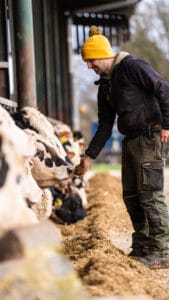
Chris Welburn feeding crimped maize to his cattle, a core ingredient in the farm’s rotation
“Our aim to grow as much of the cattle ration ourselves as we possibly can and crimped maize is an integral part of the finishing ration, fed from around 12 months,” he adds. “It’s pure energy, but can be fed at high levels without the risk of acidosis.
“In recent years, we’ve also starting taking some of the maize as forage, for inclusion in the TMR for the growing cattle.”
The main strategy around growing maize at Cross Hill Farm is to do so as economically as possible, so full use is made of cattle manure to boost soil fertility. The ground is always ploughed when maize is grown after maize, to minimise disease risks, whereas minimum tillage and sub-soiling may be sufficient following sugar beet, for example.
Drilling is typically carried out in the last week of April and into early May, with a liquid fertiliser (16:0:8 NPK), applied down the spout at 200l/ha, and a granular fertiliser spread before the end of May.
“We’re also applying a molasses-based foliar fertiliser whilst the crop is just still sprayable, towards the end of July, as it is a very efficient way of using nitrogen,” says Chris. “We’re always trying different things, in order to grow maize in the best way possible. For example, we’ve tried sowing westerwolds ryegrass after winter wheat, and then taking a crop in April before spraying it off. We’ve then minimised the cultivations by doing low disturbance sub-soiling and using a strip tiller ahead of the maize drill.
“It’s important to keep trying to move forward, to grow the crop more efficiently and with less impact on the environment.”
Amongst all the uncertainty in farming, growing maize brings a degree of consistency and reliability on this North Yorkshire farm. It provides undoubted rotational benefits, will outperform wheat in a drought, underpins the performance in the beef enterprise, and offers the option of a saleable cash crop. With new improved varieties coming through every year, there’s little doubt that it will remain central to plans at Cross Hill Farm for many years to come.
Roots of Change: Why Limagrain Field Seeds UK is backing a Farmer-led shift in Nitrogen ManagementAcross the UK, growers are under mounting pressure to drive crop productivity whilst reducing reliance on synthetic nitrogen. Fertiliser prices have surged, environmental scrutiny has tightened, and quality specifications in premium cereals markets have never been more challenging. For many farmers, this creates a tightrope between agronomic need, economic reality and environmental responsibility.
The Roots of Change (ROC) project steps directly into this challenge. Led by farmers and backed by NIAB and Limagrain, the initiative aims to understand how legume-based cover crops and companion cropping, can support nitrogen efficient cereals production, without compromising yield, grain quality or marketability.
Thomas Todd, ROC farmer, from Cornhill-on-Tweed, Northumberland commented, “This project will confirm with soil and tissue samples and nutrition tests, the true value of cover cropping, and this will then aid with farm development.
“The addition of legumes as a companion crop in the winter wheat trials, along with the cover crop, will be monitored for both nutrient and environmental benefits, and the information gathered will then be put to future use.
“We are keen to be involved with this type of research because it is good for the industry to be at the forefront and not just sitting still, and as a farming business, we are keen to embrace new technologies; from both a cultural and technical perspective.”
Limagrain’s involvement centres on one key question: ‘Why should growers trust legumes and new agronomic systems, to deliver the right nitrogen, in the right place, at the right time?’
Why Change? Fertiliser Volatility, Soil Health Decline and Tightening Specs
Over the past decade, inorganic nitrogen prices have risen sharply whilst remaining highly volatile. For many cereals growers, nitrogen costs now represent a significant portion of production expenses. At the same time, soils long reliant on tight rotations, inversion tillage and high fertiliser inputs, show signs of declining organic matter and reduced resilience.
For malting barley and quality wheat, where processor specifications are demanding, growers face real annual uncertainty around nitrogen availability and grain quality.
Why Legumes? The Case for Biological Nitrogen Fixation
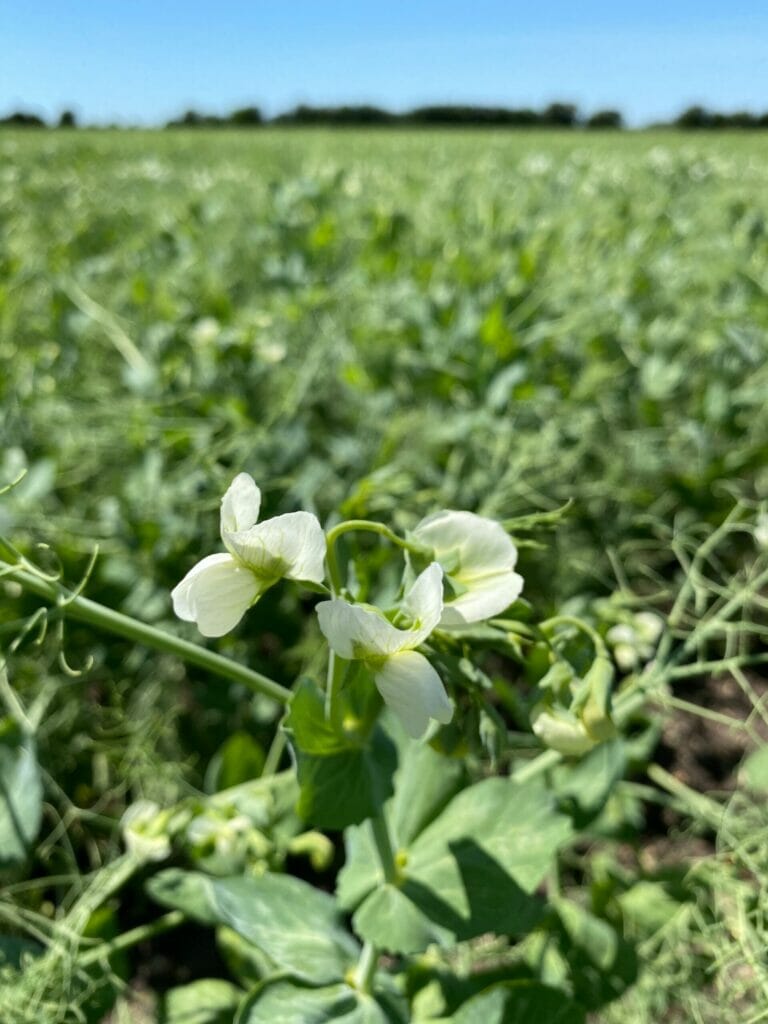
Leguminous species; peas, beans, clovers, all fix atmospheric nitrogen, reducing the need for synthetic inputs. ROC compares legume and non-legume cover crops, companion crops, different establishment systems, termination methods, and new cereal varieties bred for improved nitrogen use efficiency.
Why Limagrain? Adding Expertise Beyond the Field
Limagrain provides new barley and wheat genetics, selected for efficient nitrogen use and to meet quality markets.
Economic and Carbon‑Footprint Modelling
Limagrain leads ROC’s analysis of profitability and carbon impacts, helping farmers quantify real world benefits.
Practical, Farmer Facing Guidance
Limagrain will support ROC’s outreach programme with demonstrations, digital resources, workshops and grower guides.
Why Now? Aligning Farmer Reality with Environmental Outcomes
With fertiliser costs high, and pressure increasing to reach net‑zero, ROC aims to show that integrating legumes can support nitrogen supply, improve soil health and reduce input costs.
The Bottom Line
Roots of Change will deliver nitrogen buffering guidelines, crop specific recommendations, economic comparisons and carbon‑footprint assessments – giving UK growers clearer, evidence-backed pathways for sustainable nitrogen management.
Growing Maize as a Break Crop Option in Arable RotationsMaize now has the potential to outperform many alternative break crops in gross margin terms whilst offering arable farmers significant rotational benefits such as improved grass weed control, according to experts taking part in a recent Limagrain Field Seeds webinar, attended by farmers from across the UK.
Speakers pointed to the growing demand for anaerobic digester (AD) feedstocks and the high value of grain maize as evidence of market-led opportunities for growers.
They also highlighted the accelerated plant breeding progress that is allowing increased yields of a higher quality crop within a shorter growing window, which is giving more farmers the opportunity to follow maize successfully with winter wheat, for example.
“Potential returns for arable farmers in many parts of England are attractive, with maize offering around two or three times the gross margin of spring oats or spring beans,” said James Webster-Rusk, Senior Agribusiness Analysist for The Anderson Centre.

James Webster Rusk is confident that maize will deliver stronger margins than other spring crops
“The market is there, with growing demand for AD feedstocks and many plants looking to replenish depleted stocks in 2026. With regards to grain maize, we currently import 2.5 million tonnes a year, so there are opportunities to replace at least some of this with homegrown crops, and also to grow maize on contract for crimping, wholecrop or forage.
“In terms of rotational benefits, the different herbicide chemistry used for maize tends to help with the control of grass weeds, including blackgrass, and – being a spring drilled crop with a relatively late harvest – it offers a helpful spread in workloads.”
Whilst maize has historically been associated in some areas with difficult harvesting conditions and the risk of soil damage, speakers agreed on the modern-day potential for the crop to be environmentally beneficial.
“Breeding advances within the last ten years now mean we are growing high yielding crops of maize that mature in a much shorter growing window,” said Limagrain’s Richard Camplin.
“Earlier harvests are most certainly desirable in terms of soil health, not only avoiding structural damage but also allowing the establishment of a following crop that will use up surplus nutrients and prevent soil erosion.
“With the emergence of specialist grain maize options like LG 31.160 and very early maturity high yielders such as Harmony, breeding programmes are delivering varieties that work well within rotations and are suited to helping arable farmers respond to the market opportunities.”
Maize in Practice
Leicestershire arable and poultry farmer Will Oliver said, as part of his practical overview, that grain maize grown within his arable rotation now rivals winter wheat as the main crop. “We have a ready market for grain maize, selling to local poultry units, and it’s a crop that we find fits well into the rotation,” he said. “There’s a positive for soil health, because of the organic matter that’s being incorporated and reduced traffic when growing it, and it fits well within our SFI agreements. “Winter wheat usually performs well enough following maize, but I’d accept a lower margin in return for the wider benefits that it brings to the rotation. “It’s important to factor in drying costs when growing grain maize, but earlier maturing varieties are helping to ensure more of the moisture is lost in the field.”

Leicestershire farmer Will Oliver explains why grain maize has become a key crop on his farm
In their summing up, speakers reiterated the opportunities for maize as a break crop in the arable rotation, but reinforced the importance of seeking out markets in advance and growing varieties from the latest BSPB/NIAB Descriptive List best suited to specific farm conditions and the planned end use.
LG Beowulf Delivers Reliable Performance with Active Yellow Rust ManagementLG Beowulf remains a reliable, high-yielding Group 4 winter wheat for UK growers, provided crops are actively managed to prevent yellow rust.
The variety continues to deliver strong on-farm performance, combining high yield potential, stiff straw, good septoria resistance, excellent grain quality and OWBM resistance, says Ron Granger of Limagrain Field Seeds UK.
LG Beowulf’s key strength is its flexibility – and it is this that attracts growers around the country to the variety; it performs consistently across all UK regions and soil types, from light to heavy land, and can be drilled early, at normal timings or late. It is equally suited to first, second or continuous wheat situations.
While LG Beowulf, like many commercial varieties, is now susceptible to the newer yellow rust strain Yr15, careful monitoring and timely fungicide use will allow it to continue to perform at its best.
Early disease control is critical, with a robust, protective fungicide programme using a range of actives throughout the season. A T0, or even pre-T0, spray is recommended as a security measure, with tebuconazole providing a cost-effective option either alone or in combination. Where yellow rust is detected, rates should be increased to eradicate infection quickly.
With crops emerging from a mild winter carrying high biomass and reports of yellow rust already appearing in some fields, growers are urged to monitor crops closely, track weather conditions and make full use of spray windows to stay ahead of disease.
Maize in Northern Margins a Potential Game-ChangerMaize: The New Game-Changer for Doddington Dairy’s Forage and Sustainability Strategy
Farming in the rain shadow of the Cheviot Hills and with predominantly light sandy soils, Neill and Jackie Maxwell and their team at Doddington Dairy find growing grass to be a challenge.
Fodder beet bolsters the ration for the 400 strong crossbred milking herd, but what they have really wanted to include for quite a number of years is maize.
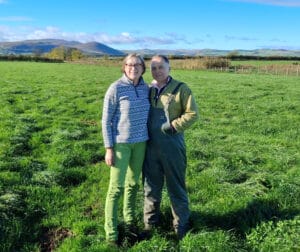
Neill and Jackie Maxwell make French-style raw milk cheese and ice cream at Doddington Dairy and won Best Food Producers in the BBC Food and Farming Awards in 2015.
Based near Wooler, in Northumberland, on the same latitude as Moscow and the south of Sweden, that’s not been an option, at least not until the 2025 season.
“Maize is a potential game-changer for us, particularly on a farm where grass growth is often difficult,” explains Neill. “Our aim is to produce as much as possible from homegrown crops, so to have our own maize in the ration will be a big step forward.
“We did try growing it around 15 years ago, but without any success. Growing maize under plastic has seemed like our only option, but we would not want the risk of microplastics in our soils and we have a strong sustainability agenda across the business.
”We decided to try growing maize unprotected again after attending an alternative forages workshop where we heard about the progress in maize breeding.
“From our experience this summer, it’s quite possible that maize will perform best for us in the years that are the most difficult to grow grass. Farming is about mitigating risk, so having another crop in the mix that can add great value to the ration whilst bolstering our overall forage output will be a great result.”
The event Neill refers to was organised by Nickerson and featured a presentation from Limagrain Field Seeds UK on the increased potential of earlier maturing varieties. Seed specialist David Watson, who hosted the meeting, helped the Doddington Dairy team in the choice of variety and the management of the crop.
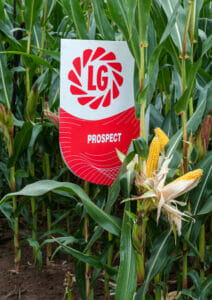
“I advised growing a variety called Prospect, because I knew it had a great track record and felt it would best suit the site,” he explains. “With an FAO of 170, it’s an early variety, though not the earliest produced from the Limagrain breeding programme, but the farm has light soils and the fields in question have a southerly aspect, so I felt sure it could do well. The early vigour certainly helped the crop and with high starch and very good cell wall digestibility it should deliver what the farm wants in the ration.”
The farm grew a cautious 21 acres in 2025, on land close to the farmstead. After plentiful applications of muck and slurry, the sandy ground was ploughed and cultivated before being drilled and then rolled. A compound fertiliser was included down the spout and nitrogen was applied onto the seedbed at 125kg N/ha. A standard programme of pre- and post-emergence herbicides, as advised by the farm’s agronomist, were the only other inputs.
“We drilled on 1st May in dry conditions, but there was moisture in the seedbed,” recalls Neill. “The crop was out of the ground quickly, and then it rained in June. Thereafter conditions remained largely dry.
“It was not the conditions for growing grass, but the maize continued to thrive. Our biggest issue turned out to be the crows feasting on the maize seedlings.”
The crop was fully mature and harvested on 30th September, yielding 18.5 tonnes/acre at 33% dry matter, but the on-board yield monitor on the forager revealed some areas of the field yielding 22 to 23 tonnes/acre.
“The variation in yields was almost certainly due to the crow damage,” adds Neill. “Despite that, we’re delighted with how the crop has performed, and particularly with the earliness as it has allowed us plenty of time to drill a following crop of wheat. We don’t ever leave bare ground over winter, so such early maturity is a big factor in the crop being viable for us.”
The farm, run by Neill and Jackie Maxwell, their herd manager James Kelly and his dedicated team, extends to 1,200 tenanted acres. Wheat, barley and fodder beet are grown across about 300 acres, with all crops fed at home.
Calving all year round, the milking herd at Doddington Dairy averages around 8,500 litres/cow. Milk solids are particularly important, with around 20% of production going into the farm’s specialist French-style raw milk cheeses and ice cream. The majority of the milk is sold on a contract to Arla.
Maize has been a game-changer for Jackie and Neill.
“We’re striving all the time to lower our carbon footprint and maximise sustainability,” continues Neill. “So, despite the challenges, we try to make as much as we can from grazing, and will aim to have some cows at grass from the beginning of April through until Christmas if we possibly can, as well as making up to four cuts of grass silage.
From this winter, maize will be included in the milking ration for the first time, replacing a proportion of the grass silage and potentially some of the bought-in straights. The aim is to take the pressure off grass production and also boost the performance of the cows at a critical time.
“We’ll include maize in the ration for the early lactation cows, to maximise intakes and yields,” says Neill. “We’ll go into it steadily at first, but do see great potential going forward.”
The milking ration is fed twice daily, after milking, not least to avoid the risk of cows gorging on fodder beet, which – once available – is fed at a rate of 15kg/cow/day. Also included is a set level of 12kg/cow of concentrate feed, fed as straights, as well as ground maize, soya hulls, barley and wholecrop wheat. There is no bought in compound feed or soya.
“Our herd manager James is first class and I know he and his team are really looking forward to feeding maize,” concludes Neill. “It will allow us to reduce our reliance on grass, making more milk at a similar cost, and that’s all building sustainability into the business and reducing our exposure to risk. If all goes as we hope, we’ll look to increase the maize acreage next year by two or three times.”