

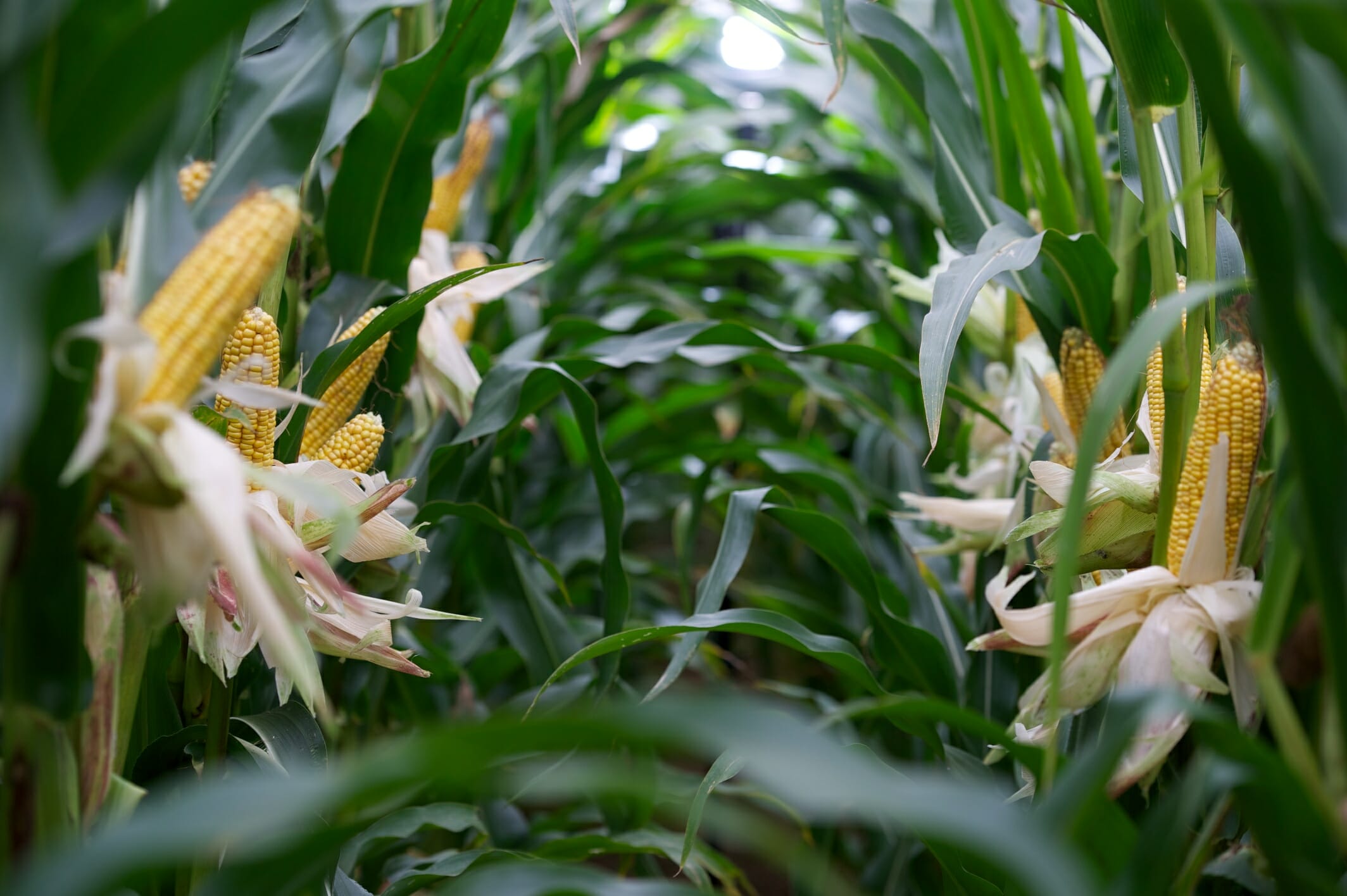
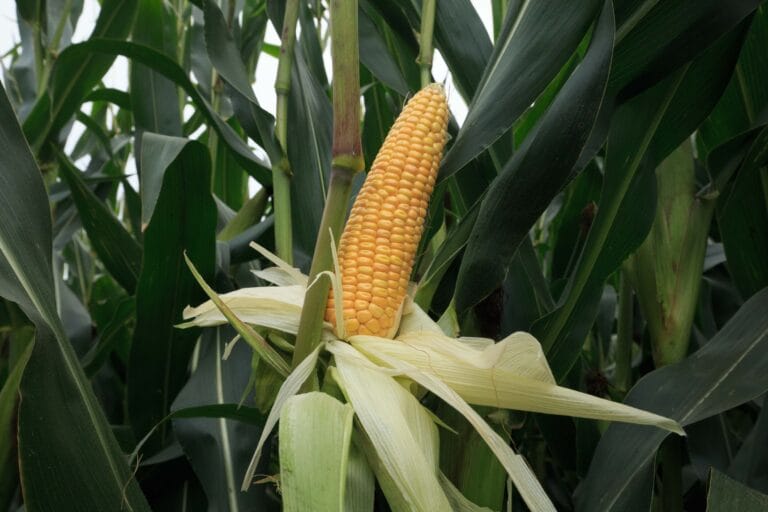










Maize is at the heart of a successful collaboration between the in-hand farming operation and tenanted farms on the Wynnstay Estate, near Wrexham, with modern varieties being key to delivering the significant benefits that are keeping both parties committed.
Two tenanted dairy farms now buy up to 250 acres of standing crop from the estate land managed by Agrii agronomist Ben Burgess, allowing them to focus on growing grass in the knowledge their alternative forage supply is in good hands.
As a grower, Ben is content having a market close to hand, whilst recognising the benefits within his rotation of an effective break crop.
A price per acre is agreed each year, once a crop is established, with all the seasonal variables taken into account. As with any negotiation, there has to be give and take, but mutual respect and understanding, as well as the crucial benefits of maize to both businesses, are making sure the arrangement continues.
Ben, who manages around 600 acres of the non-tenanted land on the Wynnstay Estate, first considered maize as a cropping option to replace oilseed rape in his rotation.
“Flea beetle was an increasing problem with oilseed rape, so we were looking for an alternative,” he says. “Maize was an option, and the fact that two dairy farms on the estate had demand for forage made it more attractive.
“We’ve now replaced all the oilseed rape, and oats, with maize, growing around 250 acres each year, alongside a similar acreage of first wheats. It’s working well, alternating the two crops, with the box muck and slurry that we get back as part of the agreement doing a lot for soil fertility.”
Successfully establishing winter wheat following maize is an important element, so Ben – who advises on everything from cultivation techniques to cropping options within the rotation on his managed land – initially prioritised very early maturing varieties. He has in the past few years, however, moved to slightly later maturing options, achieving a better all round outcome.

Ben chose Harmony based on its strong performance in trials.
“First and foremost, the aim is to grow the biggest and best quality crop of maize,” he says, “but it needs to be off in time to get the wheat in. We found with some very early maturity material that we weren’t achieving the yields, and – whilst we are paid for a standing crop rather than yield – we still strive to offer the purchasers the best crop we can. As a result, we’ve now moved to Limagrain varieties that deliver both the early harvest and a bumper crop.”
Initially growing Limagrain’s Gema, Ben has now turned to the new variety Harmony, which has performed to everyone’s satisfaction in the 2025 and 2026 seasons, despite drought conditions.
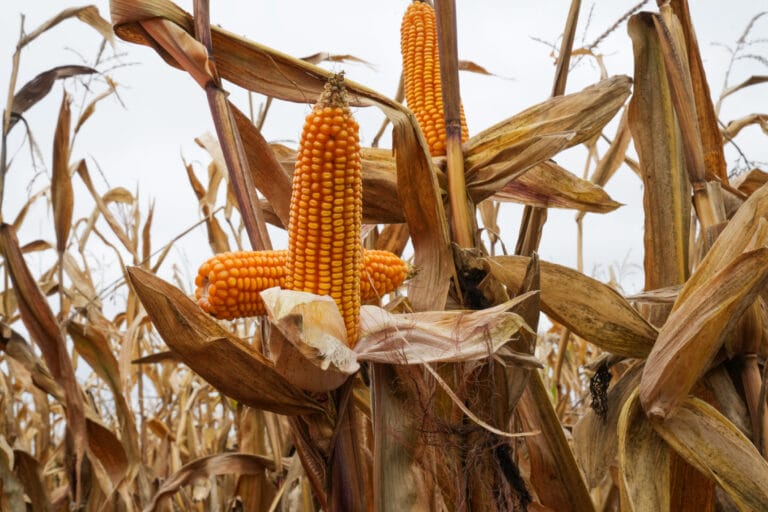
“Harmony is not one of the ultra-early varieties, having an FAO of 170, but from what I had seen in trials I was pretty confident it would do what we all needed,” he adds. “In the field, it has shown good early vigour, with the plants getting up and out of the ground quickly, and in the past two seasons it was ready to harvest by mid-September, producing big and fully mature cobs with the plants still retaining some greenness. The mid-September harvest meant we could drill winter wheat in good time, by the end of that month.
“Despite another dry year in 2026, the Harmony has averaged around 15-16t/acre, well above the UK average for this year. It’s a variety that could easily do 20t/acre, even 24-25t/acre, when conditions are favourable.”
Yield is of course important for the purchasing tenants, but so is the feeding quality. One of the recipient farms milks around 300 cows, yielding just over 9,500 litres/lactation, and maize silage plays an increasing role in the milking ration.
It has been fed alongside grass silage at around a 60:40 ratio in favour of grass, but the maize component is increasing to closer to half the ration.
Analyses are still to be carried out on the 2026 crop, but are anticipated to be similar to the high starch forage achieved in 2025, which – alongside high quality grass silage – helped to underpin production, pushing butterfat levels above 4.5%.

Despite the drought, Harmony averaged around 15-16t/acre, well above the UK average for this year.
Maize has become a key component of the milking ration, but is also fed to the youngstock. With everything retained on the farm, either as dairy replacements or for beef, there are 900-1,000 head of cattle on the farm, so there is high demand for quality forage. This also means the farm produces a lot of muck and slurry, a lot of which is going back onto the maize ground.
As Ben acknowledges, the manure delivers a lot back to the soil, not only feeding the maize but also helping the first wheats that follow produce the best gross margins.
“Having the slurry and box muck is a big advantage, providing a level of soil nutrition that we can then build on and balance with other inputs,” he adds. “This typically includes a microgranular fertiliser in the seedbed and foliar-applied formulations, including some slow-release nitrogen as well as manganese, zinc, magnesium and potash for example.
“With the weed control, we’re typically targeting thistle and crane’s bill, for example, but also blackgrass, which is helping to minimise the challenge in the wheat.”
As an experienced agronomist, Ben will continue to fine-tune his maize growing methods, seeking the optimum seed rate to suit a given variety, considering variable rate drilling, and exploring how best to manage ground over the winter months.
For the 2027 season, he’ll certainly be growing Harmony again, such has been it’s performance over the last two challenging seasons.
Making Progress with Maize to Fuel High Performance RationDrilling precision, tailored fertiliser applications, and careful selection of varieties are amongst the areas where Cornish farmer Mark Philp is seeking continued progress in maize growing.
Though the crop has been ever-present for him during his time at the family’s Trenake Farm, near Looe, two consecutive seasons where a lack of rain has created its challenges has been a reminder that there will never be any room for complacency.
What’s more, he’s growing the maize to provide a key part of the ration for a 520-cow high input – high output milking operation, and that is a responsibility that he takes very seriously.
“We’re a mixed farm, with dairy, beef and arable, but milk production is our main enterprise,” he says. “My brother Miles is more involved with the cows, alongside our herdsman, and I take care of arable operations, which includes 300 acres of forage maize.
“It’s fed alongside grass silage, roughly 50:50 in the ration, providing a cost-effective source of homegrown energy. We’re also including our own homegrown urea-treated wheat in the milking ration.
“Since we installed our eight robotic milkers five years ago, our yields have increased significantly, and cows are now averaging over 42.5 litres/day at peak, equivalent to an average lactation yield of around 13,000 litres. We’re also trying to keep butterfat and protein as high as possible, so it’s critical that the cows have a ration that will support a very high level of performance.”
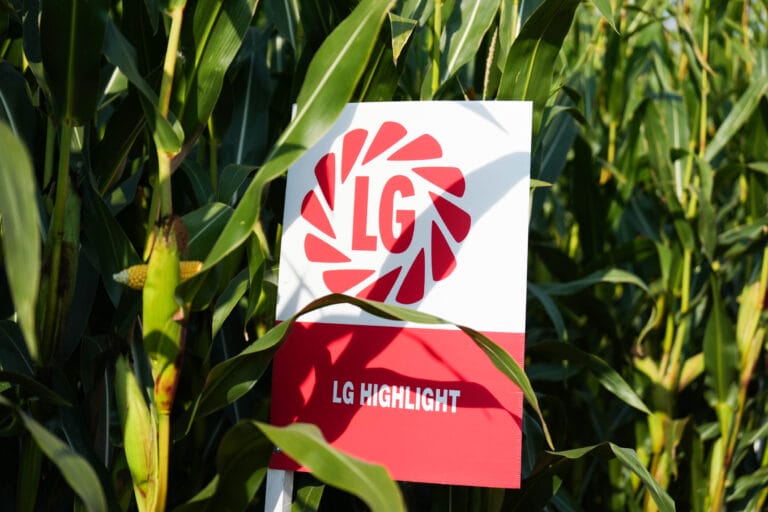
Despite another drought-affected season, the 2026 maize crop yielded over 14 tonnes/acre, well above the average yields being reported around the country. The 300 acres was split equally between three early maturity Limagrain varieties; Ambition, LG Highlight and Prospect. All three feature in the BSPB Descriptive Lists for 2027, and will have excelled over a number of years in Limagrain’s extensive UK trials programme, giving farmers high levels of confidence in their reliability. LG Highlight is new onto the lists this year, featuring strongly as a first choice variety in both the short-to-mid season and mid-to-long season categories.

LG Highlight is a brand new variety with very high dry matter yields, reducing the costs of production.
“We grow what we know works on the farm,” says Mark, “Ambition has proven to be a consistent performer for a number of years, but we’re always aiming to do better by looking at newer varieties and also improving how we grow and manage the crop.”
Tim Richmond, Maize Manager for Limagrain Field Seeds UK and Ireland, comments on the farm’s variety selections, and points to the value of making the right choices for specific circumstances.

Tim has been pleased with the performance of LG maize varieties.
“On a high output dairy operation like Trenake Farm, feed value is as important as yield, so growing varieties that have been bred for higher cell wall digestibility is paying off,” he says. “It’s also clear that the maize is performing, despite really challenging conditions, and that’s down to growing varieties that have been developed with drought resilience built in. The Philps are applying best practice and constantly pushing for more in their maize growing, and that’s key to ensuring the best varieties perform to their full potential, whatever the seasonal challenges.”
One of the latest areas of progress is in seeding accuracy, with a new combination drill being used for the first time in 2026. Offering improved seed and fertiliser placement, and features such as automatic row shut-off, he noticed the benefits as soon as the seedlings emerged.
“We’ve always done our own seeding, using a power harrow-drill combination, adapted for single seed sowing, but this has been a significant step forward. We’re now running a Kuhn 4.5 metre folding combination, that is specially designed for a six-row maize drill to piggy-back on the power harrow. The accuracy of seed and fertiliser placement is far better than we could achieve before and we’ve seen an improvement in the vigour and evenness of establishment. This, plus the automatic row shut off that avoids any overlaps, means we’ve achieved much more even crops overall.”
More tailored crop nutrition is another area where Mark believes his maize growing is progressing, with the farm using the Omnia field management system to customise applications on a field-by-field basis.
“We’re growing maize as part of a cropping rotation, wherever possible, so it constantly moves around the farm,” he explains, “and then we are applying slurry and farmyard manure, which will contribute significant nutrients.
“It’s important to know what the maize crop requires, as accurately as possible, and that will be different across the farm.
“By only applying what’s needed, broadcast onto the seedbed or down the spout on a field-by-field basis, we may be saving on inputs, but most importantly we’re ensuring that the crop is going to perform to its full potential.”
As has been the case for the majority of maize growers in 2026, the crops at Trenake Farm came off a good month earlier than what would have been the norm, harvested right at the start of September. They were drilled, into a moist seedbed, between the 27th April and 8th May, which was the usual timing, so have in effect had a much shorter growing season. Despite this, and the rigours of a very dry summer, the maize clamps are full enough to meet the needs of the milking herd.
“The earlier harvest does give us more time to establish a following crop,” says Mark, “which may be winter wheat or winter barley, or increasingly a grass crop that will give us an early silage cut in the spring.”
Grown as part of a rotation, with winter cereals, spring cereals and grass, maize is a useful break crop as well as a vital source of quality forage for the cows. By continuing to tap into the progress made by the plant breeders, and fine tuning his own establishment and management techniques, Mark is well placed to continue delivering quality maize silage for the farm’s high performing herd.
LG Legends Demo Farm Round-upHarvest Highlights from our LG Legends Demo Farmers
Harvest 2026 has provided another opportunity to see how LG varieties perform under real farming conditions. We caught up with LG Legend growers Ryan McCormack in Suffolk and Rob Atkin in Staffordshire, to hear how their crops performed through this testing season and any key lessons learnt from harvest.
Meet the growers
Dennington Hall Farms in Suffolk is a 1,600ha combinable crops and sugar beet operation. This season, the farm grew around 15 different varieties across all crops, plus several blends.
Located just outside Uttoxeter in Staffordshire, Rob Atkin manages Field Hall, a 1,000-acre farm with a focus on arable cropping and grass-fed, home-reared cattle. Rob grows a wide range of varieties tailored to different roles in the rotation.
Winter barley
Winter barley delivered some of the standout results from Harvest 2026 for the two growers. At Dennington Hall Farms, all LG varieties exceeded 10 t/ha. LG Carpenter topped the yields at 11.71 t/ha, while LG Capitol impressed with 11.39 t/ha and the highest specific weight of 68.1 kg/hl.

LG Carpenter was the top performing winter barley variety for Ryan.
Looking at results beyond yield, LG Carpenter stood out for its speed of emergence and grain quality, with Ryan describing it as having “a lovely looking big ear” and adding that “it was the best-looking variety by eye, plus the tallest.”
For Rob Atkin at Field Hall, after comparing all of his LG Winter barleys grown in a demonstration scenario, it was his LG Catapult that stood out most, achieving the highest grain yield of 8.27 t/ha, with a specific weight of 69 kg/hl. His LG Caravelle demo proved why it has been the commercial choice on farm, coming in with the second highest yield of 7.6 t/ha, with a very good specific weight of 70 kg/hl.
Rob also grew LG Caravelle commercially on two different fields. Both crops were cultivated and drilled into heavy clay soils as second cereals, with a tine drill on the 23rd of September. The land was extremely waterlogged throughout the winter and early spring, which then inevitably delayed spring development and tillering.
Even in these challenging conditions, the variety performed – the highest yielding field still achieved 6.7 t/ha, in line with the farm average of 6.7 to 7.4 t/ha.
Oilseed rape
Despite the testing late spring and early summer, oilseed rape was one of the crops that performed very well across the country, and the results from the two farms reflected this. In Suffolk, Dennington’s tramline trial saw Magelan deliver the highest yield at 5.90 t/ha, followed by LG Adapt (5.24 t/ha) and LG Academic (4.85 t/ha).

LG Academic was the highest-yielding oilseed rape variety for Rob Atkin.
Further west in Staffordshire, Rob Atkin’s plot trial recorded LG Academic as the highest-yielding variety at 5.92 t/ha, closely followed by LG Adapt (5.61 t/ha) and LG Armada and LG Adeline, both with a yield of 5.58 t/ha.
Commercial crop performance reinforced the value of LG genetics, with LG Avenger delivering competitive yields and strong returns in both farming systems.
Whilst the actual highest-yielding variety differed between locations, LG Academic and LG Adapt featured among the strongest performers at both sites, demonstrating dependable performance across contrasting farming systems.
Winter wheat
Winter wheat demonstrated strong performance despite a season marked by prolonged dryness in the spring, temperatures reaching 37.5°C and limited rainfall. At Dennington, LG Defiance delivered yields of up to 13.9 t/ha in direct-drilled large demonstration strips.
A commercially grown crop of LG Lotus achieved yields of 10.23 t/ha with 180 kg N/ha for Ryan, while the commercial crop of LG Defiance produced 8.67 t/ha with only 166 kg N/ha.
Over at Atkin Farms, LG Rebellion delivered yields exceeding 9 t/ha from 190 kg N, plus sulphur.
Key takeaways for 2027
• In a challenging season, profitability, input efficiency and resilience proved just as important as outright yield.
• Strong performance isn’t just about the highest yield. Grain quality, harvestability and consistency all contributed to crop value this season.
• LG varieties delivered competitive results across different regions, rotations and growing conditions.
Growing maize in the Blackmore Vale, on challenging predominantly clay-based land, south Somerset farmer Paul Phillips achieves success by relying on robust early maturing varieties.
He also aims to be amongst the first to take advantage of plant breeding developments, by growing the latest top performers, as they become available, rather than necessarily always relying on older tried and trusted varieties.
In what has been one of the more difficult seasons in memory, his strategy has certainly paid dividends, with the newly listed LG Highlight delivering a very satisfactory 15-16 tonnes/acre, despite a potentially debilitating lack of moisture that forced a harvest weeks ahead of the norm.

Paul will be growing LG Highlight again next year.
“The maize came off in the middle of August, which was at least a month earlier than we’d expect to harvest,” recalls Mr Phillips. “The crop was losing moisture quickly, so we could possibly have gone earlier still.
“We aim for 20 tonnes/acre in a good year, so to achieve over 15 tonnes/acre, at 30% dry matter, is a good result in this very dry season.
“It’s a good variety that suits our conditions, so we’ll grow it again next year.”
New Park Farm, near Templecombe, which extends to 1,250 acres in total, usually grows 100 acres of maize, alongside grass and wholecrop cereals. The maize goes into a total mixed ration for beef finishing, but is also grown as a feed stock for AD gas production. In both cases, the aim is to grow high yields, of the best quality possible, with a harvest before conditions become unworkable in the autumn.
According to Nickerson Seed Specialist Fraser House, matching the variety to local conditions is a big part of the crop’s success.

Fraser believes that good management of the right maize varieties will achieve consistent results.
“The farm has done very well with Prospect in recent years, so we felt the new variety LG Highlight would be good progression on from that,” he says. “It has similar earliness, with an FAO of 170, and has done very well in trials. It has a slightly higher yield but with the same robustness of Prospect, demonstrating good standing ability and disease resistance qualities.
“This is not the easiest land for growing maize, being very heavy, poor draining and variable, but with the right varieties and good management it is possible to achieve consistent results, as is being shown.”
Maize is grown in rotation where possible, but may be grown continuously where circumstances dictate. Use of cover crops over the winter, typically mustard, as well as generous applications of digestate, help to maintain and improve soil health, alongside wider benefits.
“Cover crops over the winter are important, firstly as a green manure, but also to reduce the risk of soil run-off and provide habitat for the wildlife,” adds Mr Phillips. “We apply somewhere between five and seven tonnes of digestate to the acre on land destined for maize, with an application in the autumn and again in the spring. Apart from the nutritional benefits, the digestate acts as a soil conditioner, introducing valuable organic matter and improving drainage.”
All the maize land is ploughed and power harrowed ahead of drilling, which never takes place before the first of May.
“We avoid going any earlier, and always wait until soil temperatures are at an optimum level,” he adds, “as this helps us to combat what can be a significant wireworm threat. We aim to give the crop the best possible start.”
With the digestate contributing significantly towards soil nutrition, the maize requires only modest inputs of artificial fertiliser, with a standard amount of DAP applied down the spout at drilling and some nitrogen top dressed as the crop is developing. A standard pre- and post-emergence herbicide programme is applied, but no fungicides or any other inputs are needed.
Following another drought summer when growing anything has been challenging, achieving such a good return from maize provides some reassurance. With the right variety and carefully considered management, it is a crop that can deliver under the most extreme conditions.
One Winter Barley Variety Continues to Outcompete Black-GrassWinter barley variety, LG Caravelle, has reaffirmed its position as a go-to option for growers wanting a cereal with strong competitive ability against black-grass and other weeds this autumn.
For the fifth successive year, the two-row variety from Limagrain Field Seeds has been among the top performers in Agrii’s black-grass competition trials, held on heavy land, at Stow Longa in Cambridgeshire.
The trials rate winter wheat and barley varieties on a 1-4 scale, based on an evaluation of their competitiveness and performance, taking into account crop yield, (with and without herbicides), and the physical effects on black-grass ear numbers and size.
In 2025/26, LG Caravelle gave the highest two-row yield in the trials, by 0.5 t/ha, the highest crop ear count, and some of the lowest levels of black-grass ears in both herbicide-treated and untreated plots, earning it another three-star rating, according to Agrii Seed Technical Manager, John Miles.
Yet again, the variety has outperformed other two-rows scoring just two stars, and matches conventional six-row barleys, he says.
“Generally, two-rows can be very competitive early-on, but because they are shorter than hybrids, decent-sized black-grass heads can still appear above the crop later in the season. LG Caravelle does have a bit of height about it, and reasonably leafy structure.
“It is interesting that LG Caravelle is bucking this trend and consistently performing so well compared with other two-rows.”
This year’s result is no anomaly, as LG Caravelle has shown similarly impressive results over several very different seasons.
In 2022, Mr Miles says LG Caravelle yielded top of the trials in both scenarios, due to high tiller number, and had noticeably lower black-grass ears coming out of the top of the canopy.

John Miles has been impressed by the consistent performance of LG Caravelle winter barley.
“This is what stood out, so we rated it provisionally like a conventional six-row type at three stars. In 2023, the story was repeated, top yielding, even with close to 100 ears/m2 of black-grass in the untreated plots.
“High crop ear number in 2024 gave a noticeably lower black-grass ear count than any other two-row type in the trial, and in 2025, again, there was higher crop ear number than any other, while yields and black-grass numbers were in the top three of the two-row types.”
Why is LG Caravelle so competitive?
A big factor in LG Caravelle’s competitiveness is its high tillering ability, says Limagrain’s arable technical manager, Ron Granger.
This is especially beneficial in a black-grass situation during earlier growth stages, when strong crop competition helps to achieve the target final tiller number of 775/m2 (as indicated in the AHDB Barley growth guide for good yield potential).
“Generally, as we have seen from the ADAS Yield Enhancement Network (YEN), growers are achieving higher yield potential from securing a higher final tiller count. Remember, compared to wheat, barley has less scope to compensate for low plant populations by increasing grain number in each ear, as each spikelet holds only one or three florets.”
Specific weight also has an important role in a black-grass situation, by providing security for final yield potential, he adds. “When barley is competing against black-grass for resources, it will have an impact on final grain size and specific weight – starting with a high specific weight is a security for final yield potential.”
At 71.7 kg/hl, LG Caravelle has the highest specific weight of all two-row barley varieties on the 2026/27 AHDB Recommended List.
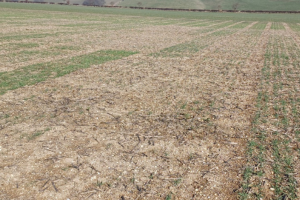
LG Caravelle has grown strongly in waterlogged conditions.
“Combine the black-grass competition with the disease resistance package, and it’s a no-brainer for me,” says Mr Miles. “One other aspect we have noticed in trials is the LG Caravelle ‘islands’.
Over the past three years, we have had some barley trials with wet feet over winter. LG Caravelle seems able to tolerate wet feet better and when those all around it are turning yellow or disappearing, it stays.”
Aside from variety choice, growers are also advised to pay close attention to seed rates to maximise crop competition, and be realistic about the establishment percentage they can expect to achieve, especially on heavy land.
“At Stow Longa, where seed rates are typically 350-375/m2, we regularly see 50-55% emergence at best, so on heavy soils I question whether people are putting enough seed on,” says Mr Miles. “If seed rates are too low, it’s giving black-grass an opportunity.”
He supports the use of variable seed rates where there are black-grass patches in a field, as upping seed rate slightly can be a good value control strategy, providing lodging risk is managed.
Of all the control options for black-grass, delayed drilling is widely regarded as being one of the most effective, but this can sometimes be challenging to do when establishing winter crops before the autumn weather window closes.
On many farms, winter barley is often one of the first crops to be sown, but Mr Granger believes there is scope to delay, just as in a wheat scenario, and allow that important flush of black-grass to be controlled before drilling.

Limagrain Arable Technical Manager Ron Granger believes growers can be patient with drilling winter barley varieties.
“You don’t have to drill winter barley too early,” he says. “Varieties such as LG Caravelle will tiller strongly, even when sown a bit later, so you can be patient.
“In practice, winter barley could be drilled quite easily up to December, but of course, it’s not standard procedure. End of September to mid-October is the optimum, although up to the end of October will be fine in most scenarios, but just be careful in the North, as we know winter generally comes quicker. If drilling later, seed rates would need to be increased.
“The important thing to recognise about barley is that it needs good soil temperatures and moisture for good germination and emergence, and then also requires warm temperatures to drive leaf development and control the final number of leaves initiated.
“Barley doesn’t like the cold, hence why we tend to drill the crop earlier so that the required high tiller numbers are established well before winter takes hold.”
LG Caravelle
• High yielding 2-row winter barley
• Strong performance across all regions
• Robust disease resistance – 7 for brown rust and mildew, 6 for Rhynchosporium and net blotch
• Very high specific weight (71.7 kg/hl) and low screenings
• Early maturity
• Has shown consistently good black-grass competition in Agrii trials
Rising demand from the livestock sector, growing bedding requirements, expanding biomass markets and tighter overall supply have pushed straw values to levels that are now impossible for growers to ignore.
“Profitable and sustainable farming is increasingly about making every hectare work harder,” says Heather Oldfield of Limagrain. “When straw values are contributing a substantial proportion of a crop’s income, growers need information that looks beyond grain yield tables.”
The numbers tell their own story. At the start of 2026, wheat straw was trading at £66 per big Hesston bale, roughly 500kg. AHDB‘s more recent figures put big square barley straw at £86 ex-farm on average, with big square wheat straw ranging from £70 to £92 ex-farm depending on region.
In some areas, straw income is now running close to grain income on a per-hectare basis.
Nowhere is that clearer than at Grasby House Farm, where a rotation of sugar beet, potatoes, winter barley and spring barley sits alongside a straw trade that’s become central to the business.
Grown for seed, the farm’s barley crop does more than one job: alongside the seed contract, its straw goes to Cherry Valley, at sites in Walesby and Buslingthorpe, where it’s used for housing ducks.
Cherry Valley — now under Chinese ownership — pays well for straw, but it’s fussy about what it buys. “Quality has to be consistent, which means variety choice matters as much for straw length and brightness as it does for grain performance and yield,” explains George Thompson.
“This year, the farm brought in around 15 bales/ha, within its usual target range of 12 to 20 bales — worth roughly £247/ha in additional income on top of the seed crop itself.”
Putting varieties to the test
George carries out his own trials on the farm, and this year ran a comparison of two similar four-hectare fields, one drilled with a six-row hybrid barley, the other with Limagrain’s winter barley, LG Caravelle.
“LG Caravelle produced significantly more straw than the hybrid, and the quality gap was just as noticeable — the hybrid’s straw simply didn’t match what came off the Caravelle. So we are justified in our decision to grow the variety for our straw business.”
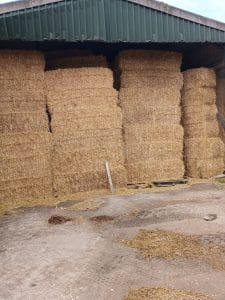
LG Caravelle produced a significant amount of straw in George’s comparison trials.
Agronomy on the farm is built around flexibility rather than a fixed calendar. Winter barley drilling isn’t rushed; last year it ran as late as the third week of October, once the preceding potato crop had finally come off the ground.
Cultivations alternate between plough and press, or a one pass stubble cultivation with a DTX depending on conditions, with a combination drill doing the sowing and nutrition applied according to soil testing.
Getting the crop right in the field is only half the job, though. Straw has to be stored properly too — kept on pallets, rodent-free, and, with growing concern over bird flu, now sheeted and covered in transit before it’s delivered to Cherry Valley as required, using a forklift.
“Straw is my all-year-round bread and butter,” says George. “But that does mean it has to be stored well but the extra value to the crop from the straw is well worth the effort.”
Not every grower treats straw as a product to sell, however. For Ryan MacCormack, manager at Dennington Estates in Suffolk, the value of straw is seen as part of the whole farming system, not as a standalone commodity to be maximised in isolation – but is an important contributor to the overall value of the crop.
“It is all about the full output off each hectare — every part of the crop has a value,” he says. “This may well be through the SFI contribution, the whole grain, and also the straw value, be that chopped or baled.”

Ryan believes that straw is an important contributor to the overall value of the crop.
Variety choice, he explains, is weighed across all those outputs together — grain quantity and quality, straw quality, and ultimately the total tonnage coming off the field.
With straw prices around £42 a tonne in the row in mid-August — sold rowed up rather than baled — Ryan points to the wider cost picture behind that decision.
“The greatest value for us comes from the grain, and then we would look at the straw — but it’s all part of the financial equation.”
That equation has to be balanced against costs and expected output, and also where the crop sits in the wider rotation, he points out.
“I look at where in the rotation the crop fits, what it’s following, how it’s going to be cultivated, and whether it’s going to be chopped or baled – all of which have associated costs.”
“Leaving straw in the row rather than baling it can save on additional combine costs. Chopping it, meanwhile, brings its own trade-offs: it can push up cultivation costs for the following crop and increase slug pressure, so in some situations, removing the straw altogether is the more cost-effective route.”
2027 Limagrain Maize Guide: Helping Growers Select Suitable Varieties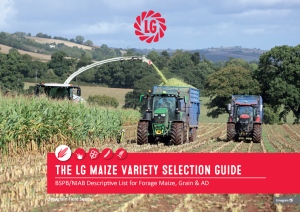
Click to download the brand new guide!
The recent exceptionally dry seasons have challenged maize growers, with moisture stress affecting crop development and reducing yields. As a result, demand for forage maize is expected to remain strong, as dairy and livestock producers seek to rebuild silage reserves.
Continued expansion of the anaerobic digestion sector is also expected to support further market growth.
Improved genetics and earlier-maturing varieties are enabling successful maize production in more northern and marginal growing regions than ever before. Grain maize also presents increasing opportunities for arable growers, offering improved profitability, rotational benefits and greater cropping flexibility.
The independent five-year data featured in this LG Maize Guide highlights varieties that deliver consistent performance across a wide range of growing conditions and seasons. Key agronomic characteristics are included, such as rapid early vigour, which helps crops make the most of available soil moisture, establish strong root systems and achieve early canopy cover to maximise yield potential. By using the LG Maize Guide, growers can reduce risk, optimise variety selection and fully benefit from the advances in maize genetics.
The UK is not alone in experiencing weather extremes, with drought affecting many maize-growing regions across Europe. This has inevitably impacted maize seed production for all breeders, resulting in some supply challenges. We therefore encourage growers to discuss variety requirements and availability as early as possible to secure their preferred choice.
We wish you a successful and productive growing season!
Download the Limagrain Maize guide today.

For tips on how to get the best out of the brand new maize guide, you can watch Tim and Richard over on our YouTube channel!
One of the Earliest Harvests on the Farm, since 1976!
Despite a challenging season and yields coming in at 10-12% below last year, Essex grower Richard Carr of Lawling Hall Farm near the coastal town of Maldon, says that Crusoe winter wheat has once again delivered a reliable performance, averaging 8.9 t/ha.
Mr Carr is a big fan of the variety – ever since its launch onto the AHDB Recommended List 14 years ago, he has continued to grow Crusoe almost every year since, at his 220-ha farm.
Harvested between 13th and 19th July, his Crusoe crop is part of what has been described as one of the farm’s earliest harvests, since 1976. Drilled around 10th October last year, Crusoe established well and continued to look strong throughout the season.
Farming in an already naturally low-rainfall area, Mr Carr chose Crusoe for its consistency, premium milling market and ability to deliver good protein levels: “I went for Crusoe due to its premium market, consistent performance and high protein content,” he says.
Reminiscing on the variety’s introduction to the market back in 2012, Mr Carr says that for him, Crusoe proved a natural successor to Hereward, which was beginning to show its age. Crusoe now sits as the farm’s main milling wheat, while LG Beowulf is grown on his farm further north.
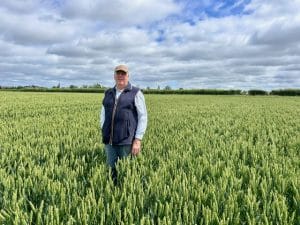
Crusoe established well despite the early harvest.
Disease pressure was relatively low, with brown rust present but easily managed through the farm’s established approach. Overall, Crusoe stayed clean and required no significant management changes.
Looking ahead, Mr Carr plans to stick with a similar approach, although the increasingly frequent dry springs could prompt earlier nitrogen applications. In addition, observations from neighbouring farms suggest there may be benefits to getting fertiliser on earlier, when conditions allow.
With the crop marketed through local merchants Dengie Crops and North Herts Farmers, as well as going into local mills, Crusoe continues to have a clear role within his rotation.
“Crusoe looked good all season,” comments Mr Carr, adding that the crop “drilled and established well, similar to others on the farm.”
With 8.9 t/ha achieved, despite the incredibly testing season for most of the UK farming industry this year, Crusoe has unsurprisingly secured another place in next year’s rotation.
Refined Approach Makes OSR the Star PerformerOilseed rape looks set to be Lincolnshire grower Ben Jackson’s most profitable crop this year, but he’s avoiding any knee-jerk reaction to increase his area for 2027.
Success in recent years has come from a more considered approach, with the crop grown no more than one year in five across the rotation, taking its place alongside first wheats, barley, legumes, linseed and maize.
Also underpinning rape’s upturn in fortunes on the farm has been a fresh look at establishment, which includes a firm philosophy to drill according to conditions and not date, along with a commitment to hybrid varieties.
“We’re taking a long term view with our cropping, and that includes oilseed rape,” says Mr Jackson. “Reducing its frequency in the rotation has certainly helped us to achieve better and more consistent performance, particularly in combatting flea beetle, as has being more selective about the fields used to grow it each year.
“We still don’t know enough about how far the beetle will migrate within a farm, so maximising the distance between previous rape crops and new drilling is an additional safeguard that we’re taking.”
Mr Jackson’s approach reflects several of the management principles promoted by the OSR Reboot Programme, including special separation and careful field selection, hybrid variety choice, and establishment based on conditions rather than calendar date.
From a base at Low Farm, Somerby, J.J. Jackson Ltd grew 480ha of oilseed rape for a 2026 harvest that spanned 11th to 17th July. Split mainly between the Limagrain Field Seeds hybrid varieties Attica, LG Adapt and LG Avenger, the crop achieved an average yield of 4.5t/ha, at 7.5% moisture and with an oil content of 45.5%.

“We’re very happy with the outcome,” says Mr Jackson, “with these yields well above the norm for us. We’re really seeing the value of hybrid vigour in these varieties, and will continue with broadly the same acreage and with the refined growing methodology that we’ve developed in recent years.”
Patience at drilling time is one of the key points, with nothing going into the ground until both moisture and soil temperatures are optimal, and there is greater accuracy in the use of a Sumo LDS that places the seed alongside liquid fertiliser.
“I’d rather wait until September than go earlier in the wrong conditions,” he adds. “Hybrid vigour is a big benefit here, as the crop requires less time, so there is no real pressure to drill early.
“We’re using a lower seed rate too, to give these more vigorous plants the space to grow.
“The important thing is to be ready to go as soon as conditions come right, so that we achieve the rapid establishment that will allow the crop to put its roots down and grow away from the flea beetle threat.”
Pre- and post-emergence herbicides are important, and some blackgrass control is incorporated into what is a largely standard inputs programme. Much of the land benefits from farmyard manure, so spring fertiliser tends to focus on nitrogen and sulphur, split over three applications, with P and K applied only where needed.
“We’re looking for the crop to kick on again in the spring, and the hybrid varieties do just that, developing a thick stem within robust and resilient plants,” says Mr Jackson.
“Harvest has been earlier this year, for all crops, but this has certainly not been to the detriment of the oilseed rape.”
With high quality oilseeds safely in store, it’s now about applying discipline in relation to next year’s crop, maintaining a sustainable acreage in the rotation, waiting for optimum conditions, and continuing to draw on the latest hybrid breeding technology.
Strong Results see LG Oilseed Varieties Return for Another SeasonA strong harvest performance from Ambassador and LG Armada oilseed rape varieties, has given Sherborne, Dorset grower, Tom Matthews of Marston Agriculture, plenty of confidence to put Limagrain OSR back in the ground next season.
Harvested on 9th July, Tom’s two crops averaged a yield of 4.75 t/ha over the weighbridge, with his best field of Ambassador reaching an impressive 5.39 t/ha.
For Tom, Ambassador’s performance comes as very little surprise, having previously been impressed by the variety’s pod shatter resistance, alongside Limagrain’s track record for reliable, high-yielding OSR varieties.
“Five years ago, we grew a competitor variety which did not perform well,” Tom says. “LG’s pod shatter trait impressed me because it actually worked! LG always seem to have the top yielding oilseed rape varieties.”

Tom has been impressed with Limagrain’s oilseed rape varieties.
Ambassador was originally recommended by Nickerson’s southern regional manager, Fraser House, and given how highly Tom values the technical knowledge and support on offer from the Nickerson team, it was an easy choice for him.
Drilled from 9th to 11th September, Tom’s crops remained particularly clean throughout the season, however, considering the general unpredictability of OSR yield performance, Tom admits that the real test comes at harvest, once the combine goes into the crop.
All of Tom’s crops are grown without desiccation, and his oil content results are still awaited – although the farm has historically achieved high results, consistently exceeding 46%, and reaching a record of 49%, with Limagrain OSR varieties.
Wait for Moisture Before Drilling OSR, Growers AdvisedAs one of the earliest harvests on record wraps up across the UK, growers turning their attention to oilseed rape drilling are being urged to hold their nerve and wait for moisture, rather than be guided by the calendar.
The advice comes from Florentina Petrescu, oilseed rape product manager for Limagrain Field Seeds UK who says the hot, dry summer has left soils critically short of the moisture needed to establish a crop successfully.
“There needs to be a decent amount of rain to restore moisture levels to where they need to be to sustain a rapidly emerging rape crop,” she says.
Oilseed rape seed goes through a series of physiological processes during germination. Initially, the seed rapidly takes up water through imbibition, initiating germination. Continued water uptake is necessary to support further metabolic activation until germination is complete.
“How often have we seen seed that has started to germinate, only for it to wither away through lack of soil moisture before completing emergence?” says Florentina. “This shows how sufficient moisture is needed in the soil to start the process, and then more rain following drilling, to ensure there is enough moisture for the crop to emerge.”
Her advice is to be guided by seedbed conditions rather than the date on the calendar.
“With not much rain in the forecast, many will be worrying about compromising establishment by holding off drilling until conditions improve. However, holding off doesn’t compromise yield,” she says.
“It is possible to get good yields from later-drilled rape, when it is sown into the right conditions. In fact, later-sown crops can often outperform some of the earlier drilled crops.
“Hybrid varieties will also have better vigour contributing to faster emergence and greater early biomass accumulation which results in a rapid establishment of the crop.”
She points out crops drilled mid-September up in the Lincolnshire Wolds achieve yields of over 6t/ha, so there is definitely high yield potential for crops drilled into September in the right conditions.

Florentina explains how strong oilseed rape yields can still be achieved from later-drilled crops when established in the right conditions.
“It is crucial to give the crop the right conditions to establish from the start, because that gives it the best chance of reaching its full yield potential. Drilling when conditions are not right means yield potential has already started to be eroded before the crop is even out of the ground.”
That principle of waiting for the right conditions has been borne out for Rutland grower Sarah Bell, whose 17-hectare crop of LG Armada has delivered exceptional results after being drilled into a firm, moist seedbed last August after timely rain in late July into early August — proof, she says, of what a modern hybrid can achieve when conditions are favourable from drilling right through to harvest.
The crop yielded strongly at 10% moisture, fully justifying the decision to grow it.
“It is a strategic decision to grow oilseed rape, based on a risk-versus-reward calculation,” says Sarah, “and this year it has certainly paid off.
“I like the Limagrain varieties because of the genetic resilience that’s been bred into them. Good disease resistance, strong vigour and good rooting are all traits that help to tip the balance a little more in the grower’s favour, so it’s an important part of the decision-making process.”

Sarah has been impressed by the disease resistance and strong vigour of Limagrain’s oilseed rape varieties.
On the mixed farm, which runs suckler cows and sheep alongside its cropping, soils generally benefit from the legacy of farmyard manure, and the field that grew the LG Armada was in a favourable state.
“This was a relatively light, but well-bodied site, and it had been ploughed two years earlier,” Sarah explains. “Spring barley preceded the oilseed rape, with minimal carryover risk from cover cropping, and there was plenty of moisture for early drilling.
“We used berseem clover as a companion crop and, crucially, the rape was up and out of the ground and looking great very quickly.”
The crop received a top dressing of 30kgN/ha in the autumn, and 190kgN/ha plus SO3 in two applications in the spring, with some early grass weed control. Fungicides and other inputs were kept to a bare minimum — a decision that paid off in a low disease-pressure season.
“Our rainfall from April through to June was around 25% less than our average, and what we did have came in two heavy bursts,” Sarah adds. “The fact that the oilseed rape did so well is testament to the strength of its rooting, and the long dry spells kept any fungal disease at bay.
“By harvest, in mid-July, the crop was seven feet tall, with stems as thick as my thumb. It has really shown what can be achieved when conditions allow full genetic potential to be realised.”
Conditions will again determine whether winter oilseed rape goes into Sarah’s rotation for 2027, but she is content in the knowledge that — when there is moisture at drilling time and flea beetle pressure is low — she can reap the benefits of progressive plant breeding.
Weathering the Drought: LG Caravelle Proves its WorthThis season’s prolonged dry weather may have taken its toll on winter barley yields, but for Lincolnshire farmer, George Thompson of Grasby House Farm, LG Caravelle has still earned its place in the rotation.
Harvested from mid-July, yields ranged from 5.6 t/ha on the poorest fields, to just over 8 t/ha on the best. While below the 10 t/ha achieved in better seasons, George says that the crop stood up well, given the conditions.
“Looking at my barley crops at the beginning of April, they looked marvellous,” he says. “I was hoping for close to 10 tonnes per hectare at harvest, then the drought set in. We had less than one millimetre of rain in June and July, which caused the crops to lose tillers and, in turn, yield.”
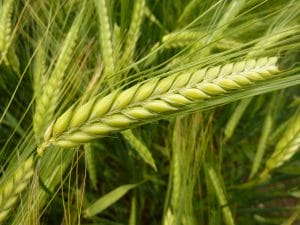
George has been impressed with both the yield and straw quality of LG Caravelle.
Despite the challenging season, George has no hesitation about growing LG Caravelle again.
“Definitely,” he says. “I tried a competitor variety previously on two 10-acre fields, and LG Caravelle combined a tank load more – four tonnes more in fact. LG Caravelle was better quality too, with better straw.”
Recommended by both the LG contracts team and George’s agronomist, LG Caravelle has consistently impressed in both independent trials and on-farm. For George, who supplies straw commercially, producing a clean, high-quality straw crop is just as important as grain yield, with straw returning £346/ha this year.
Disease pressure remained low throughout the season, allowing the crop to perform well with a simple, need-based fungicide programme. Looking ahead, he plans to apply nitrogen slightly earlier in dry springs, while continuing to favour later October drilling, after seeing his best grain samples come from crops drilled later in the month.
LG Caravelle has once again demonstrated reliable performance for George, even when the weather had other ideas.