






Reseeding – or at least overseeding – every five years is essential for dairy farmers taking grassland productivity seriously.
This costs between £550 a hectare and £850 a hectare, according to Limagrain UK’s forage crop manager John Spence.
“Of this, between 25% and 30% will be spent on seed, if you opt for a high quality mixture, or around 20% for a standard mixture” he says, adding that cutting corners here amounts to a false economy.
“There’s a big difference between a good and a standard seed mixture, in yield and feed value,” he adds, “yet it costs the same to carry out the work and only a small difference in seed costs.
“And there’s a great deal of knowledge and skill that goes into designing our best seed mixtures, and into the testing and trial work before they even hit the shelves. Farmers would be foolish to dismiss this.”
The UK’s Recommended Lists are compiled annually by a panel of industry specialists. There’s a constant influx of new varieties pitching for a place on this list.
Be discerning when choosing seed mixtures
“The selection process is pretty robust though,” adds Mr Spence. “A newcomer has to show a clear improvement on existing varieties, based on extensive trials, before being accepted, such as yield, metabolizable energy, D value and ground cover.”
 There are also secondary characteristics that are considered, more specific to the type of grass, such as disease resistance, and seasonal yield, and winter hardiness.
Much of the forage quality trial data used by the selection panel is based on results in the early growing season; something Limagrain is keen to complement with its own data from trials that run throughout the whole growing season.
“The more data we have, the better we can understand a variety’s strengths, so we use the recommended list trial data alongside our own before selecting varieties for our mixtures,” he adds. “We compare varieties on their seasonal performance and also their year on year results, so we take their lifetime performance into account.
“This additional data highlights the ‘staying power’ of the variety right across the season, so it’s important information for growers, and for us as we select varieties for our mixtures.”
Pick and mix
The second, and equally important stage, in selecting the right grass seed is choosing a mixture of varieties that work well together. Designing these mixtures lies with the individual grass seed companies and the mixture’s success is dependent on their skill and expertise.
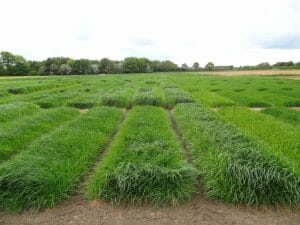 These mixtures should build on the characteristics of individual varieties, particularly when it comes to yield. “But the varieties should also complement each other, and this will be particularly evident in feed value. This is an increasingly important component of home-grown forages in the light of record highs for bought-in feed prices,” says Mr Spence.
“It’s important to use the right ingredients – or varieties – for each mixture, depending on its purpose. For example, the varieties used in a cutting mixture should prioritise yield while maintaining high feed value at silage time, whereas varieties for grazing need to perform throughout the season, with dual-purpose mixtures s carefully balancing the two key parameters.”
Put to the test
Limagrain compares its own mixtures and other commercially marketed mixtures in field trials. It’s been running since 2013, when it introduced a yield and feed value stamp of approval to the best; those achieving high performance in both areas.
“We’re the only company in the UK to have a bank of data on the performance of grass seed mixtures that is updated annually. It’s enables merchants and farmers to check out the latest ranges”.
The feed value of grass mixtures is measured using near infra-red – NIRS – spectroscopy. “We have a benchmark for energy, sugar, protein and digestibility components. Mixtures achieving or surpassing these, and meeting our benchmarks for yield, carry the LGAN accreditation.” 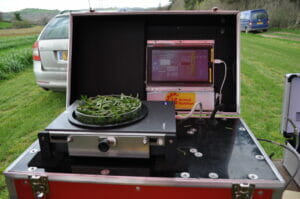
Popular mixtures for dairy farmers that carry the LGAN accreditation in the company’s Sinclair McGill range include Colossal Silage – a short term ley for cutting, dual-purpose Prosper and one of the best grazing mixtures available, Turbo.
“Take Turbo, this has five perennial ryegrasses in its mix – two intermediate and three late varieties. Within these are three tetraploids and two diploids. It also includes the grazing Festulolium Matrix and a white clover blend.
“So we have species that can withstand drier conditions, have exceptional yield characteristics, can fix nitrogen and provide growth through the season. And the Matrix grows at cooler temperatures so gives ‘shoulders’ to the crop in spring and autumn. And collectively this mix meets the LGAN combined feed value and yield benchmarks.”
Trial results show the value of improved grass seed mixtures. For example, the relative dry matter four-year mean yield for Turbo was 4% above the control, and the four-year mean sugar (WSC) content to digestible fibre (dNDF) placed Turbo ahead of the other mixtures on the trial, as shown in Figure 1.
Fig. 1 Four year sugar (WSC) (%) vs dNDF (%)
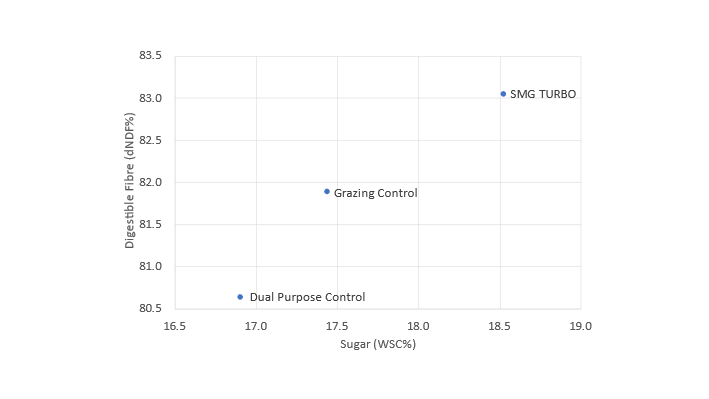
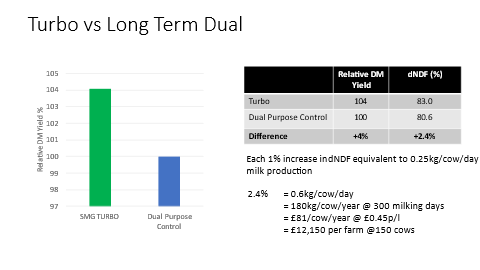
Figure 2 shows the added value of high feed value seed mixtures in milk income. “An extra 1% in digestible fibre from forage can add 0.25kg of milk a day, and based on the performance of Turbo across four years, this gave an additional £81 per cow per year based on 300 milking days.
“The benefit is even higher when we consider savings from bought in feeds and a higher milk price.”
Fig 2. Turbo vs Long term dual-purpose ley – performance 2017-2022
Quality control
No ‘full package’ seed mixture would be complete without quality checks. If you buy a premier seed mixture you expect high quality clean seed,” adds Mr Spence. “There are legal standards for germination and purity and there are higher voluntary standards.”
The standard level for germination is 80% and 96% of the seed must be pure. The higher voluntary level for purity is 98%. Limagrain adds another 10% to this germination level and tests seed every six months to make sure standards are maintained. 
A top quality grass seed mixture could cost £230 a hectare, for example, compared with a standard of the shelf mixture at £175 a hectare, at a standard sowing rate of 35kg of seed per hectare for a reseed.
If there’s a difference of 10% in germination and 2% in purity, this brings the cost per viable seed to a similar cost. But the higher quality mixture will have the yield and feed value assurances too.
“So farmers can afford to be discerning and spend their money on a mixture with a pedigree – a background of reliable recommended varieties, with supporting trial data compiled into a mixture that is proven to do the job they want it for.”
Top Tips
- Know what you want the sward for – grazing, cutting, dual-purpose?
- Review your own farm’s growing season
- Look at a mixture’s ‘pedigree’ – trial data, yield and feed value characteristics, quality and germination assurances
- Avoid mixtures with limited information on varieties and/or lack of trial data in UK conditions
Find out more
To see the full range of Sinclair McGill mixtures and find your nearest distributor, click here
To download the Sinclair McGill Grass and Forage Handbook, click here
Are multispecies seed mixtures a silver bullet or are there other options to consider when reseeding grassland?
Multispecies grass mixtures have grown in popularity in recent years, with sales at least doubling year on year since 2019. And for good reason, says Limagrain UK’s forage crops manager John Spence. But he suggests growers weigh up the pros and cons, look at alternatives, and decide what’s right for their own situation.
“Multispecies mixtures tick a lot of boxes, offering numerous benefits, but when reseeding, growers shouldn’t be quick to discount a good ryegrass and clover mixture. These can bring many of the same benefits, along with other advantages that might suit some situations better.’
He says that in many cases, multispecies are compared with a ryegrass-only swards, and the benefits of drought resistance, lower inputs and more continuous summer growth shine through in mixtures with a wider range of varieties and herb species.
“But if you add clover to the ryegrass mix, you bring some of the benefits of a multispecies mixture such as a reduced fertilizer need and more continuous growth through summer. Plus a few more advantages, such as flexibility of use and longevity, that might appeal to some.
 “For example, ryegrass and clover mixtures are better for dual purpose use. They can be cut for silage earlier in the season, then closed up and grazed,” he says, adding that while it’s not impossible to use a multispecies mixture for cutting, they tend to be more difficult to manage.
“If multispecies swards are destined for cutting, they’re best treated as a multicut crop so the chicory doesn’t get too woody and undigestible.”
Likewise, there’s little margin for error in the grazing management of multispecies swards if their feed value is to be realised.
“Grazing multispecies swards too tightly will reduce the persistence of the herbs, but if it’s left to grow too long, herbs such as chicory will become woody. It’s not quite as straight-forward as a ryegrass and clover sward.”
But the inclusion of herbs such as the deep-rooted chicory and plantain in multispecies swards do add drought-tolerance benefits and contribute to soil health and structure. “These can be very valuable in areas with light soils, and where drought conditions are common.
“But in less extreme areas, tetraploid perennial ryegrass can be added to a grass and clover mixture. These are deeper rooted than diploid varieties and can withstand dry conditions better, and tend to be higher yielding and more digestible.
Likewise, he points out that all grass swards benefit soil health and structure and are an ideal addition to a cropping rotation. Remember too that including clover in a ryegrass mixture brings nitrogen-fixing benefits and offers a more consistent growth pattern through summer.”
And if extending the grazing season is a priority, both grass/clover and multispecies mixtures can be formulated to include species such as Timothy and Festulolium which start growing at lower temperatures than ryegrasses. “This adds ‘shoulders’ in spring and autumn and extends the grazing season,” he says.
Herb longevity
Some herb species claim anthelmintic properties to mitigate the worm burden in livestock whilst also adding feed value, in addition to their deep roots that enhance soil structure and grow in drier conditions.
Which species to include in a multispecies mixture is something Mr Spence says growers should also consider carefully. “The mixtures can get very complicated, and can include 15 to 20 different components, some of which will be more difficult to establish.” 
Typically herb species such as plantain and chicory establish well across a wide range of soil types and work well in combination with productive grass species such as ryegrasses, Festulolium and Timothy. Other herb species such as sainfoin and sheeps parsley are much more difficult to establish successfully.
“Grass chicory and plantain, with red and white clover, are the simplest and maybe most reliable multispecies mixtures. If more complex mixtures are being considered, and these are generally more expensive, growers should get local advice on their suitability to the area and its soils, and the track record of establishment of the various varieties. Otherwise you might be paying for something you never see.”
The persistency of the herbal varieties will also affect sward longevity. “The herbs tend to die out quicker than the grasses and clover,” adds Mr Spence. “If we get four years from a multispecies sward we’re doing well. By then most herbs will have been ‘pushed’ out by the more competitive grass varieties with just the ryegrass and clover surviving.”
A ryegrass and white clover sward reseed should last for five years. “There’s a significant difference here with a multispecies sward, so this needs to be considered when costing a reseed.”
 The environmental aspects of multispecies swards and its ability to attract a diverse range of wildlife has attracted some growers to these options. “And a main driver has been the countryside stewardship payments for crops grown in England meeting certain criteria. If the mixture complies with the rules and the crop meets the growing requirements it can attract £382 a hectare.
“It’s all about managing risk and balancing the conditions on the farm with the requirements from the crop, and working out which mixture will be the best match.”
Multispecies or a glass clover mixture – Considerations
• Soil type, weather conditions/drought risk
• Grazing only or cutting/grazing requirements
• Grazing management resource
• Input requirements/availability of slurry
• Productivity and persistency through the season
• Sward longevity
• Eligibility for and attractiveness of conservation /environmental schemes
Keen to try new crops, sheep and beef farmer Philip Sims was interested to see how Limagrain UK’s relatively new bounce back brassica Skyfall performed on the farm and what sort of feed it provided.
Philip Sims, his wife Susan and son Robert run a flock of Texel cross sheep and a 35-cow suckler herd on the 170-acre unit at St Wenn, Bodmin in Cornwall.
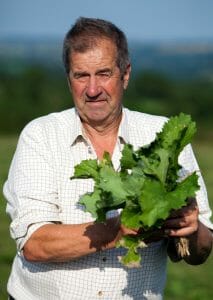 Land reaches 213m (700’) above sea level. Most of the land grows good quality forages, predominantly grass for silage and hay, and also grazing, plus maize and fodder crops.
Philip, who moved to the farm in 1956 with his parents, looks to grow as much feed for the livestock on the farm and reduce their reliance on bought in concentrates.
So extending the grazing period and the portfolio of forages is always on the cards here. And introducing a range of forages places less reliance on grass, should it be a very hot, dry summer and grass growth stalls.
Keen to try new crops, Philip was interested to see how Limagrain’s relatively new bounce back brassica Skyfall performed on the farm and what sort of feed it provided. So, in April 2021, he sowed three hectares (about seven acres) of seed into a maize stubble. Nitrogen fertiliser was applied at a rate of 200kg a hectare.
Six weeks later, at the end of May, 100% of the crop had germinated and the plants were 15cm (6”) tall and fit for grazing.
“We opened the Skyfall crop to a group of 60 ewe lambs,” says Philip. “The crop was part of an eight hectare (20 acre) field. What surprised me so much was that the sheep always headed for the Skyfall out of preference. They did very well on it.”
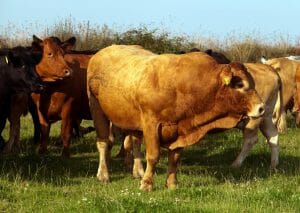 Once the crop was grazed off after about two weeks, it was shut up and left to re-grow – or ‘bounce-back’. True to its word, the crop was ready for grazing again a few weeks later.
“We repeated this a few times and in June we grazed the cattle on it,” adds Philip. “They also loved it – are loving it – it must be some sweetness in the leaves? But whatever it is, Skyfall is very palatable to both sheep and cattle, and they did well on it.”
The crop was then followed with an autumn grass reseed.
“Limagrain’s adviser Graham Parnell suggested we might want to add a fertilizer to the crop after a few rounds of grazing,” added Philip. “But we were happy enough with its natural growth. It just doesn’t stop growing. It’s a win-win really.”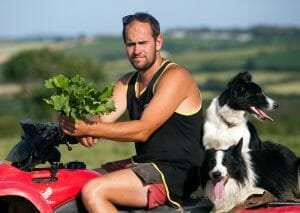
So pleased with the performance of Skyfall, Philip is growing more. “It certainly provides a good fresh bite in spring and summer and adds to our grazing forages, taking the pressure off grass.”
BOUNCE BACK BRASSICA BENEFITS – SKYFALL
• High protein forage
• Fast-growing – normal 10 weeks from sowing to grazing, but less in this case
• Leafy and palatable grazing crop for cattle and sheep
• Produces between 30 and 35 tonnes/ha
• Deep rooting so withstands dry conditions
• Regrowth potential – bounces back after first round of grazing and provides a second crop.
• Break crop – short-circuits weeds and pest problems in grassland
More information
Download the LG Skyfall bounceback brassica growers guide below
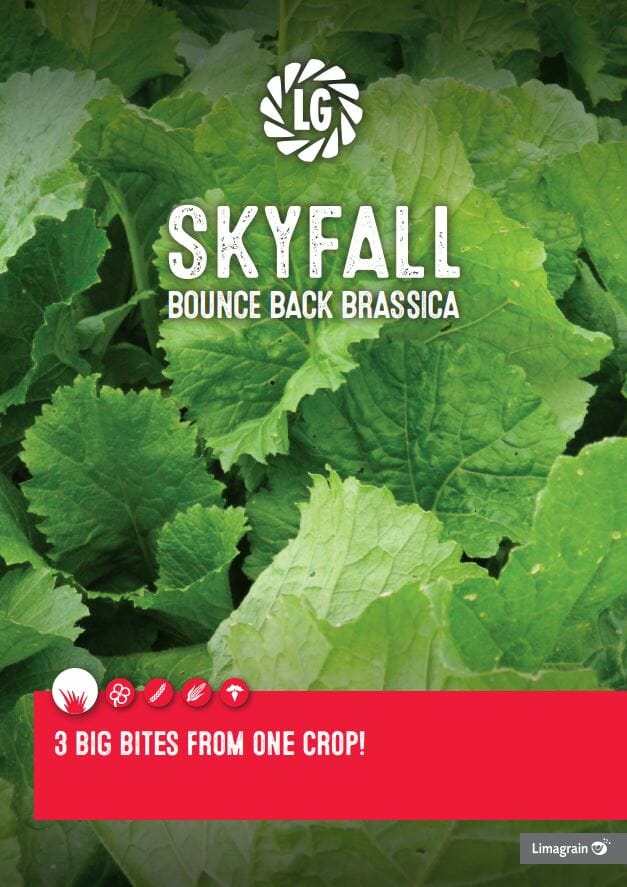
Limagrain UK’s bounce back brassica Skyfall is the perfect answer to ensuring that a highly nutritious leafy forage crop is available for grazing sheep and cattle in summer through to autumn.
Sown between May and July, it will be ready for grazing in 12 to 14 weeks. And after the first round of grazing, it can be closed up for six to eight weeks while it grows back, ready for grazing again later in the season.
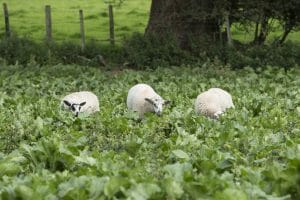 “Its deep narrow roots allow it to thrive in drier soils through summer,” says Limagrain’s forage crop manager John Spence. “This, and the crop’s exceptional vigour supports regrowth and a second grazing crop. In field trials Skyfall produced between 30 and 35 tonnes/ha of a palatable soft-leaved forage where the crop was sown in July.”
Skyfall is an ideal break crop too before a grass reseed or in a mixed arable rotation.
Sheep farmer and contractor Tim Cains was an early pioneer, sowing a crop in the first season that Limagrain introduced it. He used it for his lambs, and they devoured it first time round, and second time round six weeks later when he finished them off the crop at 40kg liveweight.
Tim Cains from Bridgnorth runs a 500-ewe flock – 300 Welsh mules and 200 Scottish Blackface hill ewes. Lambing starts in late March and lambs are reared for finishing from September.
“This puts a lot of pressure on our grassland,” says Tim, who combines his sheep enterprise with a mobile sheep dipping business.
“We lamb the mules indoors then turn the ewes and lambs out onto grassland. We’ve 130 acres of grassland for the sheep, and finish around 500 lambs, keeping 120 ewe lambs for replacements.” 
Lambs are weaned from the second week of July, and in 2020 Tim moved them straight on to the bounce back brassica Skyfall. The crop’s proven track record of great growth potential through summer and the ability to ‘bounce back’ appealed to him.
“We wanted to ease the pressure on the grazed grass and reduce reliance on bought in feed, should the grass be in short supply later in summer,” says Tim.
“We got 24kg of seed – treated with Start-Up to promote germination and even establishment, for our 13-acre ley (5.3ha). I drilled it in early May and by the time I moved 300 lambs on to it at the end of July the leaves were so big we couldn’t see the lambs. There’s not much bulb, but plenty of leaf.”
And it went down a treat. “The lambs loved it, and devoured the crop in three weeks, grazing it right down. We moved them off in mid-August onto a red clover sward and supplemented their diet with some creep.
“I then waited to see if the crop did what it was meant to do and re-grow enough for another grazing. I have to admit to being a bit skeptical. We’d only had three weeks grazing off the crop so far, so its value depended on a re-growth. We needed another three weeks of grazing to make it viable; to justify growing it,” he adds.
It wasn’t a very long wait before Tim knew this crop ‘had legs’. Within 10 days, regrowth was about 30cm. “I took photos of the crop in mid-August as I couldn’t believe the speed of the regrowth. It was exceptional.”
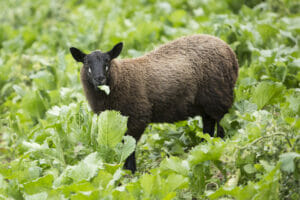 About 270 lambs were moved back on to the Skyfall at the beginning of October and Tim pulled finished lambs off the crop at around 40kg liveweight. “They sold well – the market was fairly strong last autumn. All bar 56 of the smallest lambs were sold in October; something we’ve never achieved in the past. We’re normally aiming for the Christmas market, and don’t really ‘push’ the lambs. We didn’t have to with this crop, but we got to finishing weights much earlier.
He admits that this sort of bounce back brassica is a new one for him. “But it worked really well. Lambs reached finishing weights more cost-effectively, and it gave the grass a break too.
“And I gave the crop a fair test as we used some fairly unproductive permanent pasture to grow it. It wasn’t very fertile ground and maybe not the best choice to try out this new crop, but it performed far better than I expected.”
Plans were to follow the brassica with a herbal ley in autumn but this was put back to spring 2021 to make the most of the regrowth. “I’d still got 56 lambs grazing it in late November.
“Maximising home-grown forage production is crucial and fine tuning the cropping rotation will improve output,” says Tim. “We grow 20 acres of turnips for over-wintering ewes and high energy fodder beet for later finishing lambs.
“We also need to up the grassland management but establishing new leys is challenging here as the stone in the soil makes ploughing very difficult. So being able to burn off grass and drill a brassica in directly then burning off again before planting a herbal ley saves time and machinery. It also helps clean the old grasses out ready for the new ley.
“A rotation of brassica, grass and roots seems to work well for us. And the regrowth track record of this brassica means I will aim to sow it earlier this year – I might get even more from it through summer and autumn!”
-
crop facts: SKYFALL BOUNCE BACK BRASSICA
High protein forage
Fast-growing – 10 to 12 weeks from sowing to grazing
Leafy and palatable grazing crop for cattle and sheep
Produces between 30 and 35 tonnes/ha
Deep rooting so withstands dry conditions
Regrowth potential – bounces back after first round of grazing and provides a second crop.
Break crop – short-circuits weeds and pest problems in grassland
More information
Download the LG Skyfall bounceback brassica growers guide below
Sinclair McGill’s medium term grass seed mixture, Prosper, is showing its colours as a high yielding and high value grass seed mixture.
In Limagrain field trials, carried out from 2017 to 2020 at its UK Innovation site Prosper led the field for key yield and quality attributes when compared with other Sinclair McGill mixtures and two premium controls. This mixture has continued its success in 2020 and 2021 field trials, despite challenging growing conditions.
Top yield
Prosper had excellent performance when cut for silage with yields exceeding any other perennial ryegrass based mixture. Its dry matter yield was even higher yielding than the control short term mixture composed of Italian and Hybrid ryegrasses. A short term mixture is normally expected to surpass a medium term mixture in dry matter yield.
Four-year Mean Relative DM Yield (t/ha)
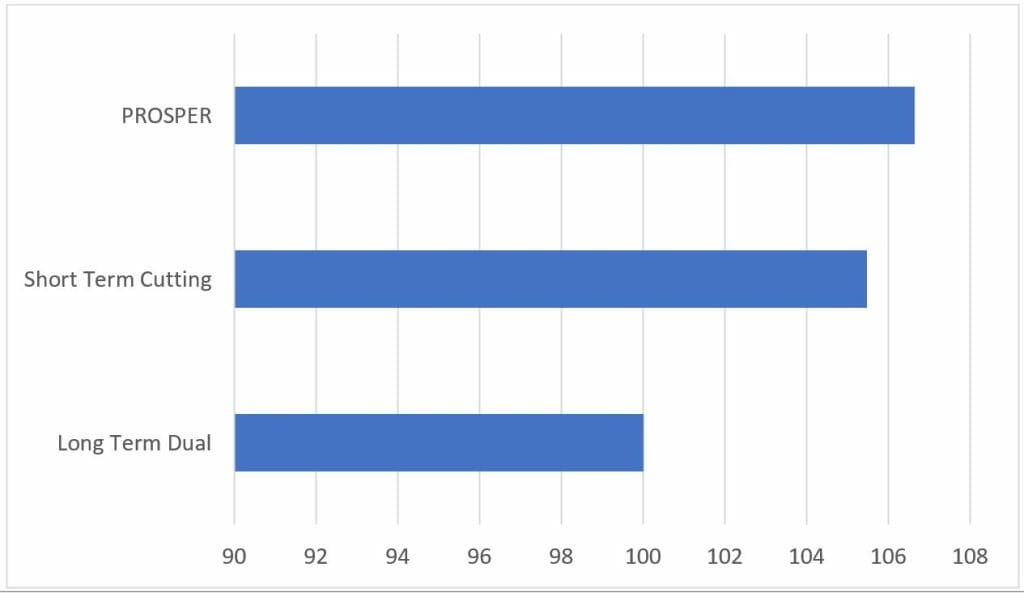
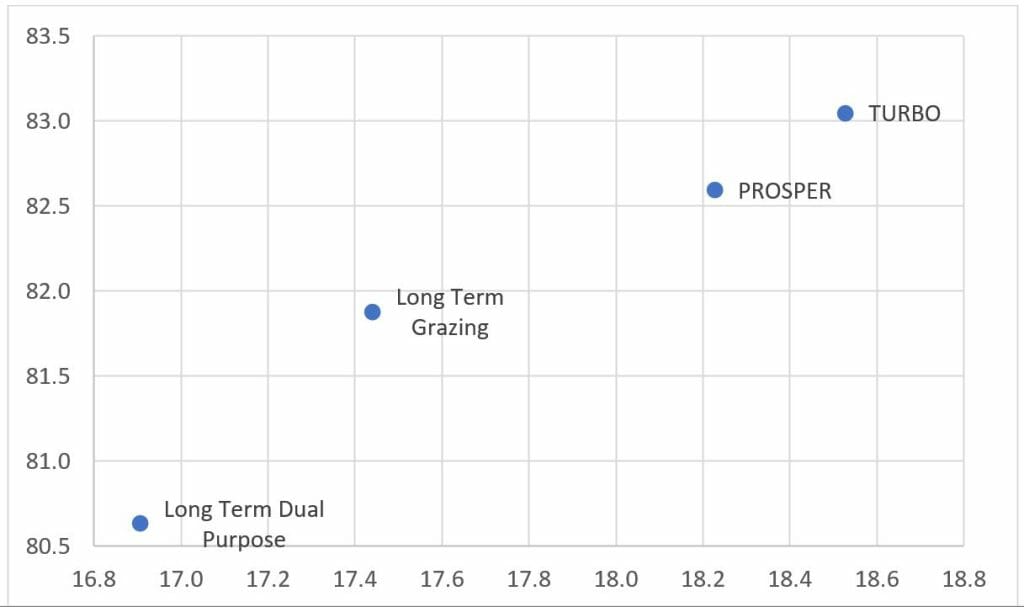
This mixture also had the highest sugar content (WSC %) among the mixtures on trial and a digestible fibre (dNDF) 2% above the long term mixture control. Prosper’s four year average mean metabolisable energy (ME) was the best in the group.
Top dry matter
In a grazing management situation, Prosper’s relative dry matter yield across the four years was significantly above the controls when cut under a simulated grazing regime. It also produced some of the best sugar, energy and digestible fibre results, similar to that of Sinclair McGill’s high quality grazing mixture Turbo.
Four-Year mean WSC (%) vs dNDF (%)
Best of both
Prosper is a dual purpose mixture comprising mid and late perennial ryegrasses and tetraploid ryegrass varieties. The mixture also includes white clover and, for Scotland and Northern Ireland, a small amount of Timothy. This combination of varieties at carefully formulated ratios makes the mixture ideal for grazing cattle and for conservation.
High yields and high feed value, particularly dNDF, combine to put Prosper ahead as a top dual purpose cutting and grazing mixture.
LGAN quality accreditation
Prosper carries Limagrain’s LGAN (LG Animal Nutrition) accreditation. This rubber-stamp confirms its yield and feed value. It reflects the merits of the individual varieties included in the mixture and their abilities to complement each other within the mixture.
 The LGAN stamp is ‘proof’ that the mixture has met both agronomic and feed value benchmarks and that, through extensive trials, it has a track record for efficient production.
The ability to improve digestible fibre (dNDF) has been a key factor in selecting LGAN varieties and mixtures. Fibre is needed in the diet to maintain a healthy rumen, so increasing dietary dNDF improves feed efficiency.
In dairy cattle even a small increase in dNDF has been linked to improvements in both intakes and milk production. Similar performance advantages can be expected in increased intakes and liveweight gain in beef cattle.
LGAN PROSPER, dual purpose (Sinclair Mcgill)
- 58% Mid season perennial ryegrass including tetraploid varieties
37% Late perennial ryegrass including tetraploid variety
5% White clover blend
(Mixture for Scotland and Northern Ireland includes 7%Timothy – slightly lower quantities of ryegrasses)
Reseed – with quality
Grass swards are at their most productive in their first year. Dry matter yield and energy content of the grass will then decline year-on-year.
Limagrain’s latest grass trial results have confirmed this and have demonstrated the yield benefits of the younger sward, and of high quality grass seed mixtures verses a control.
These latest trial results, that show an average decrease in yield of nearly five tonnes per hectare – around 40% – from year one to year four reinforce the value, and cost-justification, of reseeding as part of good farm management.
Adding further value to the reseed is achieved by using high quality, top-performing mixtures that are identified in the trial.
More information
Find your nearest Sinclair McGill distributor here
To learn more about Sinclair McGill Prosper mixture, click here
New LG fodder beet varieties raise the benchmark. And add more feed value from home grown forage
New trial data from Limagrain UK, published in January 2023, shows that new fodder beet varieties are raising the benchmark for dry matter yields. But another highlight is the crop’s ability to produce consistently high yields in varying seasonal growing conditions seen in the UK in recent years.
Dedicated UK Fodder Beet Trials
Limagrain UK has run fodder beet trials on its Lincolnshire site since 2008 and compared the performance of commercially available varieties of fodder beet.
“We’ve seen significant improvements in dry matter yields in the past decade, particularly among newer varieties,” says Limagrain UK’s forage crops product manager John Spence. “These fodder beet varieties are raising the benchmark and achieving record yields. They offer a consistently high energy and dry matter home-grown forage for livestock diets.”
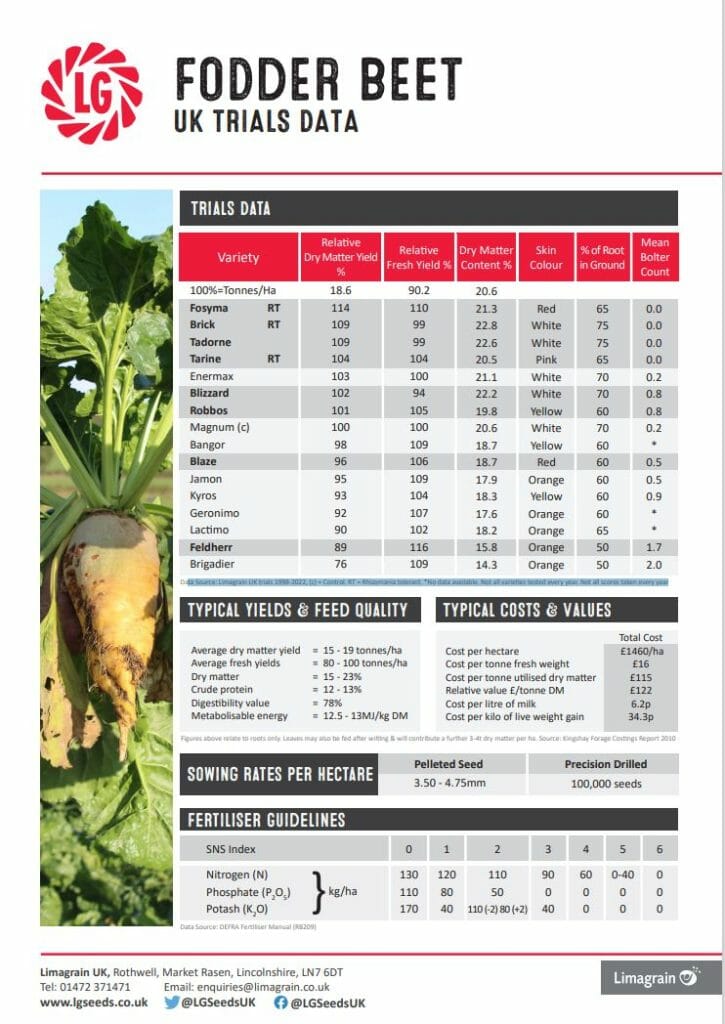
In the latest ranking, the new fodder beet variety Fosyma has an average dry matter yield of 14% above the control variety Magnum, equivalent to more than 2.5t DM/ha.
“Fosyma has 21.3% dry matter, and it is one of only a few varieties which are rhizomania tolerant. Fosyma also has good resistance to powdery mildew, rust and leaf spot,” adds Mr Spence.
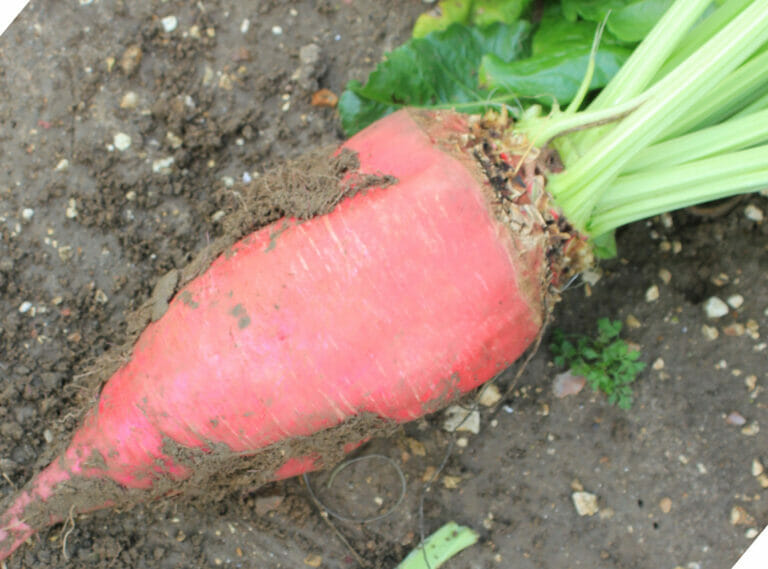
Fosyma has other proven benefits that add to its appeal. “Its high dry matter is combined with its medium-depth root. We usually associate high dry matter fodder beets with deep rooted varieties, so Fosyma, with a relatively high proportion (35%) sitting out of the ground, bucks the trend. This makes it suitable for grazing in situ as well as for lifting and it carries less risk of soil contamination than the deeper-rooted varieties.”
 Another key advantage of Fosyma is its high tolerance to bolting. It is one of the least likely varieties of fodder beet to bolt. This is particularly beneficial in more extreme seasons, such as the cold spring in 2022, followed by warm weather which can encourage bolting.
Fosyma has been included in the trials since 2019 and has been available to UK growers for the past two years.
High yielding and rhizomania tolerant variety Brick is in second place with a dry matter yield 9% above the control and a dry matter content of 22.8%. It is slightly deeper rooted than Fosyma with 25% of the root out of the ground. These characteristics give the variety excellent winter hardiness.
Reliable Robbos
A more established variety that has held its popularity in livestock diets is Robbos due to its flexibility, combined with high yields. With only 60% of the root in the ground, it is ideal for grazing sheep and cattle, and among shallower-rooted varieties, it offers a high dry matter content of 19.8%. Robbos has been included in the Limagrain UK annual trials since they started in 2008 and it gives consistent and reliable results.
“Fodder beet is really showing its colours as a consistent and reliable livestock feed,” adds Mr Spence. “We see very little variation in yields within a variety between cold, wet or dry seasons.
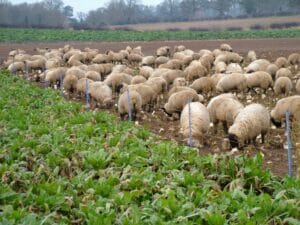 “Even after the dry summer of 2022, the crops still produced outstanding yields, and this was even more pronounced among the newer varieties, such as Fosyma, which maintained yields achieved in the previous year and well above 20t DM/ha.”
“So, for the same growing costs, farmers can produce significantly more dry matter per hectare by opting for the higher yielding fodder beet varieties.”
Sown in April, fodder beet is harvested from October onwards and can be fed in a total mixed ration or ad lib with maize silage, or it can be grazed in situ.
Limagrain UK publishes its annual trial data, available to all growers to enable them to make informed decisions. There are no recommended lists for fodder beet.
Limagrain UK’s latest fodder beet trial results are available here
Fuel from fodder beet supports cow performancePembrokeshire dairy farmer Roger James relies on a high energy diet in early lactation to keep his 300-cow cross bred dairy herd in good body condition and able to support milk production and high fertility levels in a trouble-free fashion.
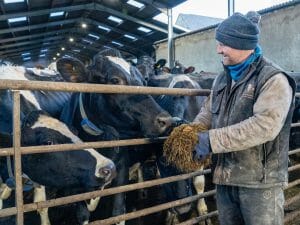
He gets this from a combination of breeding and nutrition.
Roger says his medium-sized strong cows are ideal – a cross of Montbeliarde, Norwegian Red and British Friesian genetics. “And if we feed them properly, they produce good quality milk, stay fit and get back in calf easily.”
The diet is based on a TMR comprising grass and wholecrop silage and fodder beet – all home-grown forages – plus molasses and a blend, as well as a rumen buffer, vitamins and minerals. This supports average yields in this NMR-recorded herd of 8,000 litres at 4.35% fat and 3.50% protein on twice-a-day milking.
“The fodder beet gives our cows plenty of energy and that, in turn, results in good fertility,” says Roger.
“We target, and usually achieve, a 365-day average calving interval. Getting cows back in calf is the cornerstone of our management system here. We’re mainly autumn calving and look to calve 240 cows in an eight-week period from October.”
Fodder beet is introduced to the ration early in December at a rate of 6kg per cow per day, increasing to 8kg per head by the end of the month to get the energy up, ahead of starting to AI cows from the beginning of January. 
Around 3.6 hectares of fodder beet is sown in April and provides a break crop for wholecrop wheat. “The land is free-draining, and the fodder beet grows really well, whatever the season throws at it,” he says. “We lift about 320 tonne of fodder beet each year, and yield doesn’t vary much from year to year.” Average yield is about 90t/ha.
He says that during the decade of growing the crop, he’s never had a bad harvest. “In fact, we’ve had some of our best yields when it’s been really dry and hot, such as in 2018 and in 2022. I think the extra warmth in the soil, when it did eventually rain, meant the beet grew like mad and more than made up for lost time.”
Fodder beet grown at Moat Grange, just south of the Preseli hills in the heart of Pembrokeshire, is lifted in early November and stored in a clamp, before being washed, chopped and added to the TMR.
“We feed it in the TMR even after the cows are turned out in mid-March. They’re given a buffer to support yields and fed concentrate in the parlour until milk eases off and they’re approaching drying off.
“The fodder beet keeps well, until mid-April when temperatures warm up and it starts to go soft. But we aim to have finished feeding it all by then.”
Roger is discerning about the variety he grows and takes advice from his Wynnstay adviser Laurence Couzens.
“We’ve opted for Robbos for the past few years, and I’m pleased with it. It offers a high dry matter yield and feed value. And the smooth skin, and the fact that it’s not too deep rooted, means it lifts out clean and easily, making it easier to wash.
“I know I don’t necessarily need to wash it, and many growers don’t, but I prefer to reduce any risk of soil contamination,” says Roger.
He farms the 174-hectare unit, which has been in the family for more than 100 years, in partnership with his father Robert and brother Simon.
Roger manages the dairy herd and followers with the help of a cowman and two full-time staff. His partner Angharad is also developing a gelato business – Llaeth Preseli Milk and Gelato – using milk from the herd.
 “Milk quality from healthy and productive cows is important to us,” he adds. “We sell pasteurised milk and handmade gelato directly from the farm. The milk is sold through a vending machine, and the gelato is served from a trailer in our ‘gelato garden’. Both these ventures are brand new and going well so far. Most of the herd’s milk is sold to First Milk and used for making cheddar cheese.
“We’re aiming to get the best from our unit and our cows. Our home- grown forage is vital. First cut is taken in mid-May – a little later than some would take it, but it means there’s more fibre in the silage and this balances well with the wholecrop. The fodder beet is the icing on the cake. Cows keep well on this, and production, health and fertility are good. So is our gelato!””
KEY FACTS ON FODDER BEET
- Sown in March – April
Can be part of a grass rotation or an alternative to spring cereal crops to provide livestock feed and break the pest and disease cycle
- Harvest flexibility
Crop can be lifted from late October until March. Little loss in feed value, if any, is typically seen in later harvested crops.
- High energy feed provides high feed value
Average ME 12.5-13MJ/kg DM, 162,500 – 202,500MJ/ha with more recent varieties producing well above this level.
- Choice of variety to suit the system
Consider root depth, disease resistance, bolting score
There are no recommended lists for fodder beet varieties, but Limagrain UK’s annual fodder beet trial results are available to all growers and farmers.
more information
Learn more about Robbos fodder beet here or contact your usual seed merchant for availability
The latest UK trial results data on fodder beet (including Fosyma) can be downloaded here
LG GatePost Newsletter – Feb 2023
The February 2023 issue of LG GatePost is now available to download.
This edition features articles about our exciting new Wheat, Winter Barley and Oilseed Rape varieties that are taking leading positions across the 2023/24 AHDB Recommended List.
You can read about how moving to direct drilling of LG Diablo Spring Barley has proven successful for Berwickshire grower, Neil White and watch our Spring Barley agronomy series of videos that give you all the technical know-how to successfully grow your Spring Barley crop.
There is also information about our upcoming Trials Events, and online Technical Webinar.

The agricultural press has been full of articles covering the impact of fertiliser price rises over the last year, with headlines being focussed predominantly on methods of reducing Nitrogen application rates.
What is less well reported is that growers have actually been reducing their use of inorganic fertilisers since the early 1980’s and this change has contributed to the reduction in estimated greenhouse gas emissions from UK agriculture over the last two decades.
The biggest reductions in N use have been seen on grassland farms where fertiliser use has halved. Whilst potentially good news for the environment, this reduction may be limiting profitability as even at the current fertiliser price levels, the cost of Nitrogen applications to grassland can be justified by increased forage yields.
One way of maintaining grassland yields with lower inputs is to ensure that leys include a good proportion of clover.
But DEFRA reports that only 13% of livestock farmers include clovers in all their leys, with 25% not including any clover at all. This seems like a huge, missed opportunity.
A grass sward with a good white clover content can produce as much forage as one receiving 180kg N/Ha. On a 100Ha grassland farm, this is equivalent of 52 tonnes of ammonium nitrate fertiliser. Red clover has even more impressive figures and can fix as much as 250kg N/Ha.
Making sure a newly reseeded ley includes clover is more important than ever. Where clover isn’t present, it can be successfully oversown into an existing sward using pelleted Cloverplus. The pellet enables more accurate sowing and most importantly improves establishment.
The advantages for livestock farmers are clear, but clovers (and grass/clover leys) can also improve soil organic matter, earthworm populations and soil structure in arable rotations whilst also leaving residual N for the following crop.
Arable farmers struggling to find a market for a crop of clover (or grass and clover) may be able to take advantage of ELMS/CSS options such as AB15 Two-year legume fallow. Mixtures such as Legume 2, bring all the benefits of clovers whilst also being eligible for CSS payments.
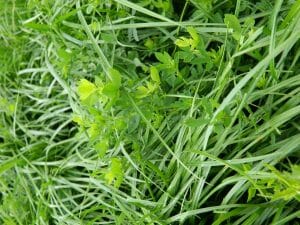
It is clear that improvements have been made across the industry to reduce reliance on inorganic fertilisers but continued environmental legislation and financial pressure mean the subject is unlikely to fall out of the spotlight any time soon.
Fodder beet helps farmer reduce his purchased feed whilst benefiting landClovers can play an important part on any farm looking to optimise nutrient inputs.
Growing fodder beet to feed cattle and sheep is helping Shropshire mixed farmer Gordon Tomley safeguard against high feed prices and benefit soil health as part of his cereal rotation.
Mr Tomley grows 12ha of fodder beet a year to feed his 500 head of cattle – from his own 80-cow suckler cow herd and 200 bought-in dairy cross weaners a year – and 700 ewes. He says stock do well off it, with cases of twin lamb disease in ewes almost disappearing, and Angus heifers and steers averaging at least 1kg a day liveweight gain.
It also provides a good break crop for this mixed farm, which includes 243ha of arable. The main rotation includes two wheat crops, winter barley, stubble turnips, fodder beet and potatoes.
Feeding rate
Throughout the winter, heifers and steers over 12 months old are fed whole fodder beet in bunkers at a rate of 3kg to 4kg a day and ad lib silage, building to 15kg to 18kg as they head towards finishing.
 In the last three months of finishing, they are also fed barley straw and ad lib corn to get the finish. However, Mr Tomley says they will always choose to eat fodder beet over corn any day.
“There’s a saying that 4kg of fodder beet is worth 1kg of corn. It certainly helps us get a good finish on cattle at a cost to feed of about 2p to 3p/kg,” he adds.
His 80 dairy cross Angus suckler cows receive 10kg a head a day of beet, and anything under 10 months is on between 5kg and 8kg a day.
Dairy x Angus heifers are averaging 315kg and steers 335kg to 340kg at about 20 months old when they are finished.
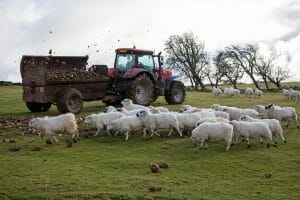 Ewes do equally as well on the home-grown product. He farms 400 Welsh and Beulah ewes on a hill farm nearby and he feeds whole ad-lib fodder beet, using a Marshall spreader, from December until six weeks post-lambing in April.
He also has 200 half-bred Mules on the home farm which are fed ad-lib fodder beet over winter. None of the ewes receives corn, as the fodder beet provides plenty of energy, and Mr Tomley says feeding fodder beet ‘takes a lot of hassle out of the job’.
He adds: “When you have a lot of stock, it’s good to know the fodder beet is there. It means we are not at the mercy of the marketplace, safeguarding us against high feed prices.”
Fodder beet also provides an added income stream as Mr Tomley sells up to 20% of the crop to neighbouring farmers, which this year was at £45/t.
Variety selection
Variety selection is critical to achieving such good performance in his stock, a key focus for agricultural merchants Wynnstay who offer support to growers and farmers in the region.
“We see big improvements in the reliability and consistency of higher yields and the improved feed value in the more recent varieties,” says the company’s grass and root seed manager Colin Jones.
Mr Tomley grows Robbos on his medium loam soil type. It yields more than 80t/hectare and has a dry matter of 19%.
“Robbos isn’t such a hard variety, which is good for the sheep as it’s a little softer on their mouths. It also keeps its leaf well, so if stock is grazing it directly, there is feed value in the leaf. The good leaf also helps protect it against frost,” he adds.
Mr Tomley also notes the cleanliness of the variety. “The first lot we lifted last year didn’t need cleaning as Robbos has a clean root. Our contractors’ machines help too, as they spin off any soil,” he says.
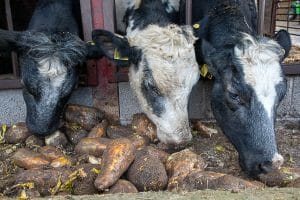 Before growing Robbos, he grew Magnum for many years, but the yield was lower, but it needed the same inputs.
Mr Tomley uses a contractor to sow the crop, usually around April 10, and it follows a crop of stubble turnips. The first batch of fodder beet is usually lifted at the end of November, with a second lift in January and a third at the end of February.
He stores it in a heap on a concrete pad next to his silage clamp, with the roots able to keep for four to five months.
Getting a good crop requires some key management, though. Mr Tomley explains: “If you want the yield, then you must make sure there is no weed competition early on. We use one pre-emergence and one post emergence herbicide and fungicide for powdery mildew and yellow virus to protect the crop.”
He also applies 10 tonnes/ha of layer manure and 20t/ha of farmyard manure, which is ploughed in. The ground is then flat-lifted and worked, ready for sowing. “Last year, it paid off applying at the end of August after the dry summer,” he adds.
Middleton Farm Facts
• 162ha grassland and 243ha of arable
• Growing 12ha of fodder beet variety Robbos a year
• Growing, lifting and sowing costs £1485-£1605/ha
• Fed to 500 head of cattle and 700 ewes
About Robbos Fodder Beet
• Has the potential to produce high dry matter yields with its clean yellow roots and medium dry matter content.
• Ideal choice for both dairy and beef production, and for first-time fodder beet growers.
• Robbos fodder beet is UK proven with large leaves and clean roots.
More information
Learn more about Robbos fodder beet here or contact your usual seed merchant for availability
The latest UK trial results data on fodder beet (including Robbos) can be downloaded here
Regular reseeding has always been good management on dairy units, but this year high fertiliser prices and bought-in protein feed make it significantly more important in managing input prices while maintaining productivity.
Why? Because a new sward of productive grasses will be far more efficient in using nitrogen than old swards. Feeding older grass swards where the grass is less responsive and there’s a higher proportion of weeds is wasteful in comparison.
As an example, trials have shown that rough stalked meadow grass has a yield response of 17% of that of perennial ryegrass when nitrogen applications are increased from 50 to 150 units.
Fertiliser prices have almost trebled in price in the last 2 years. AHDB quotes urea, with 46% nitrogen, at £244 per tonne in July 2020 and £783 for May 2022. Add to this the increased drive to maximise milk from home-grown forages and mitigate high bought-in feed prices, particularly protein, and the focus on reseeding more grassland strengthens.
Trials continue to show that new leys will yield up to five tonnes of dry matter per hectare more in their first year than a four-year-old ley.
Reseeding typically pays for itself in yield value within the first two years. Current high input prices will improve this further.
A reseed also gives the opportunity to improve grassland productivity and reduce the reliance on fertiliser. Mixtures with new, top-yielding grass varieties respond well to fertiliser applications and will out yield older varieties even at lower nitrogen levels. So even if it is necessary to cut back on application rates, an improved mixture in a new ley will yield better than mixtures with less productive grass varieties.
A reseed also offers the opportunity to introduce clover into the mix. A typical grass ley with 30% white clover can fix 180kgN per hectare and red clover may fix up to 200kgN per hectare. Based on a urea cost of £748 per tonne, this is worth around £305 per hectare for white clover and £340 per hectare for red clover.
Pelleted clover can also be oversown into existing leys, and clover-rich swards can remove the need for nitrogen applications throughout the ley’s lifespan, and there may even be residual nitrogen left for the following crop. Early spring is an ideal time to start a reseeding plan. A more rigorous reseed programme could make good commercial sense, reducing the reliance on expensive inputs and making the most of fertiliser that is used.
Sowing a forage crop and taking a “cereal break” is a win-win!Give the arable crop rotation a break and sow a forage crop this autumn, to help achieve better weed control and boost home grown feed supplies. Mixed cereal and livestock units are encouraged to think about growing forages on some of their arable land, as this will help weed control by breaking the life cycles of some damaging weeds and diseases.
Forage crops – and any grazing livestock – add organic matter to the soils, which is especially valuable in nutrient depleted soils. Soil structure and condition warrants attention on many arable units, and rotations that include forage crops are more sustainable in the long run.
Forage crops, such as; fast-growing brassica and root crops, and short-term grass leys, can be sown post-harvest to give a much-needed break in the cereal rotation, as well as providing a valuable feed crop.
Roots and brassicas can be grazed-off ahead of a spring drilled cereal crop, or ahead of a grass reseed. Leaving a grass ley down for two to three years will also help break the blackgrass cycle.

Interval Rape Kale Hybrid
There are plenty of high feed value varieties to choose, that can improve livestock growth rates and performance.
Our recommendations are:
Samson stubble turnip – for grazing October onwards
Interval rape-kale hybrid – high protein leafy forage
Meatmaker and Autumn Keep brassica mixtures – contain stubble turnips, forage rape and Kale. The high protein content of both forage rape and Kale complements the high energy stubble turnip bulbs to provide an excellent, well balanced winter feed.