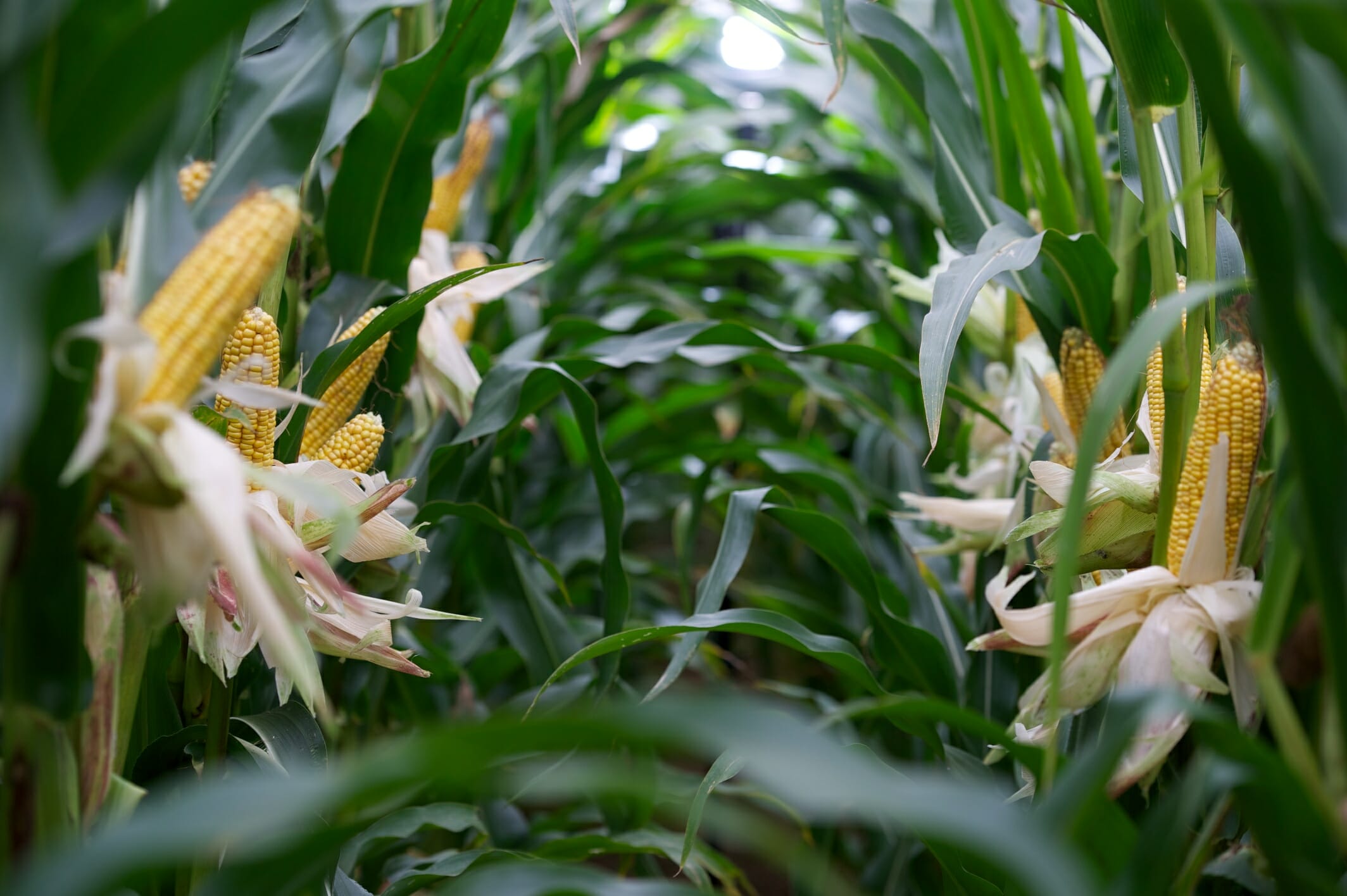
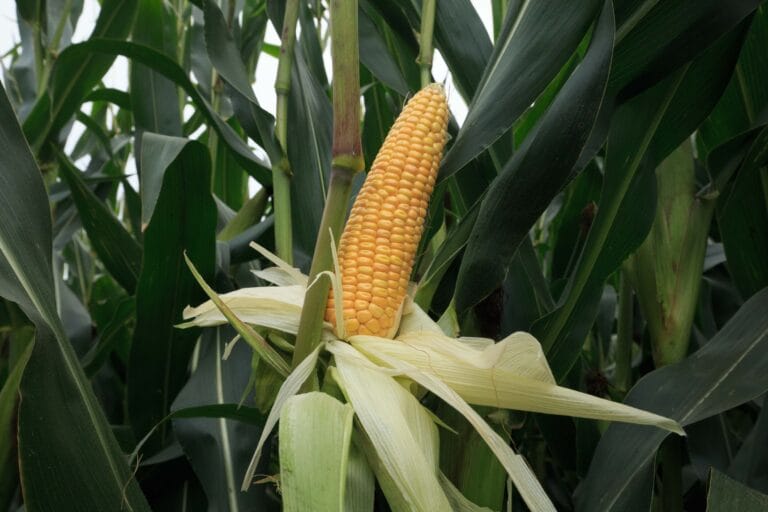




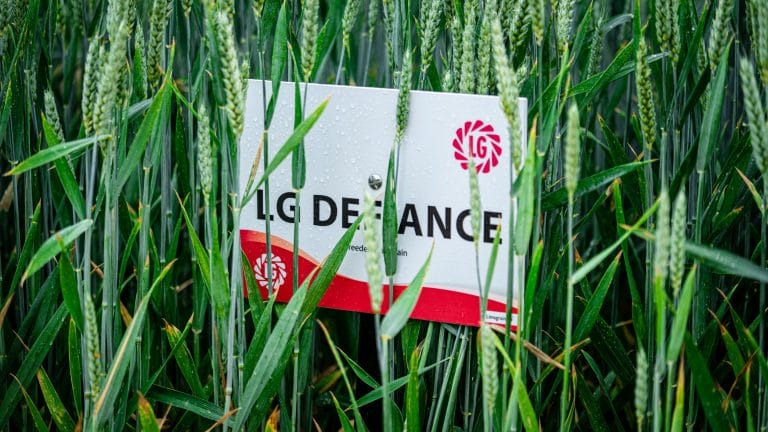



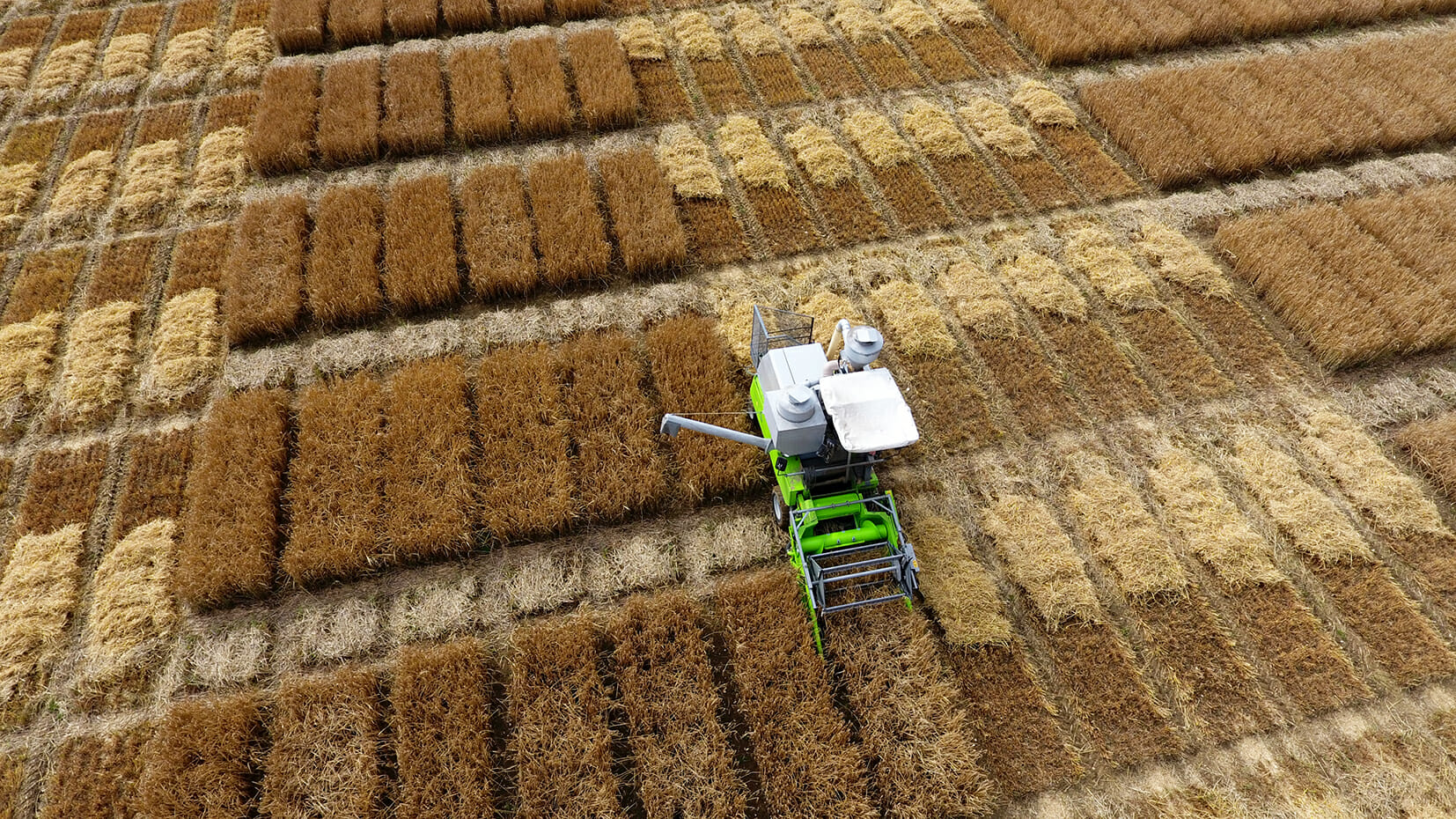

The launch of two new winter wheat varieties from Limagrain Field Seeds gives growers more options to achieve consistently high yields amidst an increasingly unpredictable climatic and economic situation.
LG Defiance and LG Challenger are both Group 4 hard wheats that have shown consistently high yield potential across different regions, seasons, soil types, and rotational positions, alongside good agronomic characteristics to reliably deliver strong returns.
“LG Defiance has the highest untreated yield on the 2026/27 AHDB Recommended List (95%), which is very rare for a hard feed wheat,” says Limagrain’s Arable Technical Manager, Ron Granger. “LG Challenger is third-best untreated yield on the list, illustrating the strength of genetics underpinning both varieties. Both contain good pedigrees, but the key is what we as breeders can get out of that parent material to deliver on-farm.”
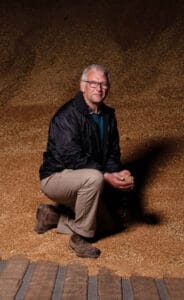
Ron Granger, Arable Technical Manager, Limagrain UK
Both varieties are close to the best in terms of UK treated yield, at 109 for LG Defiance and 107 for LG Challenger.
Crucially, LG Defiance pairs this with solid disease scores for yellow rust (rated 8) and a 6 rating for Septoria, while LG Challenger is rated 7 and 6 respectively.
“With the changes to Yr15 resistance we’ve seen, selecting a variety with better yellow rust resistance, supported by an appropriate fungicide programme, is becoming an increasing priority,” notes Mr Granger. “Although everyone is talking about yellow rust, we can’t forget that Septoria is still the biggest yield-robber on most farms.”
Risk management
Frontier’s National Technical Manager, Seeds, Dr Kirsty Richards, says that with rising costs, unpredictable weather patterns, and evolving disease pressures, selecting good genetics to reduce risk and build resilience across the rotation is crucial.
“Yield is a big attraction of LG Defiance and LG Challenger, but it cannot be at any cost. Remember that 80% of crop potential is harnessed by putting the right variety in the right place, at the right time, for your situation.”
For LG Defiance, she believes its agronomic characteristics make it a particularly good choice for later drilling or second wheat situations, while LG Challenger’s growth habit and straw strength better suits earlier sowing. Mr Granger agrees, but adds that both varieties have shown excellent yield potential when sown during the main October drilling window.
“LG Defiance is a taller variety that will require a good split PGR programme. Limagrain trials support the fact that it responds well to PGRs and the reduced height has no impact on final yield potential, similar to varieties such as LG Skyscraper and LG Redwald.”
A further characteristic that builds resilience and helps meet market requirements under tough conditions is the excellent grain quality of both varieties, particularly their high specific weights at 77 kg/hl and 78.6 kg/hl respectively, notes Dr Richards.
Best crop on the farm
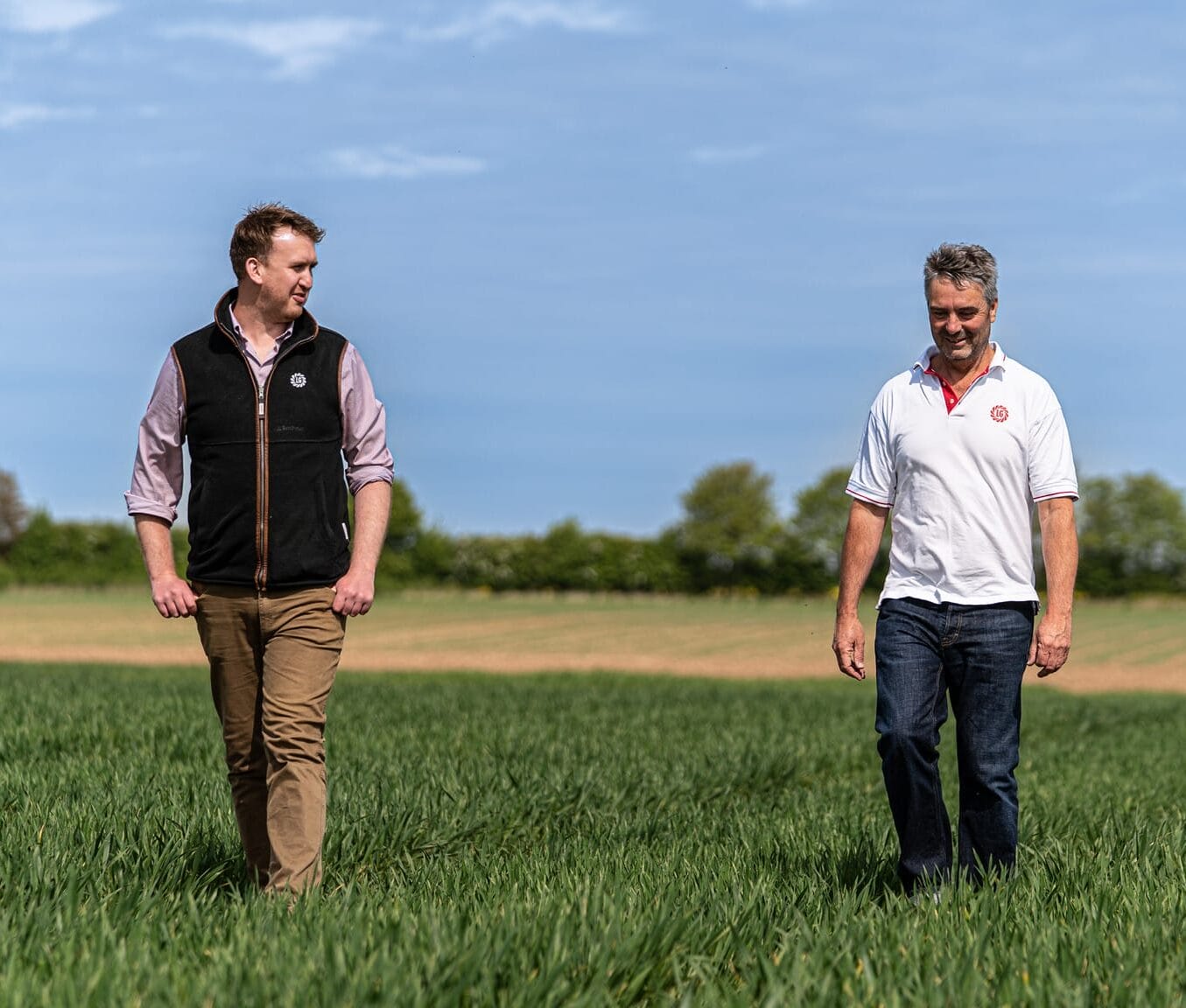
Staffordshire farmer Rob Atkin is growing a small area of LG Defiance this season to test whether the variety suits his farm, and so far he says it is the “cleanest and best looking crop on the farm”.

So far, LG Defiance is the cleanest and best-looking crop on the farm,” says Staffordshire farmer Rob Atkin
“In the past, we grew a lot of KWS Extase and Gleam, so when we saw these were in the parentage of LG Defiance, we thought it made sense to give it a try. We like to trial new varieties every year to see what works. So far, LG Defiance looks really good, but the real proof will come at harvest.”
Yield is a big consideration when choosing varieties, but Mr Atkin says robustness to diseases like Septoria and yellow rust is perhaps more important. “I want a variety that’s robust enough to stay clean and potentially give us the opportunity to reduce input costs while still maximising yield.”
Mr Atkin will be hosting an open day on 22 June, allowing growers to see first-hand the range of varieties he is growing this season. Learn more about the Staffordshire Demo Day.
High yields make financial and environmental sense
While recent rises in fuel and fertiliser prices may prompt some growers to consider cutting inputs, ADAS Senior Crop Research Scientist Christina Baxter insists productivity should remain the focus — yield is still ‘king’.
Analysis of results from more than 1,200 Yield Enhancement Network (YEN) wheat crops between 2013 and 2022 shows a “very convincing” relationship between gross margin and yield, dispelling any suggestion that high yields cost more to produce.
“On a per tonne basis, variable costs decline as yield increases, as does the carbon footprint. There’s often a criticism that high-yielding crops cost too much, are too risky, and are bad for the environment. But YEN data proves that’s not the case.”
There are many building blocks to a high-yielding crop, not least the weather and husbandry, but a key starting point is understanding the potential of individual fields and selecting a variety with the genetic profile that can deliver most in that situation.
The general approach to high yields has been to grow a crop that stays green for as long as possible. To support canopy longevity, you need to keep leaves clean so the crop gets maximum benefit from that leaf area and captures the most sunlight — in addition to ensuring sufficient rooting depth for late-season water uptake.
“Attention to detail, effective management, and good varieties all support strong productivity.”
Learn more about LG Defiance, LG Challenger, and the full range of Limagrain Field Seeds varieties at lgseeds.co.uk
| LG Defiance | LG Challenger | |
| Parentage | KWS Extase x Gleam | (Gravity x SY Insitor) x LG Skyscraper |
| Treated yield (UK) | 109 | 107 |
| Untreated Yield | 95 | 93 |
| Septoria Rating | 6.3 | 6.1 |
| Yellow Rust Rating | 8 | 7 |
| Specific Weight | 77 kg/hl | 78.6 kg/hl |
| Drilling Window | Standard to late | Early to standard |
| OWBM Resistance | Yes | Yes |
Download your essential guide to oilseeds, winter wheat and winter barley – this year’s guide is jam packed with brand new market-leading varieties, plus a wealth of technical articles from our team!
This brochure covers the key agronomic attributes of individual varieties for securing yield potential. The data is taken from the AHDB RL with additional Limagrain data sets, offering you added insight when it comes to selecting the best variety for your farming system.

This latest guide includes articles from our technical team – Ron Granger and Liam Wilkinson on variety suitability on farm, and also a handy ‘6 tips for barley grain and straw yield’, something which could be really important this year.
We’ve also included articles from the OSR team – Product Manager Florentina Petrescu writes about how OSR has made a fantastic comeback this year, and highlights some stand-out varieties from the LG breeding programme.
As always, if there is anything else you would like to know, please don’t hesitate to get in touch!
Limagrain Takes Trials Beyond the Plot with New Farmer‑Led Demo Farm NetworkBook onto our Demo Days!
Suffolk Summer Demo Day – Thursday 4th June 2026
Staffordshire Summer Demo Day – Monday 22nd June 2026
Limagrain Field Seeds is taking variety trials beyond the plot with the launch of a new UK farmer-led Demonstration Farm network.
The initiative is designed to give growers a clearer, more practical view of how varieties perform in real farming systems, moving away from purely small-plot data and into field-scale reality. Instead of relying solely on trial sites and headline figures, the network will showcase Limagrain genetics under the pressures that shape day-to-day farm decisions, including soil type, rotation, cultivation and input strategy.
Nicolle Hamilton, marketing director at Limagrain, says the aim is to give growers a different perspective. “We want to offer growers a more meaningful way of looking at our varieties, through a farmer lens,” she says. “That means taking them out of controlled conditions and putting them into real farming systems, managed by farmers making commercial decisions every day. While she stresses that formal trials and the AHDB Recommended List remain important benchmarks, she says they do not always reflect the realities of commercial farming.
“This is not about replacing trials, it’s about adding another layer,” she says. “Farmers want to know how varieties establish, how they cope with different soils and how they perform under lower inputs or after cover crops. That is where this approach adds value.”
“It’s about working with farmers, listening to them and learning from them.”
Heather Oldfield, Limagrain cereals product manager, says the strength of the network lies in its farmer-led approach. “This is about genuine collaboration,” she says. She adds the focus is not on identifying a single standout variety, but on understanding where different genetics fit. “There is no perfect variety,” she says.
“Success comes from putting the right variety in the right place. What works on one farm may not work on another. These Demo Farms help us show those differences in a way that is much more relevant to growers.”
The Farmers
The first two farms in the network are based in Suffolk and Staffordshire, offering two contrasting systems. Ryan McCormack hosts the East Anglian site at Dennington Hall Farms, while Rob Atkin farms over in Staffordshire. Together, they provide a broad snapshot of how varieties perform across different soils, climates and management approaches.
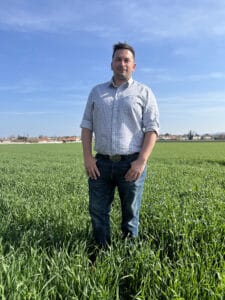
Ryan McCormack is testing Limagrain varieties in systems that include reduced tillage, cover crops, and livestock to understand what works best under these conditions
At Dennington Hall Farms, Ryan McCormack is running a highly integrated system combining arable, livestock and environmental management. The farm operates a 12-year rotation and places strong emphasis on soil health, with cover cropping, minimal cultivation and livestock grazing all playing a role. “I’m farming for margin, but also for my soils,” he says. “That means I need varieties that can cope with reduced tillage, cover crops and lower inputs. The only way to understand that is to test them in those conditions.” His trials include comparing multiple varieties under different establishment systems within the same field, giving a clear view of how genetics respond to management.
In contrast, Rob Atkin’s Staffordshire farm operates across a wide range of soil types, from heavy clay to high-organic-matter silt. The mixed farm includes combinable crops alongside beef and sheep, with a growing focus on soil health and cost control. “I still need yield to pay the bills,” he says. “But I want varieties that work on farm, not just in perfect plots. I want to know how they perform under pressure.” For Mr Atkin, the value of the network lies in its honesty. “It’s about seeing what works, what doesn’t and why, that’s far more useful than just looking at figures.”
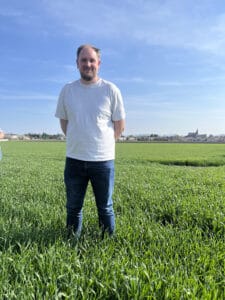
Rob Atkin believes that seeing varieties in real situations helps him make better decisions
To help growers follow crops through the season, Limagrain Field Seeds is supporting the Demo Farm initiative with on‑farm demonstration days. These demonstration days offer the opportunity to see varieties in the field, discuss results with farmers and Limagrain experts, and gain practical insight into real‑world performance.
More information and registration details can be found below:
With many winter wheat crops carrying excellent yield potential into this spring, extra care is needed to manage the large biomass and retain strong tillers through to harvest.
That is the view of Limagrain Field Seeds UK arable technical manager, Ron Granger, who says close monitoring of crop growth stages and well-timed plant growth regulator applications are key to success, alongside careful nitrogen management and disease control.
“Because many farms drilled several weeks earlier last autumn, with a relatively kind establishment period and winter, this season is looking very different to previous years, with huge biomass and yield potential in a lot of crops.”
Taller, high biomass crops can inevitably be at greater risk of lodging though, so growers need to adapt how they manage them, focusing on manipulating growth to strengthen stems, retain high tiller number, and drive maximum yield, he says.
“Farmers need to get their PGR strategy right, otherwise it could be very easy to get caught out by the situation we’re facing this season.”
Timing is everything
The aim of a good PGR programme is to shorten the distance between internodes; keeping the first node tight to the basal node and then keeping the second node close to the first, which increases straw stiffness, Mr Granger says.
To achieve this, it generally requires a split PGR programme consisting of two carefully timed PGR applications; one just before the start of stem extension, usually around growth stage 29-30, when plants start to sit upright; followed by a second at the first node detectable stage, just prior to the second node moving (GS 31-32).
“In all the years I’ve been doing PGR trials, across thousands of variety plots, a split treatment has always been the approach that’s kept crops standing. On-farm, you can be more targeted to just a single variety, so growers can sometimes get away with a well-timed single application, but I still question whether many are getting the timing right.”
The best way to ensure accurate timing, is by looking at the primordia ear development, however he recognises that time is of value, so suggests using careful plant dissection to determine when individual nodes are moving, both off the base of the plant, and between differing nodes of interest. “Crops have been drilled earlier, and will move quickly, especially once nitrogen is applied, so be vigilant and proactive, don’t rely on calendar dates.”
Should conditions remain wet, growers may have no option but to apply a full rate single PGR programme, which Mr Granger says should be targeted around the first node detectable stage (GS 31).
If conditions turn very dry in late March into April, care needs to be taken with later PGR applications, as experience shows PGR products should not be applied to stressed crops, he adds. “We have seen from previous seasons of drought, that when plants are compromised in a drought situation, you can reduce yield by applying a PGR to the crop.
“It’s best to apply PGRs early, whilst crops are nice and healthy, there’s plenty of water available, and they’re growing strongly.”
Options to consider
Mr Granger says that there is a good range of products to choose from, and most PGRs are very cost-effective, especially once weighed against the potential risks to yield and quality from lodging.
His favoured options are based on chlormequat to restrict the internodal distance, plus trinexapac-ethyl to thicken stem walls. “This is my go-to PGR programme, whether used as a split or single application. If earlier treatment windows are missed, then mepiquat + prohexadione-calcium is another product to consider, as I feel it is a kinder product, which can be applied at later growth stages, allowing you greater flexibility.”
In high lodging risk situations, such as very high-yielding crops on fertile soil in coastal areas, the addition of ethephon + mepiquat at GS 37-39, could also be considered to shorten and stiffen the upper internodes, he adds. “But for me, this would be a last resort if a well-timed split PGR programme has not been implemented initially.”
Protecting grain and straw yield
Straw presently is of value, so whilst some growers planning to bale straw may worry that using PGRs will reduce straw height and therefore yield, Mr Granger dismisses this.
“The reality is that you can maintain both grain and straw yield by using PGRs. They help to retain tiller number, which in turn delivers higher yield and gives more straw, and ensures that those tillers keep standing, allowing you to harvest the crop in good condition. Lodged, dirty, or mouldy straw is of no value to anybody.”
Equally, Limagrain trials at Rothwell, Lincolnshire in 2024 (the last wet season), showed no detrimental effect on grain yield, from using PGRs under two different nitrogen regimes (see chart 1). The work compared an untreated (no PGR), a split PGR of chlormequat + trinexapac-ethyl, and a single PGR (chlormequat + trinexapac-ethyl) approach in a crop of LG Beowulf (see chart 2), at a standard nitrogen rate of 180 kg N/ha, and a higher rate of 225 kg N/ha, which was implemented to increase lodging pressure in the trials.
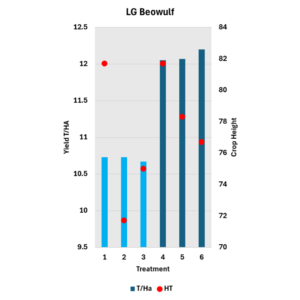
Chart 2
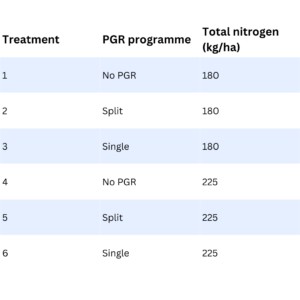
Chart 1
“There was no significant difference regarding the effect of PGRs on yield in either nitrogen regime, but there were differences in crop height, which is all positive in terms of the management of those crops, especially if growers are looking to use higher nitrogen rates to drive yield.
“As long as you get the PGR on correctly, you can then apply nitrogen rates applicable for high yield potential for your individual farm situation. The last thing you want is a flat crop at harvest. At present, crops are coming into spring with higher-than-normal biomass, so growers have an opportunity, with good agronomic input, to drive for high yield potential.”
Roots of Change: Why Limagrain Field Seeds UK is backing a Farmer-led shift in Nitrogen ManagementAcross the UK, growers are under mounting pressure to drive crop productivity whilst reducing reliance on synthetic nitrogen. Fertiliser prices have surged, environmental scrutiny has tightened, and quality specifications in premium cereals markets have never been more challenging. For many farmers, this creates a tightrope between agronomic need, economic reality and environmental responsibility.
The Roots of Change (ROC) project steps directly into this challenge. Led by farmers and backed by NIAB and Limagrain, the initiative aims to understand how legume-based cover crops and companion cropping, can support nitrogen efficient cereals production, without compromising yield, grain quality or marketability.
Thomas Todd, ROC farmer, from Cornhill-on-Tweed, Northumberland commented, “This project will confirm with soil and tissue samples and nutrition tests, the true value of cover cropping, and this will then aid with farm development.
“The addition of legumes as a companion crop in the winter wheat trials, along with the cover crop, will be monitored for both nutrient and environmental benefits, and the information gathered will then be put to future use.
“We are keen to be involved with this type of research because it is good for the industry to be at the forefront and not just sitting still, and as a farming business, we are keen to embrace new technologies; from both a cultural and technical perspective.”
Limagrain’s involvement centres on one key question: ‘Why should growers trust legumes and new agronomic systems, to deliver the right nitrogen, in the right place, at the right time?’
Why Change? Fertiliser Volatility, Soil Health Decline and Tightening Specs
Over the past decade, inorganic nitrogen prices have risen sharply whilst remaining highly volatile. For many cereals growers, nitrogen costs now represent a significant portion of production expenses. At the same time, soils long reliant on tight rotations, inversion tillage and high fertiliser inputs, show signs of declining organic matter and reduced resilience.
For malting barley and quality wheat, where processor specifications are demanding, growers face real annual uncertainty around nitrogen availability and grain quality.
Why Legumes? The Case for Biological Nitrogen Fixation
Leguminous species; peas, beans, clovers, all fix atmospheric nitrogen, reducing the need for synthetic inputs. ROC compares legume and non-legume cover crops, companion crops, different establishment systems, termination methods, and new cereal varieties bred for improved nitrogen use efficiency.
Why Limagrain? Adding Expertise Beyond the Field
Limagrain provides new barley and wheat genetics, selected for efficient nitrogen use and to meet quality markets.
Economic and Carbon‑Footprint Modelling
Limagrain leads ROC’s analysis of profitability and carbon impacts, helping farmers quantify real world benefits.
Practical, Farmer Facing Guidance
Limagrain will support ROC’s outreach programme with demonstrations, digital resources, workshops and grower guides.
Why Now? Aligning Farmer Reality with Environmental Outcomes
With fertiliser costs high, and pressure increasing to reach net‑zero, ROC aims to show that integrating legumes can support nitrogen supply, improve soil health and reduce input costs.
The Bottom Line
Roots of Change will deliver nitrogen buffering guidelines, crop specific recommendations, economic comparisons and carbon‑footprint assessments – giving UK growers clearer, evidence-backed pathways for sustainable nitrogen management.
LG Beowulf Delivers Reliable Performance with Active Yellow Rust ManagementLG Beowulf remains a reliable, high-yielding Group 4 winter wheat for UK growers, provided crops are actively managed to prevent yellow rust.
The variety continues to deliver strong on-farm performance, combining high yield potential, stiff straw, good septoria resistance, excellent grain quality and OWBM resistance, says Ron Granger of Limagrain Field Seeds UK.
LG Beowulf’s key strength is its flexibility – and it is this that attracts growers around the country to the variety; it performs consistently across all UK regions and soil types, from light to heavy land, and can be drilled early, at normal timings or late. It is equally suited to first, second or continuous wheat situations.
While LG Beowulf, like many commercial varieties, is now susceptible to the newer yellow rust strain Yr15, careful monitoring and timely fungicide use will allow it to continue to perform at its best.
Early disease control is critical, with a robust, protective fungicide programme using a range of actives throughout the season. A T0, or even pre-T0, spray is recommended as a security measure, with tebuconazole providing a cost-effective option either alone or in combination. Where yellow rust is detected, rates should be increased to eradicate infection quickly.
With crops emerging from a mild winter carrying high biomass and reports of yellow rust already appearing in some fields, growers are urged to monitor crops closely, track weather conditions and make full use of spray windows to stay ahead of disease.
Limagrain Strengthens RL 2026/27 with High-Yielding Wheat, Barley and Oilseed Rape VarietiesLimagrain Field Seeds UK has reinforced its commitment to delivering high-performing, resilient crop genetics with the addition of several standout varieties to the AHDB Recommended List (RL) 2026/27.
Commenting on the latest RL additions, Liam Wilkinson, head of technical for Limagrain Field Seeds UK, said: “In a year where we have seen disease ratings across established varieties change significantly, and two new hard feed wheats enter the AHDB Recommended List with some of the highest untreated yields available, this latest update is a clear testament to the targets of the Limagrain wheat breeding programme.”

Liam Wilkinson brings technical expertise to Limagrain’s breeding programme, driving innovation in UK varieties.
LG Defiance is one of the highest-yielding feed wheats on the new RL, achieving 109% of the UK mean yield. With an untreated yield of 95% — the highest currently available — and a strong disease profile, including an 8 rating for yellow rust, LG Defiance is particularly well suited to main and late drilling slots.
The variety has shown strong performance following roots and maize, while internal trials indicate a positive response to split plant growth regulator (PGR) applications.

LG Defiance is a high yielding hard feed wheat with the highest untreated yield on the AHDB RL 2026/27.
Another strong addition is LG Challenger, which also ranks among the highest-yielding winter wheats on the RL. Delivering consistent performance across all regions, the variety excels in northern trials and sits as the joint highest-yielding second wheat.
With excellent grain quality and orange wheat blossom midge (OWBM) resistance, LG Challenger offers a robust and reliable option for growers seeking yield security.
LG Challenger has performed consistently across all regions, but stands out in the North.
In winter barley, LG Catapult sets a new benchmark as the highest-yielding BYDV-tolerant two-row winter barley available for the coming season. Historically, BYDV tolerance has been associated with a yield penalty; however, LG Catapult is the first Limagrain variety to close the gap on conventional high-yielding feed barleys.
Combined with a comprehensive disease package, the variety provides growers with an effective integrated pest management (IPM) tool, particularly in high aphid pressure situations.

LG Catapult is the highest yielding BYDV tolerant two-row winter barley available to growers for the forthcoming season.
Limagrain has also strengthened its oilseed rape portfolio with LG Calvin CL, a Clearfield® tolerant hybrid winter oilseed rape that joins the RL as the highest gross output variety in the Clearfield® sector. Fully loaded offering Limagrain’s signature traits — including TuYV resistance, RLM7, and pod shatter resistance.
LG Calvin CL has demonstrated consistent performance across all regions. Its strong light leaf spot resistance makes it a particularly attractive option for northern growers managing high brassica weed pressure.
These latest additions highlight Limagrain Field Seeds UK’s ongoing commitment to breeding consistent, resilient varieties across its crop portfolio, delivering performance across all UK regions and farming systems.
Growers are encouraged to watch for further updates on where these new varieties can be seen performing in a range of on-farm situations during the 2026 season.
Spring Barley: An Established Spring Crop in the UK Farming IndustrySpring barley will always be a preferred spring crop for many growers, as it is an established crop of the rotation and offers wide flexibility over sowing date, and generally delivers an economical return on investment.
Although contracts for malting barley may be restricted this season, there will still be contracts offered, so it’s worth asking around in your vicinity or directly with your buying groups to see what’s available.
If malting contracts are not available, I would suggest that you have two options – firstly grow a dual use malting variety that the industry recognises, which may offer an opportunity if a demand becomes available for malting crops, after harvest 2026.
Or secondly, grow for out and out high yield potential, as this may give you a better return on investment, not only from the grain tonnage but more importantly from the straw, as there is a definite shortage of straw due to the testing season of 2025.
Limagrain’s work suggests that keeping and maintaining tiller number is essential for both grain and straw yield and this can be done in a number of ways. An earlier drilling date in a good seedbed with rising soil and air temperatures is always beneficial for any spring crop – the earlier you can get a crop established the better the opportunity for a crop to ride the stress of a dry spring, from better rooting and tiller number.
Nitrogen inputs and timing are certainly very important along with macro and micronutrients – these are key inputs to get the crop established and maintain tiller numbers for achieving final high yield potential. It’s important that spring crops are not limited for nutrient recourses, as a halt in plant growth usually results in a drop in yield potential.
Importantly, spring barley has proved itself as the ‘go to’ crop to use when blackgrass has become an issue on farm; certainly in the southeast of England, on many farms, it has now become the tool of choice along with other factors to help control blackgrass populations. In this scenario spring barley is usually drilled later to allow for either delayed cultivations, or herbicide control and in many cases, these are used jointly to ensure a reduced blackgrass population.
Drilling later has its dangers, especially around the erratic seasons we now appear to have, but generally seed rates need to be raised once you get past the end of March to compensate for the lack of time for tillering – basically your increasing tiller number per square meter by increasing seed rate with late sowings, to ensure maximum tiller number is achievable for maximum yield potential.
Growers pick out their ‘Harvest Highlights’The exceptionally dry season proved challenging for many crops this harvest, and although some yields did suffer, others fared much better, with some stand-out performers, as the LG Legends explain.
The LG Legends are a group of farmers from around the UK, working with diverse situations on-farm. They share their honest and practical on-farm experiences, from variety selection and husbandry, to harvest results and everything in between.
LG Typhoon tops the charts
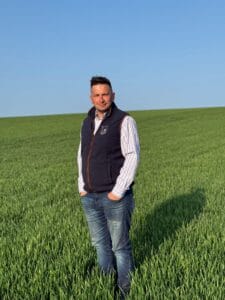
Ryan McCormack
In Suffolk, LG Typhoon was the star performer at Dennington Hall Farms, where a 100 ha block averaged 10.1 t/ha, with good grain quality and plenty of high quality straw, says farm manager, Ryan McCormack.
“It was the first of the wheats to be harvested, starting on 14 July, and gave the highest average yield out of all wheat varieties we grew last season; one small field achieved 11.7 t/ha, which was a good result given the dry conditions.”
All LG Typhoon was grown as a first wheat after beans, with minimal surface cultivations ahead of drilling in the first week of October – slightly later than he would normally sow the variety.
Another strong performer was LG Beowulf, which was coming in at over 10 t/ha, until 60mm of rain in the third week of July interrupted harvest for 10 days, Ryan says. “That rain delay seemed to knock the specific weight by 7-8%, and had a similar impact on yield. Despite that, it still did well overall, and, like the LG Typhoon, stayed pretty clean.
“We didn’t see any yellow rust, although to be fair, it was quite a low disease pressure season. We will be growing more LG Typhoon and LG Beowulf next year, combatting any yellow rust risk by applying tebuconazole at T0 to bolster disease resistance”. LG Redwald is another wheat variety the farm will grow again this autumn, as the extra vigour ideally suits later sowing after sugar beet, he notes.
After achieving an impressive 10.75 t/ha this harvest, winter barley variety LG Caravelle is another that will be grown again in 2025/26, along with LG Capitol, 100 ha of LG Avenger oilseed rape, and the new candidate hard wheat, LG Defiance. “We saw LG Defiance in trials and really liked how it looked, so will give it a try this autumn as a first wheat after oilseed rape.”
OSR is stand-out performer

Rob Atkin
For Staffordshire grower, Rob Atkin, oilseed rape has been the “crop of the year” on the 380 ha mixed family farm.
His 14 ha of LG Armada yielded around 5 t/ha (2 t/acre), well above the farm average of nearer 4.2 t/ha (1.7 t/acre), and with relatively high oil content.
“For us, it was one of the best years for growing oilseed rape for a long time.”
The two fields both followed winter barley; one drilled on 5th August, the other on the 25th. “The later-sown field did struggle a bit with pigeon damage last autumn, but other than that, there wasn’t a lot to choose between them. They established quickly and looked well all through winter, and into spring/summer,” he notes.
Rob has increased his oilseed rape area to 60 ha for 2025/26, split 50:50 between LG Armada and the cabbage stem flea beetle-resilient variety, LG Avenger. “Although CSFB pressure was very low last year, and we haven’t seen much activity so far this year, it can be an issue here, so it’s another tool to help reduce risk.”
On the cereals front, Rob acknowledges dry weather did reduce the farm’s average wheat yield by around 2.5 t/ha across all fields and varieties, although there were stronger performers within this, in a very challenging season.
“LG Rebellion is one variety that’s really surprised me in how well it’s done considering the year. We tried a small 5 ha area for the first time, which despite being drilled late in unfavourable conditions after maize, still did really well, yielding 7.4 t/ha (3 t/acre). There was a lot of rain soon after drilling, but it survived really well, with nice even establishment, and got going quickly in the spring. It also stayed clean and produced a decent amount of straw.”
A similar trial area of LG Beowulf did equally well, coming in just shy of the farm’s highest average yield, at 8.4 t/ha (3.4 t/acre), with good specific weight (77 kg/hl), protein (12.3%) and Hagberg (283).
Given this strong performance, he plans to grow both varieties on a larger scale this coming season, increasing the total area to 40-50 ha.
Overcoming late-sowing challenges
Trialling new varieties in a season as challenging and stressful as 2024/25 was never going to be ideal, but Leicestershire farmer Will Oliver says there were still some interesting differences, which will help shape future decisions.
A small area of three LG varieties was trialled on the 650 ha arable, grassland and indoor poultry farm last season, including LG Beowulf, LG Rebellion, and LG Redwald (500 kg of seed for each).

Will Oliver
“They were all fairly late sown, direct drilled after maize in November, onto heavy, high magnesium content clay soil, so it certainly wasn’t ideal conditions. There were challenges at every end of the growing season; crops were drilled in the wet, and then when we needed rain, there wasn’t any.”
As a consequence, the average yield across all varieties and total wheat area of 300 ha was down 1.4 t/ha on the farm’s five-year average of 8.5 t/ha, with LG Redwald and LG Rebellion performing best out of the LG trial varieties, Will says.
He was particularly impressed by the establishment and growth of the LG Rebellion through last autumn and into spring, as well as its final specific weight, which came in at 78 kg/hl.
“We will probably grow LG Rebellion again on a larger scale this autumn, alongside KWS Vibe, and Champion; all of which will be for seed.
“It’s been a hard year to judge varieties on yield performance alone, so I’m basing my decisions on how varieties established and looked through the season. We want a variety that can establish in late-drilling, more challenging situations, and I felt the LG Rebellion emerged well and looked better than some others we trialled.”
The wheat area is likely to be down to nearer 200 ha this autumn though, as after a six-year hiatus, oilseed rape is back into the rotation. Some 130 ha of LG Avenger was direct drilled after wheat in late August, just ahead of forecast rain.
“We’ve not grown oilseed rape for six years, but have decided to give it another go,” Will notes.
Other cropping includes 200 ha of maize, mainly LG Prospect and LG30.179, drilled in early April. “We normally combine our maize, but because of the forage shortage this year, we took the decision to sell it as a standing crop. Everything looks good, and it sold well at auction. Although it’s been a challenging year for maize, I’d say it’s been our stand-out crop.”
Will likes LG Prospect and LG30.179, and plans to grow both varieties again next year. “I like the early maturity, which really helps us get the following wheat crop in. They also have good standing power, good cob size, and they also tend to combine easier than some other varieties.”
Defying a tough season

Luke Palmer
The winter barley variety LG Capitol was one of the highlights from a challenging season for Cambridgeshire grower, Luke Palmer.
Some 100 ha (250 acres) was grown for seed, on a range of different soil types, with yields averaging 9.1 t/ha across the board, and excellent grain quality.
“That’s a pretty good result considering the season, and the fact that none of it was drilled particularly early last autumn. Most of the LG Capitol followed either sugar beet, potatoes, or maize, so was sown anywhere between the 1st October and 20th November. It got up and grew away really well though.”
All straw was baled, although he admits straw yields were down on normal, due to the exceptionally dry spring and summer.
Mr Palmer plans to grow a similar area of LG Capitol again this coming season.
Key Benefits of LG Beowulf Wheat Variety for UK Farms“It’s an excellent variety that I’m really pleased with. It has a high specific weight, strong disease profile, and seems to yield well on our land.”
‘LG Beowulf Has Earned Its Place on Our Farm’ Says Lincolnshire Grower
For Rob Nickols, two years of growing LG Beowulf have confirmed its resilience and dependable performance — even in one of the toughest seasons on record.
Farming 540ha of rented, contracted and owned land on the Fens near Sleaford in Lincolnshire, Rob Nickols has grown LG Beowulf for the past two years and has been suitably impressed with the variety, despite the challenging season. Growing mostly first wheats, winter and spring beans, sugar beet, millet and spring barley, Mr Nickols largely targets the feed market but has grown LG Beowulf for seed this season after it performed well last year.
“We planted 14ha of LG Beowulf for seed as well another 12ha separately, using a John Deere 750A in mid-October 2024. It was drilled into land which suffers with blackgrass, so it had both a pre-emergence and peri-emergence herbicide. It went into a stale seedbed in good conditions, with no significant issues,” explains Mr Nickols.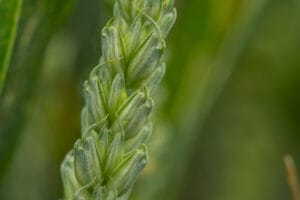
Throughout the season disease levels were low and although Mr Nickols is aware of changes to the variety’s resistance to yellow rust, he did not see a lot of disease. “The variety had a full fungicide programme but it was not overdone,” he notes. “At T0 we applied Sakura (bromuconazole + tebuconazole), which was followed by Ceratavo Plus (benzovindiflupyr) and Carcamo at T1 (prothioconazole + tebuconazole). At T2 it received Rylox (mefentrifluconazole + pyraclostrobin) and Imtex (fluxapyroxad) and at T3, Amistar (azoxystrobin).
He points out that septoria is the bigger yield robber, but if there was going to be a disease issue that has been challenging this season, it would be yellow rust. “All varieties seem to have lost some resistance to yellow rust this year but while we have tebuconazole we can tackle the disease.
“At the end of the day, applying a T0 is not expensive, totalling around £13/ha (not including PGR), so apart from the extra time involved in its application, it works out similar in cost to years where it has been too wet to apply one and we have subsequently had to increase our spend at T1.”
In terms of nutrition, LG Beowulf received an average of 210kgN/ha which was applied using Yara’s N-Sensor.
Like many others, Mr Nickols experienced drought on his farm this year, with only 240mm of rain falling since January. “Around 50mm of this fell in January”.
“LG Beowulf has done really well in such extreme drought conditions which goes to show its resilience.
“Although it is probably a slightly taller variety than some, it has stood well without any challenge for the past two seasons, says Mr Nickols.
“LG Beowulf came off the cart at 11.4t/ha, which was neck and neck with another variety we had on similar land, but well above other varieties we had on farm.
Based on the results we have had from the past two years of growing it, it has proven itself a good variety, so we will keep it on farm for as long as we can.”
Download our LG Arable Guide for all the latest on our winter oilseed rape, wheat and barley varieties

Despite a season of prolonged drought and challenging yellow rust conditions, Brett Askew finds LG Typhoon delivers reliable yields and flexibility for early drilling.
Having grown LG Typhoon for several years, he has been pleased with its performance and plans to continue growing it this coming season.
Based at Grange Farm, Kibblesworth near Newcastle, Mr Askew likes to drill early to get ahead of changeable weather conditions, which is a key reason LG Typhoon is such a good fit on his farm. The 81ha he planted for Harvest 2025 has done well despite a challenging season, proving itself a mainstay variety for him.
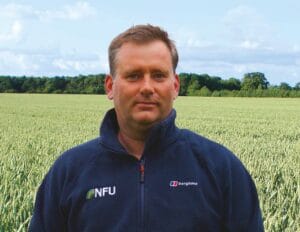
Brett Askew
Mr Askew’s first 40ha block of LG Typhoon was drilled on 2nd September, while the later block was planted between 25th-30th September. Usually, he would use a Claydon TerraStar to chop the surface tilth ahead of drilling however, last autumn was so wet that he ploughed everything.
“The earlier block of LG Typhoon went in behind a failed oilseed rape crop which we had not redrilled, so it was ploughed, pressed and planted with our Claydon drill. We then broke off to harvest our spring crops, but two weeks of heavy rain meant we could not press the second block and therefore decided to plant it with a combination drill which we could not roll – so that was not ideal.”
His earlier drilled crop was able to establish a better root, allowing it to access the nutrients it needed, which he believes helped it to resist the challenge diseases, particularly from yellow rust, this season.
“The earlier LG Typhoon had more biomass going into winter and the larger plants showed very little signs of yellow rust.
Over the past few years Mr Askew has not applied a T0 because LG Typhoon has often grown away from yellow rust however, this season it was clear an early fungicide was necessary. “You can’t mess around with disease and need to keep on top of it, but an early application of tebuconazole was all that was necessary to control it and we didn’t see any yellow rust after that.”
At T1 he applied Vimoy (isoflucypram), Kestrel (prothioconazole + tebuconazole) and folpet, followed by a reduced rate of Miravis Plus (pydiflumetofen) at T2 due to the dry conditions. “The aim was to retain the green leaf as long as possible, but the heat and dryness had an impact.”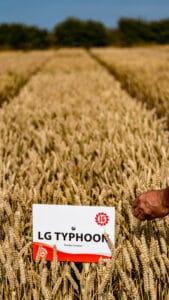
Mr Askew applied nutrition, including liquid N and food waste digestate, on some fields to give the crops a boost, with 210kgN/ha applied in total.
With almost no rain between February and June, yields on the farm have taken a hit. “On average it’ll be a poor harvest,” says Mr Askew. “Typically we have achieved 8.2-8.7t/ha over the past five years; this year our LG Typhoon averaged 8-8.5t/ha, with fields varying from 6-11t/ha however, specific weights have been sky high, with the variety achieving over 80kg/hl.”
One element of LG Typhoon that Mr Askew has been really pleased with is that even during a wet year he does not have to chase it, having found it to be very clean. “Alongside its position in the early drilling slot, this is why I have 15t ready to plant for the coming season, which will go in right after oilseed rape and oats. Sometimes we do not have the spray days, or our spray contractor cannot get to us when we need him, so not having to chase the variety is really important.
Growers put their questions to leading wheat breeder“The consistent performance of LG Typhoon over the past few years, even when it has had less than ideal conditions or we have had to be flexible with drilling date is why I will continue to grow it,” he concludes.
With our climate changing, disease pathogens evolving and the chemical armoury shrinking, the goalposts for breeding new wheat varieties are constantly shifting. To see how one breeder is rising to these challenges, four leading growers put their questions to Limagrain Field Seeds senior wheat breeder, Phil Tailby.
How can modern breeding techniques help meet future challenges?
Technology such as Marker Assisted Selection (MAS) and Genomic Selection has been around for several years, but is now delivering significant benefits to the varieties coming through, says Mr Tailby.

Limagrain Wheat Breeder Phil Tailby on breeding new wheat varieties
“MAS gives us the ability to select individuals with the specific genes that farmers want, such as Septoria or yellow rust resistance, very early in the breeding cycle, and do so far more intensively and efficiently than in the past.
“Genomic selection also allows us to model the more complex quantitative traits, such as yield, that come from multiple genes interacting with each other and the environment.
“Over the past 15 years, we have genotyped material to check for 20,000-30,000 markers to build a genetic profile of each potential variety.
In addition, everything is measured in the field (phenotyped), from height, yield, lodging, spec weight, Hagberg, etc. We can then use statistical models to predict how crosses will perform in the field, based on a vast amount of actual data that is constantly being updated.”
How are you tackling changing pathogens, such as yellow rust?
The evolution of yellow rust in recent years poses challenges for all breeders, and means new varieties need multiple ‘stacked’ resistance genes, to be more resilient, says Mr Tailby.
“We have the technology to map resistances, so we can identify those that work, and select the lines with the genes we want to use in combination together within any new variety. If you have the genetic marker, there’s a very high probability of having that gene as well.
“We can do this for any traits we have markers for, whether that’s yellow rust, brown rust, Septoria, or anything else.”
When people say a variety ‘breaks down’, is it the gene or the disease that’s changing?
“Pathogens change, genes don’t,” explains Mr Tailby.
“Resistance genes generally work by recognising the pathogen, then deploying a resistance mechanism of some sort. A hypersensitive response, for example, means when a spore lands on a plant, the plant recognises it, then kills the tissue around the spore to stop it spreading. 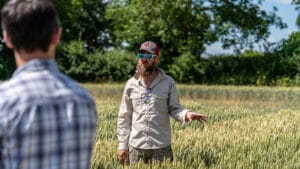
“As a pathogen replicates, it makes copies of its RNA/DNA, but it’s never a perfect system; there are always some errors. If, by chance, one of those errors happens to be in the genes that make up the sequence that codes for the protein the plant recognises, plants may no longer recognise the pathogen.”
As a breeder, what do you think about blending varieties?
Mr Tailby recognises there can be benefits to variety blends in some situations on farm, providing varieties are chosen carefully and end-user acceptance is there.
“Every variety will have a weakness of some sort, whether that’s blindingly obvious (e.g. straw strength or disease resistance), or less obvious, such as a particular weakness to a subtle abiotic stress.
By growing a blend, you are effectively ‘diluting’ the risk of any one variety having a poor year.
A variety with lower resistance to Septoria, for example, may do better in a blend with more resistant varieties, because there is less inoculum around.”
To learn more about our wheat varieties, click here
LG Legends
In a world of shifting climates, evolving disease pressures, and a shrinking chemical toolbox, breeding new wheat varieties has never been more complex, or more critical. Through open dialogue with experienced growers, Limagrain are ensuring that breeding innovation remains grounded in the realities of modern farming. As this Q&A shows, collaboration between breeders and farmers is key to developing resilient, high-performing varieties that are fit for the future.

This Q&A is taken from a Limagrain Field Seeds discussion with four ‘LG Legends’ growers; Ryan McCormack, Farm Manager at Dennington Hall Farms in Suffolk, Luke Palmer, of F.C Palmer & Sons near Cambridge, Rob Atkin of Atkin Farms in Staffordshire, and Cambridgeshire/ Bedfordshire contractor, Matt Redman.