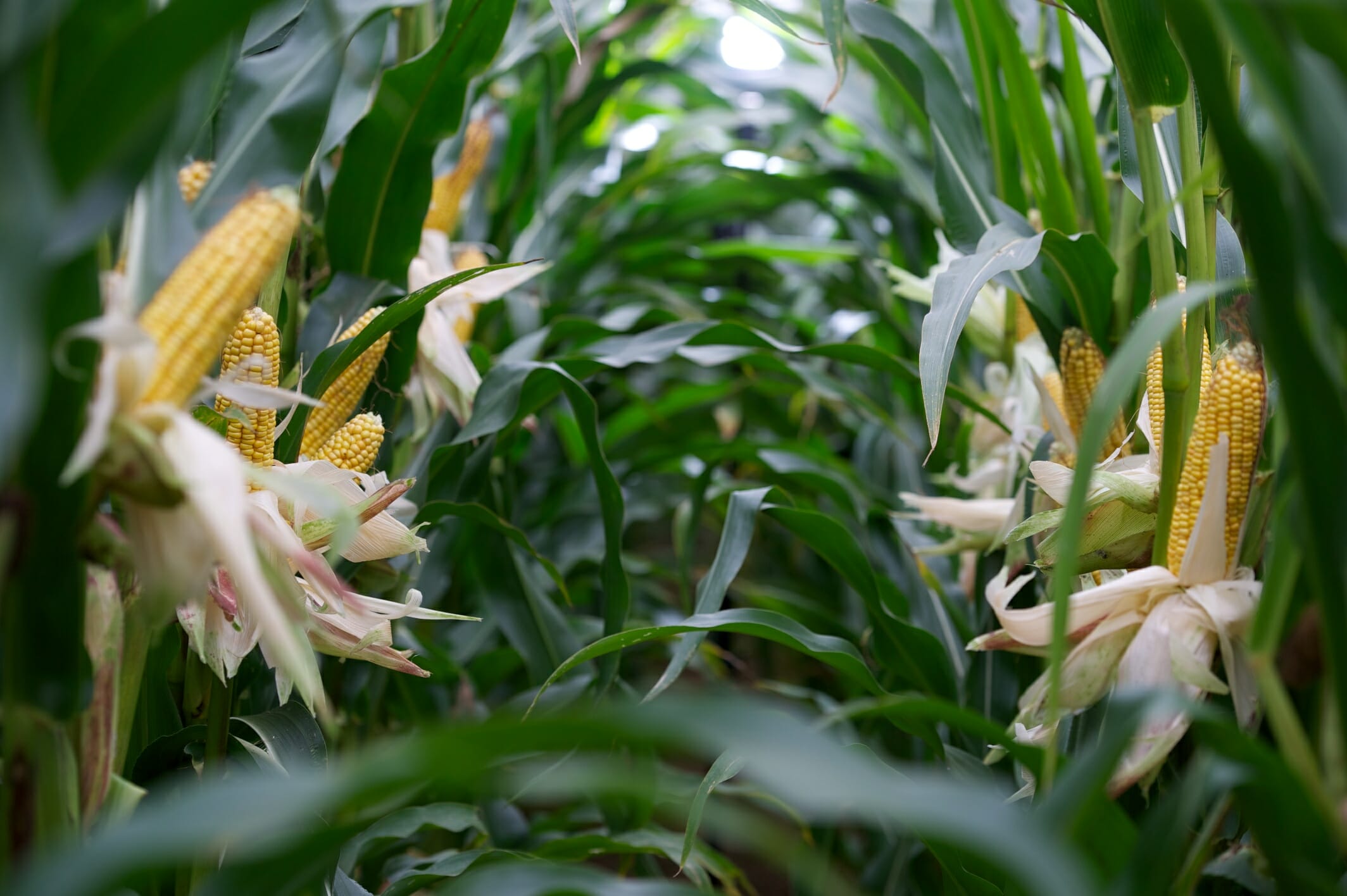
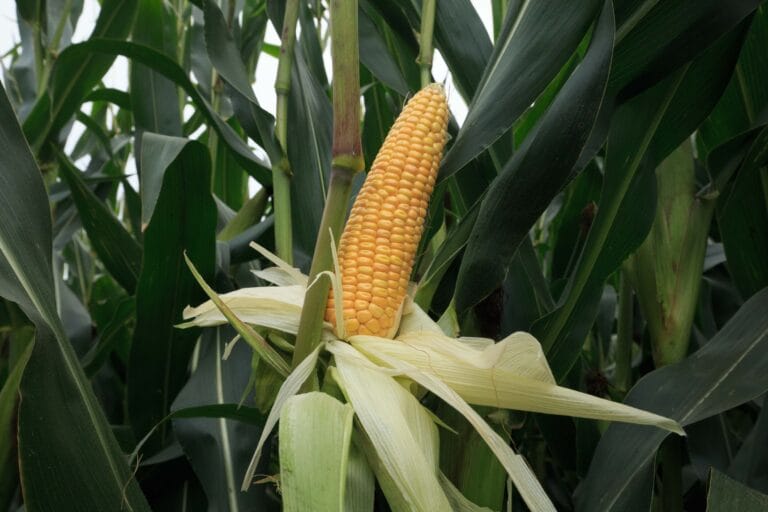


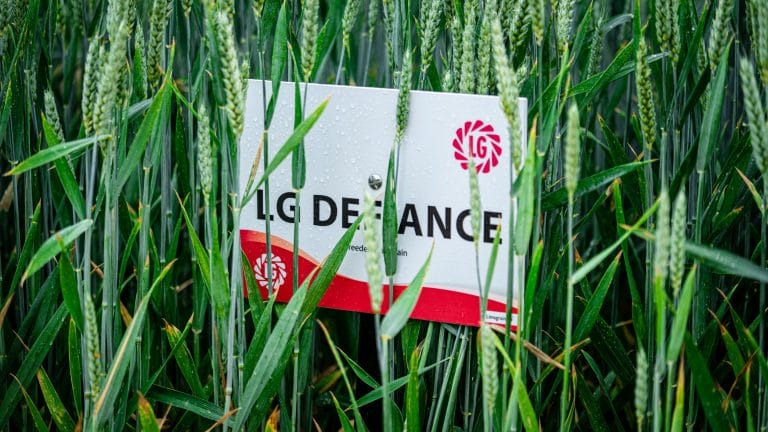



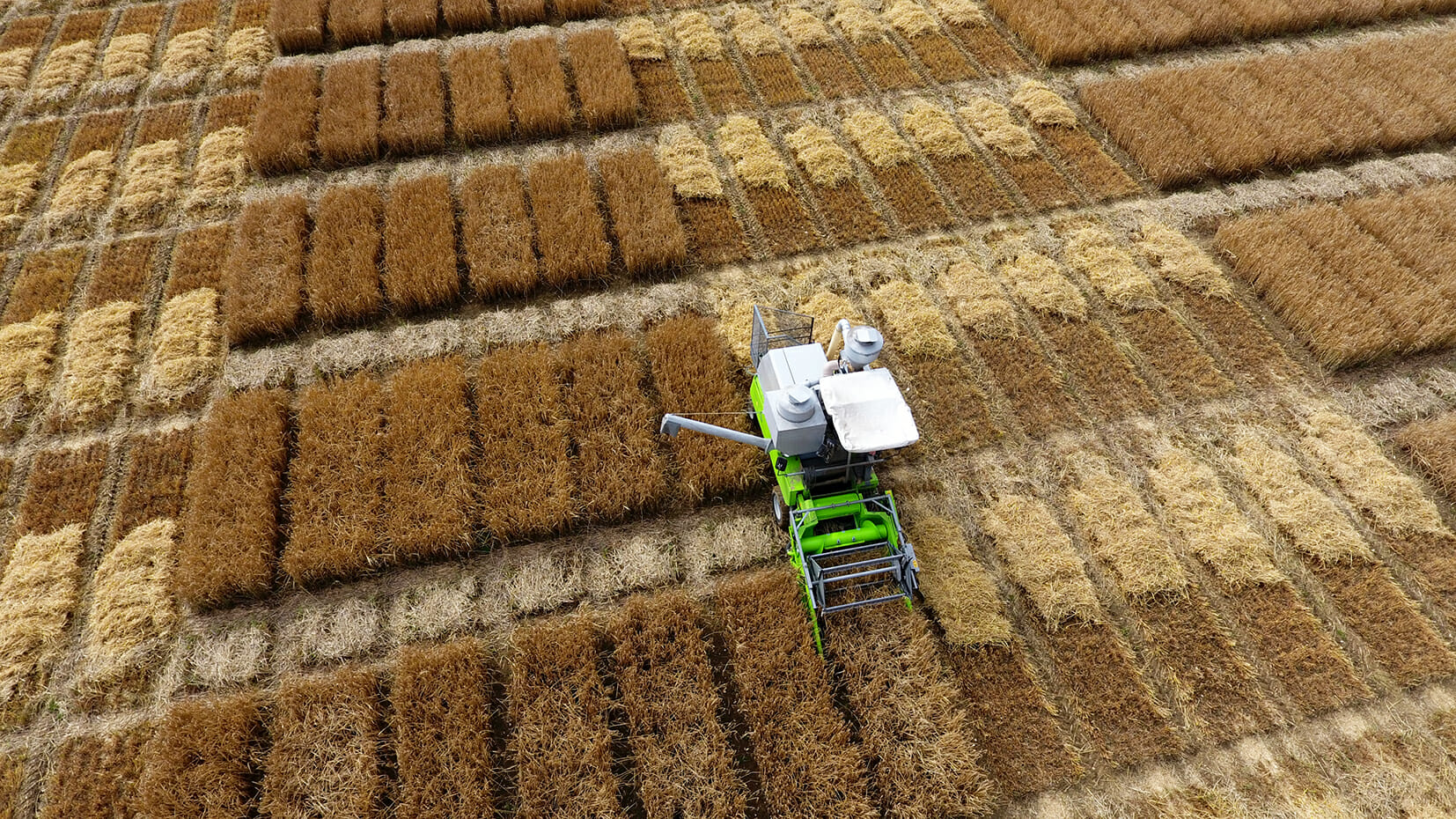
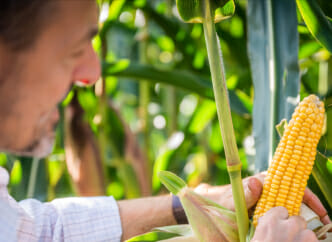
Limagrain’s newest wheat addition to the 2023-24 AHDB Recommended List, LG Redwald, follows in the footsteps of LG Skyscraper as the highest yielding feed wheat with a UK treated yield of 107% – sitting at 107% in the east and an impressive 109% in the west.
LG Redwald has shown this high yield consistency across regions and very testing seasons of weather. Its high untreated yield of 92% reflects its very good disease resistance, especially for Septoria tritici.
How to get the best out of LG Redwald
1. Adjust Seed Rates – LG Redwald is a high tillering, big biomass plant type, so consider a lower seed rate. Limagrain trials over several seasons show that reducing the seed rate by 20% had no effect on overall yield performance, with better lodging resistance.
2. Straw Strength – LG Redwald is a taller variety (94cm) with a big biomass, so a well targeted, robust, split PGR programme is recommended. If the desired early split timings are not achieved, then the inclusion of a late PGR (Cerone or Terpal) is advised.
3. Drilling Date – Do not drill LG Redwald too early, as it does not have the characteristics associated for the early drilling situation. It suits the standard drilling window of mid-October onwards and can be drilled to the end of January. For growers in the north, the drilling date can be pulled back to the beginning of October.
4. Soil Type – LG Redwald benefits from being grown on water retentive soil types; not lighter soil types associated with drought situations. Reduce seed rates and implement a good PGR programme for heavier/ fertile soils.
5. Rotational Position – LG Redwald performs well as a 1st or 2nd wheat. Sitting as the highest yielding wheat (109%) in a 2nd wheat situation, it is a valuable variety to improve gross margins in this challenging situation. It has good tolerance to take-all, but a low rating for eyespot and should be treated accordingly.
6. Fungicide Programme – LG Redwald has good disease resistance for Septoria tritici, and both Rusts – we advise that all crops should be monitored and treated accordingly.
Whilst trials show that a robust on-farm fungicide strategy should be implemented, a T0 spray may not be required, depending on disease pressure. However, a robust T3 fungicide is important for protection against Fusarium, and as it is a later maturing variety, there are benefits from maintaining green leaf canopy to maximise grain fill.
7. Insecticide – LG Redwald has OWBM resistance.
Download the latest edition of LG GatePost here
LG Caravelle – The Easy ChoiceOver the last 10 years, breeders have made great progress in improving 2-row feed winter barley varieties. Newer varieties offer superior yield potential with better disease resistance and good grain quality attributes – desirable characteristics recognised by all feed barley growers.
LG Caravelle leads the way in this new world, as the highest yielding 2-row winter barley to join the 2023/24 AHDB Recommended List.
Bred by Limagrain, LG Caravelle dispels any misconception that 2-row barleys are lower yielding than hybrids, as it offers UK yields of 106% – which is as high as the present top yielding hybrids. Its performance in the east (109%) is exciting, with a significantly higher yield potential than any other variety; including hybrids – where it has a 3% advantage.
More importantly, the variety has shown a high consistency of performance across both regional and seasonal data sets.
These high yields are backed up by an excellent disease profile, reflected in LG Caravelle’s high untreated yields.The variety has a good rating of 7 for mildew, which can be a difficult disease to control in winter barley, as we saw last spring. Limagrain data suggests a 7 rating for brown rust – again this disease can be the yield robber in many seasons when not effectively controlled.
The variety has a respectable 6 rating for Rhynchosporium, a 5 for Net Blotch and is BaYMV resistant.
Agronomically, LG Caravelle is shorter strawed like LG Mountain, and offers both good lodging and brackling ratings with an earlier maturity (0).
LG Caravelle also offers an exceptionally high specific weight for a winter barley, at 71.8 kg/hl; one of the best available and only surpassed by the old favourite, KWS Cassia.
Early indications from AGRII black-grass competition trials in Cambridgeshire, suggests that LG Caravelle is competitive in a black-grass situation, offering high yields and black-grass ear reduction levels similar to that of hybrids.
Download the latest edition of LG GatePost here
LG Live Panel – Varieties, Soils & PolicyOn 21st March, LG’s Ron Granger and Tom Barker were joined by industry experts, Tim Parton (Farm Manager, Staffordshire) and Susan Twining (CLA Advisor) for a live Q&A round table discussion on Varieties, Soils & Policy.
Key Questions raised…
1. Do you still think yield is king? Are breeders, such as Limagrain, breeding varieties specifically for a regen system?
RON GRANGER: “Yield will always be important because farmers have to make an income. But the key issue going forward is around yield security, especially with our changing climate. For example, the capability of a plant to withstand spring droughts is now becoming an increasingly important factor.”
“Robust disease resistance also has a key part to play – we are currently seeing the fruition of stacking genes in both Septoria and rust resistances. Resistance to pests is also key.”
“Most growers have been adopting some form of regenerative practise for the last 5 years, so we are in a position where growers are able to tell us, as breeders, what they want from varieties to suit a regen system for the future.”
“Generally, varieties for regen have been chosen from the present AHDB RL – which is not a problem. However, as breeders, we can look at the germplasm in our programme and identify varieties that will better suit a direct drilling, wide-row situation.”
2. What type or size of crop rotation is likely to be needed to sustain regenerative farming? Do you use companion cropping?
TIM PARTON: “I try to extend my rotation as much as possible and split spring to winter cropping by 50:50, to allow for as much cover cropping as possible. It’s the cover cropping that is key to the system and this brings in the variety of plants above and roots below the soil.”
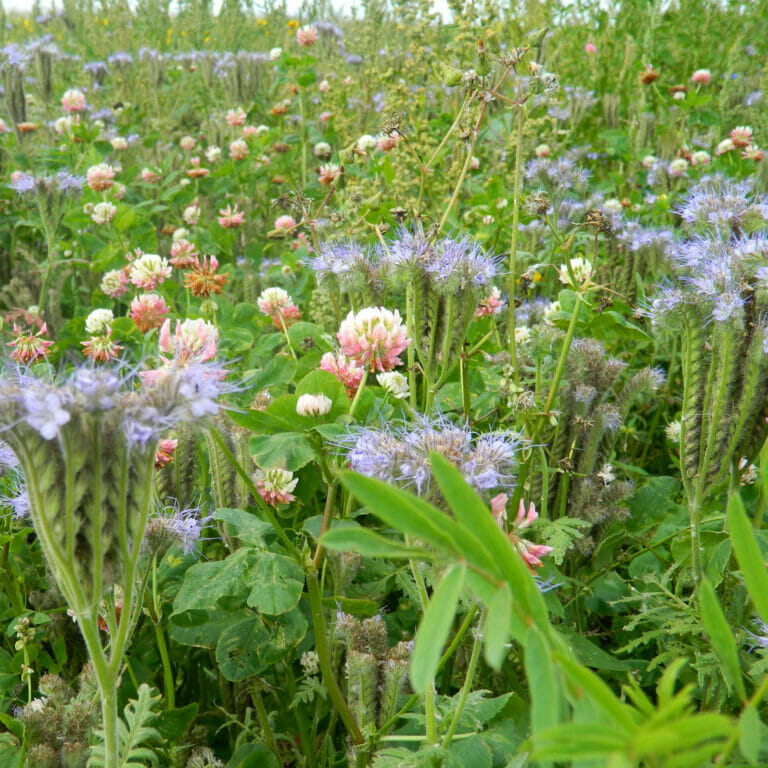
“Companion cropping is important, particularly in OSR, where I grow white, berseem and crimson clover in the crop, to take it through. Nature doesn’t monocrop and plant diversity is key.”
3. Should regen ag be certified?
SUSAN TWINING: “At the CLA , we have looked closely at this, and decided that it is not something that we would advocate for at this stage, if ever. Regen farming is about a set of principles which allows for flexibility, depending on the farming situation etc. In certifying this, it would become a tick box exercise – which makes it a completely different concept.”
“ELMS offer a good suite of options to reward farmers for good practise. We already have the Soils SFI, the IPM, and Nutrient Management SFI’s coming out later this year.”
You can watch the full version HERE
LG Denmark Study TourIn the spring, Limagrain took a group of UK growers to Denmark, to look at regenerative and conservation agricultural practices.
After two full days of visiting farms, agronomy companies and a plant breeder, there was some very interesting and surprising feedback:
GEORGE ATKINSON, LINCOLNSHIRE: “It’s been fascinating to see all the different farming systems, and also learn about Danish policies that contradict themselves. I was expecting to come and see the future, but some of the growers are where we were 15 to 20 years ago.”
AL BROOKS, HAMPSHIRE: “I came here with a preconceived idea that we were going to learn something from the Danes in terms of their view towards conservation and regenerative agriculture. I was stunned by the amount of red tape they are subjected to. They are constricted in the industry and don’t have the voice with government.”
TIM PARTON, STAFFORDSHIRE: “I think the government advisors in Denmark need to take a real hard look at what they are trying to achieve, and what their directives are. They are so restrictive; they are missing out on the big benefits they could be getting from regenerative and conservation agriculture. They need to help their farmers more, rather than restrict them.”
“Discovering that UK farming practice with regards to conservation agriculture or regen is ahead of Denmark, was a surprise to many on the trip, and a real positive take home message for the UK.
It’s very noticeable that plant breeding is paramount to the future direction of agriculture, as practices move towards lower input and better disease resistances. Limagrain look forward to sharing what we do with growers from the UK and abroad,” says Tom Barker of Limagrain, who hosted the trip.
Download the latest edition of LG GatePost here
Reasons to Establish a Legume FallowJanuary 2023 saw six new Sustainable Farm Incentive (SFI) standards published, to add to the three existing standards introduced in 2022.
These new standards add a further 19 “actions” that aim to encourage sustainable practices and importantly, increase the number of ways farmers in England can help mitigate the reduction in Basic Payment Scheme (BPS) payments.
For arable farmers, it’s likely that one of the “actions” with the biggest uptake will be to “Establish and maintain a legume fallow”, as its aims and benefits are virtually identical to the already popular “AB15: Two-year sown legume fallow” option in Countryside Stewardship.
The action pays £593/Ha (the same as AB15) and aims to provide food for pollinators and farmland birds whilst helping to support an integrated pest management (IPM) approach. We know from experience with AB15 that sowing a seed mixture such as LG Legume 2 which meets the required specification, can be a great tool to help reduce blackgrass populations, increase fertility, soil organic matter (SOM) and improve soil structure.
Ensuring these benefits are realised to their full does, however, require the same attention to detail as any other crop.
Reducing blackgrass populations is reliant on ensuring that no new seed is shed for the 2-year duration of the mixture. Under both schemes, the mix can be cut for the purpose of controlling blackgrass which in practice will be 2-3 mowings, timed so that the blackgrass has headed and flowered, but not yet produced viable seed. With correct management, the blackgrass seed bank can be expected to reduce by 70-80% per year.
The legumes within the mix will of course fix atmospheric nitrogen, so there’s no need to apply any fertiliser and there should be significant residual nitrogen remaining for the following crop. It is, however, worth thinking further ahead as ideally there should be a 5-year gap before any pulses are grown, to avoid potential foot rot or nematode issues.
Mixture choice is also very important. The legume fallow mixture can be selected with or without grass (perennial ryegrass), with the correct choice coming down to individual circumstances. A mix with grass will more successfully smother both blackgrass and broad-leaved weeds, and is likely to contribute more SOM than without. Mowing the mixture to control blackgrass will also ensure that no ryegrass seed is returned to the soil, but those without blackgrass problems may be best with a no grass mixture, to avoid future problems with weed ryegrass.
Whichever mix is chosen, sowing should happen as soon as possible after harvest – ideally in August, to make the most of warm soil temperatures.
Download the latest edition of LG GatePost here
Candidate Corner – OilseedsOver the last 4 years, we have seen the LG Oilseed Rape portfolio dominate the Recommended List, and the consistency of on-farm performance for many growers has been witnessed, with Aurelia and Ambassador becoming dependable staple varieties.
This strength in depth of the portfolio continues to progress, as we have four Candidate varieties available this autumn: LG Armada, LG Academic, LG Adeline and LG Aphrodite.
In a time when it would appear that the Recommended List is looking to be condensed, it is really encouraging to see the depth in our portfolio continues to produce varieties, with LG getting 4 Candidate varieties based on their NL performance; this is more than any other breeder.
The four varieties are all fully loaded hybrids, meaning that they encompass LG’s trait stacking approach to help mitigate risk for growers, by having the combination of TuYV resistance and pod-shatter, along with solid disease resistances.
LG Armada, LG Adeline and LG Academic all possess the new ‘Stem Health’ tag. This means that from our breeding trials across the UK and Europe, the three varieties have shown consistently strong levels or resistance to phoma stem canker, cylindrosporium and verticillium wilt.
Cylindrosporium is the stem-based symptoms of light leaf spot which, if bad, can cause early senescence, reduced oils and yield. As a result of improved stem health, these new hybrids have increased oil contents as well as more resilience towards the end of the growing season, due to the better translocation of water and nutrients to the pods.
Breeders Q&A
Coretta Kloeppel – OSR Hybrid Breeder

What is the main aim of the LG breeding programme?
“The main aim of the LG breeding programme is to secure and achieve high yields for farmers. Through stacking traits and maximising disease resistances, we look to reduce as much risk for growers as possible.”
How important is the UK to the wider European breeding team?
“The UK is integral to the European programme, it is where all initial crosses take place, every European variety begins its life in Lincolnshire. It is also very important for disease screening, the LLS screening we carry out in Scotland along with the Verticillium trials in Suffolk, all help provide data for the UK, but also feed into the wider European data sets. This helps us to build a full picture and ensure disease resistances are robust.”
What are the main threats to UK OSR growers and how are we looking to help mitigate against them?
“Cabbage Flea beetle is the obvious one. We have already started by prioritising spring and autumn vigour when selecting varieties, but we are also looking for ideotypes which may be more resilient, as well as being involved in numerous research projects. There is no silver bullet, but marginal gains can certainly help. We are also looking at club root varieties as well as looking more into the importance of Verticillium.”
What is the most important trait in OSR?
“There is no one important trait, from what we have seen the combination is the most important. So TuYV is crucial for all round plant health and maximising yield, whereas Pod shatter ensures that as much of what is produced by the plant ends up in the shed to be sold.”
Download the latest edition of LG GatePost here
Stack the Odds in Your FavourSince the introduction of Aurelia and Ambassador, LG’s OSR portfolio has dominated the Recommended List.
This not only shows the high yields that the breeders have been able to achieve, but also the consistency over regions and seasons.
This consistency comes from the LG approach towards stacking traits including pod shatter, TuYV and disease resistance and latterly the introduction of the stem health concept.
As breeders, we always look for the extremes to put our genetics to the test, to ensure that they are robust and do what they say they will, on farm. Whilst we breed for the UK market, our European programme allows us to screen across the continent, looking at phoma, light leaf spot and verticillium as well as the ability to compare against UK data which gives us confidence that varieties will perform.
This has not only been seen on farm in the UK, but also in Ireland where the resurgence of oilseed rape as a break crop has partly been due to the introduction of genetics, allowing the crop to be more manageable and risk free. Ireland has seen an increase in area of 30% over the last 6 years, with national average yields jumping from 4-4.5 t/ha to 5-5.5 t/ha.
John Dunne, variety manager for seed supplier Goldcrop, has put this down to the traits available. “It’s an essential part of the rotation for many, so having ‘stacked traits’ to secure its future place here is important.”
As breeders, we have long seen the importance of genetic resistance in Ireland, across all species, where the wet and mild climate causes high disease pressure.
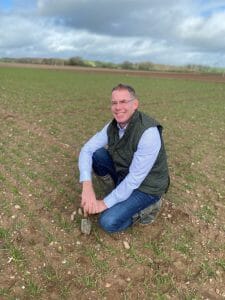
John Dunne, Variety Manager – Goldcrop
In wheat breeding, all breeders screen for Septoria resistance and in Ireland due to the climate, light leaf spot is of similar importance in OSR.
“LLS has always been the tougher beast, to my mind, and in some years the circumstances play into it with higher pressures, especially when there are nearby OSR stubbles. As the disease cycles so frequently and repeatedly, it can be hard to control” says John.
And with these pressures, we have seen the LG varieties rise to the top of the Irish Recommended List, with Ambassador and Aurelia being two of the three Recommended varieties.
Stem health will further add to this, with the reduced sporulation on stems meaning there is a reduced ‘pool’ of LLS spores to spread from stubbles to early sown crops. Early results from testing suggest that varieties such as LG Auckland and LG Armada are again raising the bar in terms of yield and stability for Irish growers.
Download the latest edition of LG GatePost here
Achieving High OSR Yields Despite the ‘Weather Gods’For David Fuller-Shapcott who farms near Kelso in the Scottish borders, beating the weather is a constant challenge.
“Autumn’s are very short and wet, which means we battle to get crops established and it can be difficult to travel in the spring so spray timings can also be difficult. Whilst at the other end of the season we need to leave crops in the field that bit longer to maximise sunlight and keep biomass growing for as long as possible,” he explains.
However adapting cultivation and establishment techniques, a focus on soil health and a large amount of patience has brought success to the cropping at Sweethope Farm.
Mr Fuller- Shapcott’s crop of Ambassador oilseed rape took the Bronze award in the 2022 national ADAS YEN competition yielding 7.33t/ha. This is not his first YEN win for oilseed rape, in 2019 he won a YEN Bronze award for a crop which yielded 6.4t/ha, calculated as 63% of its yield potential.
Oilseed rape is the main autumn break crop at Sweethope Farm in a rotation that maximises first wheats. Oilseed rape is grown one in six which usually means about 45-50ha is grown in any one year. Spring barley is grown for the local distilling market and winter barley for brewing. Soils are heavy clay and run up to over 200m above sea level.
The farm also features 32ha of permanent grass used as grass park lets for cattle and sheep, plus 17ha of mixed woodland.
YEN 2022
Oilseed rape establishment at Sweethope is based on a cultivator, using nine narrow and shortened subsoiler tines, to create relatively undisturbed slots ahead of a heavy packer. A row of 9 disc coulters and covering tines follow the packer.
The crop entered for YEN in 2022 was drilled into a field of fairly virgin oilseed rape soil following winter barley after five years of grass.
“This meant less slug pressure, which can often be more of an issue than CSFB, with our heavy, cold soils. As it was after grass we didn’t have a cover crop in this particular field,” says Mr Fuller- Shapcott
“The crop was drilled on 27th August at 2.2kg/ha -targeting 20-25 seeds/m2 – the aim is to have 22 stems/m2 at harvest. I am looking for large single plant, not a field of cress,” he says.
“I chose to grow Limagrain’s hybrid, Ambassador for several reasons.”
“We moved into hybrids for their vigour in the autumn. I don’t want too much vigour in the spring when I cannot travel and keep up with the crop.”
“It’s not just one of the highest yielding varieties on the AHDB Recommended List, but also offers a very high oil content and this boosts gross output. I have found varieties with inherently low oils harder to push.”
“Good light leaf spot resistance up here is key and Ambassador offers one of the highest resistance ratings of 7. It also offers pod shatter resistance which is very valuable.”
Mr Fuller-Shapcott points out that Ambassador also offers N-Flex which minimises yield losses in sub-optimal N conditions, making a variety adaptable for both high and low input scenarios.
He was interested to see what the benefits of this would be on his own soils and nitrogen regime, so in 2021 he carried out a small farm nitrogen trial looking at rates and timings between Ambassador and sister variety Aurelia, that does not offer N-Flex.
He found that at lower nitrogen levels, Ambassador performed as well as Aurelia at normal nitrogen levels.

David Fuller-Shapcott
He believes that this provides the crop with flexibility. “If ground conditions are too wet or the weather closes in before we can get on with fertiliser in the spring, we are not compromising the potential of the crop too much- it gives us that really valuable leeway.”
Mr Fuller-Shapcott enjoys being part of YEN and believes the learnings from it are incredibly valuable.” YEN has taught me importance of canopy structure in oilseed rape and how to manage this to achieve a particular yield and we work to this. We know that if we have 100,00seeds/m2 and a 5.0 TSW we are looking on average at a 5t/ha crop.”
“To achieve this we want to influence the structure of the canopy to promote podding at the top, aiming for an ‘oak not a pine’,” he says.
“I take a very much balanced approach to crop nutrition – not pushing the crop too hard but enough to produce a decent output with justifiable inputs. I have learned from YEN that it is worth feeding the crop well from the beginning; little and often.”
“For this crop I was aiming for about 160kgN, but in fact ended up applying less, only 133kg but this does not appear to have impacted the crop performance – and we put this down in some part to the N-Flex ability of the variety.”
“Fertiliser in liquid form is applied down the spout at drilling (subcasting), which increases rooting. Spring nitrogen goes on as soon as its possible to travel. For this crop that was around the 20th March when 66kgN went on.”
“On the 12th April we applied the same again, both doses using a 30%N and 9% sulphur liquid (W/V) with trace elements.”
“With OSR we always make sure there is adequate Boron, and tissue testing through the season gives me an insight into what the plant needs at different times,” he says.
Disease control is started as soon as he can travel, with a keen eye on Light Leaf Spot. “Last season the first spray was around the third week of January, this was followed up on the 18th April with a PGR and fungicide, and again at the end of flowering.”
“Magnesium, phosphorus and potash, also went on at this timing to help build seed size.”
Mr Fuller-Shapcott doesn’t rush to desiccate. “If we think the crop is ready, we try and leave it for another week – which does require a large amount of patience! But we have found it pays off, as it means we never have any red seeds.”
“This crop was desiccated on 26th July. Usually our rape crops have a birthday, but last year it was ready early and was combined on the 14th August- and the rest as they say is now in the YEN records!”
David was Arable Innovator of the Year in the 2018 British Farming Awards, Agriscot Scottish Arable Farmer of the Year finalist in 2018 and Scottish Rural Awards (Agriculture) finalist in 2019, Farmers Weekly Arable Farmer of the Year finalist 2019 and Scottish Land & Estates award winner 2019.
2016 saw Mr Fuller Shapcott take second highest potential yield prize in ADAS’s Yield Enhancement Network (YEN) wheat competition, achieving over 60% of the crop’s calculated potential yield.
This was a step up from 2015 when a yield of 14.2t/ha gave him the bronze potential yield award in a bumper harvest year when just across the border Northumberland grower Rod Smith broke the world record with a yield of 16.52t/ha.
Surprise Success for Scottish Oilseed Rape CropThe Lawson brothers, Mark, Philip and Ben, farm in Newton Stewart in Dumfries and Galloway – tucked into the bay just before Stranraer – generally not an area renowned for producing award winning oilseed rape crops. However Mark’s crop of oilseed rape won a silver award in the 2022 YEN awards with his crop achieving 84% of its potential yielding 7.39t/ha.
“When the awards were announced we couldn’t believe it. It was really unexpected, we never expected anything like that from a crop on this farm!” says a delighted Mark.
“It’s really wet here – and the soils are not the best- they tend to run to shallow stoney – which although gives us some reprieve from the rainfall as the water runs through it – also means we don’t have lovely, deep soils for the crop to sit its roots down into – not the best for highest yielding crops.”
Airlies farm stands out amongst its neighbours as it’s a purely arable rotation, bar some bed and breakfast cattle, in an area that traditionally is all livestock farming.
The Lawson’s bought, what was then a purely a livestock farm in 1989. However increased costs to transport bought in feed for the herd meant they started to grow their own. Over the years, the arable side has taken over and now have a rotation based on wheat, barley and oilseed rape. Grass is grown for silage and the rougher pastures support sheep.
“Our farm average oilseed rape yields can be around 3.7 t/ha but if we can push this to 4.2-4.4t/ha we are happy with that.”
“It hadn’t really occurred to us to enter YEN. We didn’t think we had much hope of winning anything and were unsure what we would gain from the experience, but a conversation with our seed advisor, Douglas Bonn of Nickerson Seeds convinced us to enter.
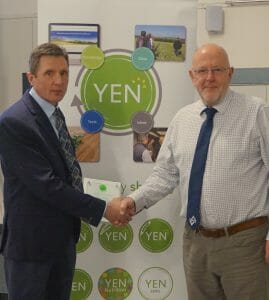
Mark Lawson and Douglas Bonn
“We had a field of Acacia oilseed rape that looked good and showed promise, so on discussion with Douglas we were persuaded to enter part of that field.”
“We used to grow variety Anastasia, so it made sense to move onto Acacia.”
Bred by Limagrain UK, Acacia is the most popular conventional variety in the country with proven strong autumn growth and good spring vigour, solid disease resistance and short, stiff straw, combined with a high oil content and yield.
“Whilst there has been a tendency to move into hybrids generally, many growers have found that Acacia delivers the vigour and consistency of performance that they are looking for,” explains Douglas.
He explains that Mark has always been interested in improving what he does on farm, so when the crop showed so much promise it made sense to enter it into the YEN for the valuable feedback gained from the judging.
Award winning cropping
“All in all it was a pretty easy season on the crop, says Mr Lawson.” Autumn 2021 had been really kind – all the crops drilled in good time. With the high levels of rainfall here our biggest challenge is getting the crops in the ground in good time.”
“Following winter barley, the oilseed rape was drilled into a nice dry seed bed. We min-till using a Simba Xpress which creates a good tilth for the seed. Seed rate was 3.55kg/ha – with an aim for an established plant count of 24 plants/m2.”
With regards to agronomy of the crop, Richard Bray, agronomist with Agrovista based in south-west Scotland says “It was a season when everything came together.”
“The crop came out of the winter well, so we included growth regulation at stem extension as we wanted to avoid a lodged or leaning crop that would not mature evenly or maximise pod fill. In with this, we also applied a broad spectrum foliar feed,” he says
“Tissue analysis highlighted the crop was still short of boron. So we addressed this at the early flowering stage with a 4-way mix containing boron, a carboxamide and triazolinthione fungicide for sclerotinia, a bio- stimulant to boost yield by increasing the numbers of seed per plant and an adjuvant to aid uptake.”
Mr Bray points out that as the flowering period can last many weeks this far north, a second mix at mid-flowering was applied but with the addition of a crop enhancer to increase chlorophyll production and maximise green leaf area.
“As far as weeds and diseases go, we can have issues with sterile brome but the oilseed rape does allow us to clean that up reasonably well. Light leaf spot can be an issue but again we were able to keep on top of that in the spray programme.
“It really is very rewarding for the Lawson’s to achieve this success and do so well against the more recognised arable areas of the east,” says Mr Bray.
Harvest promise
Mark explains how exciting it was when the combine started working in the field of Acacia. “We started harvesting on the 5th August in a neighbouring field and that looked pretty good, so we were very hopeful when we moved into the YEN crop – and in fact we struggled to get it all into the trailer- so we knew we were onto some high yields.”
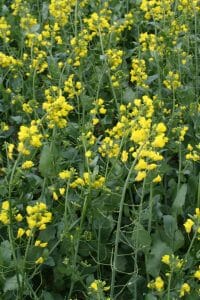
Acacia
“Entering YEN has been a really positive experience, we have learnt so much and will use what we can in this year’s crop. We will definitely enter YEN again there is always more to learn and build on from last year. Our objective is to be able to produce this level of yield consistently, year on year.”
Why did OSR yield so well in 2022?
A decade of YEN research shows that while light and water availability remain critical limiting factors to yield potential, successful crops are those with optimal biological growth to convert the energy available into grain.
Maximising biomass puts crops in a prime position to convert sunlight into yield, even if that yield potential is limited by factors beyond your control. So how did 2022 fare?
Looking at 2022 season:
- Analysis by YEN of historic weather patterns and OSR yields have revealed that high yielding seasons are associated with a warm October, dry December, warm minimum March temperatures, dry/sunny April and a wet/cool May.
- The 2021-22 season was characterized by a warm October, a dry December and winter, average March temperature, a dry sunny April and an average rainfall and warm May.
- The dry spring helped to restrict canopy growth which will have helped optimize canopy size at flowering for good seed set and reduce the risk of lodging.
- The sunny conditions in April will have helped crops to set many pods. Rainfall in May will have been particularly beneficial for crops suffering from the earlier dry spring conditions, but the dull conditions might have restricted the number of seeds set per pod.
On the whole, conditions were conducive for setting high seed numbers and hence higher potential yields
New OSR Manager for Limagrain UKPlant breeder Limagrain UK has strengthened its arable marketing team with the appointment of Liam Wilkinson to position of Oilseed rape product manager.
In his new post, Mr Wilkinson takes on the responsibility for the marketing of Limagrain’s highly successful oilseed rape portfolio which has been driven by its trait-loaded offering – bringing valuable traits and characteristics to the market, such as TuYV, Pod Shatter and Stem Health.
Limagrain’s hybrid Aurelia, is the UK’s most widely sown variety, whilst Ambassador is the number one variety grown in Europe – illustrating the strength of the breeder’s UK and European portfolio.
Limagrain is a farmer owned international co-operative group, specialising in both agricultural and horticultural seeds. As the fourth largest breeder and seeds marketing company in the world, it employs 10,000 people with a turnover of more than 2.5 billion euros annually.
Mr Wilkinson worked as a trials officer for Frontier, and latterly NIAB, before joining Limagrain in early 2020.
He has extensive experience of the oilseed rape crop; previously holding the position of arable technical officer for oilseed rape, with the breeder.
“Limagrain’s oilseed rape varieties have dominated the UK AHDB Recommended List for several years and continue to do so,” says Mr Wilkinson.

Liam Wilkinson
“There are obvious challenges for OSR growers around climate and pests, however it’s very encouraging to see the progress breeders are making by building further on the trait-stacked approach – which has helped many growers return to oilseed rape, by offering on-farm security through robust genetics.”
“We’ve already started with the introduction of Attica and LG Wagner this year, and I look forward to introducing more varieties in the coming years. Infact, it’s a really exciting time to be involved in OSR genetics.”
Six Steps to Spring Barley SuccessAs spring barley drilling gets underway in some areas, Limagrain UK’s arable technical manager, Ron Granger, outlines six ways to get the most from the crop this season.
- 1. Understand end market/ contract requirements
End user requirements will influence many agronomic decisions, particularly nitrogen strategy, so it is essential growers are clear about the quality criteria that must be met, says Mr Granger.
“Depending on the locality and the opportunities for selling to different end users or export markets, the barley crop you grow – and the agronomic inputs required – will be determined by the sector you target.”
This is particularly true for those dependent on hitting a certain grain nitrogen percentage to achieve the contract premium, notably distilling, which requires 1.65% N or lower, brewing 1.65-1.85%, and grain distilling at 1.85%+. Grain nitrogen is not a concern for animal feed.
- 2. Choose the right variety
In many instances, variety choice is also determined by the end user or contract chosen.
However, for those still to decide what to grow, Mr Granger recommends considering one of the dual use varieties, such as LG Diablo, which has good yield performance, with several end market opportunities, offering an advantage over many varieties now listed.
“Newer recommended varieties certainly offer higher yield potential, and if contracts are offered, then they are certainly worth considering. Dual use varieties offer growers flexibility for the distilling, brewing and feed market sectors.”
- 3. Wait for good drilling conditions
Limagrain trials show earlier drilling in spring can improve yield potential, however, this is mainly only possible on lighter, more free-draining land, that will dry and warm quicker than a heavier soil type.
“Early drilling will significantly increase disease risk, so consider more disease resistant varieties for this situation,” says Mr Granger.
“Generally, patience is required to wait for the right window of opportunity, when both the weather and soil conditions allow good seedbeds to be created with rising soil and air temperatures, to ensure rapid emergence and establishment, with continued plant growth.
“Certainly, we saw the value of earlier drilling in spring 2022, with most growers drilling earlier than usual in most regions. This, along with upfront nutrition before the drought hit, was certainly part of the reason why growers achieved higher yield potential than originally anticipated.”
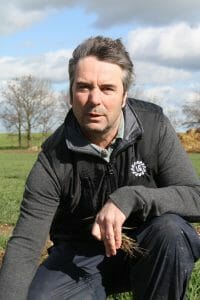
Ron Granger
- 4. Optimise seed rate
A survey of more than 100 growers by Limagrain last year showed half (49%) of growers were typically sowing spring barley at 300-350 seeds/m2, and most (76%) targeting a yield of 8 t/ha.
This rate appears to be about right when drilling into good conditions, however Mr Granger says seed rates must be tailored to individual situations.
Limagrain trials comparing variety seed rates over various seasons and regions suggest that with more vigorous, higher tillering varieties, such as LG Diablo, the optimum seed rate is 350 seeds/m2 when drilling into ideal conditions around mid-March.
However, this should be adjusted up or down depending on the weather, seedbed quality, moisture availability, drilling date, and the growers’ own experience on each site, says Mr Granger.
“Late-sown crops inevitably produce fewer tillers and therefore fewer ears, which must be compensated for by increasing seed rate.”
A lower rate of 300-325 seeds/m2 could suffice if drilling into an “onion bed” in March, but when forced to drill into April, due to the weather, or agronomic reasons, such as black-grass control, pushing rates up to 400 to 450 seeds/m2 may be more appropriate to achieve the optimum final ear number and a competitive crop in a black-grass situation, he advises.
- 5. Maintain tiller number
Once crops are established, Mr Granger says the best way to achieve high spring barley yield potential is to ensure high final ear counts. The AHDB Barley growth guide suggests final target ear population should be around 775 ears/m2.
“It is interesting to note that in 2019, higher yield potential was achieved from even higher final ear counts, approaching 800/m2 by harvest. An 8-9 t/ha crop needs around 800 ears/m2, which at a 350 seeds/m2 rate, equates to around 2.5-3 tillers per plant at harvest.
“However, experience shows optimal tiller and ear counts may be underachieved in many situations, meaning crops fall short of achieving their full yield potential.”
The biggest issue is often the weather, Mr Granger acknowledges. Drought conditions will cause tiller loss, so he says to ensure numbers are high enough at the outset by selecting high tillering varieties, using an appropriate seed rate, and driving establishment and early rooting by implementing a balanced nutrition regime early in the crop’s development.
“Traditionally, spring barley was often seen as a lower input crop, with growers reluctant to increase nitrogen application rates in fear of exceeding maltsters grain nitrogen limits. However, LG trials over many seasons of testing, indicate that using higher N rates can be beneficial.”
In the trials, a standard seedbed application of 120 kg N/ha was compared to a split nitrogen application of 150 kg N/ha, with the additional 30 kg applied at late tillering. This resulted in a yield benefit of 0.4-0.5 t/ha over a single seedbed dose, with little or no impact on grain nitrogen.
“Higher yielding varieties respond positively to higher nitrogen inputs, due to their increased yield potential and dilution of grain nitrogen content.”
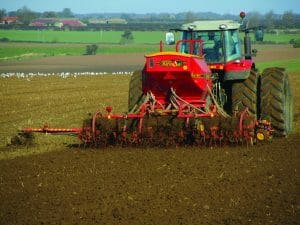
6. Optimise other nutrients
Alongside nitrogen, optimising other macronutrients, such as phosphate, potash, magnesium and sulphur, has proven beneficial to tiller retention and final yield.
These should be applied in the seedbed or soon after drilling to promote strong rooting and early plant growth, Mr Granger advises.
“Tissue analysis of the young growing crop can help identify any shortfalls in nutrition before visible symptoms appear, and is a relatively inexpensive way of targeting a high yielding crop.”
Additional micronutrients, such as manganese, zinc, copper, iron, and boron, applied at the stem extension phase into flowering, are also useful, ensuring a healthy crop and good ear fertility, whilst also helping secure high grain number and maximum yield potential. “Apply these independently with other key inputs, or as a multi-nutrient product.
“Spring barley is a fast-growing crop and if key nutrients are deficient at any time, yield potential will be compromised.”
Also consider early growth regulator applications on crops to promote rooting and strong uniform tillering, he adds.
At least two fungicides are recommended to maintain tiller number and healthy plants, including the awns and maximum grain development. Typically, the first application is at GS 25-31, with the second targeted between GS 39-55.
“Of course, if the season dictates a low disease pressure, or a drought situation, flexibility in fungicide input and timing should be adjusted for the final yield potential in hand.
“Spring barley can move through growth stages quickly, so close monitoring of the growing crop is essential.”
For more info, see Limagrain’s Spring Barley Agronomy videos
LG GatePost Newsletter – Feb 2023The February 2023 issue of LG GatePost is now available to download.
This edition features articles about our exciting new Wheat, Winter Barley and Oilseed Rape varieties that are taking leading positions across the 2023/24 AHDB Recommended List.
You can read about how moving to direct drilling of LG Diablo Spring Barley has proven successful for Berwickshire grower, Neil White and watch our Spring Barley agronomy series of videos that give you all the technical know-how to successfully grow your Spring Barley crop.
There is also information about our upcoming Trials Events, and online Technical Webinar.