
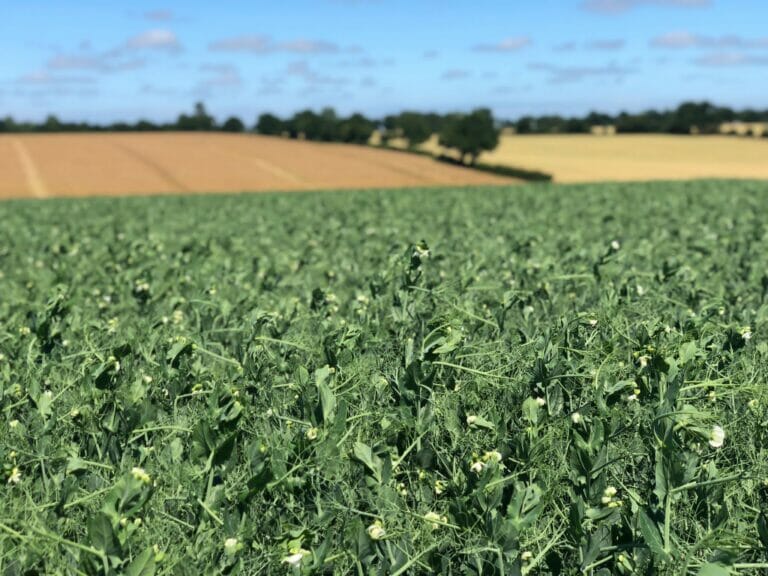
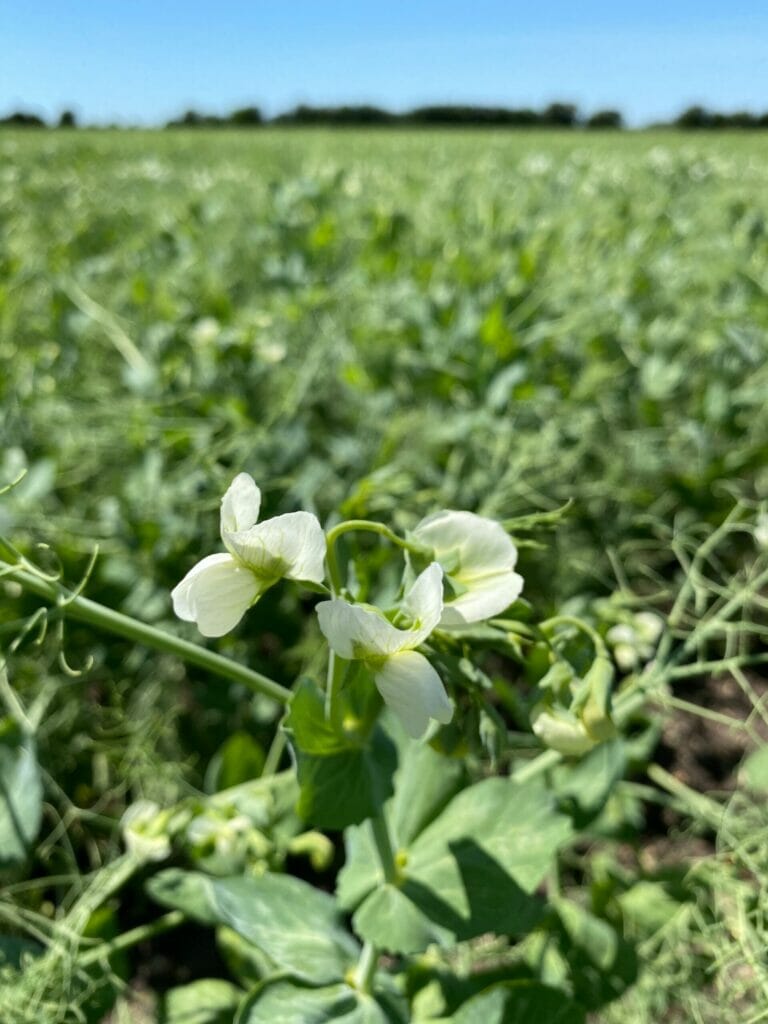
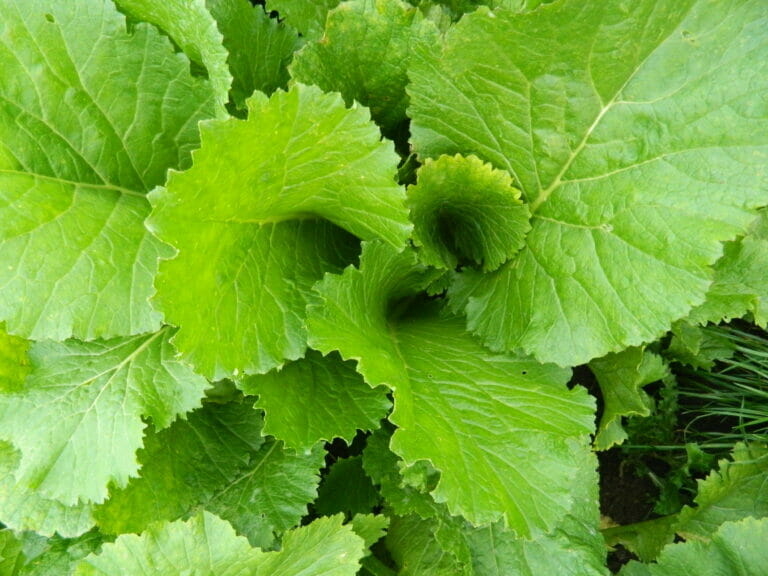
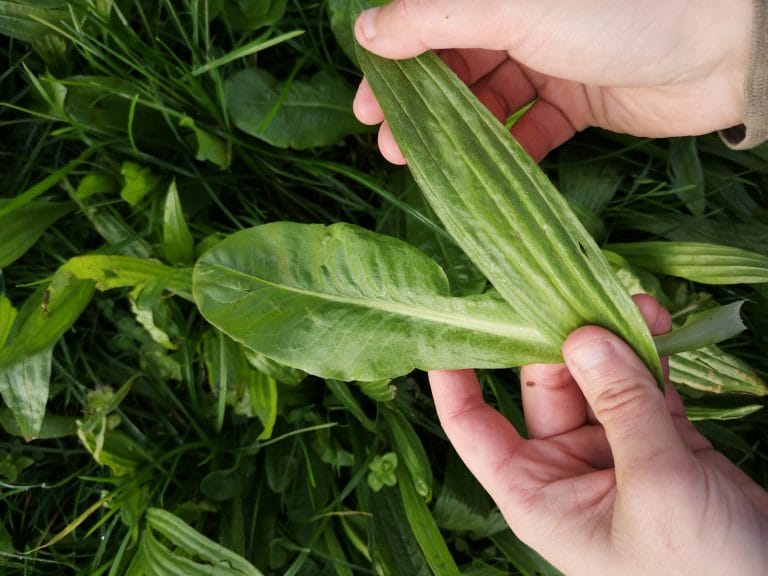





Benefits of balanced nutrition
Avoiding nutrient deficiencies
Improvement of crop tolerance to adverse conditions
Increase of crop yield per area
Optimization of economic benefit per area
Improvement of nutrient use efficiency
Establishment & Autumn Crop Nutrition
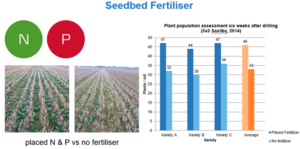
Oilseed rape establishment is influenced by autumn nutrition. Autumn fertiliser, particularly nitrogen and phosphate significantly increase both emergence and establishment of the oilseed crop. Early root growth is key to rapid emergence, and this is stimulated by readily available phosphate and nitrogen which in turn allows the plant to develop a bigger more efficient root system.
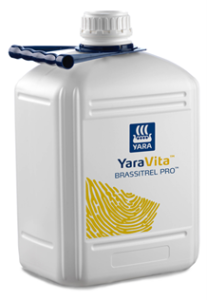
Once successfully established ensuring adequate nutrition of oilseed rape crops is vital to maximise yield and profitability. Good crop development before winter is the basis for high and stable yields. Oilseed rape needs to develop a strong, deep reaching main root with root collar diameter of about 8 mm and 8 to 10 leaves before winter. There are several nutrients the crop requires over and above nitrogen, phosphate, potassium and sulphur. YaraVita Brassitrel Pro was developed specifically for the oilseed rape crop. It contains Boron, Molybdenum, Magnesium, Manganese, Nitrogen and Calcium, all the essential nutrients in an easy-to-use formulation. A fully replicated trials programme conducted over 6 years (2016 – 2021) showed that two applications, applied once in the autumn and again in the spring just prior stem extension, delivered an average yield increase of 0.29 t/ha. It’s so easy – all the essential nutrients your OSR crop needs, in one can.
2 Key Reasons for Autumn Foliar Nutrition Applications
1) Provides nutrients straight into plant to maintain crop growth and improve winter hardiness
- 2) Loads the plant up with nutrients ready for spring growth – maintaining momentum!
Spring Crop Nutrition
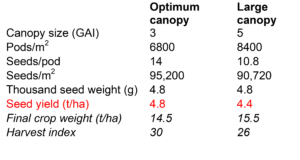
Oil seed rape canopy management begins with plant population and can then be manipulated with nitrogen fertiliser and if necessary, plant growth regulators.The yield of oilseed rape is a function of producing an optimal number of seeds/m2. This can be derived from developing a canopy that has the optimal number of pods / m2 and seeds / pod. AHDB funded research has concluded that this number should be 6 – 8000 pods/m2. At this density pods will typically contain 10-15 seeds giving around 100,000 seeds/m2, the amount required for a yield of 5 t/ha. The target canopy size to achieve this can be described by the Green Area Index (GAI – the ratio of green plant material relative to a square metre of soil). The target is to grow a canopy of a GAI of 3.5 during flowering and seed fill. In the example below you can see how achieving an optimum canopy size delivers a higher seed yield than an overly large canopy.
Canopy Size effects on yield
Source: ADAS
Nitrogen & Nitrogen Timing
Assessing the green area index of oil seed rape before spring growth is a good starting point to planning the nitrogen applications the crop will require. In replicated trials Yara found a seed yield of more than 4 t/ha requires 180 – 240 N per ha. Understanding the amount of nitrogen that is already in the crop and an assessment of what will be available from the soil will avoid excessive applications of nitrogen which can reduce seed yield and oil content by increasing protein level. Applying all the Nitrogen early will often over-shoot optimum canopy size (Particularly for crops with large GAI) so we need to plan to apply some Nitrogen later. Split applications at the beginning of vegetation and early stem elongation have been found to be the most efficient approach. Nitrate form of Nitrogen also resulted in higher yield compared to other sources of Nitrogen fertiliser.
Sulphur & Sulphur timing
Atmospheric deposition has been declining for many years and Sulphur is known to improve yield, quality and increases nitrogen fertiliser efficiency. Leaf area index and rate of photosynthesis are considerably increased by the sulphur. Sulphate is as mobile as Nitrate, therefore highly leachable so we need to plan to apply the crops requirements as close to early spring development as possible. Most sulphur is absorbed from soils by plants in the sulphate form. A lack of sulphur in the stages of early development reduces yield so the application of sulphur in spring should be at the start of the vegetative period ideally in the Sulphate form rather than the Elemental form. A delay to the availability of Sulphur can lead to lower seed yields and lower oil content.
Don’t forget about Potassium
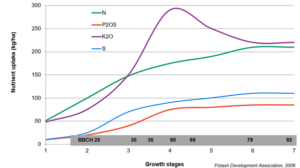
Potassium is involved in activation of several enzymes that control formation of proteins, carbohydrate metabolism, transpiration, and production & translocation of assimilates. It provides strength to plant cell walls and promotes oil synthesis therefore it optimizes growth and development of oilseed rape. Potassium uptake by oil seed rape is significant in the spring as can be seen in the below chart. Having sufficient potash available to the crop is therefore essential to maximise yield potential. In Yara’s trials production of about 3 – 3.5 t seed per ha requires 80 – 120 kg K per ha and increasing K application rate resulted in increase of oil content.
Nutrient uptake during growth stages of oilseed rape
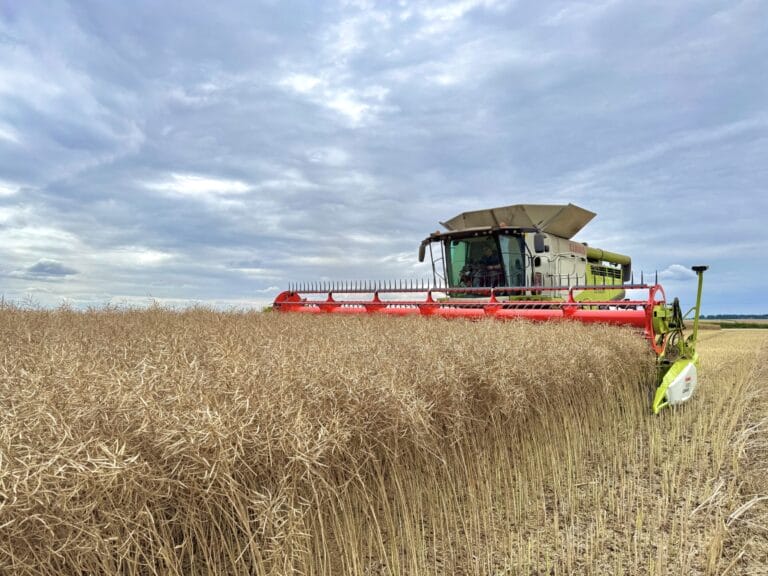
Pod shatter resistance should be one of the first things on a grower’s mind when selecting the right OSR variety. This early choice combats the potential risk of losing seed just before harvest when the majority of the investment in the crop has already been made. The pod shatter resistance trait provides genetic security and helps protect that investment.
In the season of 2024, due to the weather in July the risk of pod shatter was not as high as it had been in previous years. This doesn’t alter the fact that at the time of varietal selection, we have no idea what the weather conditions are going to be 11 months down the line when the crop is at the most risk. Increasingly unpredictable UK weather systems mean we never know when the next high wind or unseasonably high rainfall will occur. It makes sense that growers protect themselves against the risk of significant yield loss from the start, by choosing a pod shatter resistant variety.
Limagrain tests their varieties every year using a lab-based technique where the force used to break the pods is measured in Newtons. This provides a robust quantifiable data set over multiple years. The pod shatter resistant varieties in some cases can require up to 3 x more force to break than non-pod shatter resistant varieties, making it far and away the most effective option for preventing pod shatter and limiting yield loss at harvest.
The effect of pod shatter on a crop can be observed in the field, The shelled out white pods are easy to spot, especially when the OSR volunteers appear after harvest. As the shattered seed germinates, the resulting increase in volunteer OSR has a secondary consequence. It creates a ‘green bridge’ for issues such as disease and pest’s and increasing the burden of weed control. This means that the initial pod loss doesn’t just impact the yield of the current crop. It directly impacts the next crop in the rotation, and possible future planting.
In OSR where margins are unquestionably tighter than ever, pod shatter resistance is key to profitability. Choosing a variety with genetic resistance can make a difference of around half a tonne per hectare at harvest. Success with OSR is increasingly contingent on grower’s mindset, as year on year growing it becomes more challenging and costly. This must now be viewed as a technical crop and as such varietal selection is key, the question I would pose to anyone looking to drill this Autumn is, why would you choose a variety without pod shatter resistance?

Ryan Kemp, Senior Trials Officer
Following the extremely difficult autumn of 2023, we had hoped for a better 24, unfortunately it was not to be. British farmers are practiced at preparing for all eventualities, which is handy when the only consistent currently is change! Who knows what autumn 2025 will hold? In terms of crop choice, I am confident that the Limagrain portfolio has varieties to stand up to it!
On the back of an 11.1 million tonne wheat crop last harvest, this year’s AHDB Early Bird Survey surprisingly came in at only 1.6 million hectares, in recent times the average has been closer to 1.8. The Early Bird Survey shows further declination in winter barley, from the very small crop area planted in 2023. The decline in oil seed rape hectarage is marked, in terms of both production and area we are approaching a fifty-year low.
We know spring cropping can be seen as a get out of jail card for arable farmers, but is there a mindset change happening? Will this impact cropping choices and varietal selection next autumn?
Last year’s growing season did not offer a very clear picture on performance of individual cereal varieties. Disease was prevalent, crops went in late and were stressed from the go. The story is clearer when comparing varieties across consecutive growing seasons.
The varieties that have demonstrated consistent resilience both in trial and on farm across the previous 3 to 4 years are the ones that I would be choosing to drill again this Autumn. Consider LG Beowulf or LG Typhoon if you are looking for wheat, with LG Caravelle and LG Capitol great contenders for barley.
With oilseed rape the story is slightly different, though weather has of course played a significant part, it is the flea beetle that is having the greatest impact. Limagrain has listened to the concerns of growers, and through our skilled UK based breeding programme, we are actively selecting varieties that show a resilience to flea beetle, that alongside solid IPM strategy will work to mitigate the devastating crop loss experienced in previous years.
Our commitment to pulses – a breeders perspectivePauline Lafage, Pulse Breeding Project Manager, tells us what the challenges and opportunities are for pulse breeding.
As a breeder, what’s our focus for the future?
We continually screen for disease, better standing ability, and test where varieties fit best in different on-farm rotations. We have a large range of varieties and traits, from across the globe, to ensure new introductions are robust, stable, offer maximum yield, are fit for market, and deliver the best economical return.
We focus on different sources of resistance and due to the evolving nature of disease, and climatic challenges, we aim to evolve the breeding programmes just as quickly. By having close links to farmers and the onwards supply chain, we are confident LG varieties are fit for future challenges. As pulse breeders, we know the positive attributes of the inclusion of pulses in both human and livestock diets and we look to achieve varieties that also offer a strong nutritional profile.
What do we see as being the biggest threats to UK pulses?
Difficulties with weather and competition for land now falling under SFI, has meant the true potential benefits of pulses have not always been realised in recent years. The unintended consequence of this has put extra pressure on the inclusion of pulses within the rotation, with many mixtures containing legumes.The mixture with pulses (intermediate crops used between two main crops) used by the farmer is an interesting topic. We are not 100% that one pathogen is specific to one pulse or to all the pulses. Changes to cultivation practices have also caused difficulties with establishment, particularly of high yielding pea crops.
How important is the UK to LG’s breeding programme?
We have a commitment to UK pulses, with extensive trial and multiplication work underway in England and Scotland.
The UK is our main target for faba bean breeding, with commercial production in 22/23 of 795,000 tonnes, compared to France, at 158,000 tonnes. Due to the maritime climate, the British Isles are well suited to the production of pulse crops, with some unique market opportunities, particularly in the blue pea sector.
A lot of the exploratory supply chain work conducted in the UK is leading the European breeding programme, with Low varieties at the forefront of this.
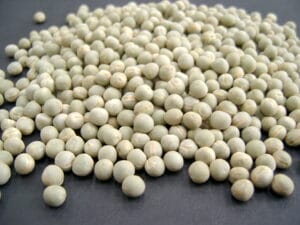
The UK is well suited to the production of blue peas.
Our Commitment to PulsesThe addition of the joint highest yielding spring bean variety LG Eagle and combining pea LG Corvet, to the 2024/25 PGRO Descriptive List, demonstrates our continuing commitment to pulses.
Heather Oldfield talks through the characteristics of these exciting varieties.
LG Eagle joins the 24/25 PGRO DL as the joint highest yielding spring bean at 110% yield (as % control). During both Limagrain and DL trials, this extremely high yield potential has been delivered consistently over the last few, very different and challenging seasons, which is an important and valuable attribute for a spring bean – and one that growers look for on farm. However, it’s not just about high yields, this need to be backed up by solid agronomics and traits, and we are delighted that LG Eagle offers all of these. It is one of the earliest varieties on the DL to mature, is not too tall, stands well and offers a good disease package, including rust.
LG Eagle is suitable for human consumption, fish feed and animal protein markets, offering a range of marketing opportunities. Its consistent yields and disease resistance package means it will be taking a big bite into the spring bean acreage by 2026.
Combining Pea LG Corvet joins the DL as a high yielding, (111% of control), early maturing, relatively short variety. Alongside these attributes, LG Corvet also has very good standing ability, which is an important trait for ease of combining and protecting precious yield.
Poor standing ability can often be a barrier to growing peas. LG Corvet offers an exceptional downy mildew resistance rating of 8 – the result of a concerted focus from Limagrain on breeding for resistance against this devastating disease in peas.The variety holds one of the highest dry protein content percentages at 22.2%.
Growing Oilseed Remains a Crucial Part of Rotation for Inverurie FarmerMurray Forsyth is a mixed arable-beef farmer with a total area of 1000 acres at Smiddyburn Farm in Inverurie, Aberdeenshire. He grows around 170-180 acres of oilseed, dependant on year and rotation, with the current rotation consisting of winter barley, oilseed, winter wheat and spring barley.

Murray Forsyth of Smiddyburn Farm
When clubroot first appeared on farm, he adopted a wider 5 year rotation, as well as choosing a clubroot resistant variety for afflicted fields.To keep his crops yielding and profitable, Mr Forsyth
takes a technical approach to his oilseeds. He has good average/medium type soil and a scheduled soil testing programme on his farm. He aims to keep the pH value around 6.2, by applying lime to the fields that have a lower pH; he also applies FYM to his fields to keep fertility high. In terms of cultivation, Mr Forsyth typically ploughs the field before drilling his oilseed, using a Horsch Express combination drill with DAP as fertiliser (down the spout – around 150 kg/ha). This is followed by a Cambridge roll and the addition of slug pellets as a precautionary tactic, since slugs are a bigger problem than flea beetle in his area.
Mr Forsyth’s average oilseed yields are between 1.7 and 2 tonnes/acre. In fields affected by clubroot, he is growing LG Anarion. He mentions the average yield is in line with the rest of the farm, which is currently LG Armada. He is convinced that varietal choice is keeping his yields at the same levels as the fields unaffected by clubroot.
Mr Forsyth is considering going back to a shorter 4-year rotation, as oilseed remains one of the most profitable crops on farm. He records his yields and profit margins across the years and notes that oilseed is not the cheapest crop to grow, however it remains a very profitable break crop. Maximising acreage for this crop and maintaining a decent yield are key to its success on farm.
Using a clubroot resistant variety such as LG Anarion helps oilseeds remain a crucial part of the farm’s rotation, allowing it to be grown in fields afflicted with high clubroot pressure. LG Anarion will also help alleviate the pressure, as resistance does not allow clubroot spores to multiply.
Barley Yield is all about Tiller RetentionSpring barley was a get-out-of-jail card for some growers last season, after wet weather prevented autumn drilling, yet many crops went on to deliver above average yields.
Why they performed so well owes much to the age-old issue of tiller retention, Ron Granger says.
Maximising spring barley yield is all about retaining maximum tillers through to harvest. In some seasons, prolonged dry periods can cause crops to drop tillers and reduce this potential, yet last year, plentiful moisture availability throughout the growing season benefitted many spring crops, especially on lighter land. We cannot control the weather, but there are five actions that will help barley produce and retain as many tillers as possible this spring. Such foundation work is essential, whatever the weather.
1. Select The Right Variety
Choosing a variety with greater tillering ability drives yield, and having more tillers helps crops compensate for tiller loss, should stressful conditions arise.
2. Wait For Optimal Conditions
While earlier drilling can increase yield potential, this may only be possible on lighter, free-draining land that dries and warms faster than heavier soil. Barley must go into a
good seedbed with warming soils and temperatures to germinate and establish quickly, so be patient.
3. Optimise Seed Rate
For high yield potential, aim for a final tiller count of 775-800/m², and work back from this to calculate seed rate, varying according to soil type, drilling date, seedbed conditions and weather. LG trials indicate 350 seeds/m2 is optimal for more vigorous, higher tillering varieties drilled in ideal conditions around mid-March, although 300-325 seeds/m2 might suffice if drilling
into an “onion bed”. Later drilling dates reduce tillering potential, so once into April, closer to 400 seeds/m2 may be more appropriate. Higher seed rates should also be considered for black-grass control.
4. Tailor Nutrition
Balanced macro and micro nutrition improves rooting and canopy development, which benefits tiller survival. Apply most nutrition early, to the seedbed or soon after drilling. Don’t be afraid to push new, higher tillering varieties with more nitrogen. In continued LG trials, an extra 30 kg N/ha applied in the second split generated 0.5-1 t/ha extra yield in some varieties, with crops still achieving low grain N.
5. Minimise Weed Competition
Weeds compromise crop establishment and tillering capacity, so drill into good condition and control early weed growth with effective chemistry sets that do not “knock” early plant development.
For more information, watch our spring barley agronomy series.
The Vital Break CropOilseeds hectarage is at an all-time low, and already the question I am coming up against is “what is the future for British OSR?”.
It has become apparent that oilseed is an increasingly technical crop to grow. However it remains a vital break crop on farm in terms of profitability, and also environment. The environmental benefit of keeping oilseeds in your crop rotation is multi-fold. The taproot has a positive impact on soil structure and biological soil activity. It helps loosen the deep soil layers which leads to better soil aeration and easier soil preparation for the following crop in the rotation.
From an environmental perspective, the oilseed crop has a high nitrogen uptake in autumn which limits the risk of mineral nitrogen losses in the winter. The high amount of plant residue left after harvest increases organic matter accumulation, whilst the resulting organic nitrogen can be used by future crops, after mineralisation.
Rapeseed oil remains one of the key consumable oil crops worldwide, and the only one grown commercially in the UK. The drop in planted area and subsequent move from exporter to importer is a bad omen for British farming, food security and the wider UK economy. On farm, genetics offer a solution towards mitigating increased risk from disease, pestilence and reduced inputs. Farmers are increasingly seeking arieties that are adapted to the UK environment and are trait stacked with consistently high yields. Traits like pod shatter and strong spring and autumn vigour are increasingly necessary to protect your investment from establishment through to harvest. As the plant breeder, with the largest UK based winter oilseeds breeding programme, Limagrain Field Seeds is uniquely placed to assist farmers who still see the benefit of growing oilseeds.
So, to answer the question “what is he future for British OSR?” – continued investment and innovation in UK breeding for securing yield potential on farm, are key to the future of this vital break crop.
Crops to Enhance Farmland WildlifeThe introduction of the Sustainable Farming Incentive (SFI) in 2023 has led to a significant increase in farmland being sown, with crops designed to benefit wildlife, particularly farmland birds and pollinators.
Whilst the key SFI actions have remained unchanged in their core aims since their introduction, there are some changes to be aware of, as well as some new actions introduced as part of the SFI 24 expanded offer, which may need to be considered when looking to sow this year.
AHL1/CAHL1
Pollen and nectar flower mix
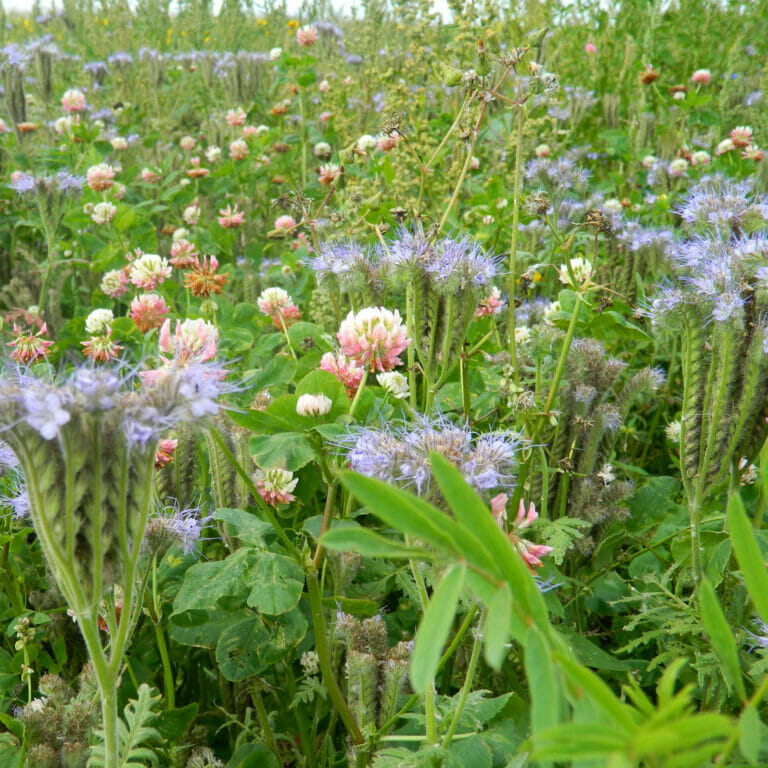
The primary aims of sowing a pollen and nectar mixture are to provide a food source for beneficial pollinators and to encourage natural pest predators. Selecting a mix that includes legumes such as red clover, birdsfoot trefoil and sainfoin will also fix atmospheric nitrogen, increasing fertility for the following crop. The inclusion of species such as phacelia, with its very fibrous root system, will help with soil conditioning.
Growers with later agreements (with code CAHL1) need to be aware that the rules around when to carry out the action have been modified, to rule out the possibility of sowing in spring and entering into an autumn sown crop in the same year. The mix must now be maintained “until the end of the second summer after sowing” to ensure the aims are met.
AHL2/CAHL2
Winter bird food on arable and horticultural land
Winter bird food has proved incredibly popular with around 70,000 Ha being entered into the action so far. The aims are to provide food for birds, especially in late autumn and winter, encourage flowering plants in the summer to benefit insects and pollinators, and to support an integrated pest management approach.
For newer agreements (with code CAHL2), changes have been made to the rules to further clarify when the mixture can be sown and how long it needs to be maintained for. Spring sown mixtures should be maintained until the end of February the following year. However, mixtures sown after the end of June must be maintained for two consecutive winters, effectively making it an 18-month option. Growers looking for something autumn sown may now want to look towards the Bumblebird action.
AHW1
Bumblebird mix
Bumblebird is a new action introduced as part of the expanded SFI24 offer but is very similar to the Countryside Stewardship option of the same name. Worth £747/Ha, Bumblebird pays less than the winter bird food action, but it has a useful place in the rotation as it can be sown up until early Autumn, to be maintained until the end of summer the following year. As the name suggests, the aim of the action is to provide food for both farmland birds and beneficial insects and pollinators.
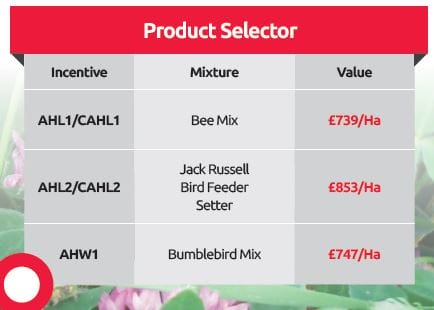
For further information about crops to meet the aims of the Sustainable Farming Incentive, please download a copy of the LG Essential Guide to Conservation and Gamecover Crops
Gema Unlocks Cover Crop Benefits
Early maturing maize allows Somerset farmer to improve soil health and earn an SFI payment from cover cropping.
Growing 800 acres of Gema allows Jon Bult to produce a high yielding, energy dense crop of maize to feed his 700 dairy cows. As an early maturing variety, Gema also enables him to prioritise soil health by establishing overwinter cover crops in maize stubbles.
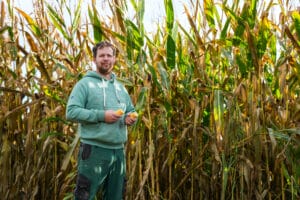
Jon Bult, Somerset Farmer
“We’re on heavy ground; some of which is marginal for maize, so it makes sense to use the earliest maturing varieties,” Jon says. “Gema is ideal as it delivers high starch, but its earliness does not impact yield. “We grow Italian ryegrass after maize and can establish this even in late October. In the past, we’ve established grass with light cultivations but have had to work deeper due to the recent wetter conditions.”
As a cover crop after maize, Italian ryegrass qualifies for the Sustainable Farming Incentive action SOH4, which is currently worth £203/ha, although Jon believes the greater value is the improvement of soil health. “Minimising soil erosion and nutrient losses is the main priority. We terminate the cover crop in spring and apply manure and slurry before drilling maize. I aim to sow maize around 20th April, but recent cold, wet springs has pushed this back to 14th May. We’ll be growing Gema again in 2025, as its early harvest suits our system well”.
Bounce back forage provides ideal summer break cropOne Cumbrian dairy farmer has found an ideal break crop for his grazing platform that also provides a valuable extra forage through summer
‘It’s a valuable addition’ is how Cumbrian dairy farmer Jack Carr describes his new-found forage. He’s grown the bounce back brassica Skyfall for the first time this summer – 2024 – as a break crop, but he’s particularly pleased with its value as a grazing alternative that slots very nicely into the summer rotation for his dairy herd.
“We’ve a 27 acre (11-ha) grazing platform around the dairy, and we keep this as fresh and productive as possible by reseeding regularly,” says Jack who runs the 200-acre (81-ha) livestock Leesrigg Farm near Wigton with his father Bryan.
“I look to reseed every four or five years, but I avoid following grass with grass immediately. I also I don’t want to ‘waste’ too much time with land out of grass around the dairy. So a quick break is ideal.”
Limagrain’s forage manager in the North and Scotland area, John Heaphy, suggested the bounce back brassica Skyfall after seeing the success of this relatively new forage on sheep and dairy units.
“It’s ideal as a break crop on dairy units,” he says. “It’s a palatable, leafy, high protein feed which can be fed either in the summer, when grass growth might be limited, or sown later and grazed into autumn.
“And if conditions are right, it only takes five or six weeks to grow so it can slot into the grazing rotation and take the pressure off grazed grass in mid to late summer. An added benefit is that it regrows thanks to its deep roots, giving two or three rounds of grazing typically of the same quantity and feed quality.”
Star performance
Keen to put the crop to the test, Jack sowed 7 acres (2.8ha) of Skyfall on June 12, after ploughing up a five-year old grass ley in his grazing platform. He was grazing it by late July.
“It’s a fast-growing crop,” says Jack. “We sprayed off the grass, ploughed the ley and added a mineral at the same time then power-harrowed and drilled the seed at the rate of 5kg per hectare.
“We added 50kg/ha of a 25:5:5 fertiliser after drilling as the crop emerged. Establishment was very good, and the crop got off to a good start.”
Cow numbers were reduced a few years ago from 110 British Friesians to 60 cows when Jack’s grandfather stepped back from the business, but numbers are now being built up, aiming for 140 milkers plus followers. They’ve also introduced robotic milking which is working well.
While Skyfall was part of the grazing rotation, cows were directed from the robot through gate ‘A’ for nine hours a day on to the crop. This was then reverted to exit gate ‘B’ for the remaining hours each day, diverting cows back onto grass.”
They found no difference in yields or milk quality when cows grazed the Skyfall. Average milk yield – recorded through NMR – is currently 8170kg at 4.49% butterfat and 3.52% protein, with 4,500kg of the milk yield coming from forage. Milk sold to Arla.
“But it gave the cows some variety in their diets, and it took some pressure of the grass,” adds Jack.
“At first the cows stopped and thought ‘what’s this’, but it didn’t take long – as they are inquisitive by nature – before they were on the crop and grazing it enthusiastically.”
Once the crop was eaten off, in about 10 days, the ley was closed-up for regrowth. “And this is exactly what it did – very quickly. We added a bit of nitrogen, and it helped it move on at a good rate.”
By mid to late August re-growth was good enough to open it to the cows again for a further 10 days. “Again, the cows performed well, and we could have done a third round, but I was keen to prepare the ley for an autumn reseed,” he says, adding that he’s equally pleased to be giving the land a break from grass so any pest cycles are broken while still getting a good feed off it for his milkers.
“The system here is geared up to get more from forage,” adds Jack. “We’ve rented more land – which is how we’ll expand the herd.”
He adds that improvements in silage making have spurred on the herd’s milk production from forage with grass silage making up most of the forage in the TMR.
Average ME across three cuts of silage is 12MJ/kg DM and dry matters are between 28% to 30%. Wholecrop silage is produced on the farm too and these forages are balanced with a blend from feed company Newbreed. Cows are topped up and fed to yield in the robot.
“The system here aims to make best use of our crops. I look for efficient cows too that make more milk from the same inputs. We’ve added some Norwegian Red bloodlines to help achieve this.”
The grazing season is relatively short, from May to September, so crops to eat in situ has to be high quality. “Skyfall works well,” says Jack. “It’s a fast growing break crop that offers a good feed so it’s far more efficient than ploughing up a ley and leaving it empty before a reseed. It’s worked well this year, so I’ve re-ordered some Skyfall seed for 2025.”
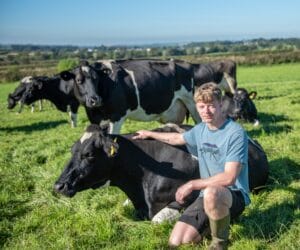
Jack Carr
SKYFALL ADDS A SHINE TO SUMMER GRAZING
Limagrain UK’s bounce back brassica Skyfall is a highly nutritious leafy forage crop for grazing cattle and sheep in summer through to autumn.
Fast growing, it is sown between May and July and ready for grazing five or six weeks later, depending on growing conditions. And after the first round of grazing, it is closed up for three to five weeks while it grows back.
Its deep narrow roots allow it to thrive in drier soils through summer. This, and the crop’s hybrid vigour supports regrowth and a second and maybe a third grazing crop through the season.
In field trials Skyfall produced between 30 and 35 tonnes/ha of a palatable soft-leaved forage where the crop was sown in July.
Skyfall is an ideal break crop too and can break pest and weed cycles before a grass reseed. Or it can be used in a mixed arable rotation.
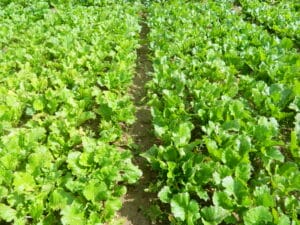
Skyfall regrowth (left) vs original growth
SKYFALL – key facts
- High protein forage
- Fast-growing – as little as five or six weeks from sowing to grazing
- Leafy and palatable grazing crop for cattle and sheep
- Produces between 30 and 35 tonnes/ha
- Deep rooting so withstands dry conditions
- Regrowth potential – bounces back after first round of grazing and provides a second crop.
- Break crop – short-circuits weeds and pest problems in grassland
Our Skyfall Growers Guide can be downloaded here
Autumn Sown SFI Options
Many growers are now getting to grips with the Sustainable Farming Incentive (SFI), and whilst most actions requiring a seed purchase are likely to be sown in the spring, many of the more profitable actions can also fit an autumn sowing window.
The four actions below are likely to feature in most agreements:
AHL2: Winter bird food on arable and horticultural land
AHL2 has proved to be a hugely popular action this spring, as growers have looked to make the most of the attractive payment rate (£853/Ha) and later sowing period. This action can also be autumn sown, but there are more considerations at this timing, to ensure the terms of the agreement are met. The primary aim of the action is to produce a supply of small seeds from late autumn until late winter. It may be tempting to establish a mixture this autumn, with the view to following with a spring crop next year, but an autumn sown mixture of any species is highly unlikely to produce sufficient seed in such a short time and so will not achieve this aim. Any mix sown at this time effectively needs to last 18 months, with flowering plants in the summer of 2025 that produce seed in the winter of 2025/26.
We have two mixtures well suited to autumn sowing. Magnet and Bumblebird. Magnet is an economical mix based around winter triticale and linseed, with flowering brassicas and phacelia.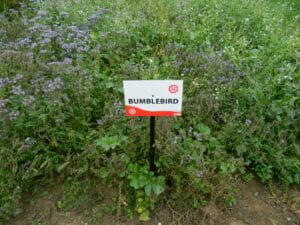
Bumblebird offers more benefits with a greater range of seed-bearing species and the inclusion of legumes such as red clover, crimson clover and vetch, which will also fix nitrogen for the subsequent crop.
IPM2: Flower-rich grass margins, blocks or in-field strips
Although not quite the highest paying option, at £798/Ha, IPM2 has the potential to offer the highest net margin of any options suited to autumn drilling. The action is rotational but to maximise profitability and to ensure the aims are properly met, the chosen seed mix should ideally be down for the full three years of the agreement. Our Flower-rich margin mixture includes 15 native, UK produced wildflower species, combined with 7 species of slow growing amenity grasses, chosen to give the wildflowers the greatest chance of successful establishment.
AHL1: Pollen and nectar flower mix
AHL1 is another action with an attractive payment rate of £739/Ha.
Our Bee mix is the product to choose to meet the aims of producing areas of flowering plants from late spring and during the summer months. As well as providing food for pollinators and encouraging natural pest predators, this mix has high levels of nitrogen fixing legumes and phacelia, which is a great soil conditioner. The possible drawback of this action is that opportunities to manage any potential problem weeds are limited. Growers hoping to reduce blackgrass populations for example, will likely find the rules on grazing and cutting too restrictive to successfully manage the weed.
NUM3: Legume fallow
NUM3 has a slightly lower payment rate than the others mentioned here, at £593/Ha, but it has some key benefits that potentially make up for the lower rate. Unlike AHL2, IPM2 and AHL1, where the maximum area entered into the actions is restricted to 25% of the farm, there is no area limit with NUM3. There is also greater freedom to cut the mix, to help prevent blackgrass from seeding, making this action preferable to AHL1 in high blackgrass situations.
We have two mixture options for this action; Legume 2 or Legume 2 grass free. Both contain a similar range of legumes to fix nitrogen, improve soil health and provide food for wildlife and pollinators, but the Legume 2 contains 66% perennial ryegrass. The ryegrass within the mix helps build soil organic matter levels, but is also better able to compete with weed species and will help smother blackgrass, again helping to reduce populations. Both of these mixtures would be suitable if you choose to rotate the action each year, but the benefits to both soil and blackgrass suppression will be greater if the mix is kept down for 2 or 3 years (the duration of the agreement).