LG Astronomer is best of the group 3’s on Hants farm
The biscuit wheat LG Astronomer was the best performing of five Group 3 varieties grown at the 1,200 ha Moundsmere Farming Company near Basingstoke this year, giving farmer Robert Brine good reason to sow it again this autumn.
Some 40 ha of LG Astronomer was tried for the first time in 2021/22, as a first wheat after winter beans, as he sought to restore his faith in Group 3 varieties.
Overall, Mr Brine was pleased with how the variety performed, in what was a challenging season, characterised by a lack of rainfall throughout spring and summer, and an exceptionally early harvest.
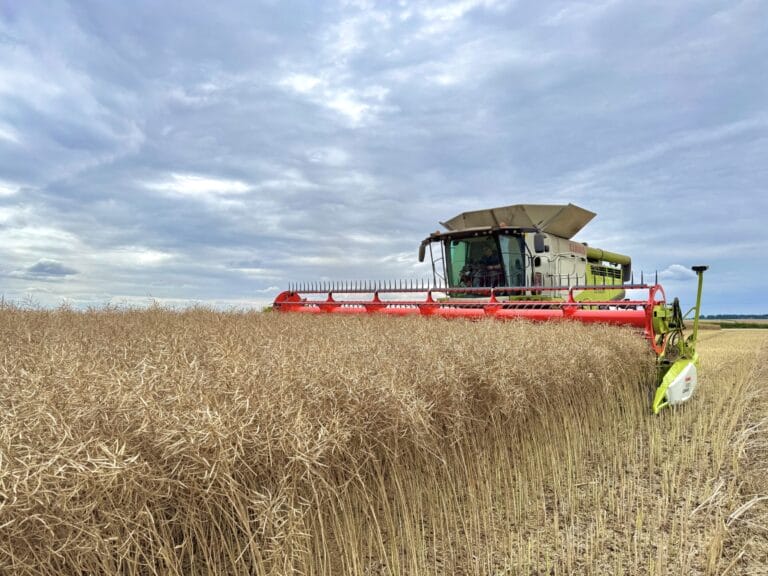
“We started combining around a fortnight earlier than normal and didn’t stop. This year we finished wheat before we even started it last season.”
Most of his LG Astronomer was cut around the end of the second week in August, with crops on the heavier clay cap ground yielding in excess of 12 t/ha, with specific weight coming in at 78-79 kg/hl. “It stood and thrashed well, as did most varieties this season.”
Given the lack of rainfall throughout much of the growing season, Mr Brine was happy that crops on thin, chalky soils still managed a respectable yield, typically averaging 8-8.5 t/ha, giving an overall average for the variety across all fields of around 10 t/ha.
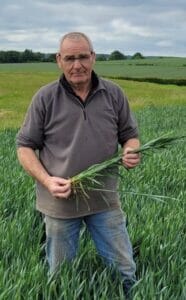
Rob Brine
“Although it didn’t quite match the yields of some of the barn-filling feed wheats, out of the five Group 3’s we grew this year, LG Astronomer did perform the best,” he says.
“In all, we had eight different wheat varieties in the ground, which was too many really, so we will be looking to thin them down a bit this coming season.”
Mr Brine says he has not yet finalised wheat variety choices for harvest 2023, but is confident LG Astronomer will be among them.
He plans to grow the variety as a first wheat, likely to be sown in early to mid-October, depending on conditions.
“We usually establish crops using a two-pass system, based on one pass with a Köckerling tined cultivator, before drilling with the Horsch Sprinter tine drill, which we used for the first time last season, and found it performed very well. We’re now looking at direct drilling some crops, but only when conditions allow.”
Last year’s LG Astronomer was sown on 9 October, at a seed rate of 325/m2. Crops established strongly and came through last winter looking very well, Mr Brine recalls.
Dry weather throughout April was a concern, but a timely application of digestate to replace the second main fertiliser dose in April provided a useful boost to spring growth and greening.
“The digestate really kicked crops into gear.”
The combination of a dry April and LG Astronomer’s strong Recommended List scores for Septoria (6.8 on the three-year rating) and rust (8 for yellow and brown rust), did allow a slight saving on fungicides this season, as no T0 was applied, he adds.
At T1, LG Astronomer received AscraXpro (bixafen, Fluopyram + prothioconazole), with Univoq (fenpicoxamid + prothioconazole) applied as the T2 flag leaf fungicide, while the T3 was based on tebuconazole and azoxystrobin.
Mr Brine notes that the resistance to Orange Wheat Blossom Midge (OWBM) in LG Astronomerand other LG varieties, is a particular benefit at Moundsmere, especially as the business moves away from using insecticides, and puts more focus on maximising the use of beneficial species.
Sowing a forage crop and taking a “cereal break” is a win-win!
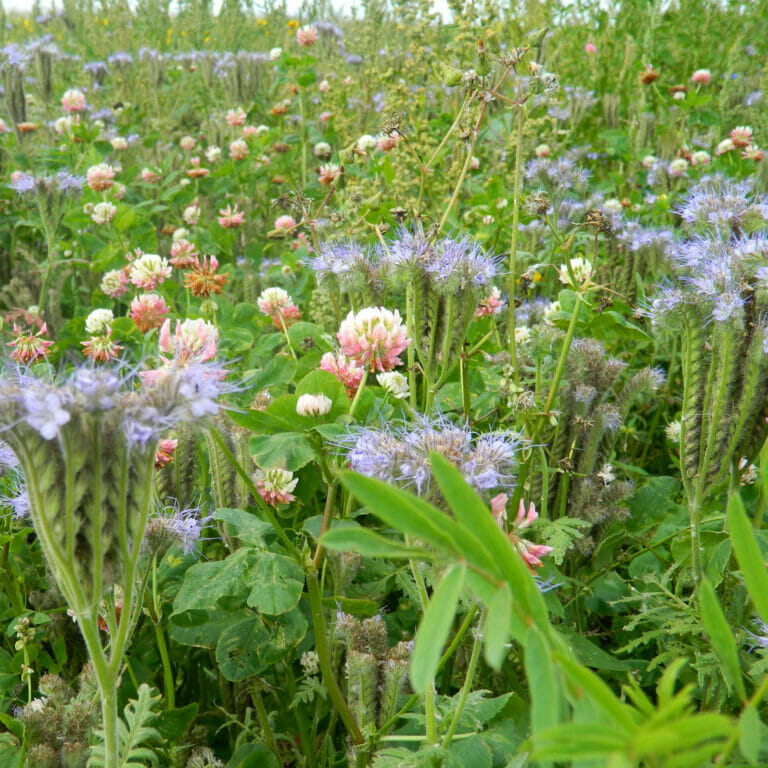
Give the arable crop rotation a break and sow a forage crop this autumn, to help achieve better weed control and boost home grown feed supplies. Mixed cereal and livestock units are encouraged to think about growing forages on some of their arable land, as this will help weed control by breaking the life cycles of some damaging weeds and diseases.
Forage crops – and any grazing livestock – add organic matter to the soils, which is especially valuable in nutrient depleted soils. Soil structure and condition warrants attention on many arable units, and rotations that include forage crops are more sustainable in the long run.
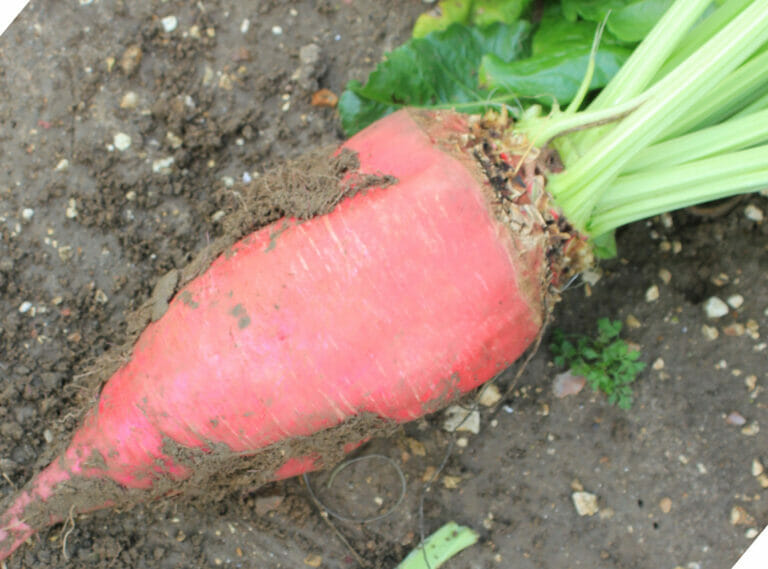
Forage crops, such as; fast-growing brassica and root crops, and short-term grass leys, can be sown post-harvest to give a much-needed break in the cereal rotation, as well as providing a valuable feed crop.
Roots and brassicas can be grazed-off ahead of a spring drilled cereal crop, or ahead of a grass reseed. Leaving a grass ley down for two to three years will also help break the blackgrass cycle.
Interval Rape Kale Hybrid
There are plenty of high feed value varieties to choose, that can improve livestock growth rates and performance.
Our recommendations are:
Samson stubble turnip – for grazing October onwards
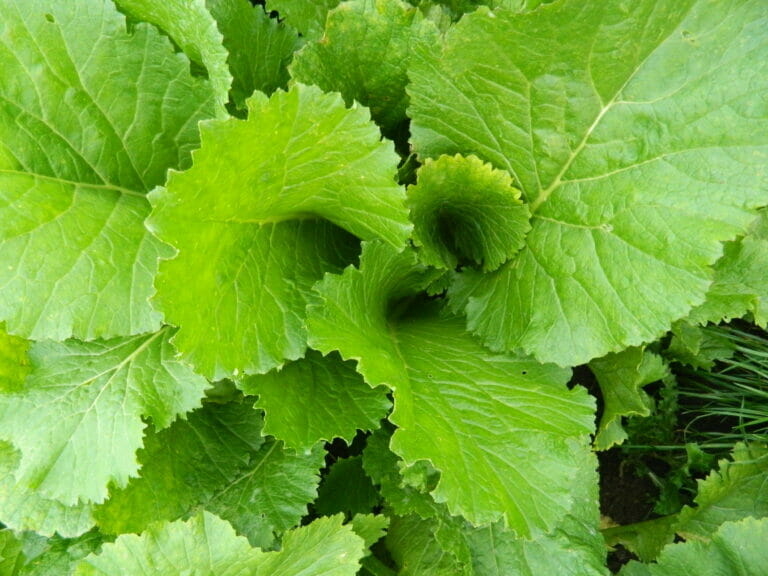
Interval rape-kale hybrid – high protein leafy forage
Meatmaker and Autumn Keep brassica mixtures – contain stubble turnips, forage rape and Kale. The high protein content of both forage rape and Kale complements the high energy stubble turnip bulbs to provide an excellent, well balanced winter feed.
Variety choice is central to risk management
Using variety choice to manage on-farm risk should be a top priority for growers when finalising variety choices for the coming season, according to breeders Limagrain UK.
Speaking at a recent variety demonstration at the Limagrain Woolpit site in Suffolk, arable technical specialist, Liam Wilkinson, urged growers to take a whole-farm approach to risk management when deciding what to grow.
There were many ways that varieties could be used to manage risk, from selecting those with different maturities to mitigate the impact of unsettled weather around harvest, to choosing varieties with strong disease resistance scores based on a diverse genetic background, he said.
“Don’t look at any one aspect in isolation; mitigating risk has got to be based on whole-farm factors.”
Yield results from local trials (treated and untreated), grain quality suitability for different end markets, fungicide response, growth habit in autumn and spring, and other agronomic traits, were all important factors to consider, Jonathan Payne of Nickerson Seeds added.
“The type of drilling system you use, whether that’s wide or narrow rows, may be something else that affects the most suitable variety to choose.”
A variety like RL Candidate LG Redwald, for example, offers huge biomass and tillering capacity, making it well suited to wide row direct drilling or min-till systems, using lower seed rates.
The variety offers a yield potential of 106%, but can also be used for whole-crop forage, given the large biomass potential. This could allow ground to be cleared early, or be part of a grass-weed control strategy.
“The key is to identify your hopes and expectations for 12 months’ time and plan variety choices depending on what you want to achieve.”
After another dry spring and early summer, drought risk was once again top of many growers’ minds, Mr Wilkinson noted.
“For drought-prone sites, generally you need a taller variety which is quick to get going in the spring, combined with early maturity and good grain quality, such as LG Skyscraper.”
“On the whole, higher-yielding varieties are generally getting taller, and we find these have better resilience in droughty situations, although growers need to manage them properly through the season.”
Safe option
For those growing milling wheats, Mr Wilkinson said Crusoe remained the safe option from a quality perspective, given its stable Hagberg, high inherent protein content and proven farm and end user performance, during a more than a decade on the Recommended List.
He acknowledged growers should be mindful of brown rust risk, but said this was generally easier to control than yellow rust, which was a much greater threat in several other varieties. In contrast, Crusoe’s yellow rust resistance score remains at 9.
This strong yellow rust resistance had been passed on through Limagrain’s breeding programme to other varieties, such as LG Detroit, which was the only Group 2 wheat to offer Orange Wheat Blossom Midge (OWBM) resistance, alongside stiff straw and good grain quality, with similar performance to Crusoe in some mills.
“Midge resistance is a fantastic trait that we know is effective, with no yield deficit. If you’re going to push a Group 2 type variety for milling potential, then this is the one I’d go for.”
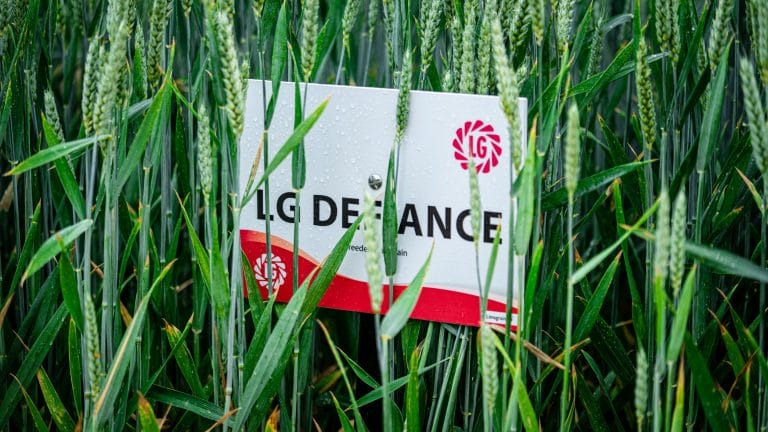
Among the increasingly crowded Group 3 sector, Mr Wilkinson picked out LG Astronomer as being an “all-round safe package”, that combined excellent grain quality with robust disease resistance and other good agronomics that would help manage risk on farm.
Importantly, its three-way parentage of (Cougar x Leeds) x Britannia, has proven to be far more robust than other varieties against the Cougar Septoria strains seen last season, resulting in it remaining one of the best Group 3’s for Septoria resistance on the RL.
“LG Astronomer likes being drilled a bit earlier and generally needs decent bodied land to get the best out of the variety. The biscuit premium might not be as attractive as that from Group 2’s, but with LG Astronomer, it’s one that can be achieved with no extra agronomic input required.”
The Group 4 variety LG Typhoon was another new variety that ticked a lot of boxes for managing risk, Mr Wilkinson said. It combines high yield potential with excellent disease resistance, stiff straw and OWBM resistance.
“Typhoon’s Septoria resistance comes from Irish parentage and is one of the highest scores available on the RL. It also has the stacked genes for yellow rust resistance, using the most robust genetics we’ve got. There’s been a lot of demand for it already, particularly in the West.”
LG Typhoon’s strong genetics could buy useful flexibility around key spray timings, and potentially allow for some savings depending on disease pressure, he said.
“The variety suits earlier drilling situations due to its spring growth habit, and is rated +2 for maturity, so it’s well worth investing in the T3.”
Local trials inform decisions
Suffolk grower Peter Mahony was one of several farmers who valued the benefits of being able to see how varieties performed in local conditions, rather than having to rely on National Trials information.
Mr Mahony farms around 220 ha (560 acres) of owned and contracted land near Rattlesden, south of Woolpit, growing 35 ha of LG Skyscraper, alongside Gleam, LG Mountain winter barley and sugar beet, on mainly clay loam soils.
This autumn will be his first year direct drilling, so he was particularly interested to see which varieties might suit that system.
“Big National Trials have less relevance to what’s going on at our farm, whereas seeing how a range of varieties fare in our soil type and growing conditions is far more useful. Plus we also value being able to talk to the breeders and get their opinions on things like drilling date or optimum seed rate.
“We’ve been growing Limagrain varieties for many years,” he added. “Knowing they’ve been bred just down the road from us gives us confidence that they should be well suited to our growing conditions on the farm.”
LG Skyscraper is up for the challenge in North Yorkshire
When Yorkshire farmer Tony Bell started growing LG Skyscraper two years ago, he did so hoping the variety would be up to the challenge of his lighter soils, not ideally suited to high-yielding wheat crops.
So far, the variety has lived up to expectations though, performing well in a challenging 2020/21 growing season that featured a wet autumn, followed by cool, very dry conditions during April, then rain in May and June.
His 20 ha (49 acres) of LG Skyscraper kept growing well throughout the changing conditions last season, and went on to average more than 10 t/ha, which was around 1 t/ha above the typical average wheat yield for the 265 ha farm near Thirsk. The crop also produced a nice bold grain sample, with specific weight coming in at 73-74 kg/hl.
“Our soil type is relatively light, so it’s not the best wheat-growing land, therefore we wanted a variety that would perform well, both in more adverse seasons when it turns very dry, and in wetter years,” Mr Bell says. “From what we’ve seen so far, LG Skyscraper seems to fit the bill.”
He acknowledges the spring growth of all varieties was impacted in some way by last April’s drought, with some very short crops through spring, however LG Skyscraper’s longer straw and strong agronomics proved beneficial.
“Because it was so dry, we didn’t need to apply any growth regulators until May, which worked well in the end as crops grew away quickly once rain came during that month. LG Skyscraper did appear to be more resilient and performed better than our other varieties in those conditions,” he says.
Increasing area
This year, Mr Bell, who manages the farm in partnership with his wife, has therefore increased his area of LG Skyscraper to 34 ha (85 acres), all sown as a first wheat after a range of different break crops that include oilseed rape, potatoes and forage maize.
Land typically receives one pass with a Sumo cultivator, before drilling with a Väderstad Rapid. “We generally favour October drilling for our LG Skyscraper, however, drilling dates for the harvest 2022 crop ranged from the 9th to the 23rd of the month, depending on the preceding crop. This year we’re also growing KWS Dawsum and Gleam, which are both September-drilled,” he notes.
Like all wheats on the farm, this year’s crop of LG Skyscraper established well and came through a relatively mild autumn and winter with good yield potential, Mr Bell reports. There was some anxiety over the potential impact of another dry April, however generally he remains happy with how crops are currently looking.
Tony Bell
“Despite the mild winter, there haven’t been any particular disease issues,” he adds.
Mr Bell recognises LG Skyscraper offers a reasonable disease resistance profile, reflected by its solid untreated yield on the AHDB Recommended List (82% of Control). The variety is rated 7 for mildew and yellow rust, 4.9 for Septoria (three-year rating), and like other leading LG wheats, carries Orange Wheat Blossom Midge (OWBM) resistance.
Last season, the dry, cool conditions in April meant he was able to make a slight saving on fungicides by not applying a T0 spray to his LG Skyscraper, however this year he did apply one.
“Given the rise in commodity prices, we wanted to do everything possible to maximise green leaf area and yield-building capacity throughout the season, and the T0 represents good value for money, relative to the high price of wheat.”
He has tried to make savings in other areas though, using the Yara N-Tester to help reduce the amount of fertiliser applied by 30-40 kg N/ha compared with last year, to nearer 170-180 kg N/ha. “Looking at nitrogen response charts, it may end up reducing yield slightly, but if we can get within 300 kg/ha of last year’s yield, I’ll be delighted.”
Crimped maize can increase feeding options
Faced with escalating fertiliser costs and the prospect of tight feed ingredient markets next winter, the importance of maximising feed output from your own resources will remain a priority for dairy farmers.
According to Richard Camplin, LG Seeds Technical Manager, farmers who are able to grow maize, or who can work in partnership with an arable neighbour who is happy to grow the crop could benefit from increasing the acreage grown this year.
“There is still time to get maize in the ground and it could be used to increase forage output with reduced reliance on fertiliser. Maize requires less fertiliser per tonne of dry matter than grass and a large proportion on maize requirements can be met from slurry.
“Alternatively, it could be used to produce crimped maize to help trim the requirement for purchased starch sources. Careful variety selection can allow a degree of flexibility to be retained about how crops are utilised as the season unfolds.”
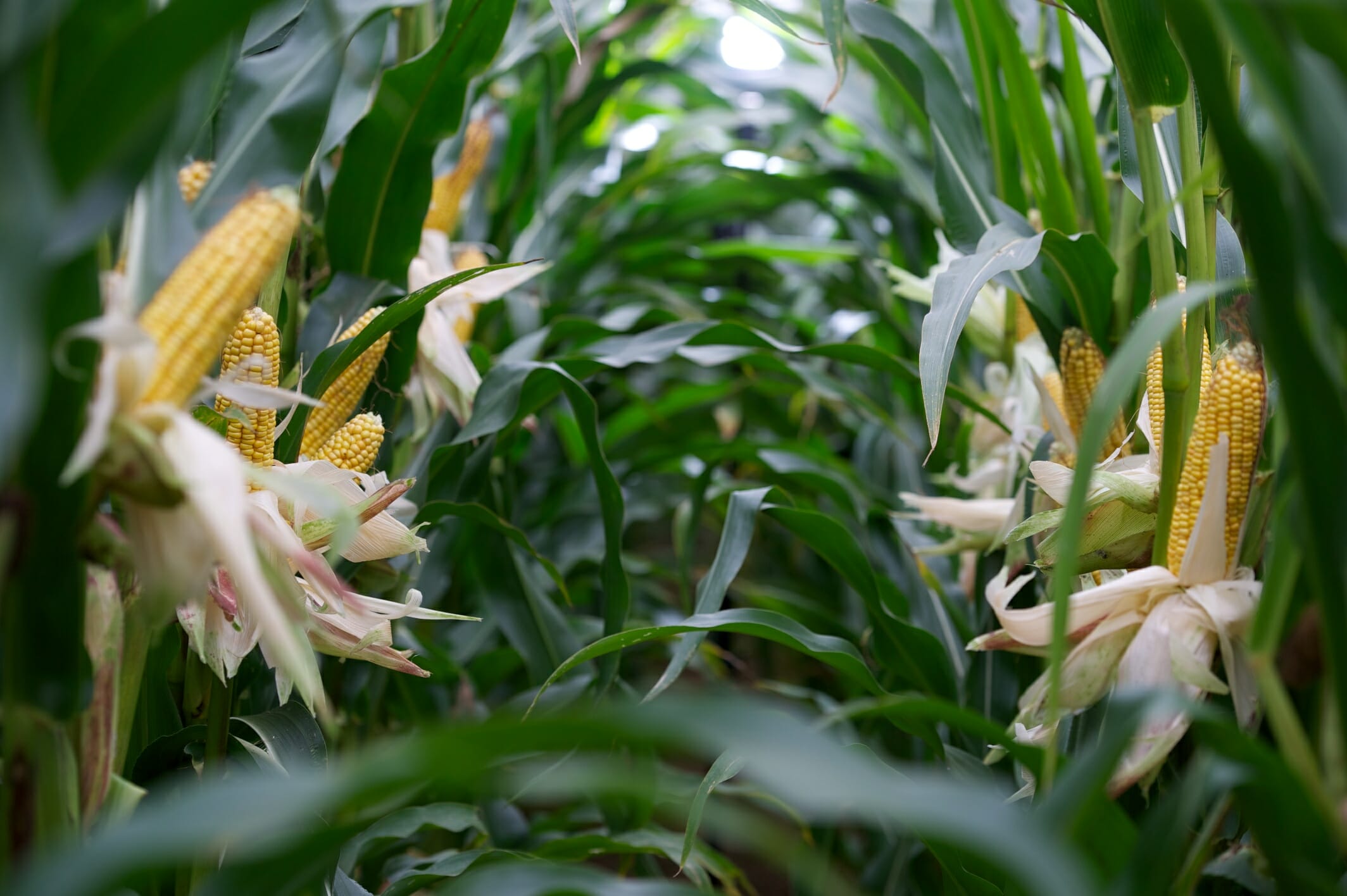
He says advances in plant breeding mean there have been massive improvements in the standing ability and disease resistance. New hybrids such as Prospect, Pinnacle and Resolute now have the combination of improved agronomy plus the advantages of superior digestibility and high starch yield, making them ideal for quality forage and also for crimping.”
If 2022 is a better than average grass growing season so grass silage yields are higher and if maize crops grow well, Mr Camplin the situation might develop where a proportion of the maize could be crimped to help reduce the requirement for purchased starch sources for the TMR.
Crimped maize is typically a 65-75% dry matter feed with 14.0-14.5MJME/kgDM and 60-70% starch making it a valuable ingredient in diets. Having been processed prior to clamping, it is a rumen-friendly feed with a higher proportion of bypass starch. It can be clamped or stored in AgBags.
LG has been running UK trials looking at crimping potential and Mr Camplin advises that variety choice allows flexibility of use to be a real option.
“We ran trials on three locations with an average 27.5% moisture at harvest with the wettest crops being 33%. As the crops are harvested around six weeks after silage would have been taken, it is vital to be growing early maturing varieties and to allow the maximum growing season. So I would recommend not making crimp from later drilled crops.
“Early maturing varieties that performed best in the trials are LG30179, Prospect, Resolute and Pinnacle, so growing these varieties would give the option for quality forage or a crimped crop (see table).”
He stresses the importance of selecting a variety suited to the farm and to look for varieties with low levels of disease and high standing ability and lodging resistance. As crops are harvested later it is essential they stand well. Bad infections of fusarium, for example, can lead to fusarium stalk rot which can weaken the stem and increase the lodging risk.
If a crop is being planted specifically for crimped maize, he advises it is usual to reduce the seed rate to 85,000 seeds/ha. This is primarily to help bring maturity forward but this is less of a concern if an early variety has been chosen as they tend to have good cob maturity. However, having more space and light will help improve cob size and starch content.
“If a grower is interested in growing a crop guaranteed to produce high quality forage but which could be switched successfully into crimping to maximise the contribution from maize the key will be choosing an early maturing variety with good feed quality and the best agronomics.
“In this way, maize can provide a flexible way to meet the challenges of feeding cows this winter,” Mr Camplin concludes.
Crimp grain yields from early maturing varieties 2021










 “
“