

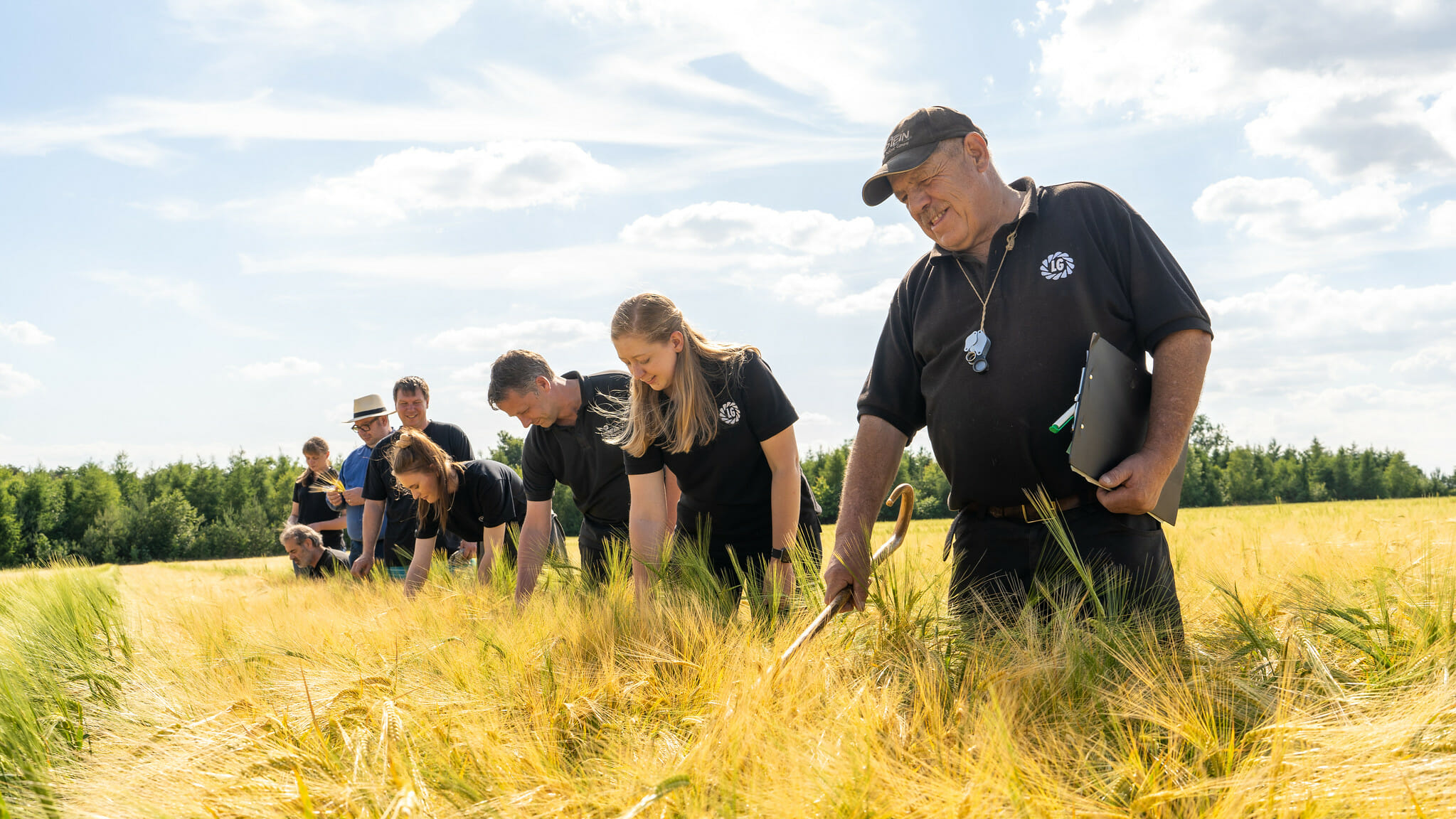




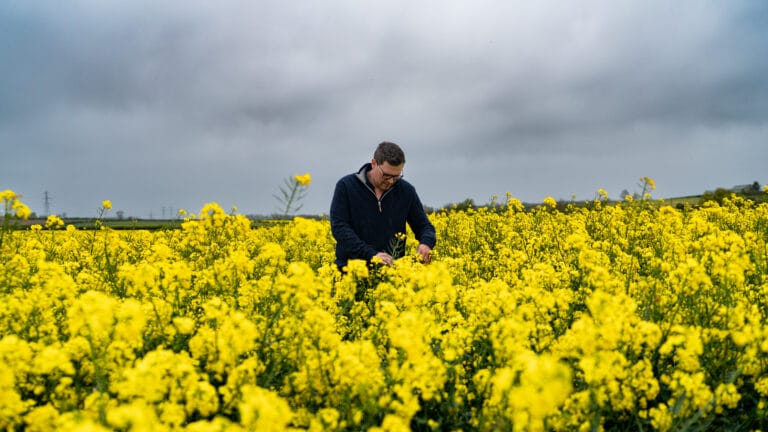





The 2023/24 season proved to be a stern test for most crops and varieties, but third generation Staffordshire farmer, Rob Atkin, is pleased with the resilience LG Typhoon has shown.
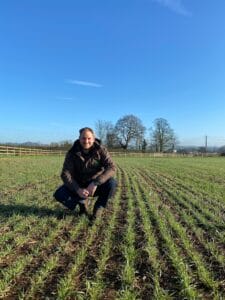
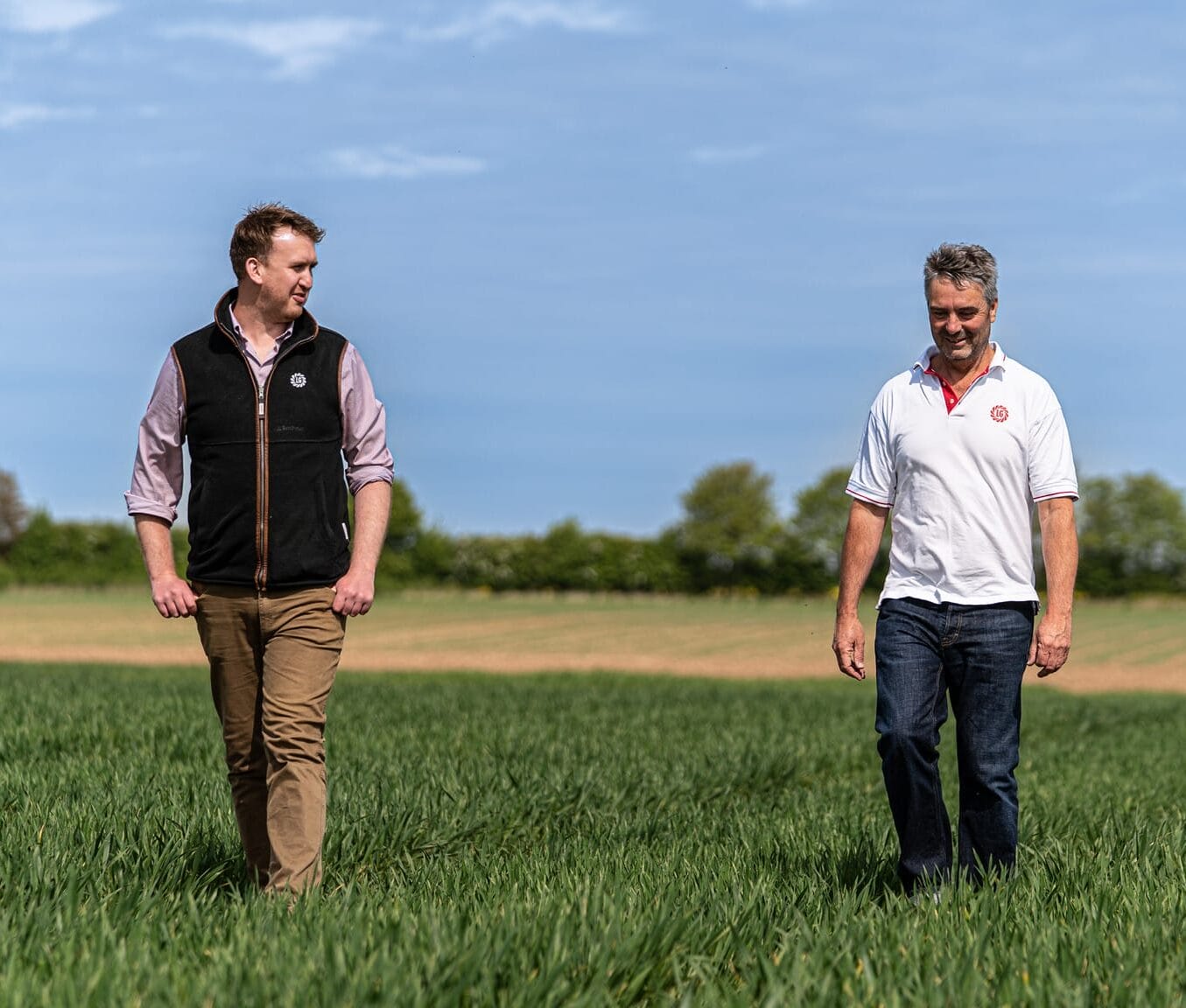
Rob Atkin
Last year was the 380 ha mixed arable and beef farm’s first time for growing LG Typhoon, with a 6 ha field sown to assess the variety’s performance.
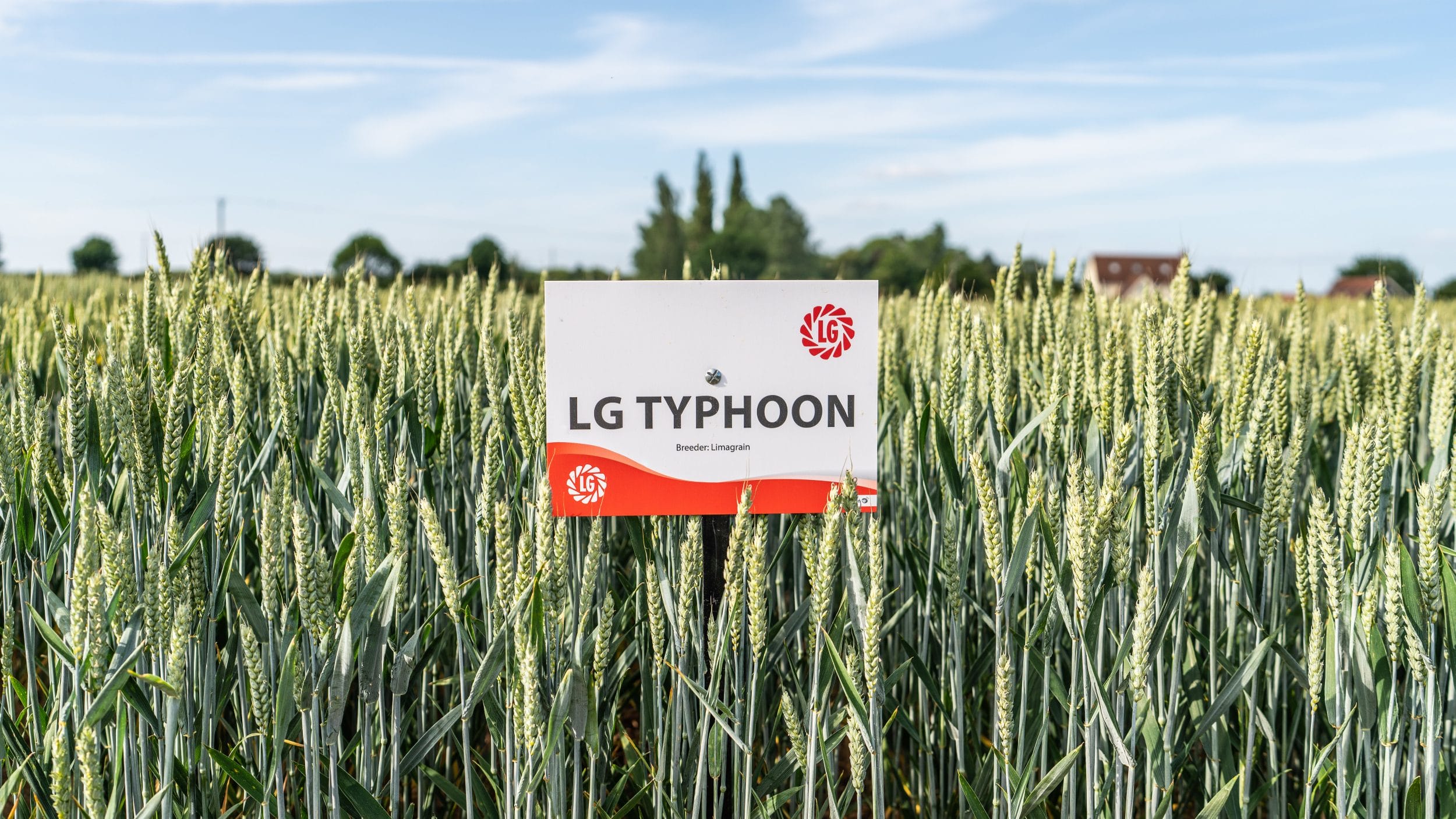
“We saw LG Typhoon in Agrii trials in 2022 and were really impressed with how it looked; it was clean, stood well, and has relatively high yield potential,” says Mr Atkin. “We also try to pick varieties that are competitive in the spring against bromes and black-grass.”
“LG Typhoon seemed to fit the bill and suit our heavy land, as well as being a good second wheat performer, so we decided to give it a try.”
Given the wet conditions last autumn, the field, which followed forage maize, was drilled later than Mr Atkin planned, on 17 October. “We got the maize off, but then had 65 mm (2.5”) of rain, which meant we couldn’t get back on the land for a while, and had to plough and combination drill instead of our usual minimal tillage. Normally we’d start drilling in the second week of September and be all done within a month, so it was right at the end of our usual window.”
Despite the late start, which was followed by an exceptionally wet autumn and winter, Mr Atkin says the LG Typhoon established well and appeared to be less affected by the tough conditions than other varieties grown on the farm, which included Graham, Oxford and KWS Extase.
“It was a little slow to get going, probably due to the cold, wet soils, but once it did, it withstood the wet conditions really well. Disease-wise, it has also been impressive; it was one of the cleanest varieties on the farm last season, despite some others breaking down to Septoria later in the season.”
Crops stay clean
That cleanliness is even more impressive given the generally high disease pressure last year, and the fact that Mr Atkin employs a reduced two-spray fungicide regime on most wheats, which does not follow conventional timings.
“We want to utilise varietal resistance and extend the cover fungicides provide, so essentially both sprays went on mid-way through the conventional timings. The first was applied at the equivalent of T1.5, while the second was at T2.5. While we are reducing the number of sprays, we do use robust chemistry at those timings.”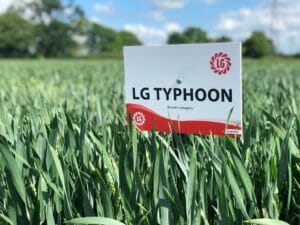
The first treatment was 0.8 L/ha Cleancrop Vulture (prothioconazole + tebuconazole) plus 1 L/ha Phoenix (folpet), with additional micronutrients and trace elements. This was followed four weeks later by 1.3 L/ha Boogie Xpro (bixafen, prothioconazole + spiroxamine), again with trace elements.
“The odd field did need an additional T3 last season, but we stuck with the two-spray approach on the LG Typhoon, and it looked really clean all the way through.
This resilience meant LG Typhoon was one of the best performing varieties on the farm this harvest, although Mr Atkin says all winter wheat yields were around 2.5 t/ha (1 t/acre) below normal, due to the wet conditions from autumn to spring.
Increasing the area
Mr Atkin is keen to give LG Typhoon another go this season, and is increasing the area of the variety to 20 ha, which he hopes to sow by the end of September. “One field will be a first wheat after oilseed rape, but we’ll also try the variety in a second wheat position to see how it performs there.”
He also hopes to be able to avoid the need for the plough this autumn, and get back to a minimal tillage system, based around a shallow disc-based cultivation after harvest, to work the top 10-20 mm of soil, which is allowed to green-up, before spraying off with glyphosate and then drilling with the farm’s Amazone Cayena tine drill.
Other varieties going in the ground this autumn include Oxford, Bamford, Crusoe, Fitzroy and a 5ha trial area of LG Beowulf, which joined the AHDB Recommended List this year.
“A lot of people have been raving about LG Beowulf and it looks good in trials, so I’m keen to give it a try on our farm. We’re growing it as a first wheat after maize or oilseed rape this season, and if it performs, we’ll look to multiply up the area next year with home-saved seed.”
Mr Atkin concludes: “It has been really hard to evaluate varieties this season given the weather, but from what we’ve seen, LG Typhoon has done well and seemed to cope better with the conditions, so we’re keen to see how it, and other varieties, perform in – hopefully – a more normal season.”
Demonstrating flexibility
Limagrain Field Seeds UK’s Ron Granger says LG Typhoon has clearly shown its great flexibility for drilling date in the 2024 season.
“Although now established as a true early drilling wheat, the variety should not be ‘pigeon-holed’ into this one category,” he says.
“The variety has demonstrated a consistency of yield performance from its agronomic characteristics, to perform in both the standard and later drilling dates, showing a robustness from its plant development, and great disease resistance profile.
“For growers seeking security for on-farm performance in challenging years of high disease pressure, then LG Typhoon is a variety worthy of consideration.”
- –> Atkin Farms, Uttoxeter, Staffs
- –> 380 ha (930-acre), mixed arable and grassland family farm
- –> Predominantly heavy copper marl soils
- –> Cropping includes winter wheat, milling oats, feed and malting barley, winter beans, forage maize,
- oilseed rape, and cover crops (trialled ahead of maize)
- –> 101 ha of grassland, home to 300-350 Belgium Blue cattle
- –> Predominantly min-till since 2003, plus some direct drilling where possible
- –> Strong focus on protecting water quality (working with South Staffs Water)
- –> Annual rainfall usually 890-900 mm – 1,200 mm in 2023

About The Author

Ron Granger
Arable Technical Manager