Soft wheat, LG Skyscraper remains at the top of the AHDB 2020-21 Recommended List after another promising season, yielding 105% over controls.
“LG Skyscraper has continued to demonstrate its ability to perform across a wide range of situations and environments, says Ed Flatman, senior wheat breeder for Limagrain UK.
“The variety has now shown over a series of contrasting years, its capacity to establish well and develop a good foundation in the early season, which it then converts into a consistently top yield of sound bold grain.”
Agronomically, the variety has held up well; its rating for yellow rust has held fast when many around have fallen and its brown rust rating has gone up from 5 to 6 on this year’s Recommended List.
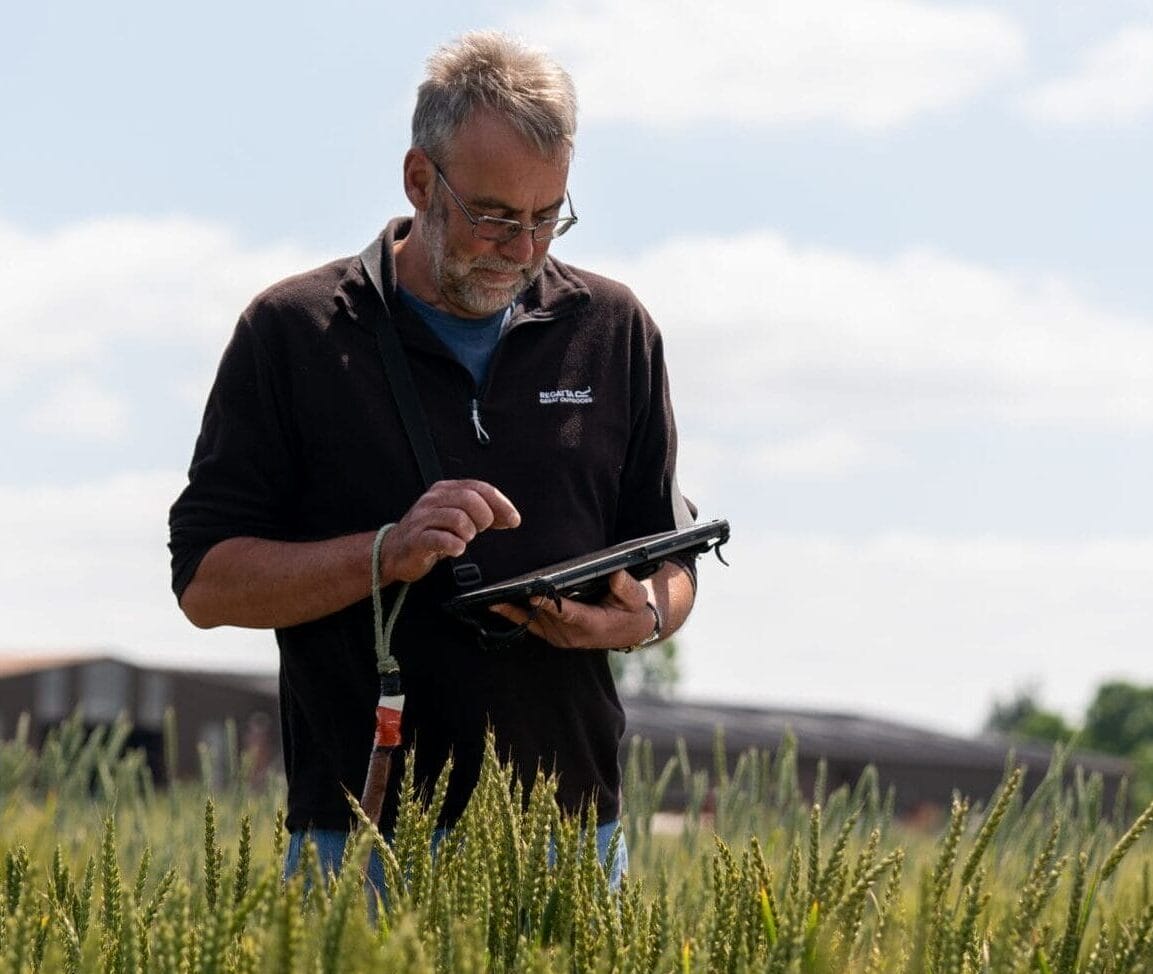
Ed Flatman, Senior Wheat Breeder for Limagrain
LG Skyscraper also has Orange Wheat Blossom Midge resistance (OWBM) which is an important trait that is of increasing value in wheat varieties due to restrictions on insecticide products, says Mr Flatman.
LG Skyscraper’s excellent performance across the UK, once again dispels any myths surrounding soft wheats being lower yielding than hard wheats, adds Limagrain’s arable technical manager, Ron Granger.
He points out that LG Skyscraper offers a large grain and its specific weight of 76.9 kg/hl and HFN coming in at 218, makes an attractive package when compared to other feed varieties.
“As a soft wheat, LG Skyscraper has the additional benefit of distilling, which in a season when it will be critical to make as much as possible from crops in the ground, is a very valuable attribute.”
For many growers who are still looking to drill their wheat, it is worth noting that in Limagrain’s 2019 trials, LG Skyscraper was the highest performing variety in the late drilled slot. In fact, the variety has shown itself to take this poll position over three very different seasons, he points out.
“LG Skyscraper can be drilled comfortably up until the end of January, and even later into February further north, but seed rates will need to adjusted accordingly.”
“LG Skyscraper ticks a lot of boxes for on-farm performance and is an excellent choice for the second wheat situation,” adds Mr Granger.
Ron Granger, Arable Technical Manager for Limagrain
FARMER PROFILE
With a best yield of 13 t/ha, a good disease profile and flexibility on planting date, LG Skyscraper has performed very well for Peterborough-based grower, Seb Richardson.
The variety has proven itself in a testing year and plans are now to increase the acreage where it will be grown, he says.
It performed well across soil types, averaging 10 t/ha, up over the five year farm average – even where it was planted on thin ground productivity held up, providing yields of 8-9 t/ha.
“The crop was mostly drilled in the third week of October, but the last field was not drilled until mid-November but we still got close to 11 t/ha from it,” he explains.
However, he feels that given the right conditions, the yields could have been even better; “the drought early in the year held back the yields from LG Skyscraper.”
Situated on Northampton heavy clay soil, he finds a conventional tillage regime, subsoiling to break the pan, ploughing and pressing to be the most effective.
His normal routine comprises three fungicide applications, combined with the use of pre-emergence herbicides plus another for broad-leaf weed and volunteer bean control. Moreover, Mr Richardson found that while he followed a sound fertiliser regime which included micronutrients and foliar feed, he did not need to apply any special nutrients.
Moving on to talk about some of the difficulties of the 2019 growing season, he points out that lodging was not a problem despite the really heavy June rainfall.
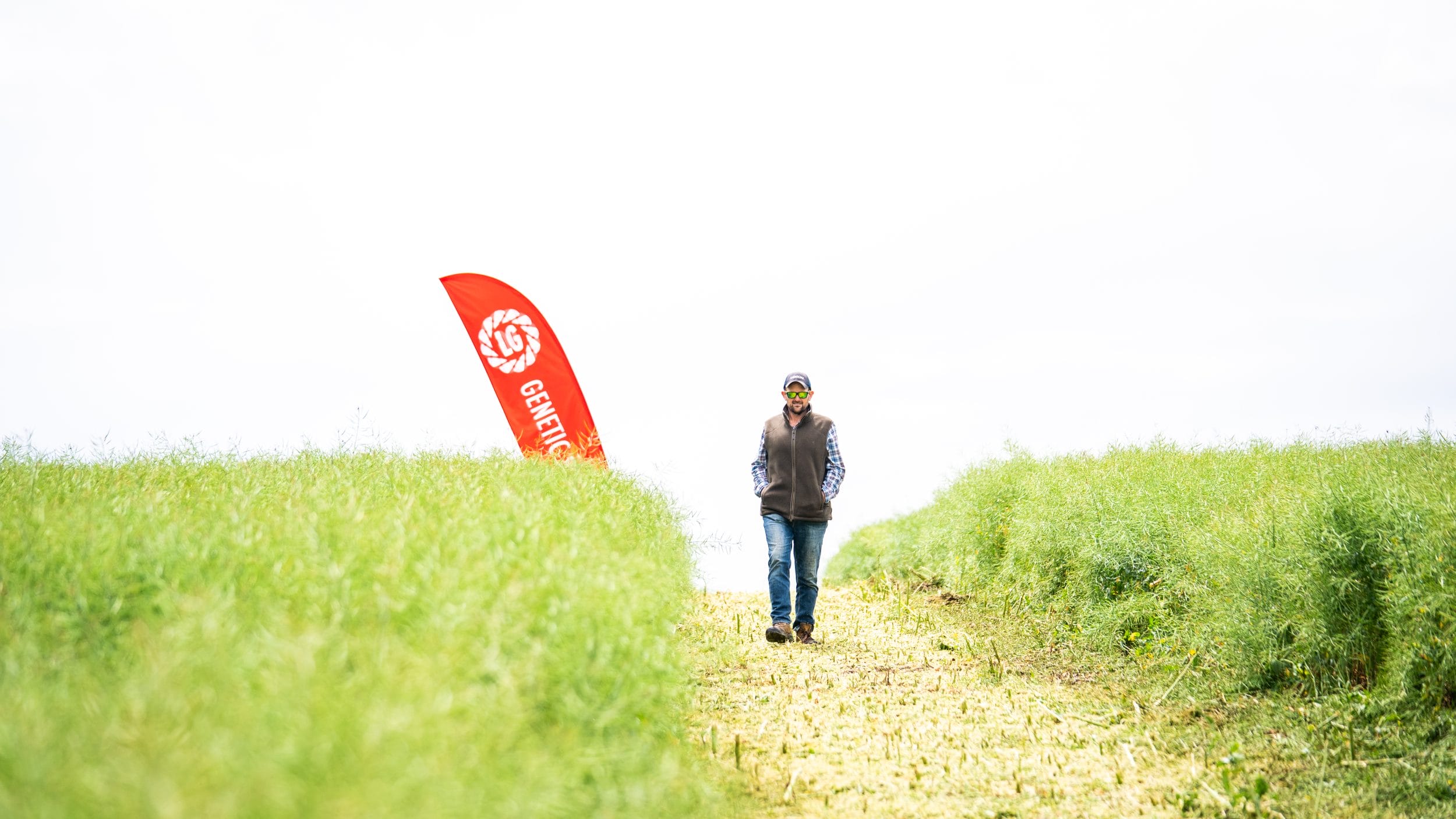
Peterborough-based grower, Seb Richardson
“There was just one field, which had received a lot of farmyard manure the year before, where the crop went down.”
Cabbage stem flea beetle has made it no longer feasible for Mr Richardson to grow oilseed rape, so, in addition to increasing the wheat area, he is also growing more winter beans.
“We find beans make a nice entry into a first wheat,” he continues, remarking that he does not grow second wheat. “Beans can be grown in a rotation of five to seven years, and this fits with our system of growing a mixture of winter and spring crops.”
“We are very pleased with LG Skyscraper; we like both its versatility and its yield – not forgetting its disease profile helps us keep fungicide use to a minimum.”
“Next year, not only will we be growing it again ourselves, but also on the contract farm we manage.”
Farm Facts
Area farmed: 500 ha at home + 200 ha contract farming
Soil: Heavy clay, Grade 3 Northamptonshire soil
Crops grown: Winter wheat, winter barley, winter beans, spring barley & spring oats
Drilling dates: 20th, 21st & 22nd October, 2018
Seed rate: 425 seeds per sq. m
Nutrition: Nitram double top, DAP (Diammonium Phosphate), good spectrum micronutrients (including manganese, zinc and potassium), plus later in the season – a foliar feed with manganese and potassium.
Crop protection: Herbicides: Avadex (thiocarbamate) and Crystal (flufenacet + pendimethalin) applied pre-emergence. Also a herbicide for broad-leaf weeds, applied for bean volunteer control.
Fungicides & PGR’s: Applied at T1, T2 and T3, to control Fusarium and rust.
LG’s oilseed rape varieties claim top 6 positions on AHDB Recommended List 2020-2021
Limagrain’s UK based oilseed rape breeding programme produces the top 6 highest yielding varieties on the new AHDB Recommended List 2020-2021
It’s the top 6 positions for breeder Limagrain UK’s oilseed rape varieties on the 2020-2021 AHDB Recommended List. In pole position sits conventional variety Acacia at 109.4% of controls, this is closely followed in by hybrids; LG Ambassador (108%), LG Aurelia (107.5%) and LG Artemis (106.6%) with conventionals Aspire (105.8%) and Aardvark (105.3%) completing the top line up.
“It’s certainly an exciting time for the Limagrain OSR breeding programme as this is the first time that any breeder has achieved this leading position with this many varieties, and is a reflection of our focus on breeding high yielding, trait-loaded varieties aimed specifically for the UK farmer,” points out Vasilis Gegas, Limagrain’s OSR European Portfolio Manager.
Acacia is the highest gross output conventional variety for the east/west and north regions , with a gross output of 109.5% and 107.6%, respectively.
“The variety is very vigorous in both the autumn and spring, combined with good disease resistance and short and stiff straw,” says Dr Gegas.
“Acacia is suited to the main OSR drilling window but is also useful in a late sown slot.”
“LG Ambassador is the first of Limagrain’s fully loaded hybrids on the AHDB Recommended List to really show the benefits of our breeding strategy,” he continues.
“This highest yielding hybrid for the east/west (Gross Output 108.4% of control) has shown itself to perform across the UK and Europe, showing the variety is resilient across a wide geographical area.”
LG Ambassador offers an outstanding package of traits associated with Limagrain’s hybrids including; TuYV resistance, pod shatter resistance and RLM7 giving the variety strong protection against stem canker resulting in a resistance rating of 8, which along with a Light Leaf Spot resistance rating of 7, ensures growers shouldn’t lose yield in unfavourable conditions.
“LG Aurelia is another of Limagrain’s fully loaded hybrids, setting a new benchmark for hybrid performance in the UK.”
Not only does LG Aurelia offer an extremely high gross output, and the Limagrain full compliment of traits such as TuYV resistance, pod shatter resistance and RLM7 against stem canker, it also offers the most robust disease resistance ratings of any variety on the AHDB recommended list with a rating of 8 for both stem canker and light leaf spot resistance.
LG Artemis is another high yielding hybrid for the east/west (106.6%) and north (106%) that once again comes with Limagrain’s standard combination of TuYV resistance, pod shatter resistance. Combined with outstanding early vigour, stiff straw, early maturity and a high oil content Artemis is certainly an interesting prospect for growers for next season.
Aspire is a conventional variety, recommended last year and offers very high gross output for the east/west and north regions – as was proven in harvest 2019 with a gross output of 105.8%.
Add to this its TuYV resistance, a strong disease profile, the opportunity to early drill, as well as short and stiff straw, and it’s clear to see that Aspire is truly a farmer friendly variety that makes for an easier harvest, with the potential to increase gross margins.
Finally, of Limagrain’s top 6 varieties on the 2020-2021 AHDB Recommended List, Aardvark is a conventional variety that thinks it is a hybrid, offering high gross output potential across all regions of the UK, with a UK gross output of 105.3% over control.
It is very vigorous in both the autumn and spring, competing with hybrids. It has short and stiff straw, as well as good disease resistance.
“This excellent agronomic package makes the variety suitable for the early and main drilling window.”
2019 Harvest results confirm value of TuYV resistance
2019 Harvest results from trials conducted by the Association of Independent Crop Consultants (AICC) in West Wittering, showed that there was a 0.4-0.5t/ha yield advantage from varieties with TuYV resistance against those without.
Limagrain’s conventional variety Aspire, performed very well – as did the newly recommended LG Aurelia and LG Ambassador.
“In this particular trial, Aspire yielded 6.7t/ha; that’s a massive yield bonus over the 6t/ha from the non-TuYV resistant variety, Campus. LG Aurelia was just behind, yielding 6.4t/ha,” explains Peter Cowlrick, director in CCC Agronomy Ltd, who managed the trials.
In a second trial in Suffolk, the trend was the same, with TuYV resistant varieties leading the pack. LG Aurelia managed a top yield of 6.1t/ha, well above that of Campus at just above 5.6t/ha. LG Ambassador yielded just below 5.9t/ha and Aspire 5.86t/ha.
“What these results show is that with varieties such as Aspire, LG Aurelia and LG Ambassador, there is no longer the yield drag once associated with TuYV resistance – in fact, it’s quite the opposite.”
“In the south-east, where the risk of TuYV infection is very high, on some farms almost 80% of the crop going into the ground this autumn will be TuYV resistant varieties. These varieties also play an important role in IPM, as there is less reliance on insecticides, “says Mr Cowlrick.
Another Great Performance from LG Skyscraper
With a best yield of 13t/ha, a good disease profile and flexibility on planting date, LG Skyscraper has performed very well for Peterborough-based grower Seb Richardson.
The variety has proven itself in a testing year and plans are now to increase the acreage where it will be grown, he says.
It performed well across soil types, averaging 10t/ha, up over the five year farm average – even where it was planted on thin ground productivity held up, providing yields of 8-9t/ha.
“The crop was mostly drilled in the third week of October, but the last field was not drilled until mid-November but we still got close to 11t/ha from it,” he explains.
However, he feels that given the right conditions, the yields could have been even better; “the drought early in the year held back the yields from LG Skyscraper.”
Situated on Northampton heavy clay soil, he finds a conventional tillage regime, subsoiling to break the pan, ploughing and pressing to be the most effective.
His normal routine comprises three fungicide applications, combined with the use of pre-emergence herbicides plus another for broad-leaf weed and volunteer bean control. Moreover, Mr Richardson found that while he followed a sound fertiliser regime which included micronutrients and foliar feed, he did not need to apply any special nutrients.
Moving on to talk about some of the difficulties of the 2019 growing season, he points out that lodging was not a problem despite the really heavy June rainfall.
“There was just one field, which had received a lot of farmyard manure the year before, where the crop went down.”
Cabbage stem flea beetle has made it no longer feasible for Mr Richardson to grow oilseed rape, so, in addition to increasing the wheat area, he is also growing more winter beans.
“We find beans make a nice entry into a first wheat,” he continues, remarking that he does not grow second wheat. “Beans can be grown in a rotation of five to seven years, and this fits with our system of growing a mixture of winter and spring crops.
“We are very pleased with LG Skyscraper; we like both its versatility and its yield – not forgetting its disease profile helps us keep fungicide use to a minimum.”
“Next year, not only will we be growing it again ourselves, but also on the contract farm we manage.”
Farm Facts
Area farmed: 500 ha at home + 200 ha contract farming
Soil: Heavy clay, Grade 3 Northamptonshire soil
Crops grown: Winter wheat, winter barley, winter beans, spring barley & spring oats
Drilling dates: 20th, 21st & 22nd October, 2018
Seed rate: 425 seeds per sq. m
Nutrition: Nitram double top, DAP (Diammonium Phosphate), good spectrum micronutrients (including manganese, zinc and potassium), plus later in the season – a foliar feed with manganese and potassium.
Crop protection:
Herbicides: Avadex (thiocarbamate) and Crystal (flufenacet + pendimethalin) applied pre-emergence. Also a herbicide for broad-leaf weeds, applied for bean volunteer control.
Fungicides & PGR’s: Applied at T1, T2 and T3, to control Fusarium and rust.
LG Skyscraper – the variety of choice for flexible drilling
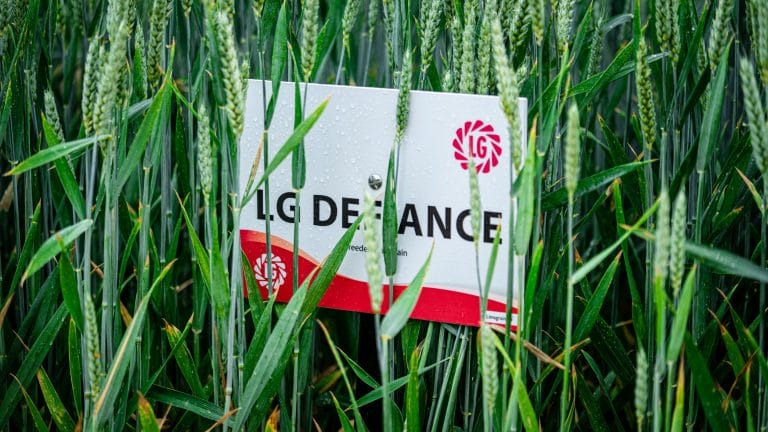
Winter wheat LG Skyscraper is quick to get going in spring and also quick to pick up tillers, says contract no-till farmer Aaron Hogsbjerg who grew the variety for the first time this year.
“We really like LG Skyscraper because it is vigorous and fits well with our no-till regime,” he says. Despite the challenging weather conditions of 2018, he achieved an average of between 9-10t/ha and compared well with other varieties grown on the Suffolk and Essex-based farms where he works.
For Aaron, planting date flexibility is a real benefit, and he reports that even the fields sown the week before Christmas went to 9t/ha. “We were chuffed to bits. We used to grow Evolution, but LG Skyscraper is streets ahead.”
A different variety sown on 25 November only did 8.5t/ha, he reports, adding that Graham works well when it is in the right place and conditions are right, but is renowned for its slow growth. “LG Skyscraper was quick to establish across the farm, and worked equally well across a number of soils, from sandy and clay loams, and even patchy light sand.”
“Since changing to a no-till regime, the improvement in the soil has been remarkable, it was now nicely friable and the crop was out of the ground in seven days.” Moreover, he remarks, even in wet weather of autumn 2019 he has been able to get on the land, and drilling through a cover crop keeps mud off the drill. However, drilling in a no-till regime can result in a few plants being lost early on, so seed rates ranged between 400 and 550 per m2, with the later drilled crops getting the higher rate.
“It sounds quite a high rate, but it gets us the results we wanted,” says Aaron. He notes that because of its height, when growing LG Skyscraper, treatment with a PGR is necessary but effective; for example despite the heavy rainfall in June 2019, none of it fell over. “This could be a problem in other years, but you can manage crop height using PGRs.”
Moving on to talk about his strategy, he explains that 25% of the land is used for growing sugar beet, and rotations can be three, five or seven years, depending on the land and conditions. “We have been building our confidence in the break crop, and next year we might grow more oilseed rape.” Aaron follows a standard programme with a “no fire engines” approach particulary at the start of the season. “We are believers in feeding the crop to keep it healthy to keep chemistry use to a minimum, and we found that the crop kept itself quite clean.”
He tissue tests the crop to check for any nutrient deficiencies. This year plants were low in boron, resulting in top-ups of both boron and manganese and reduced rates of fungicides. Moreover, he was pleased to discover that even in the late, wet harvest of 2019, bushel weight held up, where other varieties may have struggled. “LG Skyscraper is a nice variety to combine and the straw chops well.”
Plans are to grow more of it, and it will be Aaron’s variety of choice for late drilling after sugar beet. “Of course, so far we have only grown it for one year, but we really like this variety.”
Three year: Sugar beet, spring barley, winter wheat
Fertiliser: Liquid
Crop protection: Fungicide applied at T0 and T1 or T1.5
Herbicide Strategy:
Pre emergence: Movon (Flufenacet + flurtamone + diflufenican) Wicket (Prosulfocarb)
Post emergence: Sunfire (flufenacet) Claymore (pendimethalin) where needed
Early spring: Broadway star (pyroxsulam + cloquintocet-mexyl + florasulam) for broome patches
Pulse Crop Genetic Improvement Network (PCGIN)
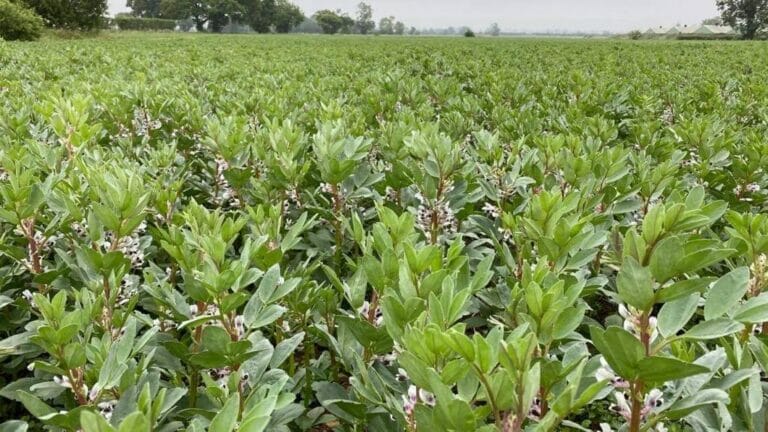
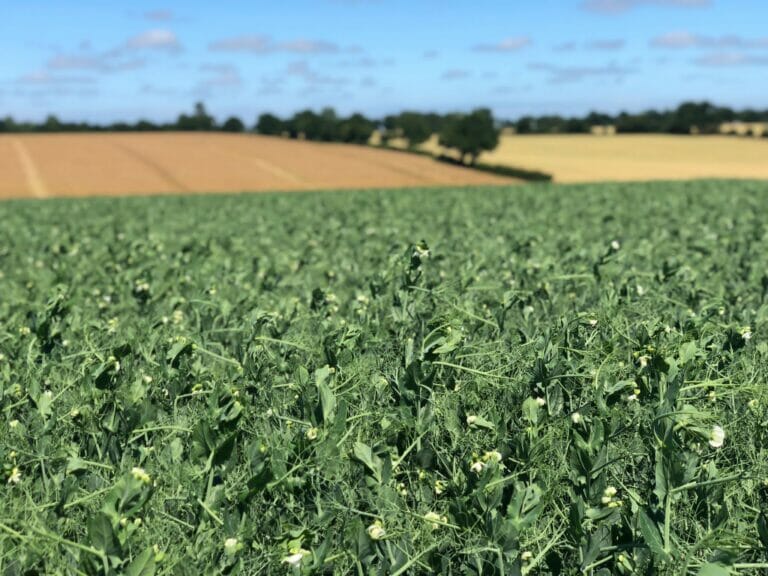
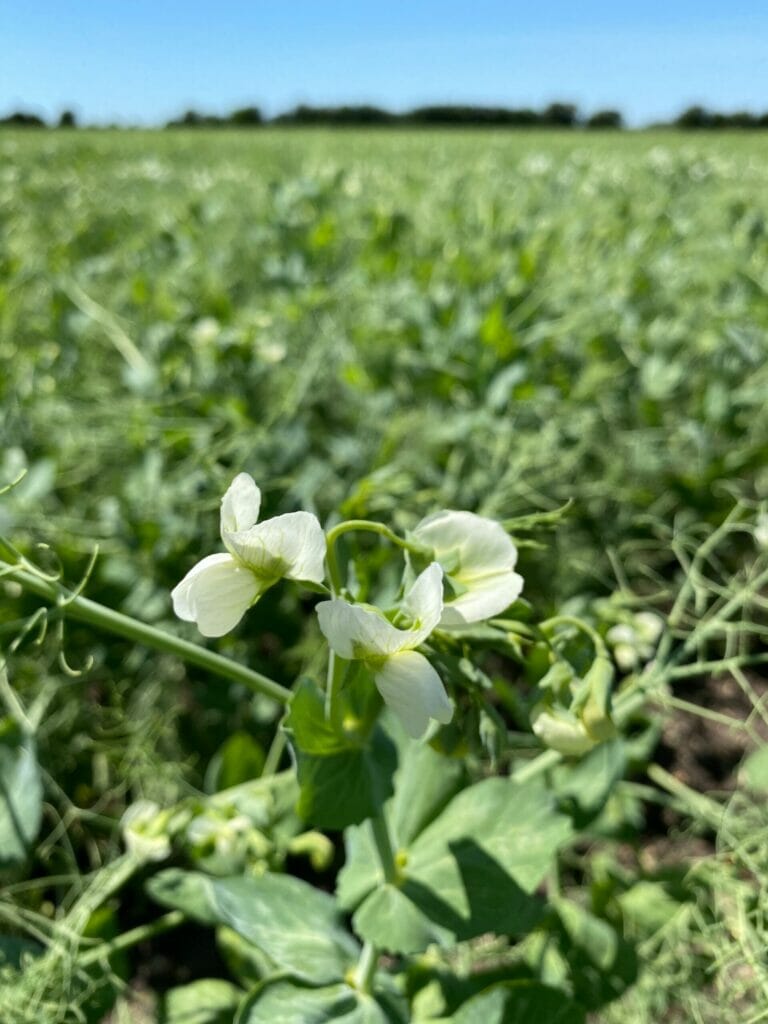
Limagrain has been involved in PCGIN since its creation and has benefited from the excellent research into the genetic improvement of the pulse crop. The next event is on 14th Nov in Grantham and open for registration now…
Limagrain has been involved in PCGIN since its creation and has benefited from the excellent research into the genetic improvement of the pulse crop. In particular, the work on seed quality has helped in colour retention in large blue and marrowfat pea breeding.
The next event is the PCGIN 2019 stakeholder meeting and will be held on 14th November in Grantham, Lincolnshire.
This industry-led stakeholder meeting will present perspective talks on future market opportunities and relevant international developments, within the context of the latest developments in genetic research on UK pulse crops (PCGIN 2018-2023). There will be time for interactions over lunch.
We are very grateful to Agrii and Limagrain for their sponsorship of this meeting.
Programme
10:30 Arrival, tea & coffee
Welcome & introductions (Peter Smith, Agrii; Will Pillinger, Limagrain)
Chair: Peter Smith, Agrii
11:20 Overview of industry-academic exchanges – Marketplace of Ideas (Donal O’Sullivan, Reading)
11:25 The industry perspective, 2019 (12 minutes each speaker)
• Andy Bury, Frontier: Challenges for trading UK pulse crops
• Paul Sheldrake, Healy Group: Rising opportunities for vegetable proteins and UK pulses – Technical & Nutritional Challenges
• Nick Saltmarsh, Hodmedods: Opportunities for existing and novel legume crops in the UK
• Chris Harrison, Novofarina: Food product development and genetic targets in pea.
• The role of Pulses UK
12:45 LUNCH with poster* viewing
Chair: Will Pillinger, Limagrain
13:40 Flash presentations from junior scientists (5 minutes each speaker)
Tom Reynolds, NIAB: Evidence for sexual reproduction of the faba bean pathogen B. fabae in the UK
Gabriel Robinson, JIC: A nutritional review of UK pulses
Vicky Tagkouli, UoR: Selection schemes for small-scale faba bean breeding Jake Moscrop, NIAB/UoCam: Enhancing pollination in the field bean, Vicia faba
Ahmed Warsame, UoR: Identifying and quantifying the most important faba bean seed proteins
14:15 Legume crops and international activities (Pete Iannetta, The James
Hutton Institute)
Curation of legume crop germplasm (Noam Chayut, JIC)
14:40 Perspectives & open discussion on priorities (growers, NFU, Defra,
industry & scientists)
15:00 Wrap up & depart
*Poster presentations:
• Genotyping tools for faba bean (Deepti Angra, Reading)
• Towards saturation mutagenesis in faba bean (Tom Harvie, Deepti Angra, Reading)
• Improved management of viruses (Becky Howard, PGRO; FERA)
• Exploring soybean germplasm (Tony Miller, JIC)
• Nitrate sensors and uptake of nitrate by crops (Tony Miller, JIC)
• Favuleux – developing faba beans as a sustainable source of high-quality protein for food through optimised genetics, farming and processing (Thomas Wood, NIAB)
• Identification of a QTL conferring partial resistance to downy mildew on faba bean, Vicia faba (Anne Webb, Krystyna Gostkiewicz, Jane Thomas and Thomas Wood, NIAB)











 “We really like