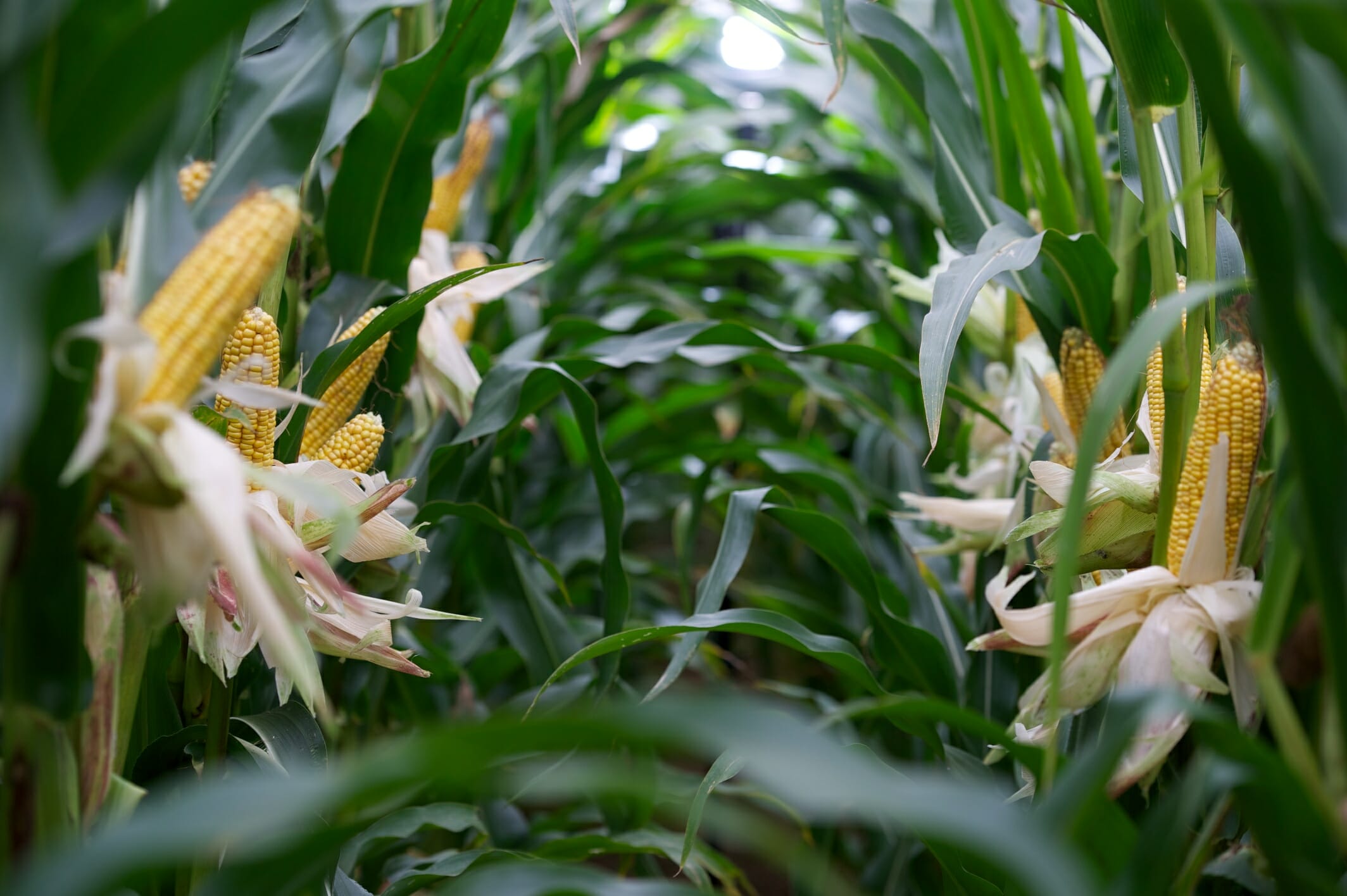
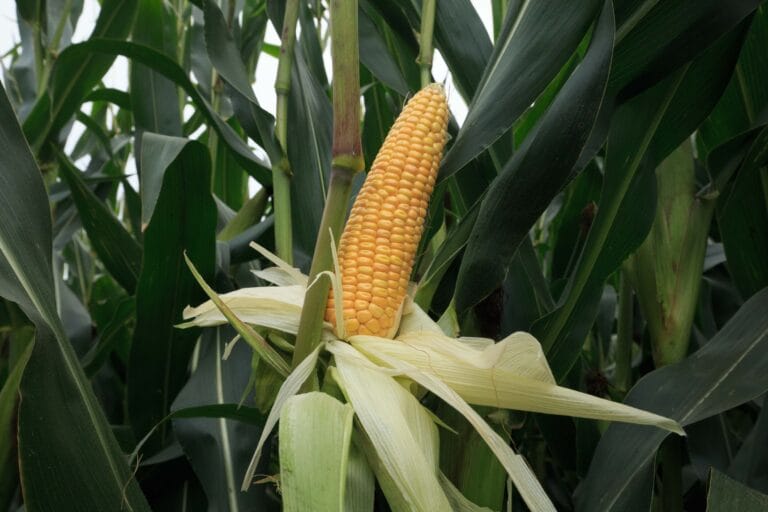
Our new Maize Variety Selection Guide for 2020 will help farmers identify the most suitable maize variety and help increase the return on investment in the crop.
“With maize costing around £800/ha to grow it is vital that farmers maximise the return on this investment,” comments Tim Richmond, Maize Manager, UK and Ireland with LG Seeds.
“Whether you are in a favourable or less favourable area, there are basically three core objectives. The first is to grow a variety that will mature early on increasing the prospect of getting it harvested in good time and allow a successor crop to be established. The second is to ensure to produce the best yield of high-quality feed, and finally you want feed available to include the diet as early as possible in the autumn. All these are driven by variety selection.”
With big developments in plant breeding including improvements in feed parameters like Cell Wall Digestibility, Mr Richmond says there are big benefits from looking to grow some of the newer varieties on the list.
The LG Maize Variety Selection Guide 2020
The Maize Variety Selection Guide contains data on all the varieties on the 2020 BSPB/NIAB descriptive lists with data presented in easy to understand charts, allowing quick comparison between varieties.
Tables provide information on quality characteristics including cell wall digestibility and starch content, enabling choices to be made to maximise the total feeding quality of maize silage. Vital agronomic information such as lodging, maturity and early vigour data is also included.
“The objective is to choose the varieties best suited to the farm situation which will maximise the nutrients available to feed stock next winter,” he continues.
“When making the decision, farmers have to consider a wide range of factors including maturity date, agronomic factors, yield and quality which can make it a challenging decision with a significant range of varieties available. Getting the choice right can have a major impact on the quality and quantity of forage produced which will have a significant effect on performance and margins.”
He says the benefits of growing one of the best new varieties can be significant. Prospect which combines early maturity for a reliable harvest with exceptional yields and feed value can produce an extra 2500 litres of milk per hectare compared to the average variety, giving an additional £700/ha return from the crop.
“New varieties like Trooper, Gema and Resolute also deliver an exceptional return while longer established varieties like Glory still allow farmers to make an excellent return by delivering high quality feed combined with early maturity.”
Growers in the north-west are sticking with Sienna as their barley of choice because of its good all-round qualities, says Agrovista agronomist Steven Gate.
“With Sienna there are no trade-offs or compromises. It has excellent grain quality, a good yield and a decent straw.”
Growers were recording good specific weights as high as 67kg/hectare, in last year’s challenging north-west England harvest.
Sienna yielded very well for both grain and straw, and its only weakness being that if harvest opportunities were missed due to unforeseen circumstances, such as contractors being committed elsewhere, then the variety did take a battering from the inclement weather we experienced last autumn, he said.
As well as being approved for malt distilling, it is also very popular for home feeding of livestock, in Cumbria and south west Scotland.
Soils in these arable areas are mainly light sandy loam, and their free draining characteristics are helpful to growers getting their spring barley crops drilled in late March or early April. They are then ready for harvest by late August or early September.
As with most crops, getting the seedbed right is key, with fine tilth and a good fertiliser diammonium phosphate (DaP) as well as nitrogen (N).
A target of 110kg/ha of total N is aimed at, taking into account in-depth soil sample results, field history and any organic manures applied prior to establishing the crop, says Mr Gate.
Of this, at least 1/3 of the requirement needs to be placed in the seedbed as near the seed as possible, and the remaining applied when the tramlines are visible.
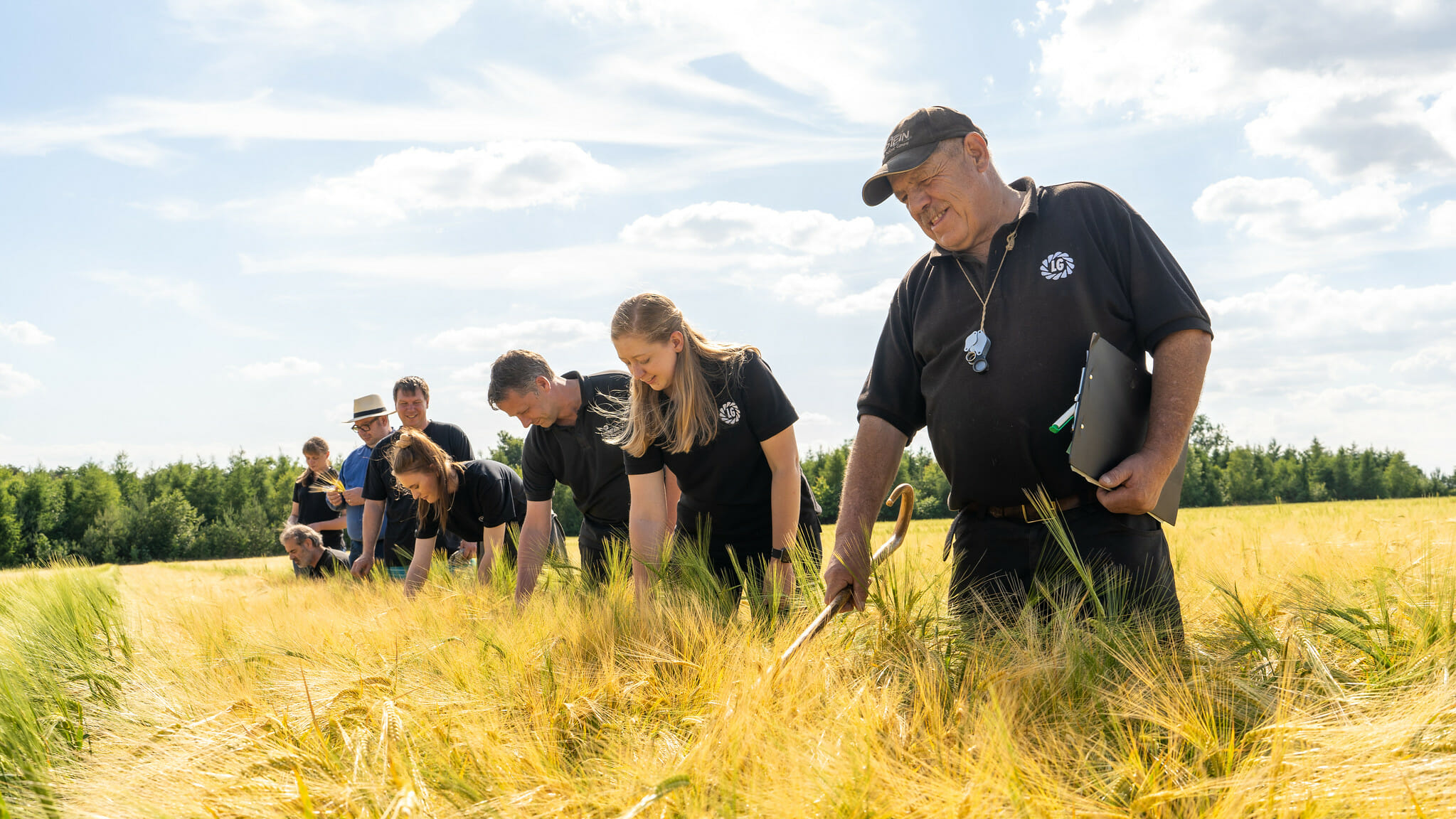
Locally-held trials in 2019 showed 15-20% more tillers in crops that had received DaP, he reveals.
“This is a significant difference, and at our Open Day in July, this difference was still visible.”
He wanted to take the trial plots through to harvest to record yield, but unfortunately last year it was not possible.
“Getting the nutrient strategy right helps the crop to get away quickly too, so it has time to develop.”
“There is a lot of livestock in our area, and soil fertility and structure is kept to a good standard, thanks to applications of farmyard manure (FYM)” he notes.
He recommends aiming for 300 surviving plants/m2 for crops drilled early to mid-March, rising to 325-350 for later sown crops. Seed rates of 160-180kg/ha are recommended, depending on thousand grain weight (T.G.W).
The variety’s disease resistance is also very good, he notes.
“A split prothioconazole-based fungicide with the addition of chlorothalonil (CTL) at T2 has kept the crop clean in the past. However, with the absence of CTL going forward, we may see Ramularia pressure increase.”
Moving on to talk about tips for getting the best out of the variety, he reminds growers to include a PGR programme to keep it standing.
“It can get a little bit tall, so you need to keep the height manageable, but the straw length remains good afterwards.”
“Overall, Sienna is a really good variety to work with; it is clean and it goes through the combine well.”
John Maxwell of J G Maxwell & Son c2 seed producers in Dumfriesshire says:
“Sienna performs very well for us and our customers, producing a good bold grain along with good amounts of straw which suits the requirements of mixed farmers in south west Scotland.”
Richard and Geoff Graham of Egremont put all their 50ha of spring barley to Sienna and have done for a number of years.
Richard says: “We like the grain yield and quality that Sienna produces, along with the good amount of straw.”
“A great all-rounder.”
Why LG Diablo is making strides into the malting barley market
LG Diablo, which was recommended in 2018 and achieved full approval for distilling in 2019, is set to make significant in-roads into the spring barley acreage this spring and claim its place as a mainstream variety.
As with all malting barley’s, there is a considerable time lag between recommendation and market take-up. However this does give growers and end-users time to see how the variety really performs from one year to another, explains Dr Steve Hoad, of the SRUC.
“Newcomer LG Diablo is giving the end-users the confidence to break up the market dominance held by Concerto and more latterly Laureate, based on what they have seen from the variety over the last few years as it goes through testing and evaluation.”
“As a dual purpose variety with its very good grain and malting quality, LG Diablo ticks all the right boxes, and the results so far are very promising, with just the final hurdle of brewing approval to come later this spring,” he adds.
Don Peters, seed manager for Scotgrain Agriculture, the procurement arm of Bairds Malt, is excited about the addition of LG Diablo to the malting barley portfolio, having had the variety in macro scale evaluation over the last two years.
“LG Diablo will be one of the mainstream varieties being contracted for harvest 2020. It was the first distilling bulk we processed from the 2019 crop and we are pleased to report vigorous germination despite the relative immaturity.”
“The malt quality showed high extract and associated predicted spirit yield, so we are confident our distiller customers will be pleased with the variety when they process it.”
“One of the reasons LG Diablo processes so well is that its hot water extract is a similar level to that of Concerto – a trait that helped Concerto to become a benchmark variety. A high hot water extract is heavily desired by the end user in order for them to achieve higher sugar extraction rates from the malt and the ability to create more alcohol”, explains arable technical manager for Limagrain, Ron Granger.
“LG Diablo also has a very good specific weight, which is important in the malting industry as malting is a volume-based process and low specific weights cause reduced throughput in the processing plants.”
He points out that this will be more significant than ever this spring with more barley going into the ground across the UK to make up the deficit from reduced autumn winter wheat plantings, as in times of over production, growers with low specific weight parcels will incur penalties if specifications are not met.
For growers and processors alike, LG Diablo’s very high yields are exciting, particularly in the north with a yield of 107%, out-performing other leading varieties such as RGT Planet and Laureate, by a significant amount, he says. LG Diablo’s untreated yields also sit at the top of the table alongside Laureate at 97% of control, and 2% over that of RGT Planet, demonstrating the variety’s very robust disease resistance profile.
“The variety has shown resilience, as shown by its consistent yield performance in the very testing seasons of 2018 and 2019.”
In terms of agronomic package, LG Diablo has straw characteristics similar to RGT Planet; medium in height (73cm) with good lodging and brackling resistance. On the 2020/21 AHDB Recommended List, LG Diablo’s maturity is rated at +1,” says Mr Granger.
Gordon and Graham Mackie of The Laws Farm, Kingennie, Dundee, have grown LG Diablo for two seasons and have been so pleased with its performance, that they will up the acreage this spring.
“We talk to Bairds malt about any new varieties worth looking at and try a small area alongside our established varieties. A couple of years ago, we started growing a small area of LG Diablo alongside Chronicle and Sassy to see how it would do on our farm – and whereas before we have seen slight incremental improvements from a new variety, LG Diablo demonstrated a real step change in performance,” Gordon explains.
“We have had fantastic yields across the farm in different fields and very different seasons. Last year we had over 7.5 t/ha, and no issues with quality.”
“There’s no doubt the variety is pushing the boundaries of current yields whilst holding onto its quality specification.”
“Maturity wasn’t an issue for us, and let’s face it, we can’t harvest over 80 hectares of barley in a day, so a spread of varieties and maturities works well. We harvest the Chronicle first, then Sassy followed by LG Diablo.”
“Importantly, straw yields are also good.”
“In the wetter conditions last year, we didn’t see any skinning or brackling. We also found LG Diablo easy to handle in the combine; it thrashed well, and it flowed really easily, taking half the time to tip.”
Further north, the enthusiasm for LG Diablo is as strong; Stewart Grant of TW Grant, Faich-hill Farm, Gartly near Huntly, started growing a small amount of LG Diablo after being impressed with it in local trials.
“It certainly looked like it ticked all of the farmer boxes, and it has not disappointed. LG Diablo was our highest yielding variety last year, bringing in around 7.9 t/ha – well above that of Concerto and Laureate, with no quality rejections.”
Mr Grant likes to have a range of maturities so that he can spread harvest out, so last year the Concerto was harvested first, then Laureate followed by LG Diablo.
Mr Grant will aim to grow about 120 hectares of LG Diablo again this year, if not a fraction more, depending on his field sizes and will stick with the three varieties as it helps to manage risk, and spread out harvest.
This is an approach that his agronomist John Watts of Agrii fully supports. “Having such a large area down to one variety is simply not an option.”
“We adopt a “little and often” approach to fungicide use, applying three sprays at approximately three week intervals which we find gives us good, season long protection.”
“This is important not only in maximising yield but also in protecting malting quality in an area which can get significant rainfall. The 2019 growing season demonstrated this with a very wet June presenting us with lush crops carrying tremendous yield potential but with high Rhynchosporium pressure.”
“The LG Diablo responded well to our fungicide programme and delivered good yields which fell within malting specification.”
The Laws Farm, Kingennie, Dundee
Faich-hill Farm, Gartly, Huntly
400 hectares between 3 sites
540 hectares
Rotation of potatoes (ware), wheat, spring barley, winter oats, oilseed rape, winter barley, 75 suckler herd
Rotation spring & winter barley & permanent grass
Soils in good condition range from sandy loam to heavier clay loam
Soils are predominantly good loamy soils
Cultivations for spring barley: conventional plough and 1 pass system with seed sown behind harrow
Cultivations: Plough, drill and roll
2019 LG Diablo drilled between 28th and 30th March at a rate of 200kg/ha
2019 LG Diablo drilled beginning March at a rate of 190kg/ha
Nutrition: 500kg/ha Yara 14:13:21 + S compound at sowing and a top dressing of 177kg/ha of 33.5% N Yara Extran at crop emergence
Nutrition: 350kg/ha 10:26:26 at sowing
The Grants target 120kg/ha N on their malting barley so 245kg/ha Nitram is top dressed on as soon as tramlines are visible
Harvest Date: 25-08-19
Harvest Date: Beginning Sept
Correct variety choice allows maize to deliver in challenging circumstances
At 520 feet above sea level, on heavy clay loam soils and with over 38 inches average rainfall, Great Lakes near Holsworthy in North Devon is certainly a marginal site for growing maize. But this hasn’t stopped Nick Shadrick from achieving excellent results with the crop.
Nick Shadrick (left) with Paul Cholwill, Harpers Feeds.
Nick runs a herd of 70 cows averaging 9000 litres through a De Laval robot, but a second robot will be installed next year, and the herd size will increase to around 120. The cows graze in the summer and are fed big bales grass silage when housed. But for the last five years, maize has been an integral part of the system.
“While the cows were milking well, we thought they were capable of doing better,” comments Paul Cholwill from Harpers Feeds who advises Nick. “Milk ureas were high and so we decided the diet would benefit from more starch. As concentrates are only fed through the robot, maize silage was the obvious choice and would have rotational benefits but growing it would be a challenge.
“We had to plan for a short growing season as with heavy soils and plentiful rain we had to budget for possibly late drilling. We also needed it off early while we could still travel easily and not be left with a difficult harvest. This meant early varieties with good early vigour, but at the same time we need feed quality”
In the first year Nick grew 10 acres of Ambition as it met his criteria and he knew it grew well in the area. All field work is undertaken by local contractor F J Webber & Sons and the acreage has increased with an additional 12 acres grown on his son-in-law’s farm. As cow numbers increase, he will move to grow closer to 30 acres annually.
“We find maize fits our system well as it gives us an outlet for slurry,” Nick explains. “We don’t rush to drill, waiting until the soil has warmed up and we can work the ground down well. This year we didn’t drill until the second week in May but as we choose varieties with good early vigour, we know they will get away strongly, and by selecting early maturing varieties we can be confident of getting the crop off early most years. We have been growing continuous maize for four years.”
This year for the first time he grew the LG variety Pinnacle which is maturity class 9 (FAO 190) making it very early. He moved from Ambition on the recommendation of Paul Cholwill who emphasised the excellent ME yield and content coupled with a high starch yield in Pinnacle.
“The crop got away well and looked good all season. When we had the crop NIR tested, the indication was that it would be fit in early October, but we had to wait for the weather and eventually harvested a few weeks later and our contractor said it was the best crop he harvested this year, averaging 18 tonnes/acre.
“The maize has analysed well at 35.5% dry matter, 11.2 MJ/ME and 31.7% starch. We are feeding around 10kg maize per cow per day along with 20kg of baled grass and some molasses in the trough. Since going back on the maize, we have seen milk quality improve, we are averaging 30 litres per cow and the top cows are giving 50 litres plus.”
Paul Cholwill says Nick’s success demonstrates the benefit of selecting varieties carefully, taking account of the site class and growing conditions. “Maize is not the cheapest crop to grow but you can do a lot to maximise the return on investment and exploit the benefits it can bring.”
Taking a risk assessment approach to maize variety choice can help ensure the objectives of the crop are achieved and the return on investment is maximised.
A clearer focus on the reasons you grow maize and learning from the lessons of 2019 should form the basis of maize variety selection this season, according to Tim Richmond, Maize Manager, UK and Ireland with LG Seeds.
“As with any forage crop, the reasons for growing maize are solely about the feed produced,” Mr Richmond stresses. “The objectives of growing maize specifically are delivering a high yield of the most energy dense crop possible and ensuring it can be incorporated in diets as soon as possible in the winter, meaning it needs to be harvested in good time.
“Increasingly, aligned to this second objective is the need to be able to establish a successor crop. Variety choice is a principle driver for all these objectives. By paying careful attention to the variety you can increase the prospects of a successful outcome.”
He says there are a number of risks that can be managed to improve the success of the crop. These include field selection, choosing fields with a better aspect and soil type and avoiding fields more prone to suffering in a wet season which increases the risk of harvesting problems.
Another risk that can be managed is poor establishment, by achieving rapid germination to get the crop away and growing quickly, while also minimising the risk of bird damage which will be more important with changes to the availability of the most commonly used bird repellents.
“Don’t select fields which may cause problems. You want a field where the soil can be worked down to a suitable tilth and then only drill when soil temperatures are consistently at a minimum 8°C at the depth the seed is to be sown, to get the seed germinated quickly. But make sure the variety you choose is suited to the farm.”
Mr Richmond says the biggest criteria determining success are usually maturity class and early vigour. He explains that early maturing varieties require fewer Ontario Heat Units to reach maturity, increasing the prospects that they will be harvested sooner in better conditions meaning silage can be incorporated into diets sooner too.
Try the heat unit calculator
“There is a 26-day spread between the earliest and latest maturing varieties on the BSPB/NIAB Descriptive List which can be the difference between harvesting in optimum conditions, producing a high-quality feed and struggling to get a crop in.
“Our unique OHU map available on our website allows you to see the average Heat Units for your postcode and so select varieties which will mature in time on your farm.
“Go for an early variety with good early vigour to make sure it gets away quickly and matures in good time. Modern breeding techniques have effectively eliminated the traditional yield penalty seen with early varieties and feed quality is typically excellent, so there is little need to gamble on later maturing options.”
Widely grown varieties like Glory and Pinnacle are both maturity class 10 or FAO 190 and are high yielding with excellent starch and ME content, while newer varieties like Trooper, Echo and Gema also produce quality forage from an early variety, reducing the risk of a difficult harvest.
“Prospect which is another new variety has the early maturity for a reliable harvest and produces exceptional feed value. The combination of high yields and exceptional ME content as a result of high starch and outstanding cell wall digestibility, means that it produces enough energy on average to produce 2500 litres per hectare more than the average variety, giving an additional £700 per hectare return in investment.
“Paying close attention to variety attributes and selecting the best variety for your circumstances will be an essential step in reducing risk when growing maize and ensuring you get a crop that really delivers,” Mr Richmond concludes.