







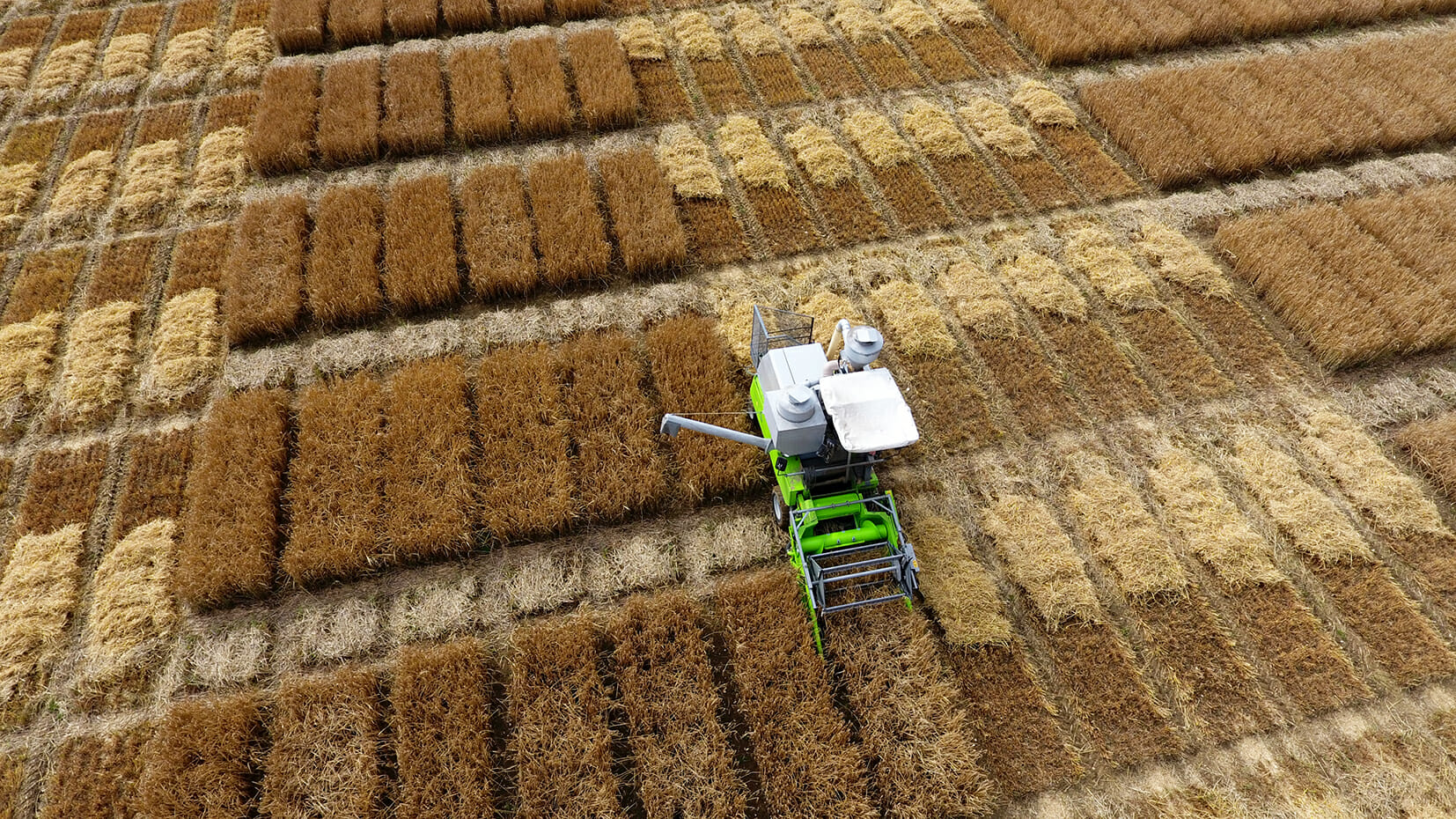

The exceptionally dry season proved challenging for many crops this harvest, and although some yields did suffer, others fared much better, with some stand-out performers, as the LG Legends explain.
The LG Legends are a group of farmers from around the UK, working with diverse situations on-farm. They share their honest and practical on-farm experiences, from variety selection and husbandry, to harvest results and everything in between.
LG Typhoon tops the charts

Ryan McCormack
In Suffolk, LG Typhoon was the star performer at Dennington Hall Farms, where a 100 ha block averaged 10.1 t/ha, with good grain quality and plenty of high quality straw, says farm manager, Ryan McCormack.
“It was the first of the wheats to be harvested, starting on 14 July, and gave the highest average yield out of all wheat varieties we grew last season; one small field achieved 11.7 t/ha, which was a good result given the dry conditions.”
All LG Typhoon was grown as a first wheat after beans, with minimal surface cultivations ahead of drilling in the first week of October – slightly later than he would normally sow the variety.
Another strong performer was LG Beowulf, which was coming in at over 10 t/ha, until 60mm of rain in the third week of July interrupted harvest for 10 days, Ryan says. “That rain delay seemed to knock the specific weight by 7-8%, and had a similar impact on yield. Despite that, it still did well overall, and, like the LG Typhoon, stayed pretty clean.
“We didn’t see any yellow rust, although to be fair, it was quite a low disease pressure season. We will be growing more LG Typhoon and LG Beowulf next year, combatting any yellow rust risk by applying tebuconazole at T0 to bolster disease resistance”. LG Redwald is another wheat variety the farm will grow again this autumn, as the extra vigour ideally suits later sowing after sugar beet, he notes.
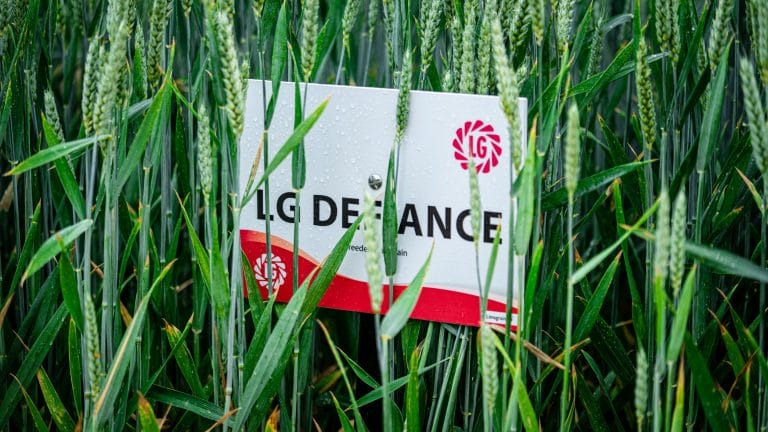
After achieving an impressive 10.75 t/ha this harvest, winter barley variety LG Caravelle is another that will be grown again in 2025/26, along with LG Capitol, 100 ha of LG Avenger oilseed rape, and the new candidate hard wheat, LG Defiance. “We saw LG Defiance in trials and really liked how it looked, so will give it a try this autumn as a first wheat after oilseed rape.”
OSR is stand-out performer

Rob Atkin
For Staffordshire grower, Rob Atkin, oilseed rape has been the “crop of the year” on the 380 ha mixed family farm.
His 14 ha of LG Armada yielded around 5 t/ha (2 t/acre), well above the farm average of nearer 4.2 t/ha (1.7 t/acre), and with relatively high oil content.
“For us, it was one of the best years for growing oilseed rape for a long time.”
The two fields both followed winter barley; one drilled on 5th August, the other on the 25th. “The later-sown field did struggle a bit with pigeon damage last autumn, but other than that, there wasn’t a lot to choose between them. They established quickly and looked well all through winter, and into spring/summer,” he notes.
Rob has increased his oilseed rape area to 60 ha for 2025/26, split 50:50 between LG Armada and the cabbage stem flea beetle-resilient variety, LG Avenger. “Although CSFB pressure was very low last year, and we haven’t seen much activity so far this year, it can be an issue here, so it’s another tool to help reduce risk.”
On the cereals front, Rob acknowledges dry weather did reduce the farm’s average wheat yield by around 2.5 t/ha across all fields and varieties, although there were stronger performers within this, in a very challenging season.
“LG Rebellion is one variety that’s really surprised me in how well it’s done considering the year. We tried a small 5 ha area for the first time, which despite being drilled late in unfavourable conditions after maize, still did really well, yielding 7.4 t/ha (3 t/acre). There was a lot of rain soon after drilling, but it survived really well, with nice even establishment, and got going quickly in the spring. It also stayed clean and produced a decent amount of straw.”
A similar trial area of LG Beowulf did equally well, coming in just shy of the farm’s highest average yield, at 8.4 t/ha (3.4 t/acre), with good specific weight (77 kg/hl), protein (12.3%) and Hagberg (283).
Given this strong performance, he plans to grow both varieties on a larger scale this coming season, increasing the total area to 40-50 ha.
Overcoming late-sowing challenges
Trialling new varieties in a season as challenging and stressful as 2024/25 was never going to be ideal, but Leicestershire farmer Will Oliver says there were still some interesting differences, which will help shape future decisions.
A small area of three LG varieties was trialled on the 650 ha arable, grassland and indoor poultry farm last season, including LG Beowulf, LG Rebellion, and LG Redwald (500 kg of seed for each).

Will Oliver
“They were all fairly late sown, direct drilled after maize in November, onto heavy, high magnesium content clay soil, so it certainly wasn’t ideal conditions. There were challenges at every end of the growing season; crops were drilled in the wet, and then when we needed rain, there wasn’t any.”
As a consequence, the average yield across all varieties and total wheat area of 300 ha was down 1.4 t/ha on the farm’s five-year average of 8.5 t/ha, with LG Redwald and LG Rebellion performing best out of the LG trial varieties, Will says.
He was particularly impressed by the establishment and growth of the LG Rebellion through last autumn and into spring, as well as its final specific weight, which came in at 78 kg/hl.
“We will probably grow LG Rebellion again on a larger scale this autumn, alongside KWS Vibe, and Champion; all of which will be for seed.
“It’s been a hard year to judge varieties on yield performance alone, so I’m basing my decisions on how varieties established and looked through the season. We want a variety that can establish in late-drilling, more challenging situations, and I felt the LG Rebellion emerged well and looked better than some others we trialled.”
The wheat area is likely to be down to nearer 200 ha this autumn though, as after a six-year hiatus, oilseed rape is back into the rotation. Some 130 ha of LG Avenger was direct drilled after wheat in late August, just ahead of forecast rain.
“We’ve not grown oilseed rape for six years, but have decided to give it another go,” Will notes.
Other cropping includes 200 ha of maize, mainly LG Prospect and LG30.179, drilled in early April. “We normally combine our maize, but because of the forage shortage this year, we took the decision to sell it as a standing crop. Everything looks good, and it sold well at auction. Although it’s been a challenging year for maize, I’d say it’s been our stand-out crop.”
Will likes LG Prospect and LG30.179, and plans to grow both varieties again next year. “I like the early maturity, which really helps us get the following wheat crop in. They also have good standing power, good cob size, and they also tend to combine easier than some other varieties.”
Defying a tough season

Luke Palmer
The winter barley variety LG Capitol was one of the highlights from a challenging season for Cambridgeshire grower, Luke Palmer.
Some 100 ha (250 acres) was grown for seed, on a range of different soil types, with yields averaging 9.1 t/ha across the board, and excellent grain quality.
“That’s a pretty good result considering the season, and the fact that none of it was drilled particularly early last autumn. Most of the LG Capitol followed either sugar beet, potatoes, or maize, so was sown anywhere between the 1st October and 20th November. It got up and grew away really well though.”
All straw was baled, although he admits straw yields were down on normal, due to the exceptionally dry spring and summer.
Mr Palmer plans to grow a similar area of LG Capitol again this coming season.
LG Typhoon proves its worth on North East farm“It’s an excellent variety that I’m really pleased with. It has a high specific weight, strong disease profile, and seems to yield well on our land.”
Despite a season of prolonged drought and challenging yellow rust conditions, Brett Askew finds LG Typhoon delivers reliable yields and flexibility for early drilling.
Having grown LG Typhoon for several years, he has been pleased with its performance and plans to continue growing it this coming season.
Based at Grange Farm, Kibblesworth near Newcastle, Mr Askew likes to drill early to get ahead of changeable weather conditions, which is a key reason LG Typhoon is such a good fit on his farm. The 81ha he planted for Harvest 2025 has done well despite a challenging season, proving itself a mainstay variety for him.

Brett Askew
Mr Askew’s first 40ha block of LG Typhoon was drilled on 2nd September, while the later block was planted between 25th-30th September. Usually, he would use a Claydon TerraStar to chop the surface tilth ahead of drilling however, last autumn was so wet that he ploughed everything.
“The earlier block of LG Typhoon went in behind a failed oilseed rape crop which we had not redrilled, so it was ploughed, pressed and planted with our Claydon drill. We then broke off to harvest our spring crops, but two weeks of heavy rain meant we could not press the second block and therefore decided to plant it with a combination drill which we could not roll – so that was not ideal.”
His earlier drilled crop was able to establish a better root, allowing it to access the nutrients it needed, which he believes helped it to resist the challenge diseases, particularly from yellow rust, this season.
“The earlier LG Typhoon had more biomass going into winter and the larger plants showed very little signs of yellow rust.
Over the past few years Mr Askew has not applied a T0 because LG Typhoon has often grown away from yellow rust however, this season it was clear an early fungicide was necessary. “You can’t mess around with disease and need to keep on top of it, but an early application of tebuconazole was all that was necessary to control it and we didn’t see any yellow rust after that.”
At T1 he applied Vimoy (isoflucypram), Kestrel (prothioconazole + tebuconazole) and folpet, followed by a reduced rate of Miravis Plus (pydiflumetofen) at T2 due to the dry conditions. “The aim was to retain the green leaf as long as possible, but the heat and dryness had an impact.”
Mr Askew applied nutrition, including liquid N and food waste digestate, on some fields to give the crops a boost, with 210kgN/ha applied in total.
With almost no rain between February and June, yields on the farm have taken a hit. “On average it’ll be a poor harvest,” says Mr Askew. “Typically we have achieved 8.2-8.7t/ha over the past five years; this year our LG Typhoon averaged 8-8.5t/ha, with fields varying from 6-11t/ha however, specific weights have been sky high, with the variety achieving over 80kg/hl.”
One element of LG Typhoon that Mr Askew has been really pleased with is that even during a wet year he does not have to chase it, having found it to be very clean. “Alongside its position in the early drilling slot, this is why I have 15t ready to plant for the coming season, which will go in right after oilseed rape and oats. Sometimes we do not have the spray days, or our spray contractor cannot get to us when we need him, so not having to chase the variety is really important.
Cabbage Stem Flea Beetle resilient variety, LG Avenger, sets new world record OSR yield“The consistent performance of LG Typhoon over the past few years, even when it has had less than ideal conditions or we have had to be flexible with drilling date is why I will continue to grow it,” he concludes.
Exactly a decade after breaking the world record oilseed rape yield, Lincolnshire farmer Tim Lamyman has defied the exceptionally dry season to bring in a record breaking crop.
An 8ha field of September-sown LG Avenger delivered an impressive seed yield of 7.52t/ha – breaking the unofficial world record of 7.2t/ha, set in 2019 by Richard Budd.
Of the 85ha of oilseed rape grown at Worlaby Farms in 2024/25, 80% was put down to LG Avenger, sown between the 10th and 20th of September. “All fields looked phenomenal throughout the season, with very little to choose between the sowing dates,” Tim comments.
“It’s the first year I’ve grown LG Avenger and I absolutely love the variety. It has fantastic autumn vigour, which was one of the main reasons for choosing it. We wanted a variety we can sow later to help mitigate flea beetle risk, and one that gets up and away quickly to establish a strong canopy going into the winter.”
Having worked with Limagrain Field Seeds UK and United Oilseeds to develop ways of mitigating cabbage stem flea beetle damage, Mr Lamyman is convinced that sowing a vigorous variety later, ideally after the 5-10 September, is the best way to avoid the worst of CSFB damage.
“Even though flea beetle pressure wasn’t particularly high last autumn, I can see that in a bad year, the vigour of LG Avenger will help get through those issues. If you’re later drilling and you’ve got that vigour, you’ve got a much better chance of getting a crop established than if you’ve drilled it earlier in the season.”
All of Mr Lamyman’s oilseed rape ground is usually prepared using the farm’s Väderstad TopDown and Carrier cultivators, before sowing with a 6m Väderstad Rapid drill. “Because we are drilling later and have a lot of stones in our soil, we prefer a higher seed rate of 4 kg/ha; equivalent to around 65 seeds/m2, to make sure we establish a good, thick crop.”
Building on solid foundations
Supporting the vigour of LG Avenger with a comprehensive nutrition programme is essential to building a big biomass crop and high yield potential, Mr Lamyman believes.
“It’s a big, bold plant, which you’re making grow even faster, so it’s all beneficial. We’ve seen in the past that going down the route of shorter, low biomass oilseed rape simply hasn’t worked, so in my view, the bigger the crop, the higher the yield.”
At Worlaby Farms, that nutrition programme centres around a range of products from Bionature UK Ltd, designed to support plant health and soil biology at different stages of the season.
This begins at the 2-4 leaf stage, with an application of Leodita & Delta. Delta is a stabilized NH2 Nitrogen foliar application. Leodita is an organic soil improver that supports strong root development, and is faster-acting than the standard DAP and autumn nitrogen approach, Mr Lamyman says.
“Indeed, trials on the farm this year showed that within four days of applying Leodita, there was 40-60% more crop biomass compared with oilseed rape that received DAP. That biomass difference didn’t stop all the way through the autumn.”
“This is followed with foliar feeds in the autumn and spring, including a calcium-based product at flowering, to improve seed set.”
“Growing a fast, vigorous variety like LG Avenger, with this kind of nutrition programme over the top, gives you the ‘shield’ you need to get a late-drilled crop established very quickly in the autumn and probably gives as much biomass as something drilled three weeks earlier.”
Managing the large biomass crop has not been an issue, he adds. “It’s a really well structured variety, which also has the benefit of excellent pod shatter resistance.”
Disease control has also been fairly straightforward, based around a standard programme including tebuconazole, prothioconazole, azoxystrobin and one SDHI fungicide. “It’s nothing very expensive, yet crops have stayed really clean throughout.”
Given the exceptional performance of LG Avenger this season, Mr Lamyman is sowing it again across his entire 90ha of oilseed rape next season; a decision he had already made before crops were harvested, given how well they looked.
- High-yielding hybrid OSR from Limagrain Field Seeds UK
- First to be commercially available in the UK with LG’s CSFB resilience characteristic
- Exceptional autumn and spring vigour
- ‘Fully loaded’ resistance to Turnip Yellows Virus, pod shatter, and RLM7 phoma
- Very good disease resistance, rated 7 for light leaf spot and sclerotinia tolerance.
The addition of the joint highest yielding spring bean variety LG Eagle and combining pea LG Corvet to the 2024/25PGRO Descriptive List from Limagrain Field Seeds, demonstrates the breeder’s continuing commitment to pulses.
LG Eagle joins the 2024/25 PGRO Descriptive List as the joint highest yielding spring bean at 110% yield (as % control).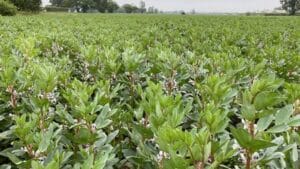
“During both Limagrain and DL trials, this extremely high yield potential has been delivered consistently over the last few very different and challenging seasons which is an important and valuable attribute for a spring bean – and one that growers look for on farm,” says Heather Oldfield, UK cereals and pulses product manager for Limagrain Field Seeds.
“However, it’s not just about high yields, these need to be backed up by solid agronomics and traits, and we are delighted that LG Eagle offers all of these,” she adds.
“It is one of the earliest varieties on the DL to mature, is not too tall, stands well and offers a good disease package including rust.”
LG Eagle is suitable for human consumption, fish feed and animal protein markets offering a range of marketing opportunities.

Heather Oldfield
With limited seed availability for 2025, Heather believes LG Eagle’s consistent yields and disease resistance package mean it will be taking a big bite into the spring bean acreage by 2026.
Combing Pea LG Corvet joins the DL offering a high yielding, (111% of control), early maturing, relatively short variety.
“Alongside these attributes, LG Corvet also has a very good standing ability, which is an important attribute for ease of combining and protecting precious yield. Poor standing ability can often be barrier to growing peas,” says Heather.
“LG Corvet offers an exceptional downey mildew resistance rating of 8 – the result of a concerted focus from Limagrain on breeding for resistance against this devastating disease in peas,” she notes.
The variety holds one of the highest dry protein percentages at 22.2%.
To meet the growing demand for pulses, Heather highlights the hard work being done by the Limagrain pulse breeding team to enhance the major traits in their varieties and introduce new ones using routine diagnostic marker assisted selection (MAS).
She explains this is being done at a high-tech facility in the Netherlands which allows the breeders to undertake rapid generation cycling.
“Target traits sought for peas include reliable yields with consistently high protein levels, resistance to lodging, and tolerance and resistance to diseases, the results of which we are seeing in LG Corvet.
“Cold tolerance without damaging the protein percentage is also an important trait for growing in more northerly climates,” adds Heather.
“The new varieties are then put into schemes for extensive testing in both the UK and Europe. Our testing builds a comprehensive data set and highlights which varieties are adapted to multiple environments, so we can identify the best high quality, stable varieties,” she continues, adding that these extended trials also build understanding of optimum drill timings.
Join the Rebellion“We also continue to work closely with key stakeholders in the marketplace to develop varieties fit for future purpose for UK growers.”
Growers looking for a strong-performing winter wheat that they can sow late this autumn and harvest early next year, should consider the hard Group 4 variety, LG Rebellion, from Limagrain Field Seeds UK.
The variety builds on many of the agronomic strengths that made KWS Extase such a popular choice on farms, but brings with it higher yield potential and even earlier maturity.
“It’s a high yielding hard feed wheat and has shown very consistent high yield potential across testing seasons and regions, with additional desirable agronomic characteristics,” says Limagrain Field Seeds arable technical manager, Ron Granger.
Early maturity is a particularly valuable characteristic of LG Rebellion, offering growers in many parts of the country, north and south, a way to spread harvest workloads or provide an early entry for following crops, such as oilseed rape, he says.
LG Rebellion has strong tillering ability and good spring vigour, and suits drilling around the traditional October window. However, it can also perform well when sown later, into November, providing conditions allow, therefore could make a good choice for growers looking to sow wheat after later harvested potatoes, sugar beet, or maize, Mr Granger says.
“While LG Beowulf remains the highest yielding variety in late drilling situations on the present AHDB Recommended List, there is also a good opportunity for extended drilling dates with LG Rebellion, because it’s so quick out of the blocks regarding its vigour in the spring. It produces strong tillers and responds very well to PGR programmes.”
Another key strength of LG Rebellion is its consistently high untreated yield. The 2024 AHDB provisional harvest results (published 26 September) show that LG Rebellion delivered the second highest mean untreated yield over the four years to this harvest (2020-2024), at 117% of control.
This is partly due to an excellent disease resistance profile, especially for Brown Rust and Septoria, plus the variety also offers Pch1 eyespot resistance, which will be particularly important for growers looking to grow it in a second wheat situation, says Mr Granger. Indeed, LG Rebellion has performed well in second wheat situations, he notes.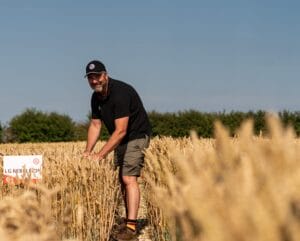
Grain quality is excellent, offering a high Hagberg and specific weight, although he reminds growers that it is a hard Group 4 feed wheat with ukp export potential, rather than a Group 2 quality wheat like its parent.
“It’s a KWS Extase derivative with 4% higher yield, offering yields comparable with the best hard feed wheats commercially available.
“But choosing a variety should never be just about yield,” he adds. “While yield is important, it’s also important to consider all of the other attributes that a variety offers growers on farm, whether that’s variety positioning, early maturity, disease resistance, or grain quality.”
LG Rebellion spreads workloads on Cambs farm
Cambridgeshire farmer Michael Brown grew 20 ha of LG Rebellion for the first time last season, utilising its early maturity to help spread harvest workloads on the 600 ha farm.
The variety was one of the last to be drilled before the weather broke in the middle of October last year, but despite that, it was easily the first to reach harvest, which this summer was on 30 July.
“The LG Rebellion established well last autumn, but it was in the spring that it grew away really quickly,” he remarks. “Throughout the spring, the variety was easily the most forward of all the wheats I grew.”
Mr Brown’s LG Rebellion also went on to produce the farm’s joint highest winter wheat yield last season, averaging 10.5 t/ha, with a specific weight of 78 kg/hl.
On the back of that strong performance, he is increasing the area of LG Rebellion for this season, with 30 ha being grown for seed, and another 30 ha as a commercial crop.
Alongside LG Rebellion‘s early maturity, Mr Brown also values its strong disease profile, as reflected by the high untreated yield.
“We grow a lot of crops for seed, so generally like to maintain a robust fungicide programme, but it’s good to have the varietal resistance as an insurance policy in the event that the weather prevents us getting on with sprays at the optimum time. There may be scope to reduce inputs slightly on the cleaner varieties, such as LG Rebellion, in the future, so that’s something we may look at doing.”
LG Rebellion
- –> Hard Group 4 feed wheat with consistent high yield potential
- –> Consistent yield performance over multiple seasons and across regions
- –> Very high untreated yield
- –> Good disease resistance profile, including Pch1 eyespot resistance
- –> Strong tillering with good spring vigour
- –> Very early maturity
- –> Suitable for drilling from early October onwards
- –> Excellent grain quality – ukp export potential
- –> A true replacement for growers of KWS Extase and its agronomic type
- –> Has shown good black-grass competition in external trials
The sisters LG Capitol and LG Caravelle are definitely doing it for themselves, and proving to be a force within the winter barley sector.
Winter barley sister varieties LG Capitol & LG Caravelle, continue to show a high consistency of yield performance in what is considered to have been one of the most testing seasons for winter cereals, ever!
Both varieties retain their positions as high yielding fully recommended 2-row feed varieties on the AHDB Recommended List harvest results mean 2024 (provisional results 28th August), with LG Capitol achieving 105.4% and LG Caravelle 105.2% of controls, for treated grain yield. Both varieties show a yield increase over KWS Tardis.
Ron Granger, Limagrain Field Seeds arable technical manager, shares his views on why both varieties have a place on farm this coming season.
LG Capitol has been the highest yielding 2-row feed variety for the last two seasons – just beating its sister LG Caravelle, by less than a decimal point!
He believes their excellent consistency of performance over some very difficult seasons is a headline note, with both varieties demonstrating this consistency of yield performance over not just seasons – but also across regions – as confirmed by AHDB RL harvest results for the mean of four years, from 2020–2024, which shows both varieties continue to sit at 106%.
He says the high yield potential of both varieties comes down to their increased tillering ability and this in turn also delivers valuable straw yields.
This excellent tillering ability of both LG Capitol and LG Caravelle, allows for as good black-grass competition as that offered by hybrid barley. In particular, LG Capitol’s performance on heavy soils which, generally favour black-grass populations, is the best of any of the winter barley varieties available, hybrids included.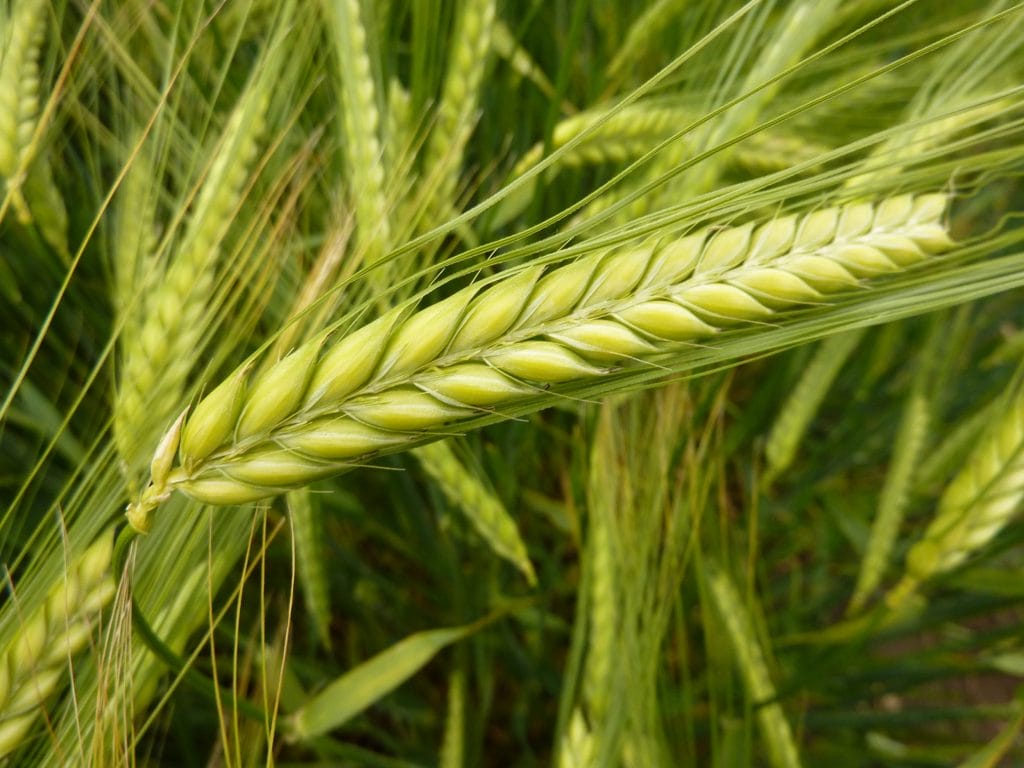
On farm characteristics
Mr Granger notes, agronomically, there are such subtle differences between the two sister lines but both varieties can be treated the same with regards to agronomic inputs and timings, as shown by results from Limagrain in-house agronomy trials over the last 2 seasons.
LG Typhoon is top performer in Leicestershire“It’s worth noting, LG Caravelle and LG Capitol winter barleys can offer a higher yield potential with better agronomics and specific weights compared to a second or third winter wheat, along with a reduced fungicide spend and an earlier harvest opportunity, if oilseed rape is back on the agenda.”
The first year of growing LG Typhoon proved to be a resounding success for Leicestershire farm and contracting business, F J Garner & Sons.
The variety out-yielded other wheats on the farm by around 25%, and produced a good grain sample, with big, bold grains, despite very challenging growing conditions throughout much of the year.
Extending to 420 ha of land, plus another 120 ha of contracting for neighbours, across a mixture of soil types, the farm tried 9.3 ha of LG Typhoon last year on the recommendation of seed merchant, Saxon Agriculture, explains Peter Garner.
“We like to stay one step ahead of the curve by growing new varieties, otherwise there is a risk you get left behind. It was only one field last year, so wasn’t a particularly big gamble.”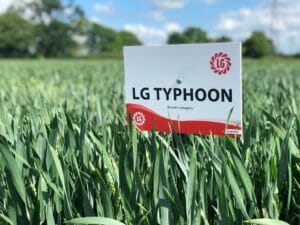
But it was a decision that paid off, after the crop, which followed oilseed rape and received biosolids prior to being direct drilled on 20 September, yielded an average of 11.4 t/ha, well above all other varieties grown last season.
“The crop was initially a bit slow to get going last autumn, but once it did, it started to look good, then very good in the spring.
“By harvest, the LG Typhoon yielded really well. I did see 16 t/ha at one point on the combine yield monitor, and certainly many parts of the field were typically doing 11-14 t/ha. Inevitably, the headlands did pull down the overall average slightly.
“It’s not the highest yield we’ve ever had, but in a year where everything else was yielding nearer 7-9.2 t/ha, it was head and shoulders above the rest.”
The crop produced a good grain sample too, with a thousand grain weight of 53 g; the highest of all wheat varieties grown last season, Mr Garner adds.
Disease-wise, it stayed clean throughout the growing season and looked a good colour in the spring, he notes.
Later-sown LG Typhoon shows resilience in a tough seasonFollowing the strong performance in 2023/24, the farm is growing LG Typhoon again for the coming season and plans to sow another 20 ha this autumn, which will be direct drilled around the third week of September, weather permitting.
The 2023/24 season proved to be a stern test for most crops and varieties, but third generation Staffordshire farmer, Rob Atkin, is pleased with the resilience LG Typhoon has shown.
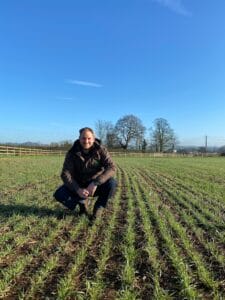
Rob Atkin
Last year was the 380 ha mixed arable and beef farm’s first time for growing LG Typhoon, with a 6 ha field sown to assess the variety’s performance.
“We saw LG Typhoon in Agrii trials in 2022 and were really impressed with how it looked; it was clean, stood well, and has relatively high yield potential,” says Mr Atkin. “We also try to pick varieties that are competitive in the spring against bromes and black-grass.”
“LG Typhoon seemed to fit the bill and suit our heavy land, as well as being a good second wheat performer, so we decided to give it a try.”
Given the wet conditions last autumn, the field, which followed forage maize, was drilled later than Mr Atkin planned, on 17 October. “We got the maize off, but then had 65 mm (2.5”) of rain, which meant we couldn’t get back on the land for a while, and had to plough and combination drill instead of our usual minimal tillage. Normally we’d start drilling in the second week of September and be all done within a month, so it was right at the end of our usual window.”
Despite the late start, which was followed by an exceptionally wet autumn and winter, Mr Atkin says the LG Typhoon established well and appeared to be less affected by the tough conditions than other varieties grown on the farm, which included Graham, Oxford and KWS Extase.
“It was a little slow to get going, probably due to the cold, wet soils, but once it did, it withstood the wet conditions really well. Disease-wise, it has also been impressive; it was one of the cleanest varieties on the farm last season, despite some others breaking down to Septoria later in the season.”
Crops stay clean
That cleanliness is even more impressive given the generally high disease pressure last year, and the fact that Mr Atkin employs a reduced two-spray fungicide regime on most wheats, which does not follow conventional timings.
“We want to utilise varietal resistance and extend the cover fungicides provide, so essentially both sprays went on mid-way through the conventional timings. The first was applied at the equivalent of T1.5, while the second was at T2.5. While we are reducing the number of sprays, we do use robust chemistry at those timings.”
The first treatment was 0.8 L/ha Cleancrop Vulture (prothioconazole + tebuconazole) plus 1 L/ha Phoenix (folpet), with additional micronutrients and trace elements. This was followed four weeks later by 1.3 L/ha Boogie Xpro (bixafen, prothioconazole + spiroxamine), again with trace elements.
“The odd field did need an additional T3 last season, but we stuck with the two-spray approach on the LG Typhoon, and it looked really clean all the way through.
This resilience meant LG Typhoon was one of the best performing varieties on the farm this harvest, although Mr Atkin says all winter wheat yields were around 2.5 t/ha (1 t/acre) below normal, due to the wet conditions from autumn to spring.
Increasing the area
Mr Atkin is keen to give LG Typhoon another go this season, and is increasing the area of the variety to 20 ha, which he hopes to sow by the end of September. “One field will be a first wheat after oilseed rape, but we’ll also try the variety in a second wheat position to see how it performs there.”
He also hopes to be able to avoid the need for the plough this autumn, and get back to a minimal tillage system, based around a shallow disc-based cultivation after harvest, to work the top 10-20 mm of soil, which is allowed to green-up, before spraying off with glyphosate and then drilling with the farm’s Amazone Cayena tine drill.
Other varieties going in the ground this autumn include Oxford, Bamford, Crusoe, Fitzroy and a 5ha trial area of LG Beowulf, which joined the AHDB Recommended List this year.
“A lot of people have been raving about LG Beowulf and it looks good in trials, so I’m keen to give it a try on our farm. We’re growing it as a first wheat after maize or oilseed rape this season, and if it performs, we’ll look to multiply up the area next year with home-saved seed.”
Mr Atkin concludes: “It has been really hard to evaluate varieties this season given the weather, but from what we’ve seen, LG Typhoon has done well and seemed to cope better with the conditions, so we’re keen to see how it, and other varieties, perform in – hopefully – a more normal season.”
Demonstrating flexibility
Limagrain Field Seeds UK’s Ron Granger says LG Typhoon has clearly shown its great flexibility for drilling date in the 2024 season.
“Although now established as a true early drilling wheat, the variety should not be ‘pigeon-holed’ into this one category,” he says.
“The variety has demonstrated a consistency of yield performance from its agronomic characteristics, to perform in both the standard and later drilling dates, showing a robustness from its plant development, and great disease resistance profile.
“For growers seeking security for on-farm performance in challenging years of high disease pressure, then LG Typhoon is a variety worthy of consideration.”
- –> Atkin Farms, Uttoxeter, Staffs
- –> 380 ha (930-acre), mixed arable and grassland family farm
- –> Predominantly heavy copper marl soils
- –> Cropping includes winter wheat, milling oats, feed and malting barley, winter beans, forage maize,
- oilseed rape, and cover crops (trialled ahead of maize)
- –> 101 ha of grassland, home to 300-350 Belgium Blue cattle
- –> Predominantly min-till since 2003, plus some direct drilling where possible
- –> Strong focus on protecting water quality (working with South Staffs Water)
- –> Annual rainfall usually 890-900 mm – 1,200 mm in 2023
In a season characterised by wet weather and high disease pressure, one East Lothian grower says his LG Caravelle winter barley has remained “spotless” and delivered the yields it ‘promised.’
This is the first time the variety, LG Caravelle has been grown on the Baro Farm, just outside Haddington, with yields ranging from 8.9 t/ha to 10.8 t/ha, across 4 fields.
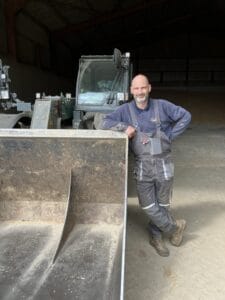
James McLaughlin
Farm manager James McLaughlin, is delighted with the performance of the variety, pointing out that not only has it yielded very well, it has also made the specification for pearling and will be bought by local merchants, Silvery Tweed, in Berwick-upon-Tweed.
Cereals managing director for Silvery Tweed, Bob Gladstone says: “LG Caravelle performs well in our plant, producing a high-quality pearled barley for our customers within the UK food and drink sector. The consistent high pearling yield delivered by LG Caravelle, allows us to produce a competitively priced product for our customers.”
“Considering we have had what is being cited as the wettest winter in 25 years, this is an impressive performance from the variety,” he says.
The barley, at the 450 ha farm, forms part of a rotation centred around combinable winter crops, oilseed rape and spring oats. “We like to grow winter barley mainly because it’s harvested earlier, which gives us a good window of opportunity to establish following wheat crops.”
Mr McLaughlin says the LG Caravelle sown in mid-September, established quickly and was just emerging as the weather broke later that month, but showed excellent vigour, despite saturated soils and tough growing conditions.
“We’ve barely lost anything, which is amazing compared with what some have faced. In fact, the variety tillered really well.”
Staying ‘spotless’
Importantly, Mr McLaughlin says all of his LG Caravelle has remained “spotlessly clean”, despite very high disease pressure throughout this season.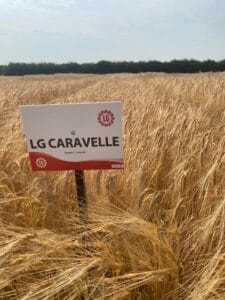
“With winter barley varieties in the past, we’ve often found disease will get in during the winter and early spring, then never really seem to go away.”
The fact crops have stayed so clean is testament to LG Caravelle’s strong genetics, supported with well-timed fungicide applications. These included: T1 Folpet + Bixafen+Prothioconazole+Spiroxamine at T1, followed by Folpet + Prothioconazole + Pyraclostrobin at T2.
“The crop ripened off evenly – we didn’t need to burn it off, which is a nice saving to make on glyphosate, and it was combined on 1 August which is fairly standard for us,” he says.
Mr McLaughlin confirms that on the back of the very pleasing performance of the variety, all of the 2025 winter barley crop will be put down to LG Caravelle.
James McLaughlin tried LG Caravelle on the advice of Douglas Bonn of Nickerson Seeds, who sees the variety as possessing all the key characteristics for a winter barley.
”In my opinion, LG Caravelle is the stand out winter barley to grow, as the highest yielding two-row winter barley for the second year running, since joining the AHDB Recommended List in 2023.
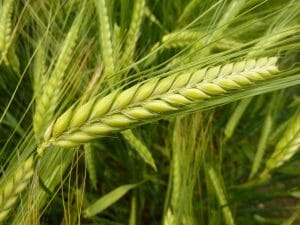
“Offering UK yields of 105.6%, LG Caravelle continues to dispel any misconception that two-row barleys are lower yielding than hybrids. The variety certainly competes with the best yielding hybrid barleys,” he says.
“LG Caravelle’s high yields are backed up by an excellent disease profile, reflected in its superb untreated performance. It is early maturing with stiff straw and good brackling resistance.
“LG Caravelle also offers an exceptionally high specific weight for a winter barley, of 71.4 kg/hl, combined with low screenings %.”
LG Capitol stands up to wettest of seasonsWinter barley variety LG Capitol has withstood one of the wettest seasons on record as well as any winter wheat and looks full of promise heading towards harvest 2024, says Shropshire farmer & contractor, Rob Bebbington.
Fieldfare Farmers covers some 365 ha (900 acres) for a range of clients across Cheshire, Shropshire, and north Wales. It has a varied rotation, split roughly 50:50 between autumn cereals and spring cropping, including potatoes, forage maize, oilseed rape, winter wheat and winter barley.
Winter barley is grown primarily as an early entry for oilseed rape, and this year, Mr Bebbington’s whole barley area (28 ha) is down to LG Capitol, grown for the first time on the recommendation of seed supplier and grain buyer, Wynnstay.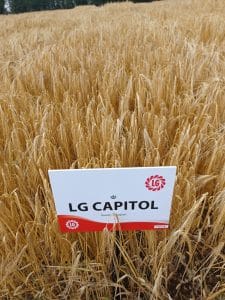
“Historically, 20 years ago, winter barley always looked a bit disappointing after a wet, cold winter, whereas with the improvements in genetics we’ve seen in recent years, now it almost seems to withstand the conditions as well as any winter wheat,” says Mr Bebbington.
“Indeed, despite one of the wettest years we’ve ever had, LG Capitol has stood up to the wet autumn and spring, and looks incredible! I can’t wait to see how it performs going into the shed this harvest.”
This year’s LG Capitol was sown on 26 September at a seed rate of 165 kg/ha, after forage maize. Land was ploughed, power harrowed and drilled in good time last autumn, allowing crops just enough time to establish before the winter set in, he says.
In total, the LG Capitol received 165 kg N/ha (applied as 26N 31SO3 and granulated urea), two fungicides based on bixafen, Fluopyram + prothioconazole and fluxapyroxad + Mefentrifluconazole, plus a mepiquat-based growth regulator, and foliar manganese.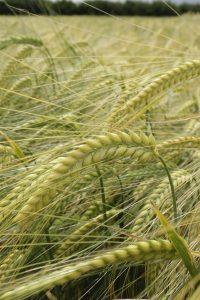
Mr Bebbington says winter barley yields typically average around 7.6-8 t/ha (3.1-3.2 t/acre), but looking at the condition of the LG Capitol approaching harvest, he is cautiously optimistic that this year’s crop will at least match, if not exceed, that level.
The crop will be followed by oilseed rape. “We still like growing oilseed rape; it fits in well with our rotation and gives us a good spread of cropping, with winter barley providing an excellent early entry. Fingers crossed we haven’t suffered too badly with cabbage stem flea beetle.”
Looking ahead to the coming autumn, Mr Bebbington says end user requirements remain a key driver of varietal choices, so will again influence final decisions.
“But at the same time, we like LG Capitol, and don’t feel a need to change from it.”
LG Capitol
- –> Highest yielding 2-row winter barley for the east & north
- –> Yield comparable with hybrid varieties
- –> Strong disease resistance – notably brown rust, Rhynchosporium & mildew
- –> Good specific weight & screenings
Hard feed wheats account for more than half of the UK winter wheat market, and will undoubtedly feature heavily again in many cropping plans this autumn, as growers look to bounce back from the rain-hit 2023/24 season.
Winter wheat remains the highest gross margin crop on most arable farms, with yield still regarded as being ‘king’ for maximising returns. But, achieving high yields when faced with more extreme and unpredictable weather, alongside the many other agronomic challenges, requires varieties with strong agronomics and proven, consistent, performance across multiple seasons, says Limagrain UK.
“Farmers are increasingly looking for security on-farm,” says the firm’s arable technical manager, Ron Granger. “You need a variety that delivers the right agronomics, as well as high yield.”

It is something Limagrain UK is providing, with a range of exciting new hard wheat varieties coming through its UK breeding programme, including LG Typhoon (launched two years ago), newcomer this year, LG Beowulf, and 2024 RL Candidate variety, LG Rebellion.
Genetic gains
These varieties, and two others currently in National List trials that will hopefully progress as Candidates for 2025, are the latest results of several years of ongoing breeding development, says Limagrain UK wheat breeder, Phil Tailby.
“When the UK market started shifting towards hard wheats several years ago, it took a few years for breeding programmes to adapt and new hard wheat varieties to come through. But, by using powerful breeding tools, such as marker-assisted and genomic selection, we have been able to increase selection intensity, improve selection accuracy, and reduce the time needed to develop the next generation.
“This ultimately drives faster varietal improvements, delivering the traits that growers want and need in modern wheat varieties.”
LG Typhoon for example, has an excellent disease resistance profile, especially for yellow rust (rated 9) and Septoria tritici (7.2), plus it has orange wheat blossom midge (OWBM) resistance, good specific weight, and a slow, prostrate growth habit that suits both early sowing and wide-row, direct drilling situations.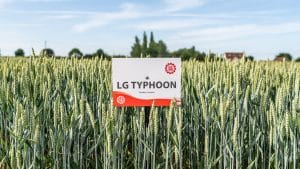
“It joined the Recommended List in 2022 with a range of agronomic attributes that are beneficial to farmers,” says Mr Granger. “These characteristics have seen it deliver excellent consistency across different seasons and regions, and suitability for the on-farm placement we have advised.”
LG Typhoon’s suitability for early drilling could be particularly pertinent this year, given the likely desire by growers to avoid a repeat of last autumn, when many drilling plans were halted by heavy rain during October onwards, he notes.
Newcomer LG Beowulf takes genetic gains on a stage further, building on its strong Costello x Gleam parentage, Mr Granger continues.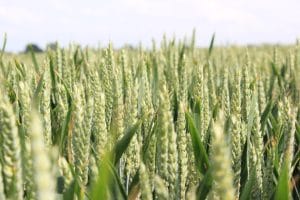
It delivers a range of desirable agronomic characteristics that make it the highest yielding variety on the RL, with proven performance across a range of situations, soil types and regions, including the North. LG Beowulf has a strong disease profile, rated 9 for yellow rust, and 6.7 for Septoria tritici, stiff straw, strong tillering, OWBM resistance, and good grain quality, particularly specific weight.
LG Beowulf has also inherited Gleam’s robustness and ability to be sown into a wide range of drilling dates and still deliver on yield, he adds.
RL Candidate variety for 2024, LG Rebellion, offers similarly impressive performance, capitalising on its KWS Extase parentage to give very high untreated yields, and an excellent disease resistance profile (notably against yellow rust and Septoria), with the additional genetics of Pch1 eyespot resistance.
LG Rebellion is also earlier maturing than KWS Extase and, unusually for a hard Group 4 variety, it has ukp export potential thanks to its excellent grain quality.
“It ticks many different boxes and gives growers the option of going for something that’s a bit different to other hard feed wheats on the market,” says Mr Granger.
Market insight

David Brown
Hard Group 4 wheats are estimated to account for around 54% of the UK wheat area, based on seed sales and farm-saved seed data, according to Openfield’s David Brown, who believes it will remain a key sector for UK growers.
While many hard Group 4 wheats go into animal feed production, in some years, there is a potential milling premium available – typically worth £2-5/t over the feed price – for crops of sufficient quality to be blended into the grist with other high-protein grade varieties, he says.
Milling demand and specifications for hard wheats do vary season-by-season, but users typically require 10.7% protein, 180 Hagberg, and 74 kg/hl specific weight, although these thresholds can be down to 10.2%, 130 and 74 kg/hl, depending on the season and overall crop quality, he says.
“Milling demand and hard wheat specifications are usually made in September, once millers know the quality profile for EU and UK crops.
“The UK is currently trading at import parity for full-spec Group 1 milling wheat and if millers continue to import, we could see more opportunity for UK hard wheat going into the grist.”
Much will depend on the size and quality of crops in the UK and elsewhere, which at the time of writing, remains uncertain given the challenging weather across much of Europe, Mr Brown says.
“With a reduced wheat area in the ground for this harvest – estimated at around 1.4 million ha – a much lower UK crop is widely anticipated, although estimates vary as to how much it will be down. The crop in the ground to be harvested in August 2024 could be between 9 and 11 million tonnes, which is comparable with 2020, and to put this into context, crop 2022 was 15.5 million tonnes and crop 2023 is circa 14 million tonnes,” he says.
Potentially, that could help support markets, but with a lower crop, the UK will be more reliant on imports, which is therefore likely to cap domestic prices, he adds.
“The UK will continue to follow global markets. These did move slightly higher during May, but all eyes remain fixed on the new crop and how that will be impacted by the weather around the world, and other events (e.g. the wars in Ukraine and the Middle East), over the coming months.”
New LG hard wheats: key attributes
|
LG Rebellion (Candidate 2024) |
||
|
Agronomic characteristics for securing consistent yield performance over multiple seasons and regions on farm |
The highest yielding variety, offering high yield potential in all regions, including the North |
High yield potential combined with the desirable agronomic characteristics of KWS Extase |
|
Prostrate growth with high tillering capacity suits early drilling, direct-drill regen situations |
Wide drilling window and suitability for a range of situations (1st vs 2nd wheat), and differing soil types |
Agronomics suit the main October and later drilling dates on farm. Very high untreated yield (97) reflects strong all-round disease profile |
|
Excellent disease resistance (especially Septoria and yellow rust) – high untreated yield, OWBM resistance |
Excellent disease profile (especially yellow rust and Septoria), OWBM resistance, and tall, stiff straw |
Excellent disease resistance profile – similar to KWS Extase, plus Pch1 eyespot resistance |
|
+2 maturity versus Skyfall |
Similar maturity to LG Typhoon |
Earlier maturing (-2 vs Skyfall) |
|
Good specific weight |
Excellent grain quality, combining a high Hagberg and specific weight |
Excellent grain quality, plus ukp export potential |
Limagrain UK’s benchmark milling wheat variety, Crusoe, has claimed the top three positions in the Yield Enhancement Network (YEN) Milling Wheat Quality awards.

Richard Budd
It is welcome recognition for the Group 1 variety that, in the 12 years since joining the AHDB Recommended List, has established itself as a firm favourite amongst growers and millers due to its consistent yield and quality performance, across a range of very different seasons.
First-place in the 2023 YEN award went to Richard Budd, of Stevens Farm (Hawkhurst Ltd), who grows around 220 ha of Crusoe across 1,400 ha in Kent and Sussex. The farm’s focus is on growing quality Group 1 and 2 wheats, to supply local flour mills and occasional export markets, and he values the reliability that Crusoe offers.
“We’ve only been growing Crusoe for three or four years, as previously we had been doing really well with KWS Zyatt and Skyfall. But, they both became uneconomic to grow due to their disease profiles, so last year we made the decision to go completely with Crusoe, which now accounts for one-third of our wheat area, alongside KWS Extase and Mayflower for the remainder.
“So far, Crusoe has served us well. It’s yielded well, is relatively clean and easy to manage, stands well and has a good specific weight, protein, and Hagberg. It’s a solid, stable variety.”
With milling wheat premiums touching £72/t over feed at the time of writing, and predicted to stay firm for the foreseeable future given tight European supplies, Mr Budd is cautiously optimistic for the 2024 harvest, despite a challenging start to the season.
“Admittedly, I’d like an extra 5% yield, but I understand UK flour millers may be less keen on that due to the potential protein dilution. We do need some new genetics in the Group 1 sector, but at the moment, Crusoe is our default variety.”
Hitting protein spec
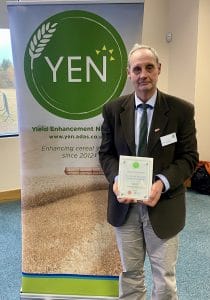
Chris Eglington
Norfolk Crusoe grower, Chris Eglington, won gold in the 2022 YEN Milling Wheat Quality awards, and claimed silver with the variety in 2023, recording the highest grain protein of 13.7% and one of the highest specific weights at 78.2 kg/hl for his 10.5 t/ha crop.
He too values Crusoe’s performance in what was a tricky 2023 season.
“Yes, it’s been around a while now, but it’s great to have a variety that we know how to manage and know will perform well.”
Last year’s crop followed oilseed rape, with land cultivated using an 8-metre Väderstad Carrier prior to drilling on 14 September, then rolled and a residual herbicide applied.
Variable rate potash, lime (where required) and nitrogen applications are used across the farm, and he has worked closely with grain buyer Camgrain, and in the past with Sainsbury’s, to optimise nitrogen inputs and protein.
Mr Eglington recognises nitrogen management could be more challenging this spring, given the impact of the exceptionally wet autumn and winter on residual soil levels.
“We’re already towards the top of what we can apply in terms of nitrogen, so I don’t think our programme will change drastically. We’ve always found the highest yields come in years when we’ve managed to get nitrogen on early, and fortunately we did manage to apply the first lot of nitrogen during a narrow window in early February, and might apply some more in early March, depending on how the crop looks.”
Typically, first wheats receive a total of 280 kg N/ha, applied as four splits of solid granular fertiliser, sometimes supplemented with a small amount of liquid urea towards the end of the season (June), to help build grain protein if required.
Regular tissue testing is also used to adjust the nitrogen programme according to crop need.
Mr Budd also recognises the importance of early nitrogen to support tillering and biomass accumulation, and has previously seen good results from applying two large splits of 80-90 kg N/ha when conditions allow in February, and again in late March/ early April. Tissue testing is then used to refine later applications according to crop requirements.
Staying disease free
Mr Budd’s nutrition strategy is supported with a robust, preventative fungicide programme, tailored to disease pressure around each spray timing and varietal resistance. His aim is to keep upper and lower leaves free from disease as long as possible, rather than relying solely on the flag and leaf two to build yield.
“With our direct/ strip-till system, we find that if we can keep leaves 3, 4, and even 5 and 6 relatively clean throughout the year, they are still contributing quite a lot to final yield, right up to cheesy ripe stage.
“That said, we’re not applying maximum rate fungicides all of the time; decisions are guided by what’s there at the time, and varietal choice.
“I like Crusoe; it is a relatively easy, clean variety, with good Septoria scores, and yellow rust is non-existent really.”
Late-season brown rust is something to watch out for in some years, but even that is relatively easy to control, with a good range of chemistry available, he notes. “As an industry, we need to be looking more at genetics rather than a can.”
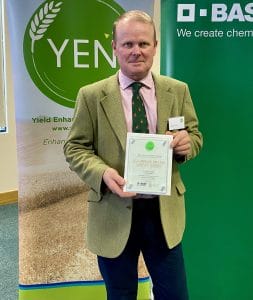
Edward Vipond
Confidence to invest
Having confidence in a variety’s ability to regularly achieve milling specification is vital for Suffolk farmer Edward Vipond, who says Crusoe has become the “go-to” variety in the first wheat slot at the 1,400 ha Troston Farms, near Bury St Edmunds.
The farm grew 160 ha of Crusoe last season, and has increased this to 224 ha for 2024.
“When you’re spending a lot of money on fertiliser to obtain a milling premium, applying 270-280 kg N/ha for example…
“…you need confidence that the crop will deliver in terms of protein, and Crusoe does that. Protein is as much down to the variety’s genetics as how you manage it.”
He also notes that Crusoe seems more consistent than other milling wheats grown on the farm. “For us, even at yields of 10.5 t/ha, it will still regularly obtain 13.3-13.5% protein.”
Last season’s wet summer did pose challenges for protecting quality, with milling wheats prioritised for harvesting slightly earlier than they might have been in a drier year, Mr Vipond says.
This did raise a few issues with thrashing on the combine, resulting in some unthrashed tips in the grain sample, but he insists the benefits of hitting milling specification far outweighed any drawbacks.
“There aren’t that many other competitors in the Group 1 list at the moment. There are one or two coming in, but they’re yet to be proven and have got to do something special to knock Crusoe off. Crusoe suits our land and it delivers.”
Mr Vipond says flexibility and attention to detail are key to getting the best from any crop, particularly in terms of drilling date, seed rates, nutrition and other inputs. He generally drills Crusoe in early October to reduce BYDV risk, opting for seed rates of around 325-350 seeds/m2.
There is no fixed cultivation or drilling strategy though, instead the farm opts for whichever equipment suits conditions at the time. Some fields after potatoes or onions, for example, are established with a plough and combination drill, while others may receive a non-inversion deep tine (e.g. Sumo Quatro) before drilling with a disc or tine machine. “Every season is different, so we do what is required.
“Yield is still king, and if you can get decent yields of good spec milling wheat at a premium of £50-60/t, the return is still there. With the results we had from Crusoe last year, what’s not to like?”
Summary of the top three YEN wheat samples, all Crusoe
|
|
Gold (Richard Budd) |
Silver (Chris Eglington) |
Bronze (Edward Vipond) |
|
Yield (t/ha) |
11.9 |
10.5 |
10.4 |
|
Moisture (%) |
15 |
14.4 |
14.1 |
|
Protein (%) |
13.6 |
13.7 |
13.3 |
|
Specific weight (kg/hl) |
76.2 |
78.2 |
76.9 |
|
Hagberg (seconds) |
334 |
368 |
349 |