Quality not quantity should be the watch word when planning the maize harvest according to Brian Copestake from maize seed specialists LG Seeds.
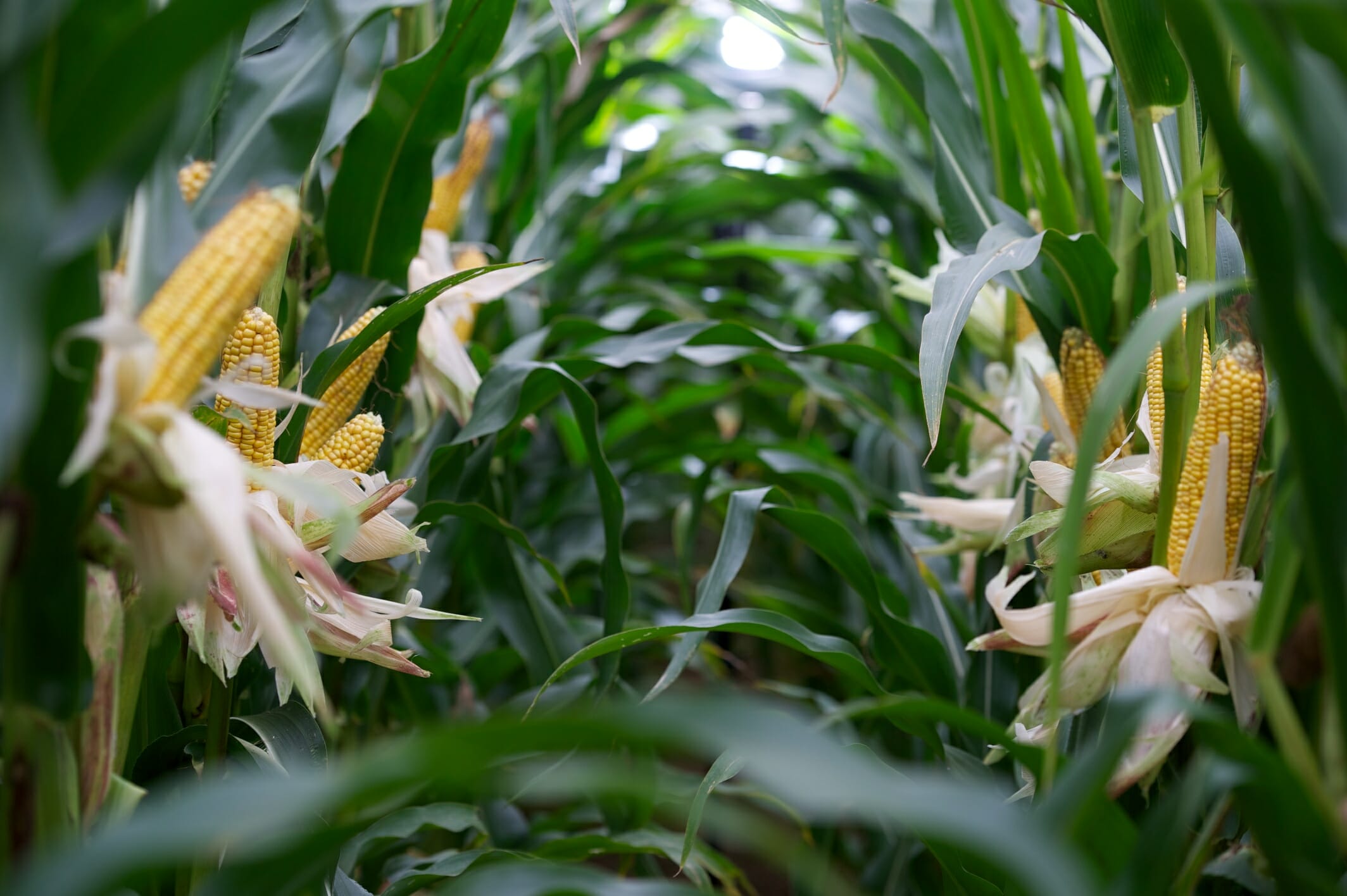
Mr Copestake says there is a larger hectarage of maize being grown on arable farms this year, mainly as farmers looked for a crop to spring sow following the disrupted autumn drilling season.
“With winter cereal drillings down, maize fitted the bill in many areas allowing a spring crop which would allow a return to a normal autumn rotation,” he comments. “It also allowed a cereal break and in most parts of the country demand for maize silage, for livestock feed or AD plants, remains high.
“With crops in the ground and growing very well, the focus must turn to making the most valuable crop possible, and as with other arable crops the quality of the harvested material is paramount.”
Mr Copestake explains that users of maize silage want a high energy feed with a good level of dry matter which has been well fermented, all of which are affected by harvest date. At the same time, growers will want an early harvest to allow timely establishment of the successor crop.
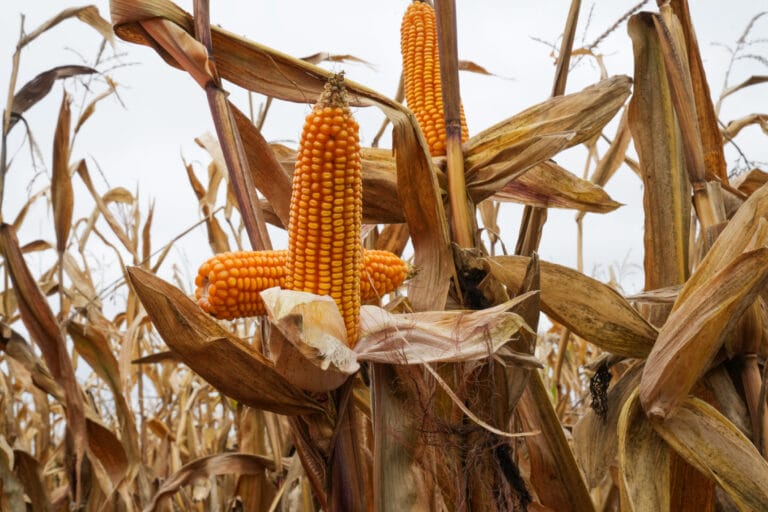
Once the crop has got to 32% dry matter, there is little benefit in delaying harvest, as it will increase it’s dry matter content, but not bulk up any more. In addition, if the crop is too dry and has senesced too far, it will be more difficult to ensile.
Cutting too soon can mean an earlier harvest but can produce a lower dry matter product. Furthermore, sugars will not have been converted to starch, while the fibre to starch ratio will be higher which is equally undesirable in terms of quality.
“As a crop matures it dries out. Once dry matter increases above 32%, the digestibility of the vegetative part of the plant which contains 50% of the total energy declines as the plant lignifies, reducing overall energy content.”
He says that harvest date is greatly influenced by the variety grown. Early maturing varieties require fewer heat units to reach maturity.
“As there is a range of over 20 days between the time the earliest and latest varieties will be fit for harvest, the first thing to do is check the maturity class of the variety you are growing so you can understand where it sits in the range.”
He says the ideal time to harvest the crop is at a dry matter content of 32-35% and when cobs are mature and starch yield is maximised, with the target of a minimum 30% starch content.
“Harvesting crops too dry at above 35% can result in ensiling problems, which is something that must be avoided.”
As crops start to dry down at a rate of around 2% per week from the beginning of September, Mr Copestake advises walking and inspecting crops weekly and carrying out two simple tests.
“Walk well into the crop and look at plants in several locations in the main field. The first test is the dry matter of the growing plant. You should be looking to harvest when the stover is around 24% DM, when the lower part of the stems no longer have any moisture freely running from them when twisted. In addition, the leaves level with the cob will be beginning to turn brown.”
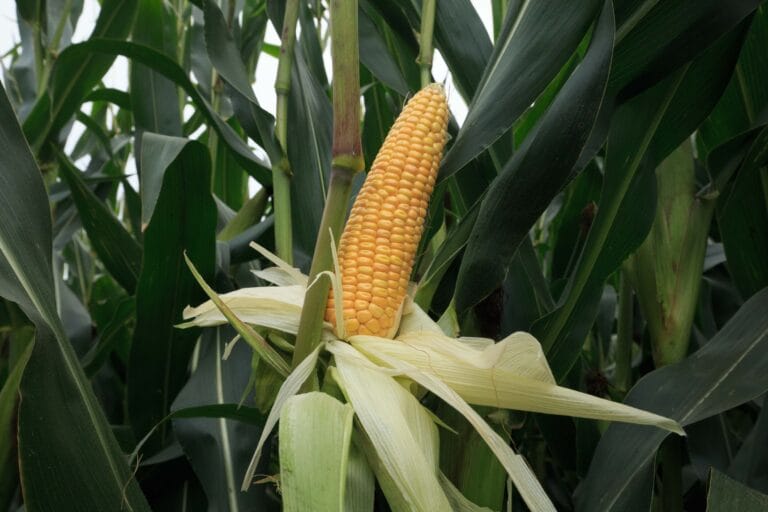
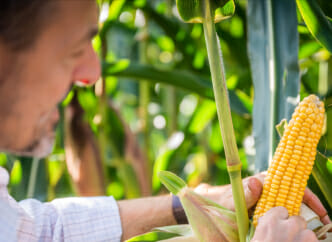
Regarding the cob, he says it should be around 55% DM which can be assessed by the thumbnail or milk line test, where grains in the middle of the cob will no longer bear the imprint of a thumb nail when pushed into it. Grains at the top of the cob will have a consistency of soft cheese while those at the bottom should be like hard cheese.
“Regular assessment of the growing crop will improve the precision of timing of harvest but it is also vital to keep talking to your contractor in the lead up to harvest to ensure the crop is actually harvested at the optimum time.
“Also make sure all steps are taken to make the best quality feed by focussing on the ensiling process as this will determine the quality of the end product and help reduce aerobic spoilage. There is little point harvesting at the optimum stage if the crop is poorly ensiled and fermented”, Mr Copestake concludes.
Maize Growers Should Beware of the False Spring
The first spell of warm weather doesn’t mean it is time to drill maize. In recent years it has paid to hold back and wait until conditions are correct.
The advice is often to drill early to increase yields by giving a longer growing season. This has largely been overtaken by the development of early maturing varieties which yield well in a shorter season and will mature over 14 days earlier than the latest varieties.
RISKS OF EARLY DRILLING
Early drilling is higher risk:
In cold soils, rate of germination is reduced
In wet soils, seed can rot
Higher seed rate commonly advised to compensate for seed loss, pushing up costs
If you are going to lose seeds, you should not be sowing.
DON’T BE SEDUCED BY A WARM, EARLY APRIL
Look at the facts based on our seven sites around the country. The graph above shows the mean temperatures across all seven sites for the last three years and highlights the possible issues for maize drilling.
In the last three years there has been an early peak in temperatures around 20-24th April
This has been followed by a substantial temperature drop to below 8°C for 2-3 weeks.
Temperatures did not consistently exceed 10°C until 4-13th May but then rose consistently.
In each of the last three years:
Seed drilled in early April would have struggled to get away. It would either be chilled in dry soils or would rot in wet ground
Later drilled seed would have germinated much quicker and resulted in a stronger early crop
Sowing should not have started before the end of April
TARGETS FOR SUCCESSFUL ESTABLISHMENT
Soil at 8-10°C at the target drilling depth for at least a week before drilling. Clearly the deeper you drill, the later this can be.
Create a fine, firm seedbed with no clods and minimise compaction to ensure good contact between the seed and the soil
Seed should be drilled at uniform spacing to promote even germination and growth followed by consistent canopy closure.
Use biological seed dressings including plant polymers such as Starcover to encourage more rapid and enhanced root growth.
Try the LG Heat Map Tool to find the average OHU in your postcode
Paying Careful Attention to the Variety This Season is Key
Making sure maize plants make the best possible start is key to reducing damage by birds and ensuring the best results from your crop. This will be particularly important this spring given the very wet autumn and winter, with the likelihood of colder soils, later drilling and the loss of key seed treatments.
Making the right decisions regarding variety, site choice, drilling date and seed treatment will all contribute to successful and rapid establishment of the maize plant. Paying careful attention to the variety is crucial.
There are a number of risks that can be managed to improve the success of the crop. These include field selection, choosing fields with a better aspect and soil type and avoiding fields more prone to suffering in a wet season which increases the risk of harvesting problems.
You want a field where the soil can be worked down to a suitable tilth and then only drill when soil temperatures are consistently at a minimum 8°C at the depth the seed is to be sown, to get the seed germinated quickly. But make sure the variety you choose is suited to the farm.”
The main variety agronomic criteria determining success are usually maturity class and early vigour. Early maturing varieties require fewer Ontario Heat Units to reach maturity, increasing the prospects that they will be harvested sooner in better conditions meaning silage can be incorporated into diets sooner too.
Download the 2020 LG Variety Selection Guide
There is a 26-day spread between the earliest and latest maturing varieties on the BSPB/NIAB Descriptive List which can be the difference between harvesting in optimum conditions, producing a high-quality feed and struggling to get a crop in.
Go for an early variety with good early vigour to make sure it gets away quickly and matures in good time. Modern breeding techniques have effectively eliminated the traditional yield penalty seen with early varieties and feed quality is typically excellent, so there is little need to gamble on later maturing options.
Selecting for early vigour helps reduce the risk of poor establishment, by achieving rapid germination to get the crop away and growing quickly, while also minimising the risk of bird damage which will be more important with changes to the availability of the most commonly used bird repellents.
Reason continues to be a popular variety and justifiably so. It is maturity class 10 or FAO 190 and is high yielding with excellent starch and superb Cell Wall Digestibility for high ME content forage. Suitable for favourable and less favourable sites, it is a good choice for marginal locations and short growing seasons. On the BSPB/NIAB list it is harvested over 20 days sooner that the latest variety, crucial when planning getting maize into the diet.
Strong establishment is crucial for maize success
Making sure maize plants get off to the best possible start is key to reducing damage by birds and ensuring the best results. A good start will be particularly important this spring, given the very wet autumn and winter bringing the likelihood of colder soils, later drilling and loss of key seed treatments.
Richard Camplin
Richard Camplin, LG’s technical manager for forages, says making the right decisions regarding variety, site choice, drilling date and seed treatment, will contribute to successful and rapid establishment of the maize plant.
He says this will help the plant quickly reach the critical size when birds will not be able to damage it: “With more traditional chemicals being withdrawn from the market, LG is now looking to the use of biological compounds as an environmentally safe means of increasing the effectiveness of nutrient uptake to promote growth.
“As a result, LG now also offers a new biological seed treatment, Starcover, which is available with most LG maize varieties. Containing a unique combination of a polymer and a biological compound, it has a significant, positive impact on root and plant development.”
The polymer element of the Starcover seed treatment attracts moisture to the seed, allowing a crust to form around it. This changes the environment in which the roots emerge from the germinating seeds and causes a proliferation of root growth, particularly more fibrous roots which are especially effective at sourcing water and nutrients, says Mr Camplin.
He says: “The biological component of Starcover is a plant growth promoting rhizobacteria which colonises roots as they grow and increases availability of soil nutrients, particularly phosphate to the enlarged root mass.
Starcover treated roots on the left
“In 2018 and 2019, we conducted farm-scale trials on almost 40 sites across a wide range of locations in the UK. Results have been very positive, particularly in 2018 when drought stress had a significant impact on crop yield.
“In the trials, Starcover-treated crops developed 18% more roots than untreated plants. Two weeks after drilling, treated plants achieved an average height which was 5.1% higher than the control.
“After five weeks, these plants grew to a height which was 15.4% greater than untreated ones, meaning they were capturing solar energy more efficiently and earlier in the season.
Wet conditions
“In 2018, when crops were drilled in wet conditions, we saw an increase in dry matter [DM] yield of 3-7% in fields drilled with Starcover-treated seed compared to the control. These conditions were very similar to what we expect to encounter this year.”
Mr Camplin suggests the conditions in 2019 were more typical of a British summer and, as a consequence, the yield difference was less pronounced compared to the control. Nevertheless, the trials showed a DM yield increase of 3-4% on average across the sites.
Mr Camplin says using Starcover-treated seed alongside good agronomic practice should promote more rapid crop establishment, helping minimise risk of bird damage.
He says the trial results also showed Starcover promotes more even germination and plant size, which helps encourage the correct development of the planting, so increasing yield potential.
“Even with with the benefits of the Starcover seed dressing, it is still vital for farmers to make the right decisions in relation to variety and site choice and prepare a suitable seedbed and drill with care at the right time and to the right depth.
“Where possible, farmers should choose a field with a southerly aspect which will warm up more quickly in the spring. Prepare a firm seedbed which is not cloddy and has excellent soil to seed contact. Where a farmer is using contractors, it is vital to have a conversation about the timing of drilling, seed rate and drilling depth.
“Monitor the soil temperature at the depth the seed will be placed and only drill when it is a minimum of 8-10degC for at least seven to 10 days. Sowing into warm soils will result in rapid germination and plant growth, reducing opportunities for birds to remove seedlings.
Mr Camplin says: “Seed should not be left lying around on headlands or on the soil surface, as this will inevitably attract birds.”
He refers to the importance of selecting a variety with good early vigour. In those parts of the country where soils are slow to warm up in spring, early vigour and a good early variety are essential.
“Top performing early varieties, such as Glory, Prospect, Pinnacle and Reason, would fit the bill in most areas. For growers in more typical, less marginal areas for maize crops, the new variety Resolute also has exceptional early vigour.
Selection
Try the Heat Map Tool!
“Many of these varieties are available with Starcover. To assist in variety selection, Limagrain’s Heat Map tool allows farmers to type in their postcode and find out which maize varieties are suitable for their farm.
“This tool draws on a 13-year dataset from the Met Office to predict the average number of Ontario Heat Units available between April and October across most areas in the UK.
“It then lists the varieties which are appropriate for each farm postcode, allowing the farmer to decide which variety of the relevant maturity fits their needs.”
TOP SEVEN TIPS FOR ENCOURAGING EARLY VIGOUR AND RAPID GROWTH
Select a suitable field, ideally south or south westerly facing, on free-draining soils which are quicker to warm up in the spring
Drill into warm soils which have reached a temperature of 8-10degC at the depth of sowing for a minimum of a week
Create a fine, firm seedbed which is free of clods and compaction, to facilitate good soil to seed contact
Drill at the right depth for the site conditions; generally a depth of 5-10cm is optimum
Drill the seed at uniform spacings to promote even germination and growth and consistent canopy closure
Select the variety with the right maturity for your farm which has good early vigour
Select seed which is treated with Starcover to boost early growth rates and establishment
Watch to see how Starcover Seed Treatment works…
Tim Richmond
Maize Product Manager
Make sure you know how your maize seed has been dressed
With changes in maize seed dressings this season, Tim Richmond from LG Seeds advises growers to check which dressing has been used and be prepared to revise handling procedures.
Click to view the Korit Safety Recommendations
“For many years Mesurol (methiocarb) has been the ubiquitous seed dressing on maize seed but has now been withdrawn and only limited Mesurol-treated seed is available for 2020 drilling.
“Most seed this year will be treated with a replacement dressing with the active ingredient ziram and farmers need to be clear what dressing has been used on their seed.
He says most ziram treated seed will have been treated with the product Korit, although some own brand products have also been used. Ziram has some particular risks and seed must be handled carefully with the appropriate personal protective equipment used at all times when handling ziram treated seed.
“When opening the seed bags and when filling or emptying the seed drill hoppers, avoid exposure to dust and the transfer of dust from the seed bag into the seed drill hoppers.
“The bags themselves will need careful handling and disposal. Do not leave empty bags lying around and dispose of them in accordance with current legislation. Return all unused treated seeds to their original bags and do not re-use empty bags for other purposes.”
Mr Richmond says new generation biological seed dressings offer significant benefits with none of the risks associated with chemical treatments. Starcover, which is available with most LG maize varieties this season, contains a polymer and a biological compound which together have a significant impact on root and plant development.
“Biological dressings offer a safe alternative to traditional chemical treatments, although they work in a different way. Rather than being seen as an insurance premium you spend in case of a bird risk, they can be seen as an investment in a stronger plant and potentially a bigger crop.”
However, as most seed this year will be treated with Korit (ziram) he urges farmers to make sure they brief their contractors about the seed treatment used.
“With a wider range of seed treatments being used this year and more product names, every farmer has a duty of care to make sure the contractor knows in advance what seed treatment has been used so they can take steps to ensure the Health and Safety of their drivers and provide necessary PPE as required.
“Don’t assume they will know which product has been used and make sure the contractor has access to relevant safety data sheets which will be on the bag or downloadable from seed company websites.”
Technology Key to Reducing Maize Risk
With maize costing around £800ha to grow, farmers need to understand and manage risk to ensure a quality feed is available and to maximise the return on investment, according to Tim Richmond Maize Manager for LG Seeds.
“The 2019 growing season was a good example of the potential risks faced by maize growers,” he comments. “Where harvest was delayed, the quality of the resultant feed was reduced, while in some cases crops were never harvested at all. In addition, many successor crops were not drilled, affecting rotations and leaving stubbles over-winter.
“In other years, farmers have to manage the risk of a poor or slow crop establishment and this could be an issue in 2020 given the very wet, early winter and current soil conditions.
“The skill is in reducing these risks and technological developments will help with this.”
Whether you are in a favourable or less favourable area, he says there are basically three core objectives:
1. The first is to grow a variety that will mature early to increase the prospects of getting it harvested in good time and allow a successor crop to be established.
2. The second is to ensure you produce the best yield of high-quality feed.
3. Finally you want feed available to include in the diet as early as possible.
All these are driven by variety selection and have been the focus of breeding programmes. He says selecting early over late varieties can bring harvest forward by over two weeks, explaining that early maturing varieties require fewer Ontario Heat Units to mature. Making use of Met Office data, farmers can now look up the average heat units accumulated in their area and use this to help improve the effectiveness of variety selection.
“Identifying a variety that will receive sufficient OHU to mature in your area, combined with good early vigour, is the starting point to managing risk associated with the crop.
“When making the variety decision, farmers have to consider a wide range of factors including maturity date, agronomic factors, yield and quality which can make it a challenging decision, with a significant range of varieties available. Getting the choice right can have a major impact on the quality and quantity of forage produced which will have a big impact on performance and margins.”
To help farmers make full use of data to ensure they select the optimum variety, the LG Maize Variety Selection Guide contains data on all the varieties on the 2020 BSPB/NIAB Descriptive Lists with data presented in easy to understand charts, allowing quick comparison between varieties.
Tables provide information on quality characteristics, including cell wall digestibility and starch content, enabling choices to be made to maximise the total feeding quality of maize silage. Vital agronomic information such as lodging, maturity and early vigour data is also included.
Mr Richmond predicts new developments in biological seed treatments can further improve speed of establishment and season long growth. He explains that there is increased interest in the use of biological treatments, given the phasing out of the current mainstream seed dressings. He says most seed dressings had been marketed as bird repellents and that while biological dressings will not specifically repel birds, they help reduce the risk by getting crops established quickly.
He says Starcover, which is available for the first time this year, is an example of the new technologies available. It combines a plant extract that accelerates root development and increases root number and length, with plant growth promoting bacteria that help improve nutrient uptake and boost early plant growth.
“In trials over several years, treated crops have had 18% more roots than untreated plants and when harvested, treated plants yielded between 3-7% more dry matter per hectare.
“By embracing new technologies, maize growers will be able to increase the prospects of high yielding, good quality feeds harvested on time and incorporated into diets quickly.”
See how Starcover works…
Are bird repellent seed dressings the only option?
Maize growers will need to rethink their approach to reducing the risk of bird damage following the withdrawal of the principal repellent, but there are options available.
Bird damage can be an issue for some maize growers leading to virtually all maize seed being sold treated with a maize repellent, primarily Mesurol (methiocarb) which has now been withdrawn with only limited Mesurol-treated seed available for 2020 drilling.
But according to Richard Camplin, Technical Manager with LG Seeds, bird repellents may have become an insurance premium rather than a necessity. He says that as all seed has been treated, it is impossible to say if the treatment was actually needed.
“For many farmers, bird repellents may be unnecessary,” Mr Camplin continues. “At our five test sites across the country, we have not treated our variety trials with Mesurol for 10 years, giving a total of over 40 trials. In that time, we lost just two trials completely to birds, with only one other trial substantially damaged. So, it might be that in many cases birds are less of an issue than perceived.
“Like any insurance premium, you only get a return if birds cause damage. If birds aren’t a risk, then all that the treatment has done is increased costs.”
He says that most seed this year will be treated with a replacement bird repellent with the active ingredient ziram and warns farmers to check what dressing has been used.
“Most ziram treated seed will have been treated with the product Korit, although some own brand products have also been used. Ziram has some particular risks and seed must be handled carefully and the appropriate personal protective equipment used at all times when handling ziram treated seed.
“When opening the seed bags and when filling or emptying the seed drill hoppers, avoid exposure to dust and avoid the transfer of dust from the seed bag into the seed drill hoppers.
“The bags themselves will need careful handling and disposal. Do not leave empty bags lying around and dispose of them in accordance with current legislation. Return all unused treated seeds to their original bags and do not reuse empty bags for other uses.”
It is likely that there will be further restrictions on seed treatment use. Mr Camplin suggests there are alternative approaches that can be used to avoid the investment and risks associated with bird repellents and still ensure good crop establishment by working with the plant. He says choosing a variety with good early vigour, focusing on seed bed preparation and encouraging strong early root growth will help reduce the risk of bird damage.
“If we can get the plant away growing strongly and quickly, we can manage the bird risk. Many varieties including Glory, Prospect, Pinnacle and Reason combine excellent performance with exceptional early vigour. As a rule of thumb, consider a variety with an early vigour of at least 7.3 using the BSPB/NIAB list to help with selection.
“Once you have chosen the variety, then focus on getting the seed bed right to encourage germination and root development.”
He advises where possible choosing south or south west facing fields with free draining soil. Create a fine, firm seedbed with no clods and minimize compaction. Seed should be drilled at uniform spacing to promote even germination.
“Seed depth is a big topic of discussion. Drilling deeper can offer some protection against birds but may delay crop emergence. While a depth of 7cm is optimum, it may be necessary to drill deeper to around 10cm. The key is to ensure the soil has warmed up before seed is drilled. You want the soil to have been 8-10°C at the target drilling depth for at least a week before drilling. Clearly the deeper you drill the later this can be and this year soils may take a while to warm up given how much rain we have seen and with more fields waterlogged.”
Mr Camplin says new generation biological seed dressings offer significant benefits and will help ensure plants get away quickly. They also have none of the risks associated with chemical treatments.
Starcover, which is available with most LG maize varieties this season contains a polymer and a biological compound which together have a significant impact on root and plant development.
“The polymer in Starcover seed treatment attracts moisture to the seed. In doing so it changes the environment in which the roots emerge from the germinating seeds and causes more rapid and prolific root growth, particularly the fibrous roots which are more effective at moving water and nutrients into the plant.
“The biological component of Starcover is a Plant Growth Promoting Rhizobacteria (PGPR) which colonises the roots as they grow and increases the availability of soil nutrients to the plant, particularly the increased nutrient supply results in better growth”
Roots on Starcover treated plants shown to be much bigger.
In trials over several years at sites across the country, Starcover treated crops have had 18% more roots that untreated plants. Two weeks after drilling treated plants were on average 5.1% higher and 15.4% higher five weeks after drilling, meaning they were capturing solar energy more efficiently sooner.
When harvested, treated plants yielded between 3-7% more dry matter per hectare and forage was on average up to 2.6%DM higher.
“Biological dressings offer a safe alternative to traditional chemical treatments, although they work in a different way. Rather than being seen as an insurance premium you spend in case of a bird risk, they can be seen as an investment in a stronger plant and potentially a bigger crop.”
However, Mr Camplin points out that most seed this year will be treated with Korit (ziram) and he urges farmers to make sure they brief their contractors about the seed treatment used.
“With a wider range of seed treatments being used this year and more product names, every farmer has a duty of care to make sure the contractor knows in advance what seed treatment has been used so they can take steps to ensure the Health and Safety of their drivers and provide necessary PPE. Click here to download the Safe Handling Guidelines
“Don’t assume they will know which product has been used and make sure the contractor has access to relevant safety data sheets which will be on the bag.”
Watch how Starcover works!
Biological seed treatment brings big benefits
With many traditional chemical seed dressings for maize being withdrawn, there is increased interest in biological dressings. New for 2020, Starcover from LG is already creating a lot of interest with growers looking to get crops off to the best possible start.
Starcover uses plant extract
that accelerates root development
“Developed in response to environmental regulation and the need to reduce dependence on chemical products, Starcover uses a combination of a plant extract that accelerates root development and increases root numbers and length, along with plant growth promoting bacteria that help improve nutrient uptake and plant growth,” explains Richard Camplin, LG Seeds Technical Manager.
“The result is plants which develop a stronger root system, allowing them to flourish during the critical period immediately after germination, and continue to grow strongly throughout the season.” “The stronger root system means crops are better able to withstand environmental stresses during the growing season and our trials show significant benefits.”
In trials over several years, Starcover treated crops have had 18% more roots than untreated plants. The root system is visibly bigger with better defined root hairs. Together, these ensure increased uptake of both nutrients and water.
Two weeks after drilling, treated plants were on average 5.1% higher and 15.4% higher five weeks after drilling, meaning they were capturing solar energy more efficiently and sooner. This is important, as stronger plants are less at risk of damage by birds; a concern on many farms, given that the previously widely used bird repellent, is now unavailable. The stronger root system means plants have more growth in the early pre-flowering stages which contributes to a better developed plant.
Most importantly from the growers’ perspective, when harvested, treated plants yielded between 3-7% more dry matter per hectare and forage was on average up to 2.6% higher DM. In simple terms, Starcover resulted in more feed available, worth an extra £53 per hectare in terms of extra dry matter production, and a further £660 in extra potential milk production. “Starcover represents a major step forward in seed treatments and will bring some exciting benefits to growers.”
Our new Maize Variety Selection Guide for 2020 will help farmers identify the most suitable maize variety and help increase the return on investment in the crop.
“With maize costing around £800/ha to grow it is vital that farmers maximise the return on this investment,” comments Tim Richmond, Maize Manager, UK and Ireland with LG Seeds.
“Whether you are in a favourable or less favourable area, there are basically three core objectives. The first is to grow a variety that will mature early on increasing the prospect of getting it harvested in good time and allow a successor crop to be established. The second is to ensure to produce the best yield of high-quality feed, and finally you want feed available to include the diet as early as possible in the autumn. All these are driven by variety selection.”
With big developments in plant breeding including improvements in feed parameters like Cell Wall Digestibility, Mr Richmond says there are big benefits from looking to grow some of the newer varieties on the list.
The LG Maize Variety Selection Guide 2020
The Maize Variety Selection Guide contains data on all the varieties on the 2020 BSPB/NIAB descriptive lists with data presented in easy to understand charts, allowing quick comparison between varieties.
Tables provide information on quality characteristics including cell wall digestibility and starch content, enabling choices to be made to maximise the total feeding quality of maize silage. Vital agronomic information such as lodging, maturity and early vigour data is also included.
“The objective is to choose the varieties best suited to the farm situation which will maximise the nutrients available to feed stock next winter,” he continues.
“When making the decision, farmers have to consider a wide range of factors including maturity date, agronomic factors, yield and quality which can make it a challenging decision with a significant range of varieties available. Getting the choice right can have a major impact on the quality and quantity of forage produced which will have a significant effect on performance and margins.”
He says the benefits of growing one of the best new varieties can be significant. Prospect which combines early maturity for a reliable harvest with exceptional yields and feed value can produce an extra 2500 litres of milk per hectare compared to the average variety, giving an additional £700/ha return from the crop.
“New varieties like Trooper, Gema and Resolute also deliver an exceptional return while longer established varieties like Glory still allow farmers to make an excellent return by delivering high quality feed combined with early maturity.”
Correct variety choice allows maize to deliver in challenging circumstances
At 520 feet above sea level, on heavy clay loam soils and with over 38 inches average rainfall, Great Lakes near Holsworthy in North Devon is certainly a marginal site for growing maize. But this hasn’t stopped Nick Shadrick from achieving excellent results with the crop.
Nick Shadrick (left) with Paul Cholwill, Harpers Feeds.
Nick runs a herd of 70 cows averaging 9000 litres through a De Laval robot, but a second robot will be installed next year, and the herd size will increase to around 120. The cows graze in the summer and are fed big bales grass silage when housed. But for the last five years, maize has been an integral part of the system.
“While the cows were milking well, we thought they were capable of doing better,” comments Paul Cholwill from Harpers Feeds who advises Nick. “Milk ureas were high and so we decided the diet would benefit from more starch. As concentrates are only fed through the robot, maize silage was the obvious choice and would have rotational benefits but growing it would be a challenge.
“We had to plan for a short growing season as with heavy soils and plentiful rain we had to budget for possibly late drilling. We also needed it off early while we could still travel easily and not be left with a difficult harvest. This meant early varieties with good early vigour, but at the same time we need feed quality”
In the first year Nick grew 10 acres of Ambition as it met his criteria and he knew it grew well in the area. All field work is undertaken by local contractor F J Webber & Sons and the acreage has increased with an additional 12 acres grown on his son-in-law’s farm. As cow numbers increase, he will move to grow closer to 30 acres annually.
“We find maize fits our system well as it gives us an outlet for slurry,” Nick explains. “We don’t rush to drill, waiting until the soil has warmed up and we can work the ground down well. This year we didn’t drill until the second week in May but as we choose varieties with good early vigour, we know they will get away strongly, and by selecting early maturing varieties we can be confident of getting the crop off early most years. We have been growing continuous maize for four years.”
This year for the first time he grew the LG variety Pinnacle which is maturity class 9 (FAO 190) making it very early. He moved from Ambition on the recommendation of Paul Cholwill who emphasised the excellent ME yield and content coupled with a high starch yield in Pinnacle.
“The crop got away well and looked good all season. When we had the crop NIR tested, the indication was that it would be fit in early October, but we had to wait for the weather and eventually harvested a few weeks later and our contractor said it was the best crop he harvested this year, averaging 18 tonnes/acre.
“The maize has analysed well at 35.5% dry matter, 11.2 MJ/ME and 31.7% starch. We are feeding around 10kg maize per cow per day along with 20kg of baled grass and some molasses in the trough. Since going back on the maize, we have seen milk quality improve, we are averaging 30 litres per cow and the top cows are giving 50 litres plus.”
Paul Cholwill says Nick’s success demonstrates the benefit of selecting varieties carefully, taking account of the site class and growing conditions. “Maize is not the cheapest crop to grow but you can do a lot to maximise the return on investment and exploit the benefits it can bring.”
Taking a risk assessment approach to maize variety choice can help ensure the objectives of the crop are achieved and the return on investment is maximised.
A clearer focus on the reasons you grow maize and learning from the lessons of 2019 should form the basis of maize variety selection this season, according to Tim Richmond, Maize Manager, UK and Ireland with LG Seeds.
“As with any forage crop, the reasons for growing maize are solely about the feed produced,” Mr Richmond stresses. “The objectives of growing maize specifically are delivering a high yield of the most energy dense crop possible and ensuring it can be incorporated in diets as soon as possible in the winter, meaning it needs to be harvested in good time.
“Increasingly, aligned to this second objective is the need to be able to establish a successor crop. Variety choice is a principle driver for all these objectives. By paying careful attention to the variety you can increase the prospects of a successful outcome.”
He says there are a number of risks that can be managed to improve the success of the crop. These include field selection, choosing fields with a better aspect and soil type and avoiding fields more prone to suffering in a wet season which increases the risk of harvesting problems.
Another risk that can be managed is poor establishment, by achieving rapid germination to get the crop away and growing quickly, while also minimising the risk of bird damage which will be more important with changes to the availability of the most commonly used bird repellents.
“Don’t select fields which may cause problems. You want a field where the soil can be worked down to a suitable tilth and then only drill when soil temperatures are consistently at a minimum 8°C at the depth the seed is to be sown, to get the seed germinated quickly. But make sure the variety you choose is suited to the farm.”
Mr Richmond says the biggest criteria determining success are usually maturity class and early vigour. He explains that early maturing varieties require fewer Ontario Heat Units to reach maturity, increasing the prospects that they will be harvested sooner in better conditions meaning silage can be incorporated into diets sooner too.
Try the heat unit calculator
“There is a 26-day spread between the earliest and latest maturing varieties on the BSPB/NIAB Descriptive List which can be the difference between harvesting in optimum conditions, producing a high-quality feed and struggling to get a crop in.
“Our unique OHU map available on our website allows you to see the average Heat Units for your postcode and so select varieties which will mature in time on your farm.
“Go for an early variety with good early vigour to make sure it gets away quickly and matures in good time. Modern breeding techniques have effectively eliminated the traditional yield penalty seen with early varieties and feed quality is typically excellent, so there is little need to gamble on later maturing options.”
Widely grown varieties like Glory and Pinnacle are both maturity class 10 or FAO 190 and are high yielding with excellent starch and ME content, while newer varieties like Trooper, Echo and Gema also produce quality forage from an early variety, reducing the risk of a difficult harvest.
“Prospect which is another new variety has the early maturity for a reliable harvest and produces exceptional feed value. The combination of high yields and exceptional ME content as a result of high starch and outstanding cell wall digestibility, means that it produces enough energy on average to produce 2500 litres per hectare more than the average variety, giving an additional £700 per hectare return in investment.
“Paying close attention to variety attributes and selecting the best variety for your circumstances will be an essential step in reducing risk when growing maize and ensuring you get a crop that really delivers,” Mr Richmond concludes.
Prospect delivers on all fronts
Combining early maturity and high yields with exceptional quality Prospect, the new forage maize variety from LG Seeds, has raised the bar on the three critical selection criteria for maize growers looking to boost production from forage.
In its first year on the BSPB/NIAB Descriptive Lists,Prospect is the first choice variety on both the Less Favourable and Favourable lists delivering exceptional performance across all the major attributes.
“Prospect represents the Holy Grail of maize breeding being the first early variety to produce such high feed quality, making it the perfect variety for farmers across the country wanting to maximise the return on investment in maize” comments Tim Richmond, LG Seeds maize manager in the UK and Ireland. “It delivers fantastic agronomy and tremendous yields with the combination of high starch and outstanding cell wall digestibility to make full use of the total energy available in the plant.”
He explains that Cell wall digestibility (CWD) is a measure of the extent to which animals are able to digest plant fibre. The higher the CWD, the better the potential feed value of the plant. The part of the cell walls that give the plant structural strength that prevents it from collapsing is lignin which is indigestible and produced in greater quantities as the plant matures. As lignin content increases, CWD declines.
“As a consequence many very early varieties do not have particularly high CWD values, but with Prospect our breeders have managed to neutralize the impact of increasing lignin as the plant matures, enabling it to maintain exceptionally high CWD.
“It provides the high quality forage farmers require and plenty of it. It produces 13000MJ/ha more than the average variety on the Less Favourable sites list which equates to an additional 2360 litres of milk per hectare from forage, worth around £680 per hectare.”
Prospect is an early variety with maturity class 9 (or FAO 160) meaning it is suitable for all maize growing sites. It combines excellent early vigour and good standing power with good eyespot tolerance and fusarium resistance meaning it will deliver in the field. But the difference will really be seen in the clamp and in the feed trough.
It is the top variety on the Less Favourable site list for dry matter yield, cell wall digestibility, starch yield, ME content and ME yield. On Favourable sites it is the highest ranked early variety, topping the list for cell wall digestibility, ME content and ME yield.
“Some later varieties may aspire to match Prospect on quality, but they have limited appeal. In many parts of the country there are simply not enough heat units available to allow these later varieties to reach maturity meaning they will fail to deliver fully on feed quality. With the environmental and agronomic drivers for early varieties, Prospect will allow growers across the country to have their cake and eat it, producing high yields and quality combined with early maturity.”
To download a copy of our New Maize Variety Selection Guide 2020, please click here, or on the image below…







 Mr Copestake says there is a larger hectarage of maize being grown on arable farms this year, mainly as farmers looked for a crop to spring sow following the disrupted autumn drilling season.
 Regarding the cob, he says it should be around 55% DM which can be assessed by the thumbnail or milk line test, where grains in the middle of the cob will no longer bear the imprint of a thumb nail when pushed into it. Grains at the top of the cob will have a consistency of soft cheese while those at the bottom should be like hard cheese.


 “The 2019 growing season was a good example of the potential risks faced by maize growers,” he comments. “Where harvest was delayed, the quality of the resultant feed was reduced, while in some cases crops were never harvested at all. In addition, many successor crops were not drilled, affecting rotations and leaving stubbles over-winter.


