Monitoring maize crops key to a successful harvest
Following the prolonged and varied maize drilling season crops will need careful management to ensure an optimum harvest
Across the country, farmers faced challenging conditions to get maize established but the focus now has to turn quickly to ensuring a successful harvest to ensure a quality feed to compliment variable grass silage.
Simon Pope from Wynnstay comments that he can not remember a season in recent years where the average drilling date was so late. “We saw very little maize drilled in late April as it was cold and dry while most of May was cold and wet. The main drilling window became late May and early June.
“Across Wales and the West Midlands crops are beginning to catch up but a lot will depend on the weather from now on and how rapidly the Ontario Heat Units that drive maturity accumulate.
“One of the stand-out varieties for early vigour and rapid establishment under difficult conditions has been LG Gema. In a shortened growing season high-performing, very early varieties such as Gema really come into their own.”
Agrii National Forage Product Manager Ben Lowe says late sown maize has got going very well and in many cases is further advanced than earlier drilled crops where the seed took a while to get going. Many crops are looking better than crops sown in late April in a typical year.
“This is largely because later drilled crops were actually sown in optimum conditions with warm soils and adequate moisture and I hope growers remember this in future seasons and throw away the calendar and instead take decisions based on the conditions.”
He suggests there is little if any point establishing crops in poor conditions, and it is always better to wait. That said you need to choose the appropriate variety. Drilling late and still harvesting at the normal time truncates the growing season and makes the choice of early maturing varieties essential.
A late drilled late maturing variety may struggle to mature with the consequence of harvesting too soon or having to delay harvest and risk poor conditions
Resolute Maize
“LG Resolute for example is an excellent early maturing variety which has outstanding early vigour to get away quickly. But it is also the highest on the NIAB/BSPB list for dry matter and ME yield making it an excellent candidate for delaying drilling to ensure optimum conditions.”
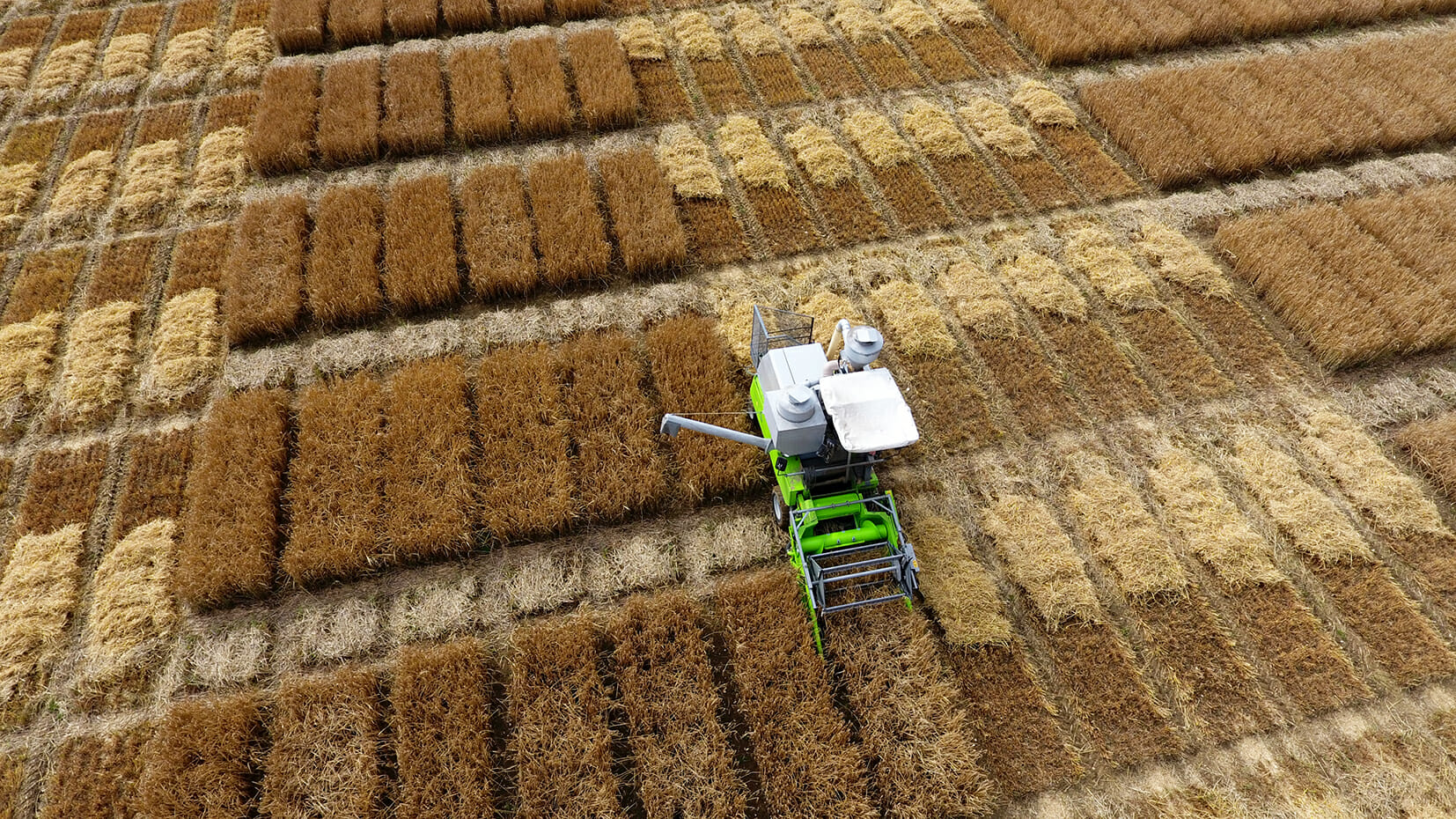
Richard Camplin, LG Technical Manager is responsible for the company’s network of trial plots and agrees it might be time to rethink maize planning. He says the trial plots had to be drilled later this year with the latest plots at the Bangor site in North Wales only drilled at the end of May.
“Going in late, the tilth was good, and soil was warm. We drilled the seed shallower, and we saw emergence after just six days, and these are now probably the strongest plots we have. It is about planning for the conditions.
“Later drilled crops has caught up quickly and also have higher plant populations. We have not lost out and earlier varieties lime Saxon, Dignity and Prospect are looking good with the ability to allow an early harvest,”
He comments earlier drilled crops had higher field losses and poorer plant populations and we have had reports of this from across the country. Seed was drilled deeper in cold soils and struggled to get away. This is not to say these crops will not yield well as with fewer plants there will be less competition.
“The challenge now will be to gets crops harvested at the optimum time. With variable grass silage reported across the country, dairy producers will be looking for a high-quality maize forage but also a feed that can be incorporated in diets quickly to complement the other forages.
“To achieve this will require a commitment to monitoring the crop and being flexible about harvest date rather than harvesting on a set date
He says maize should be harvested when the crop combines maximum starch content with only limited leaf die back so maintaining high digestibility in the vegetative part of the plant. At the same time, the crop must have sufficient moisture to allow effective compaction in the clamp. Harvesting a crop too soon will result in sub-optimal starch content, as sugars will not have been converted into starch.
Equally, delaying harvest will result in poorer digestibility of the vegetative part of the plant and reduce digestible fibre which is essential for rumen health. He advises modern varieties stay green for longer and do not to go brown before being harvested.
“Harvesting date is not a direct function of drilling date but is influenced by OHU accumulation in the growing season with early maturing varieties requiring fewer units. It is entirely likely that an early maturing variety drilled late could be ready for harvest sooner than expected.
“We regularly run NIRS clinics at markets, allowing farmers to bring plants to assess maturity and fitness for harvest. Whilst in most years a significant proportion of plants are more mature than the grower expected, this may not be the case this year. However, to avoid issues from harvesting at the wrong stage we would still urge farmers to start monitoring crop sooner than later.”
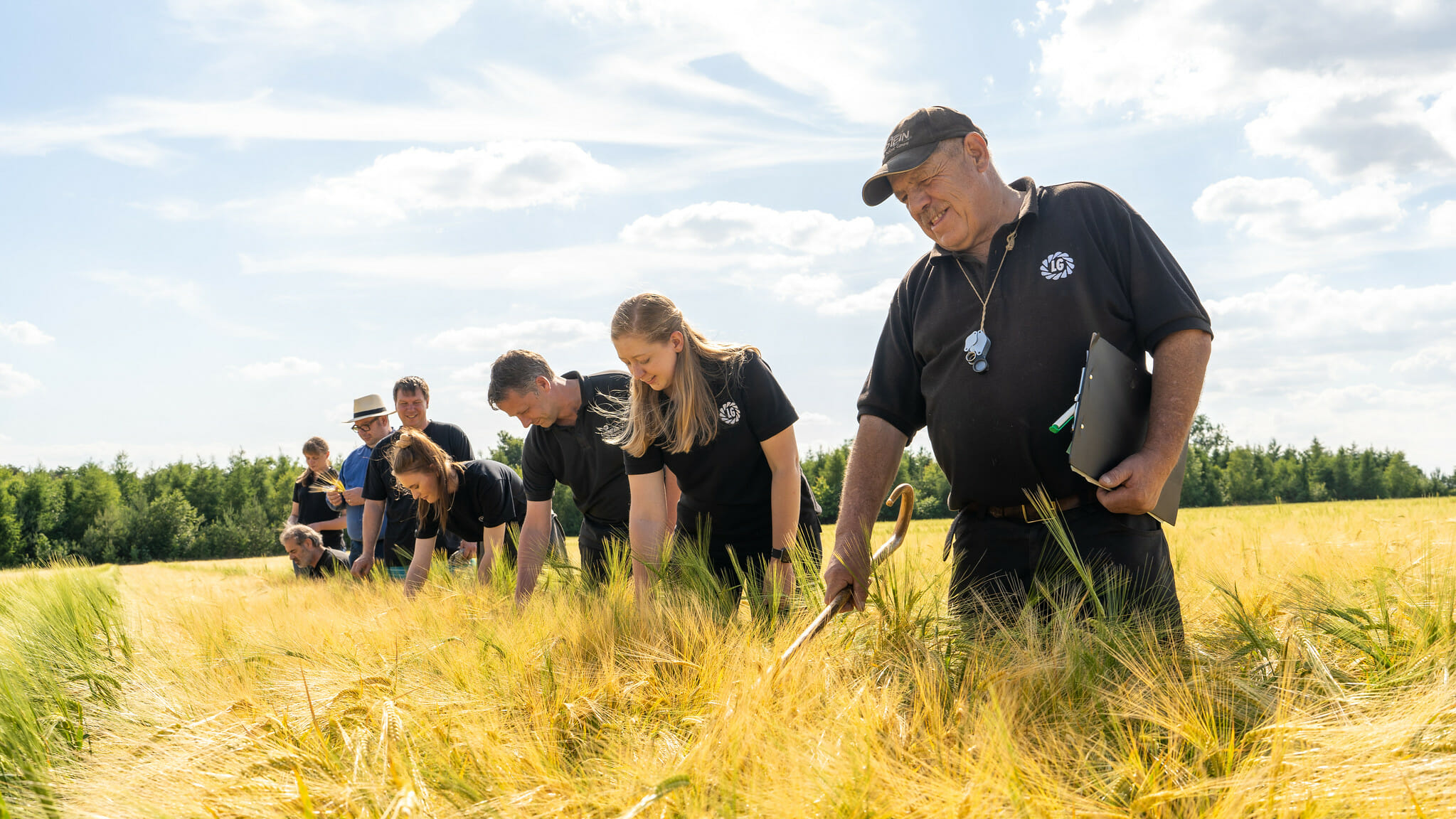
Mr Camplin recommends starting to walk the crop from mid to late August to assess maturity and fitness to harvest, to prevent crops going over. He advises walking well into the crop and looking at plants in several locations. Never evaluate plants on the field margins.
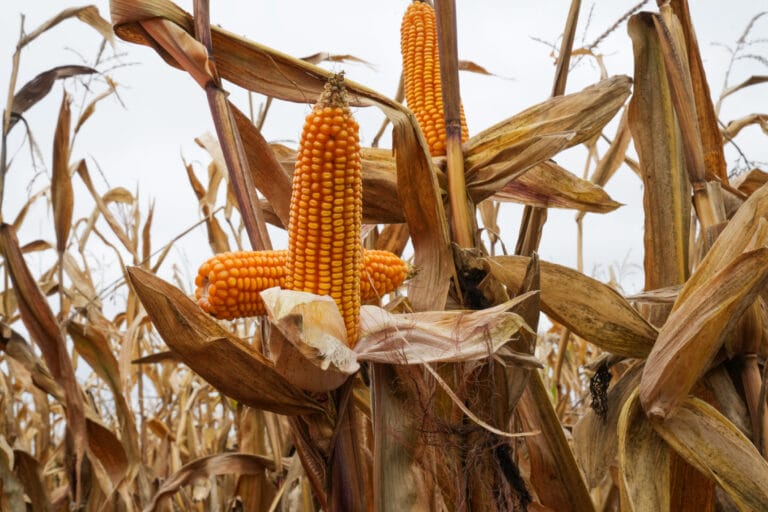
He says that modern varieties often remain green to maturity, and it is a misunderstanding that maize needs to be dead before harvesting. The target range for an optimum crop is 32-35% dry matter. At dry matter levels higher than this, palatability and intakes can be reduced, digestibility will be compromised, and the crop may prove difficult to consolidate, increasing the risk of aerobic spoilage.
“Crops typically dry down at 2% per week so, it is important to start measuring dry matter and assessing maturity, so you aren’t caught out.”
To assess the maturity of the vegetative material he advises looking at the flow of juice from the stem. “Look to harvest when no juice emerges as the stem is twisted, and when the leaves level with the cob are just beginning to turn brown.
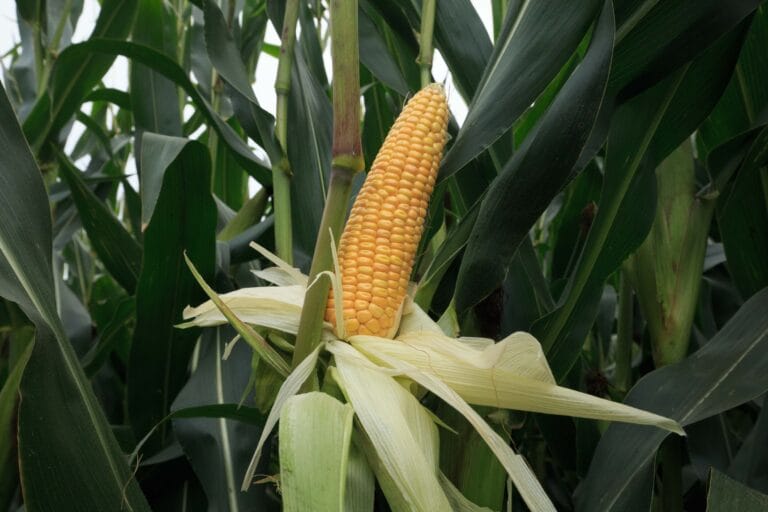
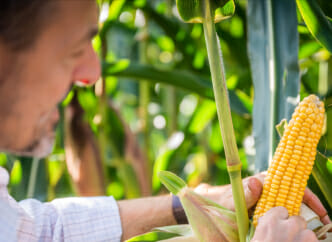
Then assess the grains using the thumb nail test. The grains at the top of the cob should be like soft cheese, the ones at the bottom should be like hard cheese and the ones in the middle should be soft enough to leave the imprint of a thumbnail on.
Based on the dry matter of the cob and of the stem, the app will determine if the crop is ready for harvest and recommend a cutting date. If harvest is not imminent the app uses postcode related weather data to predict when the crop will be suitable for harvest.
“By walking the crop and assessing the state of maturity and the rate at which dry matter is increasing, you increase the prospects of harvesting the crop at the optimum stage to maximise the production of high-quality forage,” Mr Camplin points out. “The app will then improve the precision of harvest timing, helping maximise the value of the crop they have grown and reduce the risk of incorrect harvest date on silage quality.”
There is still time to sow maize, despite the late cold spring and the wettest May for many years, but growers need to review their approach to minimise any potential yield reduction or decline in feed quality.
A few changes to establishment could help ensure a more successful late sown crop.
Modern varieties typically require 150 growing days, and are normally sown on 1st May, giving a harvest on 1st October.
Trials conducted by LG examined the effect of sowing maize at weekly intervals throughout May and then harvesting at weekly intervals from end of September until the end of October.
On average, there was a dry matter loss of 5% per week as a consequence of late drilling and a 1.8% per week decline in dry matter content. So it will be important to take steps to reduce any potential impact.
Step 1
If possible, swap to an earlier maturing variety, (maturity class 8 -10) preferably around 40 FAO points lower than a usual variety for the farm
Step 2
If not possible to change to an earlier variety, then reduce seed rate by at least 5% to give each plant more space and access to more resources to mature
Step 3
Sow shallower (2-3cm depending on soil type) as soils will be warm enough with adequate moisture to allow plants to get away strongly
Step 4
Consider nitrogen applications – too much nitrogen will delay maturity
Fine tuning maize establishment will still allow late sown crops to deliver good yields of a high quality feed to help offset any shortfall in winter feed stocks. Make sure all the bases are covered, act on soil sample results, watch for trace element deficiency etc.
Remember, your late sown crop may not be far behind early sown crops into cold wet seed beds.
An opportunistic maize crop could help dairy farmers offset the impact of reduced first cut yields
The cold and dry conditions in April significantly reduced grass growth. Many farmers were forced to take very early and light cuts of first cut grass silage as fields failed to bulk up as expected. Although recent rain came at the right time for aftermaths and could help improve second cut yields, inevitably many producers will need to plan to offset the consequences of reduced grass silage tonnages “With commodity and purchased feed prices remaining high, farmers were hoping for a good forage year to help reduced purchased feed costs per litre over the winter,” comments Tim Richmond from LG Seeds.
“They will now need to review their stocks and plan to make up the shortfall and maize could be a valuable option in many parts of the country.” While the recent warmer and wetter weather has been vital for grass growth, it also means soil conditions for drilling maize are ideal. Mr Richmond says soil temperatures are now perfect for maize establishment and the moisture will improve seed to soil contact. “Maize can be successfully drilled until the end of May and modern early maturing varieties will ensure crops are mature and ready to harvest in time to establish a successor crop. But it will be vital to choose a suitable variety.”
Early maturing varieties require fewer Ontario Heat Units to reach maturity, and Mr Richmond advises selecting varieties which are FAO 160-180. In most parts of the country these can still be established and allow a harvest in good conditions in the autumn. “While late drilling can shorten the optimum growing season, very early varieties can require 10% fewer heat units and will soon catch up with earlier drilled crops.
To help crops get away, we would also advise selecting varieties with good early vigour to ensure the plants quickly establish a good root system and leaf canopy to optimise nutrient uptake from the soil and photosynthetic rates.” Mr Richmond says modern early maturing maize varieties are also higher yielding than their predecessors. They can produce high dry matter yields of around 16.5-18.3t DM/ha to help make up the forage shortfall.
“Growing 10 hectares of a variety like Trooper which is FAO 170 would be expected to produce around 180 tonnes of dry matter, enough for an additional tonne of dry matter per day for a six-month winter which could be the difference between having enough forage and having to restrict forage intakes,” He also recommends selecting a variety with high cell wall digestibility. He explains that 50% of the energy is maize is in the vegetative parts of the plant.
Increasing the cell wall digestibility makes more energy available to the cow and also helps support rumen function. “Maize offers the most assured way to increase forage output this year as no other crops will produce such high yields of quality forage in a shortened growing season. Growing maize also provides an opportunity to drill a successor crop for early bite in the spring to further increase forage availability.
“Despite the cold spring we now have the warmth and moisture needed for crops to grow away quickly. This will be particularly important if maize follows grass as a rapidly growing crop will reduce the risk of potential wireworm attack. “However, if you decide to grow maize, make sure to plant an early maturing variety with good early vigour to ensure the crop gets away quickly and will mature in good time.” For the full list of LG varieties whether you’re growing for forage, AD or for grain, click here!
Maize flexibility could benefit both arable and livestock farmers this year
Maize can be utilised in a number of ways other than to provide a high energy forage, but it is essential to select a variety suited to the end use.
Tim Richmond, LG Maize Manager UK and Ireland, says that whilst most maize is used to provide forage to feed to livestock or as a feedstock into an AD plant, it can be successfully used in other ways. Crimped maize can be grown by dairy and beef producers as a home grown concentrate replacement. There has also been increased interest from feed merchants looking for UK sourced grain maize to replace imported ingredients, particularly for the pet food market. This makes maize an attractive break cash crop for arable farms, especially where growers are looking for an alternative to other spring crops like oilseed rape. He says that while maize can have several uses, a successful crop has its foundations in choosing the optimum variety for the end use. Varieties suited to silage production do not necessarily perform as well when used for crimping or grain.
“While a variety selected for forage will need to combine early maturity, high energy yield and high Cell Wall Digestibility, criteria such as standing power, disease resistance and starch yield move up the priority list for crimped and grain maize. So, it is important to select varieties carefully.” Faced with increased global feed price volatility and the prospect of higher ingredient prices next winter, Mr Richmond says there is increased interest in crimped maize from milk producers trying to control purchased feed costs. Crimped maize is a high energy, moist feed at around 14MJ/kgDM, with a high starch content. The starch is less rapidly degradable than in cereals which helps promote better rumen health. Mr Richmond comments that maize for crimping is harvested at around 60-65%DM, a few weeks later than for normal silaging, before being treated with a preservative and clamped. It will yield 10-12t/ha at 35% moisture content. “For crimped maize, producers should be looking for an early variety combining good starch yields and standing power combined with good disease resistance.”
Mr Richmond suggests home-grown maize for grain is unlikely to be used as a feed on livestock farms as the crop needs drying after harvest. Instead it is seen as a potential cash crop on arable units. While maize for grain is harvested at 65-75%DM, it then needs to be dried down to around 15% moisture which can be a significant cost. “It is more likely that grain maize will be grown under contract for a local feed merchant and can produce a gross margin of around £1100/ha after including drying costs.” Mr Richmond says that drying the grain adds significant costs, so the crop needs to be able to dry down as much as possible whilst in the field. It is therefore essential to select varieties that have been bred for grain harvesting conditions and are capable of being left longer and have excellent standing ability. Varieties must have good disease resistance, while good sheath cover of the cob will help reduce susceptibility to Fusarium. For the pet food market, also consider a variety with an attractive yellow kernel. “As the crop will be combine harvested, farmers should select a variety with high grain yield. A well-grown crop will produce 7-10t/ha of grain at 15% moisture.” Mr Richmond advises varieties ideally suited to both grain and crimped maize are Yukon and LG30179, which combine the grain yield with the agronomic factors required. He says that broadly, establishment and crop management will be the same as for forage maize but that it can be advantageous to plan for increased cob yields. “To help bring maturity forward and accelerate crop dry-down, crops should be sown as soon as possible in April when soil temperatures at planting depth have risen above 8 deg C and when there is good seed to soil contact. Seed rates should be reduced to 90,000 per hectare, so plants have more space and nutrients as this encourages larger cob development.”
For more info on our grain maize varieties click here.
Grass ‘companion’ can make maize more ‘friendly’
Maize undersown with grass could solve the forage crop’s environmental issues, particularly with regard to run off and soil nutrient losses, while maintaining, if not boosting, feed output. But what underpins the viability of this approach on UK dairy units?
Growing a crop like maize and leaving the field fallow for at least six months is like having an empty factory for half a year. And that’s before considering the environmental impact, from soil run off and the loss of nutrients from the soil, when maize fields are left fallow.
“So combining maize with another crop, like grass, to increase its output, while helping to retain soil and nutrients, aid drainage and improve soil structure makes good sense,” says Limagrain’s forage crop manager John Spence.
“But we have to be careful that maize yields are not compromised by the grass. And additional cultivations and passes across the field must be efficient and cost-effective.”
There are some possible options that can support maize crops while increasing land productivity and avoiding environmental issues.
Three include: drilling maize and grass at the same time, with the grass spaced in rows that are at least 15cm away from the maize; drilling grass into the maize crop once the maize has reached the six-leaf stage, after about six weeks; or follow maize with a forage rye, grass reseed or a winter cereal crop.
The first, drilling maize and grass at the same time, is preferable, according to South Staffs Water (SSW) senior catchment adviser Nina Yiannoukos-Benton. “Because this minimises the number of passes and helps to protect soil structure and nutrient retention.
“Some producers may be concerned that the grass could compete and compromise maize yield, but in the trials we’ve carried out on commercial dairy units, they’ve actually seen increased crop performance.
“The grass ‘stays in its lane’, so to speak, only spreading once the maize has been harvested and providing a good cover crop for winter.”
Mr Spence says it’s key, if this is the chosen option, to select early maturing maize varieties and slow growing (low yielding) grass seed mixtures to avoid grass competing with the maize in the early growth stage.
Limagrain has been working with SSW on developing a mixture that creates a ‘carpet’ effect, but is also palatable.
And maize varieties with good early vigour that are typically harvested by late September/early October, gives grass the chance to grow, take up nutrients, and develop a good root system to ‘bind’ the soil.
Mrs Yiannoukos-Benton prefers undersowing the grass at the same time as the maize. “Because multiple passes can create soil compaction issues.
But, drilling once the maize is established is an option if producers are concerned about maize yields, and it also enables higher yielding grass varieties to be grown, if that’s their preference.”
This option relies on good sowing conditions for grass. And again, early maturing maize varieties are ideal so there’s still enough warmth and light for some grass growth once the maize is harvested, ensuring the ‘companion’ crop can play its environmental role and provide a green cover.
Success really depends on the grass mixture drilled alongside the maize.
“It can’t compete with, or comprise, the maize crop. And it also needs to be a valuable feed in its own right – offering some late-season grazing for dry cows and young stock, or even milkers,” adds Mr Spence.
So grass mixture choice is crucial. “It has to quickly establish and grow in the dry environment caused by the maize crop. But it’s a fine line – too fast and it will compete with the maize crop, resulting in yield loss.”
For sowing at the same time as maize he recommends a high proportion of amenity-type tall fescues in the grass mixture, to provide some drought tolerance and the ability to survive well when sown at the same time as the maize.
For sowing at the six leaf stage he suggests a proportion of tall fescue type festuloliums (a cross between tall fescue and Italian Ryegrass) and Matrix (a meadow fescue type festulolium).
“But make sure seed rates are not too high. Good agronomy advice and careful drilling – with the correct equipment – is key.”
Grant schemes
There are environmental schemes to encourage producers to consider a second crop to reduce pollution from maize land.
Countryside Stewardship SW5 is an option, with payments of £133/hectare for mid and higher tiers. Applicants must satisfy criteria that stipulate harvesting maize by October 1 and establishing a quick-growing cover crop, by October 15, which will provide a dense cover and protect the land from soil erosion.
SSW has a grant scheme for producers in its high-risk catchment areas and offers £150/hectare towards the cost of growing maize that’s undersown with grass.
The grants are available under its SPRING environmental protection scheme, set up to help producers reduce soil run off and pollution.
One Staffordshire-based dairying couple has been trialling maize undersown with grass for the past two years and are about to start their third year in the scheme.
Becky and Trevor Mycock grow 90 hectares of maize to feed their 400-cow herd and 48 hectares of it was undersown with a grass mixture in 2020.
“Local contractor Rob Moore used an adapted drill – a prototype that’s been developed in conjunction with SSW – that sows both crops at once. This removes the need for additional cultivations, which reduces the risk of compaction and other soil structure and fertility issues,” says Mrs Mycock.
The couple grew 60 hectares of maize in 2019, the first year they took part in the SSW trials, and a third of it was undersown with grass, using a Pottinger maize drill that is owned by another local contractor.
“Our biggest concern was whether the grass would reduce maize yield. But our big gamble paid off. We actually saw more maize freshweight yield per hectare from the undersown fields,” she adds.
“And forage quality was unaffected. We were also able to graze some dry cows and young stock on the maize ‘aftermath’ and the grass also provided a good cover crop during the winter between maize crops.”
The Mycocks grow a mixture of early and later maturing maize varieties. “Both have done well. And we’re also looking at trialling a different grass mixture this year – one developed in conjunction with Limagrain – that should improve the palatability of the sward.”
During the past two years they have seen good establishment of both the maize and the grass, even though the seasons have been wetter than usual. “We have also seen some excellent maize yield results.”
Mrs Mycock adds that, typically, the maize freshweight yield is five tonnes per hectare higher for the undersown crops – averaging 42t/hectare compared to 37t/hectare for straight maize. “Our experience certainly allayed any concerns that the grass could compromise maize growth and development,” she says.
Maize has a reputation for being environmentally damaging. “But we recognise that it is an essential part of many producers’ dairy production system,” says Mrs Yiannoukos-Benton.
“So we looked at a way to undersow the maize with grass to offer green cover during the winter. This is when land is at high risk from nutrient and sediment losses to watercourses and, with this dual-sowing approach, we have reduced losses dramatically.”
Other producer who are also involved in trials reported that harvesting the maize crop is also easier and ‘cleaner’. “The grass acts like a carpet, keeping mud to a minimum and allowing access to what may otherwise be inaccessible fields,” adds Mrs Mycock. “I can honestly say that without the undersown grass we may not have been able to harvest a lot of our maize in 2019, because it was just too wet.”
“If that’s not an incentive to give it a go, particularly after the exceptionally wet autumns of 2019 and 2020, I don’t know what is.”
Managing Risk Improves Maize Success
Decisions taken shortly will have a significant bearing on how maize crops will perform according to Brian Copestake from LG Seeds.
“Ensuring a high yield of an energy rich crop which matures quickly, to ensure harvesting in good conditions and to allow a successor crop to be established is the goal of modern maize production,” he comments.
Brian Copestake – UK Sales Manager
“With modern early maturing varieties, there is less of a trade-off between maturity date and yield so there is no reason why high yielding, high quality crops cannot be achieved by mid-September in most maize growing areas.”
Mr Copestake stresses the importance of field choice and seed bed preparation in minimising risk. He says if a crop is able to get away quickly and strongly then the chances of success are greatly increased.
“The most important thing is to ensure good seed to soil contact with adequate moisture, to ensure rapid root development and a good supply of nutrients to the young plant.”
To preserve moisture and maximise seed to soil contact, seedbed preparation should be left until soon before drilling. The top 5cm needs to be worked to a fine tilth. Drilling should not take place until the soil temperature is at least 8°C and then sow to a depth where the seed is in contact with moisture, between 3-8cm depth depending on soil type.
“If the field conditions will not be right then question if the crop should be drilled at all, as the risk of a poor crop will be increased. This is another place where early maturing varieties can help reduce risk. As they require fewer Ontario Heat Units (OHU) to mature and a shorter growing season, it may be an option to delay drilling to ensure a better seedbed.
“Advances in genetic selection also mean it is now easier to select early maturing varieties for a timely harvest helping ensure well-fermented high quality forage is available to use sooner, whether for feeding livestock or for use in AD plants.
“The starting point has to be selecting a variety suited to the average OHU accumulated at your location,” he says. “Many new varieties like Resolute and Conclusion will produce high yields of a top-quality feed while also maturing sooner. Having shortlisted varieties which will grow well at your location, it is important to consider early vigour as you want a crop which will germinate quickly.
“Then look at the production potential as there are considerable ranges in dry matter yield and energy content, thanks in no small part, to breeding varieties with improved cell wall digestibility (CWD) which improves the access to the 50% of the crop’s total energy which is found in the vegetative parts of the plant.
“For example, Resolute is FAO 190 and a first-choice variety on this year’s BSPB/NIAB list. The combination of high starch and CWD mean it produces 214,591MJ/ha, which is 7% more than average and give a superior return on investment combined with early harvesting. The extra energy would be worth £774/ha in increased milk production.”
Mr Copestake also stresses the need for effective seed treatments, commenting that most farmers opted for a bird repellent with Mesurol (methiocarb) the market leader. Since Mesurol was banned in 2020 Korit (Zirame) has stepped up as the replacement.
“A single action seed treatment has severe limitations so new developments have focussed on seed treatments with more than one mode of action to ensure a return on investment by also ensuring faster germinating and more robust crops.”
Korit® Pro combines three different modes of action. Alongside the bird repellent properties of Zirame, it contains a fungicide to protect the young plant from Rhizoctonia, which causes stem and root rot.
“By also adding Sedaxane to Korit® Pro, plants are protected from infection and have improved root development, helping them get away strongly. The addition of manganese and zinc not only improves root development and stem elongation but also increases photosynthesis activity.
“The combination of careful variety selection, seed treatment choice and attention to detail on field choice and seed bed preparation can help reduce the risks associated with maize growing and ensure top-quality forage harvested in optimum conditions,” Mr Copestake concludes.
Over £300/ha – The extra feed cost penalty of poor maize variety choice
With the top maize variety producing sufficient high-quality forage to produce £774/ha more milk than the average, and the poorest variety producing a return of £600/ha less milk produced than average, it really does pay to make the right variety choice.
You need to choose a variety which:
Matures at the optimum time for your farm to ensure you can harvest in good conditions avoiding the risk of a late harvest and ensuring maize can be included in the diet soon
Combines high dry matter yields with excellent starch content and high cell wall digestibility to maximise feed energy values and the milk production potential of your crop
Allows high intakes of quality forage to cut feed bills
With so many factors to consider, how do you make sure you choose the right variety to optimise return on investment on your farm?
By downloading the LG Maize Manager app, you can make it easy to make the best decision for your farm.
Drawing from extensive UK trials data, the Feed Manager section lets you compare individual varieties for their energy output and milk production potential.
Choosing the best variety over an average option could save over £300/ha in purchased feed costs.
Download the app and see the savings you could be making!
Time to plan next year’s maize
Selecting your maize varieties soon for 2021 will help ensure a more profitable crop according to Tim Richmond from LG Seeds
This year’s crops may only just be in the clamp or feed trough, but Mr Richmond believes it will be important to select varieties for 2021 in the next few weeks.
“Recent advances in plant breeding mean there are real advantages in being more targeted in variety selection,” he comments. “At the same time, we are seeing an increasing range of selection criteria with agronomy and how varieties fit into rotations becoming a higher priority.”
Tim Richmond, Maize Manager
Mr Richmond suggests environmental pressures mean there is an increased need to ensure successor crops are established in the autumn to prevent stubbles being overwintered. At the same time undersowing maize with grass to provide cover shows signs of increased popularity.
He also points to the drive to maximise forage output per hectare per year which combined with multicut grass systems means more farmers are looking to sow maize after first cut, which can reduce the growing season with implications for variety choice.
“When these factors are added to the production goals of achieving a high yield of an energy rich, high quality feed delivering a good return on investment, selecting the right variety is even more important.
“The days of growing a variety because ‘it has always done well’ have been replaced with the need to select the best variety for the circumstances. In addition, it is important to make sure varieties can help reduce the risk of seasonal variation and you will want to make sure you have seed with the appropriate seed treatment.
Mr Richmond says the advances in maize variety breeding mean newer varieties offer a considerable financial advantage over earlier cultivars. He quotes an analysis of LG varieties that shows that over the last 17 years dry matter yield per hectare has increased by 20% or 2.98t/ha. At the same time, starch yield has been increased by 24%, equivalent to over an extra 1 t/ha and ME yield by 27% or an additional 43,750MJ/ha due to a combination of higher yields and superior quality.
“This extra energy is enough to produce an additional 8,200 litres per hectare delivering an exceptional return on investment from choosing the latest genetics.”
He warns that this year variety availability could be compromised depending on the form of Brexit arrangement which is implemented as all maize seed is imported. Making the selection soon and getting seed organised early could be a wise business decision.
With variety selection becoming increasingly complicated with a greater range of parameters to consider, Mr Richmond says it is crucial to make sure to use independent data to inform decisions, rather than just taking the breeders word for it.
The new Maize Manager app is available now!
He says the BSPB/NIAB Forage Maize Descriptive List is the industry standard. It organises independent Descriptive List testing for forage maize varieties, financed by the BSPB and managed by NIAB. It compares the major maize varieties grown in the UK marketplace across the key growing locations, with comparisons made on dry matter, yield, quality characteristics such as starch and energy and finally agronomic data incorporating five years of trials.
“It provides a good way to compare and sort varieties to develop a short list to meet your circumstances and varieties not on the list will probably not be worth growing.”
He advises selecting varieties based on a number of both agronomic and feed quality criteria. The first is maturity. How quickly do you want a variety to mature? Increasingly he says the market is moving towards varieties in the early and very early classifications as these varieties require fewer Ontario Heat Units (OHU) to reach maturity and are classified by having a lower FAO rating below FAO180. This means that they require only a short growing season to mature and also can be harvested sooner, in better conditions and ensure a successor crop can be established.
“To help identify suitable varieties for different parts of the country, our Maize Manager App uses Met Office data to show OHU accumulations by post code and provides an FAO recommendation for your location.”
Mr Richmond says that early varieties used to be associated with lower yields but comments this is no longer the case.
He advises selecting varieties with good early vigour as you want seed to germinate and get away quickly. He points out that the quicker the plant can start photosynthesising, the faster it will grow away.
Once varieties have been identified in the appropriate maturity class and your site class, the next key stage is to refine the list based on the yield and quality potential of the variety. Mr Richmond stresses the importance of focusing on quality because to maximise forage intakes you need varieties produce silage which encourages high intakes.
“With 50% of the total energy in maize contained in the vegetative parts of the plant, varieties combining high starch and high cell wall digestibility (CWD) should be chosen. Higher CWD results in a higher quality feed and encourages faster rumen throughput and higher intakes.
“The overall objective should be to select varieties that will mature at a time to suit the farm and rotation and produce the yields of quality forage to optimise return on investment (ROI).”
The difference in return on investment can be considerable and using BSPB/NIAB data, The LG Maize Manager App allows varieties to be ranked on this basis. He says early maturing varieties combining good starch and Cell Wall Digestibility will drive productivity per hectare.
He says the data show that new varieties deliver a substantial financial benefit. The variety Prospect for example is maturity class 9 / FAO170 but is above average for dry matter yield across all varieties on the BSPB/NIAB List. It has exceptional CWD combined with high starch and will produce 210,095MJ/ha, enough to produce 39,808 litres which is 2082 litres more than average.
Conclusion is a first-choice variety on this year’s BSPB/NIAB list and with an FAO190 is still early maturing, ensuring a timely harvest. It out-yields all earlier varieties on both ME and dry matter, supporting 2432 litres/ha more than average
Whatever variety is selected, Mr Richmond stresses the need to ensure an appropriate see dressing is used. He says that Korit will remain the only registered bird repellent.
He comments that bird repellents are only needed where bird damage will be a problem but says there remains considerable interest in seed dressings that also help the crop get established.
“For example, Korit Pro combines the bird repellent effect with trace minerals to stimulate root growth and function and a fungicide to prevent root damage caused by rhizotonia. So, it will be important to find out what dressings are available on your variety of choice.
“Making a decision soon based on the latest data will help ensure that the maize you grow fits your farming system and will deliver the best return on investment while helping meet the increased environmental pressures being faced,” he concludes.
Download the Maize Manager App today, select your app store:
Maize Manager App optimises return on investment in feed or AD
The Maize Manager app from LG Seeds has drawn together the latest information to help growers significantly improve return on investment by optimising decision making at all the key stages in producing a quality crop.
“Decisions about which variety to grow, the appropriate seed rate and the optimum harvest date greatly influence the return on investment in a maize crop. Our new app helps growers make the best decisions, whether they’re growing for forage or AD,” comments Tim Richmond. LG Maize Manager UK and Ireland.
Suitable for android and IOS phones, and downloadable from both the Apple and Google Play stores, the app is designed to be quick and easy to use and is subdivided into four sections.
Of immediate interest, as growers decide on their varieties for 2021 is the Feed Manager section which provides users with the ability to compare individual varieties for their energy output and milk production potential within a similar maturity range. The Feed Manager tool also gives a potential additional return on investment from using a specific variety for AD or livestock feed.
“With the top variety on the NIAB/BSPB list producing £774 per hectare more potential milk production than the average and with the poorest variety producing a return of £600 per hectare less milk than average, the impact of variety choice on performance and profitability can be considerable.
“By selecting varieties proven to support high milk production, farmers can reduce purchased feed costs to boost margins. The saving between the top and bottom varieties is around 2.25 tonnes of purchased feed saved per hectare of maize grown.”
The Maturity Manager section uses Ontario Heat Unit data to provide a recommended FAO range, from which varieties can be chosen to be successfully grown at the farm’s postcode.
The Sowing Manager provides a recommended seed rate and calculates the number of seed bags required for the hectarage to be drilled.
Finally, the Harvest Manager uses information on the maturity of the cob and the dry matter of the stem to determine the date when a crop will be ready for harvest, giving the farmer a more informed guide and advanced warning as to when to book his contractor.
“Using the app, growers will be able to use data to determine the optimum variety, drilling rate and harvest date to help maximise ROI from their maize through a high yield of a quality forage to drive milk production or AD performance,” Mr Richmond concludes.
Prospect from LG Seeds is the first-choice maize variety on the 2020/21 BSPB/NIAB Descriptive List for farmers wanting to maximise milk production from maize and the return on investment in the crop.
“Added to the list in 2019, Prospect continues to set the standard in all the attributes defining a successful crop,” comments LG Seeds Maize Manager Tim Richmond. “It is a product of our focussed breeding programme, combining excellent agronomy with outstanding productivity and is perfect for both Favourable and Less Favourable sites.”
Prospect is an early maturing variety, FAO 170 and maturity class 9, and combines excellent early vigour with good standing power. It also has excellent eyespot tolerance and fusarium resistance.
“Farmers can grow Prospect confident that it will get going quickly, grow strongly and be ready to harvest in good conditions, reducing harvest risk and ensuring successor crops can be rapidly established. But it is in the clamp that Prospect really stands out.”
Prospect is one of the top early varieties on the BSPB/NIAB List for dry matter yield at 103%. The combination of high starch and the highest cell wall digestibility of any early variety, helps Prospect be one of the highest ME yielding varieties on the list at 210,095MJ/ha which is 9,000MJ more than the average early variety.
“Prospect produces enough energy to support 1680 litres per hectare more than the average variety, worth over £470 per hectare in increased income, meaning it delivers an outstanding return on investment.
“By combining the early maturing ability demanded by progressive growers, combined with unrivalled performance in terms of yield, quality and return on investment, Prospect will deservedly be the first choice for farmers looking to grow maize crops that really deliver,” Mr Richmond concludes.
Prospect from LG Seeds is the first-choice maize variety on the 2020/21 BSPB/NIAB Descriptive List for farmers wanting to maximise milk production from maize and the return on investment in the crop.
“Added to the list in 2019, Prospect continues to set the standard in all the attributes defining a successful crop,” comments LG Seeds Maize Manager Tim Richmond. “It is a product of our focussed breeding programme, combining excellent agronomy with outstanding productivity and is perfect for both Favourable and Less Favourable sites.”
Prospect is an early maturing variety, FAO 170 and maturity class 9, and combines excellent early vigour with good standing power. It also has excellent eyespot tolerance and fusarium resistance.
“Farmers can grow Prospect confident that it will get going quickly, grow strongly and be ready to harvest in good conditions, reducing harvest risk and ensuring successor crops can be rapidly established. But it is in the clamp that Prospect really stands out.”
Prospect is one of the top early varieties on the BSPB/NIAB List for dry matter yield at 103%. The combination of high starch and the highest cell wall digestibility of any early variety, helps Prospect be one of the highest ME yielding varieties on the list at 210,095MJ/ha which is 9,000MJ more than the average early variety.
“Prospect produces enough energy to support 1680 litres per hectare more than the average variety, worth over £470 per hectare in increased income, meaning it delivers an outstanding return on investment.
“By combining the early maturing ability demanded by progressive growers, combined with unrivalled performance in terms of yield, quality and return on investment, Prospect will deservedly be the first choice for farmers looking to grow maize crops that really deliver,” Mr Richmond concludes.
Have you heard about our new app?
The Maize Manager App is back!
In a totally revised and extended version of their successful Maize Manager app, LG Seeds has drawn together the latest information to help growers optimise decision making at all the key stages in producing a quality crop.
“Decisions about which variety to grow, the appropriate seed rate and the optimum harvest date greatly influence the return on investment in a maize crop and our new app will help farmers make the best decisions, whether they’re growing for forage or AD,” comments Tim Richmond. LG Maize Manager UK and Ireland.
The four features of the app
Suitable for android and IOS phones, and down loadable from both the Apple and Google Play stores, the app is designed to be quick and easy to use and is subdivided into four sections.
Of immediate interest is the Harvest Manager section which assesses the condition of the crop and advises on target harvest date to ensure the crop is cut at the optimum dry matter to maximise feed values and fermentation quality.
A separate assessment is made of the dry matter of the cob and of the stem, the app will then determine if the crop is ready for harvest and recommend a cutting date. If
harvest is not imminent, the app uses postcode related weather data to predict when the crop will be suitable for harvest.
“By improving the precision of harvest timing, the app will help growers maximise the value of the crop they have grown and improve their return on investment,” Mr Richmond comments.
The Maturity Manager and Feed Manager sections provide a powerful decision-making aid to selecting the most appropriate variety for a given farm, essential if high quality crops are to be grown.
The Maturity Manager section uses Ontario Heat Unit data to provide a recommended FAO range, from which varieties can be chosen to be successfully grown at the farm’s postcode.
The Feed Manager tool is a brand new concept which assesses varieties on the expected financial return per hectare, using yield and energy content data to compare varieties with the average
The app will help you determine if your crop is ready for harvest
based on anticipated milk income, or gas output where used as feedstock for anaerobic digestion.
“The app calculates the value of potential income per hectare which is the real driver of ROI and shows the difference compared to the average within maturity class. For example, the early variety Prospect has the potential to generate and additional £580 per hectare in terms of milk value.”
The final section is Sowing Manager which provides a recommended seed rate and calculates the number of seed bags required for the hectarage to be drilled.
“Using the app, growers will be able to use data to determine the optimum variety, drilling rate and harvest date to help maximise ROI from their maize through a high yield of a quality forage,” Mr Richmond concludes.









 A few changes to establishment could help ensure a more successful late sown crop.
 “Some producers may be concerned that the grass could compete and compromise maize yield, but in the trials we’ve carried out on commercial dairy units, they’ve actually seen increased crop performance.


 it contains a fungicide to protect the young plant from Rhizoctonia, which causes stem and root rot.


 He says the data show that new varieties deliver a substantial financial benefit. The variety
  Of immediate interest, as growers decide on their varieties for 2021 is the Feed Manager section which provides users with the ability to compare individual varieties for their energy output and milk production potential within a similar maturity range. The Feed Manager tool also gives a potential additional return on investment from using a specific variety for AD or livestock feed.
