

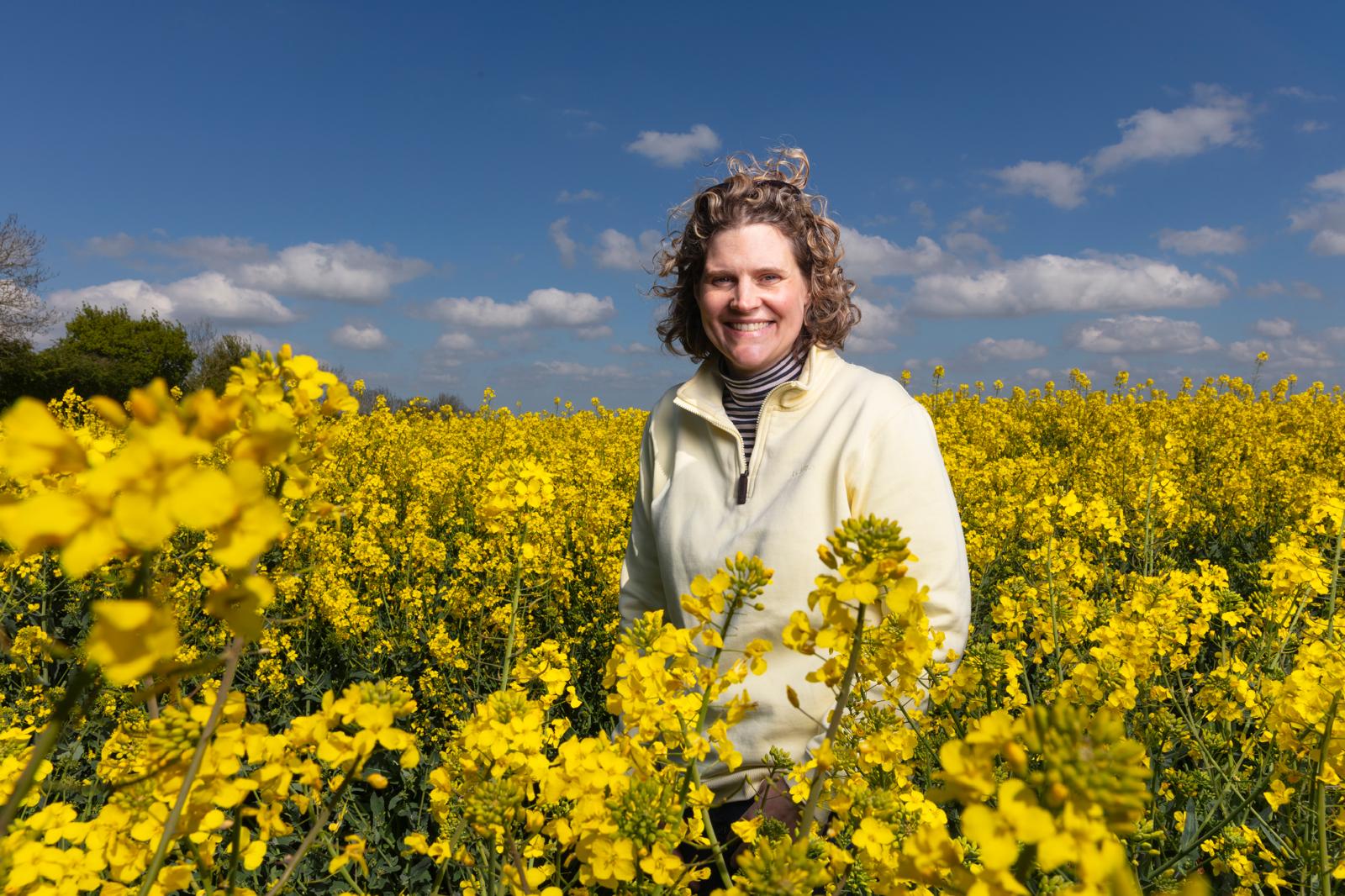
As one of the earliest harvests on record wraps up across the UK, growers turning their attention to oilseed rape drilling are being urged to hold their nerve and wait for moisture, rather than be guided by the calendar.
The advice comes from Florentina Petrescu, oilseed rape product manager for Limagrain Field Seeds UK who says the hot, dry summer has left soils critically short of the moisture needed to establish a crop successfully.
“There needs to be a decent amount of rain to restore moisture levels to where they need to be to sustain a rapidly emerging rape crop,” she says.
Oilseed rape seed goes through a series of physiological processes during germination. Initially, the seed rapidly takes up water through imbibition, initiating germination. Continued water uptake is necessary to support further metabolic activation until germination is complete.
“How often have we seen seed that has started to germinate, only for it to wither away through lack of soil moisture before completing emergence?” says Florentina. “This shows how sufficient moisture is needed in the soil to start the process, and then more rain following drilling, to ensure there is enough moisture for the crop to emerge.”
Her advice is to be guided by seedbed conditions rather than the date on the calendar.
“With not much rain in the forecast, many will be worrying about compromising establishment by holding off drilling until conditions improve. However, holding off doesn’t compromise yield,” she says.
“It is possible to get good yields from later-drilled rape, when it is sown into the right conditions. In fact, later-sown crops can often outperform some of the earlier drilled crops.
“Hybrid varieties will also have better vigour contributing to faster emergence and greater early biomass accumulation which results in a rapid establishment of the crop.”
She points out crops drilled mid-September up in the Lincolnshire Wolds achieve yields of over 6t/ha, so there is definitely high yield potential for crops drilled into September in the right conditions.

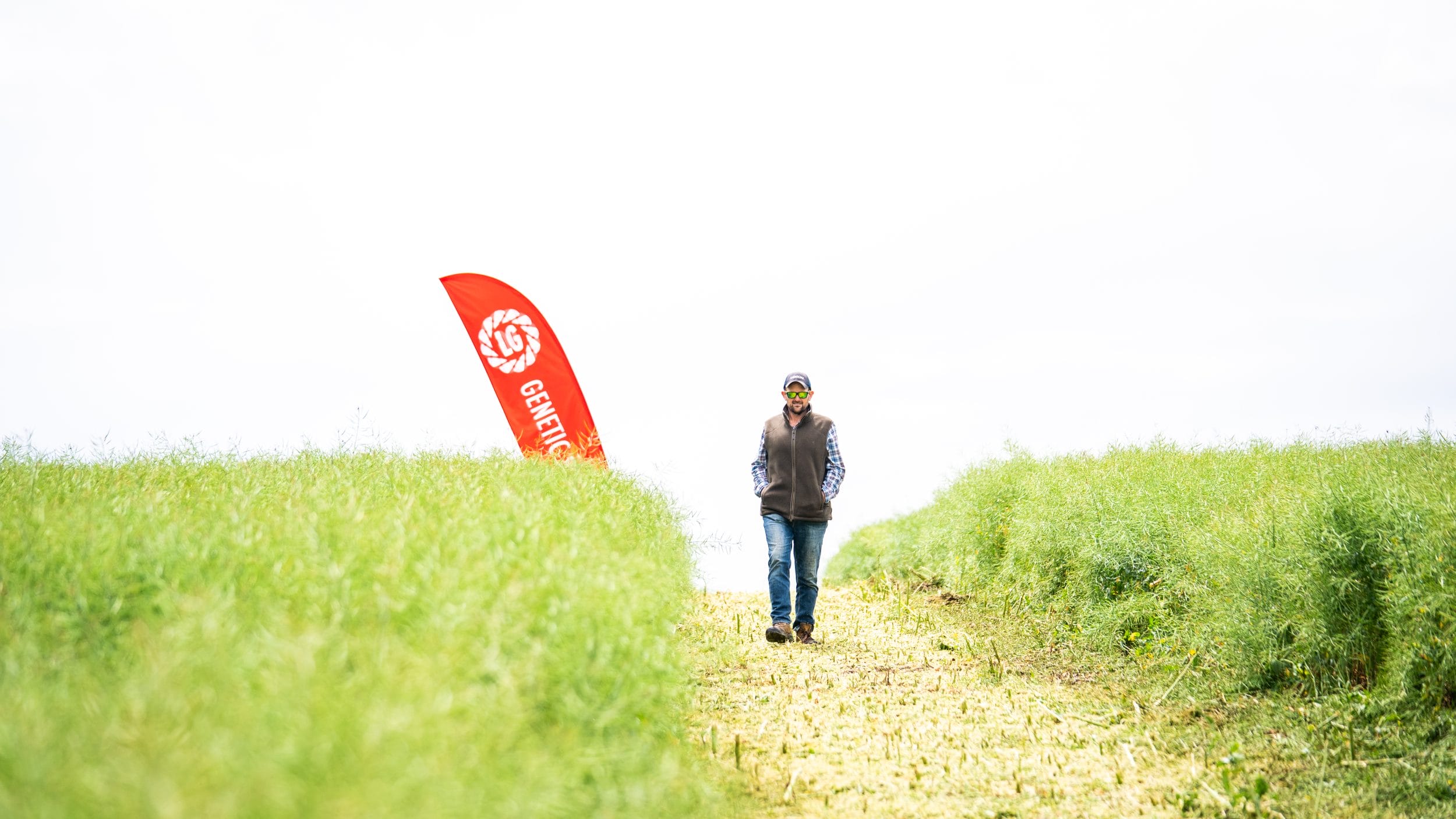
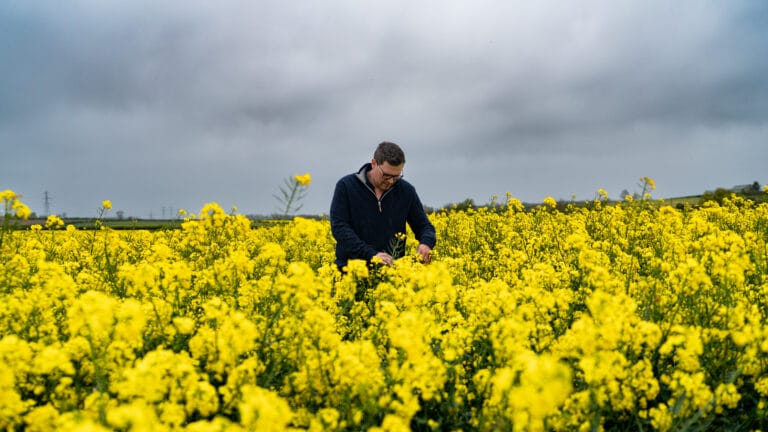
Florentina explains how strong oilseed rape yields can still be achieved from later-drilled crops when established in the right conditions.
“It is crucial to give the crop the right conditions to establish from the start, because that gives it the best chance of reaching its full yield potential. Drilling when conditions are not right means yield potential has already started to be eroded before the crop is even out of the ground.”
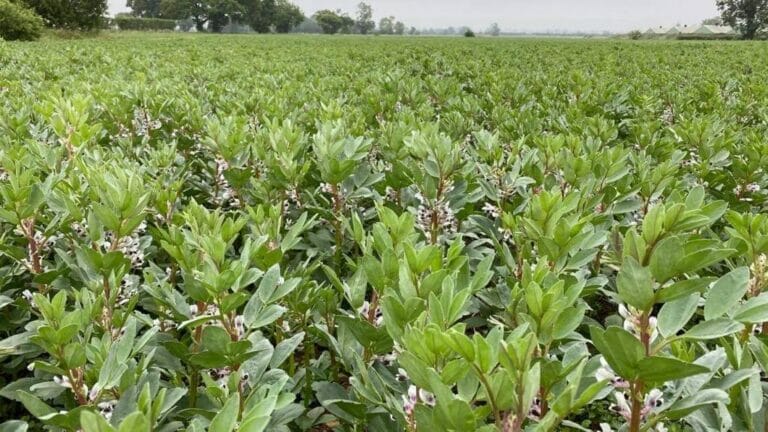
That principle of waiting for the right conditions has been borne out for Rutland grower Sarah Bell, whose 17-hectare crop of LG Armada has delivered exceptional results after being drilled into a firm, moist seedbed last August after timely rain in late July into early August — proof, she says, of what a modern hybrid can achieve when conditions are favourable from drilling right through to harvest.
The crop yielded strongly at 10% moisture, fully justifying the decision to grow it.
“It is a strategic decision to grow oilseed rape, based on a risk-versus-reward calculation,” says Sarah, “and this year it has certainly paid off.
“I like the Limagrain varieties because of the genetic resilience that’s been bred into them. Good disease resistance, strong vigour and good rooting are all traits that help to tip the balance a little more in the grower’s favour, so it’s an important part of the decision-making process.”
Sarah has been impressed by the disease resistance and strong vigour of Limagrain’s oilseed rape varieties.
On the mixed farm, which runs suckler cows and sheep alongside its cropping, soils generally benefit from the legacy of farmyard manure, and the field that grew the LG Armada was in a favourable state.
“This was a relatively light, but well-bodied site, and it had been ploughed two years earlier,” Sarah explains. “Spring barley preceded the oilseed rape, with minimal carryover risk from cover cropping, and there was plenty of moisture for early drilling.
“We used berseem clover as a companion crop and, crucially, the rape was up and out of the ground and looking great very quickly.”
The crop received a top dressing of 30kgN/ha in the autumn, and 190kgN/ha plus SO3 in two applications in the spring, with some early grass weed control. Fungicides and other inputs were kept to a bare minimum — a decision that paid off in a low disease-pressure season.
“Our rainfall from April through to June was around 25% less than our average, and what we did have came in two heavy bursts,” Sarah adds. “The fact that the oilseed rape did so well is testament to the strength of its rooting, and the long dry spells kept any fungal disease at bay.
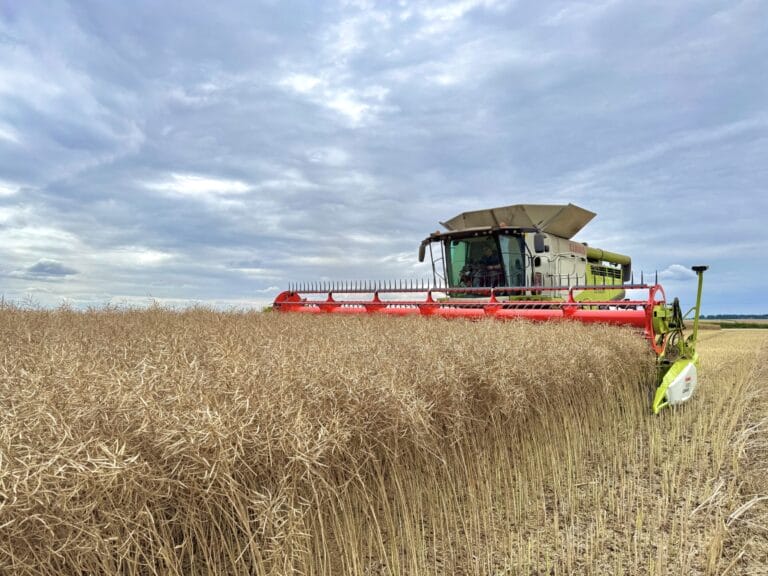
“By harvest, in mid-July, the crop was seven feet tall, with stems as thick as my thumb. It has really shown what can be achieved when conditions allow full genetic potential to be realised.”
Conditions will again determine whether winter oilseed rape goes into Sarah’s rotation for 2027, but she is content in the knowledge that — when there is moisture at drilling time and flea beetle pressure is low — she can reap the benefits of progressive plant breeding.
About The Author

Florentina Petrescu
OSR Product Manager