




The value of varietal tolerance to Barley Yellow Dwarf Virus (BYDV) has been clear to see in trials and on-farm this season, following impressive results from the new two-row winter barley, LG Catapult.
The variety yielded close to the conventional two-row feed varieties LG Capitol and LG Caravelle in the latest AHDB harvest results, coming in at 105% of the control varieties in provisional data published in late July. The figures also show LG Catapult to be the highest yielding variety in fungicide-untreated trials at 116%.
“Although more results are still to come in, it’s clear that LG Catapult has done really well, in what has been another challenging season,” Limagrain Field Seeds arable technical manager, Ron Granger, says.
The variety’s BYDV tolerance is likely to be a significant contributory factor behind the strong performance, as the mild, wet winter of 2025/26 led to increased aphid activity, with more reports of BYDV in wheat and barley crops around the country this spring, he says.
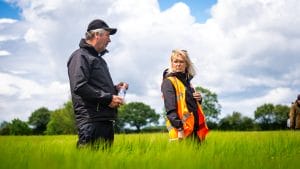
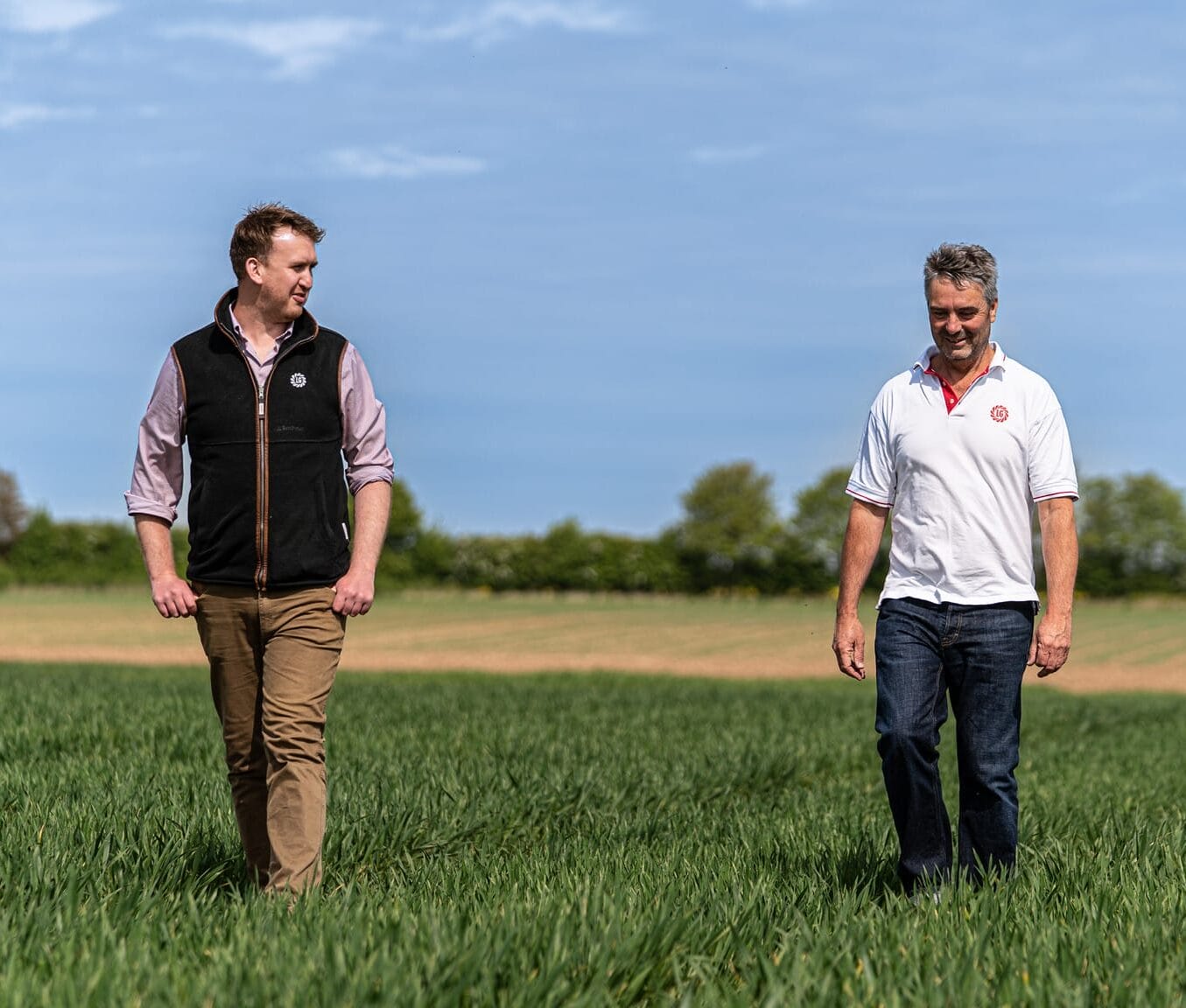
Ron Granger says BYDV tolerance proved its value this season, helping LG Catapult maintain strong yield performance under high virus pressure.
“Issues were thought to be quite regionalised, with the southeast and west generally being the main high-pressure areas, but seeing these results, one can conclude that the pressure was higher than we thought, and possibly went unrecognised in the majority of crops grown across the UK.
“I think people underestimate the impact that BYDV can have, as you only need a small amount of virus to pull yields down,” he adds. “When you have a high pressure year for BYDV, such as 2026, the value of tolerance in a variety like LG Catapult really comes to the fore.”
Standing out from the crowd
Indeed, LG Catapult’s BYDV tolerance has been a key reason for growing the variety for Lincolnshire farmer Ben Bateman, of the 2,400 ha (6,000-acre) B Bush & Sons Ltd, near Boston.
The farm grew 130 ha of LG Catapult this season, 25 ha for seed and the remainder as a commercial crop, with pleasing results. “We tried a small area last year and could see the variety stood out as having something special,” he says.
“This year, the main block of 92 ha was near Lincoln, where we noticed that most of the other barley crops grown nearby seemed to have BYDV in the spring, whereas the LG Catapult didn’t appear to have any. That was despite no insecticides being used across any of that area, as we’re in the SFI no insecticide option.
“In this region, we used to get cold, dry winters that would kill aphids off, but that doesn’t seem to happen anymore, with mild and wet conditions increasingly becoming the norm,” he continues. “That means aphids – and the associated virus risk – are becoming a bigger threat, so if we can grow a variety that has tolerance, with no yield penalty, it’s a no-brainer. It’s another tool we can use to help de-risk the business, while reducing our environmental impact.”

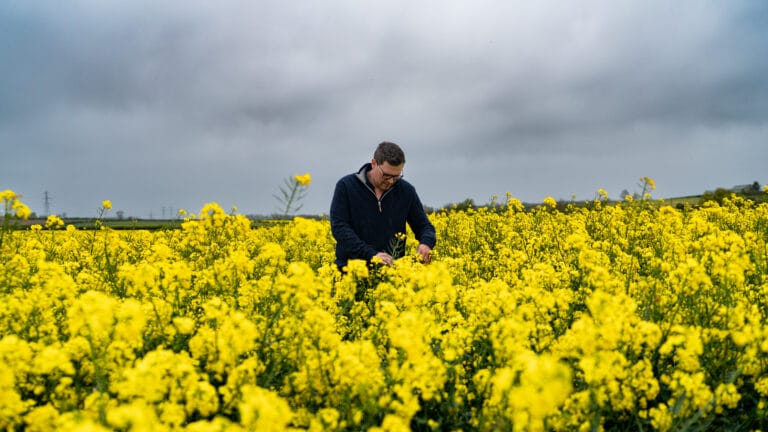
Lincolnshire farmer Ben Bateman has seen first-hand the benefits of BYDV-tolerant winter barley on farm.
The farm’s main commercial crop was sown at the end of September/ first week in October, as a second cereal after wheat on average Grade 3 land, and yielded 8.6 t/ha (3.5 t/acre) this harvest, with a good grain sample. That was a decent result for that land given the lack of rainfall, Mr Bateman says.
“If we’d have grown a second wheat there instead, it would have probably died off prematurely and not produced a very high specific weight given the conditions. But, because winter barley is naturally that bit earlier maturing, it didn’t seem to be as badly affected by the lack of rain.
“With spring barley becoming more risky in dry springs, it makes sense for us to go for a high-yielding winter barley instead, especially if there’s a local demand for it nearby, as we have here.”
The farm also grew a small area (14 ha) of RL Candidate BYDV-tolerant variety, LG Caprice, which Mr Bateman was similarly impressed with after yields nudged 10 t/ha (more than 4 t/acre).
Given the performance of BYDV tolerant varieties on the farm this year, Mr Bateman sees the value of this genetic trait and plans to continue growing BYDV tolerant varieties next season.
Mr Granger says LG Catapult’s performance is proof that BYDV tolerance can be introduced into new two-row varieties, with no yield penalty, which combined with good agronomics, strong all-round disease resistance, and a good specific weight, makes it a solid option for growers this coming autumn.
He suggests BYDV tolerance could soon become a standard feature of all UK winter barley varieties, as it is in France, where it is fully endorsed as a valuable genetic tool for securing final yield potential on-farm.
“For BYDV tolerant varieties to be successful, they have to be commercially viable and competitive with the leading two and six row varieties presently in the market; LG Catapult does that, and has the right attributes to make real inroads into the winter barley sector.”
-
LG Catapult
– New 2-row winter barley
– Combines BYDV tolerance with high yield potential
– One of the highest untreated yields on the Recommended List (90%)
– Strong all-round disease resistance (especially brown rust and mildew)
– Good specific weight (70.7 kg/hl) and straw strength
– Consistent performance, even in seasons without BYDV
– Relatively early maturity (similar to LG Caravelle)
– Suits a range of soil types, but prefers heavier soils

About The Author

Ron Granger
Arable Technical Manager