

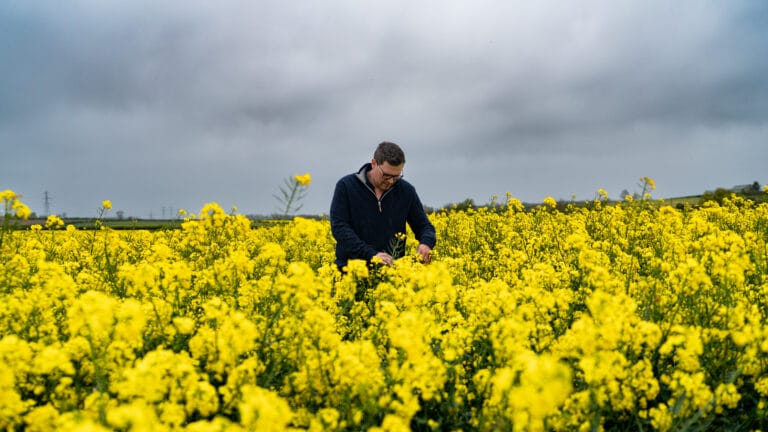
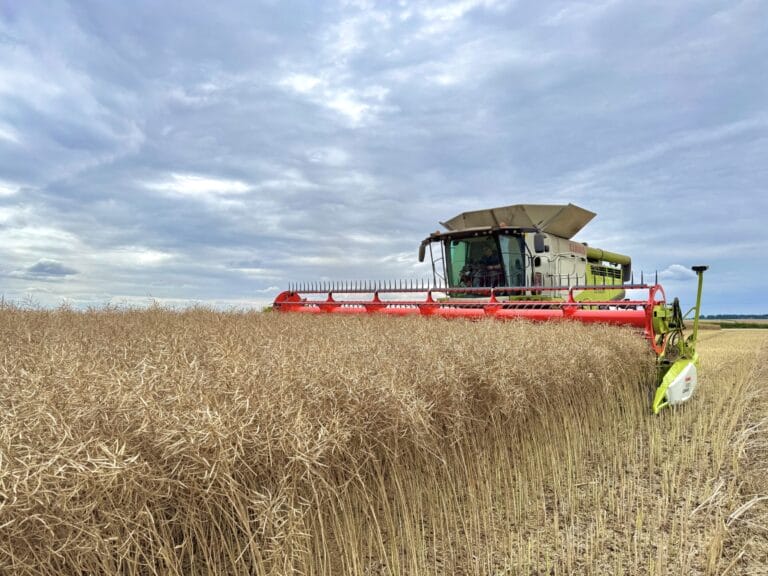

Oilseeds hectarage is at an all-time low, and already the question I am coming up against is “what is the future for British OSR?”.
It has become apparent that oilseed is an increasingly technical crop to grow. However it remains a vital break crop on farm in terms of profitability, and also environment. The environmental benefit of keeping oilseeds in your crop rotation is multi-fold. The taproot has a positive impact on soil structure and biological soil activity. It helps loosen the deep soil layers which leads to better soil aeration and easier soil preparation for the following crop in the rotation.
From an environmental perspective, the oilseed crop has a high nitrogen uptake in autumn which limits the risk of mineral nitrogen losses in the winter. The high amount of plant residue left after harvest increases organic matter accumulation, whilst the resulting organic nitrogen can be used by future crops, after mineralisation.
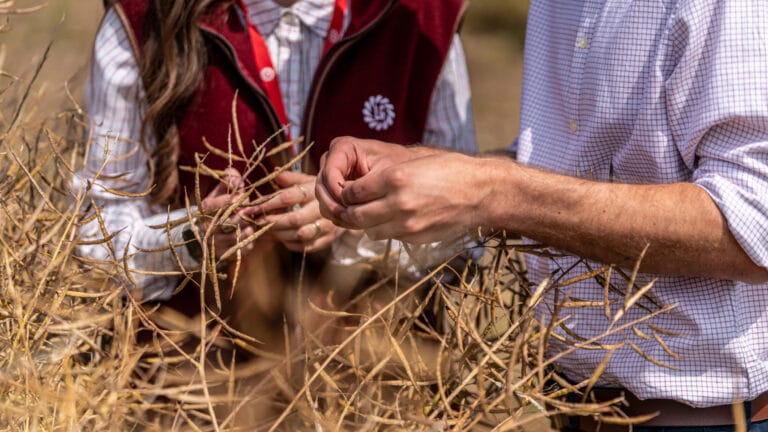
Rapeseed oil remains one of the key consumable oil crops worldwide, and the only one grown commercially in the UK. The drop in planted area and subsequent move from exporter to importer is a bad omen for British farming, food security and the wider UK economy. On farm, genetics offer a solution towards mitigating increased risk from disease, pestilence and reduced inputs. Farmers are increasingly seeking arieties that are adapted to the UK environment and are trait stacked with consistently high yields. Traits like pod shatter and strong spring and autumn vigour are increasingly necessary to protect your investment from establishment through to harvest. As the plant breeder, with the largest UK based winter oilseeds breeding programme, Limagrain Field Seeds is uniquely placed to assist farmers who still see the benefit of growing oilseeds.
So, to answer the question “what is he future for British OSR?” – continued investment and innovation in UK breeding for securing yield potential on farm, are key to the future of this vital break crop.
About The Author

Florentina Petrescu
OSR Product Manager