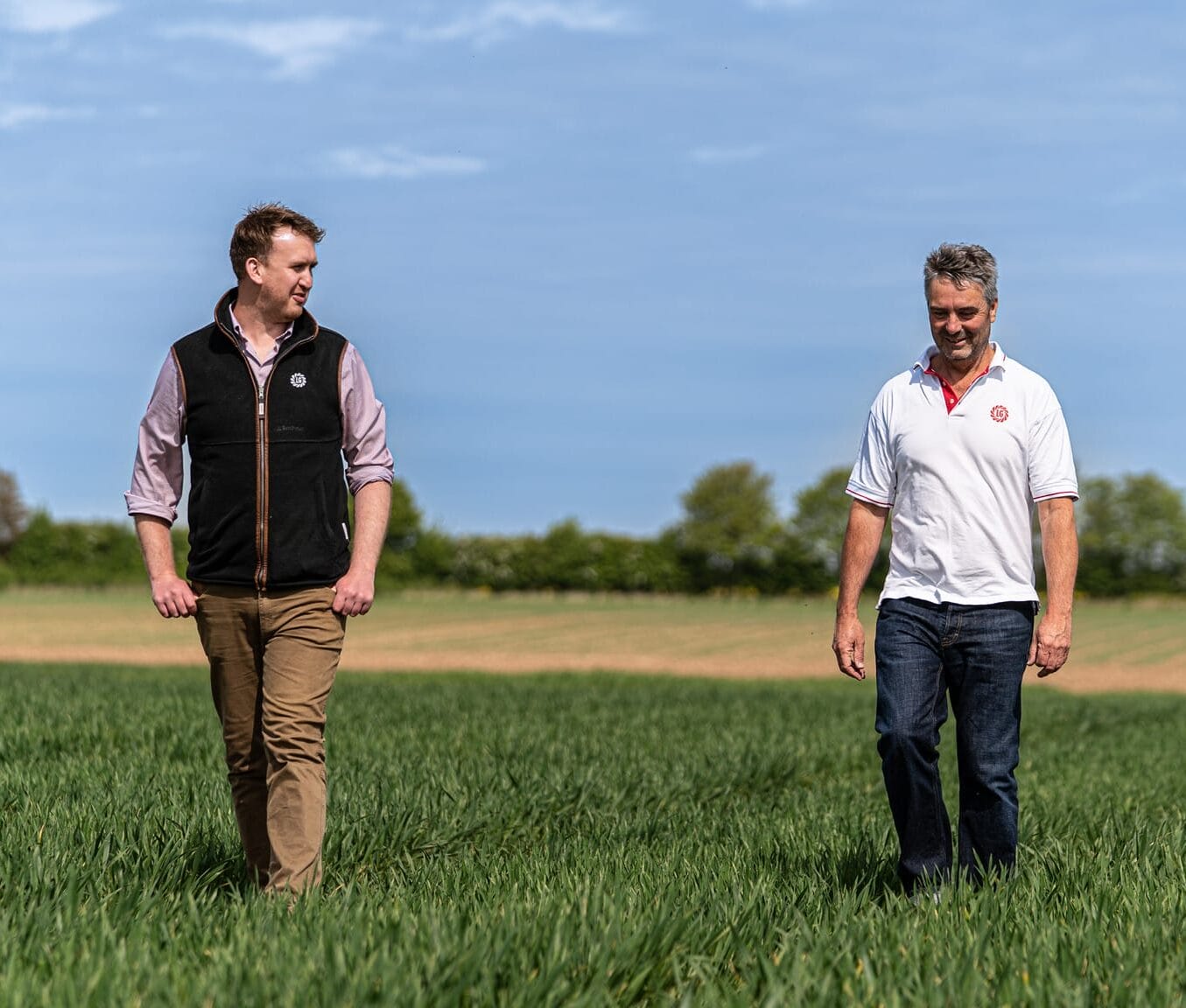






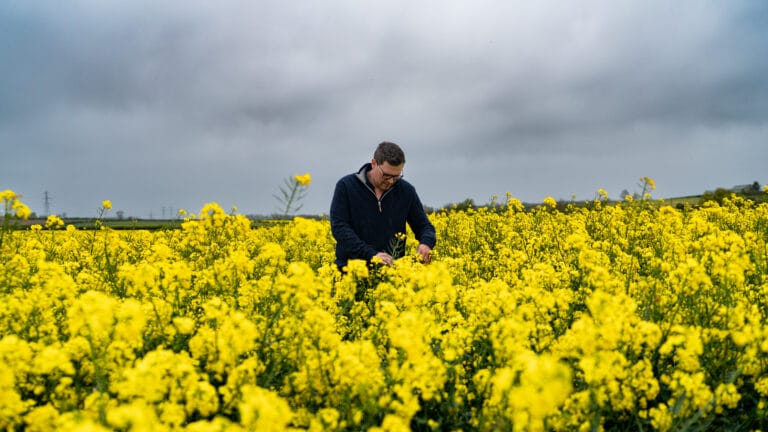
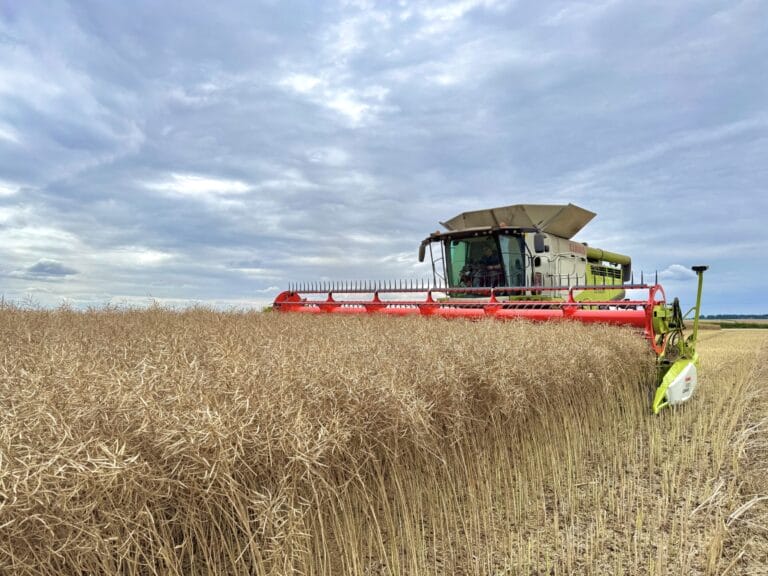





Oilseed rape is expected to be one of the outstanding performers this season across Andrew Reed’s 800 hectares of mixed arable cropping, up in the north eastern corner of Northumberland, near Berwick-upon-Tweed.
He had taken the bold move of replacing previously successful Aurelia with newly recommended LG Adapt, staying true to his commitment to continually push forward with new breeding advances.
As the rape harvest concluded on 2nd August, he was estimating a yield of close to 5.5t/ha, confident that his crop management had enabled the new hybrid to deliver fully on its genetic potential.
“We selected the variety on the basis of our agronomist’s advice and Limagrain’s trial results, with disease resistance traits as important as its yield potential,” says Mr Reed. “It has been a fantastic crop throughout, holding up to the weather conditions and delivering the kind of performance that we’d hoped for. There was a nervous period leading up to harvest, as it was a good 18 days between the desiccant going on and making the decision cut, but it looks like we were right to be patient.”

Andrew has been impressed by the consistent performance of Limagrain’s oilseed rape varieties.
Oilseed rape has long been a part of the rotation at East Anscroft Farm, typically grown one year in seven, following two wheats, two spring barleys, beans and winter barley. Seed for the 2026 crop was drilled with a seeder on the Simba SL 400, with a liquid starter fertiliser, and slug pellets applied, before firming up the seedbed with Cambridge rolls.
“This was all carried out within a tight window, between the 15th and 20th August,” adds Mr Reed, “and the crop got away well.”
In addition to some weed control and foliar micronutrients, an insecticide was applied in the autumn, but no fungicides were required. In the spring, the crop received two main fungicide applications, one with additional growth regulation and foliar micronutrients at stem extension in March, and one more at flowering in late-April. Phosphate and potash was applied at variable rates in March, and the crop had a total of 245kgN/ha in three splits.
With the farm’s trailed sprayer lacking the clearance of many self-propelled machines, and much of the land being relatively exposed to the elements, seed loss around harvest is always a concern for Mr Reed, but he’s confident the variety’s strengths have paid dividends.
“The plants were well structured, rigid and hardy, and the pod shatter resistance has been effective, so we’re very happy with the outcome. We’re certainly going again with Adapt.”
About The Author

Florentina Petrescu
OSR Product Manager