





















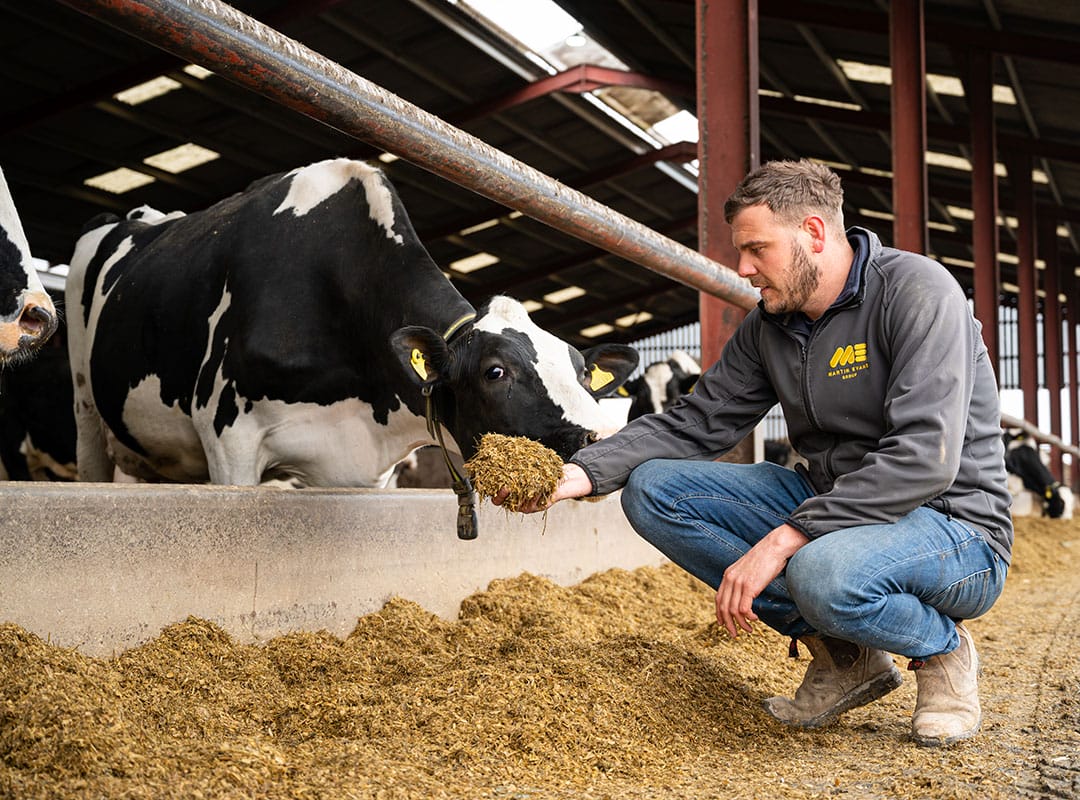
As experienced contractors and longstanding maize growers in their own right, Martin Evans Farming know all about the importance of good variety selection.
In their own case, very early maturity is a key priority, to ensure harvest is underway by the end of September so that following crops can be established in good time.
They also require consistent performance, with starch and energy levels as high as possible to underpin the ration of their 1,500-cow herd of high performing pedigree Holsteins.
 “Maize is the mainstay of the forage ration for our milking herd, making up around 60% alongside grass silage,” explains Josh Evans. “The higher the quality, the better, as it reduces other feed costs, but we’re also focused on crops reaching full maturity early. We always aim to establish a following crop to cover the ground over the winter, whether that’s after maize grown within a rotation or a crop that’s grown continuously. It’s important to prevent soil erosion over winter, and to have a crop in the ground to minimise any leaching of nutrients.”
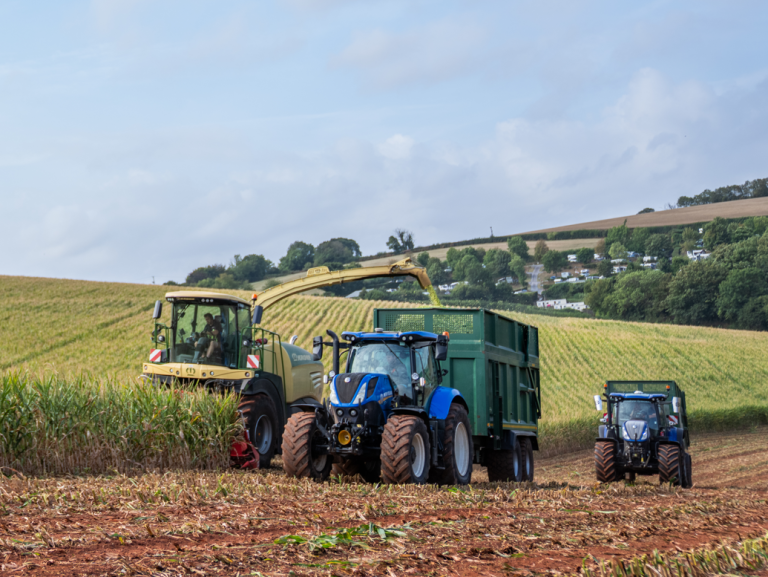
Martin Evans Farming, based at Priddbwll Mawr, Llangedwyn, near Oswestry, usually grows between 500 and 600 acres of maize each year, most of it as part of an arable rotation and typically followed by winter wheat. The remainder is grown on ground suited to continuous maize, where the usual practice is to follow it with an over-winter cover crop, such as a Westerwolds and Italian ryegrass blend.
The farm’s agronomist, Ian Evans of BCW Agriculture Ltd (Frontier), provides guidance on varieties, with the 2024 acreage largely being drilled with the very early variety Skipper or the slightly later maturing Saxon, both from Limagrain and bred through the company’s robust and extensive UK screening and testing programme.
“With such a large and important maize acreage, we’re looking for varieties that will reliably get up and out of the ground, and stand up and perform in terms of yield, starch and energy,” Josh explains. “Skipper meets all these criteria, and as it is very early – often selected to perform in more marginal areas – it delivers the early harvest. Saxon has similar attributes, but is slightly later and therefore a better option for our lighter ground.”
The Priddbwll Holsteins are split into two herds, one milked through a rotary and one through a semi-rapid exit parlour, calving all year round. Milked three times daily, the cows are averaging around 13,000 litres/lactation.
 “A typical milking ration will contain 22kg of maize silage and 16kg of grass silage, with rape, wheat, ground maize and a protein blend making up the mix,” adds Josh. “The maize is a primary source of energy, so we are trying to maximise the amount we include in the diet.
“It’s important that we fill the clamps with as good a quality crop as possible, so we need reliably performing varieties, and we do the best job we can with everything from seed bed preparation through to nutrition.”
The maize ground at Priddbwll Mawr benefits from applications of either farmyard manure, slurry or poultry muck, so baseline soil nutrition is good. After ploughing at 8-10 inches, the ground is sub-soiled, usually between 14 and 18 inches, and then power harrowed to create a fine tilth.
“We’ll go over with the power harrow twice if necessary, in order to create the seedbed conditions that we need,” says Josh. “There’s little to be gained trying to cut corners with seedbed preparation.”
 Drilling date is dictated by the season, but would be as early as 24th April if conditions allowed. In 2024, with cold and damp conditions dominating until beyond the end of April, drilling was delayed until 12th May, further underlying the importance of selecting early maturing varieties like Skipper to counter harvesting delays due to seasonal conditions. As with variety selection, agronomist Ian Evans advises on any further inputs, with the farm using both pre- and post-emergence herbicides to ensure all crops have a clean start.
With base level soil nutrition underpinned by the application of the farm’s own manures, any additional fertilisers are for targeted use, designed to help early establishment and deliver a boost when the crop needs it most. To this end, a starter fertiliser is applied down the spout at drilling, at a rate of 125kg/ha, delivering nitrogen, phosphate and key trace elements. Then, at around 6-8 weeks, Josh has seen benefits from the use of the slow-release urea Nutrino Pro, applied as a foliar spray.
“We’ve used the liquid fertiliser over the last couple of years and it’s something we’ll continue as it seems to give the crops an advantage.”
Harvest date is determined with the help of Ian Evans, with the optimum dry matter range being between 28 and 32% in order to optimise the starch percentage, metabolisable energy (ME) and neutral detergent fibre (NDF) available to the dairy cows.
“Even in what has been a difficult year for growing maize, we’ve harvested a mature crop in good time and have what we need in the clamps,” Josh concludes.
Download the Maize Variety Selection Guide here


About The Author

Tim Richmond
Maize Product Manager