




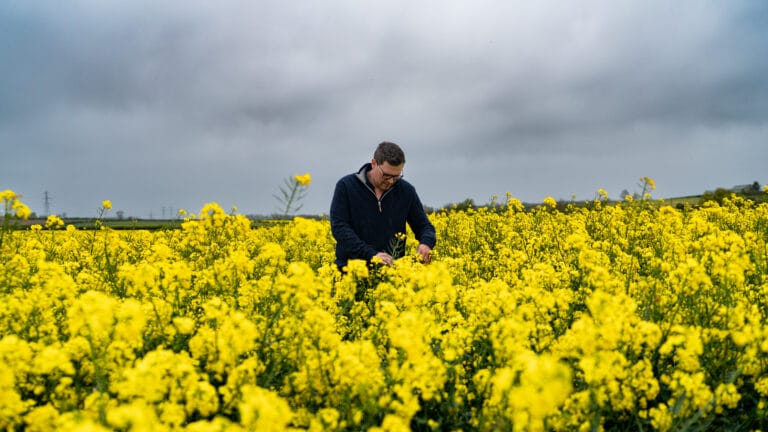



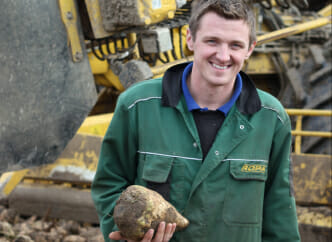


Rob Atkin, Atkin Farms, Staffordshire
“Highest yielding variety on farm – second year in a row!”
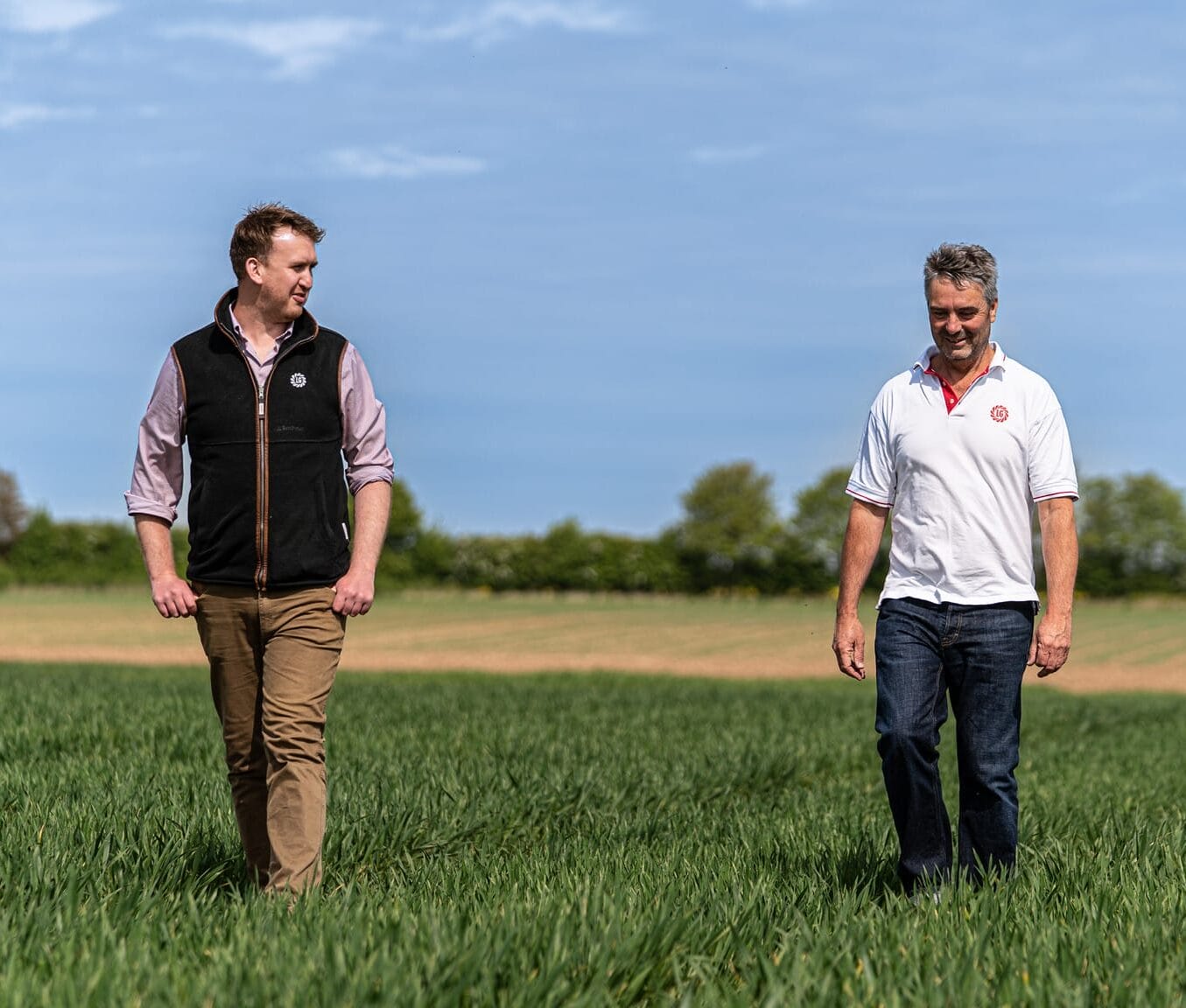
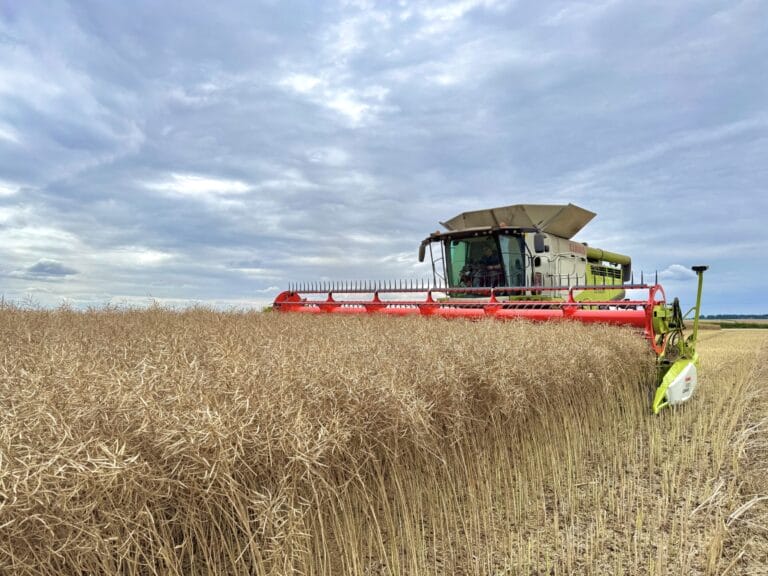
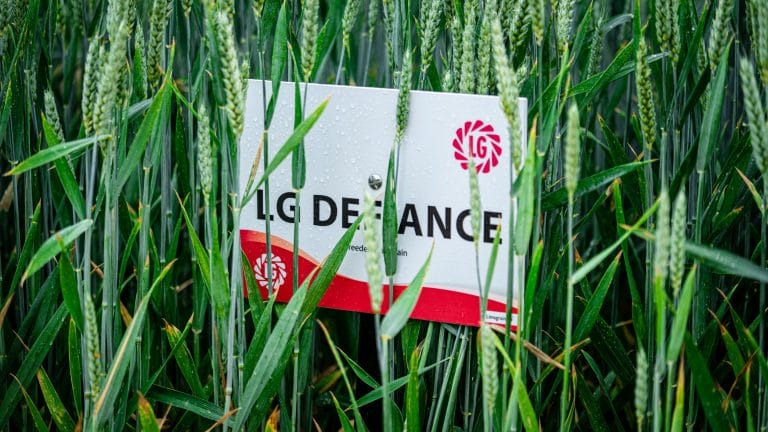
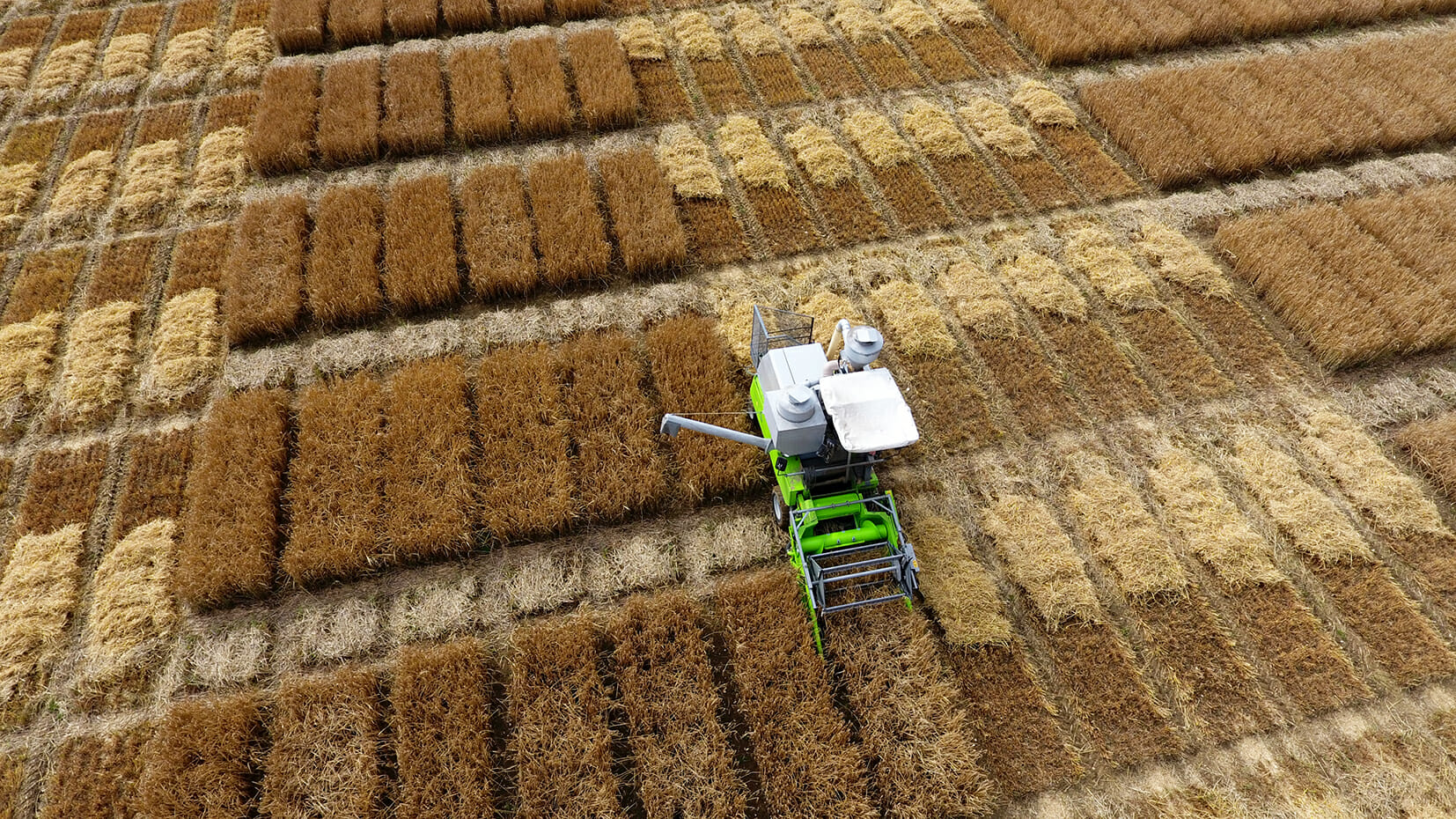
The combines are rolling, and LG Rebellion is once again proving why it’s a firm favourite at Atkin Farms, Staffordshire.
Chosen by Rob Atkin for the second consecutive season thanks to its outstanding yield potential and robust disease resistance, LG Rebellion has delivered an impressive 16% above the farm’s five-year average yield.
Direct drilled with a HORSCH Avatar on 26th September, it’s had the following inputs:
Fungicide spend: £89/ha
Nitrogen: 180kg N/ha
Sulphur: 80kg/ha
Total Average Yield: 9.17t/ha
Spec weight: 79kg/hl
Compared to the East of the country, this part of the West Midlands has received adequate rainfall, but three intense heatwaves. LG Rebellion has looked strong from establishment through to harvest. With plentiful straw and another standout yield performance, it’s no surprise Rob plans to grow the variety again next season.
See LG Rebellion in action at harvest over on our socials!
For more on LG Rebellion or any of our other winter wheat and winter barley varieties – as well as all our leading OSR varieties, download the 2026 Arable Guide!

Crusoe Delivering at Dennington!
Crusoe still delivers after 14 years!
When a variety stays on the Recommended List for well over a decade and continues to perform on farm and in the mill, you know it’s doing something right.
At Dennington Hall Farms, Crusoe has once again proved why it’s one of the UK’s most trusted Group 1 wheats:
9.5t/ha yield
13.8% protein
350 Hagberg
83kg/hl specific weight
3.8t/ha straw yield
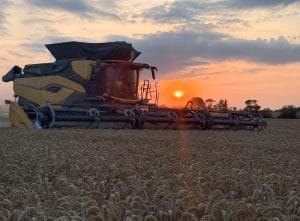
Grown as a second wheat it was direct drilled on 16th October into a summer catch crop, alongside 40kg/ha of Tundra winter beans to help provide an additional nitrogen boost. Just 170kg/ha liquid nitrogen was applied in three splits.
Despite the season’s challenges, the crop stayed clean throughout the year, with a total fungicide spend of only £95/ha.
With its strong agronomic performance, excellent milling quality and the valuable Group 1 premium, Crusoe is set to deliver one of the best financial returns on the farm to date this season.
It’s no surprise that Crusoe will be back in the rotation in 2027!
Want to read more on this great variety? Crusoe stands the test of time – LG Seeds
Crusoe stands the test of timeIt is 14 years since Group 1 milling wheat Crusoe joined the AHDB Recommended List, which is quite a feat considering the many other varieties that have come and gone over that time.
Crusoe is now the oldest variety on the RL, yet remains popular among end users for its flour quality and baking performance, while its inherently high protein content continues to give growers the confidence to target premium milling wheat markets.
One of those is Essex farmer Richard Carr, who has grown Crusoe almost every year since its launch at his 220 ha (540-acre) farm near the coastal town of Maldon. This year, he has 85 ha of winter wheat in the ground at Lawling Hall Farm, split evenly between Crusoe and Skyfall, alongside a small area of SY Cheer.
“One of our biggest challenges farming in this area is the lack of rainfall, which means we struggle to achieve the really high yields that some new Group 4 varieties promise, despite being on strong wheat-growing ground,” says Mr Carr.
“That’s why we go for milling wheats; if yield is going to be compromised due to lack of rainfall, we’re better off going for a premium market instead.”
And in the 13 years he has been growing Crusoe, the variety has achieved milling specification every time, allowing him to build strong relationships with local buyers. “We need to be over 13% protein, but more often than not it’s nearer to 14% or above, which in some years can earn us a small extra premium on top of the milling price if supplies are tight.”
Switch to min-till
Recent years have seen a move away from plough-based establishment at Lawling Hall Farm, to a minimal tillage approach, although Mr Carr remains flexible, with decisions made on a field-by-field basis.
“We’ve invested in drainage at the farm, which has made a big difference to soil health, crop uniformity, and has helped us go down the min-till route,” he notes. “It also means we can usually get a head start for early applications of fertiliser and sprays in the spring.”
Indeed, Mr Carr knows that early yellow rust, and later brown rust, is a risk in Crusoe, but says it is relatively easy to manage, providing disease is controlled properly from the outset.
“We typically start by applying a good triazole at T0 to make sure crops are clean going into the main growing season, and maintain this protection with other chemistry at T1, T2, and T3. In high-pressure years, we might need an interim spray to cover the gap between T1 and T2, but decisions really depend on disease pressure and the season.
“We’ve found that if we can keep yellow rust out from the start, then Crusoe is quite good at growing away from it once adult plant resistance kicks in.”
Getting onto ground early is also important for crop nutrition, with Crusoe typically receiving four applications of nitrogen each season, totalling 210-220 kg N/ha. The first is usually applied as urea in late February, followed by the main dose three to four weeks later, with the last ammonium nitrate plus sulphur going on in late April/early May. Crops also receive a foliar nitrogen top-up at cheesy ripe stage, as well as other micronutrients and trace elements throughout the season.
“Magnesium deficiency is one of the main issues, as although soil levels are quite high, they are prone to nutrient lockup, so we monitor crops with tissue testing and address with foliar treatments as necessary.”
Crusoe’s lack of orange wheat blossom midge resistance is something Mr Carr remains aware of, but says he has not needed to treat for the pest in the past five years. “Part of that might be due to the natural cycle of OWBM, or the fact that generally, farmers are now growing more midge resistant varieties.”
Safety in a catchy harvest
Mr Carr says Crusoe generally holds onto its Hagberg well in seasons where harvest gets delayed due to the weather, affording some level of security and flexibility. This can be particularly beneficial considering the farm does not have its own combine, but shares a hired machine with other neighbouring farms.
“Generally, if the weather is unsettled, we’ll prioritise combining the Skyfall first, as Hagbergs tend to drop quicker in that than in Crusoe .
“But one of our biggest stress relievers has been the recent investment in a 20 tonne/hour continuous flow system for cleaning and drying grain, which has made harvest management a lot easier, and is a good insurance policy that means we can cut at 20% moisture if need-be.”
Looking ahead to the coming autumn, Mr Carr plans to continue growing a similar area of Crusoe, but will also try a small area of two other new Group 1 varieties.
“At the moment, I can’t see any reason not to keep growing Crusoe. Any new varieties have got to prove themselves for both yield and quality before I make any significant changes.”
Lawling Hall Farm
- 220 ha farm near the Essex coast
- Predominantly heavy Windsor series clay soils
- Low annual rainfall, averaging 455-510 mm (18-20”) – ranging from 355 mm (14”) in 2025, up to 760 mm (30”)
- Cropping includes winter wheat (all Group 1s), lucerne, naked oats, winter beans and linseed
- Growing Crusoe since 2013
- Min-till establishment system
Cabbage stem flea beetle has been a big factor behind the decline in oilseed rape area over recent years, but one Lincolnshire grower is using varietal resilience to return to the crop after a three-year break.
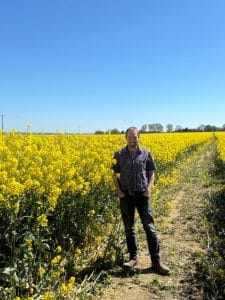
David Bristow, Lincolnshire
David Bristow of the 650 ha Stourton Estate on the edge of the Lincolnshire Wolds, stopped growing oilseed rape in 2022/23, after several seasons spent battling flea beetle, but decided to give it another go after hearing about the CSFB resilience characteristics of LG Avenger (see panel).
“When our seed supplier United Oilseeds told us about the resilience characteristics, it was one of the main reasons we were prepared to give oilseed rape another go,” says Mr Bristow. “But, it’s not the only reason. LG Avenger really has got the whole package; it’s a well balanced, good variety, that we’ve had no issues with growing so far.”
Rapid establishment
This season, Mr Bristow has 52 ha of LG Avenger in the ground, sown after winter barley in the last week of August. Stubbles were cultivated with a low disturbance subsoiler before drilling with the farm’s Horsch Avatar at 2.6 kg/ha, alongside a companion crop of buckwheat (5 kg/ha) and a surface dressing of 150 kg/ha of DAP fertiliser.
“We did have to wait until there was some moisture before drilling, but once it went in, the LG Avenger was up and away really quickly. The drill worked really well, with very even seed depth, which resulted in excellent establishment.
“The crop grew past the cotyledon stage so rapidly, I don’t think we saw any of the classic shot-holing last autumn, although pressure was generally fairly low.”
Larval assessments in 10 stem samples collected this spring support this, with just one larvae per stem found. “They were all very small, so I suspect they were laid fairly late in the season,” he notes.
The lack of CSFB damage comes despite no insecticides being used on the farm for the past six years, with a large area now signed up to the SFI no insecticide option (CIPM4).
Marginal gains
Mr Bristow is well aware that CSFB remains a threat to oilseed rape, so is keen to do all he can to mitigate the risks when coming back into the crop. Below are some of the steps he has taken:
- Selecting a CSFB resilient variety, LG Avenger
- Waiting for adequate moisture before drilling to aid rapid establishment
- Sowing with a companion crop to ‘mine’ soil phosphate and help disguise the OSR
- Applying DAP fertiliser at drilling to boost establishment
- Leaving taller stubble in the preceding barley crop to lessen the brown soil colour that CSFB are more attracted to
- Focus on achieving uniform seed depth and even emergence
- Applying an early spring multi-nutrient (polysulphate) fertiliser and nitrogen in mid-February to boost spring growth
- Two spring fungicides applied at mid-stem extension and mid-flowering, plus micronutrients at the earlier timing
- Close monitoring of pest and disease levels in-season, and potential CSFB migration risks to next year’s crop
“Individually, they’re all quite small things, but together they do all add up to make a bigger difference,” says Mr Bristow.
Added insurance
LG Avenger’s strong disease scores and pod shatter resistance provide another layer of insurance for protecting yield potential, Mr Bristow says.
“This season we’ve only applied two fungicides in the spring, and nothing last autumn, as the combination of LG Avenger’s phoma resistance and our careful disease monitoring was enough. Crops just never reached the threshold for treatment.”
The crop’s first spring fungicide was based on 200g/ha of tebuconazole, which Mr Bristow says helps to encourage compensatory growth lower down the plant. “It’s not about managing crop height, it’s to encourage crops to branch out more.”
LG Avenger’s pod shatter resistance is another trait Mr Bristow values, especially as the tractor and trailed sprayer used for pre-harvest desiccation lack the ground clearance of self-propelled machines. “Given the pod shatter resistance, we probably won’t use a pod sticker this season.”
Mr Bristow concludes; “The crop’s looked really strong throughout this season so far, with lots of pods forming during flowering, so if it carries all of those through to harvest, I hope it will do very well. We’d like to get at least 4-4.5 t/ha, maybe more ideally.
“I’m confident that we’ll be growing LG Avenger again next season, with a slightly larger area of 59 ha planned.”
LG Avenger
- High yielding hybrid with CSFB resilience characteristics
- High oil content (46.5%)
- Pod shatter resistance
- Turnip Yellows Virus resistance
- Strong disease package, including a light leaf spot rating of 7 and sclerotinia tolerance
CSFB Resilience explained
Florentina Petrescu, Oilseed Rape Product Manager
LG CSFB Resilience is “a novel genetic approach that tackles CSFB at key crop stages, as part of an effective integrated pest management strategy on farm”, explains Florentina Petrescu, Limagrain UK OSR Product Manager.
Resilient varieties feature a series of characteristics that make them better adapted to escaping damage during two crucial periods in the autumn and spring, so it is not just about a single genetic trait, she says. These characteristics include:
- Strong autumn dynamic growth to help developing crops escape the early “shot holing” damage caused by adult flea beetles feeding on cotyledons and first leaves, which can result in significant leaf loss and complete crop failure in extreme cases
- Rapid stem elongation in the spring to improve the plant’s resilience to damage caused by larvae mining into petioles and stems
- A capacity in some varieties (e.g. LG Avenger) to limit the number of larvae that develop within the stems – the exact reasons for this are still being identified
- Reduced CSFB larvae damage severity – e.g. stunted, bushy plants.
LG Adapt has fantastic potential!
Changing from a trusted variety to a new one can sometimes require a leap of faith, but for Northumberland farmer Andrew Reed, of East Ancroft Farm, it is a move that seems to be paying off.
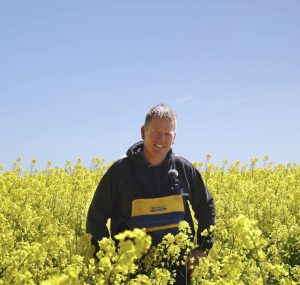
Andrew Reed, East Ancroft Farm, Northumberland
This season, Mr Reed, who farms 800 ha of mixed cropping across four farms near Berwick-upon-Tweed, swapped from proven oilseed rape variety, Aurelia, to Recommended List newcomer LG Adapt, sowing 100 ha after winter barley last August.
“Aurelia has been a superb variety for us over the past three years, but when the seed wasn’t available from our usual source last autumn, we decided to give LG Adapt a go on the advice of our agronomist, and data from Limagrain trial sites.
“I was looking for the next step forward in varieties, and so far, it all looks fantastic. It established really well, and has come through the winter and spring looking clean and superb. If anyone has a better 200-acre block of oilseed rape, I will shake their hand.
“I’m really looking forward to harvest,” he continues. “Last year’s Aurelia, which was grown on a heavier block of land, came in at 5.5 t/ha, so hopefully we can get close to, or exceed that.
“Oilseed rape looks like it could be the breadwinner this harvest, followed by first wheats.”
Looking beyond yield
While yield potential is obviously a big driver when choosing any new variety, and LG Adapt sits among the best at 106% on the 2026/27 AHDB Recommended List, other factors are also important to Mr Reed.
Disease resistance is one of those, and here too LG Adapt scores well, with good stem health, and Turnip Yellows Virus (TuYV) resistance.
Mr Reed says no fungicide was needed last autumn, while this spring, his LG Adapt received two main fungicides, one with additional growth regulation and foliar micronutrients at stem extension in March, and another at mid-flowering in late April.
Mr Reed also values LG Adapt’s pod shatter resistance, which can be a particularly valuable trait when growing oilseed rape on some of the more exposed fields close to the east coast, where significant issues with seed loss due to windy conditions were experienced six years ago.
Desiccation is also carried out with a trailed sprayer that lacks the ground clearance of a self-propelled machine, so pod shatter resistance should help to limit any tramline losses too, he notes.
All being well, Mr Reed plans to grow a similar area of LG Adapt again next season. “I don’t like to change varieties too much, as it’s good to learn how we can push them to maximise their potential on our farm. We had Aurelia for three years, and I’d like to think that we’ll have LG Adapt for at least another three years, if not more.”
LG Adapt at East Ancroft Farm
- 100 ha sown after winter barley on 10-20 August
- Seed broadcast behind a Simba SL cultivator, then rolled
- Liquid starter fertiliser also applied
- Autumn – herbicides applied in September and October, plus insecticide, and micronutrients
- Spring – two fungicides applied at stem extension and mid-flowering, plus foliar micronutrients with the earlier spray
- Variable P&K applied early March
- 245 kg N/ha applied in three splits
LG Adapt
- High-yielding hybrid oilseed rape variety (106)
- Highest oil content on the Recommended List 2026/27 (47%)
- Consistently strong performance across all regions and seasons
- Good resistance to stem based diseases
- TuYV (Turnip Yellows Virus) resistance
- Pod shatter resistance
Read more on LG ADAPT by clicking here!
Oilseed Rape Gaining MomentumThere is now more positivity than ever for oilseed rape as a crop around the UK, as 2025 was a much stronger year for it.
Harvest results indicate average yields have increased to 3.76 t/ha for 2025 harvest – a significant increase on the 2.8 t/ha recorded in 2024.

Florentina Petrescu, Oilseed Rape Product Manager
The recovery comes along with new confidence in the crop and improved establishment across much of the country, with 2026 crops looking very promising.
Market conditions have also provided a welcome boost. Commodity prices were on average £20-£40/tonne ahead of last year, and are holding strong currently, helping farmers restore margins and strengthen the crop’s position in rotations.
Area figures confirm this trend, with an average of 14% increase on last year’s grown area.
Seed market dynamics also underline the crop’s renewed strength. Despite heavy competition, LG varieties have maintained good market share, keeping LG firmly in the number 1 position for this crop group. This has been boosted by the introduction of LG Adapt – the highest yielding variety with pod shatter resistance, and the only cabbage stem flea beetle resilient variety in the market – LG Avenger.
 2025 harvest has also made a first for LG oilseed rape varieties, as Lincolnshire farmer, Tim Lamyman, has broken the world record for oilseed rape with LG Avenger, achieving a massive 7.52 t/ha crop.
LG Adapt is making headlines of its own, with it leading the field for oil content in the UK in 2025, having the highest oil yield out of over 35 varieties tested – giving farmers an advantage for higher oil bonuses.
Varieties like LG Armada, LG Academic and LG Adeline, are holding strong, with good performance on the AHDB 26/27 RL, showing consistency of the varieties across regions and seasons. This year’s list also marks the introduction of LG Calvin CL – the highest yielding Clearfield® variety on the RL.
Overall, the data suggests that oilseed rape is regaining ground. With improved genetics, stronger industry collaboration and a more favourable market, the crop is once again demonstrating its value as a resilient and profitable break crop for UK farmers.
Florentina Petrescu
Oilseed Rape Product Manager, Limagrain UK