










Harvest Highlights from our LG Legends Demo Farmers
Harvest 2026 has provided another opportunity to see how LG varieties perform under real farming conditions. We caught up with LG Legend growers Ryan McCormack in Suffolk and Rob Atkin in Staffordshire, to hear how their crops performed through this testing season and any key lessons learnt from harvest.
Meet the growers
Dennington Hall Farms in Suffolk is a 1,600ha combinable crops and sugar beet operation. This season, the farm grew around 15 different varieties across all crops, plus several blends.
Located just outside Uttoxeter in Staffordshire, Rob Atkin manages Field Hall, a 1,000-acre farm with a focus on arable cropping and grass-fed, home-reared cattle. Rob grows a wide range of varieties tailored to different roles in the rotation.
Winter barley
Winter barley delivered some of the standout results from Harvest 2026 for the two growers. At Dennington Hall Farms, all LG varieties exceeded 10 t/ha. LG Carpenter topped the yields at 11.71 t/ha, while LG Capitol impressed with 11.39 t/ha and the highest specific weight of 68.1 kg/hl.

LG Carpenter was the top performing winter barley variety for Ryan.
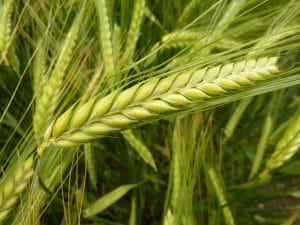
Looking at results beyond yield, LG Carpenter stood out for its speed of emergence and grain quality, with Ryan describing it as having “a lovely looking big ear” and adding that “it was the best-looking variety by eye, plus the tallest.”
For Rob Atkin at Field Hall, after comparing all of his LG Winter barleys grown in a demonstration scenario, it was his LG Catapult that stood out most, achieving the highest grain yield of 8.27 t/ha, with a specific weight of 69 kg/hl. His LG Caravelle demo proved why it has been the commercial choice on farm, coming in with the second highest yield of 7.6 t/ha, with a very good specific weight of 70 kg/hl.
Rob also grew LG Caravelle commercially on two different fields. Both crops were cultivated and drilled into heavy clay soils as second cereals, with a tine drill on the 23rd of September. The land was extremely waterlogged throughout the winter and early spring, which then inevitably delayed spring development and tillering.
Even in these challenging conditions, the variety performed – the highest yielding field still achieved 6.7 t/ha, in line with the farm average of 6.7 to 7.4 t/ha.
Oilseed rape
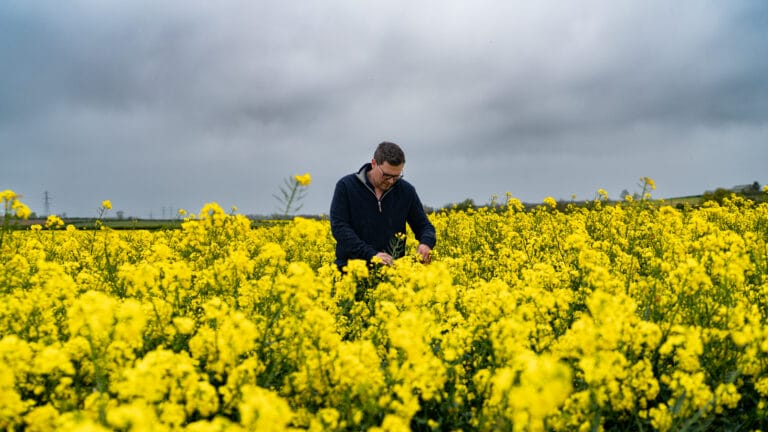
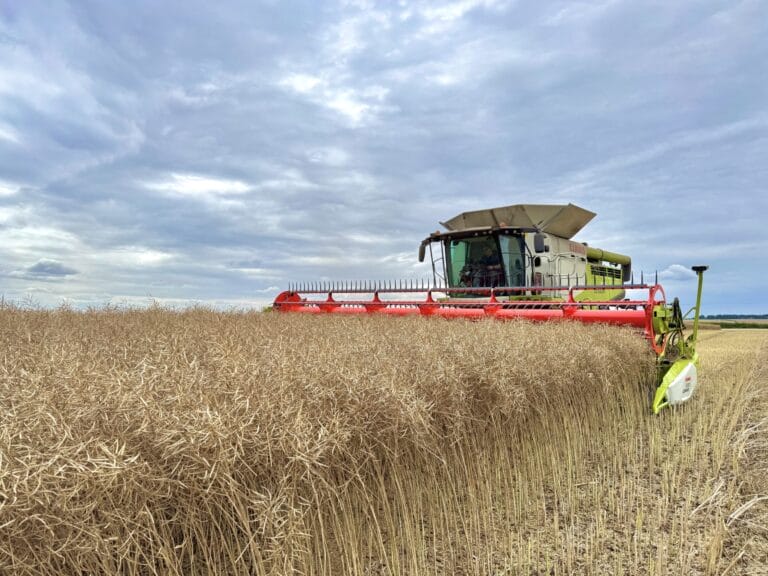
Despite the testing late spring and early summer, oilseed rape was one of the crops that performed very well across the country, and the results from the two farms reflected this. In Suffolk, Dennington’s tramline trial saw Magelan deliver the highest yield at 5.90 t/ha, followed by LG Adapt (5.24 t/ha) and LG Academic (4.85 t/ha).

LG Academic was the highest-yielding oilseed rape variety for Rob Atkin.
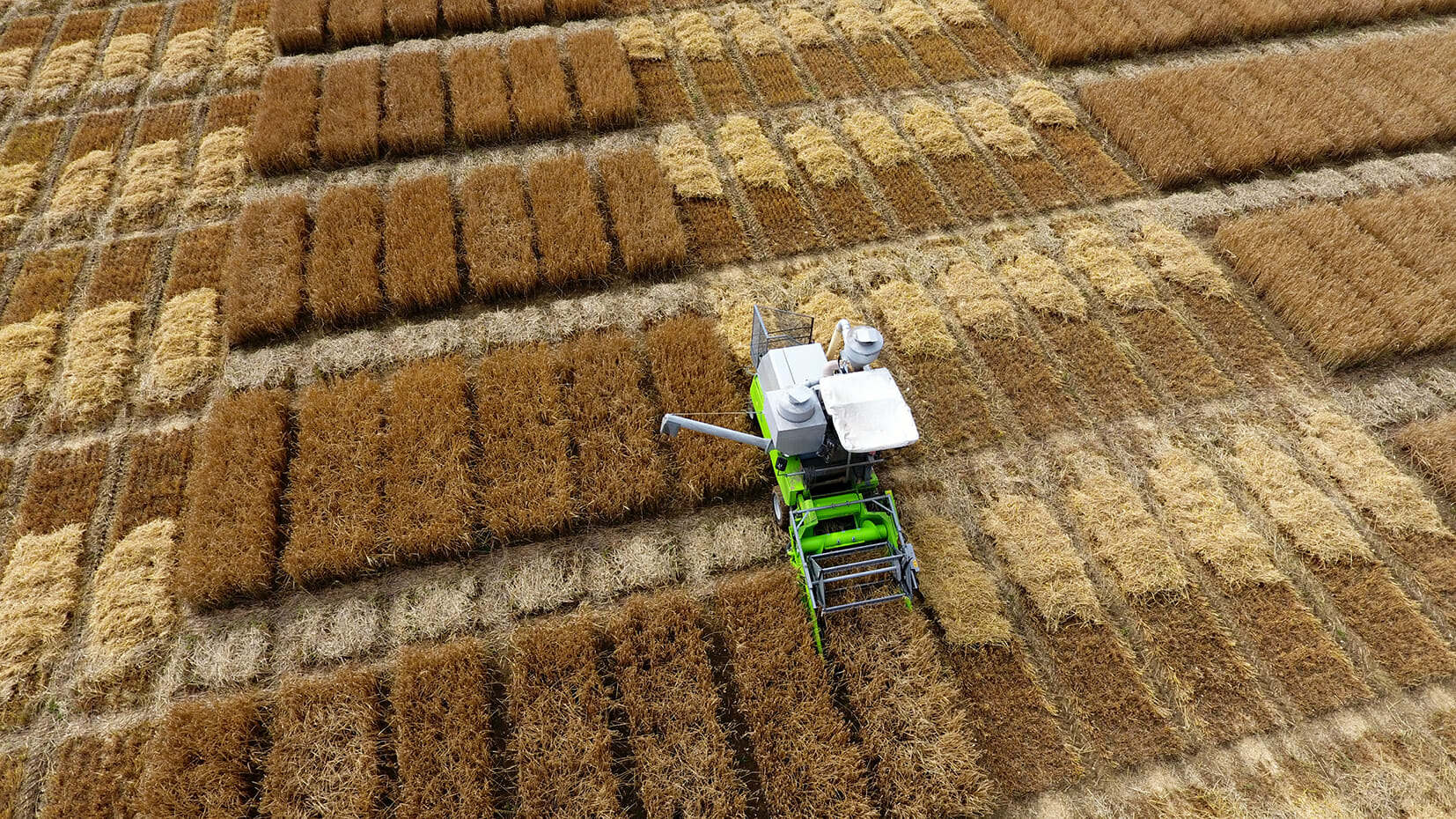
Further west in Staffordshire, Rob Atkin’s plot trial recorded LG Academic as the highest-yielding variety at 5.92 t/ha, closely followed by LG Adapt (5.61 t/ha) and LG Armada and LG Adeline, both with a yield of 5.58 t/ha.
Commercial crop performance reinforced the value of LG genetics, with LG Avenger delivering competitive yields and strong returns in both farming systems.
Whilst the actual highest-yielding variety differed between locations, LG Academic and LG Adapt featured among the strongest performers at both sites, demonstrating dependable performance across contrasting farming systems.
Winter wheat
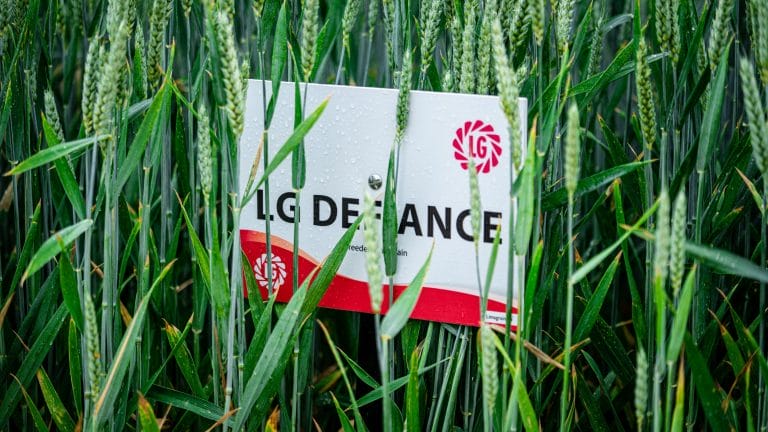
Winter wheat demonstrated strong performance despite a season marked by prolonged dryness in the spring, temperatures reaching 37.5°C and limited rainfall. At Dennington, LG Defiance delivered yields of up to 13.9 t/ha in direct-drilled large demonstration strips.
A commercially grown crop of LG Lotus achieved yields of 10.23 t/ha with 180 kg N/ha for Ryan, while the commercial crop of LG Defiance produced 8.67 t/ha with only 166 kg N/ha.
Over at Atkin Farms, LG Rebellion delivered yields exceeding 9 t/ha from 190 kg N, plus sulphur.
Key takeaways for 2027
• In a challenging season, profitability, input efficiency and resilience proved just as important as outright yield.
• Strong performance isn’t just about the highest yield. Grain quality, harvestability and consistency all contributed to crop value this season.
• LG varieties delivered competitive results across different regions, rotations and growing conditions.
Winter barley variety, LG Caravelle, has reaffirmed its position as a go-to option for growers wanting a cereal with strong competitive ability against black-grass and other weeds this autumn.
For the fifth successive year, the two-row variety from Limagrain Field Seeds has been among the top performers in Agrii’s black-grass competition trials, held on heavy land, at Stow Longa in Cambridgeshire.
The trials rate winter wheat and barley varieties on a 1-4 scale, based on an evaluation of their competitiveness and performance, taking into account crop yield, (with and without herbicides), and the physical effects on black-grass ear numbers and size.
In 2025/26, LG Caravelle gave the highest two-row yield in the trials, by 0.5 t/ha, the highest crop ear count, and some of the lowest levels of black-grass ears in both herbicide-treated and untreated plots, earning it another three-star rating, according to Agrii Seed Technical Manager, John Miles.
Yet again, the variety has outperformed other two-rows scoring just two stars, and matches conventional six-row barleys, he says.
“Generally, two-rows can be very competitive early-on, but because they are shorter than hybrids, decent-sized black-grass heads can still appear above the crop later in the season. LG Caravelle does have a bit of height about it, and reasonably leafy structure.
“It is interesting that LG Caravelle is bucking this trend and consistently performing so well compared with other two-rows.”
This year’s result is no anomaly, as LG Caravelle has shown similarly impressive results over several very different seasons.
In 2022, Mr Miles says LG Caravelle yielded top of the trials in both scenarios, due to high tiller number, and had noticeably lower black-grass ears coming out of the top of the canopy.

John Miles has been impressed by the consistent performance of LG Caravelle winter barley.
“This is what stood out, so we rated it provisionally like a conventional six-row type at three stars. In 2023, the story was repeated, top yielding, even with close to 100 ears/m2 of black-grass in the untreated plots.
“High crop ear number in 2024 gave a noticeably lower black-grass ear count than any other two-row type in the trial, and in 2025, again, there was higher crop ear number than any other, while yields and black-grass numbers were in the top three of the two-row types.”
Why is LG Caravelle so competitive?
A big factor in LG Caravelle’s competitiveness is its high tillering ability, says Limagrain’s arable technical manager, Ron Granger.
This is especially beneficial in a black-grass situation during earlier growth stages, when strong crop competition helps to achieve the target final tiller number of 775/m2 (as indicated in the AHDB Barley growth guide for good yield potential).
“Generally, as we have seen from the ADAS Yield Enhancement Network (YEN), growers are achieving higher yield potential from securing a higher final tiller count. Remember, compared to wheat, barley has less scope to compensate for low plant populations by increasing grain number in each ear, as each spikelet holds only one or three florets.”
Specific weight also has an important role in a black-grass situation, by providing security for final yield potential, he adds. “When barley is competing against black-grass for resources, it will have an impact on final grain size and specific weight – starting with a high specific weight is a security for final yield potential.”
At 71.7 kg/hl, LG Caravelle has the highest specific weight of all two-row barley varieties on the 2026/27 AHDB Recommended List.
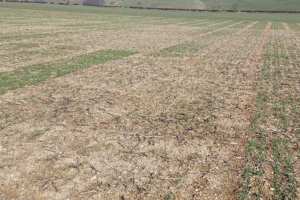
LG Caravelle has grown strongly in waterlogged conditions.
“Combine the black-grass competition with the disease resistance package, and it’s a no-brainer for me,” says Mr Miles. “One other aspect we have noticed in trials is the LG Caravelle ‘islands’.
Over the past three years, we have had some barley trials with wet feet over winter. LG Caravelle seems able to tolerate wet feet better and when those all around it are turning yellow or disappearing, it stays.”
Aside from variety choice, growers are also advised to pay close attention to seed rates to maximise crop competition, and be realistic about the establishment percentage they can expect to achieve, especially on heavy land.
“At Stow Longa, where seed rates are typically 350-375/m2, we regularly see 50-55% emergence at best, so on heavy soils I question whether people are putting enough seed on,” says Mr Miles. “If seed rates are too low, it’s giving black-grass an opportunity.”
He supports the use of variable seed rates where there are black-grass patches in a field, as upping seed rate slightly can be a good value control strategy, providing lodging risk is managed.
Of all the control options for black-grass, delayed drilling is widely regarded as being one of the most effective, but this can sometimes be challenging to do when establishing winter crops before the autumn weather window closes.
On many farms, winter barley is often one of the first crops to be sown, but Mr Granger believes there is scope to delay, just as in a wheat scenario, and allow that important flush of black-grass to be controlled before drilling.
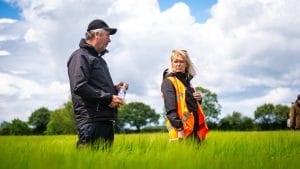
Limagrain Arable Technical Manager Ron Granger believes growers can be patient with drilling winter barley varieties.
“You don’t have to drill winter barley too early,” he says. “Varieties such as LG Caravelle will tiller strongly, even when sown a bit later, so you can be patient.
“In practice, winter barley could be drilled quite easily up to December, but of course, it’s not standard procedure. End of September to mid-October is the optimum, although up to the end of October will be fine in most scenarios, but just be careful in the North, as we know winter generally comes quicker. If drilling later, seed rates would need to be increased.
“The important thing to recognise about barley is that it needs good soil temperatures and moisture for good germination and emergence, and then also requires warm temperatures to drive leaf development and control the final number of leaves initiated.
“Barley doesn’t like the cold, hence why we tend to drill the crop earlier so that the required high tiller numbers are established well before winter takes hold.”
LG Caravelle
• High yielding 2-row winter barley
• Strong performance across all regions
• Robust disease resistance – 7 for brown rust and mildew, 6 for Rhynchosporium and net blotch
• Very high specific weight (71.7 kg/hl) and low screenings
• Early maturity
• Has shown consistently good black-grass competition in Agrii trials
Rising demand from the livestock sector, growing bedding requirements, expanding biomass markets and tighter overall supply have pushed straw values to levels that are now impossible for growers to ignore.
“Profitable and sustainable farming is increasingly about making every hectare work harder,” says Heather Oldfield of Limagrain. “When straw values are contributing a substantial proportion of a crop’s income, growers need information that looks beyond grain yield tables.”
The numbers tell their own story. At the start of 2026, wheat straw was trading at £66 per big Hesston bale, roughly 500kg. AHDB‘s more recent figures put big square barley straw at £86 ex-farm on average, with big square wheat straw ranging from £70 to £92 ex-farm depending on region.
In some areas, straw income is now running close to grain income on a per-hectare basis.
Nowhere is that clearer than at Grasby House Farm, where a rotation of sugar beet, potatoes, winter barley and spring barley sits alongside a straw trade that’s become central to the business.
Grown for seed, the farm’s barley crop does more than one job: alongside the seed contract, its straw goes to Cherry Valley, at sites in Walesby and Buslingthorpe, where it’s used for housing ducks.
Cherry Valley — now under Chinese ownership — pays well for straw, but it’s fussy about what it buys. “Quality has to be consistent, which means variety choice matters as much for straw length and brightness as it does for grain performance and yield,” explains George Thompson.
“This year, the farm brought in around 15 bales/ha, within its usual target range of 12 to 20 bales — worth roughly £247/ha in additional income on top of the seed crop itself.”
Putting varieties to the test
George carries out his own trials on the farm, and this year ran a comparison of two similar four-hectare fields, one drilled with a six-row hybrid barley, the other with Limagrain’s winter barley, LG Caravelle.
“LG Caravelle produced significantly more straw than the hybrid, and the quality gap was just as noticeable — the hybrid’s straw simply didn’t match what came off the Caravelle. So we are justified in our decision to grow the variety for our straw business.”
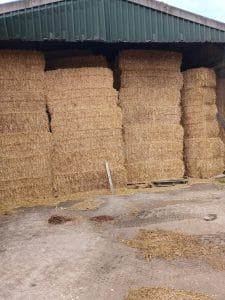
LG Caravelle produced a significant amount of straw in George’s comparison trials.
Agronomy on the farm is built around flexibility rather than a fixed calendar. Winter barley drilling isn’t rushed; last year it ran as late as the third week of October, once the preceding potato crop had finally come off the ground.
Cultivations alternate between plough and press, or a one pass stubble cultivation with a DTX depending on conditions, with a combination drill doing the sowing and nutrition applied according to soil testing.
Getting the crop right in the field is only half the job, though. Straw has to be stored properly too — kept on pallets, rodent-free, and, with growing concern over bird flu, now sheeted and covered in transit before it’s delivered to Cherry Valley as required, using a forklift.
“Straw is my all-year-round bread and butter,” says George. “But that does mean it has to be stored well but the extra value to the crop from the straw is well worth the effort.”
Not every grower treats straw as a product to sell, however. For Ryan MacCormack, manager at Dennington Estates in Suffolk, the value of straw is seen as part of the whole farming system, not as a standalone commodity to be maximised in isolation – but is an important contributor to the overall value of the crop.
“It is all about the full output off each hectare — every part of the crop has a value,” he says. “This may well be through the SFI contribution, the whole grain, and also the straw value, be that chopped or baled.”

Ryan believes that straw is an important contributor to the overall value of the crop.
Variety choice, he explains, is weighed across all those outputs together — grain quantity and quality, straw quality, and ultimately the total tonnage coming off the field.
With straw prices around £42 a tonne in the row in mid-August — sold rowed up rather than baled — Ryan points to the wider cost picture behind that decision.
“The greatest value for us comes from the grain, and then we would look at the straw — but it’s all part of the financial equation.”
That equation has to be balanced against costs and expected output, and also where the crop sits in the wider rotation, he points out.
“I look at where in the rotation the crop fits, what it’s following, how it’s going to be cultivated, and whether it’s going to be chopped or baled – all of which have associated costs.”
“Leaving straw in the row rather than baling it can save on additional combine costs. Chopping it, meanwhile, brings its own trade-offs: it can push up cultivation costs for the following crop and increase slug pressure, so in some situations, removing the straw altogether is the more cost-effective route.”
One of the Earliest Harvests on the Farm, since 1976!Despite a challenging season and yields coming in at 10-12% below last year, Essex grower Richard Carr of Lawling Hall Farm near the coastal town of Maldon, says that Crusoe winter wheat has once again delivered a reliable performance, averaging 8.9 t/ha.
Mr Carr is a big fan of the variety – ever since its launch onto the AHDB Recommended List 14 years ago, he has continued to grow Crusoe almost every year since, at his 220-ha farm.
Harvested between 13th and 19th July, his Crusoe crop is part of what has been described as one of the farm’s earliest harvests, since 1976. Drilled around 10th October last year, Crusoe established well and continued to look strong throughout the season.
Farming in an already naturally low-rainfall area, Mr Carr chose Crusoe for its consistency, premium milling market and ability to deliver good protein levels: “I went for Crusoe due to its premium market, consistent performance and high protein content,” he says.
Reminiscing on the variety’s introduction to the market back in 2012, Mr Carr says that for him, Crusoe proved a natural successor to Hereward, which was beginning to show its age. Crusoe now sits as the farm’s main milling wheat, while LG Beowulf is grown on his farm further north.
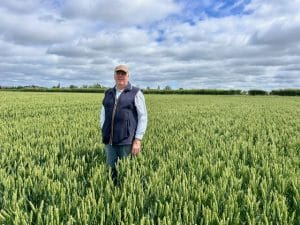
Crusoe established well despite the early harvest.
Disease pressure was relatively low, with brown rust present but easily managed through the farm’s established approach. Overall, Crusoe stayed clean and required no significant management changes.
Looking ahead, Mr Carr plans to stick with a similar approach, although the increasingly frequent dry springs could prompt earlier nitrogen applications. In addition, observations from neighbouring farms suggest there may be benefits to getting fertiliser on earlier, when conditions allow.
With the crop marketed through local merchants Dengie Crops and North Herts Farmers, as well as going into local mills, Crusoe continues to have a clear role within his rotation.
“Crusoe looked good all season,” comments Mr Carr, adding that the crop “drilled and established well, similar to others on the farm.”
With 8.9 t/ha achieved, despite the incredibly testing season for most of the UK farming industry this year, Crusoe has unsurprisingly secured another place in next year’s rotation.
Weathering the Drought: LG Caravelle Proves its WorthThis season’s prolonged dry weather may have taken its toll on winter barley yields, but for Lincolnshire farmer, George Thompson of Grasby House Farm, LG Caravelle has still earned its place in the rotation.
Harvested from mid-July, yields ranged from 5.6 t/ha on the poorest fields, to just over 8 t/ha on the best. While below the 10 t/ha achieved in better seasons, George says that the crop stood up well, given the conditions.
“Looking at my barley crops at the beginning of April, they looked marvellous,” he says. “I was hoping for close to 10 tonnes per hectare at harvest, then the drought set in. We had less than one millimetre of rain in June and July, which caused the crops to lose tillers and, in turn, yield.”
George has been impressed with both the yield and straw quality of LG Caravelle.
Despite the challenging season, George has no hesitation about growing LG Caravelle again.
“Definitely,” he says. “I tried a competitor variety previously on two 10-acre fields, and LG Caravelle combined a tank load more – four tonnes more in fact. LG Caravelle was better quality too, with better straw.”
Recommended by both the LG contracts team and George’s agronomist, LG Caravelle has consistently impressed in both independent trials and on-farm. For George, who supplies straw commercially, producing a clean, high-quality straw crop is just as important as grain yield, with straw returning £346/ha this year.
Disease pressure remained low throughout the season, allowing the crop to perform well with a simple, need-based fungicide programme. Looking ahead, he plans to apply nitrogen slightly earlier in dry springs, while continuing to favour later October drilling, after seeing his best grain samples come from crops drilled later in the month.
LG Caravelle has once again demonstrated reliable performance for George, even when the weather had other ideas.
LG Challenger Winter Wheat is Set to Become Sole Wheat Variety at Lincolnshire FarmWinter Wheat has been a key part of the rotation at DM Sharp in Lincolnshire for several years, following root crops and providing the added benefit of helping with blackgrass. One variety in particular, LG Challenger, has delivered consistently high yields over the past two seasons despite the challenging growing conditions.
Ben has been impressed by the performance of LG Challenger
Ben Sharp farms over 800 acres of arable land, investing heavily in rented land, meaning variety choice can have a significant impact on the business’s profitability. Having been impressed with LG Challenger’s performance last season, Ben retained some seed for this year’s rotation.
Harvested in July, the crop delivered yields of 8.5-9.0t/ha, a strong return given the early Harvest date and the challenges caused by this summer’s drought. However, it wasn’t just the yield that impressed him.
“The ears were fresh and clean, compared to other varieties which looked a bit browner and had smaller ears. The grain size was good, nice and even, with excellent all-round consistency. It’s a good variety that was easy to manage and didn’t struggle with disease.”
After two years of growing LG Challenger, Ben plans to make the variety his only wheat variety next season.
“I rent a lot of land, so the crop needed to deliver to pay the rent.” says Ben. “Based on its performance last year, I was confident that it would deliver high yields when I drilled it. Due to its consistent performance, LG Challenger will make up my entire wheat area next year. It’s chalk and cheese compared with other varieties.
“My livelihood depends on growing crops that perform, and this variety has certainly paid the bills.”
LG Defiance Winter Wheat Delivers in Challenging Lincolnshire Conditions
Winter wheat plays an important role in Jeff Bush’s rotation, providing a reliable and consistent crop. Jeff was looking for a variety that combined strong disease resistance with a high yield, and having been impressed with its performance in trials, he selected LG Defiance.
With most of the farm’s grain marketed for feed, reliable and consistent crops are vital to Jeff’s farm. LG Defiance’s strong disease package and clean appearance in trial plots were among the first characteristics that caught his attention, giving him confidence ahead of drilling.
At harvest, LG Defiance delivered yields of more than 10.25 t/ha, producing what Jeff describes as one of the best crops he has seen in recent years. However, it was not just the yield that stood out.
“The cleanliness of the crop was what first impressed me. The trial results showed very little difference between treated and untreated plots because of its yellow rust and all-round disease resistance.”
The variety has also provided an important alternative within the farm’s wheat portfolio. While Jeff usually grows two or three varieties to spread risk, LG Defiance has quickly established itself as a key part of the rotation.
“It gave us another strong option and put us in good stead,” he explains. “It stood very well throughout the season and performed exactly as we wanted it to.”
Although the farm grows a considerable area of second wheat, Jeff chose to position LG Defiance in the first wheat slot, where he felt it offered a stronger package than other varieties.
Following LG Defiance’s performance in a very difficult season, Jeff has no hesitation in growing the variety again.
BYDV Tolerance Proves its Worth in High Pressure Year“We looked at a lot of trial sites and LG Defiance stood out as a strong variety. We didn’t see a better option. It fitted well with the way we farm, and we were able to save money on more expensive chemical products because we simply didn’t need them. It was easy to manage and delivered exactly what we were looking for.”
The value of varietal tolerance to Barley Yellow Dwarf Virus (BYDV) has been clear to see in trials and on-farm this season, following impressive results from the new two-row winter barley, LG Catapult.
The variety yielded close to the conventional two-row feed varieties LG Capitol and LG Caravelle in the latest AHDB harvest results, coming in at 105% of the control varieties in provisional data published in late July. The figures also show LG Catapult to be the highest yielding variety in fungicide-untreated trials at 116%.
“Although more results are still to come in, it’s clear that LG Catapult has done really well, in what has been another challenging season,” Limagrain Field Seeds arable technical manager, Ron Granger, says.
The variety’s BYDV tolerance is likely to be a significant contributory factor behind the strong performance, as the mild, wet winter of 2025/26 led to increased aphid activity, with more reports of BYDV in wheat and barley crops around the country this spring, he says.
Ron Granger says BYDV tolerance proved its value this season, helping LG Catapult maintain strong yield performance under high virus pressure.
“Issues were thought to be quite regionalised, with the southeast and west generally being the main high-pressure areas, but seeing these results, one can conclude that the pressure was higher than we thought, and possibly went unrecognised in the majority of crops grown across the UK.
“I think people underestimate the impact that BYDV can have, as you only need a small amount of virus to pull yields down,” he adds. “When you have a high pressure year for BYDV, such as 2026, the value of tolerance in a variety like LG Catapult really comes to the fore.”
Standing out from the crowd
Indeed, LG Catapult’s BYDV tolerance has been a key reason for growing the variety for Lincolnshire farmer Ben Bateman, of the 2,400 ha (6,000-acre) B Bush & Sons Ltd, near Boston.
The farm grew 130 ha of LG Catapult this season, 25 ha for seed and the remainder as a commercial crop, with pleasing results. “We tried a small area last year and could see the variety stood out as having something special,” he says.
“This year, the main block of 92 ha was near Lincoln, where we noticed that most of the other barley crops grown nearby seemed to have BYDV in the spring, whereas the LG Catapult didn’t appear to have any. That was despite no insecticides being used across any of that area, as we’re in the SFI no insecticide option.
“In this region, we used to get cold, dry winters that would kill aphids off, but that doesn’t seem to happen anymore, with mild and wet conditions increasingly becoming the norm,” he continues. “That means aphids – and the associated virus risk – are becoming a bigger threat, so if we can grow a variety that has tolerance, with no yield penalty, it’s a no-brainer. It’s another tool we can use to help de-risk the business, while reducing our environmental impact.”

Lincolnshire farmer Ben Bateman has seen first-hand the benefits of BYDV-tolerant winter barley on farm.
The farm’s main commercial crop was sown at the end of September/ first week in October, as a second cereal after wheat on average Grade 3 land, and yielded 8.6 t/ha (3.5 t/acre) this harvest, with a good grain sample. That was a decent result for that land given the lack of rainfall, Mr Bateman says.
“If we’d have grown a second wheat there instead, it would have probably died off prematurely and not produced a very high specific weight given the conditions. But, because winter barley is naturally that bit earlier maturing, it didn’t seem to be as badly affected by the lack of rain.
“With spring barley becoming more risky in dry springs, it makes sense for us to go for a high-yielding winter barley instead, especially if there’s a local demand for it nearby, as we have here.”
The farm also grew a small area (14 ha) of RL Candidate BYDV-tolerant variety, LG Caprice, which Mr Bateman was similarly impressed with after yields nudged 10 t/ha (more than 4 t/acre).
Given the performance of BYDV tolerant varieties on the farm this year, Mr Bateman sees the value of this genetic trait and plans to continue growing BYDV tolerant varieties next season.
Mr Granger says LG Catapult’s performance is proof that BYDV tolerance can be introduced into new two-row varieties, with no yield penalty, which combined with good agronomics, strong all-round disease resistance, and a good specific weight, makes it a solid option for growers this coming autumn.
He suggests BYDV tolerance could soon become a standard feature of all UK winter barley varieties, as it is in France, where it is fully endorsed as a valuable genetic tool for securing final yield potential on-farm.
“For BYDV tolerant varieties to be successful, they have to be commercially viable and competitive with the leading two and six row varieties presently in the market; LG Catapult does that, and has the right attributes to make real inroads into the winter barley sector.”
-
LG Catapult
– New 2-row winter barley
– Combines BYDV tolerance with high yield potential
– One of the highest untreated yields on the Recommended List (90%)
– Strong all-round disease resistance (especially brown rust and mildew)
– Good specific weight (70.7 kg/hl) and straw strength
– Consistent performance, even in seasons without BYDV
– Relatively early maturity (similar to LG Caravelle)
– Suits a range of soil types, but prefers heavier soils
The hard Group 4 variety, LG Beowulf, has been a stand-out performer of harvest 2026 so far at Dennington Hall Farms, a 1,600 ha regenerative farming business in East Suffolk.
Despite the exceptionally hot, dry spring and summer, the 100 ha block of LG Beowulf, all grown as a second wheat, averaged 9.5 t/ha, with some areas achieving nearer 10.5 t/ha over the weighbridge, according to farm manager, Ryan McCormack. Specific weight was also very good, at 80-82 kg/hl.
“It looked well through the season, but we were never expecting to get record-breaking yields given the weather. The high temperatures we saw during flowering (33-35 C) had a massive impact, as did the drought, which made many crops drop a few tillers.
“So to have 100 ha of LG Beowulf average 9.5 t/ha and some areas do a tonne more than that, it is definitely a variety that has stood out for us this year.”
Limagrain’s arable technical manager, Ron Granger, says LG Beowulf has consistently demonstrated good performance over multiple seasons and variable growing conditions, retaining both yield and specific weight, even when the weather is more challenging.
“The big, bold grain can add weight to a crop which is especially important with the changeable seasons we’ve been experiencing,” he notes.
“LG Beowulf combines most of the desirable traits that farmers are looking for in a hard feed wheat, including high yield potential, stiff straw, good septoria resistance, excellent grain quality and OWBM resistance.”
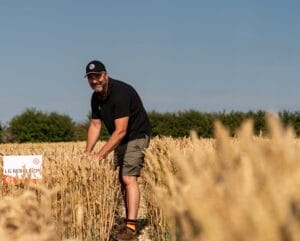
Ron Granger highlights the consistent performance and grower appeal of LG Beowulf.
A key strength is its flexibility to perform across all UK regions and soil types, from light to heavy land, sowing timings (early, normal, or late), and rotational positions – it is equally suited to first, second or continuous wheat situations, he says.
While LG Beowulf, like many commercial varieties, is now susceptible to the newer yellow rust strain Yr15, careful monitoring and timely fungicide use will allow it to continue to perform at its best, he adds.
This season, Mr McCormack says his fungicide and fertiliser spend has been lower across the board, largely due to the dry weather, which allowed him to use more cost-effective chemistry to manage yellow rust risk at T0 and T1, and make further savings on later treatments.
“Altogether we spent around £94/ha on fungicides across the wheats,” he says. “In terms of fertiliser, most received around 170 kg N/ha in total, front-loaded towards the beginning of the season in anticipation of conditions turning dry, with 40 kg N/ha applied towards the end of May.”
Overall, with harvest around half-way through at the time of writing, the farm’s average yield across all winter wheats is 8.6 t/ha, which is around 10% down on normal due to the weather, Mr McCormack says.
“However, with a relatively low spend on inputs, if we can achieve somewhere closer to a 9 t/ha average across the 700 ha of wheat, I’ll be very pleased.”

Ryan McCormack has been impressed with the performance of LG Varieties throughout Harvest 2026.
This coming autumn, Mr McCormack plans to grow LG Beowulf again, alongside LG Rebellion, LG Defiance, and LG Lotus.
“It’s the first year we’ve grown LG Lotus, and we only had a small 10 ha area, which was part of the Defra-funded ADOPT trial, Roots of Change (ROC), but it averaged 10.23 t/ha, which I was again very pleased with.”
Likewise, his Crusoe, also part of the ADOPT trial, performed well too, coming in above the farm’s average at 9.5 t/ha.
Elsewhere, Mr McCormack is pleased with how his LG Defiance and LG Rebellion have performed in the farm’s low-input regenerative system, which involved direct drilling both varieties into a summer catch crop, and tailoring nitrogen and other inputs based on crop sampling through the season.
The LG Defiance averaged just above the farm’s overall average, while LG Rebellion was slightly below, however given the reduced inputs on these crops, their gross margin came in at a healthy £1,250/ha.
Find out more about LG varieties for the coming autumn at https://lgseeds.co.uk/.
Highest yielding variety on farm 2nd year in a row!
Rob Atkin, Atkin Farms, Staffordshire
“Highest yielding variety on farm – second year in a row!”
The combines are rolling, and LG Rebellion is once again proving why it’s a firm favourite at Atkin Farms, Staffordshire.
Chosen by Rob Atkin for the second consecutive season thanks to its outstanding yield potential and robust disease resistance, LG Rebellion has delivered an impressive 16% above the farm’s five-year average yield.
Direct drilled with a HORSCH Avatar on 26th September, it’s had the following inputs:
Fungicide spend: £89/ha
Nitrogen: 180kg N/ha
Sulphur: 80kg/ha
Total Average Yield: 9.17t/ha
Spec weight: 79kg/hl
Compared to the East of the country, this part of the West Midlands has received adequate rainfall, but three intense heatwaves. LG Rebellion has looked strong from establishment through to harvest. With plentiful straw and another standout yield performance, it’s no surprise Rob plans to grow the variety again next season.
See LG Rebellion in action at harvest over on our socials!
For more on LG Rebellion or any of our other winter wheat and winter barley varieties – as well as all our leading OSR varieties, download the 2026 Arable Guide!

Crusoe Delivering at Dennington!
Crusoe still delivers after 14 years!
When a variety stays on the Recommended List for well over a decade and continues to perform on farm and in the mill, you know it’s doing something right.
At Dennington Hall Farms, Crusoe has once again proved why it’s one of the UK’s most trusted Group 1 wheats:
9.5t/ha yield
13.8% protein
350 Hagberg
83kg/hl specific weight
3.8t/ha straw yield
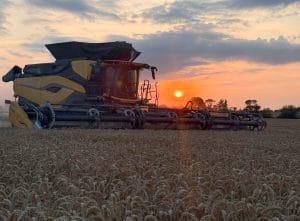
Grown as a second wheat it was direct drilled on 16th October into a summer catch crop, alongside 40kg/ha of Tundra winter beans to help provide an additional nitrogen boost. Just 170kg/ha liquid nitrogen was applied in three splits.
Despite the season’s challenges, the crop stayed clean throughout the year, with a total fungicide spend of only £95/ha.
With its strong agronomic performance, excellent milling quality and the valuable Group 1 premium, Crusoe is set to deliver one of the best financial returns on the farm to date this season.
It’s no surprise that Crusoe will be back in the rotation in 2027!
Want to read more on this great variety? Crusoe stands the test of time – LG Seeds
On-farm Insight: Limagrain Field Seeds Demo Farm, UttoxeterTo help growers follow crop performance through the season, Limagrain Field Seeds launched its inaugural Demo Farm initiative this year, hosting on-farm demonstration days across the country.
The aim was straightforward: to give growers the chance to see varieties performing in the field, discuss results directly with farmers and Limagrain experts, and gain practical, real-world insight beyond what trial plot data alone can offer.
One of these demo farms is hosted by Rob Atkin at Field Farm, Uttoxeter, Staffordshire. Rob has been involved in practical farm trials for many years, including work on variable rate technology and environmental initiatives aimed at improving soil health and reducing water pollution.
He has been integrating cover crops and livestock into his system, while maintaining a strong focus on economic performance.
“I still need yield to pay the bills, so yield is important,” he says. “But I want varieties that work in real farm conditions, not just in perfect plots. I want to know how they perform under pressure and whether they genuinely fit into my system.”
Field Farm operates across a wide range of soil types, from heavy clay through to high-organic-matter silt. It’s a mixed operation, combining arable cropping with beef and sheep enterprises, with a growing focus on soil health and cost control across the business.
Trials established at Field Farm this year include a field-scale comparison of establishment techniques in wheat and barley, alongside winter wheat, spring barley and oilseed rape variety trials. On one of the hottest days of the summer, under clear blue skies, visitors to the open day were guided through the latest cereal and oilseed rape variety trials. Limagrain’s newly recommended winter bean, LG Arctic, was also on trial, alongside a range of early maturing maize varieties.
Varieties discussed on the day ranged from those narrowly missing out on Recommended List inclusion, to new candidates progressing through trials, to recently listed varieties now available to growers. The overarching theme was consistency of yield across different seasons and drilling situations, alongside strong disease resistance profiles.
Find out more about our oilseed rape varieties here.
Yellow Rust
Yellow rust in wheat was the key issue leading discussions at the wheat plots. Ron Granger, arable technical manager for the breeder, urged growers not to discount any variety simply because of revisions to its yellow rust rating, especially where other favourable characteristics remained unchanged.
“Take LG Typhoon, for example — yes, you have to watch yellow rust more closely given the Yr15 changes, but it’s still got fantastic Septoria resistance, has the agronomics to suit wider-row direct drilling situations, and is still a true early drilling variety.”
He went on to suggest early rust control was vital, especially where juvenile plant resistance is not available in a variety. However, he pointed out that some varieties had held off yellow rust better later in the season, once adult resistance kicked in post growth stage 37.
“The speed of early rust development in different varieties is something that should be looked at more closely by the industry, as it’s evident this season that some varieties surprised us with how late rust developed in them compared with previous years. We still have a lot to learn, and our pathologist is certainly being kept busy this season.”
Maize in the Rotation
As part of the Demo Farm trial, a series of plots comparing maize varieties has been set up at the Staffordshire site. The site forms part of a wider network of farm trials Limagrain is running this year across the north, as the crop continues to grow in importance on more northerly farms. Yield and quality assessments will be taken pre-harvest to better understand how these varieties perform on more challenging sites.
After struggling with oilseed rape establishment a few years ago, Rob introduced maize into the rotation. “We are a marginal site here for maize, so we are looking for very early/ultra-early maturing varieties. This suits the rotation, as it gives us a good entry for a following crop of wheat. Growing ultra-early varieties also gives us some flexibility to drill a little later, should we need to. It’s also a useful break crop to help clean up weeds.”
LG’s ultra-early variety Flashmob fits this bill well and is used by Rob in his beef finishing ration, as well as being grown for a neighbouring dairy farm — a useful outlet for their slurry and a way of freeing up land.
“As long as the crop pays for itself and covers its costs, we are happy, and it has done this so far.”
This year’s trials cover a range of early and ultra-early maize varieties to assess performance under Field Farm’s conditions. “As well as commercial and near-commercial varieties, there are also some new coded lines for evaluation,” explains Richard Camplin, forage technical manager for Limagrain.
The plots were drilled after autumn stubble turnips, which sheep had grazed off. “We went in with a subsoiler before drilling, as it had been a bit wet and the sheep probably stayed on a bit longer than needed, so there was some compaction. The crop got 15t/ha of muck and 150kg/ha of nitrogen later on — and after struggling through a cold, wet June, is now knee high and starting to fill out,” says Rob.
PANEL: Cultivations Trial — Direct Drilling vs Shallow Cultivation
For Rob Atkin, one of the most interesting aspects of the trials was comparing cultivation methods and their effect on establishment and crop quality heading towards harvest.
“We started our min-till journey on the farm in 2003, moved into shallow cultivations, and now direct drill in the main,” Rob explains. “We were interested to see how the same variety — in this instance LG Defiance — grown in the same field, would look when direct drilled versus established after shallow cultivations.”
Wheat trial
“Initially, the wheat established in shallow-cultivated soil performed better, showing more early vigour than the direct-drilled crop,” says Rob. “However, this reversed through spring: the direct-drilled wheat tillered more strongly — likely because it had needed to work harder to establish its roots early on, leaving it better founded once the dry spring set in. By comparison, the shallow-cultivated wheat looked thinner. However, heading towards harvest, it’s now hard to tell the two apart. Harvest will tell the true story.”
Spring barley trial
A similar comparison was run in a field of spring barley, using new Limagrain variety LG Aquarius. The barley was drilled into a field that had previously been cover-cropped and grazed by sheep, leaving some soil compaction. Results followed a similar pattern to the wheat: “The cultivated crop established better initially, as it didn’t have to work through the compaction left by the sheep. However, the direct-drilled barley now looks stronger and hasn’t ‘shot’ in the way the cultivated crop has — again likely because its roots were forced to work harder and go deeper during spring, helping it hold up better through the summer heat. As with the wheat, harvest will reveal the full picture.”
Why it matters
Even small yield differences between the two systems are worth taking seriously, believes Mr Atkin. “A gain of just 0.2t/ha across a whole field can be enough to justify adapting cultivation strategy.” Rob acknowledges every year brings different weather and soil conditions, but the broader trend has been towards wetter winters and drier springs, as seen again this year.