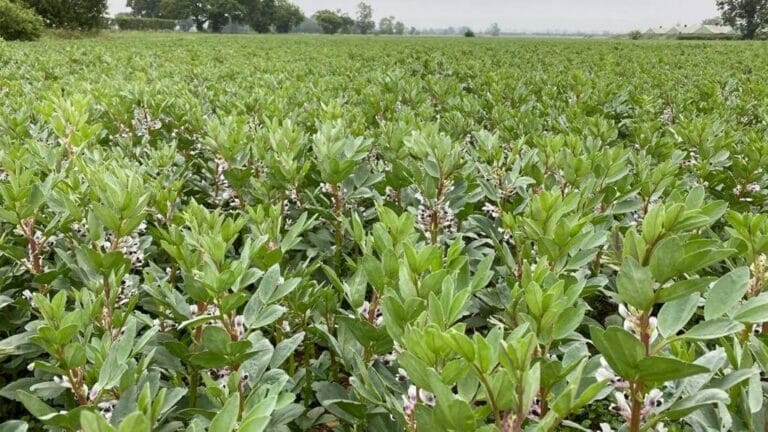
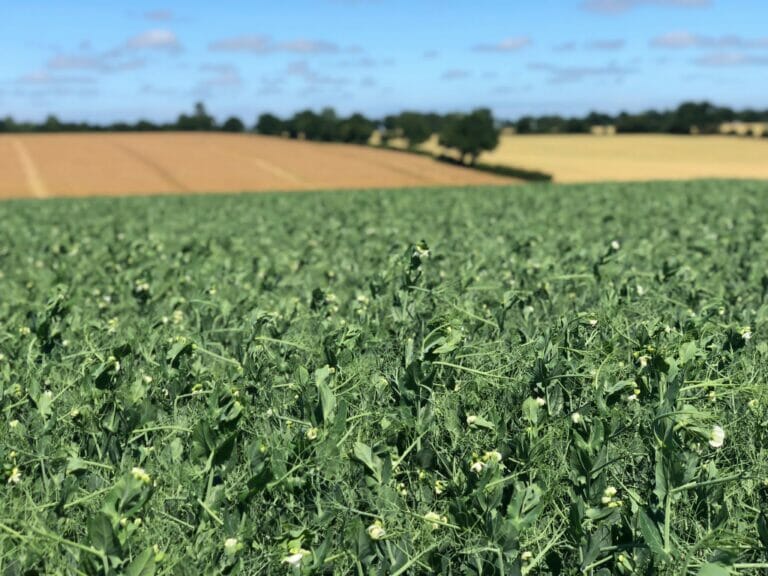
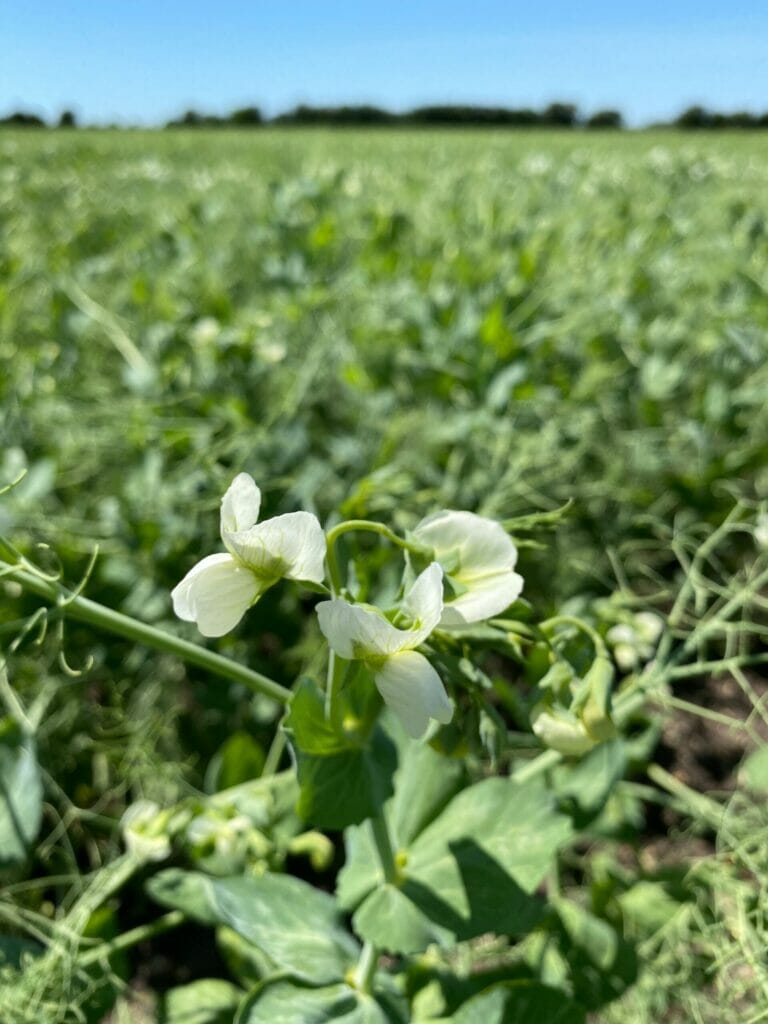
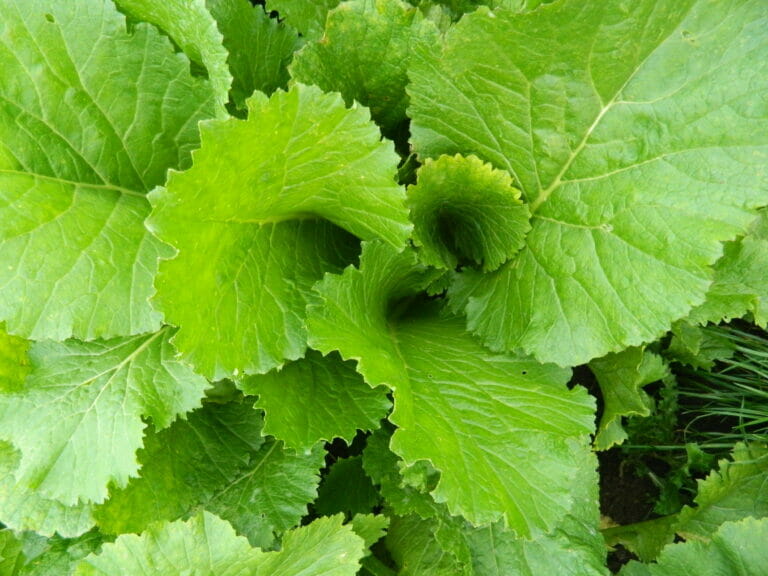





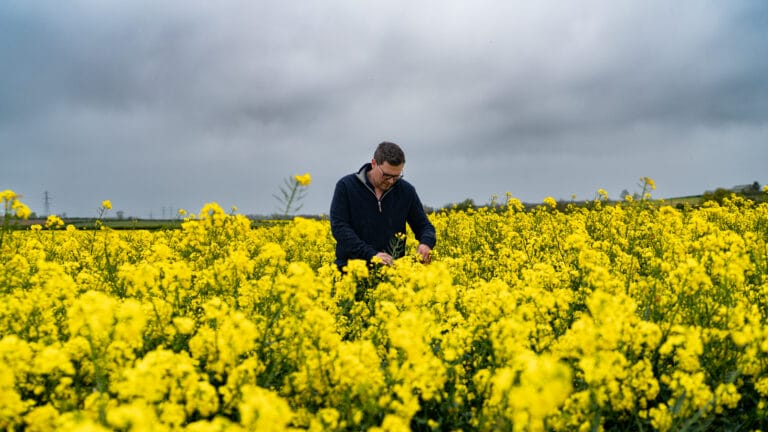




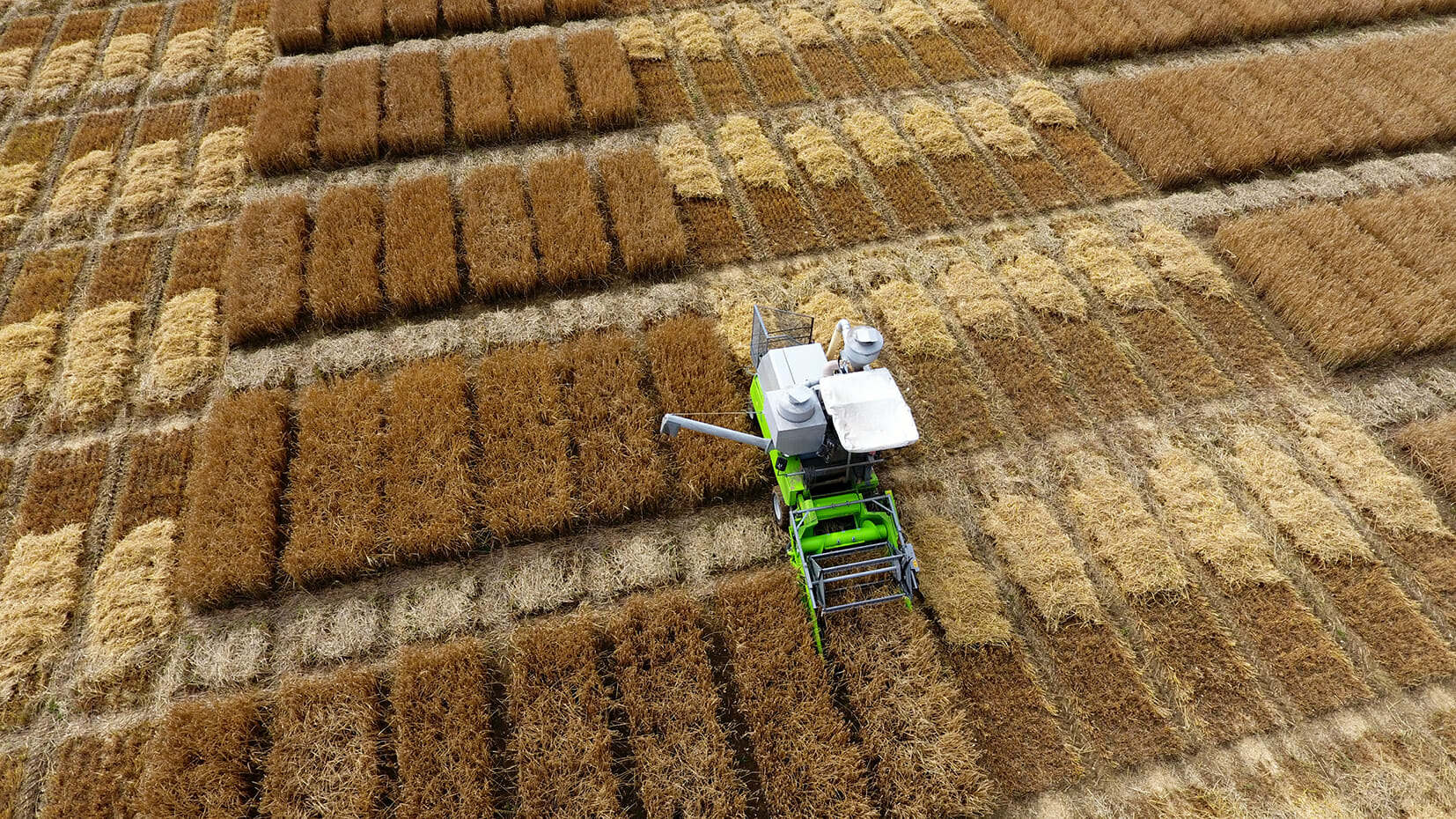

With the mild autumn and good establishment, oilseed rape crops are looking good across the country. However, while forward or large canopies can seem beneficial, if not properly managed they can limit yields and leave the advantage of good establishment underutilised.
Here are 5 top tips for how you can capitalise on a forward oilseed rape crop:
1. Measure and quantify the canopy. You can manage what you can’t measure. An oilseed rape canopy contains nitrogen which can be remobilised by the plant. Using GAI apps or satellites, you can measure the green leaf area in relation to the ground. 1 GAI is equal to 50 kg/ha of nitrogen. Or, cut 1 m² of above-ground biomass; 1 kg equals 55 kg N/ha.
2. Reduce the first split of nitrogen. High doses of early nitrogen encourage rapid stem elongation, causing shading and plant competition. This leads to lower branches aborting—branches that have the capacity to hold the most pods and yield.
3. Aim for a GAI of 3.5 at flowering. This is equivalent to 175 kg of N/ha in the canopy. Using knowledge of what is already in the crop can help save on nitrogen input. AHDB report PR447 suggests only 60% of spring-applied nitrogen is utilised by the crop, so adjust rates accordingly.
4. Don’t delay sulphur availability. If using products such as DoubleTop®, reducing nitrogen also reduces sulphur. Lack of sulphur can be yield-limiting: slowing leaf and tissue development, reducing nitrogen-use efficiency, lowering stress tolerance, and reducing oil content. Pick a product that applies 40–75 kg/ha of SO₃.
5. Apply micronutrients early. In particular, Boron, as low levels can result in stem splitting during rapid spring growth, allowing potential entry for disease. Boron is also key for good pollination and stress tolerance.
Early Maturing Maize Varieties: What Farmers Really Gain by Going Earlier
Producing milk without maize isn’t something that Flintshire dairy farmer Tom Beltcher would like to consider.
Not only is it a vital part of his 450-cow herd’s ration, but it has become an integral part of his farming system, fitting into a rotation in which double-cropping is now commonplace.
Success in recent years has come through the use of the earliest maturing varieties available, with continuing progress by maize breeders meaning that an early harvest does not have to result in any compromises on yield, nutritional value or digestibility.
“We’ve grown maize for as long as I can remember, but it has become more important to us in the last ten years,” says Tom. “Our cows are averaging around 10,000 litres, so maize silage is essential to complement grass silage. We make our grass silage using a multi-cut system. This produces a high quality forage but, with grass, there is always more risk of inconsistencies resulting from variable growing conditions and unpredictable weather at the time you’re cutting. Maize now typically makes up around half of our forage ration and offers all-important stability and consistency that ensures we keep the cows performing.”
The Beltchers are based at Argoed Hall Farm, near Mold, and typically grow around 250 acres of maize each year, with a further 150 acres usually grown on contract on neighbouring farms. Whether the maize is grown at home or on contract, Tom insists on a responsible approach that looks after the land and minimises the risks of any problems associated with a late harvest in wet conditions.
“The aim is to have the crops off as early as we can, allowing the opportunity to establish another crop in the autumn,” he says. “On our farm that is usually winter wheat, but it can be a grass crop that will provide an early first cut. We apply the same thinking with crops grown on contract, because double-cropping is the best way to manage the land, environmentally and economically. It’s about working together for the best mutual outcomes.”
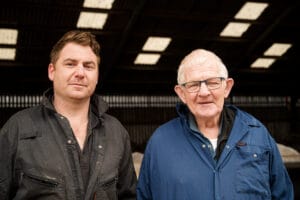
Tom Beltcher with his father Roger.
Argoed Hall Farm is predominantly a heavy clay site, so is considered marginal for maize. The policy is to grow the earliest maturing material available, with Limagrain Field Seeds’ Ultra Early variety Duke standing out in 2025. Duke is an example of the type of genetic progress resulting from an extensive UK breeding programme that is focused on producing stable varieties that deliver high yields of dry matter within a shorter growing window, without compromising on nutritional quality and digestibility.
With up to eight trials sites across the UK, Limagrain Fields Seeds is selecting LG varieties that have the proven consistency of performance required in UK conditions by farmers like Tom Beltcher, delivering a number of new improved varieties onto the NIAB/BSPB Descriptive List every year.
“Overall, we’ve averaged around 18-19 tonnes per acre across all our maize crops this year, and Duke has been the standout performer,” adds Tom. “We drilled about a week earlier than usual, in the first week of April, because seedbed conditions were right. It was something of a gamble, but it paid off because we had moist soils during the critical establishment phase. Given the early start the maize had, it’s been a good year for the crop, and our earliest harvest ever.”
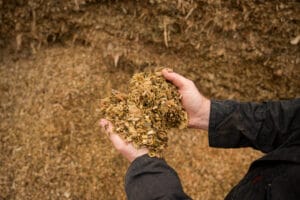
Making up around half of the forage ration, maize provides much-needed stability and consistency alongside grass silage.
For Tom, maize is his priority, which he admits sometimes means the farm is not making full use of cover crops grown over winter. It’s a sacrifice he considers worthwhile, however, as it means the maize always has the best possible start.
“We want to have the maize ground mucked, ploughed, broken down and power harrowed by early April, so we can drill as soon as soil temperatures are right,” he says.
“That may mean we’re taking a very early first cut off a grass crop, and losing potential yield, but I’d rather maximise what we can achieve from the maize.”
Maize is drilled with a microgranular phosphate and nitrogen fertiliser down the spout, and receives a further 100 units of nitrogen per acre when the crop is around knee-high. Crops receive pre-emergence and post-emergence herbicides, but no other specialist inputs.
“It’s a great crop, when you consider the amount of high quality dry matter you can put in the clamp, and an ideal complement for grass silage.
“Maize has at times had something of a bad name, in relation to issues such as soil erosion, but there is really no need for that to be the case. Growing the very early maturing varieties, which can now deliver great yields and quality, should – more often than not – allow the opportunities to harvest in good conditions and establish an over-winter crop. In the majority of cases, this should be a positive for soil health and the environment, as well as producing clamps full of high quality forage.”
Maize drives high intakes in high performing herdHigh-Quality Maize is Driving Exceptional Dry Matter Intakes in UK Dairy Herds
For Somerset dairy farmer Andrew Bristol, dry matter intake is the key parameter as he seeks to maintain performance in his 240-cow high yielding Holstein Friesian herd.
At an impressive 27.1 kg DM/cow/day with the full ration included, he is on target, driving yields of 11,400 litres/cow and with an improving milk from forage figure sitting close to 3,500 litres/cow.
Though it makes up only around twenty percent of the dry matter in the ration, high quality maize is an essential element, giving much needed balance alongside grass silage, and boosting the energy levels of the forage component.
“Intakes, intakes, intakes … that’s my mantra,” says Andrew. “I am a great believer in giving the cows variety in order to stimulate intakes, and maize certainly delivers that, and more. If we could grow more maize and increase the proportion in the ration, we would, but most of our land is simply too heavy. Improvements in maize breeding are certainly helping, so the contribution is growing, and perhaps in the future we’ll be able to increase from current levels.”
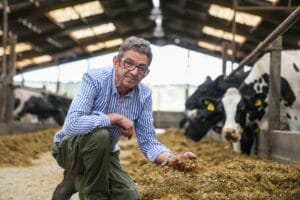
Maize is an essential part of the milking ration, offering an ideal balance to the grass silage and helping to drive intakes.
Based at Greenlands Farm, near Wincanton, Andrew operates a relatively simple dairying system, with just himself and one herdsman employed. Running a flying herd, and calving all year round, with grazing only for the later lactation cows, the focus is primarily on management of the cows and their housed ration, with full reliance on contractors when it comes to maize growing, for example. Andrew also works with Pearce Seeds agronomist Ben Allard, who is involved not only in maize variety selection but also has a valued input throughout the growing process.
“Given the heavy wet clay soil type on most of this farm, we are looking for very early varieties in order to achieve a mature crop in the shortest window, to avoid harvesting in wet conditions that can result in soil damage and erosion,” says Ben. “On Andrew’s heaviest ground, we grew Limagrain’s new ultra early variety LG 31.152, the earliest he’s ever grown. This variety yields very well and also benefits from good early vigour, so the crop was up and out of the ground very quickly, resulting in a good start that proved particularly important this season. On the lighter ground, we grew the slightly later variety Dignity, another Limagrain variety with good early vigour and strong agronomic characteristics, and very high yielding.”
The good start culminated in a very impressive outcome, with maize being harvested at the end of August, a full month earlier than usual, and the overall average yield across the farm’s sixty acres averaging around 18 tonnes per acre.
“Our yields were slightly up on what we normally expect,” reveals Andrew, “and the LG 31.152 most certainly contributed to that, despite being a very early variety. From an early forage analysis, the dry matter percentage is a little lower than optimal at 29.0%, but a starch level of 33.4% and ME of 11.7% are where we want them to be.”
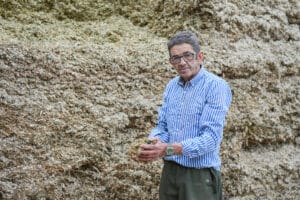
Maize yields at Andrew Bristol’s Greenlands Farm were higher than usual from a harvest that was around a month earlier than the norm.
Another factor that impressed Andrew was the stay-green characteristic of the varieties, something that has been a feature of Limagrain’s breeding programme for many years as it strives for better and better nutritional value in forage maize.
“To have a good hard mature cob whilst the leaves and stem are still green is a real benefit,” he says. “It means the crop ensiles better and the end result is a more stable and palatable forage for the cows. You can see it on the clamp face and in the cows’ intakes.”
Maize is grown as part of a rotation at Greenlands Farm that includes wheat, which all goes into the milking ration either rolled or caustic-treated. The ground destined for maize receives around 6,000 gallons/acre of slurry and 10 tonnes/acre of farmyard manure in the spring before being ploughed. Two passes with a power harrow are usually sufficient before drilling, with the heavier ground also being sub-soiled when necessary. Maize was drilled in 2025 on 26th April, when soils were still moist. Apart from pre- and post-emergence herbicides, the only other input is nitrogen fertiliser applied to the seedbed at 60 units N/acre.
The summer of 2025 proved to be a good one for growing maize, at least in Andrew’s area, but it was still a surprise to have a mature crop as early as the end of August. The fact that yields were slightly up on the norm underlines how modern maize breeding can deliver earlier maturity without compromising significantly on output.
Andrew began feeding the maize almost immediately, including it in a mixed ration alongside grass silage, a rape meal and protected rape blend, rolled and caustic treated wheat, minerals and yeast, fed once a day.
“It’s a key ingredient in the ration so I don’t like to be without it,” he adds. “There’s no doubt that having earlier varieties that deliver high yields is making the crop more viable on a heavy land farm like ours, which could in future mean we are able to grown more. In addition, qualities like stay-green help to add value when it comes to feeding out, not least in helping to drive those all-important intakes.”
Table: Typical fresh weight milking ration at Greenlands Farm
| Fresh weight (kg/cow/day) | |
| Grass Silage | 40.0 |
| Maize Silage | 17.0 |
| Rape meal / protected rape blend | 4.0 |
| Caustic Wheat | 4.0 |
| Rolled Wheat | 2.5 |
Following the extremely difficult autumn of 2023, we had hoped for a better 24, unfortunately it was not to be. British farmers are practiced at preparing for all eventualities, which is handy when the only consistent currently is change! Who knows what autumn 2025 will hold? In terms of crop choice, I am confident that the Limagrain portfolio has varieties to stand up to it!
On the back of an 11.1 million tonne wheat crop last harvest, this year’s AHDB Early Bird Survey surprisingly came in at only 1.6 million hectares, in recent times the average has been closer to 1.8. The Early Bird Survey shows further declination in winter barley, from the very small crop area planted in 2023. The decline in oil seed rape hectarage is marked, in terms of both production and area we are approaching a fifty-year low.
We know spring cropping can be seen as a get out of jail card for arable farmers, but is there a mindset change happening? Will this impact cropping choices and varietal selection next autumn?
Last year’s growing season did not offer a very clear picture on performance of individual cereal varieties. Disease was prevalent, crops went in late and were stressed from the go. The story is clearer when comparing varieties across consecutive growing seasons.
The varieties that have demonstrated consistent resilience both in trial and on farm across the previous 3 to 4 years are the ones that I would be choosing to drill again this Autumn. Consider LG Beowulf or LG Typhoon if you are looking for wheat, with LG Caravelle and LG Capitol great contenders for barley.
With oilseed rape the story is slightly different, though weather has of course played a significant part, it is the flea beetle that is having the greatest impact. Limagrain has listened to the concerns of growers, and through our skilled UK based breeding programme, we are actively selecting varieties that show a resilience to flea beetle, that alongside solid IPM strategy will work to mitigate the devastating crop loss experienced in previous years.
Success on the 2024/25 PGRO Descriptive List emphasises breeder’s commitment to pulsesThe addition of the joint highest yielding spring bean variety LG Eagle and combining pea LG Corvet to the 2024/25PGRO Descriptive List from Limagrain Field Seeds, demonstrates the breeder’s continuing commitment to pulses.
LG Eagle joins the 2024/25 PGRO Descriptive List as the joint highest yielding spring bean at 110% yield (as % control).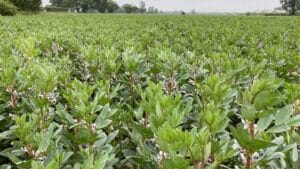
“During both Limagrain and DL trials, this extremely high yield potential has been delivered consistently over the last few very different and challenging seasons which is an important and valuable attribute for a spring bean – and one that growers look for on farm,” says Heather Oldfield, UK cereals and pulses product manager for Limagrain Field Seeds.
“However, it’s not just about high yields, these need to be backed up by solid agronomics and traits, and we are delighted that LG Eagle offers all of these,” she adds.
“It is one of the earliest varieties on the DL to mature, is not too tall, stands well and offers a good disease package including rust.”
LG Eagle is suitable for human consumption, fish feed and animal protein markets offering a range of marketing opportunities.

Heather Oldfield
With limited seed availability for 2025, Heather believes LG Eagle’s consistent yields and disease resistance package mean it will be taking a big bite into the spring bean acreage by 2026.
Combing Pea LG Corvet joins the DL offering a high yielding, (111% of control), early maturing, relatively short variety.
“Alongside these attributes, LG Corvet also has a very good standing ability, which is an important attribute for ease of combining and protecting precious yield. Poor standing ability can often be barrier to growing peas,” says Heather.
“LG Corvet offers an exceptional downey mildew resistance rating of 8 – the result of a concerted focus from Limagrain on breeding for resistance against this devastating disease in peas,” she notes.
The variety holds one of the highest dry protein percentages at 22.2%.
To meet the growing demand for pulses, Heather highlights the hard work being done by the Limagrain pulse breeding team to enhance the major traits in their varieties and introduce new ones using routine diagnostic marker assisted selection (MAS).
She explains this is being done at a high-tech facility in the Netherlands which allows the breeders to undertake rapid generation cycling.
“Target traits sought for peas include reliable yields with consistently high protein levels, resistance to lodging, and tolerance and resistance to diseases, the results of which we are seeing in LG Corvet.
“Cold tolerance without damaging the protein percentage is also an important trait for growing in more northerly climates,” adds Heather.
“The new varieties are then put into schemes for extensive testing in both the UK and Europe. Our testing builds a comprehensive data set and highlights which varieties are adapted to multiple environments, so we can identify the best high quality, stable varieties,” she continues, adding that these extended trials also build understanding of optimum drill timings.
LG’s Summer Demo Days“We also continue to work closely with key stakeholders in the marketplace to develop varieties fit for future purpose for UK growers.”
LG has a range of summer open days across the UK, to present their demo trials, alongside Limagrain’s technical experts who will be providing all the latest information on new & existing varieties.
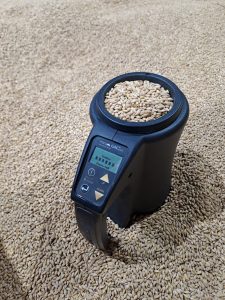
As well as the LG experts, each event will feature industry experts from within the agricultural sector, providing technical information on an array of topics such as fertiliser & micronutrients, agrochemicals, SFI’s and more. On top of this, we will again be running the Moisture Meter Clinic, which has been a farmer favourite in past years.
LG’s Summer Demos will have a wide assortment of winter wheat varieties to show, including Limagrain’s No.1 highest yielding variety; LG Beowulf, and a taste of Limagrain’s up and coming RL Candidates and NL2 offerings.
Alongside this, they will also be displaying commercial competitor varieties, with both untreated and treated plots.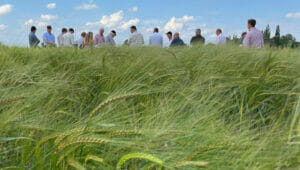
Rothwell and Woolpit will be showing all varieties in the Limagrain winter barley portfolio, including the 2 highest yielding; LG Caravelle & LG Capitol, plus exciting new BYDV tolerant RL Candidate, LG Carpenter.
Register now…
—-> Tues 9th July – Rothwell, Lincolnshire
—-> Weds 17th July – Perth, Perthshire
BASIS/NRoSO points will be available for each Demo Day.
If you are thinking of growing an LG variety, have an interest in learning more, or have any questions for our experts, Register Now for one of our Demo Days.
Highest yielding Recommended varieties on show at CerealsPlant breeders Limagrain UK will showcase their impressive portfolio of varieties across crop sectors at Cereals 2024.
After several years absence from Cereals, the breeders have returned to the Event on the back of their resounding success on the 2024/2025 AHDB Recommended List.
“Producing the highest yielding varieties, backed up with desirable agronomic characteristics is an exceptional achievement for any breeder. What’s more, these varieties have proven to be robust and consistent performers across seasons and regions,” explains Ron Granger, Limagrain’s arable technical manager.
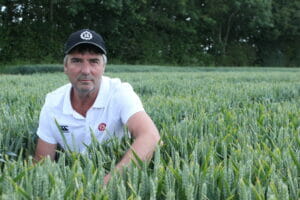 Visit stand 606 to find out more about the highest yielding winter wheat LG Beowulf, LG Caravelle the highest yielding 2-row winter barley and the highest gross output oilseed rape varieties LG Armada, LG Adeline and LG Academic.
There will also be experts on hand to discuss Limagrain’s very diverse portfolio, including maize, forage crops and SFI options as well as an opportunity to enter a prize draw to win free seed.
“We are here to listen and share our expertise on how to get the very best out of Limagrain genetics, and the Cereals Event gives us the opportunity to do this directly with the farming community we serve,” he says.
Visit LG on stand 606, buy tickets here
Introducing Kurtis Scarboro – Arable Development Officer Kurtis started his career in the agricultural industry over 10 years ago, working on a mixed livestock and arable farm, before moving into a role within crop trials at NIAB.
In 2022, Kurtis completed a BASIS certificate in crop protection, giving him an additional recognised industry qualification.
Kurtis says, “I am excited to have joined Limagrain UK, and look forward to the variety and the challenges that the job will entail. I have always been interested in furthering my knowledge within the industry. My new role will help me achieve this, especially working within such an experienced and knowledgeable technical team.”
Since starting in September 23, Kurtis has spent a lot of time working with individual crop teams and getting to grips with the Limagrain variety portfolio (there is still a long way to go!).
Kurtis has been helping to plan and organise the drilling of winter wheat demo sites across the UK, at Rothwell, Woolpit, Newbury and Perth. In addition, alongside Ron Granger, he has also implemented a range of agronomy interaction trials at Rothwell, across wheat and barley. The wheat variety demo compares 36 different varieties, including some new promising Limagrain lines, with treated and untreated replicates. Despite the weather, the Rothwell Demo site was drilled over the first 2 weeks of October, using a Wintersteiger trials disc drill with help and thanks to the Rothwell breeding teams.
Summing up his time at Limagrain so far, Kurtis comments, “I look forward to collaborating with people both internally and externally within the industry, and seeing many of you at the LG open days next summer.”
Limagrain Upgrades Malting Barley Laboratory at UK Head QuartersOur malting barley laboratory at Rothwell in Lincolnshire has been upgraded to increase testing capability for the early screening of new varieties, from 1000 to 4000 samples a year, for both the UK and European markets.
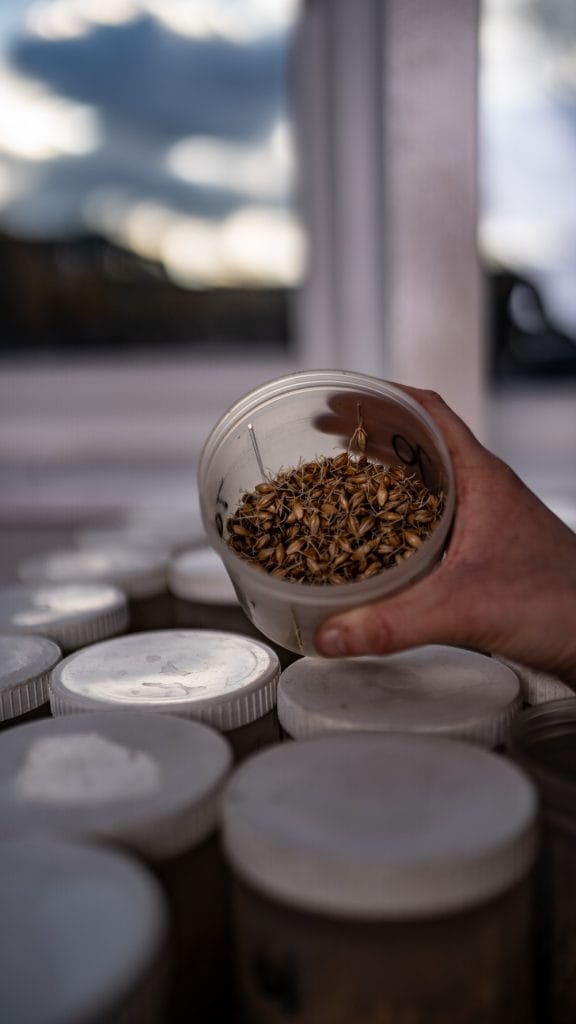
“This will allow us to use the data generated more efficiently to enable more accurate genomic selection, to better predict the malting potential and quality of the next generation of malting barleys,” says Sophie Buon, barley breeder.
“This new approach will test varieties under different micro-malting regimes, that require less water and less steeping – and in response to end user requirements, do this in the most carbon neutral way possible.”
“We hope that the new facility will encourage end-users to visit and see for themselves, the extensive work that we are doing to breed new and exciting malting barley varieties, that meet all of today and tomorrows market requirements.”

Plant breeder Limagrain’s winter wheat LG Beowulf and 2-row winter barley LG Caravelle, are the highest yielding varieties to join the 2024/25 AHDB Recommended List.
LG Armada also takes lead position as the highest yielding oilseed rape variety on the Recommended List for the UK, whilst LG Adeline takes pole position for oilseed rape in the North.
In addition, high yielding maize variety Saxon tops the 2024 BSPB Forage Maize Descriptive List for ME yield (‘000s MJ/ha).
This means that LG now offer the highest yielding varieties in; winter wheat, 2 row winter barley, OSR and maize*.

“This is an exceptional achievement for any breeder,” explains Ron Granger, Limagrain’s arable technical manager.
“Last year saw our winter wheat and winter barley varieties take pole positions across the RL. We have built on this success for a second year running, producing higher yielding varieties, backed up with desirable agronomic characteristics, securing high yield performance on farm. What’s more, these varieties have proven to be robust and consistent performers across seasons and regions.”
Highest yielding winter wheat
Group 4 hard wheat LG Beowulf yields 106% across the UK and shows the same consistency of performance across all regions: east (106%), west (106%) and the north (107%) – an outstanding achievement for any variety.
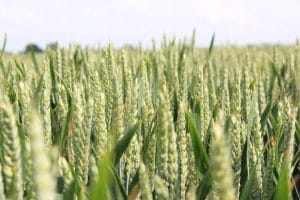 LG Beowulf has produced these exceptionally high yields consistently in National List and RL trials over regions and seasons, in both the unusually dry summer of 2022 as well as the exceptionally wet summer of 2023. Alongside these yields, it offers a good grain quality, with a spec weight of 78.3 kg/hl.
“LG Beowulf is much like LG Skyscraper; it performs wherever you grow it,” he says. “It can be drilled early or late – providing growers with a wide drilling window, as a first or second wheat, on light or heavy land, and there are very few varieties that meet this criterion,” he says.
LG Beowulf yields are backed up by a set of strong agronomic characteristics, offering an excellent disease resistance profile with ratings of 9 for yellow rust, 6.7 for septoria, as well as orange wheat blossom midge (OWBM) resistance.
It has very stiff straw and is rated 8 for standing in untreated and PGR treated trials, which strongly contributes to its reliability on farm.
“In summary, LG Beowulf is a very high yielding, robust and versatile variety that comes at a time when growers are looking more than ever to maximise output, in order to maintain profit in times of increasing costs,” says Mr Granger.
Highest yielding winter barley
LG Caravelle is the highest yielding two-row winter barley for the second year running, since joining the Recommended List in 2023.
“Offering UK yields of 105.6%, LG Caravelle continues to dispel any misconception that two row barleys are lower yielding than hybrids. The variety certainly competes with the best yielding hybrid barleys, especially in the east,” says Mr Granger. “LG Caravelle is competitive in a black-grass situation, another characteristic that is normally associated with hybrids.” 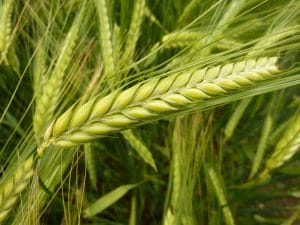
“LG Caravelle’s high yields are backed up by an excellent disease profile, reflected in its superb untreated performance, it is early maturing with stiff straw and good brackling resistance.”
“LG Caravelle also offers an exceptionally high specific weight for a winter barley, of 71.4 kg/hl combined with low screenings %,” he adds.
“Indeed, LG Caravelle possesses all of the key characteristics for a winter barley.”
LG Capitol is a two-row winter barley that joins the Recommended List this year and is a sister variety to LG Caravelle, offering similar yields and consistency of performance over seasons and regions. Its yields sit just 0.1% behind that of LG Caravelle, at 105.5%.
LG Capitol also combines a high specific weight and ripening, similar to KWS Tardis, with a solid disease resistance profile and good straw attributes.
Highest yielding OSR
The top three highest yielding oilseed rape varieties on the 2024/25 AHDB Recommended List all come from the Limagrain stable, offering exceptional consistency over regions and seasons.
LG Armada tops the UK and E/W List at 107%, LG Academic follows 1% behind at 106%, with LG Adeline taking pole position on the Northern List with an outstanding yield of 108.3%.
LG Armada is one of the next generation of versatile high yielding oilseed rape varieties, improving on the characteristic trait loaded-hybrids that growers have come to expect from Limagrain.
“‘Ambassador-like’ in its growth habit, LG Armada has strong autumn vigour, is robust, with good adaptability to all regions of the UK,” says Limagrain’s oilseeds product manager, Liam Wilkinson.
 “LG Armada is the first of our seventh generation of hybrids, bringing new maintainer and restorer lines to our OSR portfolio. This effectively means we are bringing varieties to market offering a stacked portfolio of much improved stem health attributes, alongside the standard pod shatter, TuYV and RLM7 resistance traits.”
“We know stem health is key to driving consistent oilseed rape yields across farms and with these seventh-generation hybrids, we are seeing bigger stems and better rooting which also results in higher oil content,” he says.
Highest yielding maize
Limagrain’s maize variety, Saxon was added to the BSPB 2023 Forage Maize Descriptive List and has made the top of the list for 2024 for its ME yield of 225 (‘000s MJ/ha). It has dry matter yields of 19.1 t/ha, making it ideal for all uses, including anaerobic digestion.

“On the Descriptive List, Saxon yields 105% of the average and additionally is quite an early variety with an FAO of 180,” says Tim Richmond, Limagrain’s product manager for maize.
“Saxon combines superb early vigour with good standing power, making it perfectly suited for all mainstream maize sites.”
“LGAN has long been the watchword for maize varieties that deliver what really counts – high yields of high-quality feeds that sustain excellent milk yields. Saxon is one of the latest examples of the benefit of breeding varieties that deliver in the clamp.”
To learn more about how any of these varieties could perform on your farm, click the links below;
LG Maize
LG Winter Wheat
LG Winter Barley
LG OSR
- * Data: 2024/25 AHDB RL / *2-row winter barley. 2024 BSPB NIAB Forage Maize Descriptive List – First choice varieties for favourable sites by ME yield of fresh plant at harvest (‘000s MJ/ha)
Limagrain UK is pleased to announce that the impending ban on maize seed treatments has been lifted following a successful lobbying campaign, with the granting of Emergency Authorisations allowing seed treated with three key seed treatments to be imported into and grown in the UK in 2024.
The future viability of maize being grown in the UK has been in question due to an impending ban on seed treatments not registered for use in the UK. These include Korit (ziram) bird deterrent, Redigo M (prothioconazole + metalaxyl) fungicide and Force 20 CS (tefluthrin) insecticide, with the use of all three products due to be banned from 31st December 2023. After this date it would have been illegal to import, sell or sow any seed which has been treated with any of these products, putting into doubt the future viability of maize grown for livestock forage or as a feedstock for anaerobic digestion (AD) plants.

Tim Richmond
“Without a suitable bird repellent, insecticide and fungicide, there’s a substantial risk that newly drilled crops could be completely wiped out by corvid grazing, or seriously hindered by insect damage and soil-borne pathogens,” explains Tim Richmond, Maize Manager for Limagrain Field Seeds in the UK and Ireland.
“To counter the ban, which has threatened the industry as a result of the UK’s departure from the EU, Limagrain set up and spearheaded an industry working group to lobby the Government into taking action. We can now announce that all three products have been granted an Emergency Authorisation, meaning that treated seed will be allowed to be imported into, and used in the UK next year.”
But the campaign doesn’t end here Mr Richmond continues. “Whilst the emergency use authorisations are a significant win for the industry, they are by no means a permanent solution. We are therefore continuing to lobby on behalf of all UK maize growers to secure a more sustainable solution in the form of a longer-term delay on the ban which will require a change in UK law, and will encourage the CRD (Chemicals Regulation Division) to ensure the next generation of maize seed treatments are approved at a regulatory level as quickly as possible.”
FIND OUT MORE ABOUT OUR MAIZE VARIETIES HERE
Limagrain provides feed for endangered bird speciesThe campaign to increase numbers of turtle doves in the UK and stave off extinction of this endangered species is benefitting from feed supplies from seed company Limagrain UK.
Donations of small seeds typically turnips and peas and oilseed rape screenings from the company’s seed plant in Norfolk, that would otherwise be wasted, are supporting birds on the independent Turtle Dove Breeding Project. This project, co-ordinated by Trevor Lay of Waveney Wildlife, supplies all the captive bred birds to the Turtle Dove Trust for release purposes.
“We use mostly domestic, fostering Java Doves and we also encourage the Turtle Doves to rear at least one or two broods themselves,” says Trevor.
The breeding project supplies around 500 turtle doves each year, free of charge. The majority to the Turtle Dove Trust, and to other conservationists or release projects.
Trevor puts the seed material on a range of different ground surfaces such as scrubby grass, gravel, different sand types, ballast and granite chippings, so the young birds get used to foraging for all their seeds. “They are then familiar with searching on different terrain when they are released.
“We aim to release over-wintered birds once the oilseed rape and barley harvest is well underway, so the birds have plentiful feed supplies locally and are not tempted to migrate.”
The UK population has declined by almost 90% during the past 40 years. Captive breeding is helping to ensure that this species of dove does not face extinction. But it relies on donations and so we are always delighted when companies and individuals step up to the mark to help the project.